Shekar Polo (شکر پلو) – Persian Sweet Rice from Shiraz
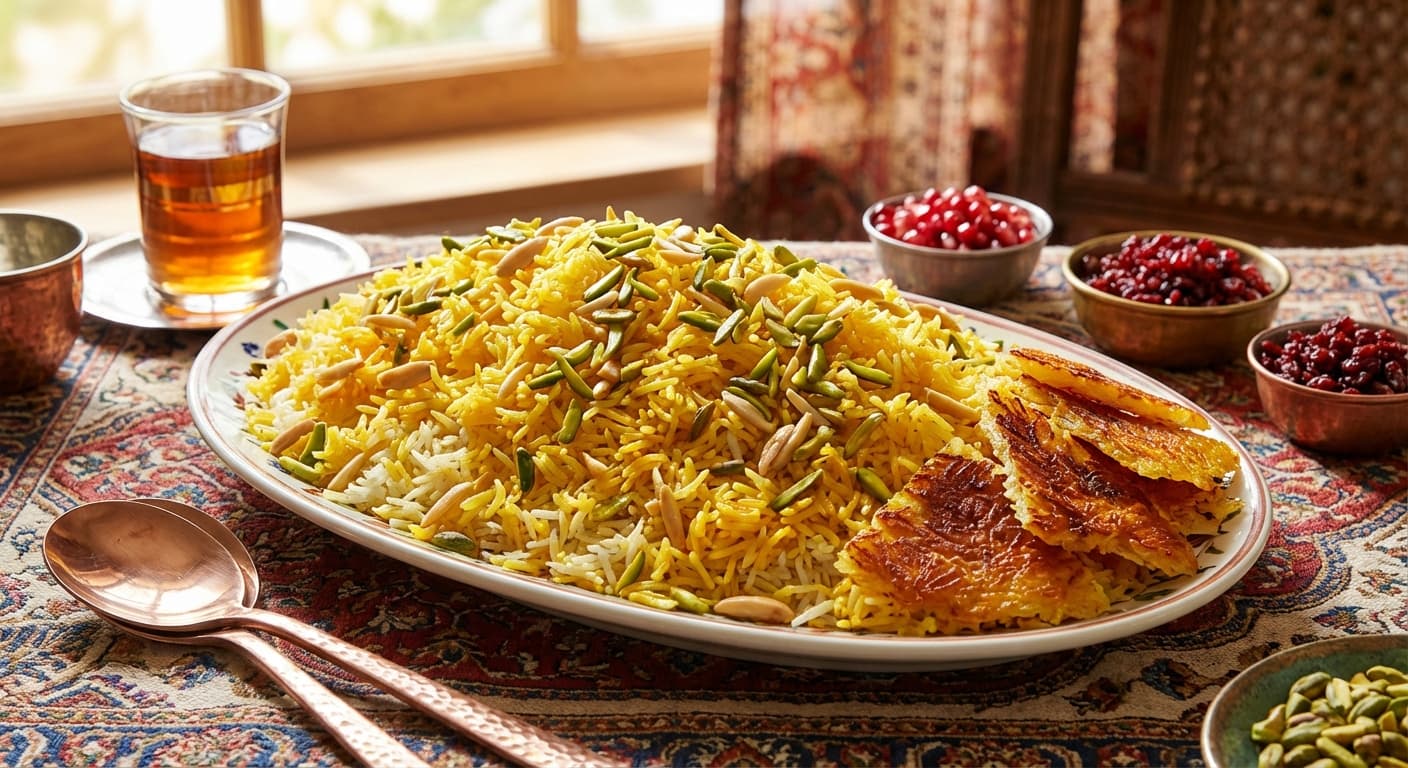
Shekar Polo is a celebratory Shirazi sweet rice with a luminous saffron-turmeric color, perfumed with citrus zest and rosewater, then finished with crunchy pistachios. It’s delicately sweet, floral, and elegant beside rich stews or roasted meats.
Printable Recipe Card
Servings: 6 · Total: 125 min · Difficulty: medium
Ingredients (quick list)
- 500 g Basmati rice (aged basmati preferred, rinsed until water runs clear)
- 18 g Sea salt (for soaking and boiling water (about 1 tbsp))
- 3000 ml Water (for parboiling the rice)
- 220 g Granulated sugar (for syrup; adjust to taste only after first try)
- 10 g Mandarin zest (finely grated; or use orange zest)
- 0.3 g Saffron threads (ground and bloomed in hot water)
- 2 g Turmeric (about 1 tsp, for warm golden color and aroma)
- 15 ml Rosewater (1 tbsp, optional but traditional in Shiraz)
- 60 ml Vegetable oil (4 tbsp, divided)
- 120 g Plain yogurt (for a crisp tahdig (optional but common))
- 60 g Pistachios (shelled, slivered or roughly chopped, lightly toasted)
Steps (summary)
- Rinse the basmati rice 5–6 times until the water is mostly clear. Cover with 1.5 liters cool water and dissolve 9 g sea salt in…
- Make the syrup: in a small saucepan, combine 220 g sugar with 240 ml water. Bring to a gentle simmer over medium heat, stirring…
- Bring 3 liters water to a rolling boil in a large pot. Add the remaining 9 g sea salt. Drain the soaked rice and add it to the…
- Drain the rice in a colander and rinse quickly with 250 ml cool water to stop cooking and wash off excess surface starch. Let i…
- Prepare the pot for tahdig: in a nonstick pot (24–26 cm), warm 2 tbsp vegetable oil over medium heat for 1 minute. In a bowl, m…
- Layer and perfume: add the remaining rice to the pot in a loose mound, making 3–4 layers. Drizzle the remaining syrup evenly be…
+ 2 more steps in the full instructions section below.
Cultural Background
Shekar Polo is a jewel of Shiraz, often served at celebrations where sweet-and-scented rice symbolizes hospitality and abundance. Its saffron glow and citrus perfume reflect the city’s love for fragrant ingredients and elegant rice cookery.
Equipment
💡 Tips
- For the cleanest floral sweetness, use aged basmati and avoid overboiling; the rice should be al dente before steaming.
- If your citrus zest tastes bitter, blanch it: simmer zest in 250 ml water for 2 minutes, drain, then add to syrup.
- Keep the syrup at a light simmer; a thick syrup can clump the rice and make it sticky.
- Toasting pistachios for 3–4 minutes in a dry pan over low heat intensifies aroma without darkening.
⚠️ Common Mistakes
❌ Overboiling the rice before steaming
💡 Why: Sweet syrup adds moisture; fully cooked rice turns mushy during the final steam.
✅ Fix: Parboil only until the grain is tender outside but firm inside (6–8 minutes), then steam gently on low heat.
❌ Reducing the syrup too much
💡 Why: A thick syrup coats grains heavily, causing clumps and sticky texture.
✅ Fix: Simmer briefly (about 7 minutes total) for a light syrup; it should pour easily and not form threads.
❌ Using bitter zest straight from the peel
💡 Why: Some citrus has harsh oils that can dominate the delicate saffron aroma.
✅ Fix: Blanch the zest for 2 minutes, drain well, then add to syrup; or zest only the bright outer peel, avoiding white pith.
❌ High heat throughout steaming
💡 Why: The bottom burns before the rice finishes steaming, and saffron aroma becomes harsh.
✅ Fix: Use medium heat only to build steam (10 minutes), then reduce to low for the remainder and keep the lid tightly wrapped.
🧊 How to Store
Cool leftovers within 2 hours. Refrigerate in an airtight container up to 3 days. Reheat covered with 2–3 tbsp water in a pot over low heat for 10–12 minutes, or microwave covered at 60% power in 1-minute bursts. Tahdig is best eaten fresh; it softens after refrigeration.
📅 Make Ahead
You can rinse and soak the rice up to 1 hour ahead, and prepare the saffron and syrup up to 24 hours ahead (refrigerate syrup airtight; warm to loosen before using). For best texture, steam and assemble Shekar Polo the day you plan to serve it.
🍽️ Pairs Well With
- Khoresh-e Fesenjan (pomegranate-walnut stew)
- Zereshk Polo ba Morgh (barberry rice with chicken) as a festive mixed rice spread
- Roasted chicken or lamb shoulder with lemon
- Persian salad (Shirazi salad) to balance sweetness
Regional Variations
- Shiraz (Fars)Often includes rosewater and a more pronounced citrus perfume; pistachios are common, and the rice is kept pale-golden rather than deeply caramelized.
- TehranSometimes made sweeter and richer with a small amount of butter or ghee, and garnished with slivered almonds alongside pistachios for a more lavish party platter.
- IsfahanMay include a touch of ground cardamom in the syrup and a slightly drier finish, emphasizing distinct grains and a crisp tahdig.
Ingredients
- 500 gBasmati rice (aged basmati preferred, rinsed until water runs clear)
- 18 gSea salt (for soaking and boiling water (about 1 tbsp))
- 3000 mlWater (for parboiling the rice)
- 220 gGranulated sugar (for syrup; adjust to taste only after first try)
- 10 gMandarin zest (finely grated; or use orange zest)
- 0.3 gSaffron threads (ground and bloomed in hot water)
- 2 gTurmeric (about 1 tsp, for warm golden color and aroma)
- 15 mlRosewater (1 tbsp, optional but traditional in Shiraz)
- 60 mlVegetable oil (4 tbsp, divided)
- 120 gPlain yogurt (for a crisp tahdig (optional but common))
- 60 gPistachios (shelled, slivered or roughly chopped, lightly toasted)
🔄 Substitutions
- Mandarin zest→ Orange zest
- Plain yogurt (for tahdig)→ Thinly sliced lavash or tortilla brushed with oil
- Vegetable oil→ Ghee
Instructions
- 1
Rinse the basmati rice 5–6 times until the water is mostly clear. Cover with 1.5 liters cool water and dissolve 9 g sea salt into it, then soak for 45 minutes at room temperature. Meanwhile, grind saffron to a powder and bloom it with 45 ml boiling water; cover to trap aroma.
- 2
Make the syrup: in a small saucepan, combine 220 g sugar with 240 ml water. Bring to a gentle simmer over medium heat, stirring only until the sugar dissolves, about 3 minutes. Add mandarin zest and turmeric, simmer 4 minutes more, then turn off heat and stir in rosewater and 2 tbsp bloomed saffron.
- 3
Bring 3 liters water to a rolling boil in a large pot. Add the remaining 9 g sea salt. Drain the soaked rice and add it to the boiling water. Boil 6–8 minutes, stirring once or twice to prevent sticking, until the grains are elongated and tender on the outside but still firm in the center.
- 4
Drain the rice in a colander and rinse quickly with 250 ml cool water to stop cooking and wash off excess surface starch. Let it drain for 5 minutes. Taste a grain: it should have a slight bite. If it is fully soft, reduce steaming time later to avoid mushy sweet rice.
- 5
Prepare the pot for tahdig: in a nonstick pot (24–26 cm), warm 2 tbsp vegetable oil over medium heat for 1 minute. In a bowl, mix 120 g yogurt with 1 cup (about 150 g) of the drained rice and 1 tbsp of the syrup. Spread this mixture evenly on the pot bottom to form a crisp, lightly sweet tahdig layer.
- 6
Layer and perfume: add the remaining rice to the pot in a loose mound, making 3–4 layers. Drizzle the remaining syrup evenly between layers, reserving 2 tbsp for serving if desired. Use the handle of a spoon to poke 5–6 holes down to the bottom for steam channels, then drizzle the final 2 tbsp oil over the top.
- 7
Steam the rice: wrap the lid with a clean kitchen towel and cover the pot tightly. Steam on medium heat for 10 minutes until you see strong steam, then reduce to low and continue steaming 35 minutes. Turn off heat and rest, covered, for 10 minutes to set the grains and deepen the aroma.
- 8
Finish and serve: gently fluff the rice, keeping grains intact. Spoon onto a platter, then drizzle with the reserved 2 tbsp syrup and the remaining bloomed saffron for extra color. Sprinkle with toasted pistachios. Release the tahdig by loosening edges and flipping onto a plate, or break into shards to serve alongside.
🪪 Recipe Passport
Cultural Background
Shekar Polo is a jewel of Shiraz, often served at celebrations where sweet-and-scented rice symbolizes hospitality and abundance. Its saffron glow and citrus perfume reflect the city’s love for fragrant ingredients and elegant rice cookery.
Regional Variations
Researched from multiple sources and validated by the Zaffaron editorial team. Every recipe is tested for accuracy, measurements, and cultural authenticity.
Nutrition per serving
Pairs well with
If you enjoyed this recipe, here are a few related Zaffaron recipes to try next.
Does your family make this differently?
Every family has their own version. Maybe your grandmother adds a secret ingredient, or your aunt has a completely different technique. Preserve your family's version — with their name on it, forever.
You Might Also Like
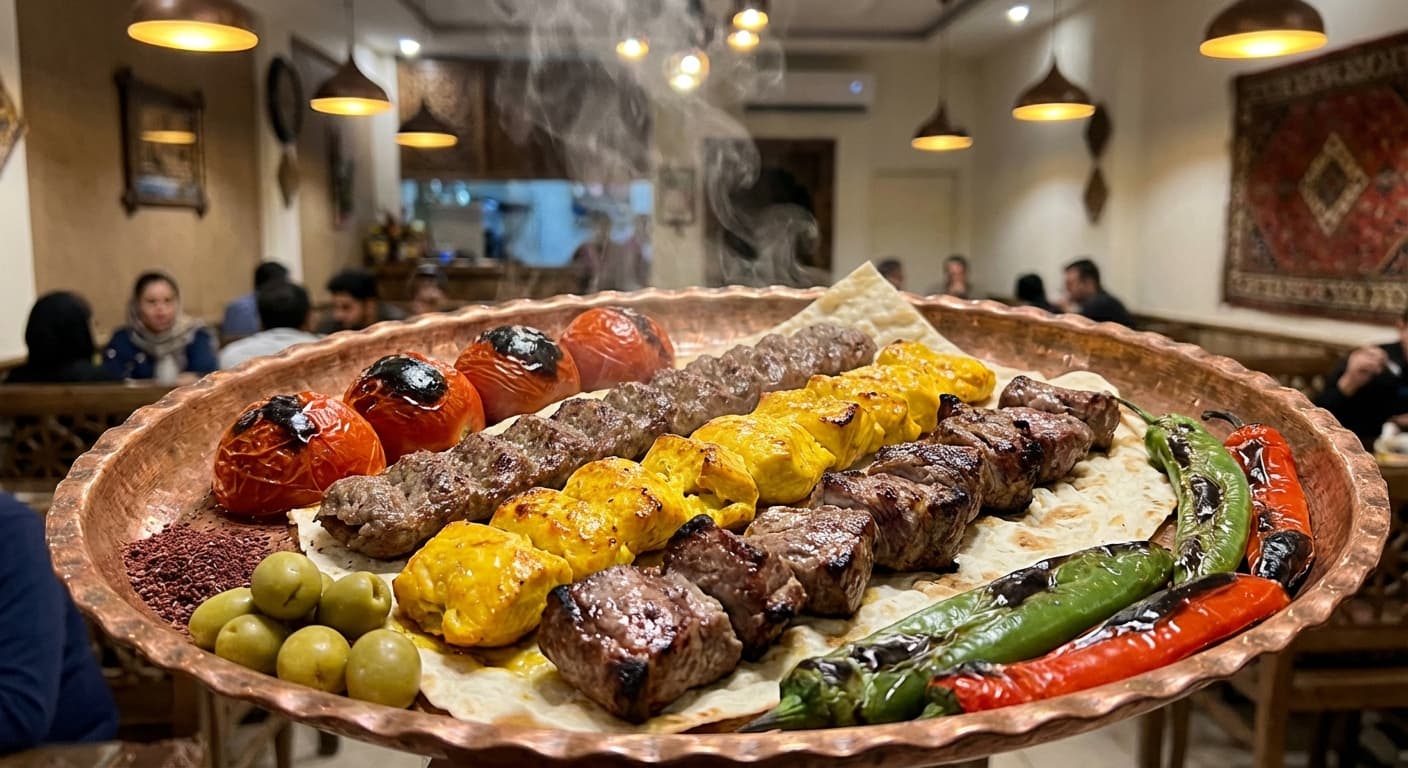
Kabab Vijeh (کباب ویژه) — Royal Persian Mixed Grill Platter
Persian · Kebabs · 70 min
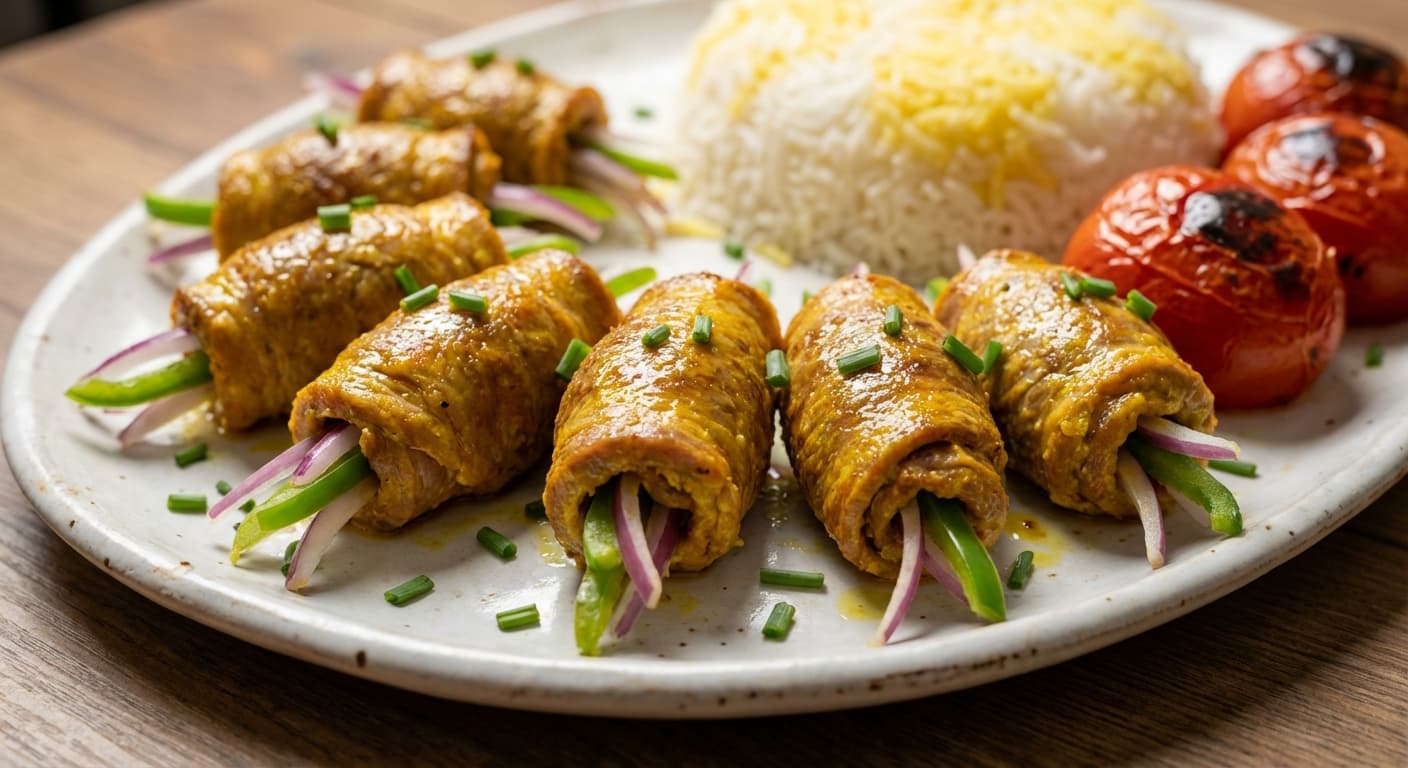
Bulgar Kabab (کباب بلغار) — Persian Rolled Saffron Fillets
Persian · Kebabs · 37 min
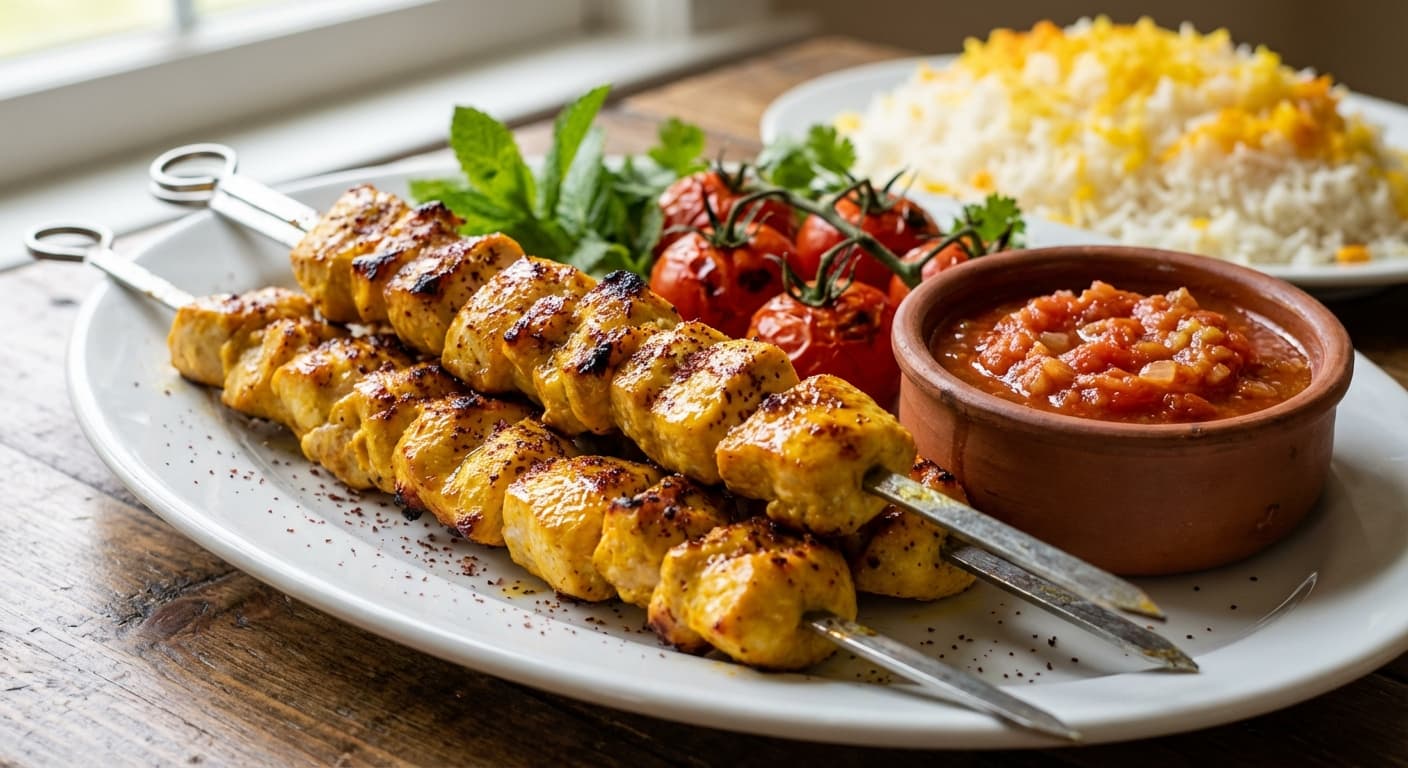
Jujeh Kabab (جوجه کباب) — Saffron-Turmeric Chicken with Rustic Tomato Sauce
Persian · Kebabs · 45 min
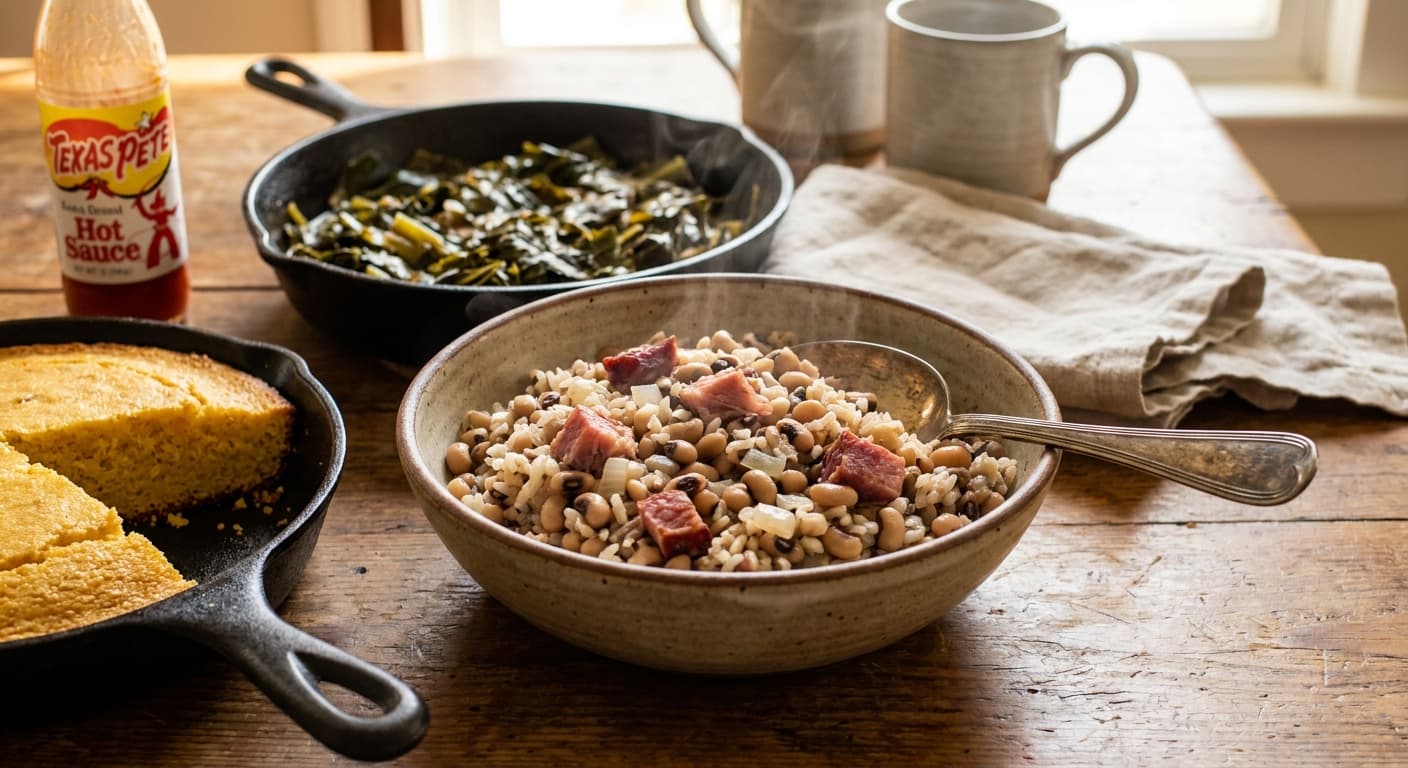
Hoppin' John (Hoppin' John) — Southern Black-Eyed Peas and Rice
American · Rice Dishes · 115 min
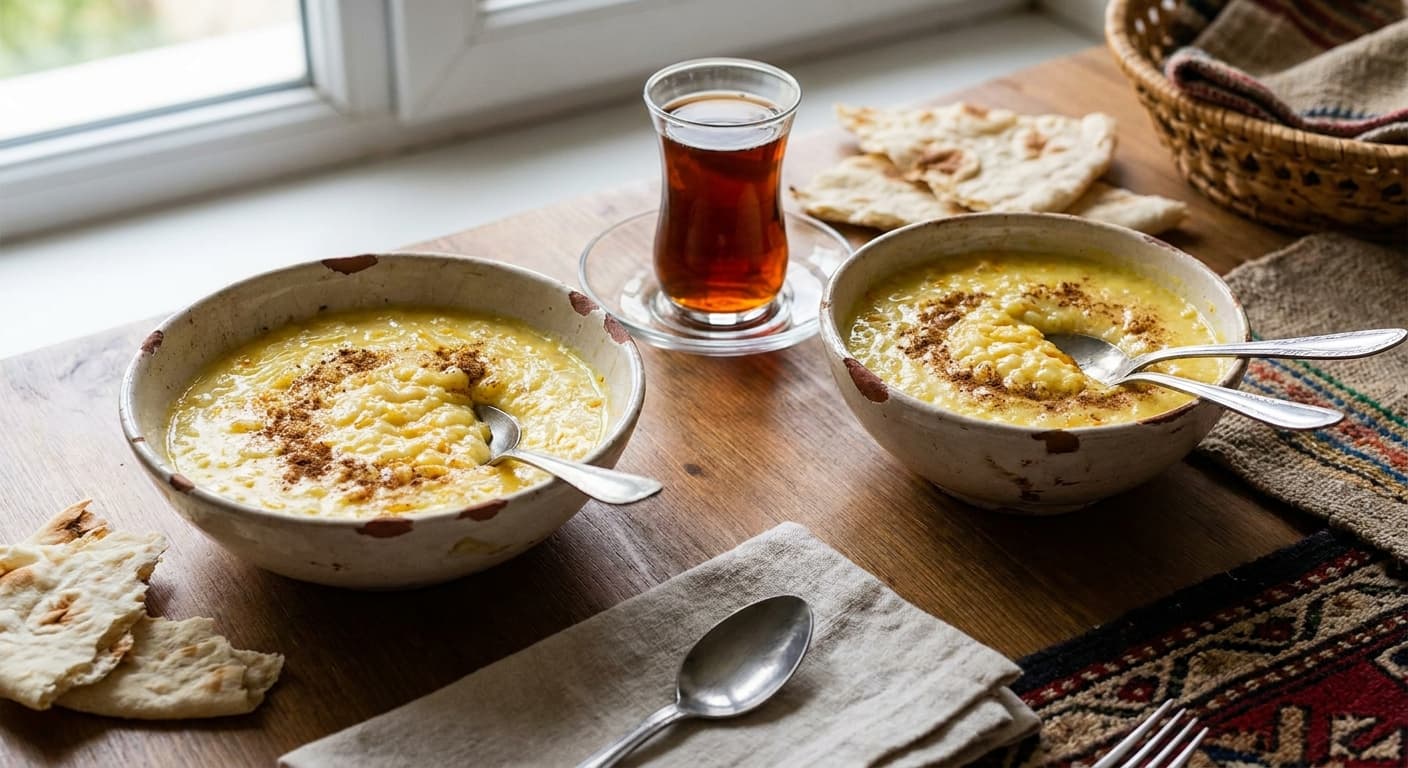
Azerbaijani Milk-Rice Porridge (Südlü Sıyıq) — Creamy Breakfast Rice with Saffron
Azerbaijani · Rice Dishes · 50 min
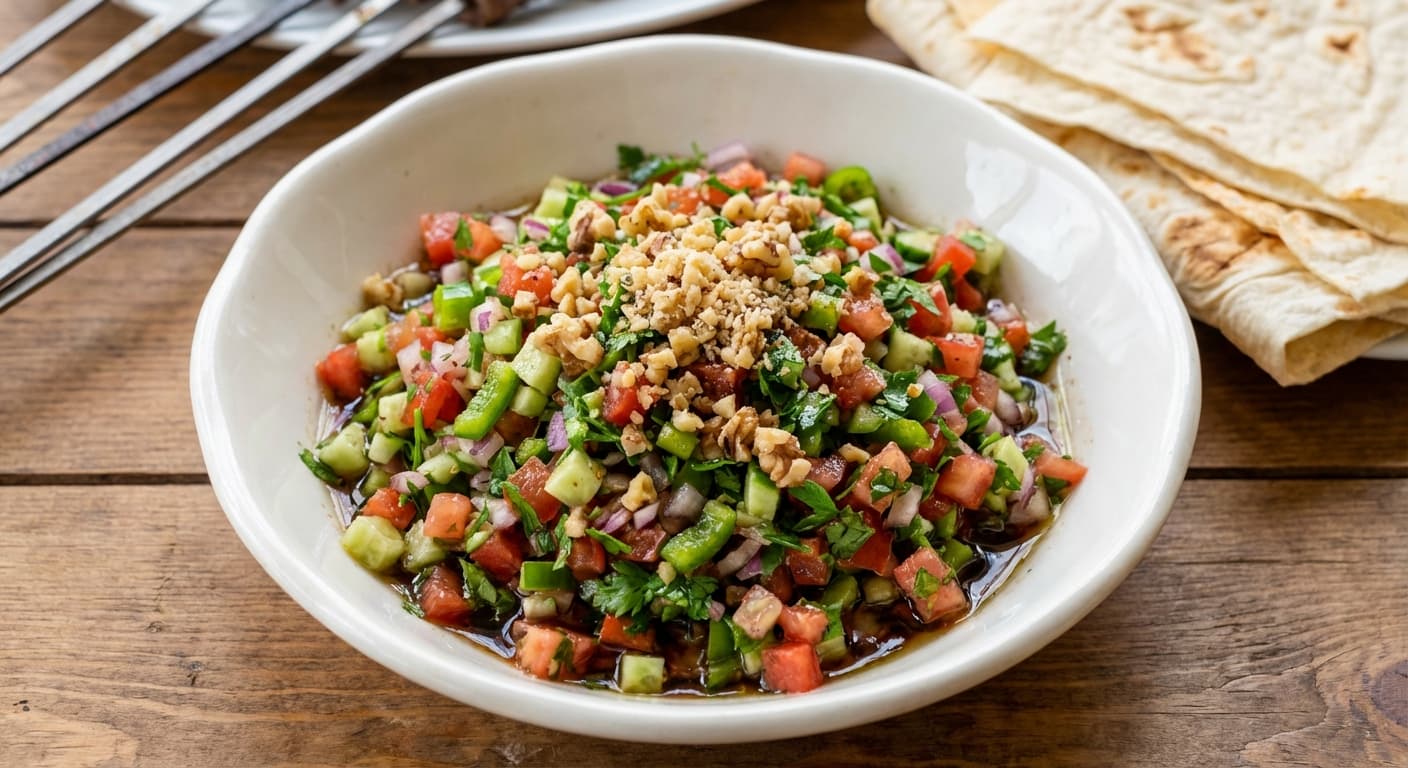
Gavurdağı Salad (Gavurdağı Salatası) — Finely Chopped Walnut & Pomegranate Salad
Turkish · Salads · 20 min
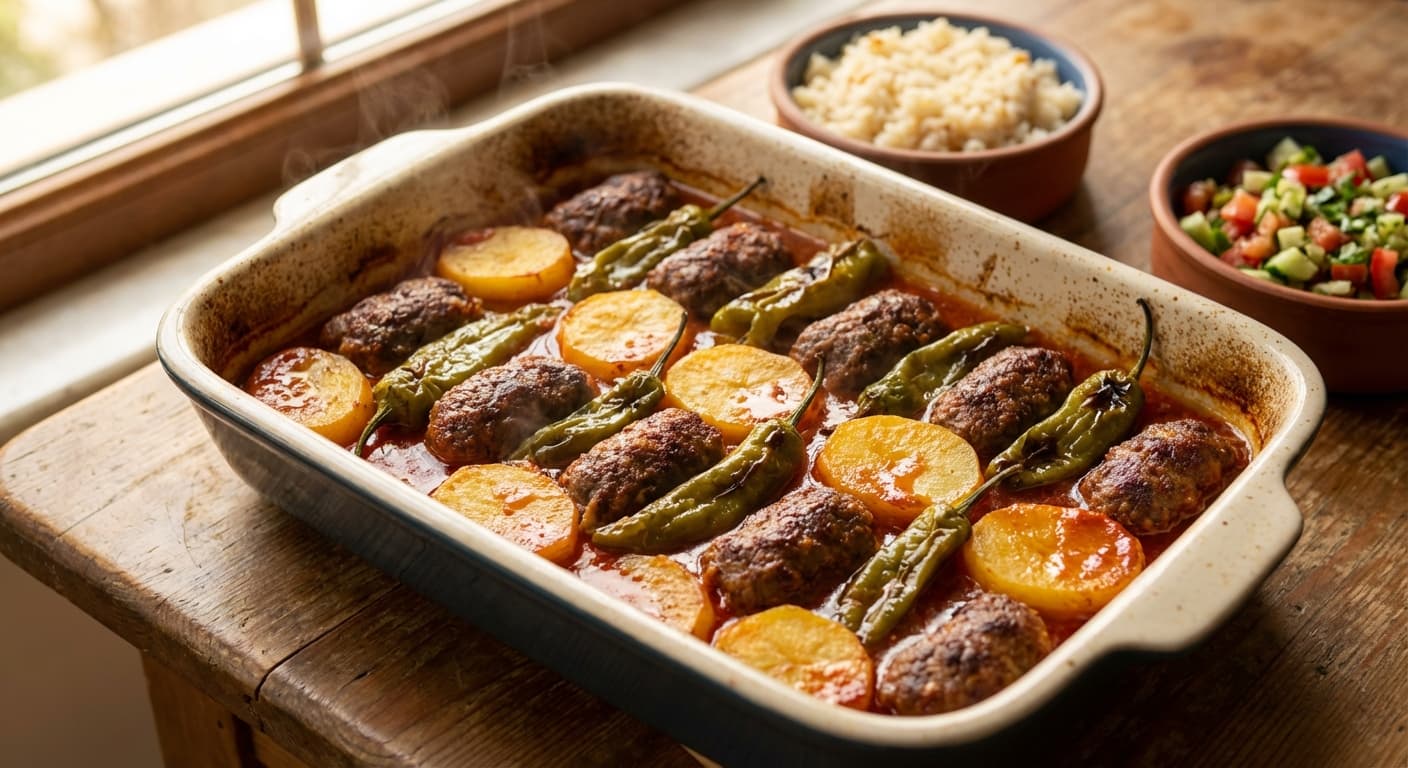
Izmir Kofte (İzmir Köfte) — Oven-Baked Meatballs with Tomato Sauce and Potatoes
Turkish · Main Courses · 70 min
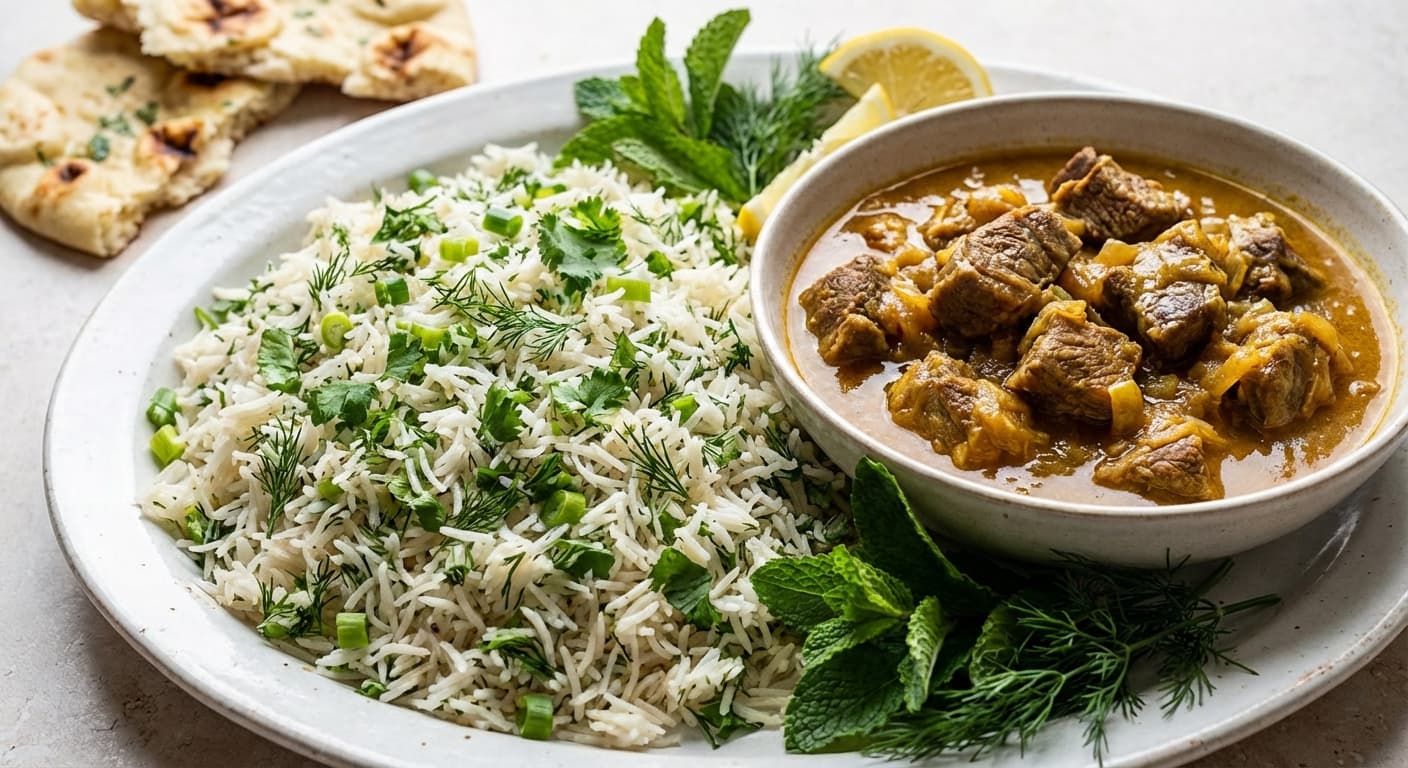
Sabzi Chalaw (سبزی چلو) — Afghan Herb Rice with Meat Stew
Afghan · Rice Dishes · 130 min
Reviews
Cooked this recipe?
Tap the stars to rate it — that's all it takes. A few words are welcome but optional.
No ratings yet. Cooked this one? Be the first to rate it — it takes one tap.