Hanukkah
חֲנֻכָּה
About Hanukkah
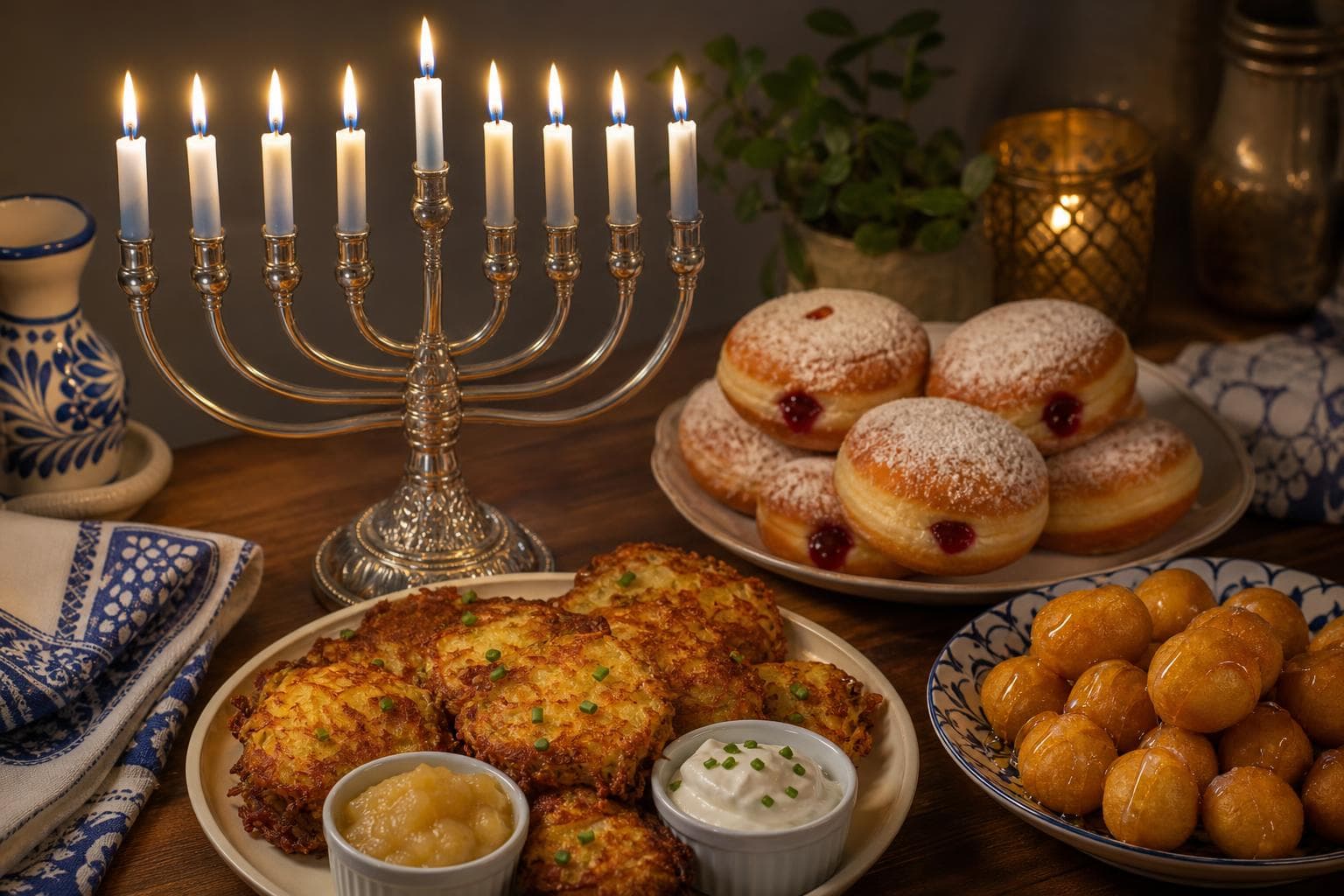
Hanukkah ("Dedication") is the eight-night Festival of Lights commemorating the Maccabean rededication of the Second Temple in Jerusalem (c. 165 BCE) after the Hasmonean revolt against Seleucid king Antiochus IV Epiphanes. The central miracle (per the Talmud) is that one day's supply of consecrated oil burned for eight days in the rededicated Temple menorah. Beginning on the 25th of Kislev, Hanukkah is observed by progressively lighting the eight-branched **Hanukkiah** (Chanukah menorah) with the ninth helper Shamash candle — one additional candle each night. **This is NOT a Jewish Christmas** — Hanukkah is a minor festival in the traditional Jewish calendar (work is permitted), elevated in modern Western diaspora by calendar proximity to Christmas but theologically and culinarily distinct. The food anchor is **oil-fried**: **Latkes** (potato pancakes), **Sufganiyot** (jelly doughnuts), **Bimuelos / Loukoumades** (Sephardic-Greek fried dough), and **brisket**.
Signature Dishes
Latkes
לאַטקেস
Sufganiyot
סופגניות
Gelt
געלט
Brisket
Dairy foods
cheese blintzes
Regional Variations
Ashkenazi (Eastern European + Russian)
Latkes — potato pancakes with grated potato + onion + egg + matzah meal, fried in oil, served with applesauce and sour cream; Brisket as Hanukkah main; Rugelach (rolled pastry) and Sufganiyot (jelly doughnuts) — Russian-Israeli adopted variant; Hanukkah Gelt (chocolate coins) for children.
Sephardic (Iberian-Mediterranean diaspora)
Bimuelos / Bumuelos — fried dough balls with honey-syrup or sugar (Greek-Turkish-Sephardic equivalent of doughnuts); Keftes de Prasa (leek-fritters fried in oil); Moroccan Sfenj (Sufganiyot ancestor — yeasted ring doughnuts); olive-oil dominant frying tradition.
Mizrahi (Middle Eastern Jewish — distinct from Persian cuisine; multi-substrand: Iraqi, Yemenite, Syrian, Bukharan, Persian-Jewish)
Iraqi: Zalabia (fried syrup-soaked dough) + sesame oil frying; Yemenite: Zalabia and oil-rich pastries; Syrian: Atayef (fried filled pancakes adapted for Hanukkah); Bukharan: bukhori-style fried sweets; Persian-Jewish sub-strand (one substrand of Mizrahi — NOT generic Persian cuisine): saffron-rosewater fried sweets + Hanukkah-specific pastries, distinguished from secular Persian sweets by Hanukkah oil-miracle context.
Israeli
Sufganiyot national centerpiece — bakeries produce millions, jelly-filled basic + gourmet variants (chocolate, halva, pistachio, dulce de leche); Levivot (Hebrew for latkes) widely eaten; Hanukkah Gelt and dreidel games; public Hanukkiah lightings in town squares; Tel Aviv + Jerusalem signature variants.
American + Diaspora Jewish
Hanukkah elevated in cultural prominence due to Christmas proximity — gift-giving expanded beyond traditional gelt; latkes + brisket family meals; community menorah-lighting ceremonies; commercial Hanukkah Gelt (chocolate coins) for children + dreidel games (sevivon-spinning top).
Observance Practices
Eight-night progressive Hanukkiah (Chanukah menorah) lighting — one candle on night 1, two on night 2, etc., plus the ninth Shamash helper candle; lit at sundown (or after stars appear) and placed in window facing public to publicize the miracle
Oil-fried foods — Latkes (potato), Sufganiyot (doughnuts), Bimuelos (Sephardic), Sfenj (Moroccan), Zalabia (Mizrahi) — culinary commemoration of the one-day-oil-lasting-eight-days Temple miracle
NOT a Jewish Christmas — Hanukkah is a minor Jewish festival (work permitted; minor liturgical status) historically; elevated by Christmas-calendar proximity in modern Western diaspora; theologically + culinarily distinct from Christmas
Hanukkah Gelt (chocolate coins) gifts to children + dreidel (four-sided spinning top with Hebrew letters Nun-Gimel-Hey-Shin = 'A great miracle happened there') games — modern customary additions
Hallel and Al HaNissim added to daily liturgy; Maccabean military victory + Temple rededication historical narrative read; Maoz Tzur hymn sung after candle lighting