Upma (उपमा) — Indian Savory Semolina Breakfast Porridge
Upma is a classic South Indian breakfast made by roasting semolina and cooking it with tempered spices, ginger, and vegetables. Served hot with lemon and coconut chutney, it’s a comforting, quick morning staple across India.
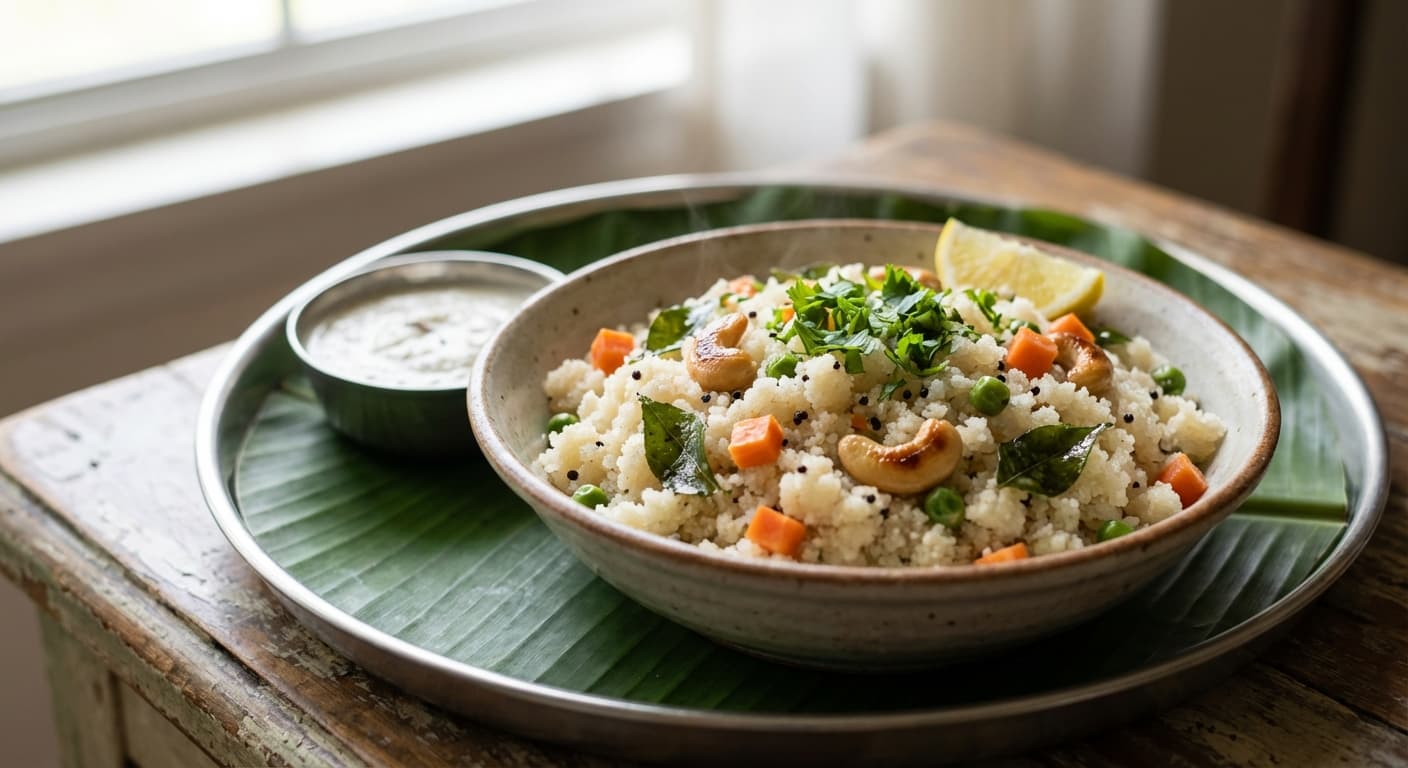
Printable Recipe Card
Servings: 4 · Total: 25 min · Difficulty: easy
Ingredients (quick list)
- 180 g semolina (sooji/rava) (fine to medium grind)
- 600 ml water (hot, not boiling)
- 15 g ghee (about 1 tbsp)
- 15 ml neutral oil (about 1 tbsp)
- 1 tsp mustard seeds
- 2 tsp urad dal (split black gram, skinned) (for crunch)
- 2 tsp chana dal (split chickpeas) (for crunch)
- 30 g cashews (whole or halved)
- 2 dried red chili (broken in half)
- 12 leaf curry leaves (fresh leaves)
- 150 g onion (finely chopped)
- 10 g ginger (finely grated)
+ 7 more in the full ingredients section below.
Steps (summary)
- Dry-roast the semolina in a wide pan over medium-low heat for 4–6 minutes, stirring constantly, until it smells nutty and feels…
- Heat the ghee and oil together in a heavy pot over medium heat for 1 minute. Add mustard seeds and cook for 30–45 seconds until…
- Add cashews and cook for 1–2 minutes, stirring, until they are pale golden and glossy. Add dried red chili and curry leaves and…
- Add onion and cook for 4–5 minutes until translucent and lightly softened. Stir in ginger and green chili and cook for 45–60 se…
- Add carrot, peas, turmeric, and salt, and sauté for 2 minutes to coat everything in the tempered fat and spices. Pour in the ho…
- Reduce heat to low and slowly rain in the roasted semolina while stirring continuously with a whisk or wooden spoon to prevent…
+ 1 more steps in the full instructions section below.
Cultural Background
Upma is a beloved South Indian breakfast that spread nationwide through tiffin culture and home kitchens. The hallmark is the tempering—mustard, curry leaves, and lentils—showcasing the region’s signature spice technique and love of quick, nourishing meals.
Equipment
💡 Tips
- Roast semolina just until fragrant and warm; browning makes upma taste bitter and feel dry.
- Use hot water and add semolina gradually while stirring to avoid lumps and ensure a fluffy, non-gummy texture.
- For softer, porridge-like upma, increase water to 700 ml; for a drier, fluffy upma, reduce to 550 ml.
⚠️ Common Mistakes
❌ Adding semolina all at once, creating lumps.
✅ Fix: Lower the heat and sprinkle semolina in a steady stream while stirring continuously with a whisk.
❌ Skipping or under-roasting the semolina, leading to a raw taste.
✅ Fix: Roast 4–6 minutes until fragrant and warm, then remove from the pan immediately.
❌ Letting the tempering burn, making the dish bitter.
✅ Fix: Keep heat at medium and add curry leaves and chilies only after dals are lightly golden.
🧊 How to Store
Cool leftovers within 1 hour, then refrigerate in an airtight container for up to 3 days. Reheat in a pan or microwave with 30–60 ml water per serving, covered, stirring halfway until steaming hot and fluffy again.
📅 Make Ahead
Roast the semolina up to 2 weeks ahead and store airtight at room temperature. You can also pre-chop onions and vegetables and refrigerate them for 24 hours to make breakfast assembly very fast.
🍽️ Pairs Well With
- Coconut chutney
- sambar
- lemon wedges
- masala chai.
Regional Variations
- Karnataka-style upma often includes a pinch of sugar (about 2 g) and sometimes grated coconut for a gentle sweetness.
- Tamil Nadu versions may add more curry leaves and a touch of asafoetida (hing) for extra aroma.
- Kerala-style upma can include sliced shallots and a little grated coconut, served with banana or pappadam.
Ingredients
- 180 gsemolina (sooji/rava) (fine to medium grind)
- 600 mlwater (hot, not boiling)
- 15 gghee (about 1 tbsp)
- 15 mlneutral oil (about 1 tbsp)
- 1 tspmustard seeds
- 2 tspurad dal (split black gram, skinned) (for crunch)
- 2 tspchana dal (split chickpeas) (for crunch)
- 30 gcashews (whole or halved)
- 2dried red chili (broken in half)
- 12 leafcurry leaves (fresh leaves)
- 150 gonion (finely chopped)
- 10 gginger (finely grated)
- 1green chili (finely chopped (about 8 g))
- 80 gcarrot (small dice)
- 60 ggreen peas (fresh or frozen)
- 0.5 tspturmeric powder
- 1.25 tspsalt (about 7.5 g fine salt)
- 15 mllemon juice (about 1 tbsp)
- 10 gcilantro (chopped)
🔄 Substitutions
- ghee→ neutral oil
- cashews→ roasted peanuts
- green peas→ finely chopped green beans
Instructions
- 1
Dry-roast the semolina in a wide pan over medium-low heat for 4–6 minutes, stirring constantly, until it smells nutty and feels slightly warmer to the touch. Do not let it brown; transfer it to a bowl immediately so residual heat doesn’t over-toast it.
- 2
Heat the ghee and oil together in a heavy pot over medium heat for 1 minute. Add mustard seeds and cook for 30–45 seconds until they pop, then add urad dal and chana dal and stir for 1–2 minutes until they turn light golden.
- 3
Add cashews and cook for 1–2 minutes, stirring, until they are pale golden and glossy. Add dried red chili and curry leaves and cook for 20–30 seconds; the leaves should sizzle and become fragrant without burning.
- 4
Add onion and cook for 4–5 minutes until translucent and lightly softened. Stir in ginger and green chili and cook for 45–60 seconds, scraping the bottom so the aromatics don’t stick.
- 5
Add carrot, peas, turmeric, and salt, and sauté for 2 minutes to coat everything in the tempered fat and spices. Pour in the hot water and bring it to a strong simmer for 2–3 minutes so the vegetables begin to soften.
- 6
Reduce heat to low and slowly rain in the roasted semolina while stirring continuously with a whisk or wooden spoon to prevent lumps. Keep stirring for 2–3 minutes as it thickens into a smooth, fluffy porridge and the grains hydrate evenly.
- 7
Cover and steam on the lowest heat for 3 minutes, then turn off the heat and rest for 2 minutes. Fluff thoroughly, then stir in lemon juice and cilantro; serve immediately while hot for the best texture.
🪪 Recipe Passport
Cultural Background
Upma is a beloved South Indian breakfast that spread nationwide through tiffin culture and home kitchens. The hallmark is the tempering—mustard, curry leaves, and lentils—showcasing the region’s signature spice technique and love of quick, nourishing meals.
Regional Variations
Researched from multiple sources and validated by the Zaffaron editorial team. Every recipe is tested for accuracy, measurements, and cultural authenticity.
Nutrition per serving
Pairs well with
If you enjoyed this recipe, here are a few related Zaffaron recipes to try next.
Does your family make this differently?
Every family has their own version. Maybe your grandmother adds a secret ingredient, or your aunt has a completely different technique. Preserve your family's version — with their name on it, forever.
You Might Also Like
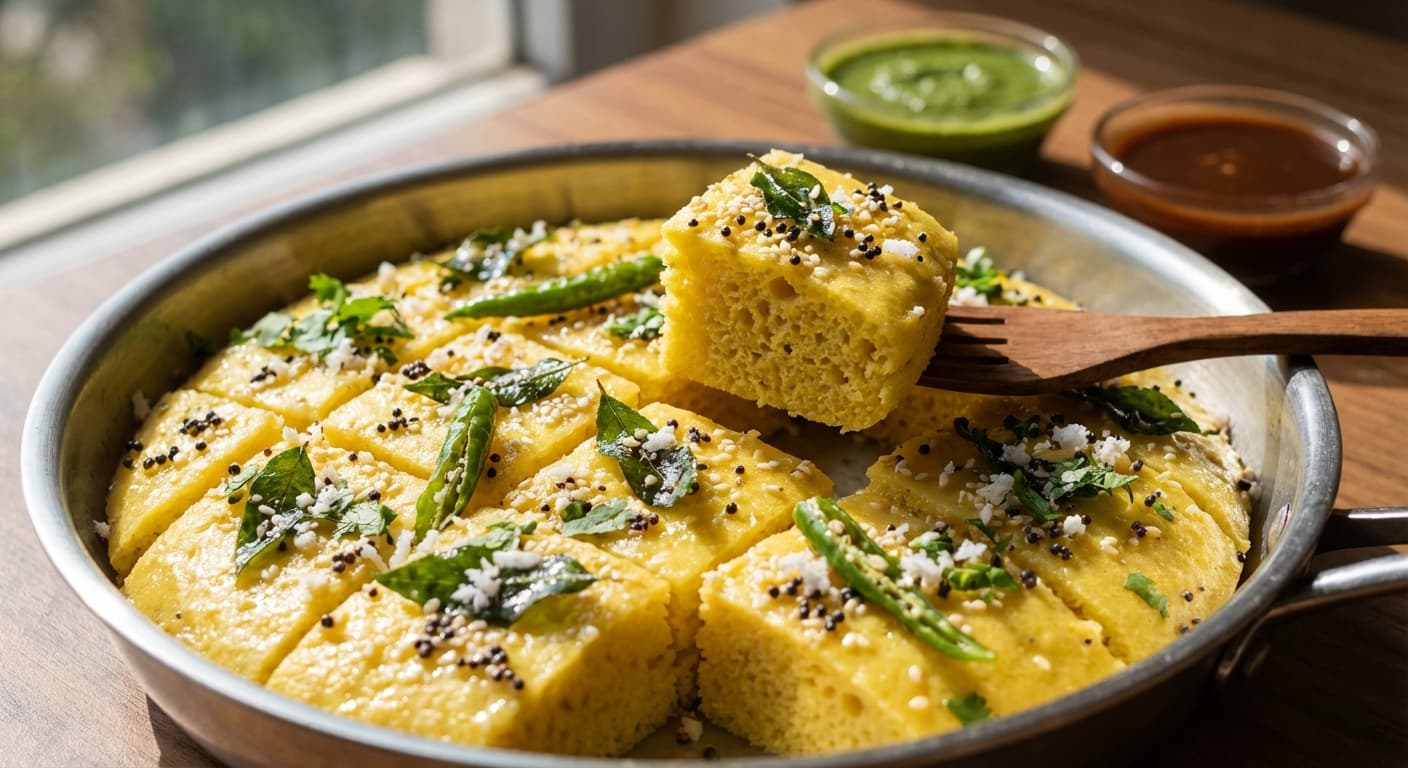
Dhokla (ઢોકળા) — Indian Steamed Savory Chickpea Cake with Mustard Seeds
Indian · Appetizers · 33 min
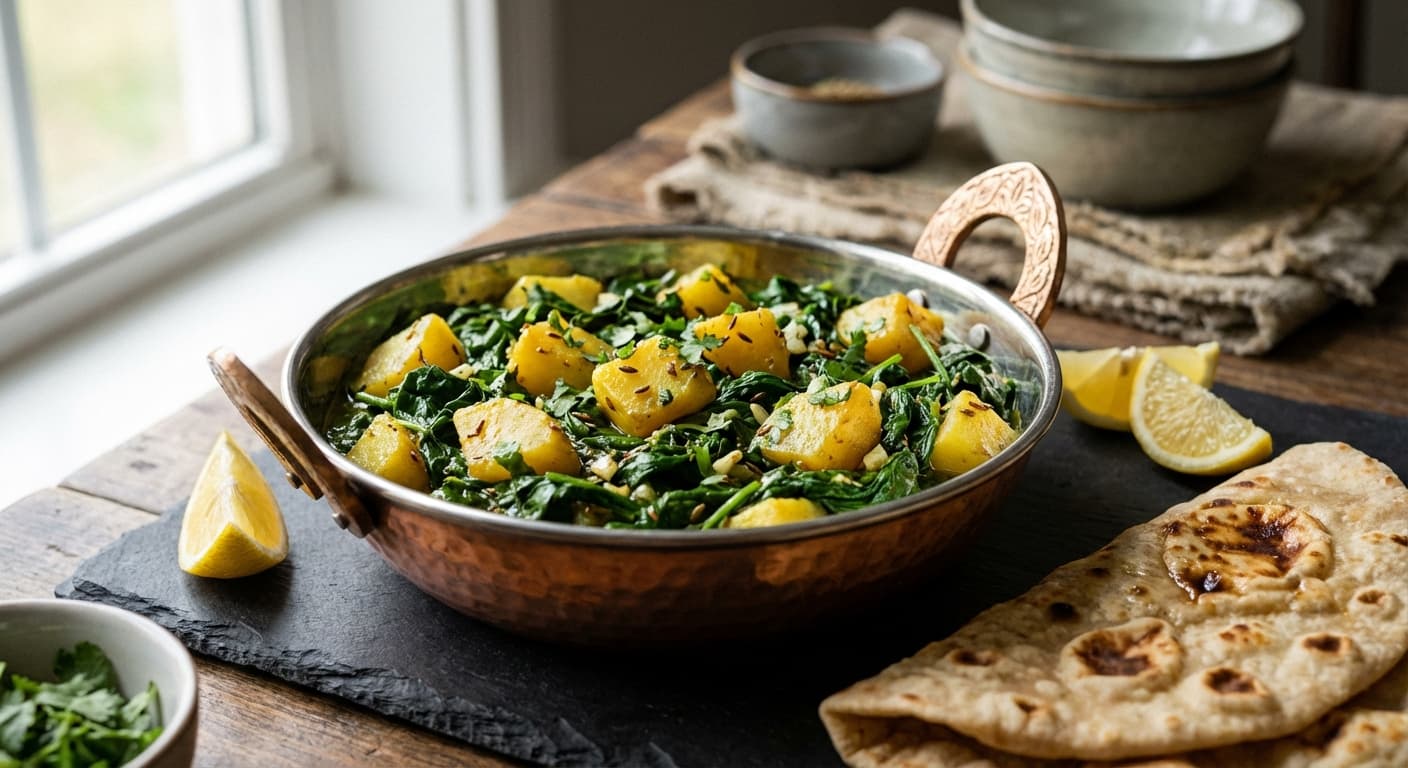
Saag Aloo (साग आलू) — Indian Spinach and Potatoes with Garlic
Indian · Main Courses · 45 min
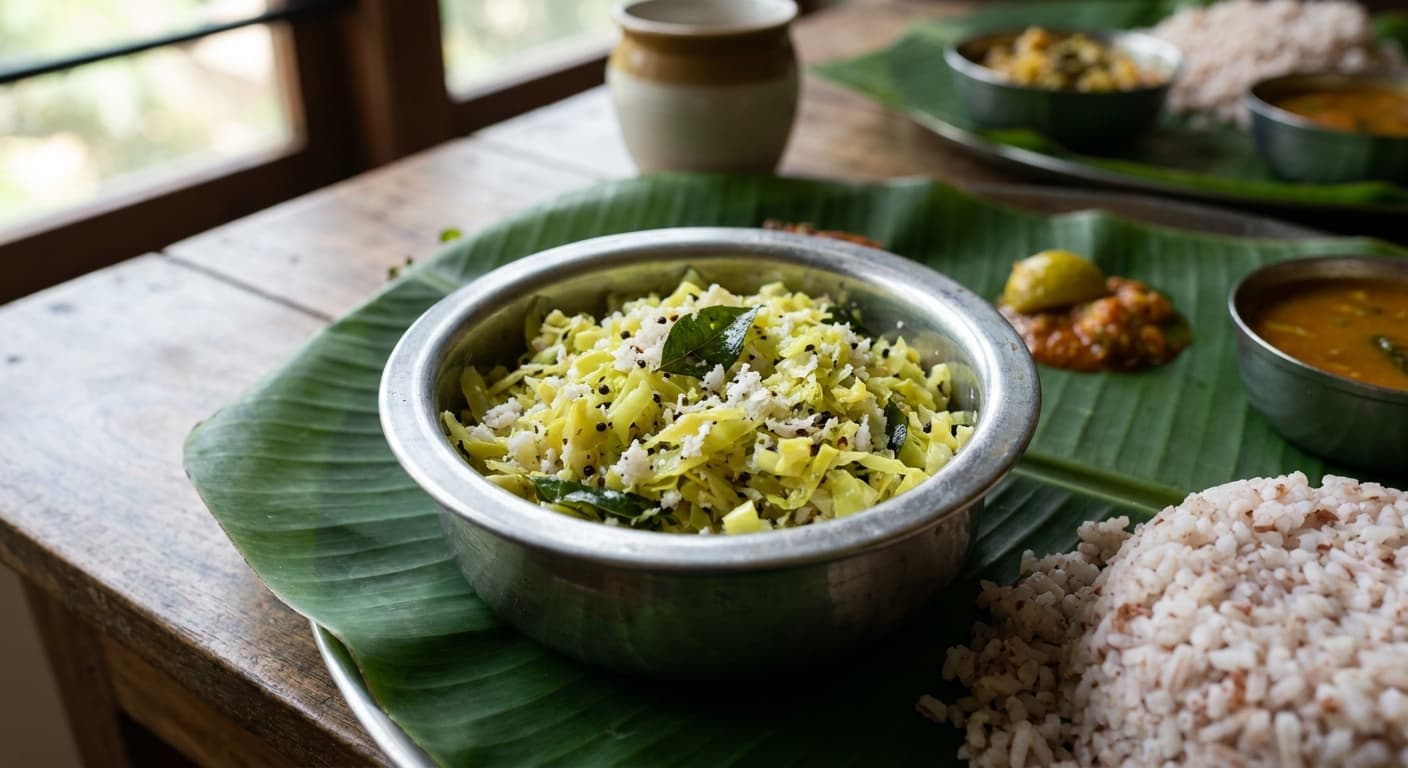
Thoran (തോരൻ) — Kerala Coconut Vegetable Stir-Fry
Indian · Side Dishes · 35 min
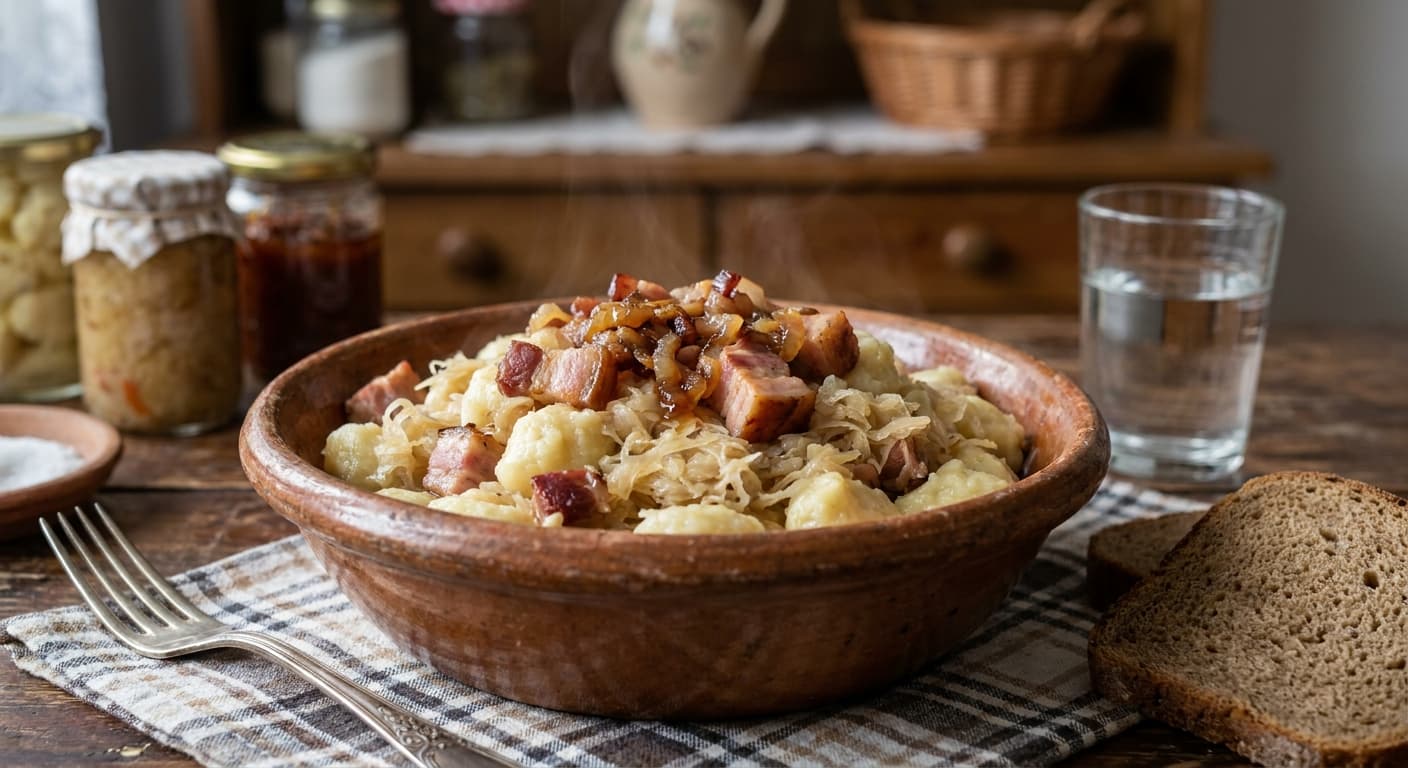
Potato Dumplings with Smoked Meat (Strapačky s údeným mäsom) — Rustic Slovak Halušky with Sauerkraut
Slovak · Main Courses · 70 min
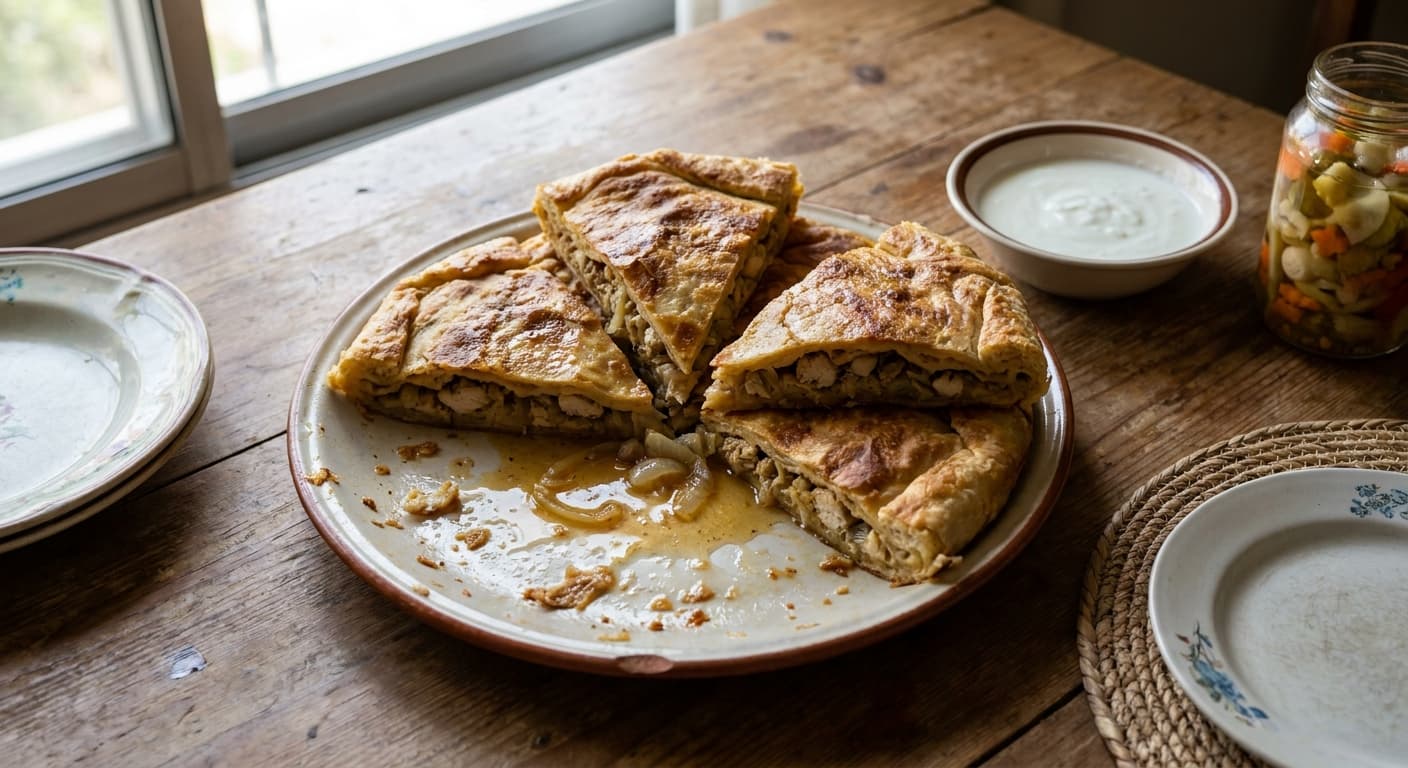
Makmoura (مكمورة) — Jordanian Layered Chicken Bread Pie
Jordanian · Main Courses · 185 min
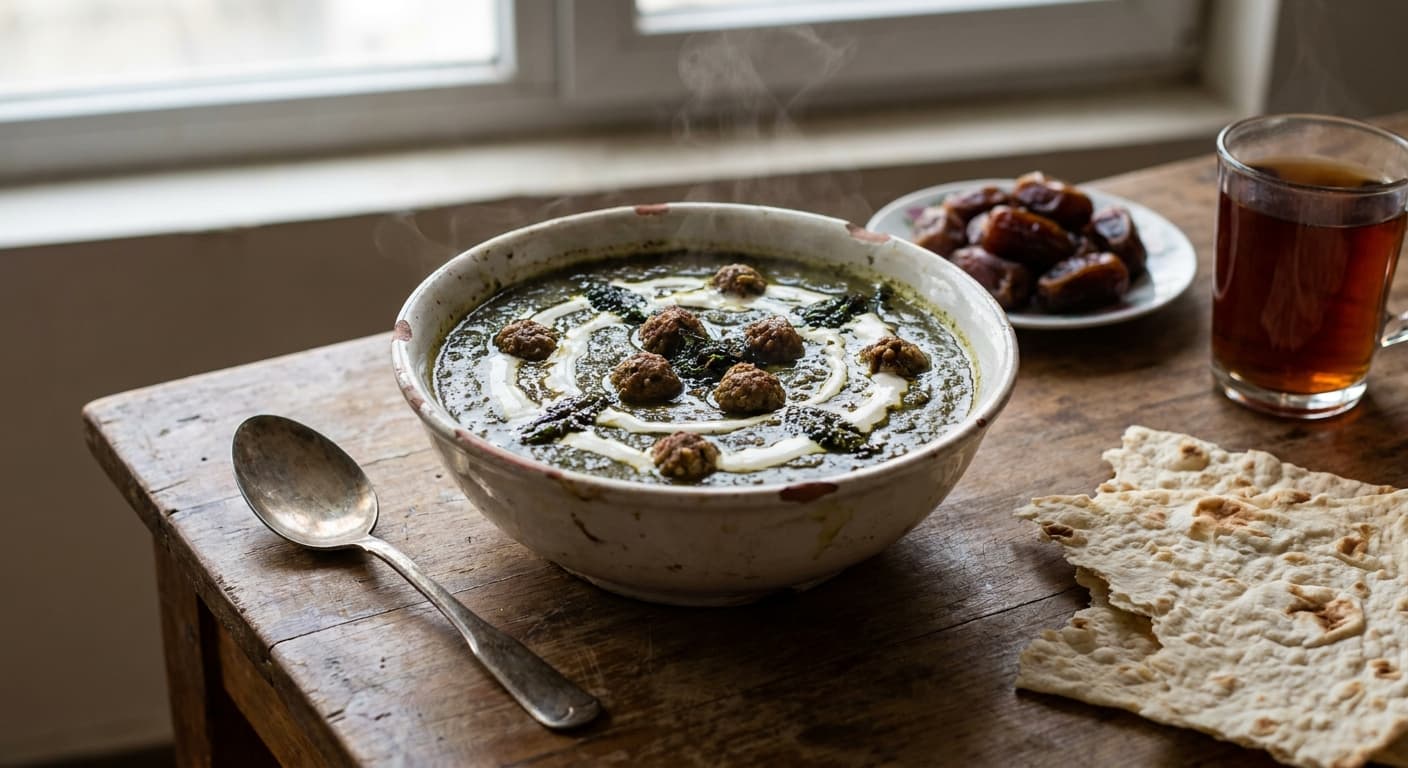
Ash-e Sak (آش ساک) — Golestani Spinach, Legume, and Meatball Soup
Persian · Soups · 175 min
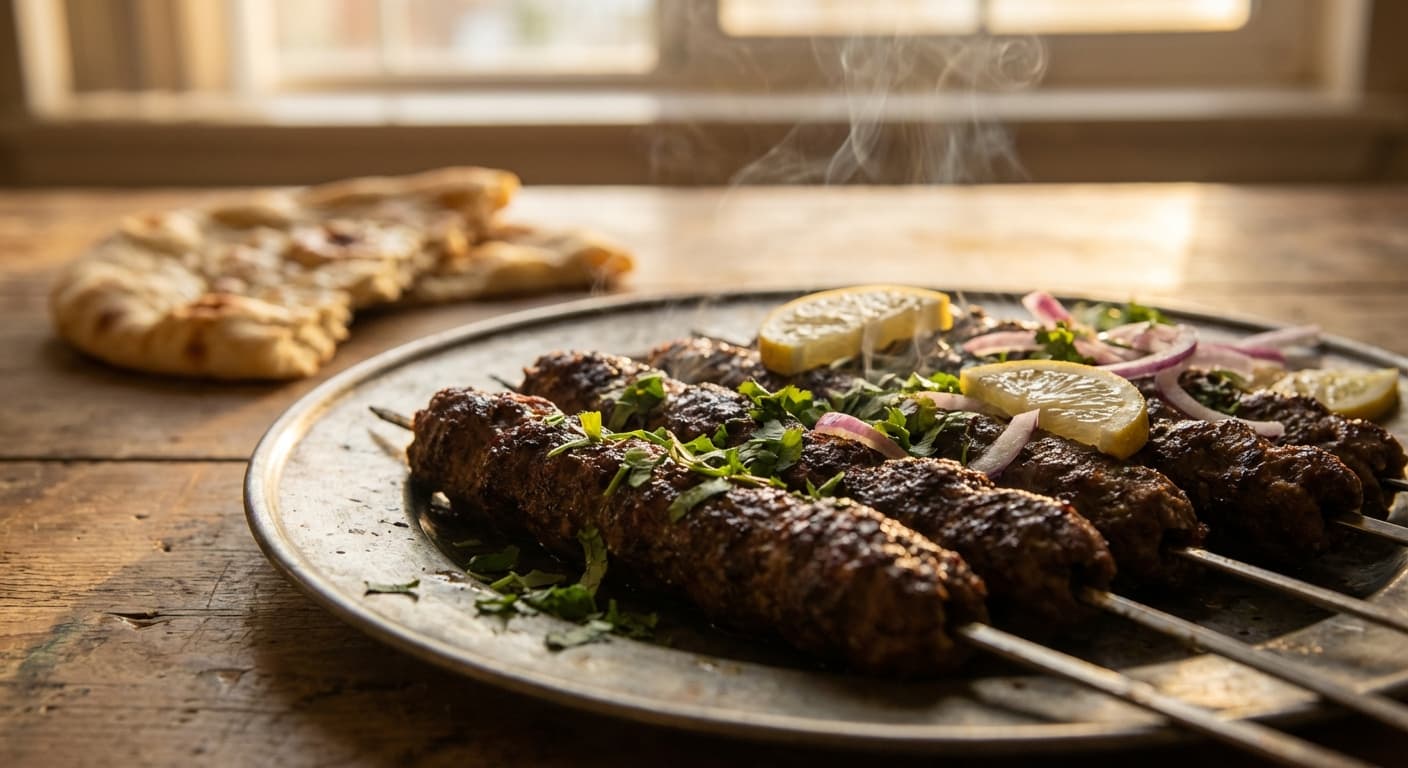
Seekh Kebab (کباب سیخی) — Afghan Grilled Minced Meat Skewers with Cumin
Afghan · Kebabs · 37 min
Haleem (حلیم) — Indian Slow-simmered wheat-lentil-meat porridge, spiced
Indian · Main Courses · 250 min
Reviews
Cooked this recipe?
Tap the stars to rate it — that's all it takes. A few words are welcome but optional.
No ratings yet. Cooked this one? Be the first to rate it — it takes one tap.