What Makes Afghan Cuisine Unique
Afghan cuisine sits at a crossroads of Central and South Asia, with rice dishes, kebabs, and slow-simmered stews that feel both familiar and distinctly their own. Here’s what defines it, from spices and grains to hospitality and tradition.
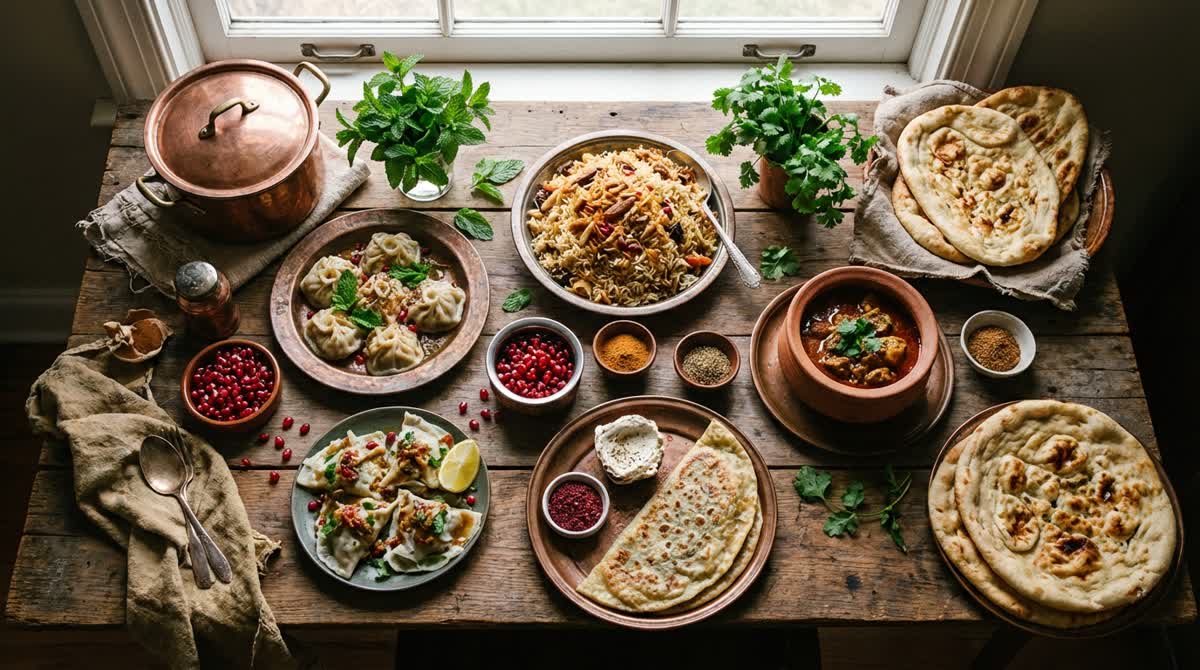
A cuisine at the crossroads
Afghan cuisine is one of the world’s great meeting places. Afghanistan has long been a crossroads of trade routes and empires, connecting Central Asia, South Asia, and the Iranian plateau. That geography shaped the food in a way you can taste: rice dishes that feel regal and aromatic, kebabs that celebrate live fire, dumplings that carry family technique, and stews that lean on patience instead of complexity.
If you’re familiar with Persian food, some flavors will feel like cousins: herbs, rice, saffron, and slow-cooked comfort. If you know North Indian or Pakistani cooking, you’ll recognize the love of rice, kebabs, and warming spices. But Afghan cuisine is not “a mix” in a diluted sense. It has its own identity, built on balance, restraint, and a deep culture of hospitality.
Let’s talk about what makes it unique, and how to start cooking it at home in a way that feels respectful and true.
1) Rice is a centerpiece, not a side
In many Afghan meals, rice isn’t just a base, it’s a signature. Afghan rice dishes are often layered with aromatics, meat, vegetables, and sweet-savory accents. You’ll see:
- Qabili (Kabuli) Palaw: Afghanistan’s most iconic rice dish, often topped with caramelized carrots and raisins, sometimes with nuts. It’s festive without being fussy.
- Shola and sticky rice dishes: Comfort foods that lean into a softer texture.
Afghan rice tends to be fragrant, but not overly spiced. The aroma is meant to feel clean and inviting. If Persian tahdig is about dramatic crunch, Afghan palaw is often about perfumed grains and thoughtful toppings that give contrast.
Try: Kabuli Pulao
2) Dumplings are a craft tradition (and a love language)
Few foods communicate “someone took time for you” like Afghan dumplings. Two beloved types show up again and again:
- Mantu: Small meat-filled dumplings, often topped with yogurt sauce and a tomato-based lentil or meat sauce.
- Ashak: Dumplings filled with leeks or scallions, also served with yogurt and a savory sauce.
The elegance is in the layering: tender dough, juicy or herbal filling, tangy yogurt, and a warm sauce on top. It’s a cuisine that understands contrast in a very refined way.
3) Spicing is aromatic and restrained
Afghan food is flavorful, but it often avoids the heavy, multi-layered spice intensity you might associate with some South Asian cuisines. Spices are used to perfume and round, not to dominate. Common notes include:
- Cumin, coriander
- Black pepper
- Cardamom
- Cinnamon in small amounts
- Sometimes dried mint
A key idea is clarity. You should still taste the meat, the rice, the onions, the carrots. Spices are there to make those ingredients feel more themselves.
4) Kebabs and live fire are central
Afghan kebabs (often lamb, beef, or chicken) are about smoke, salt, and good meat. Marinades can be simple: onion, yogurt, garlic, and spices. The focus is on technique and heat control.
Kebabs are frequently served with naan, fresh herbs, sliced onion, and sometimes a light salad. The meal feels direct and satisfying, the kind of food that tastes best outdoors or with a table full of people.
Try: Afghan Chicken Kebab
5) Yogurt is both ingredient and sauce
Yogurt is a major part of Afghan cooking, not just as a side. It becomes sauce, tang, and richness. You’ll see yogurt paired with:
- Dumplings (mantu, ashak)
- Eggplant dishes
- Kebabs
- Rice, in some settings
The yogurt is usually plain, thick, and tangy, often with garlic and dried mint. It’s one of the defining flavors that makes Afghan dishes feel cool and clean even when the meal is rich.
6) Vegetables shine, especially eggplant
Afghan cooking can be very vegetable-forward, with dishes that feel hearty without relying on heavy spice. Eggplant is especially beloved. One classic dish is borani banjan (eggplant with tomato sauce and yogurt).
The way it’s cooked is important: eggplant is softened until silky, not aggressively fried into bitterness. The tomato sauce is gentle, and yogurt brings everything into balance.
Try: Borani Banjan
7) Sweet-savory balance, but in a subtle key
Afghan cuisine often uses sweetness to create contrast, not to turn savory dishes into dessert. Raisins and carrots on Kabuli Pulao are a perfect example: sweet, yes, but also earthy and caramelized, meant to lift the dish.
You’ll also see dried fruits and nuts in some dishes, but usually as accents. The overall effect is elegant, not sugary.
8) Hospitality is not a concept, it’s a practice
Across Afghanistan’s many communities, hospitality is a deeply held value, and food is the vehicle. Serving guests well is a form of honor. That shapes the cuisine: dishes are designed to be shared, rice platters are designed to be generous, and meals often include multiple elements even when ingredients are simple.
If you’ve been invited to an Afghan home, you’ve likely been urged to eat more than you thought possible. That’s not pushiness, it’s care. The table says, “You’re safe here.”
How Afghan cuisine differs from Persian and Indian cooking
Compared to Persian cuisine
- Afghan food often uses fewer souring agents like dried lime, pomegranate molasses, or heavy herb stews (though there are overlaps).
- Rice dishes like palaw are central, with toppings like carrots and raisins that aren’t typical in everyday Persian polo.
- Dumpling culture (mantu, ashak) is a stronger hallmark in Afghan cuisine.
Compared to Indian cuisine
- Afghan dishes tend to be less chili-forward and less heavily spiced overall.
- Sauces often feel cleaner and less creamy-spiced (though yogurt is important).
- Grilling and rice platters play a larger role than thick curries in many Afghan meals.
These are broad strokes, of course. Afghanistan is diverse, and regional and family styles vary widely.
How to start cooking Afghan food at home
If you’re new to Afghan cuisine, start with one dish that teaches you the “Afghan balance” of aroma, sweetness, and comfort:
- Kabuli Pulao (the signature rice dish)
- Borani Banjan (eggplant with yogurt)
- Mantu (dumplings for a weekend project)
A few practical tips
- Use good basmati rice. Rinse well, and don’t overcook. Grain definition matters.
- Caramelize onions patiently. Many Afghan dishes start with onions cooked until sweet and golden. That sweetness is a backbone flavor.
- Let yogurt be tangy. Choose plain, unsweetened yogurt, and don’t be afraid of garlic and dried mint.
- Taste for balance. If something feels heavy, add a squeeze of lemon or a spoon of yogurt. If it feels sharp, add a touch of sweetness (a few raisins, or more caramelized onion).
A closing thought: Afghan food is generous on purpose
Afghan cuisine doesn’t rely on flashy tricks. It relies on care. It’s rice steamed properly, onions cooked slowly, dumplings folded by hand, yogurt stirred until smooth, kebabs watched closely over the fire. The flavors are welcoming, the portions are generous, and the table is designed for community.
When you cook Afghan food, you’re not just learning recipes, you’re learning a way of hosting. You’re learning to make a meal that feels like an invitation.
If you’re building your first Afghan dinner, make Kabuli Pulao, add a yogurt sauce, and put a big platter in the center. Let people serve themselves. Let the conversation run long. That, as much as any spice, is what makes Afghan cuisine unique.