Cinco de Mayo
About Cinco de Mayo
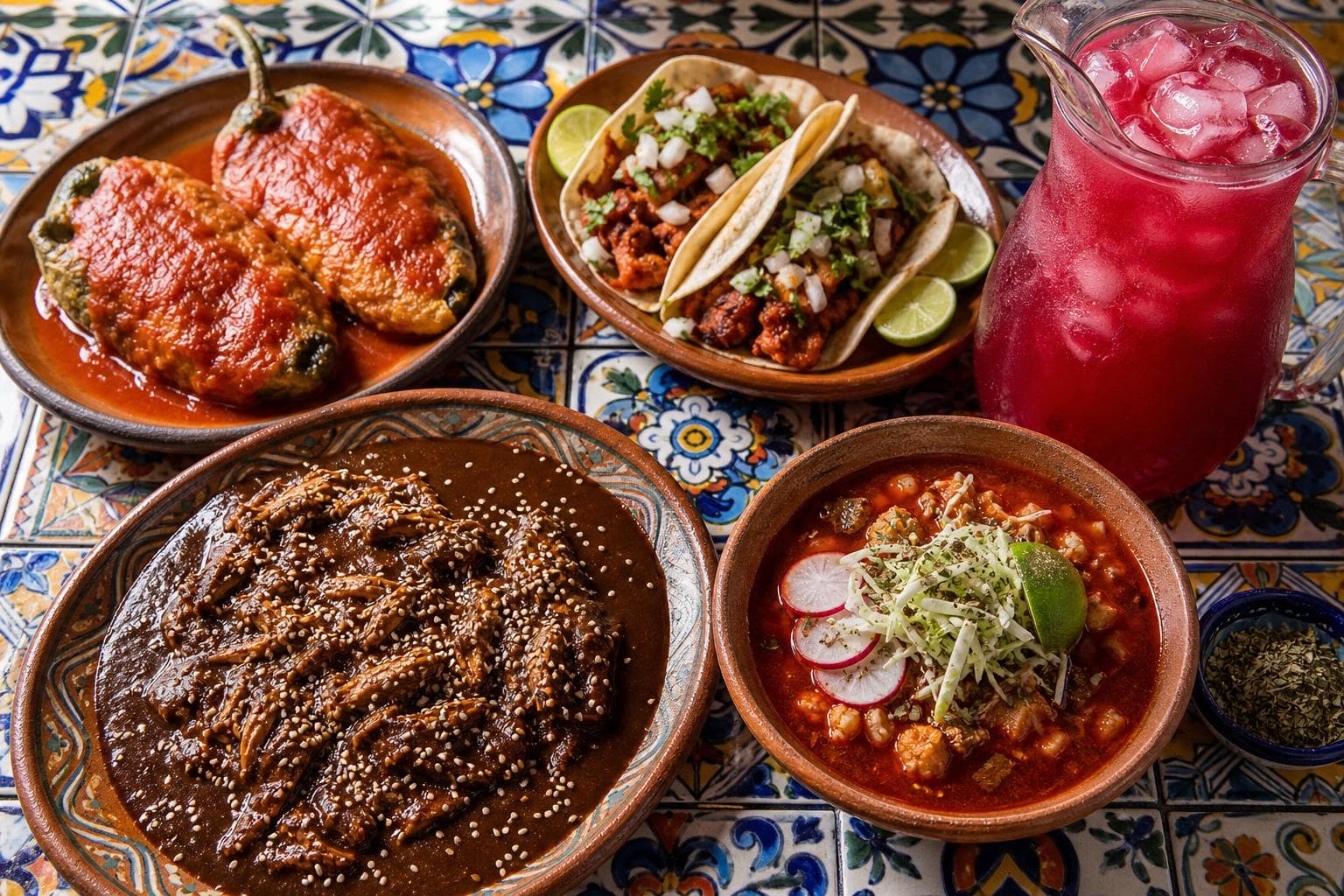
Cinco de Mayo ("Fifth of May") commemorates Mexico's unlikely victory over the French Empire at the Battle of Puebla on May 5, 1862, when General Ignacio Zaragoza led a poorly-equipped force against a much larger French expeditionary corps. **This is NOT Mexican Independence Day** — that falls on September 16 and is celebrated separately. In Mexico itself the day is a minor regional holiday observed mainly in Puebla state with parades and reenactments. The festival's primary cultural and gastronomic life unfolds in the United States, where Mexican-American communities have transformed it into a celebration of Mexican heritage and cuisine. Food anchors include **Mole Poblano** (the iconic Puebla complex chocolate-and-chile sauce over poultry), **Chiles Rellenos** (poblano peppers stuffed and batter-fried), **Tacos** (al pastor, carnitas, carne asada), **Pozole** (hominy soup with pork or chicken), and **Agua Fresca** (jamaica, horchata, tamarindo).
Signature Dishes
Mole poblano
Tacos and antojitos
Chiles rellenos
Pozole
Agua fresca
Regional Variations
Puebla, Mexico (origin)
The actual location of the 1862 battle; observances include military parades, historical reenactments, and Puebla-specific Mole Poblano which originated in Puebla's Convent of Santa Rosa. Chalupas Poblanas (small thick masa platters with salsa) and Cemita Poblana (sesame-seed roll sandwich) appear at local festivities.
Veracruz / Gulf Mexico
Cinco de Mayo regional commemorations with Veracruz-style seafood dishes — Huachinango a la Veracruzana (red snapper in tomato-olive-caper sauce), Camarones a la diabla; tropical agua fresca and pulque traditional fermented drinks.
Northern Mexico (Sonora, Chihuahua, Nuevo León)
Smaller observances with carne asada cookouts, Sonoran-style flour tortillas, machaca dried-beef preparations, Norteño regional cuisine. Less central than Puebla.
United States Mexican-American communities (California, Texas, Arizona, New Mexico, Illinois)
PRIMARY locus of Cinco de Mayo celebration as Mexican-American heritage day. Restaurants and community events feature Mexican-canonical foods (mole, tacos, pozole), Mariachi bands, ballet folklórico dances. Texas-Mexican Tex-Mex variations adjacent but DISTINCT from Mexican-canonical (do not collapse — Tex-Mex is a separate fusion cuisine, not Mexican).
Broader US (corporate / commercial)
Late-20th-century commercial expansion by beverage companies (notably beer brands) into mainstream American festivity; criticism from Mexican-American advocates of cultural-flattening; authenticity-conscious observance returns focus to Puebla origin and Mexican-canonical cuisine.
Observance Practices
NOT Mexican Independence Day — that is September 16; common Western confusion to be explicitly corrected
In Mexico: minor regional holiday primarily in Puebla state with military parades and reenactments of Battle of Puebla
Mexico (especially Puebla)
In Mexican-American US communities: PRIMARY observance as Mexican heritage and cuisine celebration
US Mexican-American communities
Mariachi music, ballet folklórico, parades, community fiestas; family meals featuring Mexican-canonical dishes (NOT Tex-Mex collapse)
Puebla-canonical Mole Poblano gets renewed prominence on this day given the Battle of Puebla anchor