Easter
Πάσχα/Pâques/Pascua
About Easter
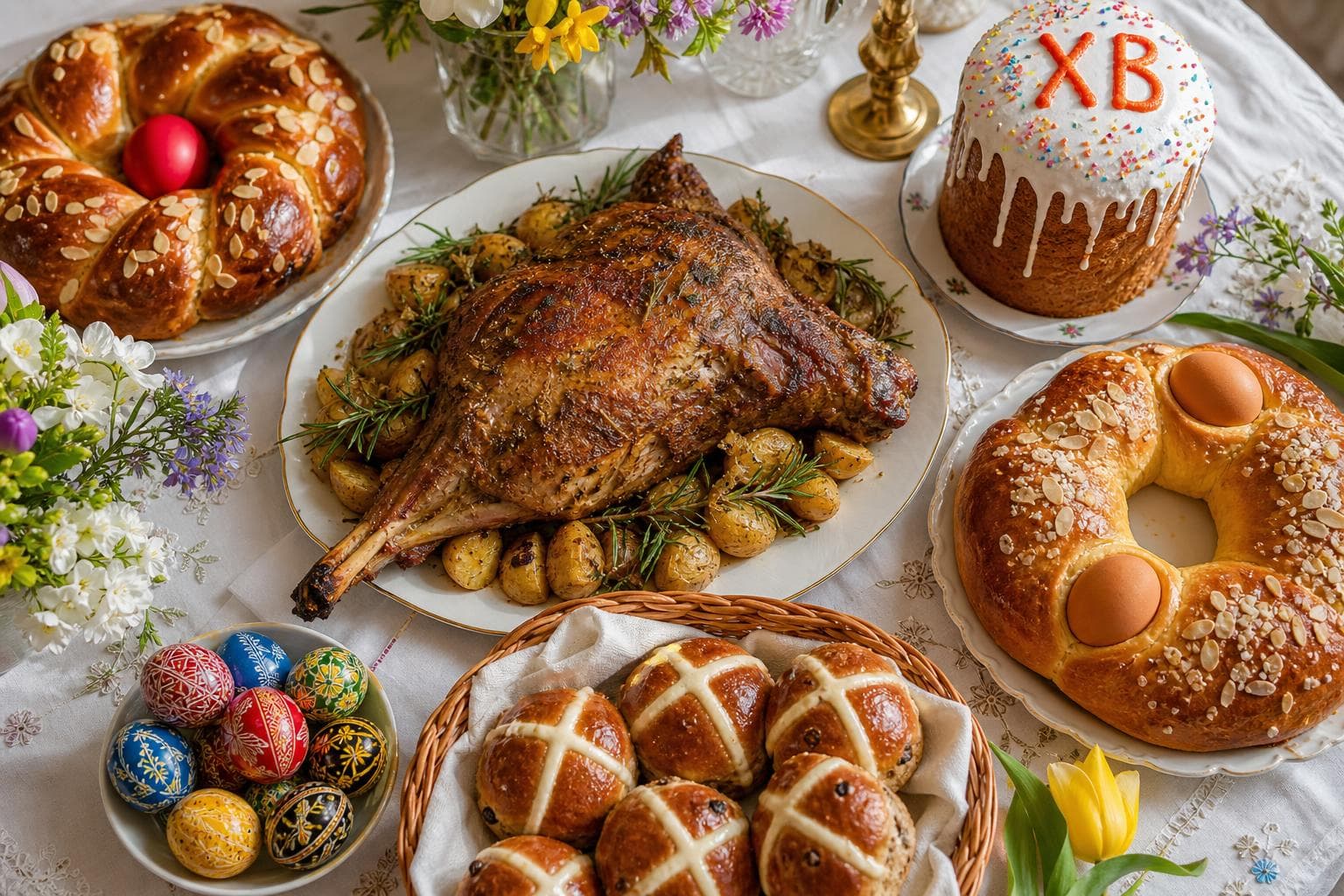
Easter (**Pascha** / **Pâques** / **Pascua** / **Velikonoce**) is the central Christian feast celebrating the **Resurrection of Jesus Christ**, observed in **Western Christian tradition on April 5, 2026** (computed by the **Gregorian Computus** — first Sunday after the first full moon on/after the vernal equinox). The **Eastern Orthodox tradition** observes Pascha **April 12, 2026** by the **Julian Computus** — a 7-day differential in 2026 (the differential varies 0–5 weeks year-to-year); see standalone **greek-orthodox-easter** for Eastern Orthodox Pascha. After 40 days of Lenten austerity, Easter feast breaks the fast with **rich, sweet, egg-heavy dishes** symbolizing new life. Food anchors span global Christian traditions: **Lamb roast** (Western/Greek Paschal-Lamb symbolic centerpiece), **Hot cross buns** (British/Anglican Good Friday → Easter carryover), **Tsoureki** (Greek τσουρέκι braided sweet bread with red Easter egg), **Kulich** + **Paska** (Russian/Ukrainian Easter tall cylindrical sweet bread with curd-cheese pashka), **Mona de Pascua** (Spanish/Catalan Easter cake with whole eggs), **Babka** (Polish ring cake), and **Pysanky** (Ukrainian decorated eggs).
Signature Dishes
Lamb roast
Hot cross buns
UK
Tsoureki
τσουρέκι
Kulich
кулич
Pysanky eggs
Regional Variations
Western Catholic + Anglican + Lutheran (Gregorian Pascha)
April 5 2026 Gregorian Pascha observance with lamb roast canonical Paschal-Lamb symbolic centerpiece (Italian abbacchio + British roast lamb + French gigot Pascal + Spanish cordero pascual); Hot cross buns (Good Friday → Easter; British/Australian/New Zealand Anglican tradition); Simnel cake (British/Irish marzipan-topped Easter cake with 11 marzipan balls symbolizing 11 faithful apostles); Roman Catholic Easter Vigil + Sunday breakfast eggs.
Greek Orthodox + Greek diaspora (Eastern Pascha — see standalone greek-orthodox-easter)
Greek Orthodox Pascha April 12 2026 (Julian Computus 7 days after Western); Greek Easter centerpiece dishes — Magiritsa (Easter Saturday-night offal soup), Tsoureki braided sweet bread with red-dyed egg at center (red symbolizing blood of Christ), Kokoretsi (offal-wrapped lamb intestines), Lampries (whole roast lamb) — covered standalone in shipped greek-orthodox-easter event.
Russian + Ukrainian + Eastern Slavic Orthodox
Slavic Orthodox Pascha with Kulich (Russian tall cylindrical Easter sweet bread with white icing + sprinkles + XB cyrillic for Christ is Risen); Paska (Ukrainian similar shape + braided decoration); Pashka (curd-cheese pyramid molded dessert eaten alongside Kulich); blessing of Easter basket (Сорочинская корзина) with kulich + paska + colored eggs + salt + horseradish + meat at church Sunday morning; Pysanky decorated eggs (Ukrainian wax-resist multi-color tradition).
Spanish + Latin American Catholic (Pascua de Resurrección)
Spanish/Catalan Mona de Pascua (Easter cake with whole hard-boiled or chocolate eggs baked into braided ring, godparent gift to godchild); Hornazo (Salamanca-region savory Easter pie with ham + chorizo + boiled egg); Mexican capirotada (also Lenten, into Holy Week through Easter); Filipino Easter Sunday Lechon (roast pig) + Bibingka spongecake breaking 40-day Lenten austerity.
Polish + Slavic Catholic
Polish Wielkanoc Easter table with Żurek (sour rye soup with sausage + boiled egg), Biały Barszcz (white borscht), Babka (ring sweet cake, Polish version distinct from Eastern Orthodox kulich), Mazurek (Polish flat Easter cake with dried fruit/nuts), Święconka (blessing of Easter basket with sausage + egg + bread + butter-lamb at church); Slovak/Czech similar with Hrudka (sweet egg curd dessert).
German + Austrian + Northern European
German Osterlamm (lamb-shaped sponge cake), Easter ham (Osterschinken), Hefezopf (braided sweet bread similar to tsoureki/challah), Osterzopf + Easter biscuits + dyed Ostereier eggs; Austrian Reindling (sweet braided ring cake); broader Northern European Easter egg traditions (Norwegian Påskeegg with names + treats); German Easter market traditions in Bavaria + Saxony.
Observance Practices
April 5 2026 Western Gregorian Pascha (Roman Catholic + Anglican + Lutheran + Western Protestant) — computed by Gregorian Computus (first Sunday after first full moon on/after vernal equinox); Eastern Orthodox Pascha April 12 2026 (Julian Computus, 7-day differential 2026; range 0-5 weeks varies year-to-year); see standalone greek-orthodox-easter event for Eastern Pascha
40-day Lenten austerity culmination — Easter feast breaks the fast with rich + sweet + egg-heavy + meat-rich dishes; Paschal-Lamb canonical Western centerpiece (Italian abbacchio + British roast + French gigot + Spanish cordero); Lamb symbolism connects to Jewish Passover (the original Paschal Lamb) and Christian Lamb-of-God theology
Egg symbolism universal across traditions: dyed boiled eggs (universal), Ukrainian Pysanky wax-resist decorated eggs (multi-color heritage tradition), Greek red-dyed eggs (red symbolizing blood of Christ), Polish Pisanki + Easter-basket blessing, German Ostereier hidden eggs (likely origin of American Easter Bunny tradition)
Slavic Orthodox Easter-basket blessing (Russian Сорочинская корзина / Polish Święconka): basket contains kulich/paska + colored eggs + salt + horseradish + sausage + butter-lamb sculpture; blessed at church Easter Sunday morning before family breakfast
Russian + Ukrainian + Polish
Easter sweet bread tradition spans denominations: Greek Tsoureki (braided with red egg) + Russian Kulich (tall cylinder) + Ukrainian Paska (similar) + Polish Babka (ring) + Spanish Mona de Pascua (with whole egg baked in) + German Osterzopf (braided) + British Simnel cake (marzipan-topped) — all symbolizing new life and breaking of Lenten fast