Epiphany / Three Kings Day
Επιφάνεια / Día de Reyes
About Epiphany / Three Kings Day
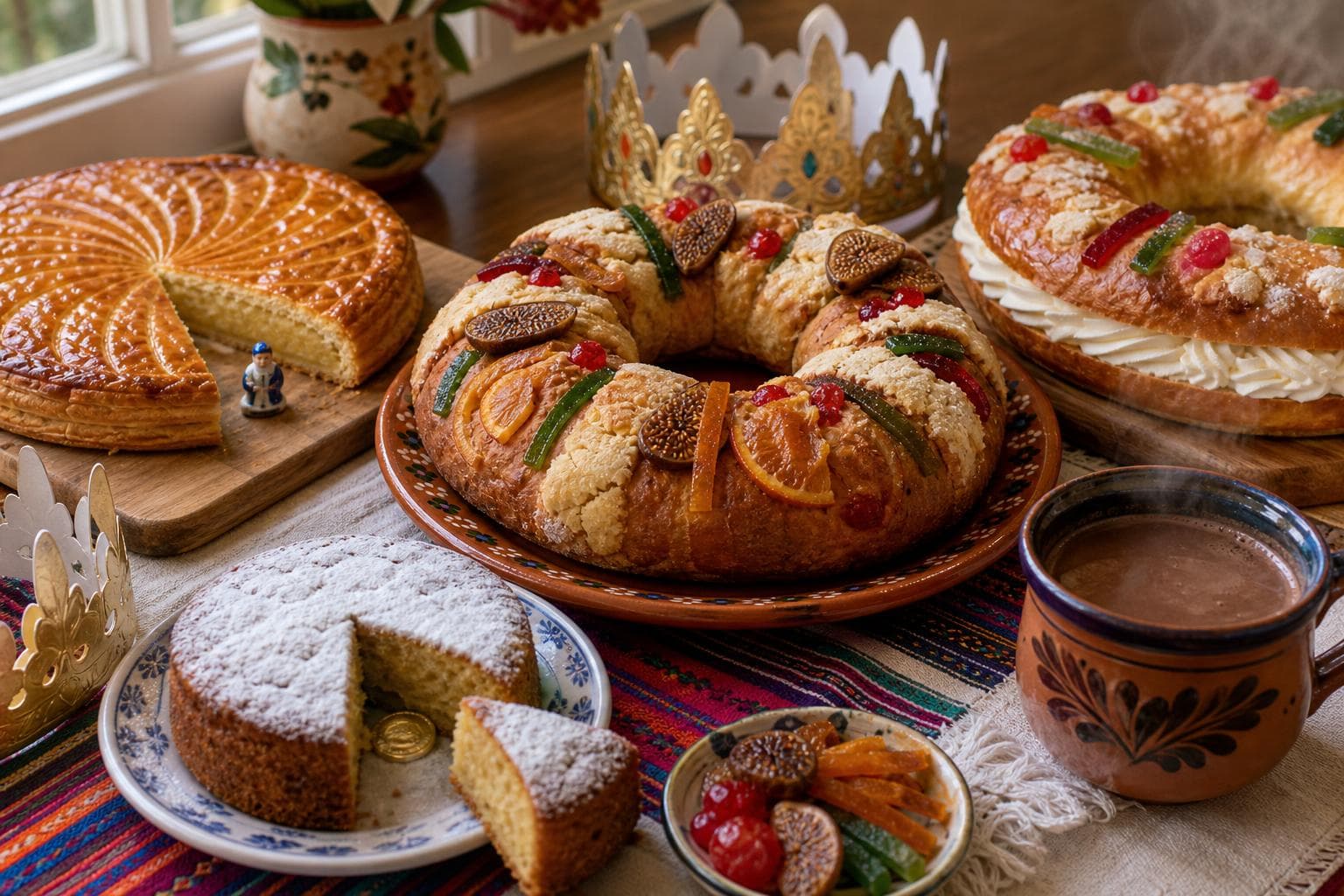
Epiphany / Three Kings Day (**Día de los Reyes Magos** / **La Fête des Rois** / **Theophany**) is observed January 6 with **distinct Western Christian and Eastern Christian theological-focus traditions**. In the **Western Catholic + Anglican + Lutheran tradition**, Epiphany commemorates the **Visit of the Magi** (the Wise Men presenting gifts to the infant Jesus); in the **Eastern Orthodox + Oriental Orthodox tradition**, January 6 observes **Theophany** — the Baptism of Christ in the River Jordan. Across Western traditions, the day marks the **canonical conclusion of the 12 Days of Christmas** and centers on a multi-cuisine king-cake culinary tradition: **Rosca de Reyes** (Mexican/Spanish ring cake with hidden figurine and dried fruit), **Roscón de Reyes** (Spanish version with cream filling), **Galette des Rois** (French frangipane puff-pastry with hidden fève charm), and **Vasilopita** (Greek St. Basil's cake on Jan 1, sister-tradition with hidden coin). Hot chocolate or champurrado (Mexican) accompanies. The hidden-figurine ritual creates playful obligation-of-host customs that extend the meal.
Signature Dishes
Rosca de Reyes
Galette des Rois
Roscón de Reyes
Vasilopita
Βασιλόπιτα
Hot chocolate / champurrado
Regional Variations
Spain + Spanish-speaking Latin America (Mexico, Colombia, Argentina, Peru)
Día de los Reyes Magos primary gift-giving day historically (predates Santa Claus); Rosca de Reyes ring-cake with hidden plastic Niño Dios figurine — finder hosts Candelaria (Feb 2) tamale feast; Mexican Rosca with ate de membrillo + dried fig + nuts; Spanish Roscón de Reyes with whipped cream or candied fruit; champurrado (Mexican corn-chocolate atole) traditional; processional Cabalgata de Reyes parades in Spain.
France + French diaspora (Quebec, Louisiana)
La Fête des Rois with Galette des Rois — puff-pastry filled with frangipane (almond cream); hidden fève charm (originally a bean, now porcelain figurine); finder wears paper crown + chooses queen/king. Louisiana French-Creole tradition extends as King Cake through Mardi Gras season with brioche + purple-green-gold sugar.
Greece + Cyprus (Western-Magi-on-Jan-6 + Theophany-Jan-6 dual observance)
Greek Orthodox observes January 6 as Theophany (Φώτα) — Great Blessing of the Waters; Vasilopita St. Basil cake (eaten Jan 1 New Year, not Epiphany — sister-tradition with hidden coin/florín; finder receives year of blessing). Greek Cypriot tradition similar. Distinct from Western Magi-focus.
Eastern Orthodox (Russia, Ukraine, Serbia, Bulgaria, Antiochian) — Theophany
Eastern Orthodox January 6 Theophany centers on Baptism of Christ commemoration with Great Blessing of Waters (rivers, lakes, ocean); priest immersion of cross; faithful collect blessed water (agiasma); fasting day observance — NOT a feast day in Eastern tradition. Distinct from Western Magi-focus.
Italy + Italian diaspora
Italian Epifania observance + La Befana folkloric witch-figure who fills stockings with sweets/coal Jan 5 night; Befana-cake tradition with anise + dried fruit; carbone dolce (black sugar coal candy) for children stockings; closes Italian Christmas season.
Filipino + Latin American Catholic diaspora
Filipino Tres Reyes closes Pasko (Christmas season); Three Kings gift-giving in Spanish colonial-Catholic tradition; closes 16-day Simbang Gabi; Puerto Rican Día de los Reyes major gift-giving with grass under bed for camels.
Observance Practices
Western Catholic + Anglican + Lutheran observance: Visit of the Magi (Wise Men presenting gold + frankincense + myrrh to infant Jesus); canonical conclusion of the Twelve Days of Christmas; king-cake hidden-figurine tradition with finder-hosts-next-event obligation
Western Christian + Latin America + diaspora
Eastern Orthodox + Oriental Orthodox observance: Theophany (Φώτα / Theofania) — Baptism of Christ in the River Jordan; Great Blessing of the Waters; priest cross-immersion ceremony; faithful collect blessed water (agiasma); fasting day, NOT a feast day in Eastern tradition
Eastern Orthodox + Coptic + Armenian
4-cuisine king-cake tradition: Rosca de Reyes (Mexican/Spanish, hidden Niño Dios figurine, dried fruit decoration), Roscón de Reyes (Spanish, whipped-cream filling), Galette des Rois (French, frangipane puff-pastry, hidden fève), Vasilopita (Greek/Cypriot St. Basil sister-tradition Jan 1, hidden coin)
Mexican Rosca tradition extends as multi-week obligation: finder of Niño Dios hosts Candelaria (Feb 2) tamale-and-atole feast — strong family-bonding cultural ritual
Mexico + Mexican diaspora
French Galette des Rois tradition: youngest child crawls under table, calls out who receives each slice (preventing favoritism); finder of fève wears paper crown and chooses queen/king for the day
France + French diaspora