Indonesian Ramadan & Lebaran
Idul Fitri
About Indonesian Ramadan & Lebaran
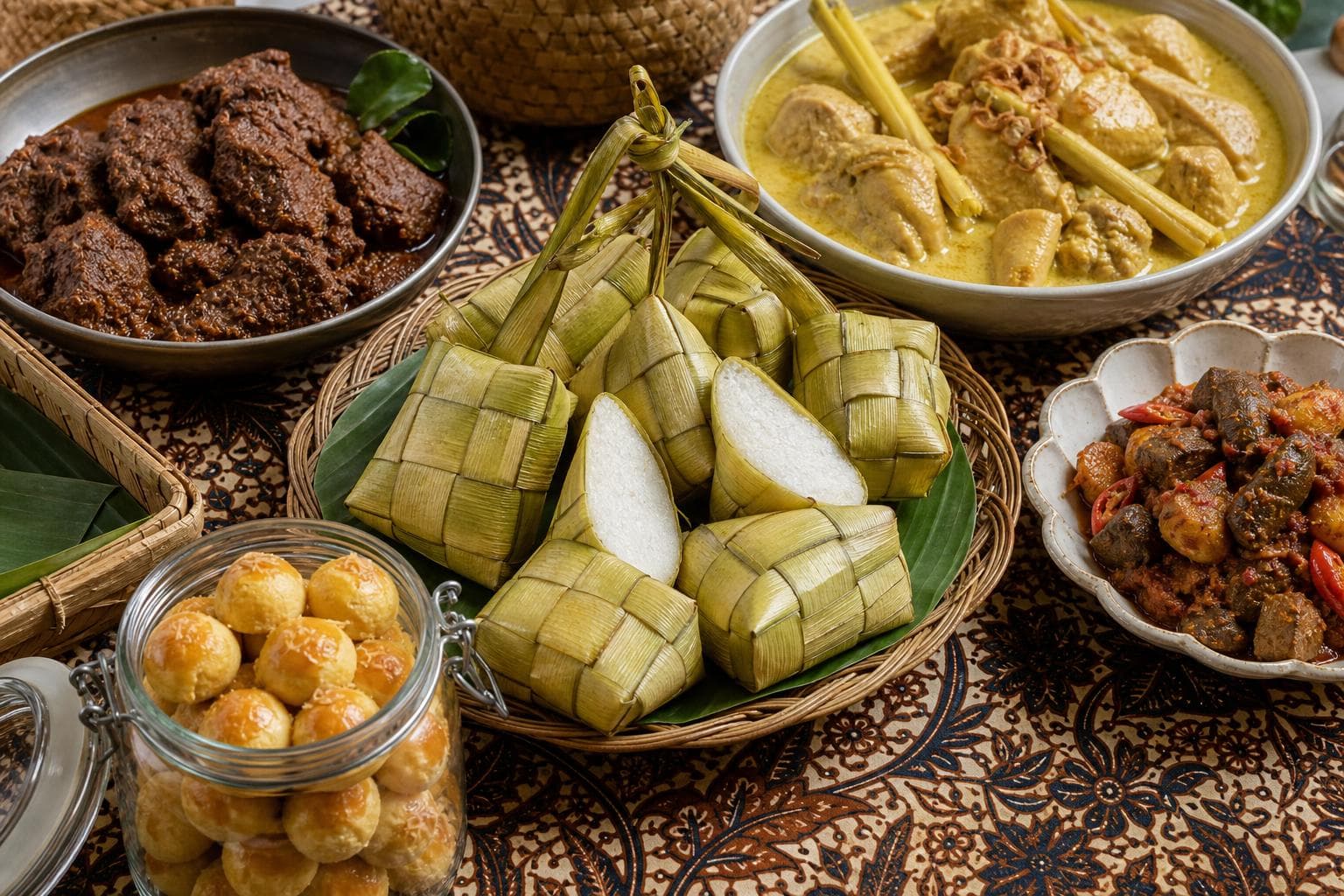
Indonesian Ramadan & **Lebaran** (Idul Fitri) is observed across the world's largest Muslim-majority country (270M+ Indonesians) with a unique Nusantara culinary identity blending Malay-archipelago staples, Indian-Ocean spice trade heritage, and **Dutch-colonial influences**. The signature mass-migration tradition **mudik** sees millions of urban workers return to ancestral villages; the post-Eid social ritual **halal bi halal** (forgiveness-asking visits) extends celebration for days. Food anchors are deeply symbolic: **Ketupat** — woven palm-leaf rice cake whose diamond weaving represents human mistakes and the forgiveness-asking nature of Eid; **Rendang** — Minangkabau-rooted slow-cooked spiced beef whose hours-long preparation symbolizes patience and devotion (recognized globally as one of the world's most delicious dishes); **Opor ayam** — coconut-milk chicken in turmeric-galangal-lemongrass broth, Lebaran-canonical pairing with ketupat; **Sambal goreng ati** — spicy stir-fried liver-and-potatoes; **Kue nastar** — Dutch-influenced pineapple-jam butter cookies. Open-house tradition welcomes all guests regardless of religion.
Signature Dishes
Ketupat
Rendang
Opor ayam
Sambal goreng ati
Kue nastar
Regional Variations
Jakarta + Java (urban primary observance)
Capital Jakarta and Javanese centers observe Lebaran with Betawi (native Jakarta) ketupat sayur — ketupat in coconut-milk vegetable broth — alongside opor ayam; lontong rice cakes alternate; Javanese gudeg (young jackfruit stew) in Yogyakarta + Solo; nastar Dutch-colonial origin most prevalent here; suburban-rural mudik exodus reaches ~30M annually.
Sumatra + Minangkabau (Padang, West Sumatra — rendang origin)
West Sumatra's Minangkabau people are the cultural origin of rendang; Padang Lebaran tables feature dendeng balado (crispy fried beef with chili), gulai (coconut-milk curry) variations, and ayam pop (white-poached chicken). The rendang technique — beef slow-simmered in coconut milk and spice paste for 4-8 hours until coconut oil renders and meat is dry-coated — is Minangkabau-canonical, not generic Indonesian.
Sulawesi + Eastern Indonesia (Makassar, Maluku)
Eastern Indonesian Lebaran variations: Coto Makassar (offal soup), Konro (rib soup) in South Sulawesi; Maluku regional palu basa; sago-based dishes in eastern islands reflecting non-rice staple traditions; opor variations with local spice palettes.
Bali + Lombok (Muslim minority + majority)
Lombok's Muslim Sasak majority observes Lebaran with ayam taliwang (grilled spicy chicken Sasak-specialty), plecing kangkung (water-spinach with chili-tomato sambal); Balinese Muslim-minority observances retain core Lebaran dishes with local adaptations.
Indonesian diaspora (Netherlands, Suriname, Malaysia, Singapore, Hong Kong)
Dutch Indonesian-Indo diaspora preserves Lebaran traditions in The Netherlands — rijsttafel commercialized but Lebaran retains family character; Surinamese Javanese descendants observe Lebaran with adapted Caribbean ingredients; Singapore + Hong Kong Indonesian domestic-worker communities observe Eid with bus-station communal gatherings + WhatsApp halal-bi-halal.
Indonesian-Chinese Peranakan (Cina-Indo Muslim)
Peranakan Indonesian-Chinese Muslim families blend nyonya kueh traditions with Lebaran nastar + kaastengels (Dutch cheese sticks); kue lapis legit (Dutch lapis cake) reaches its most elaborate Lebaran preparation here; combined Chinese-Indonesian-Dutch culinary heritage.
Observance Practices
Mudik — annual mass urban-to-rural family migration in the week before Lebaran; the world's largest annual human migration by some counts (~30M Indonesians); cultural homecoming + ancestral-village ritual
Indonesia nationally
Halal bi halal — post-Eid social visits among neighbors, relatives, colleagues to ask forgiveness for the past year's wrongs; extends celebration for days beyond Eid prayer; open-house tradition where all guests are welcomed regardless of religion
Ketupat woven palm-leaf rice cake — diamond-shaped weaving symbolizes human mistakes (kupat = ngaku lepat in Javanese, "admit fault"); the labor-intensive weaving and slow-cooking is a multi-day Lebaran preparation ritual; paired canonically with opor ayam
Rendang slow-cooking ritual — Minangkabau-origin technique of beef simmered in coconut milk and spice paste 4-8 hours until coconut oil renders and meat is dry-coated; symbolizes patience, devotion, and the value of slow careful preparation in Indonesian culinary philosophy
West Sumatra origin; nationally observed
Kue nastar (Dutch-colonial pineapple-jam butter cookies), kaastengels (Dutch cheese sticks), kue lapis legit (multi-layer Dutch lapis cake) reflect 350-year Dutch colonial culinary heritage retained as Lebaran cookie tradition