Jewish Purim
פּוּרִים
About Jewish Purim
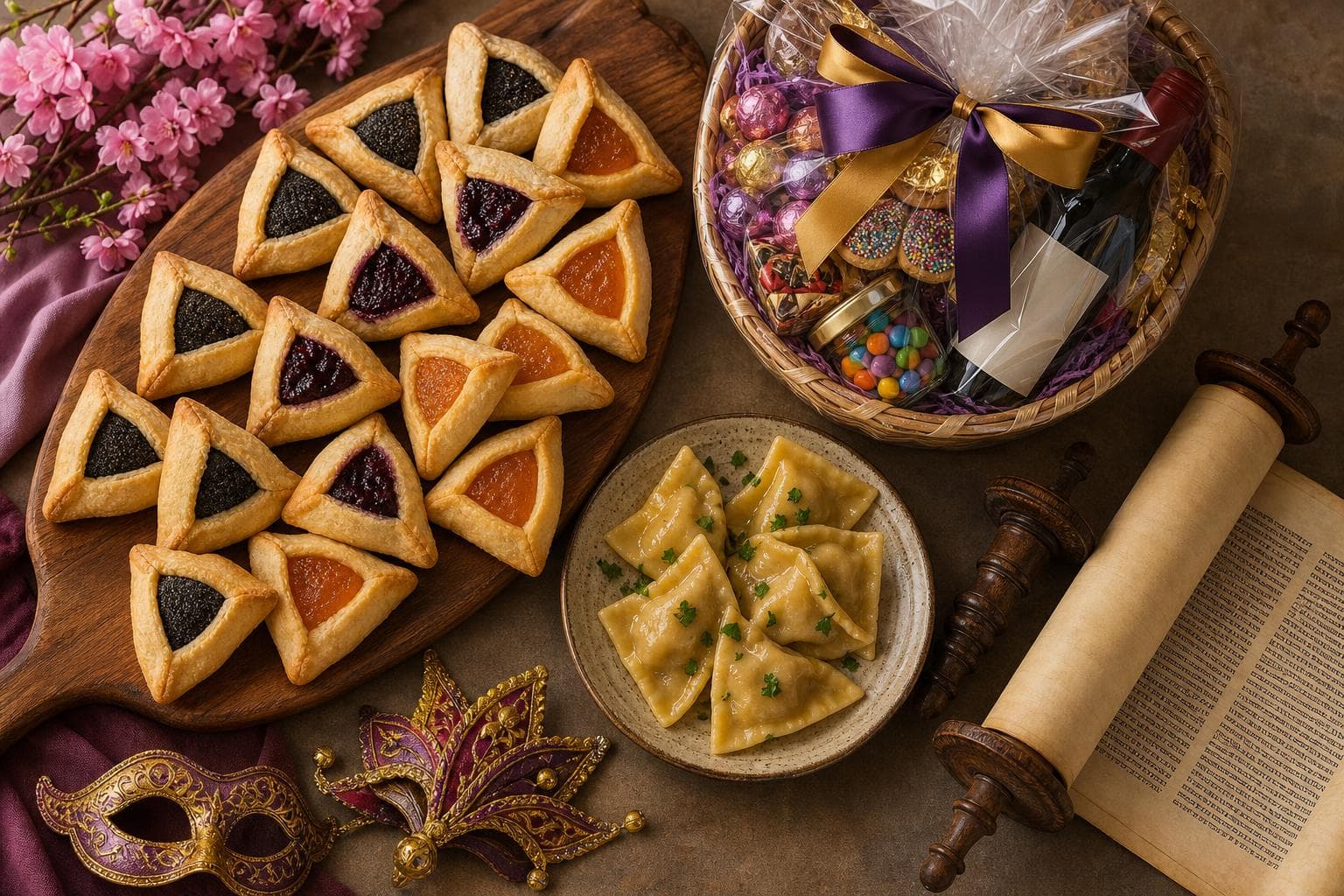
Purim commemorates the deliverance of Persian-era Jews from Haman's genocidal plot, as recounted in the Book of Esther (the Megillah). Observed on the 14th of the Hebrew month of Adar (15 Adar in walled cities such as Jerusalem — "Shushan Purim"), it falls in late winter or early spring. The day combines public Megillah recitation, festive masquerade, and four mitzvot: hearing the Megillah, sending food gifts (**mishloach manot**), giving charity to the poor (**matanot la'evyonim**), and the Purim feast (**seudah**). The food anchor is **Hamantaschen** (triangular filled pastries — poppy seed, prune lekvar, apricot, chocolate — symbolizing Haman's hat or ears, called **Oznei Haman** in Hebrew). Other foods include **Kreplach** (filled dumplings, "hidden" like Esther's identity), nuts, seeds, and wine — drinking until one cannot distinguish "blessed Mordecai" from "cursed Haman" is a Talmudic Purim tradition.
Signature Dishes
Hamantaschen
אוזני המן
Mishloach manot
Kreplach
Wine and festive meals
Oznei Haman variations
Regional Variations
Ashkenazi (Eastern European)
Hamantaschen (Yiddish 'Haman's pockets') with poppy seed (mohn), prune lekvar (povidla), or apricot fillings; Kreplach (triangular meat-filled dumplings) served in chicken soup at the seudah; vodka or sweet wine.
Sephardic (Iberian-Mediterranean diaspora)
Orejas de Haman or Folares de Purim (similar pastries with sesame, honey, or date fillings); Spanish-Portuguese tradition of Fazuelos (fried dough) and stuffed savory pastries; rosewater and orange-blossom flavorings common.
Mizrahi (Middle Eastern Jewish — distinct from Persian cuisine; includes Iraqi, Yemenite, Syrian, Bukharan, Persian-Jewish sub-strand)
Iraqi Jews: Sambusak meat pastries and Aroug (chickpea fritters); Yemenite: Jachnun-adjacent stuffed flatbreads; Syrian: stuffed Sambusek and rose-petal-flavored sweets; Persian-Jewish sub-strand (NOT generic Persian cuisine): Ozney Haman variants with cardamom + rosewater + saffron + pistachio — distinguished from secular Persian baked goods by Purim-specific timing and Megillah-feast context.
Israeli
Modern Israeli adaptation: Oznei Haman widely sold in bakeries with cosmopolitan fillings (Halva, chocolate, date, Nutella); urban street festivals (Adloyada) with parade-style observance; mishloach manot trays sold in supermarkets.
Diaspora (American Jewish, French Jewish, British Jewish)
American Jewish: hamantaschen widely commercialized, often baked in Hebrew schools; community-curated mishloach manot themed packages; charity drives; Purim spiels (parody plays) at synagogues.
Observance Practices
Public Megillah (Book of Esther) recitation — twice, evening and morning; congregation drowns out Haman's name with groggers (noisemakers)
Four mitzvot: Megillah hearing + mishloach manot (food gifts to friends, min. 2 items to 1 person) + matanot la'evyonim (charity to 2+ poor) + seudah (festive Purim feast)
Costumes / masquerade (especially children) — echoes hidden-identity theme of Esther; modern Adloyada parades in Israeli cities
Talmudic permission to drink wine 'until one cannot distinguish blessed Mordecai from cursed Haman' — moderation customary in practice
Shushan Purim observed one day later (15 Adar) in walled cities such as Jerusalem; commemorates extra day of Jewish self-defense in Esther 9:13-18
Jerusalem + ancient walled cities