Juneteenth
About Juneteenth
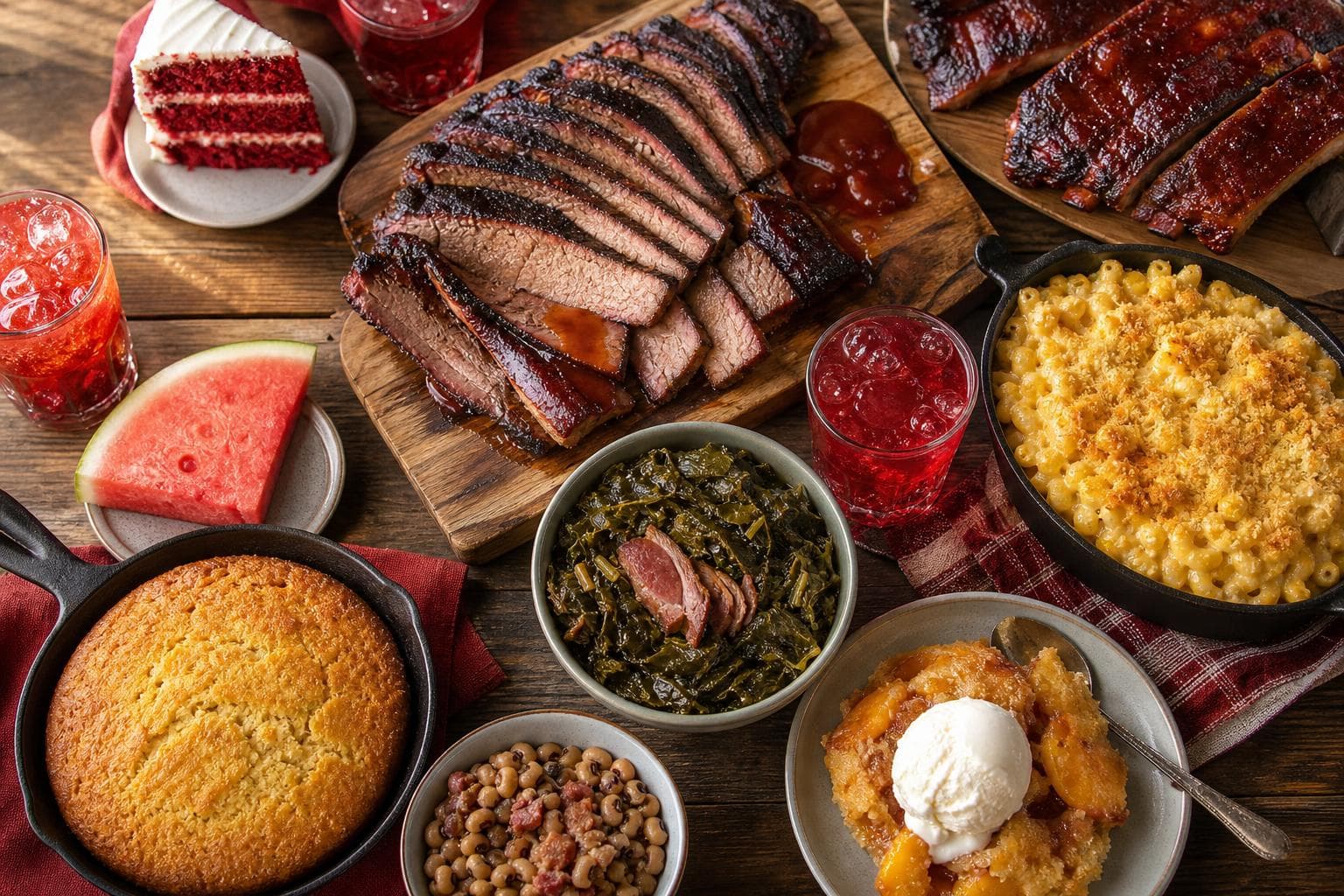
Juneteenth (June 19, Gregorian fixed; federal US holiday since 2021) commemorates **June 19, 1865** — Union General **Gordon Granger** in Galveston, Texas freeing the last enslaved African Americans 2.5 years after the Emancipation Proclamation. Juneteenth anchors **African-American food canon** rooted in symbolic **red foods/drinks** — Yoruba/Akan West-African spiritual heritage + memorial of slavery: **red velvet cake**, **red drinks** (Big Red soda, Hibiscus tea, watermelon), and **BBQ red-sauce ribs**. The broader meal is **Southern-US soul food**: **Texas-canonical brisket and ribs**, **mac and cheese**, **collard greens with smoked ham hock**, **cornbread**, **peach cobbler**, **black-eyed peas** (Hoppin' John for prosperity), and **sweet potato pie**. Juneteenth food is **NOT generic American BBQ** — it is specifically African-American emancipation food rooted in West-African foodways adapted through enslavement, sharecropping, and Great Migration to Northern cities.
Signature Dishes
Red foods/drinks
Barbecue
Macaroni and cheese
Collard greens
Peach cobbler
Regional Variations
Texan / Galveston (canonical origin)
BBQ brisket Texas-style (post-oak smoked) + Texas-red-chili (no beans canonical) + red drinks (Big Red soda Texas-canonical) + cornbread + collard greens with smoked ham hock; June 19, 1865 Galveston General Order No. 3 origin-place pilgrimage tradition.
Southern US (Mississippi, Alabama, Georgia, Louisiana, South Carolina)
Soul food canon: smoked BBQ ribs + macaroni and cheese + collard greens + cornbread + peach cobbler + sweet potato pie + black-eyed peas (Hoppin' John for prosperity); Gullah-Geechee Sea Islands variants (low-country boil, red rice).
African-American Great Migration cities (Chicago, Detroit, Harlem, Oakland, Memphis)
Soul-food restaurant tradition expanded post-1910 Great Migration; Memphis dry-rub ribs + Chicago hot-link sausage + Harlem soul-food canonical + Oakland West-Coast Soul-Food fusion; family-restaurant tradition (Sylvia's Harlem, Lem's Bar-B-Q Chicago).
Yoruba/Akan West-African heritage (symbolic ancestral)
Red-foods symbolism rooted in Yoruba/Akan spiritual heritage (Sango red associations + Asante royal red) + jollof rice variations (West-African origin preserved in diaspora) + okra-based stews + black-eyed peas as ancestral spiritual food; West-African ancestral cuisine framework distinct from but underlying American soul-food canon.
National-Holiday-modern (post-2021 federal designation)
Public observance via cookouts + community potlucks + festivals; "Black-owned restaurant" support tradition + soul-food revival in mainstream American media; Juneteenth Festival national observances since 2021 federal-holiday designation (Biden signing June 17, 2021); cultural-respect framework critical (no cultural-appropriation flattening into generic American-summer-BBQ).
Observance Practices
Red foods and drinks tradition — central symbolic dish category; red velvet cake + red drinks (Big Red Texas soda, Hibiscus tea, strawberry soda, watermelon defiantly reclaimed from racist caricature) + BBQ red-sauce; rooted in West-African Yoruba/Akan red-color spiritual heritage + memorial of bloodshed-of-slavery.
Barbecue tradition — Texas-canonical brisket and ribs + smoked-meat tradition; African-American BBQ rooted in enslaved + post-bellum smoking-tradition; Memphis / Kansas City / Texas regional pit-master variants; family-pit-master tradition expanded into commercial BBQ canon.
Soul food family meal — macaroni and cheese + collard greens with smoked ham hock + cornbread + peach cobbler + sweet potato pie + black-eyed peas Hoppin' John tradition; Sunday-dinner-table tradition expanded for Juneteenth gathering.
Galveston Texas pilgrimage + national festival adoption — origin-place commemoration (June 19, 1865 General Order No. 3); Galveston annual Juneteenth Parade canonical; national festival observances expanded post-2021 federal designation.
Texas / Galveston canonical-origin
NOT generic American BBQ — Juneteenth food is specifically African-American emancipation food rooted in West-African foodways adapted through enslavement and Great Migration; cultural-respect framework critical (no cultural-appropriation flattening into generic American-summer-BBQ); Black-owned restaurant support tradition central.