Korean Chuseok
추석
About Korean Chuseok
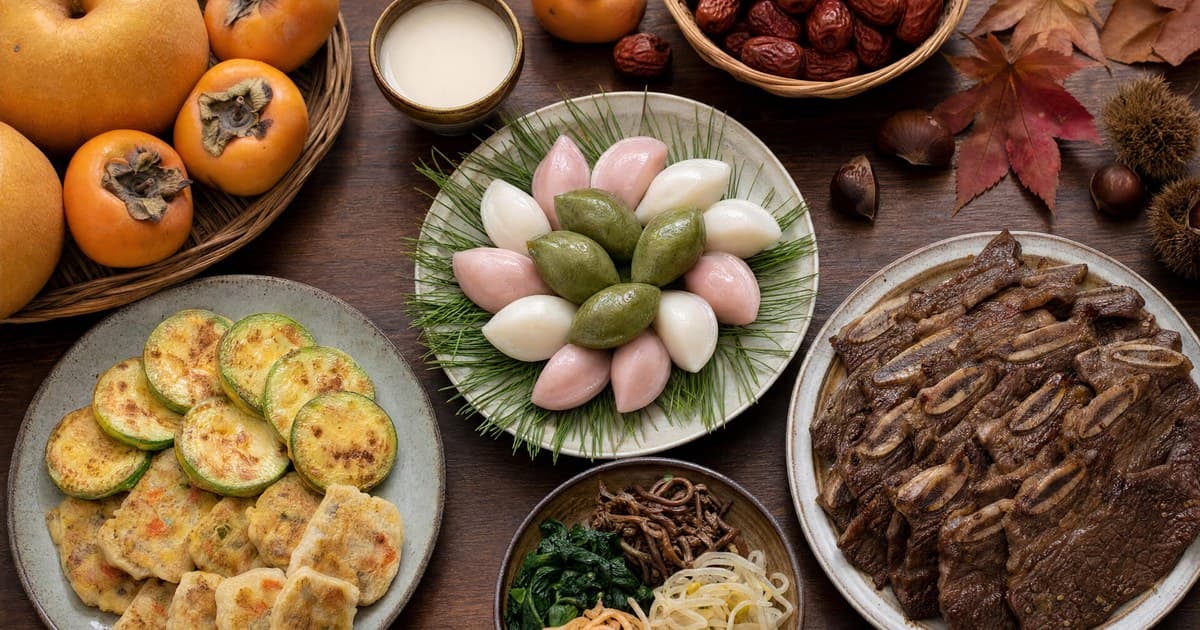
Korean Chuseok (추석), also called Hangawi (한가위, "great middle of autumn"), is the Korean harvest thanksgiving festival, observed on the 15th day of the 8th lunar month — the same date as the Chinese Mid-Autumn Festival, 2026-09-25 — but distinctly Korean in identity, ritual, and food. The festival's defining dish is songpyeon (송편), small half-moon-shaped rice cakes filled with sweetened sesame, chestnut, sweet bean, or jujube paste, then steamed over pine needles that infuse them with a delicate forest aroma. The half-moon shape — contrasted with the round mooncakes of Chinese Mid-Autumn — symbolizes growth and aspiration toward the full moon, representing a "future bigger than the present." Families gather to shape songpyeon together; tradition holds that those who make beautiful songpyeon will have beautiful children. Charye (차례) ancestral memorial rites are performed with harvest offerings — newly-harvested rice, fruits, fish, and meat are presented to ancestors at the family altar. Galbi (grilled short ribs), jeon (savory pancakes — particularly hobakjeon zucchini and saengseonjeon fish), japchae (sweet potato noodles with vegetables), and baekseju (medicinal rice wine) crowd the holiday table. Families travel cross-country to ancestral hometowns (귀성).
Signature Dishes
Songpyeon
송편
Jeon
전
Baekseju
Galbi
Fresh fruits and autumn foods
Regional Variations
Seoul / Central Korea
Classic songpyeon with sesame-sugar or chestnut filling, steamed over pine needles. Galbi grilled short ribs and multiple jeon varieties anchor the table; japchae noodles common.
Jeolla (Southwestern Korea)
Stronger fermented-seasoning style: more jeotgal (fermented seafood) in side dishes; specific Jeolla-region songpyeon shapes; preserved fish offerings at charye.
Gyeongsang (Southeastern Korea)
Beef-based broths and grilled meats prominent; Andong-style songpyeon with regional shape variations; Gyeongju heritage dishes.
Jeju Island
Island Chuseok features black-pork dishes, abalone, sea-urchin, and indigenous Jeju-specific harvest foods; songpyeon made with sweet potato variations.
Korean diaspora
Community Chuseok gatherings at Korean churches and cultural centers; imported songpyeon or family-made with available ingredients; Korean-American hybrid menus with introducing Chuseok to non-Korean friends.
Observance Practices
3-day public holiday (Chuseok eve, Chuseok day, day after) — Korea's largest annual migration as families return to ancestral hometowns
Charye (차례) ancestral memorial rites with newly-harvested foods presented at family altar
Songpyeon-making — extended family gathers to shape and steam half-moon rice cakes; tradition: well-shaped songpyeon → beautiful children
Seongmyo (성묘) — visiting and tending ancestral grave sites; clearing weeds, offering food and rice wine
Ganggangsullae (강강술래) circular folk dance performed under the full moon by women in some regions (UNESCO intangible cultural heritage)