Korean Seollal
설날
About Korean Seollal
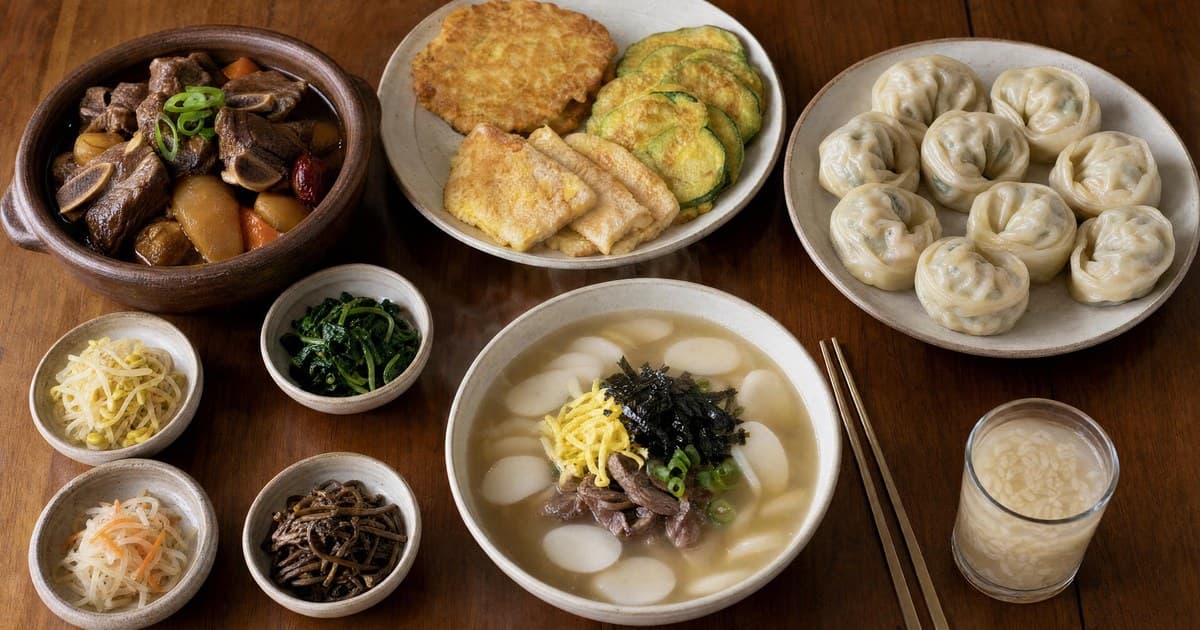
Korean Seollal (설날) is the Korean Lunar New Year, observed on the same lunisolar date as the Chinese Spring Festival and Vietnamese Tết but rooted in distinctly Korean identity, ritual, and food. The defining dish is tteokguk (떡국, rice-cake soup) — sliced oval rice cakes in clear beef-anchovy broth garnished with egg, beef, and seaweed. Eating tteokguk is a rite of passage: a Korean is considered to have aged one year on Seollal regardless of birthday, and the white rice cakes symbolize purity and the beginning of a fresh year. Mandu (만두, Korean dumplings — meat, vegetable, or kimchi-filled) often accompany tteokguk; jeon (전, savory pancakes — bindaetteok mung-bean pancakes, hobakjeon zucchini pancakes, saengseonjeon fish pancakes) crowd the holiday table; galbi jjim (braised short ribs) anchors the main course; namul (seasoned vegetable sides) provide balance; and sikhye (sweet fermented rice drink) and yakgwa (honey cookies) finish the meal. The morning of Seollal begins with charye (차례) ancestral rites — elaborate offerings before the family altar — followed by sebae (세배), where younger family members perform a deep bow to elders in traditional hanbok dress, receiving sebaedon (cash) and words of wisdom. 2026 Seollal falls on February 17.
Signature Dishes
Tteokguk
떡국
Mandu
만두
Jeon
전
Galbi jjim
Namul
나물
Regional Variations
Seoul / Central Korea
Tteokguk with clear beef-anchovy broth and thinly-sliced oval rice cakes; Mandu-tteok-guk (combined version) common; multiple jeon varieties; galbi jjim braised short ribs.
Northern Korea / Pyongyang style
Mandu-guk (dumpling soup) takes precedence over tteokguk in some northern traditions; pheasant or duck broth historical; cold buckwheat naengmyeon noodles served year-round.
Southern Korea (Jeolla, Gyeongsang)
Stronger fermented seasonings (jeotgal); more seafood-based dishes; bibim-tteokguk variations; spicy banchan side dishes.
Jeju Island
Distinctive island cuisine: black-pork dishes, abalone porridge for Seollal; seafood-stew variants; locally-sourced manul (garlic) and mugwort.
Korean diaspora (US, Japan, China-Yanbian, Russia-Sakhalin)
Community-organized Seollal celebrations at Korean churches and cultural associations; tteokguk made with imported tteok rice cakes; Korean-American hybrid menus; second-generation cultural retention.
Observance Practices
3-day public holiday in South Korea (Seollal eve, Seollal day, day after); 1-day in North Korea
Charye (차례) ancestral memorial rites performed at family altar on Seollal morning — offerings include tteokguk, fruits, fish, rice, soju, ancestral tablets
Sebae (세배) — younger family members perform deep bow to elders in hanbok dress, receiving sebaedon (cash gifts) and blessings (덕담)
Eating tteokguk symbolically adds one year of age — a Korean rite of passage independent of birthday
Hanbok (한복) traditional dress worn on Seollal day; families travel cross-country to grandparents' home
Yutnori (윷놀이) traditional 4-stick board game played in extended family gatherings
Sons traditionally inherit primary charye-hosting responsibility; firstborn daughter-in-law plays central food-preparation role (contemporary practice increasingly egalitarian)