Kurban Bayramı
Eid al-Adha
About Kurban Bayramı
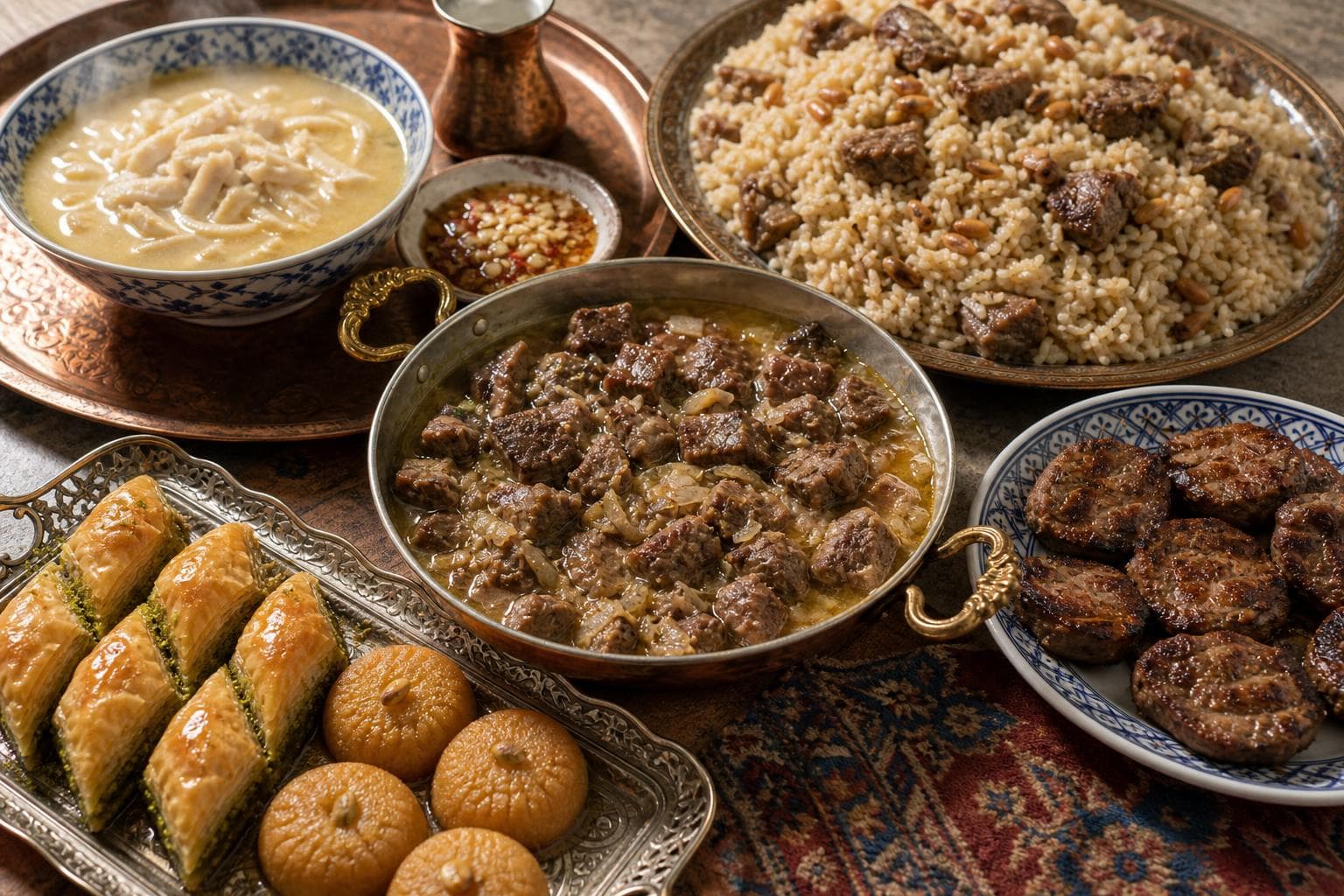
Kurban Bayramı (the **Turkish observance of Eid al-Adha**) is observed across Turkey, the Turkic regions, and the Turkish diaspora in Germany, Netherlands, and Austria as a **four-day** religious-and-culinary festival commemorating the Qurban (sacrifice) tradition. The Turkish observance distinguishes itself from pan-Muslim Eid al-Adha through specific cultural-culinary practices: sacrificial meat is shared with **seven groups** (family, neighbors, relatives, friends, the poor, travelers, and religious officials), and **Kavurma** — slow-pan-cooked diced sacrificial meat in its own rendered fat — is the traditional first-preparation of the blessed Qurban meat. Food anchors over the four days include: **Etli pilav** — meat-rich Turkish rice pilaf served at family Bayram tables; **Küşleme** — premium grilled lamb tenderloin; **İşkembe çorbası** — tripe soup traditionally served after the heavy meat feasting to aid digestion; and Bayram tatlısı — Bayram sweets including baklava and şekerpare. Hospitality obligations are paramount.
Signature Dishes
Kavurma
Etli pilav
Küşleme
İşkembe çorbası
Various meat preparations
Regional Variations
Istanbul + Marmara (urban primary)
Istanbul Kurban Bayramı observes the four-day cycle with urbanized adaptations of the sacrificial tradition (vakif-administered sacrifices for apartment-dwellers); Beyoğlu + Üsküdar + Kadıköy household tables feature kavurma + etli pilav + küşleme; midnight-to-dawn baklava + lokum sweet-shop visits among extended family.
Anatolia + Central Turkey (Konya, Kayseri, Ankara)
Central Anatolian rural Bayram retains the traditional household sacrifice and seven-group sharing in literal form — neighbors arrive at each other's homes with meat-shares; Konya's mantı (Turkish dumplings) joins the Bayram table; Kayseri pastırma (cured-spiced beef) regional addition; iskembe çorbası post-feast digestif Anatolian-canonical.
Eastern Turkey + Kurdish-Turkish + Southeastern (Diyarbakır, Şanlıurfa, Gaziantep)
Southeastern Turkey + Kurdish-Turkish Bayram traditions feature kuzu çevirme (whole spit-roasted lamb) for larger gatherings; Gaziantep's celebrated baklava + İşkembe çorbası + lahmacun share table; Şanlıurfa's çiğ köfte (raw-meat-bulgur preparation) regional Bayram appearance.
Aegean + Mediterranean Turkey (İzmir, Antalya, Bodrum)
Aegean-Turkish Bayram lighter on heavy meat with regional adaptations — keşkek (pounded-wheat lamb stew) common; herb-forward preparations; coastal regional adaptations integrate fish-and-meat tables; İzmir's mücver + zucchini-blossom dishes contextualize meat feast with lighter sides.
Turkish diaspora (Germany 3M+ Turks; Netherlands; Austria; Bulgaria; Cyprus)
German Turkish diaspora (3M+ — largest outside Turkey) observes Kurban Bayramı with halal-certified diaspora-adapted sacrifice arrangements; Berlin Kreuzberg + Hamburg + Cologne traditional kavurma + etli pilav household tables; Dutch + Austrian + Bulgarian Turkish communities preserve four-day cycle; Northern Cyprus Turkish observance retains pan-Cypriot Turkish traditions.
Observance Practices
Four-day Bayram cycle (vs pan-Muslim 1-3-day variants) — Turkish observance spans four full days of celebration, family visiting, and meat-feasting; distinct Turkish-cultural framework around the religious Qurban core
Turkey + Turkish diaspora
Seven-group sacrificial meat sharing — sacrificial Qurban meat divided among family + neighbors + relatives + friends + the poor + travelers + religious officials; Turkish-codified sharing categories distinct from pan-Muslim 3-way division (one-third self / one-third relatives / one-third poor)
Kavurma first-preparation ritual — slow-pan-cooked diced sacrificial meat in its own rendered fat is the traditional first dish prepared from the blessed Qurban meat; eaten the day of sacrifice; can be preserved for weeks-to-months as kavurma confit
Hospitality obligations paramount — relatives are visited in strict order (elders first); Bayram tatlısı sweets (baklava + şekerpare + lokum) offered to every guest; cologne (kolonya) hand-anointing ritual at every visit
İşkembe çorbası post-feast tradition — tripe soup served after heavy meat days; aids digestion; cultural codification of post-feast recovery; often consumed late at night between visits