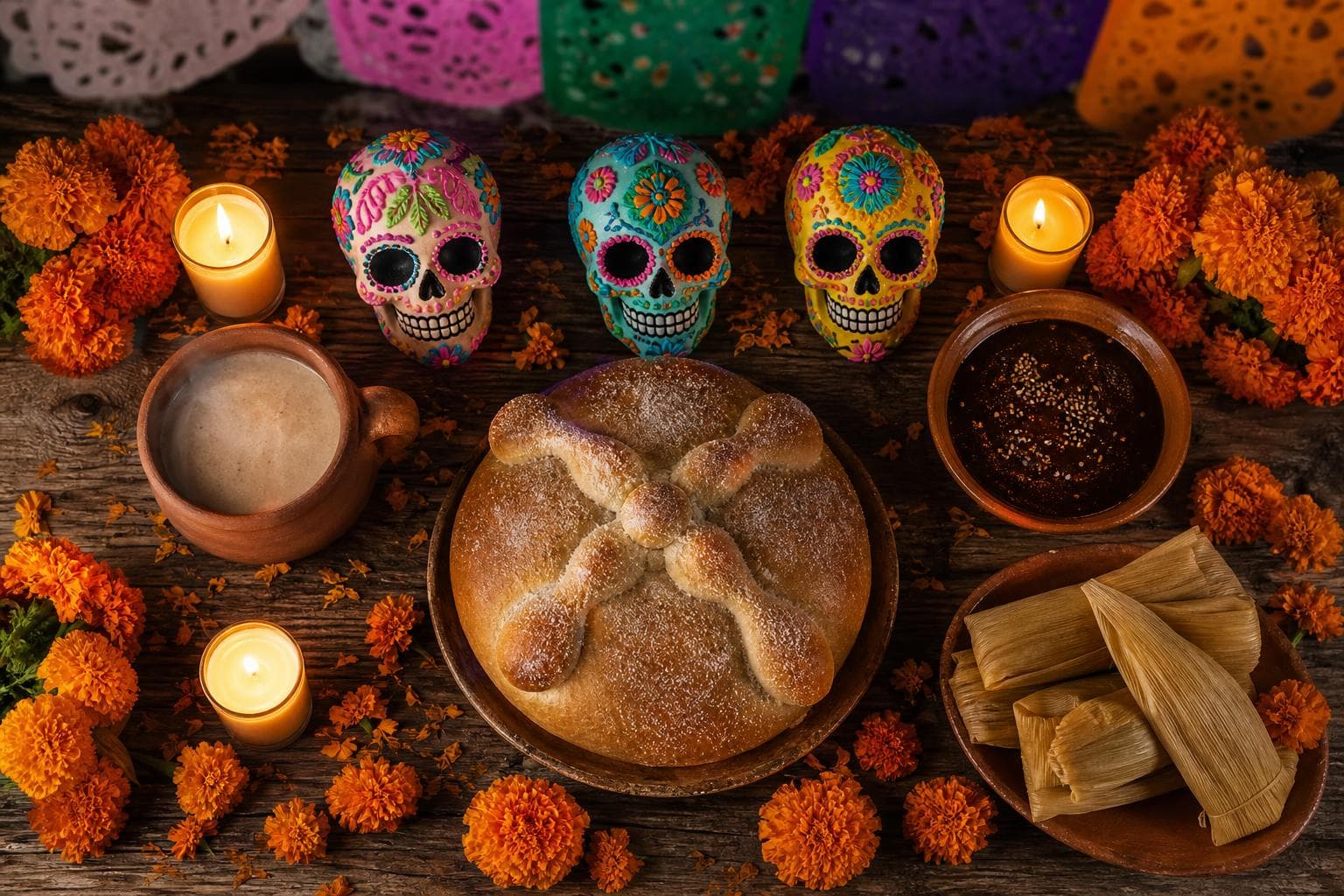
Mexican Día de Muertos
Día de los Muertos
About Mexican Día de Muertos
Día de Muertos (Day of the Dead) is one of Mexico's most distinctive cultural observances, honoring deceased loved ones over November 1-2 with **ofrendas** (altars) built in homes, cemeteries, and public spaces. Recognized by UNESCO as Intangible Cultural Heritage of Humanity (2008), it blends pre-Hispanic indigenous **Aztec/Nahua** traditions of honoring the dead with Catholic All Saints' Day (Nov 1) and All Souls' Day (Nov 2). The celebration is **NOT a Mexican Halloween** — its cosmology, food rituals, and emotional register are fundamentally distinct. Altars hold the favorite foods of the departed, photographs, marigold flowers (cempasúchil), and candles. Food anchors include **Pan de Muerto** (round egg-bread with bone-shaped dough strips, scented with orange-blossom), **Calaveras de Azúcar** (sugar skulls named for the dead), **Mole** (often Mole Negro Oaxaqueño), **Tamales** (savory and sweet), and **Atole** (warm masa drink, sometimes as Champurrado).
Signature Dishes
Pan de muerto
Calaveras de azúcar
Mole
Tamales
Atole
Regional Variations
Oaxaca
One of the most elaborate observances; Mole Negro Oaxaqueño (black mole with chilhuacle chiles and chocolate) is the signature ofrenda dish; Tamales de Mole; Pan de Muerto with sesame-seed bone decorations; cemetery vigils with mariachi serenading the dead.
Michoacán (Pátzcuaro, Janitzio)
Lake Pátzcuaro candlelight vigils famous; Purépecha indigenous traditions strong; Corundas (Purépecha tamales) and Atapakua (thick masa-stew) on ofrendas; nighttime cemetery gatherings.
Mexico City (CDMX)
Modern urban observances with massive public ofrendas in Zócalo plaza; recent Spectre-film-influenced parade tradition (post-2015); Pan de Muerto and Calaveras de Azúcar sold throughout October.
Puebla
Distinctive Mole Poblano on ofrendas; Pan de Muerto with anise-orange-blossom flavoring; Chiles en Nogada-influenced regional variants.
Yucatán
Hanal Pixán (Yucatec Maya 'food of the souls') is the local name; Mucbipollo (a large tamale-style dish baked underground in píib pit oven for the dead) is the signature; food preparation begins days in advance; distinctly Maya-rooted observance with Spanish-Catholic syncretism layered later.
Mexican diaspora (US, Canada, Spain)
Growing observance in US Mexican-American communities and broader Latino communities; community ofrendas in cultural centers, schools, museums; food traditions adapted to local sourcing; second-generation cultural retention.
Observance Practices
2-day observance: Nov 1 ('Día de los Inocentes' / 'Día de los Angelitos') honors deceased children; Nov 2 ('Día de los Muertos') honors deceased adults
Ofrenda (altar) construction: photographs, favorite foods of the deceased, marigold flowers (cempasúchil), copal incense, candles, water, salt, calaveras de azúcar named for each honored person
Cemetery vigils on Nov 1-2 nights — families clean and decorate graves, share meals with the deceased, often staying overnight with mariachi or song
NOT a Mexican Halloween — distinct cosmology (welcoming returning souls) vs Halloween (warding off spirits); food-and-altar tradition vs costume-and-candy tradition
UNESCO Intangible Cultural Heritage of Humanity since 2008
Indigenous pre-Hispanic roots (Aztec/Nahua Miccailhuitontli, Maya Hanal Pixán) syncretized with Spanish-Catholic All Saints' / All Souls' Day after 1521