Passover / Pesach
פֶּסַח
About Passover / Pesach
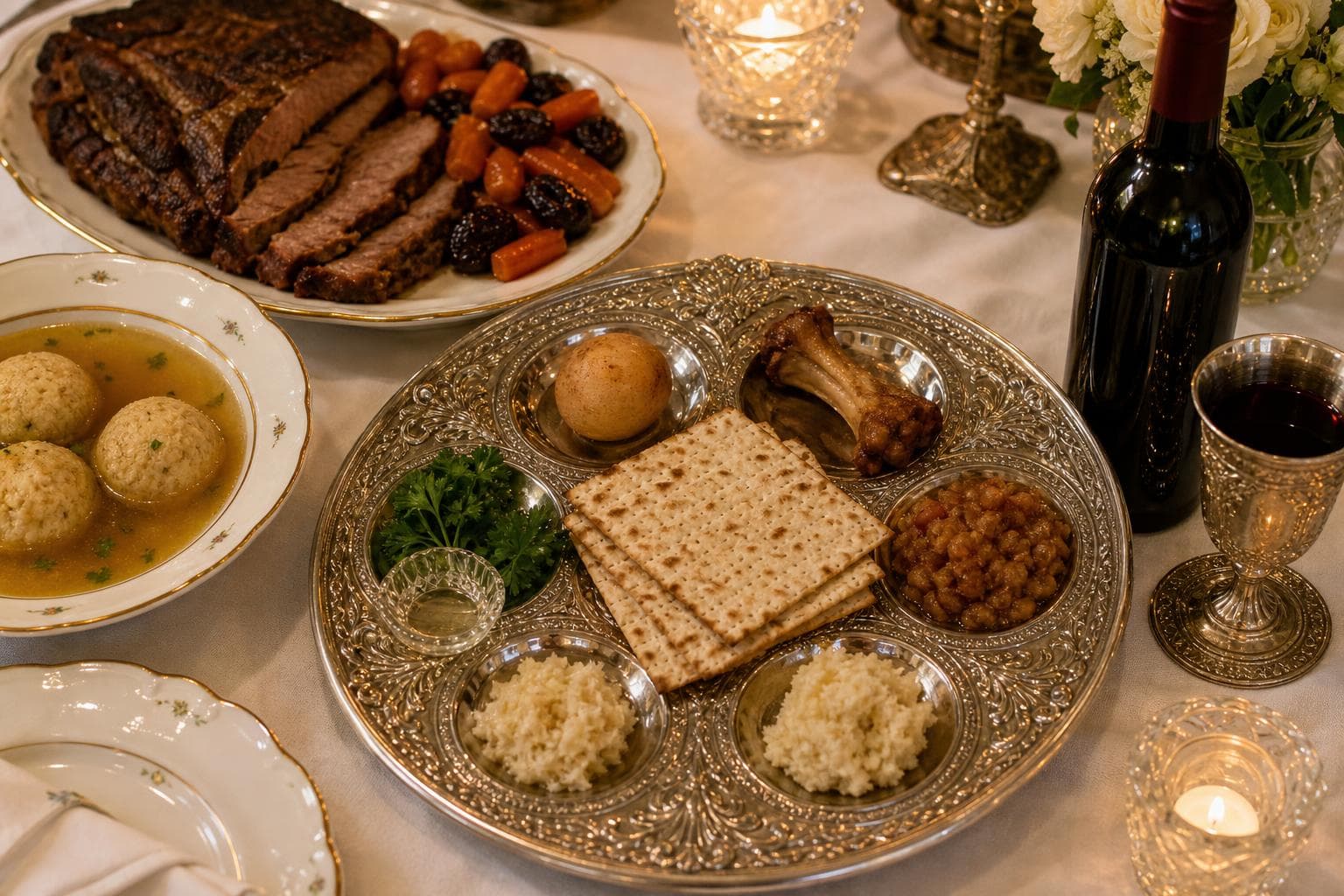
Passover (**Pesach**) is the seven-day spring festival (eight in Diaspora) commemorating the Exodus of Israelite slaves from ancient Egypt under Moses. It begins on the 15th of Nisan with the **Seder** — a structured ritual meal centered on the Haggadah's retelling of the Exodus and built around the symbolic foods of the **Seder plate**: matzah (unleavened bread), maror (bitter herbs of slavery), charoset (sweet apple-nut-wine paste symbolizing the mortar of Egyptian bricks), karpas (green vegetable dipped in salt water for tears), zeroa (roasted shankbone), and beitzah (roasted egg). Throughout the festival, all leavened grain (chametz) is forbidden — homes are scoured beforehand and matzah replaces all bread. Iconic foods include **matzah ball soup** (knaidlach in chicken broth), **brisket**, **gefilte fish**, **roasted lamb or chicken**, and Sephardic / Mizrahi variants with rice and legumes (kitniyot, Sephardic-permitted; Ashkenazi-prohibited in many traditions).
Signature Dishes
Matzah
מַצָּה
Charoset
חֲרֽוֹסֶת
Matzah ball soup
Brisket
Gefilte fish
Regional Variations
Ashkenazi (Eastern European + Russian)
Strict kitniyot prohibition (no rice, corn, beans, legumes beyond chametz). Iconic dishes: matzah ball soup (knaidlach), gefilte fish (poached carp/whitefish-pike loaf with horseradish), brisket with onion-prune-carrot tzimmes, potato kugel, charoset (apples + walnuts + cinnamon + sweet wine).
Sephardic (Iberian-Mediterranean diaspora — Moroccan, Tunisian, Greek, Turkish, Italian)
Kitniyot PERMITTED — rice, legumes, corn allowed. Iconic: Moroccan Charoset with dates + figs + nuts + wine (paste-like); Tunisian Mina Pesach (matzah-bound meat pie); Greek Spanakopita-adjacent matzah pies; Turkish Buyumelos (matzah-meal fritters); olive oil dominant.
Mizrahi (Middle Eastern Jewish — distinct from Persian cuisine; multi-substrand: Iraqi, Yemenite, Syrian, Bukharan, Persian-Jewish, Egyptian)
Kitniyot permitted across Mizrahi traditions. Iraqi: Charoset with dates + walnuts + cardamom; Yemenite: Halek (date-syrup charoset); Syrian: rice-based seder side dishes; Bukharan: bukhori-Pesach plov rice; Persian-Jewish sub-strand (one substrand of Mizrahi — NOT to be confused with secular Persian cuisine): Halegh charoset with dates + pomegranate + apple + walnut + cardamom, distinguished from generic Persian cooking by Pesach kashrut + Haggadah-feast context.
Israeli
Modern fusion across all Jewish traditions; Sephardic kitniyot policy now widely accepted by Israeli rabbinate (2015 onward); national matzah supply via state-supervised bakeries; iconic Israeli dishes adapted for Pesach with potato-flour or matzah-meal substitutions.
American Jewish diaspora
Ashkenazi tradition dominant historically; recent generations adopt Sephardic kitniyot-permitted approach selectively; commercial gefilte fish, matzah, charoset kits; large family seders; Manischewitz sweet wine cultural touchstone.
Ethiopian Jewish (Beta Israel)
Distinct Beta Israel kashrut tradition (Haymanot) with its own Pesach customs; Dabbo Kolo and other Ethiopian-Jewish foods; large post-Operation-Moses Israeli population preserves traditions.
Observance Practices
Seder ritual meal on first night (Diaspora: first AND second nights) — Haggadah read aloud + Seder plate symbolic foods + 4 cups of wine + matzah + maror + charoset + Hallel + Afikoman dessert-matzah hidden for children
Removal of chametz (leaven) before festival — Bedikat Chametz search by candle/feather on Nisan 14 evening; Biur Chametz burn next morning; sale of chametz to non-Jew for festival duration
7-day festival in Israel; 8 days in Diaspora (extra day Yom Tov Sheni); first and last 1-2 days = full Yom Tov (no work); middle days = Chol HaMoed (semi-festival)
Kitniyot doctrine SPLIT: Ashkenazi prohibit rice/legumes/corn during Pesach; Sephardic + Mizrahi PERMIT — recipe inventory should reflect both traditions
Counting of the Omer begins on second night of Pesach — 49-day count toward Shavuot
Festival of Freedom theme — universal Exodus narrative + 'in every generation each person must see himself as if he personally left Egypt' (Mishnah Pesachim 10:5)