Rosh Hashanah
רֹאשׁ הַשָּׁנָה
About Rosh Hashanah
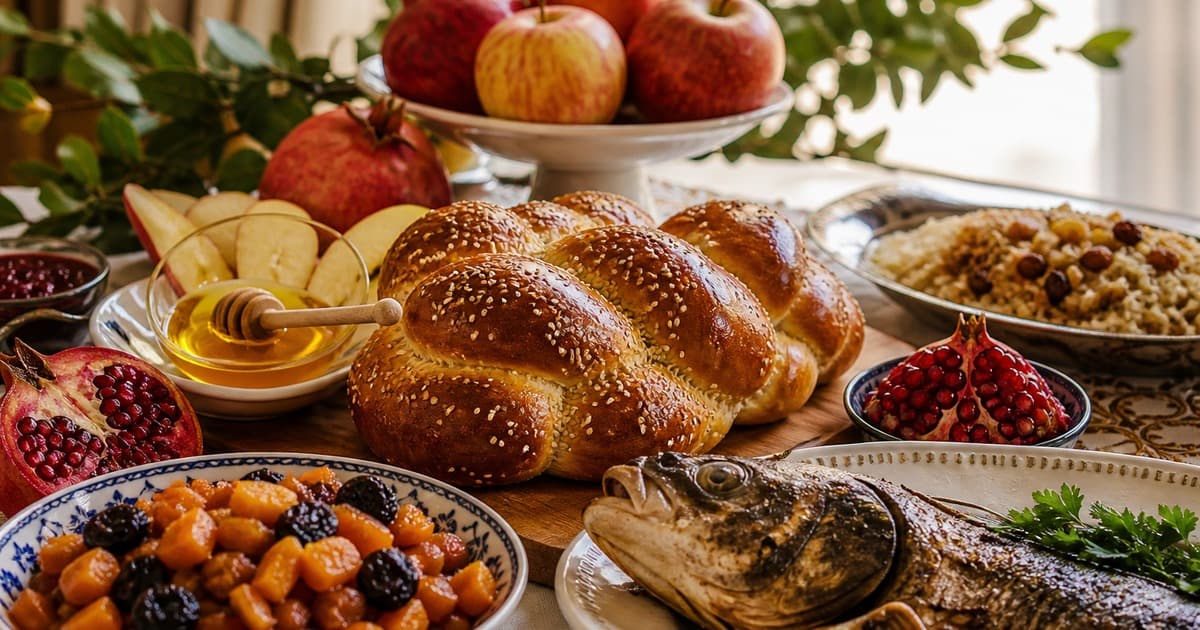
Rosh Hashanah, the Jewish New Year observed on 1-2 Tishrei (September-October), opens the ten Days of Awe with meals built around sweetness and symbolic hope for the year ahead. Apples and honey are nearly universal — slices dipped at the table after kiddush, accompanied by a blessing for a sweet year — alongside a round Challah, often raisin-studded, whose circular shape evokes the turning of the year. Ashkenazi tables commonly carry Tzimmes (a honey-braised carrot, prune and sweet-potato dish), honey-glazed brisket, and lekach honey cake. Sephardic and Mizrahi households often prepare a Seder of Simanim, a ritual array of foods eaten with 'yehi ratzon' blessings: Pomegranate seeds for abundant merits, leek fritters, dates, black-eyed peas, and a fish head expressing the wish 'to be the head and not the tail.' Israeli tables today frequently blend all three traditions, drizzling date silan over apples or folding pomegranate into walnut salads.
Signature Dishes
Apples and honey
Challah
חלה
Pomegranate
Tzimmes
צימעס
Fish head
Regional Variations
Ashkenazi (Central/Eastern European Jewish diaspora)
Round raisin challah, gefilte fish with chrain, honey-glazed brisket, tzimmes, lekach honey cake, sweet kugel, and kreplach traditionally served.
Sephardic (Iberian-descent + Mediterranean/Maghrebi diaspora)
Distinguished by the Seder of Simanim — 7-8 symbolic foods (dates, pomegranate, gourd, leek fritters, fish head, black-eyed peas, chard) with yehi ratzon blessings.
Mizrahi (Middle Eastern Jewish, broad)
Date syrup (halek) often substitutes for honey; festival adaptations of regional staples form the simanim and feast core.
Iraqi Mizrahi
T'beet (slow-cooked stuffed chicken and rice) and halek date syrup traditionally feature in the new-year meal.
Persian-Jewish (Mizrahi sub-strand)
Rosh Hashanah-specific gondi variants and simanim-adjacent dishes like mast-o-khiar commonly served; distinct from generic Persian cuisine.
Yemenite Jewish
Jachnun (stretched dough pastry) and hareesah (cracked-wheat porridge) often prepared in festival adaptations.
Egyptian Jewish
Rosewater apple compote, honey-spiced chicken tagine, and Rosh Hashanah variants of kahk pastries traditionally associated.
Syrian Jewish
Helou sweet pastries and festival kibbeh-bil-sanieh variants commonly served.
Bukharan Jewish (Central Asian)
Plov rice pilaf with new-year adaptations and pomegranate-walnut sauces traditionally feature.
Israel (modern multi-tradition fusion)
Honey-glazed lamb, modern challah variants (za'atar/olives/nuts), apples with silan date honey, and fused Ashkenazi-Sephardic-Mizrahi simanim plates.
Observance Practices
Sounding the shofar (ram's horn) during morning prayer — traditionally 100 blasts including tekiah, shevarim, teruah
Tashlich — symbolic casting of breadcrumbs into flowing water to represent shedding sins
Extended synagogue liturgy across the two days of Tishrei 1-2
Family meal opened with kiddush over wine and blessings over apples dipped in honey
Round (often raisin-studded) challah blessed at the festival meal
Pomegranate eaten with a blessing for merits as numerous as its seeds
Seder of Simanim — ritual table of symbolic foods with yehi ratzon blessings
Sephardic and Mizrahi communities
Substitution of date syrup (halek) for honey in simanim
Iraqi and some Mizrahi communities
Observance of kashrut throughout all meals
Cessation of weekday labor as a festival (yom tov) day
Entry into the 10-day Yamim Nora'im (Days of Awe) period of teshuvah culminating in Yom Kippur