Somali Eid al-Fitr
About Somali Eid al-Fitr
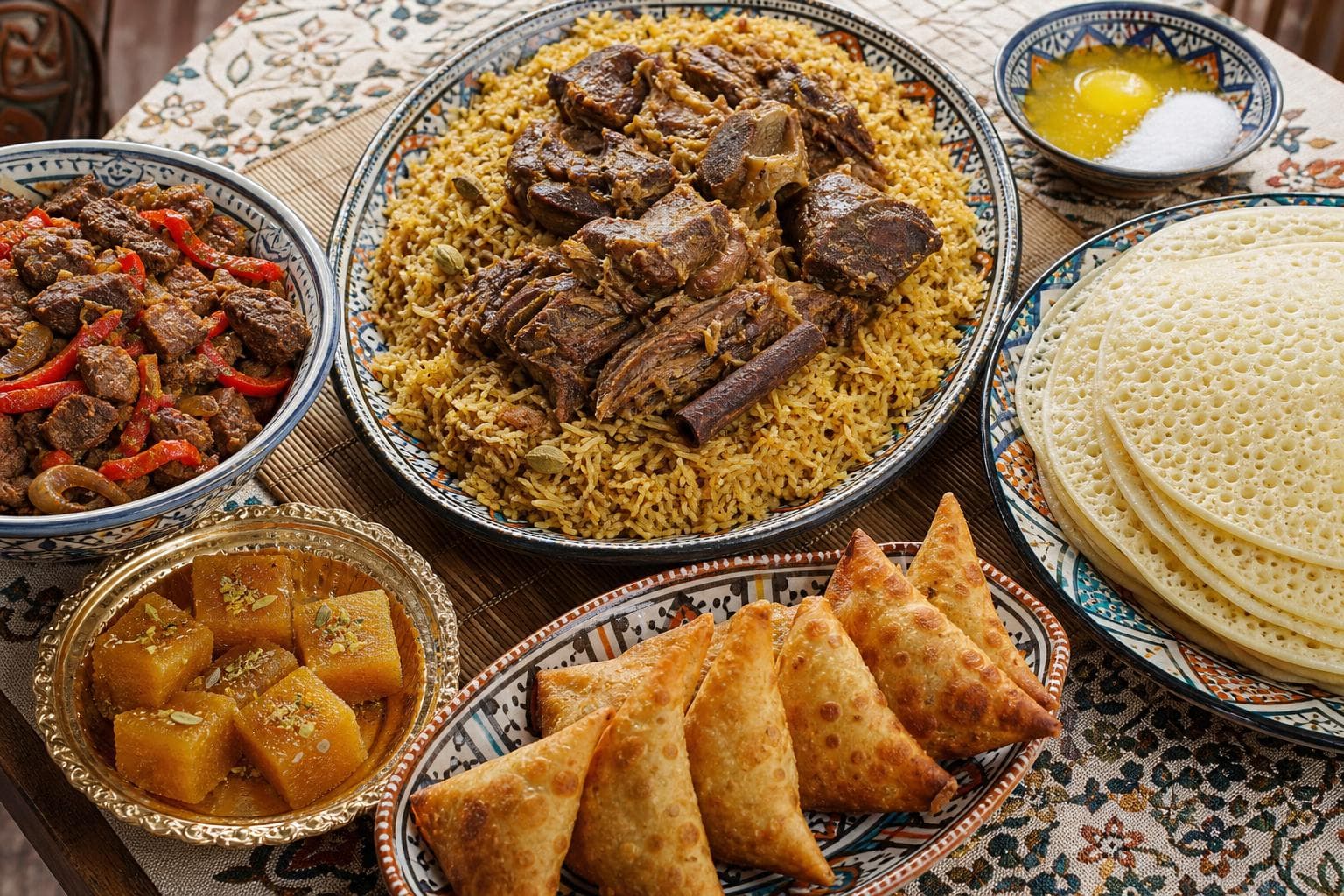
Somali Eid al-Fitr (**Iidul Fitr**) is the joyful close of Ramadan observed across **Somalia and the global Somali diaspora** (Minneapolis, London, Toronto, Nairobi, Dubai), shaped by the Horn of Africa's centuries-old Indian Ocean spice trade. The Somali Eid culinary identity centers on five distinct food anchors: **Bariis iskukaris** — aromatic Somali rice cooked with cardamom, clove, black pepper, and slow-braised meat (the celebratory main course); **Suqaar** — diced beef or goat stir-fried with onions, peppers, cumin and xawaash spice blend; **Canjeero** (also called *laxoox*) — fermented sourdough sorghum-and-wheat pancake similar to Ethiopian injera but lighter, served at Eid breakfast with sugar and ghee or with stews; **Xalwo** (Somali halwa) — the essential Eid sweet, cardamom-and-ghee-rich, prepared in large trays and shared with neighbors as the central act of hospitality; **Sambusa** — Somali samosa continuing from Ramadan iftar into Eid celebration, filled with spiced meat or vegetables. New clothes are worn, relatives visited, sweets exchanged.
Signature Dishes
Bariis iskukaris
Suqaar
Canjeero
Xalwo
halwa
Sambusa
Regional Variations
Mogadishu + Banaadir coast (primary urban)
Capital Mogadishu and the Banaadir coastal region observe Eid with bariis iskukaris as centerpiece; coastal Indian Ocean influence brings seafood variations (mukmad fish prep) into some households; xalwo prepared in huge communal trays; canjeero served at Eid breakfast with caano (camel milk) or ghee.
Hargeisa + Somaliland (north)
Somaliland Eid traditions emphasize muufo (anjeero-related flatbread) with bariis; suqaar prepared with goat meat preferred over beef; xalwo varieties differ slightly with sesame additions; tea (shaah cadays) with cardamom + cinnamon served throughout the day. Somaliland's livestock economy reflected in meat-heavy Eid table.
Garowe + Puntland (northeast)
Puntland coastal Eid traditions parallel Banaadir with regional variations; camel-meat preparations during Eid; canjeero called laxoox locally; xalwo cardamom-heavy as core sweet; bariis with cinnamon stick and bay leaf aromatics.
Somali diaspora (Minneapolis + London + Toronto + Nairobi)
Diaspora Somali communities preserve Eid food traditions vigorously — Minneapolis "Little Mogadishu" Cedar-Riverside; London Whitechapel + East Ham; Toronto Rexdale + Dixon; Nairobi Eastleigh. Diaspora bariis iskukaris uses available basmati substitution; xalwo making is a major family event; canjeero passed across generations; halal sourcing constraints adapted locally.
Somali Bantu + minority communities
Somali Bantu communities (Jubba River valley + diaspora) have distinct food traditions blending Bantu agricultural staples with Somali Eid customs — banana, maize, and cassava preparations alongside canjeero + bariis; xalwo retained as Eid sweet across all Somali sub-communities.
Observance Practices
Bariis iskukaris (aromatic rice with cardamom + clove + black pepper + slow-braised meat) as the Eid centerpiece main course; cooked in large pots; sharing across households
Somalia + diaspora
Xalwo (Somali halwa) prepared in large trays and shared with neighbors — central hospitality act; cardamom + ghee + sugar base; preparation often community/family multi-generational event
Eid morning breakfast canjeero (fermented sourdough pancake) with ghee, sugar, or stews; precedes the larger bariis Eid lunch/dinner
New clothes worn for Eid prayer (Salat al-Eid); relatives visited throughout day; children receive Eid gifts (Ciid); sambusa retained from Ramadan into Eid celebration
Indian Ocean spice-trade heritage reflected in Somali Eid spice palette (cardamom + clove + cinnamon + black pepper + ginger via xawaash blend); historical Arabian + Indian + Persian Gulf trade links shape distinctive aromatic profile