Sukkot
סֻכּוֹת
About Sukkot
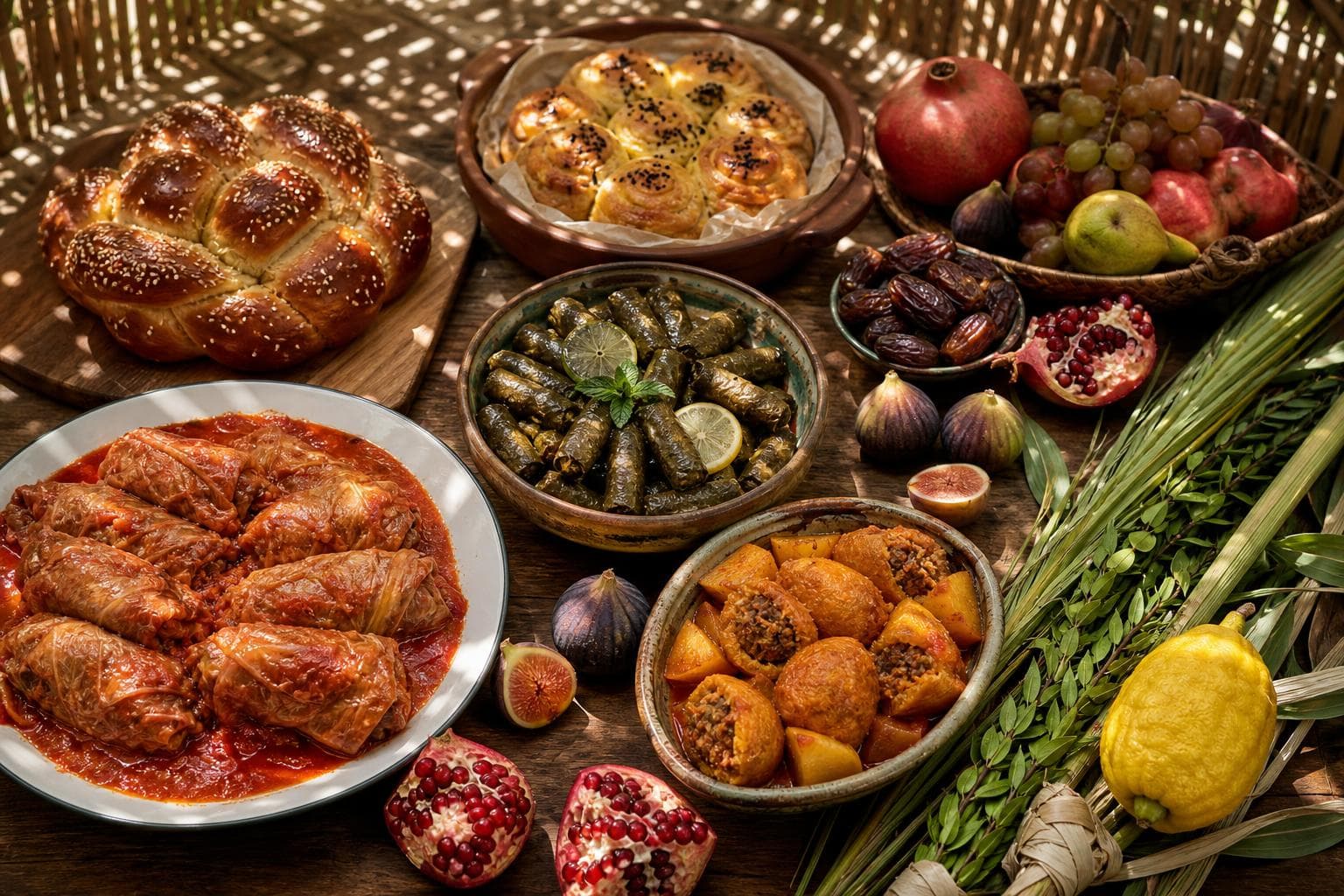
Sukkot (Hebrew סֻכּוֹת, "Booths") is the seven-night Jewish Festival of Booths running Tishrei 15–21 (immediately after Yom Kippur), biblically commanded as a harvest festival commemorating the 40 years of wilderness wandering in temporary dwellings. The festival anchors a **stuffed-foods abundance metaphor** — **holishkes, dolma, kibbeh** — and **multi-tradition Mizrahi + Sephardic + Ashkenazi co-celebration** through outdoor meals in temporary booths (**sukkah**), with the **four species (lulav, etrog, hadassim, aravot)** ritually waved daily. The festival closes with **Shemini Atzeret + Simchat Torah** (Tishrei 22–23) — Torah-completion closing feasts featuring kreplach (Ashkenazi), bourekas (Sephardic), and kubaneh (Yemenite). Sukkot is a Major Global Jewish festival, contrasted with Yom Kippur's fast five days earlier — Sukkot is a feast-week, with sukkah-meals communal across all Jewish denominations.
Signature Dishes
Stuffed foods
holishkes, dolma
Challah
Kreplach
Seasonal produce dishes
Honey cakes
Regional Variations
Ashkenazi (Eastern European + Russian)
Holishkes (stuffed cabbage rolls with beef + rice in sweet-and-sour tomato sauce) — canonical Ashkenazi Sukkot stuffed-food; kreplach (Jewish dumpling meat-filled in chicken soup) for Hoshanah Rabbah + Shemini Atzeret; tzimmes (sweet carrot + sweet potato + dried fruit braise); kasha varnishkes (buckwheat groats + bowtie pasta); honey cake with apple; beef brisket as Sukkot festive centerpiece in American Ashkenazi families.
Sephardic (Iberian-Mediterranean diaspora)
Yebra / yaprakes / dolma (stuffed grape leaves meat or rice version) — Sephardic Sukkot canonical stuffed-food; bourekas (cheese, spinach, or meat-filled phyllo or yufka pastries) Sukkot week breakfast staple; keftes de prasa (leek patties) Spanish-Jewish autumn-vegetable Sukkot dish; Sephardic-style stuffed bell peppers; spinach + chickpea-filled sambousek harvest variant.
Mizrahi (Middle Eastern Jewish — distinct from Persian cuisine; multi-substrand: Iraqi, Yemenite, Syrian, Bukharan, Persian-Jewish, Egyptian)
Iraqi-Jewish: kibbeh pumpkin (bulgur + pumpkin-stuffed Sukkot variant) + t'beet (overnight-cooked rice + stuffed chicken Shabbat-of-Sukkot variant) + shorbat rumman (pomegranate soup). Yemenite: kubaneh (overnight-baked Shabbat-Sukkot bread clay-pot tradition) + jachnun (rolled dough overnight-steamed) + bint al-sahn (Sukkot honey-bread multi-layer). Syrian (Aleppo/Damascus): yebra Halabi (Aleppo-style stuffed grape leaves with apricot-tamarind sauce — distinct from Sephardic yebra) + sambousek (Syrian-Jewish meat-filled pastry) + kibbeh shamiyya (Damascus-style Sukkot variant). Bukharan (Central Asian): osh palov (rice pilaf with raisins + chickpeas + lamb — Sukkot festive plov, the Mizrahi-rice anchor preventing Persian-tahdig-as-default collapse) + manti (dumplings Hoshanah Rabbah variant). Persian-Jewish sub-strand (one substrand of Mizrahi — NOT generic Persian cuisine): gondi (Persian-Jewish stuffed chickpea-chicken dumpling — Sukkot variant; Persian-Jewish-distinct, NOT Persian national-default) + gormeh sabzi adapted for sukkah meals + tahdig (Persian-Jewish festive variant). Egyptian-Jewish: foul medames (fava bean stew Sukkot breakfast) + falafel + tahini sukkah-meal canonical + hamin / dafina Egyptian Sabbath stew Shabbat-of-Sukkot variant.
Israeli (modern post-1948)
Sukkah catering — restaurant-and-hotel Sukkot meal services in Jerusalem + Tel Aviv; Sukkot picnic culture secular-Israeli observance via family barbecues + harvest-themed meals; Israeli salad explosion with fresh autumn produce (eggplant + zucchini + tomato + cucumber); Israeli-Mizrahi fusion blending all 6 Mizrahi peers into 'New Israeli Sukkot menu' in modern Tel Aviv chefs.
American + Diaspora Jewish
NYC Modern Orthodox community all-tradition sukkah suppers — one night Ashkenazi (brisket + kreplach), next night Sephardic (yebra + bourekas), next night Mizrahi (chosen sub-tradition); LA / Toronto / London Jewish communities restaurant-led Sukkot tasting menus; Hasidic Sukkot distinct stricter framework (Lubavitch / Satmar variations).
Observance Practices
Seven-day sukkah dwelling — meals (and ideally sleep) taken in a temporary booth with at minimum 3 walls and a roof of organic materials (s'chach) through which stars can be seen; commemorates 40 years of wilderness wandering in temporary dwellings; communal sukkah meals across all Jewish denominations.
Four species (lulav + etrog + hadassim + aravot) daily ritual waving — palm branch (lulav) + citron (etrog) + myrtle (hadassim) + willow (aravot) bound together; waved in 6 directions daily as part of festival prayers; etrog later preserved for jam / liqueur after Sukkot ends.
Stuffed-foods abundance metaphor — universal Sukkot symbol of vessels-of-blessing and harvest abundance; holishkes (Ashkenazi cabbage rolls) + dolma / yebra (Sephardic / Mizrahi grape leaves) + kibbeh pumpkin (Iraqi-Mizrahi) anchor the cross-tradition culinary motif.
Hoshanah Rabbah (7th day of Sukkot) + Shemini Atzeret + Simchat Torah closing feasts — Hoshanah Rabbah features 7 hoshana willow-circuit + kreplach (Ashkenazi); Shemini Atzeret/Simchat Torah (Tishrei 22-23) features Torah-completion celebration with kreplach + bourekas + kubaneh; closing-feast framework distinct from Sukkot week proper.
Major Global Jewish festival contrast with adjacent fasts — Sukkot follows Yom Kippur (fast-day Tishrei 10) by 5 days, providing feast-week reversal; work permitted only on intermediate days (Chol HaMoed); Sukkot status: Major Festival (work-prohibited on first and last days for diaspora; first day in Israel).