Vietnamese Tết
Tết Nguyên Đán
About Vietnamese Tết
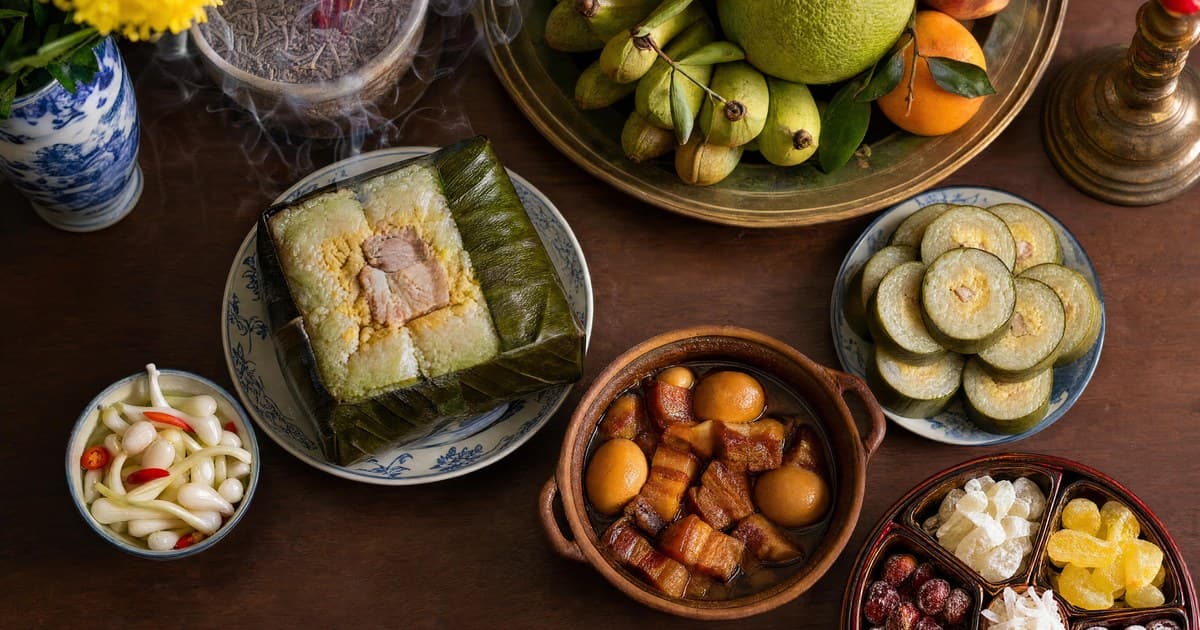
Tết Nguyên Đán (Tết) is the Vietnamese Lunar New Year, observed on the same lunisolar date as the Chinese Spring Festival but rooted in distinctly Vietnamese identity, ritual, and food. Where Chinese tradition centers on the crescent jiaozi, Vietnamese Tết centers on bánh chưng, a square sticky-rice cake wrapped in dong leaves and filled with mung bean paste and pork — its square shape symbolizing the Earth (Đất), while the cylindrical bánh tét from southern Vietnam symbolizes the Sky (Trời). Together they represent the cosmic order — the marriage of earth and sky — and ancestral altars are not complete without them. Thịt kho trứng (caramelized pork belly with boiled eggs in coconut water) simmers for hours and is reheated over days; Dưa hành (pickled scallions) balances the rich meats with sharp acidity; Canh khổ qua (bitter melon soup) is eaten to "swallow bitterness" of the old year. Mứt Tết — candied fruits and ginger arranged on lacquered trays — welcome guests with sweetness. Ancestral altars receive offerings of five fruits (mâm ngũ quả), incense, rice, and bánh chưng. Tết is observed for 3 days (Mùng 1, 2, 3) with family visits, ancestral veneration, and lì xì red-envelope giving. 2026 Tết falls on February 17.
Signature Dishes
Bánh chưng
Bánh tét
Thịt kho trứng
Dưa hành
Mứt
Regional Variations
Northern Vietnam (Hanoi, Hà Nội)
Bánh chưng (square sticky-rice cake) is the iconic centerpiece — wrapped in dong leaves with mung bean and pork filling, boiled for 8-12 hours communally. Thịt kho with rich savory soy. Mâm ngũ quả (5-fruit tray) with banana, pomelo, peach, persimmon, kumquat.
Central Vietnam (Huế)
Imperial-style Tết banquet inheriting Nguyễn dynasty cuisine; bánh tét miniaturized; bánh tổ steamed glutinous rice cake; complex multi-course family meals with seafood and meat.
Southern Vietnam (Saigon, Mekong Delta)
Bánh tét (cylindrical sticky-rice log) replaces bánh chưng; Thịt kho trứng caramelized in coconut water; Canh khổ qua (bitter melon soup with stuffed pork); tropical 5-fruit tray with mãng cầu (custard apple), dừa (coconut), đu đủ (papaya), xoài (mango) — the names form auspicious phrase 'cầu dừa đủ xoài' (pray for enough).
Vietnamese diaspora (US, France, Australia, Germany, Canada)
Community-organized Tết festivals; bánh chưng/tét sourced from diaspora bakeries; áo dài traditional dress at temple visits; second-generation hybrid menus.
Hue Imperial Court tradition (historical)
Multi-course imperial banquet with intricate vegetable-carving; tea ceremony; ancestral altar elaborately prepared in royal tradition (now historical/heritage).
Observance Practices
3-day public holiday (Mùng 1, 2, 3); preparations begin 1-2 weeks earlier with house cleaning, debt settlement, ancestral grave visits
Bánh chưng/bánh tét cooking is communal — extended family gathers to wrap and tend the long boiling (8-12 hours overnight)
Ancestral altar with mâm ngũ quả (5-fruit tray), incense, bánh chưng, rice wine, family photos
Xông đất (first foot in the door on Day 1) — the first visitor's zodiac and luck determines family fortune for the year
Lì xì red envelopes given by elders to children and unmarried adults
Family hierarchy visits: paternal grandparents Day 1, maternal Day 2, teachers/friends Day 3