Ash-e Sholeh Ghalamkar (آش شله قلمکار)
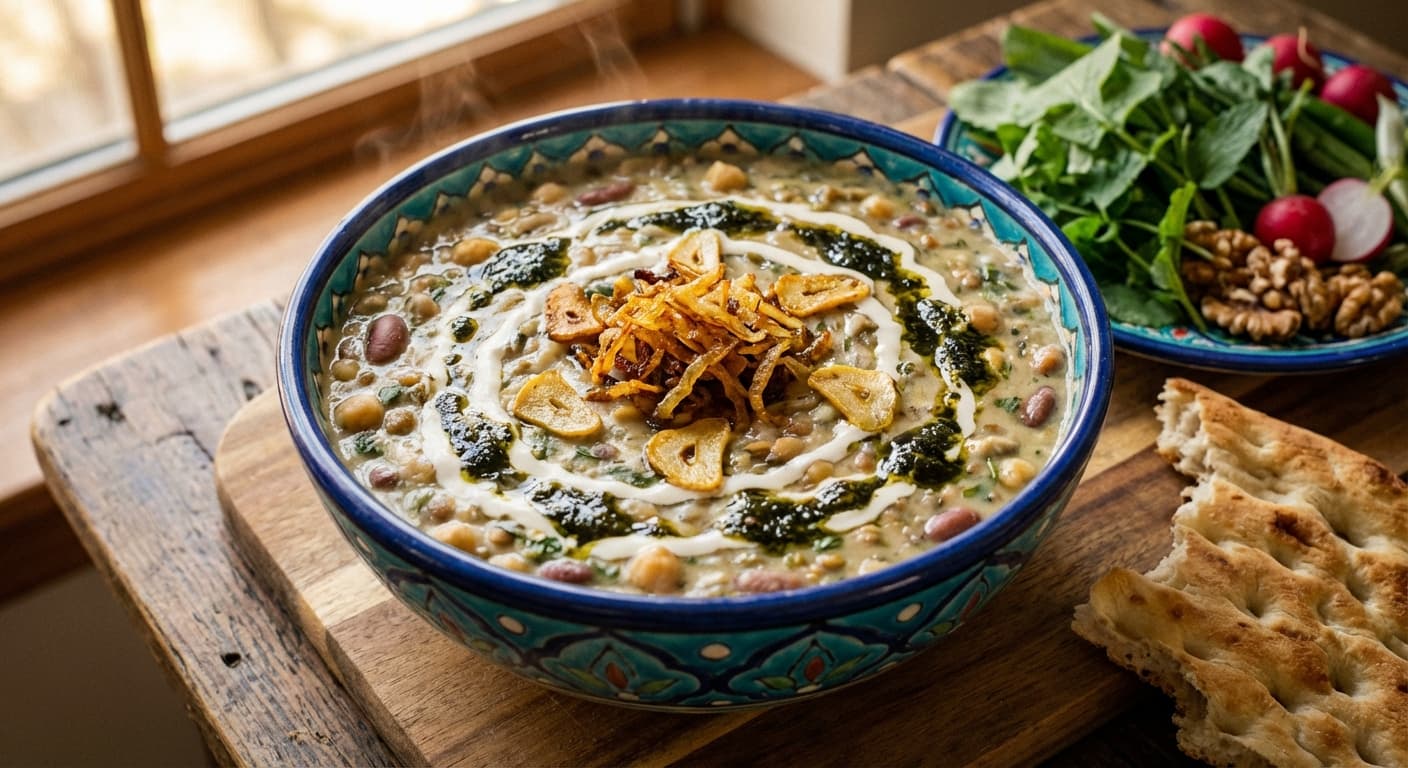
A grand Tehran-style Persian ash packed with mixed beans, rice, herbs, and tender meat, slowly simmered until creamy and “stretched.” Finished with aromatic fried onions, mint oil, and tangy kashk.
Printable Recipe Card
Servings: 8 · Total: 1020 min · Difficulty: hard
Ingredients (quick list)
- 120 g Chickpeas, dried (soaked 10–12 hours, drained)
- 120 g White navy beans, dried (soaked 10–12 hours, drained)
- 120 g Pinto beans, dried (soaked 10–12 hours, drained)
- 120 g Lentils, dried (rinsed)
- 80 g Split peas, dried (rinsed)
- 150 g Basmati rice (rinsed until water runs mostly clear)
- 80 g Pearl barley (rinsed)
- 450 g Beef shank (bone-in preferred)
- 200 g Yellow onion (quartered)
- 2 tsp Turmeric, ground
- 1 tsp Black pepper, ground
- 3000 ml Water (plus more as needed during simmering)
+ 12 more in the full ingredients section below.
Steps (summary)
- Soak the chickpeas, navy beans, and pinto beans in plenty of cold water for 10–12 hours at room temperature, changing the water…
- In a large heavy pot, add beef shank, quartered onion, turmeric, black pepper, and 3000 ml water. Bring to a boil over high hea…
- Remove the beef shank to a plate. Strain the broth through a fine sieve, discarding the onion. When cool enough to handle, shre…
- Return the hot broth to the pot. Add soaked chickpeas, navy beans, and pinto beans. Bring to a steady simmer over medium heat,…
- Stir in the rinsed pearl barley and cook 30 minutes at a gentle simmer, uncovered, stirring frequently to prevent sticking. The…
- Add chopped parsley, cilantro, chives, spinach, and fenugreek. Stir well and simmer 25 minutes, uncovered, so the herbs cook th…
+ 4 more steps in the full instructions section below.
Cultural Background
Ash-e Sholeh Ghalamkar is a celebratory, labor-of-love ash strongly associated with Tehran and large gatherings, where it’s often cooked in big pots and shared communally. Its abundance of legumes, grains, herbs, and garnishes reflects Iranian hospitality and the tradition of serving hearty ash for cold seasons and special occasions.
Equipment
💡 Tips
- For the classic “sholeh” texture, stir vigorously near the end; the rice and split peas help the ash become naturally creamy without flour.
- If the ash gets too thick, add boiling water 100 ml at a time; cold water can shock the pot and dull the simmer.
- Fenugreek is powerful—keep it measured; too much makes the ash bitter.
⚠️ Common Mistakes
❌ Adding all legumes and grains at the same time
💡 Why: Different beans and grains cook at different speeds; some will turn to paste while others stay firm, giving uneven texture.
✅ Fix: Cook soaked beans first, then add barley, then rice/lentils/split peas in stages as written.
❌ Cooking herbs too early for too long
💡 Why: Overcooked herbs lose their fresh aroma and can turn dull, making the ash taste flat.
✅ Fix: Add chopped herbs after grains and legumes are mostly soft, then simmer about 25 minutes.
❌ Burning the dried mint for mint oil
💡 Why: Scorched mint becomes bitter and can ruin the garnish.
✅ Fix: Use low heat and stir for only 20–30 seconds; remove from heat as soon as it turns fragrant.
❌ Not stirring as the ash thickens
💡 Why: Rice and split peas settle and scorch at the bottom, creating a burnt taste.
✅ Fix: Stir every 3–5 minutes once rice is added; lower heat and add boiling water if needed.
🧊 How to Store
Cool to room temperature within 2 hours, then refrigerate in an airtight container up to 4 days. Reheat gently over low heat with 150–300 ml water per pot as needed, stirring often to prevent sticking. Freeze up to 2 months; thaw overnight in the fridge before reheating. Store toppings separately for best texture.
📅 Make Ahead
Soak beans up to 12 hours ahead. You can cook and shred the meat 1 day ahead; refrigerate meat and broth separately, then reheat and proceed with legumes. Fried onions and garlic can be made 2 days ahead and stored airtight at room temperature; mint oil is best made the day of serving.
🍽️ Pairs Well With
- Serve with sangak or barbari bread
- torshi (pickles)
- fresh sabzi khordan
- and a squeeze of fresh lemon if desired. Traditionally garnished generously with kashk
- fried onions
- fried garlic
- and mint oil.
Regional Variations
- TehranOften includes shredded meat (beef or lamb) and is cooked very thick, then vigorously stirred to achieve the signature “sholeh” stretch. Garnishing with kashk, fried onions, garlic, and mint oil is typically generous.
- QazvinSome cooks make a lighter, more soup-like version with less meat and slightly fewer herbs, focusing on a cleaner legume flavor. The ash may be served with fewer toppings, and kashk may be offered on the side rather than mixed in.
Ingredients
- 120 gChickpeas, dried (soaked 10–12 hours, drained)
- 120 gWhite navy beans, dried (soaked 10–12 hours, drained)
- 120 gPinto beans, dried (soaked 10–12 hours, drained)
- 120 gLentils, dried (rinsed)
- 80 gSplit peas, dried (rinsed)
- 150 gBasmati rice (rinsed until water runs mostly clear)
- 80 gPearl barley (rinsed)
- 450 gBeef shank (bone-in preferred)
- 200 gYellow onion (quartered)
- 2 tspTurmeric, ground
- 1 tspBlack pepper, ground
- 3000 mlWater (plus more as needed during simmering)
- 200 gFresh parsley (finely chopped)
- 150 gFresh cilantro (finely chopped)
- 120 gFresh chives (finely chopped)
- 250 gFresh spinach (coarsely chopped)
- 30 gFresh fenugreek leaves (finely chopped)
- 2 tbspDried mint
- 90 mlVegetable oil (divided)
- 400 gYellow onions (thinly sliced)
- 20 gGarlic (thinly sliced (about 5–6 cloves))
- 250 gKashk (diluted with 60 ml water and gently warmed)
- 3 tspSalt (add gradually to taste)
- 0.15 gSaffron threads (ground and bloomed in 30 ml hot water)
🔄 Substitutions
- Beef shank→ Lamb shank (450 g)
- Kashk→ Thick Greek yogurt (200 g) mixed with 30 ml water
- Fresh fenugreek leaves→ Dried fenugreek (1 tsp)
Instructions
- 1
Soak the chickpeas, navy beans, and pinto beans in plenty of cold water for 10–12 hours at room temperature, changing the water once halfway through. Drain and rinse well. Rinse the lentils and split peas separately (no soaking needed). This long soak shortens cooking time and helps the ash become creamy without tasting “raw” from the beans.
- 2
In a large heavy pot, add beef shank, quartered onion, turmeric, black pepper, and 3000 ml water. Bring to a boil over high heat, skim foam for 5 minutes, then reduce to a gentle simmer. Cover partially and cook 90 minutes, turning the shank once, until the meat is fork-tender and the broth is richly flavored.
- 3
Remove the beef shank to a plate. Strain the broth through a fine sieve, discarding the onion. When cool enough to handle, shred the meat into thin strands and discard bones and excess connective tissue. Measure the strained broth; you should have about 2000–2200 ml. Keep it hot; add a little water if needed to reach this range.
- 4
Return the hot broth to the pot. Add soaked chickpeas, navy beans, and pinto beans. Bring to a steady simmer over medium heat, then cook 60 minutes, stirring every 10 minutes and adding 200–400 ml water if the level drops below the beans. The goal is soft beans that begin to break down, creating body.
- 5
Stir in the rinsed pearl barley and cook 30 minutes at a gentle simmer, uncovered, stirring frequently to prevent sticking. Then add the rinsed basmati rice, lentils, and split peas. Cook 35–45 minutes more, stirring every 3–5 minutes, until grains and legumes are very soft and the mixture thickens noticeably.
- 6
Add chopped parsley, cilantro, chives, spinach, and fenugreek. Stir well and simmer 25 minutes, uncovered, so the herbs cook through and their aroma mellows. Keep the heat low to medium-low and stir often; as the ash thickens, it can scorch quickly. Add 150–300 ml water if it becomes too stiff to stir.
- 7
Add the shredded beef back to the pot. Using a wooden spoon, vigorously stir for 8–10 minutes to “stretch” the ash and encourage a cohesive, creamy texture. Simmer 15 minutes more. Season with 2 tsp salt first, then adjust with the remaining 1 tsp gradually; the ash should taste well-seasoned but not salty.
- 8
Prepare toppings while the ash finishes: in a skillet, heat 60 ml oil over medium heat. Add sliced onions and fry 18–22 minutes, stirring, until deeply golden and crisp at the edges. Transfer onions to a plate. In the same oil, fry sliced garlic 1–2 minutes until pale golden; remove immediately to avoid bitterness.
- 9
For mint oil, lower heat to low and add the dried mint to the remaining oil (add up to 30 ml more oil if the pan is dry). Stir constantly for 20–30 seconds until fragrant; do not let it darken. Turn off heat. In a small pan, gently warm the diluted kashk over low heat for 2–3 minutes; do not boil.
- 10
Finish the ash by stirring in the bloomed saffron. Simmer 5 minutes to marry flavors, then rest the pot off heat for 15 minutes so the texture settles and thickens evenly. Ladle into bowls and top with fried onions, garlic, mint oil, and ribbons of warm kashk. Serve hot with fresh herbs and flatbread.
🪪 Recipe Passport
Cultural Background
Ash-e Sholeh Ghalamkar is a celebratory, labor-of-love ash strongly associated with Tehran and large gatherings, where it’s often cooked in big pots and shared communally. Its abundance of legumes, grains, herbs, and garnishes reflects Iranian hospitality and the tradition of serving hearty ash for cold seasons and special occasions.
Regional Variations
Researched from multiple sources and validated by the Zaffaron editorial team. Every recipe is tested for accuracy, measurements, and cultural authenticity.
Nutrition per serving
Pairs well with
If you enjoyed this recipe, here are a few related Zaffaron recipes to try next.
- Chelo Goosht Semnani (چلو گوشت سمنانی) — Semnani Lamb with Rice
- Baghala Polo ba Mahicheh (باقلا پلو با ماهیچه) — Persian Dill and Fava Bean Rice with Braised Lamb Shank
- Beranj Rangi ba Panir (برنج رنگی با پنیر) — Persian Saffron Rice with Cheese
- Borani Kadu (بورانی کدو) — Saffron-Infused Zucchini and Yogurt Dip
Does your family make this differently?
Every family has their own version. Maybe your grandmother adds a secret ingredient, or your aunt has a completely different technique. Preserve your family's version — with their name on it, forever.
You Might Also Like
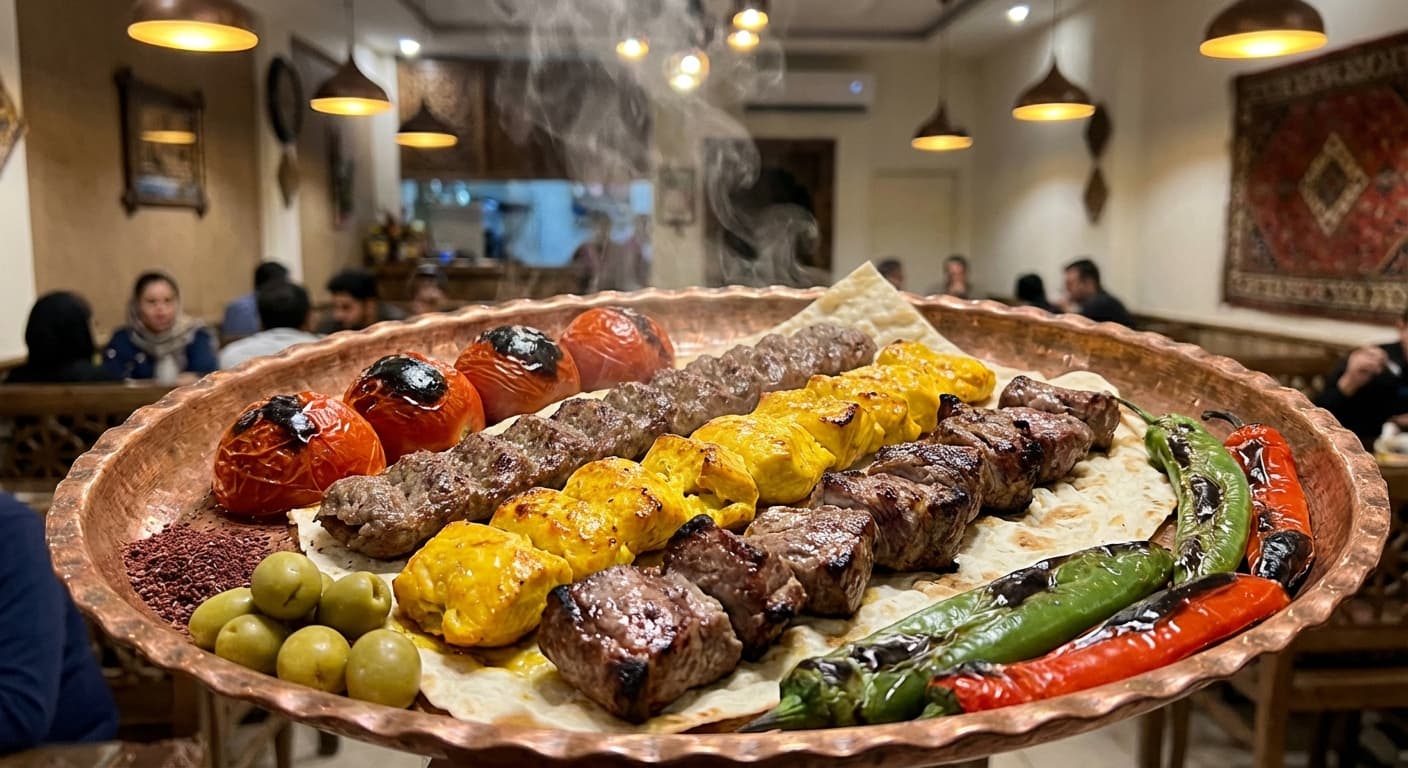
Kabab Vijeh (کباب ویژه) — Royal Persian Mixed Grill Platter
Persian · Kebabs · 70 min
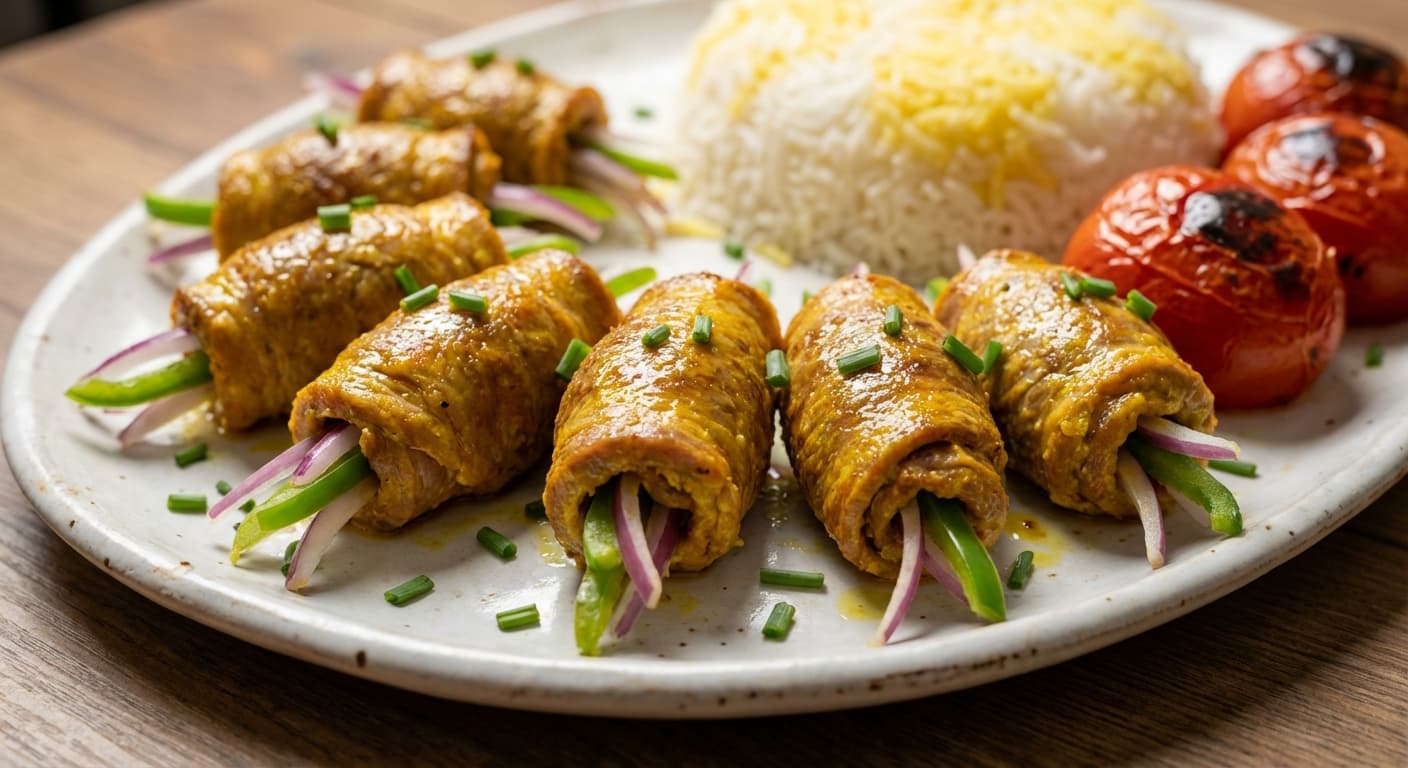
Bulgar Kabab (کباب بلغار) — Persian Rolled Saffron Fillets
Persian · Kebabs · 37 min
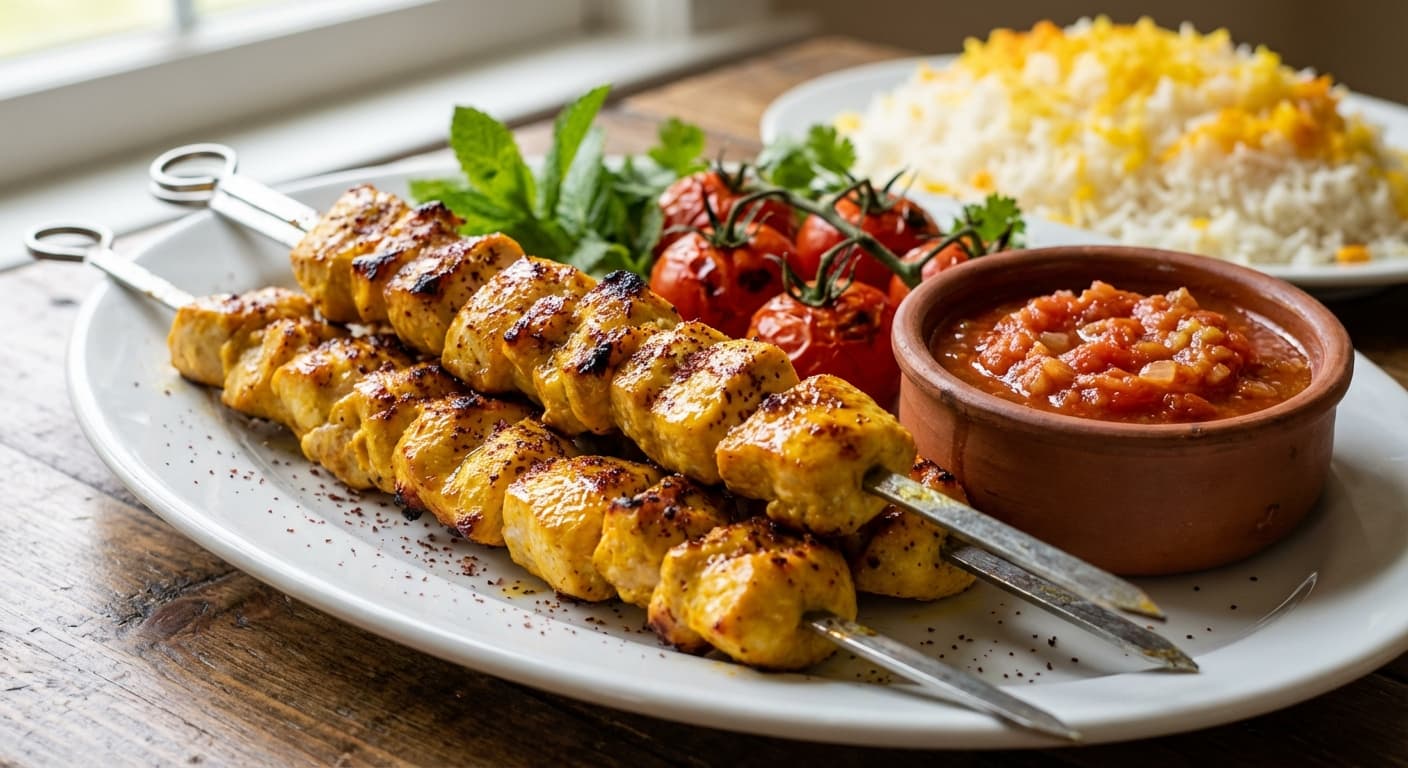
Jujeh Kabab (جوجه کباب) — Saffron-Turmeric Chicken with Rustic Tomato Sauce
Persian · Kebabs · 45 min
Tinolang Manok (Tinolang Manok) — Filipino Ginger Chicken Soup
Filipino · Soups · 65 min
Gaeng Som (แกงส้ม) — Thai Sour Curry with Fish and Vegetables
Thai · Soups · 60 min
Azerbaijani Milk Rice Porridge (Südlü Sıyıq) — Creamy Breakfast Bowl
Azerbaijani · Rice Dishes · 40 min
Keshkek (Keşkek) — Creamy Ceremonial Wheat and Lamb Stew
Turkish · Stews · 240 min
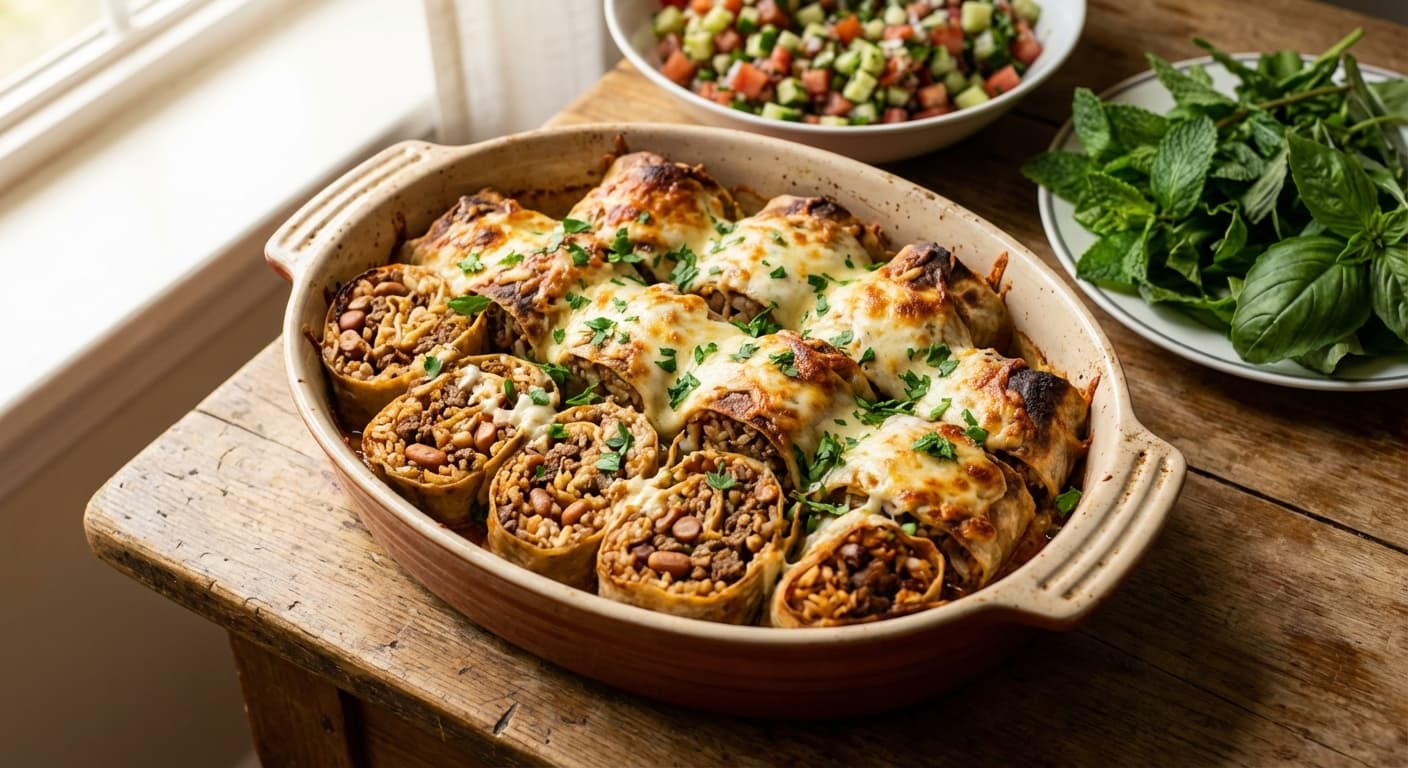
Dolmeh Lavash (دلمه لواش) — Persian Stuffed Flatbread Rolls with Mozzarella
Persian · Main Courses · 90 min
Reviews
Cooked this recipe?
Tap the stars to rate it — that's all it takes. A few words are welcome but optional.
No ratings yet. Cooked this one? Be the first to rate it — it takes one tap.