Dogroma (Dograma) — Turkmen Mutton and Bread Broth
Turkmen dograma is a hearty bowl of tender mutton, hot broth, onion, tomato, and hand-torn çörek. The name reflects the dograma technique of cutting or tearing ingredients into small pieces before serving.
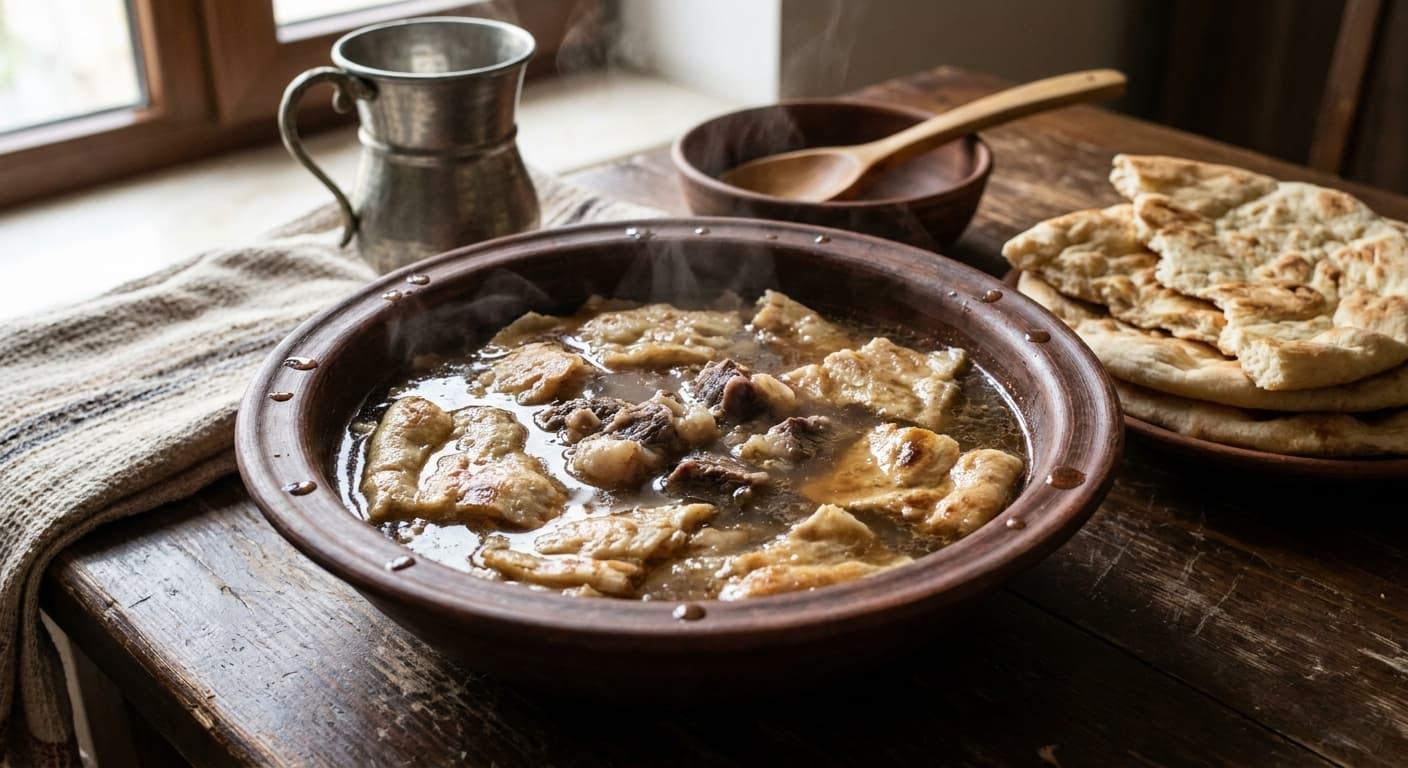
Printable Recipe Card
Servings: 6 · Total: 175 min · Difficulty: medium
Ingredients (quick list)
- 1.2 kg halal bone-in lamb shoulder (mutton is more traditional if available)
- 500 g lamb neck bones (adds body to the broth)
- 3 l cold water
- 1 yellow onion (peeled and halved)
- 12 g fine sea salt
- 1 tsp black peppercorns
- 2 yellow onions (thinly sliced)
- 3 ripe tomatoes (diced into 1 cm pieces)
- 450 g Turkmen çörek flatbread (one-day-old bread tears cleanly and absorbs broth well)
- 0.5 bunch fresh cilantro (finely chopped)
- 1 tsp freshly ground black pepper
Steps (summary)
- Rinse the lamb shoulder and lamb neck bones under cold running water, then place them in a large heavy pot with 3 l cold water.…
- Add the halved onion, 12 g fine sea salt, and 1 tsp black peppercorns to the pot. Reduce the heat to low, cover the pot with th…
- Lift the cooked lamb onto a tray and strain the broth through a fine sieve into a clean pot. Discard the boiled onion and peppe…
- Pull the lamb from the bones and remove any large pieces of gristle or excess fat. Chop the meat finely with a knife into small…
- Put the thinly sliced onions in a bowl and rinse them with 300 ml cold water for 20 seconds to soften their sharpness. Drain we…
- Tear the çörek by hand into rough 2 cm pieces and divide it among 6 deep serving bowls. Hand-tearing is important because the i…
+ 2 more steps in the full instructions section below.
Cultural Background
Dograma is closely tied to Turkmen hospitality and Gurban Bayram tables, where bread and meat are shared generously. Caroline Eden and Glenn Randall Mack both frame Turkmen food culture around bread, livestock, and communal serving.
Equipment
💡 Tips
- Use mutton rather than mild young lamb when possible, because its deeper flavor is especially prized in traditional Turkmen dograma.
- Do not boil the broth aggressively after skimming; a low simmer keeps the liquid clear and prevents the meat from becoming stringy.
- Tear the çörek just before serving so it absorbs hot broth without collapsing completely.
⚠️ Common Mistakes
❌ Adding the çörek too early and letting it sit in broth for a long time.
✅ Fix: Tear the bread into bowls at the last moment and ladle hot broth over it just before serving.
❌ Using only boneless lean meat.
✅ Fix: Include bones or neck pieces so the broth has enough body and the finished dograma tastes full.
❌ Boiling the broth hard throughout cooking.
✅ Fix: After the first skim, keep the liquid at a quiet simmer to protect both clarity and tenderness.
🧊 How to Store
Store broth and chopped meat separately from the torn çörek for up to 3 days in airtight containers in the refrigerator. Reheat the broth and meat until steaming, then add fresh or briefly warmed bread only at serving time.
📅 Make Ahead
Cook the broth and lamb 1 day ahead, then chill them separately. Skim any hardened fat if desired, reheat until steaming, and assemble with freshly torn çörek just before serving.
🍽️ Pairs Well With
- Extra çörek
- sliced raw onion
- hot green tea
- chal
- fresh tomato and cucumber salad.
Regional Variations
- Some Turkmen households prepare dograma with mutton head meat for major feast days, using the same chopped meat and torn bread structure.
- In lighter home versions, the tomato is reduced or omitted so the broth, onion, and çörek remain the main flavors.
- A few families add fresh herbs only at the table, allowing each person to keep the bowl plain or make it more aromatic.
Ingredients
- 1.2 kghalal bone-in lamb shoulder (mutton is more traditional if available)
- 500 glamb neck bones (adds body to the broth)
- 3 lcold water
- 1yellow onion (peeled and halved)
- 12 gfine sea salt
- 1 tspblack peppercorns
- 2yellow onions (thinly sliced)
- 3ripe tomatoes (diced into 1 cm pieces)
- 450 gTurkmen çörek flatbread (one-day-old bread tears cleanly and absorbs broth well)
- 0.5 bunchfresh cilantro (finely chopped)
- 1 tspfreshly ground black pepper
🔄 Substitutions
- mutton or bone-in lamb shoulder→ bone-in goat shoulder
- Turkmen çörek flatbread→ dense tandoor-style flatbread or unsweetened naan
- fresh cilantro→ flat-leaf parsley
Instructions
- 1
Rinse the lamb shoulder and lamb neck bones under cold running water, then place them in a large heavy pot with 3 l cold water. Bring the pot slowly to a gentle simmer over medium heat, skimming off foam for 15 minutes so the dograma broth stays clear and clean-tasting.
- 2
Add the halved onion, 12 g fine sea salt, and 1 tsp black peppercorns to the pot. Reduce the heat to low, cover the pot with the lid slightly ajar, and simmer for 2 hours until the meat pulls away from the bone with very little resistance.
- 3
Lift the cooked lamb onto a tray and strain the broth through a fine sieve into a clean pot. Discard the boiled onion and peppercorns, then keep the broth hot over low heat while the meat cools for 10 minutes.
- 4
Pull the lamb from the bones and remove any large pieces of gristle or excess fat. Chop the meat finely with a knife into small bite-size pieces, because the classic dograma texture depends on meat, bread, and vegetables being evenly cut or torn.
- 5
Put the thinly sliced onions in a bowl and rinse them with 300 ml cold water for 20 seconds to soften their sharpness. Drain well, then mix the onions with the diced tomatoes and chopped lamb so the fresh vegetables warm gently from the meat without losing their brightness.
- 6
Tear the çörek by hand into rough 2 cm pieces and divide it among 6 deep serving bowls. Hand-tearing is important because the irregular edges soak up broth better than neat cubes and give dograma its traditional rustic body.
- 7
Divide the lamb, onion, and tomato mixture over the torn çörek in each bowl. Ladle about 350 ml of very hot broth into each serving, making sure the bread is thoroughly moistened but not crushed into paste.
- 8
Rest the bowls for 2 minutes so the çörek absorbs the broth while still keeping some texture. Finish each bowl with chopped cilantro and freshly ground black pepper, then serve immediately while the broth is steaming.
🪪 Recipe Passport
Cultural Background
Dograma is closely tied to Turkmen hospitality and Gurban Bayram tables, where bread and meat are shared generously. Caroline Eden and Glenn Randall Mack both frame Turkmen food culture around bread, livestock, and communal serving.
Regional Variations
Researched from multiple sources and validated by the Zaffaron editorial team. Every recipe is tested for accuracy, measurements, and cultural authenticity.
📚 Sources & Cultural References
- Caroline Eden — Red Sands: Reportage and Recipes through Central Asia, from Hinterland to Heartland — (2020)
- Glenn Randall Mack — Food Culture in Russia and Central Asia — (2005)
Sources cited by the Zaffaron editorial team during recipe research. Cultural and culinary references supporting authenticity claims.
Nutrition per serving
Pairs well with
If you enjoyed this recipe, here are a few related Zaffaron recipes to try next.
Does your family make this differently?
Every family has their own version. Maybe your grandmother adds a secret ingredient, or your aunt has a completely different technique. Preserve your family's version — with their name on it, forever.
You Might Also Like
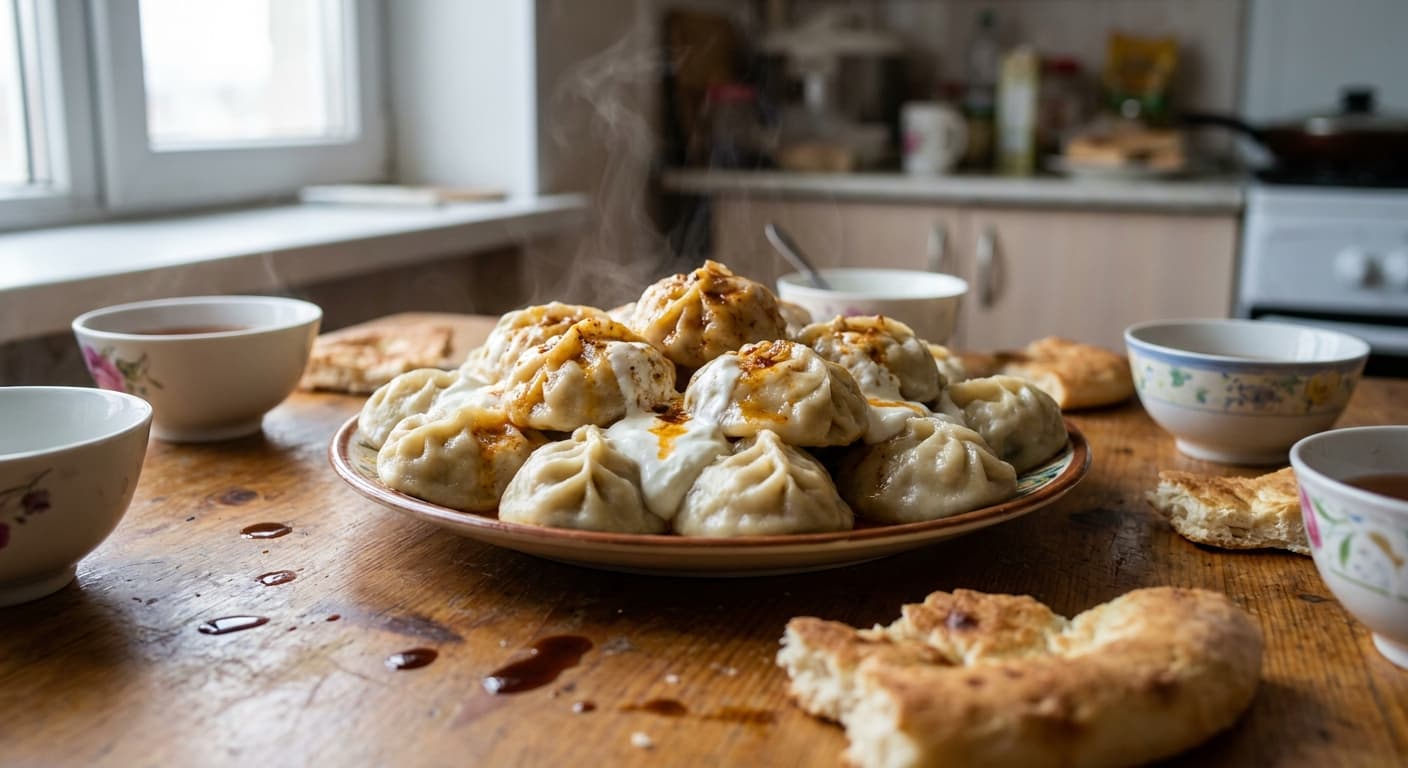
Turkmen Manty (Manty Türkmen) — Steamed Lamb Dumplings
Turkmen · Main Courses · 110 min
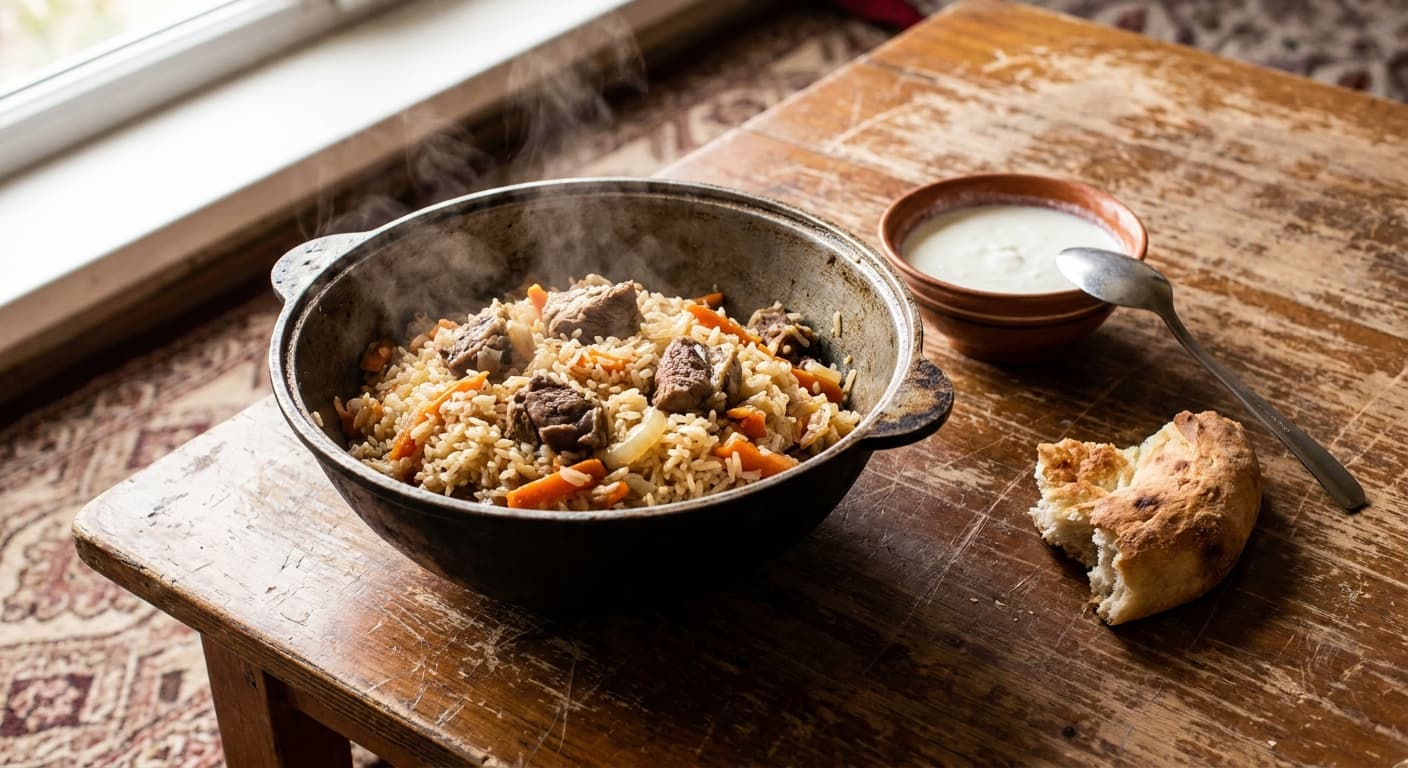
Chekdirme (Çekdirme) — Turkmen Lamb and Tomato Rice
Turkmen · Rice Dishes · 100 min
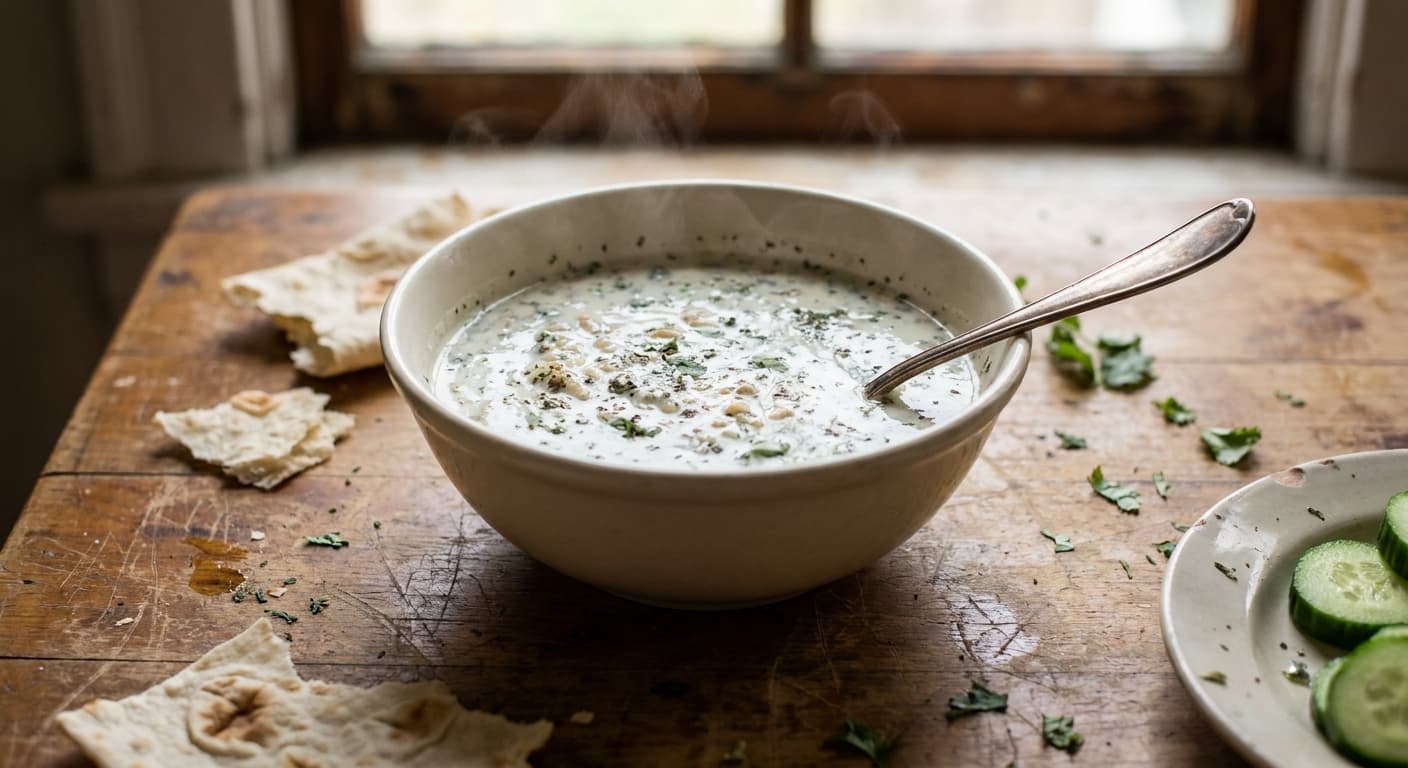
Spas (Սպաս) — Armenian Yogurt-and-Wheat Soup
Armenian · Soups · 70 min
Uzbek Shurpa (Шўрпа) — Lamb and Vegetable Soup
Uzbek · Soups · 160 min
Uzbek Dimlama (Dimlama) — Layered Lamb and Vegetable Stew
Uzbek · Stews · 125 min
Ash-e Torsh (آش ترش) — Sour Herb and Legume Soup
Persian · Soups · 145 min
Ash-e Sak (آش ساک) — Golestani Spinach, Legume, and Meatball Soup
Persian · Soups · 175 min
Bulgarian Tarator (Таратор) — Cold Yogurt Cucumber Soup
Bulgarian · Soups · 15 min
Reviews
Cooked this recipe?
Tap the stars to rate it — that's all it takes. A few words are welcome but optional.
No ratings yet. Cooked this one? Be the first to rate it — it takes one tap.