Gogal (گوگال) — Azerbaijani Sweet Saffron and Cardamom Layered Pastry
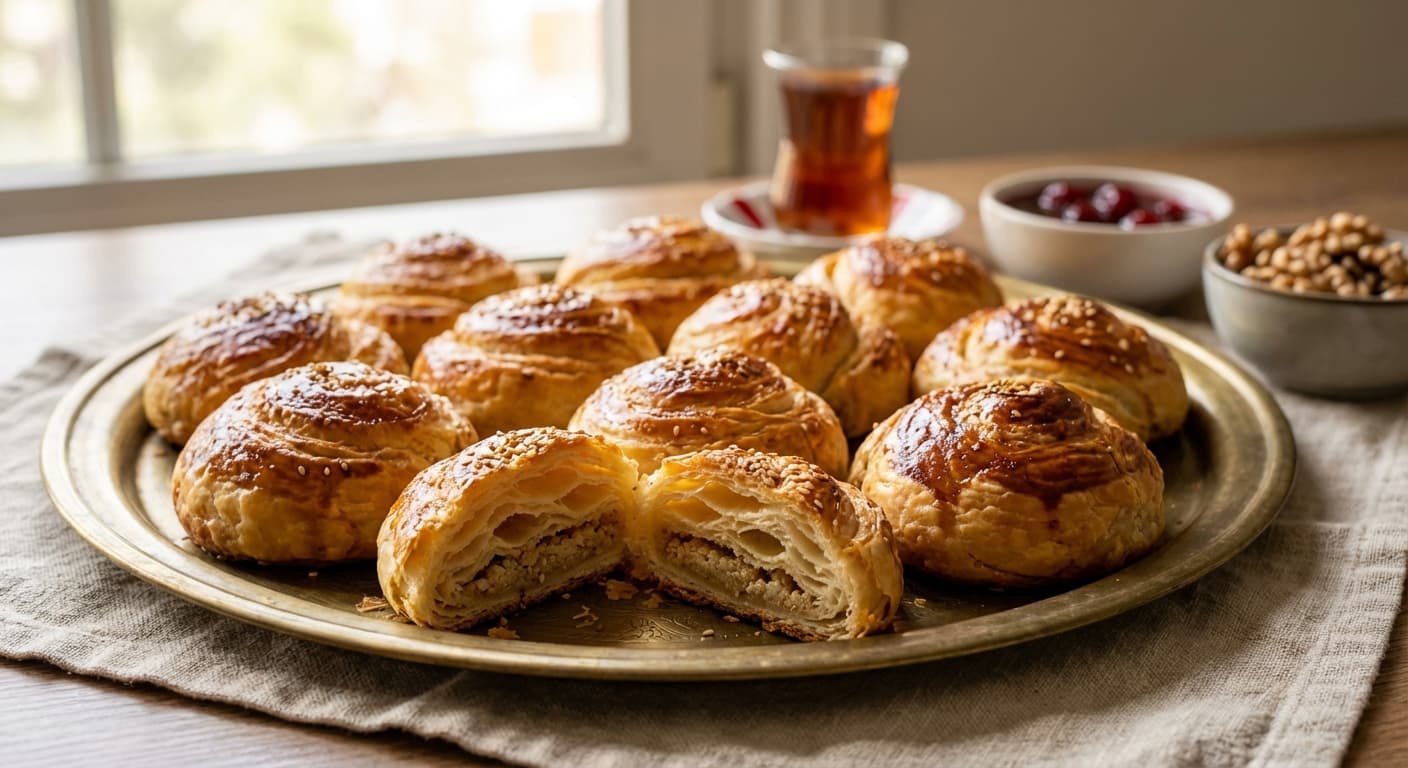
Gogal is a beloved Azerbaijani layered pastry, traditionally baked for spring celebrations and shared with tea. This sweet version perfumes flaky layers with saffron, cardamom, and buttery richness, echoing the region’s love of aromatic spices.
Printable Recipe Card
Servings: 12 · Total: 100 min · Difficulty: hard
Ingredients (quick list)
- 600 g All-purpose flour
- 7 g Instant yeast (1 standard packet)
- 60 g Granulated sugar
- 6 g Fine salt
- 240 ml Whole milk (lukewarm, about 38°C)
- 2 Egg yolks
- 60 g Unsalted butter (melted and cooled)
- 3 tsp Ground cardamom
- 0.2 g Saffron threads (about 1/2 tsp loosely packed)
- 30 ml Hot water (just off the boil)
- 1 Egg yolk
- 12 g Sesame seeds (about 1 tbsp)
Steps (summary)
- Bloom the saffron first so its color and aroma fully develop. Crush the saffron threads between your fingers, pour over 30 ml h…
- Make the dough by combining flour, instant yeast, sugar, and salt in a large bowl. Add the lukewarm milk, 2 egg yolks, and 60 g…
- Knead the dough for 8–10 minutes until smooth and elastic, adding no extra flour unless the dough is truly wet. Cover the bowl…
- Prepare the sweet spice filling while the dough rises. Mix 150 g sugar, 3 tsp ground cardamom, and 20 g flour until evenly comb…
- Divide the risen dough into 12 equal pieces, about 80–85 g each, for consistent baking. Roll each piece into a tight ball, cove…
- Roll the first dough ball into a very thin circle about 22–24 cm wide, using light flour only if it sticks. Brush the surface w…
+ 7 more steps in the full instructions section below.
Cultural Background
In Azerbaijan, gogal is closely associated with springtime festivities and tea-table hospitality, often baked in batches for sharing. Its layered form and golden hue symbolize abundance, while saffron and cardamom reflect the region’s historic spice routes.
Equipment
💡 Tips
- Keep the melted butter warm (about 35–40°C) so it brushes in a thin film; if it cools and thickens, rewarm briefly to avoid tearing the dough.
- Roll each sheet as thin as you can without holes; thin sheets create more distinct flakes and prevent a bready center.
- Use the saffron infusion sparingly per layer (about 1/2 tsp) to perfume the pastry without making the stack wet and heavy.
⚠️ Common Mistakes
❌ Dough turns tough and shrinks while rolling.
✅ Fix: Rest the dough balls 10 minutes before rolling and keep the workspace lightly floured; avoid overworking and forcing the pin.
❌ Layers fuse and look bready instead of flaky.
✅ Fix: Brush a thin, complete butter layer to the edges on every sheet and avoid pressing down hard when stacking and shaping.
❌ Pastries leak butter and fry on the tray.
✅ Fix: Bake at 190°C on the middle rack and do not over-butter; use a thin film per layer and cool on the tray for 10 minutes to reabsorb.
🧊 How to Store
Store cooled gogal in an airtight container at room temperature for up to 2 days. Re-crisp in a 160°C oven for 6–8 minutes, then cool 5 minutes before eating to restore flakiness without drying the crumb.
📅 Make Ahead
Mix the dry filling up to 7 days ahead and store airtight at room temperature. You can also shape the pastries, refrigerate covered for up to 12 hours, then egg-wash and bake straight from the fridge, adding 2–3 minutes to bake time.
🍽️ Pairs Well With
- Black tea
- Azerbaijani-style jam (murabba)
- clotted cream
- fresh fruit.
Regional Variations
- Savory gogal uses turmeric, pepper, and sometimes cumin in the filling instead of sugar, creating a golden, spiced bread-like pastry for tea.
- Some Baku-style versions shape the dough into round coils rather than wedges, then score the top to emphasize the layers before baking.
Ingredients
- 600 gAll-purpose flour
- 7 gInstant yeast (1 standard packet)
- 60 gGranulated sugar
- 6 gFine salt
- 240 mlWhole milk (lukewarm, about 38°C)
- 2Egg yolks
- 60 gUnsalted butter (melted and cooled)
- 3 tspGround cardamom
- 0.2 gSaffron threads (about 1/2 tsp loosely packed)
- 30 mlHot water (just off the boil)
- 1Egg yolk
- 12 gSesame seeds (about 1 tbsp)
🔄 Substitutions
- Whole milk→ 2% milk
- Instant yeast→ Active dry yeast (7 g)
- Sesame seeds→ Nigella seeds
Instructions
- 1
Bloom the saffron first so its color and aroma fully develop. Crush the saffron threads between your fingers, pour over 30 ml hot water, and let it steep for 10 minutes until deeply golden.
- 2
Make the dough by combining flour, instant yeast, sugar, and salt in a large bowl. Add the lukewarm milk, 2 egg yolks, and 60 g melted butter, then mix until a shaggy dough forms and no dry flour remains.
- 3
Knead the dough for 8–10 minutes until smooth and elastic, adding no extra flour unless the dough is truly wet. Cover the bowl and let it rise in a warm place for 45–60 minutes, until it increases by about 70% rather than fully doubling.
- 4
Prepare the sweet spice filling while the dough rises. Mix 150 g sugar, 3 tsp ground cardamom, and 20 g flour until evenly combined, then keep it covered so it stays dry and clump-free.
- 5
Divide the risen dough into 12 equal pieces, about 80–85 g each, for consistent baking. Roll each piece into a tight ball, cover with a towel, and rest for 10 minutes so the gluten relaxes and rolling becomes easier.
- 6
Roll the first dough ball into a very thin circle about 22–24 cm wide, using light flour only if it sticks. Brush the surface with a thin, even layer of the 220 g melted butter, making sure the edges are coated so the layers separate.
- 7
Sprinkle about 1 heaped tablespoon (roughly 15 g) of the filling over the buttered sheet, leaving a 1 cm border. Drizzle about 1/2 tsp of the saffron infusion across the surface, then gently spread it with the back of a spoon so it perfumes the sheet without soaking it.
- 8
Repeat rolling, buttering, filling, and saffroning with the remaining dough balls, stacking each finished sheet directly on top of the previous one. Work steadily so the butter stays fluid, because cold butter can tear the thin dough and reduce flakiness.
- 9
Once all sheets are stacked, lightly press the stack to even it out without compressing the layers. Roll the stack gently to about 28–30 cm wide, then cut it into 12 equal wedges like a pizza for uniform pastries.
- 10
Shape each wedge by rolling from the wide edge toward the tip to form a snug spiral, then tuck the tip underneath so it does not unroll. Place the shaped gogal on a parchment-lined tray with 4–5 cm spacing, and rest them for 20 minutes to relax and slightly puff.
- 11
Preheat the oven to 190°C and position a rack in the middle for even browning. Whisk 1 egg yolk with 15 ml milk, then brush each pastry lightly and evenly so the layers stay visible and not glued together.
- 12
Sprinkle the tops with 12 g sesame seeds, distributing them across all pastries for a traditional finish. Bake for 22–26 minutes until deep golden with visible layered ridges, rotating the tray at minute 15 for even color.
- 13
Cool the gogal on the tray for 10 minutes so the butter reabsorbs and the layers set. Transfer to a rack and cool another 15 minutes before serving, because the aroma of saffron and cardamom opens up as the pastry cools slightly.
🪪 Recipe Passport
Cultural Background
In Azerbaijan, gogal is closely associated with springtime festivities and tea-table hospitality, often baked in batches for sharing. Its layered form and golden hue symbolize abundance, while saffron and cardamom reflect the region’s historic spice routes.
Regional Variations
Researched from multiple sources and validated by the Zaffaron editorial team. Every recipe is tested for accuracy, measurements, and cultural authenticity.
Nutrition per serving
Pairs well with
If you enjoyed this recipe, here are a few related Zaffaron recipes to try next.
- Pakhlava (پاخلاوا) — Azerbaijani Diamond-Cut Baklava with Cardamom
- Sac Qovurma (Sacda ət və tərəvəz) — Fast-cooked Azerbaijani meat and vegetables on a saj
- Stuffed Eggplant (Badımcan Dolması) — Azerbaijani eggplants filled with spiced meat and herbs
- Kuku Sabzi (کؤکو) — Azerbaijani Herb Omelet Fried in a Pan
Does your family make this differently?
Every family has their own version. Maybe your grandmother adds a secret ingredient, or your aunt has a completely different technique. Preserve your family's version — with their name on it, forever.
You Might Also Like
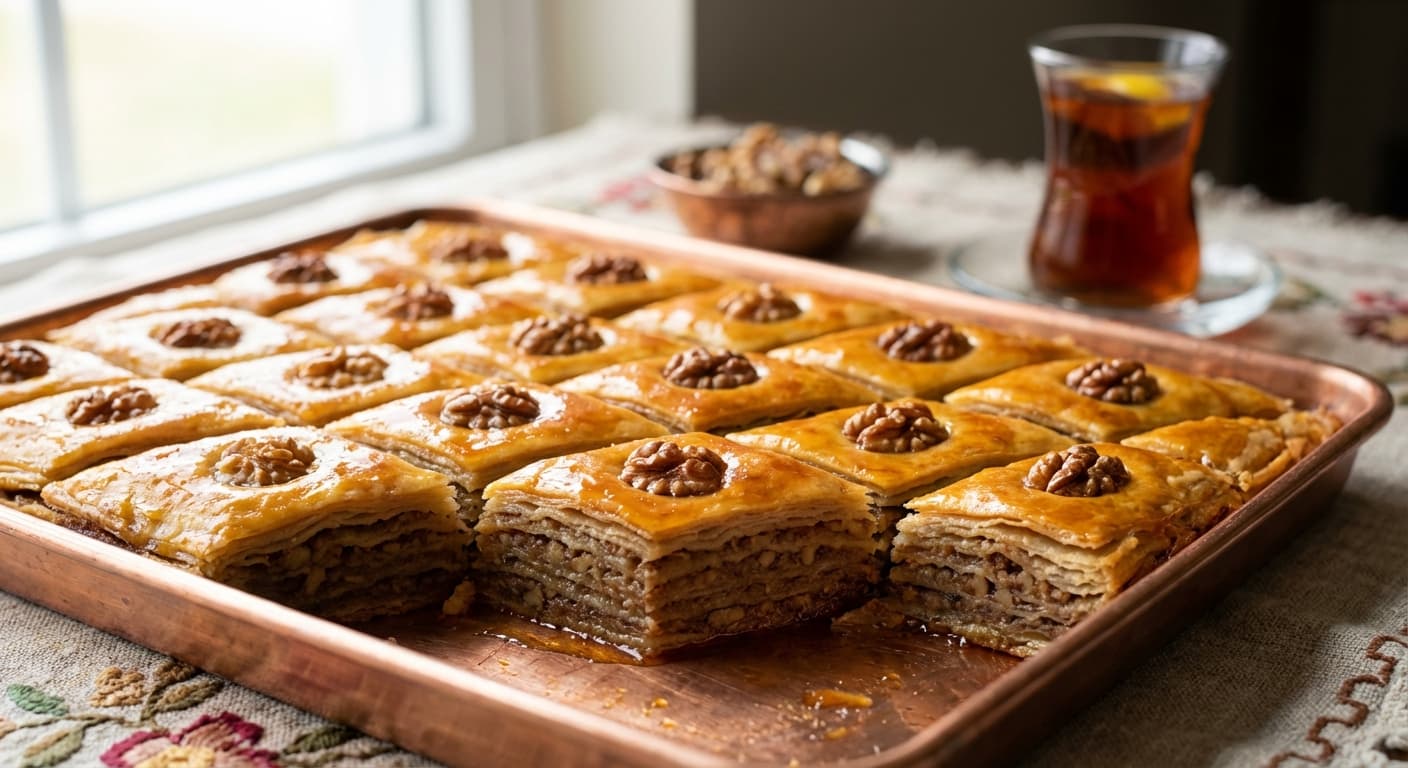
Baku Pakhlava (باكو پخلاوا) — Azerbaijani Diamond-layer pastry with nuts and saffron syrup
Azerbaijani · Desserts · 115 min
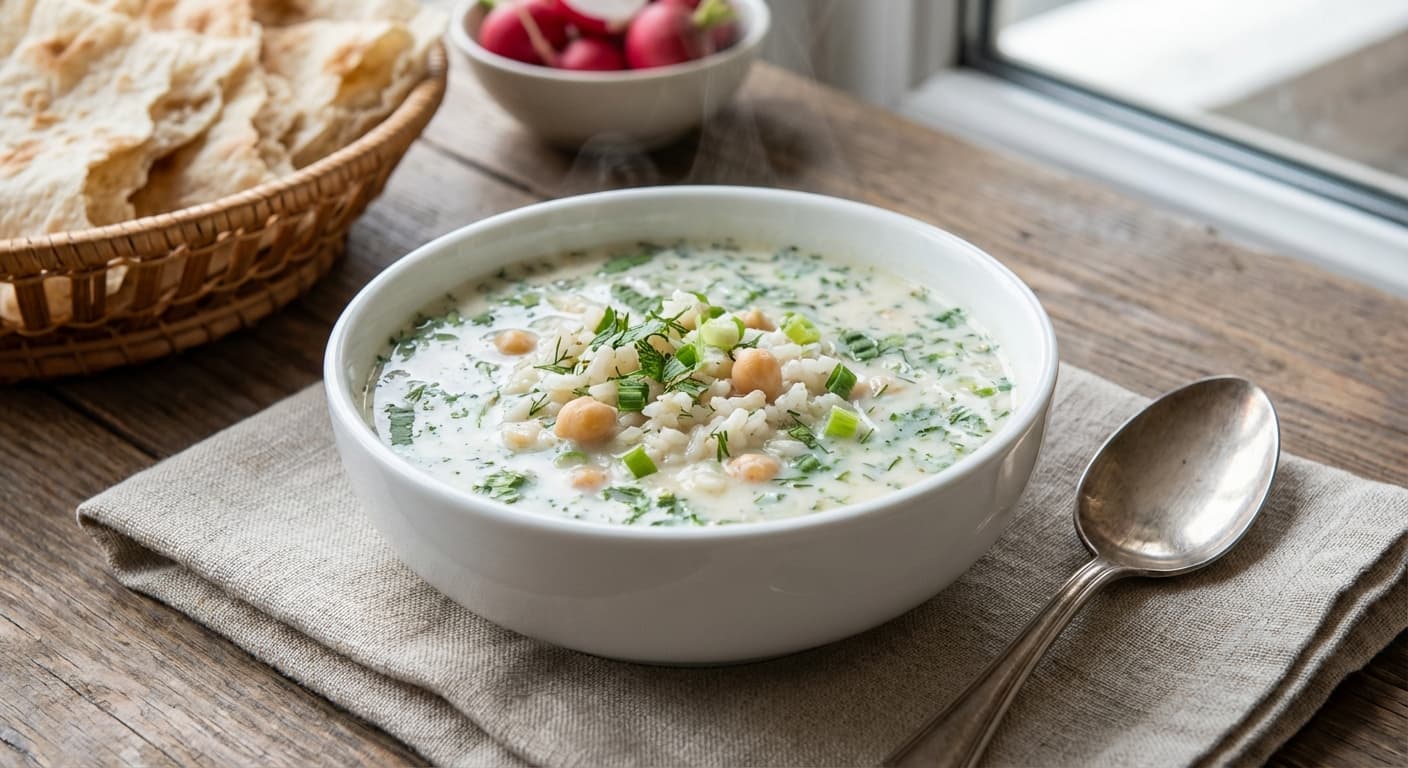
Hot Dovgha (دوغا) — Azerbaijani Warm Yogurt-Herb Soup with Rice and Chickpeas
Azerbaijani · Soups · 55 min
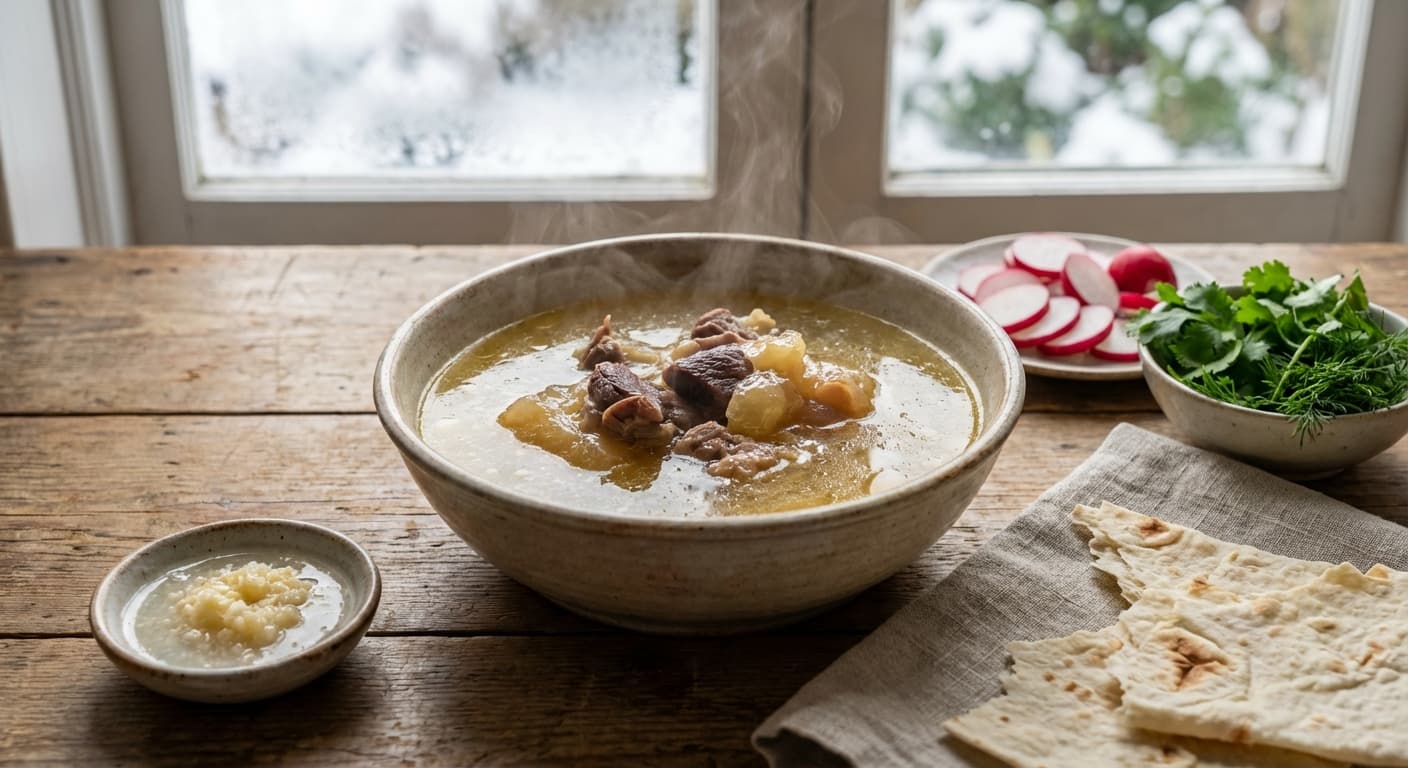
Khash (خاش) — Azerbaijani Long-simmered Trotters Breakfast Soup
Azerbaijani · Soups · 525 min
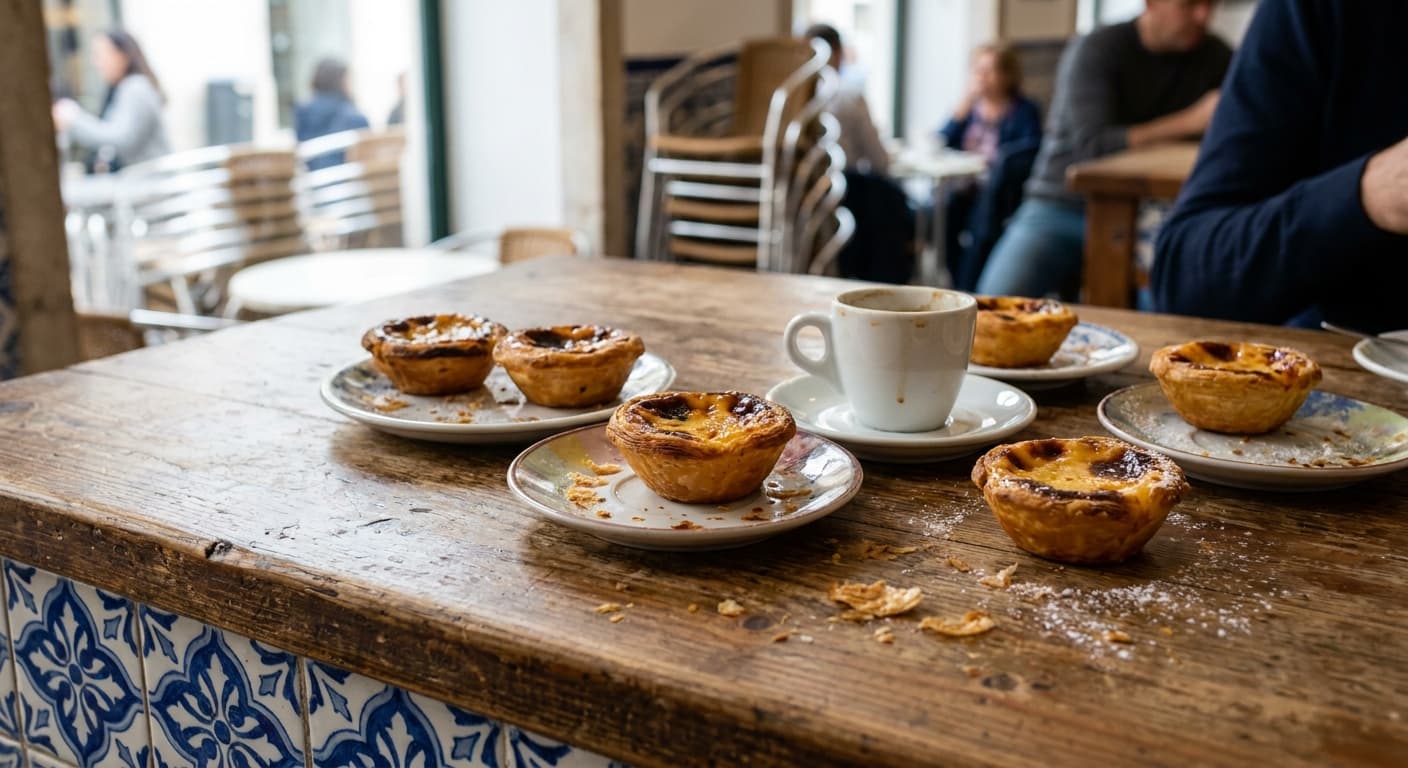
Portuguese Custard Tarts (Pastéis de Nata) — Flaky Lisbon-Style Custard Pastries
Portuguese · Desserts · 87 min

Halo-Halo (Halo-Halo) — Filipino Shaved Ice Dessert
Filipino · Desserts · 40 min
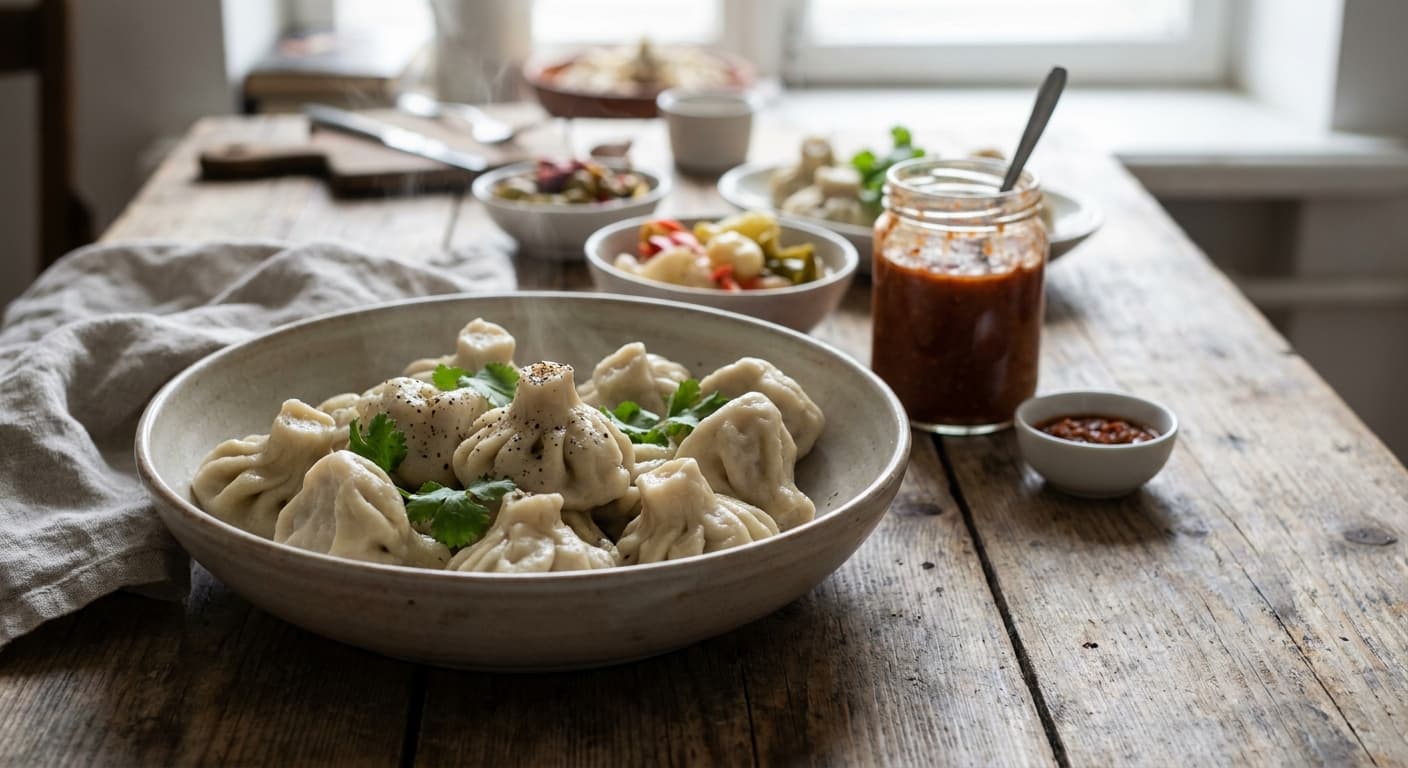
Georgian Khinkali (ხინკალი) — Juicy Meat Soup Dumplings
Georgian · Main Courses · 100 min
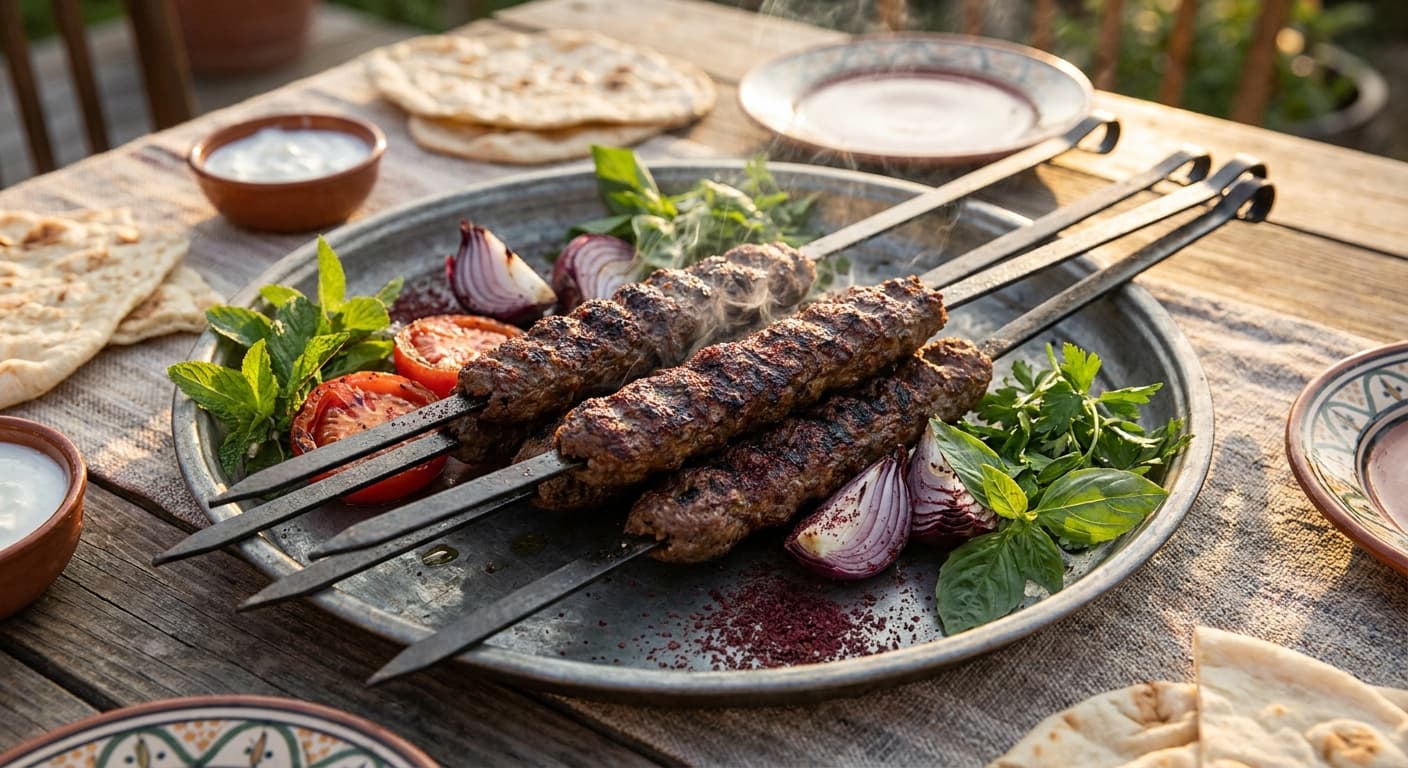
Authentic Kabab Koobideh (کباب کوبیده) — Persian Minced Lamb Skewers
Persian · Kebabs · 40 min
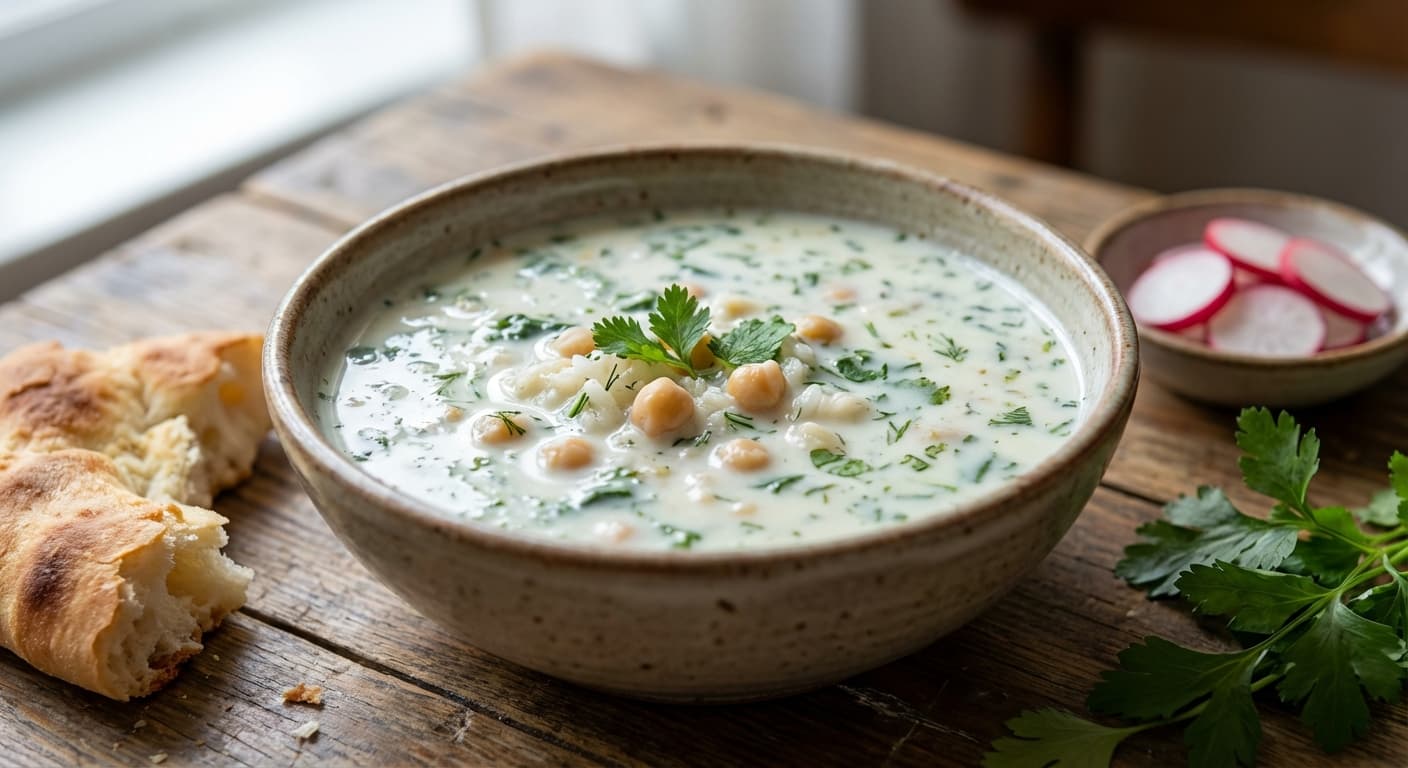
Dovga (دوغا) — Azerbaijani Yogurt, Herb, and Chickpea Soup
Azerbaijani · Soups · 55 min
Reviews
Cooked this recipe?
Tap the stars to rate it — that's all it takes. A few words are welcome but optional.
No ratings yet. Cooked this one? Be the first to rate it — it takes one tap.