Kashk-e Bademjan (کشک بادمجان) — Persian Smoked Eggplant & Fermented Whey Dip
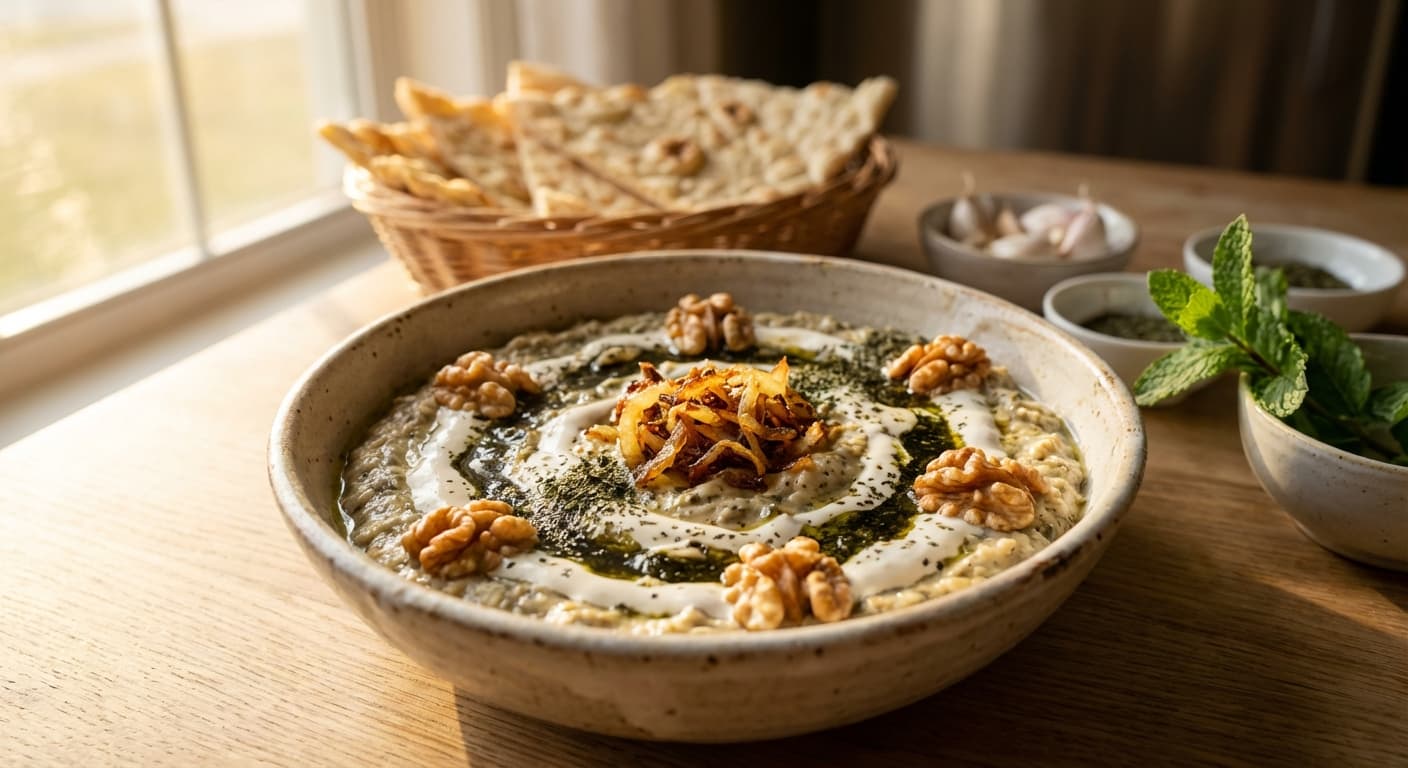
Kashk-e Bademjan is a classic Persian dip made from smoky eggplant, caramelized onions, garlic, dried mint, and tangy fermented whey. Finished with walnuts and mint oil, it’s velvety, savory, and deeply aromatic.
Printable Recipe Card
Servings: 6 · Total: 105 min · Difficulty: medium
Ingredients (quick list)
- 900 g Italian eggplants (about 3 medium; peeled in stripes (optional) and cut lengthwise into 2–3 thick slabs)
- 10 g Sea salt (divided; plus more to taste)
- 90 ml Vegetable oil (divided)
- 450 g Yellow onions (thinly sliced)
- 2 tsp Turmeric powder
- 18 g Garlic (6 cloves, finely grated or minced)
- 2 tsp Dried mint
- 120 ml Warm water (plus 15–45 ml as needed to adjust texture)
- 180 ml Kashk (fermented liquid whey) (well-shaken; plus 15–30 ml for garnish if desired)
- 1 tsp Freshly cracked black pepper (plus more to taste)
- 50 g Walnuts (toasted and coarsely chopped)
Steps (summary)
- Prepare the eggplant for a creamy, non-bitter dip. Slice the eggplants into thick slabs and sprinkle with 6 g of the salt on bo…
- Smoke and soften the eggplant. Heat a grill pan or cast-iron skillet over high heat until very hot, about 3 minutes. Sear eggpl…
- Caramelize the onions (piaz dagh). In a wide skillet over medium heat, warm 45 ml of the vegetable oil. Add sliced onions and c…
- Make mint-garlic oil without burning the herbs. In the same skillet, push onions to the sides and add the remaining 45 ml oil t…
- Build the base and mash to a velvety texture. Peel away any tough eggplant skin if needed, then add the hot, soft eggplant to t…
- Add kashk carefully and finish seasoning. Lower heat to low and stir in 180 ml kashk. Simmer 3–5 minutes, stirring frequently,…
+ 1 more steps in the full instructions section below.
Cultural Background
Kashk-e Bademjan is commonly served in Iranian homes and gatherings as part of a shared table, where dips and small plates encourage communal eating. The combination of eggplant, fried onions, mint, and fermented whey reflects long-standing pantry staples and techniques used to build depth from simple ingredients.
Equipment
💡 Tips
- For deeper smokiness, char the eggplants directly over a gas flame (turned frequently) before roasting; wipe off loose soot and proceed.
- If your kashk is very salty or thick, dilute it with 15–30 ml warm water before adding so it blends smoothly.
- Keep dried mint moving in hot oil; it can go from fragrant to bitter in under 15 seconds.
- For a silkier texture, mash longer or briefly blend 10–15 seconds, then return to the pan to re-warm (avoid over-blending into a puree).
- Toast walnuts in a dry pan over medium heat for 3–5 minutes, shaking often, until fragrant; cool before chopping.
⚠️ Common Mistakes
❌ Skipping the drying step after salting the eggplant
💡 Why: Wet surfaces steam and absorb more oil, leading to a greasy, watery dip with less smokiness.
✅ Fix: Salt for 20 minutes, then pat very dry; sear on a very hot surface before roasting to drive off moisture.
❌ Burning dried mint in hot oil
💡 Why: Scorched mint turns bitter quickly and can dominate the dip unpleasantly.
✅ Fix: Lower the heat, add mint last, and stir constantly for 20–30 seconds only; remove from heat if it darkens too fast.
❌ Boiling hard after adding kashk
💡 Why: High heat can cause dairy to split and dull the tangy flavor.
✅ Fix: Keep heat low, stir frequently, and only gently simmer 3–5 minutes; thin with warm water if needed.
❌ Under-cooking the eggplant
💡 Why: Firm eggplant fibers will not mash smoothly and can taste astringent rather than sweet and smoky.
✅ Fix: Roast until fully collapsing and very tender (20–25 minutes at 220°C / 425°F after charring), then mash while hot.
🧊 How to Store
Cool to room temperature within 2 hours, then refrigerate in an airtight container for up to 3 days. Reheat gently on low with 15–30 ml warm water to loosen; avoid boiling after adding kashk. Not recommended for freezing due to texture separation.
📅 Make Ahead
Cook fully up to 2 days ahead and refrigerate. Reheat on low with 15–30 ml warm water, then add fresh garnishes (reserved onions, walnuts, and a drizzle of kashk) just before serving for the best contrast.
🍽️ Pairs Well With
- Warm flatbread (lavash
- sangak
- or pita)
- Fresh herbs (mint
- basil
- tarragon
- scallions)
- Radishes
- cucumber
- and cherry tomatoes
- Pickles or torshi
- As part of a mezze spread alongside yogurt dips
Regional Variations
- Tehran-style (urban home cooking)Often mashed very smooth and served warm with generous onion-garlic-mint oil on top; walnuts may be used as a garnish rather than mixed in.
- Caspian-influenced (northern Iran)Sometimes made with a slightly looser texture and more garlic, leaning into brighter tang; some cooks add extra toasted walnuts for richness.
- Diaspora adaptation (outside Iran)When kashk is hard to find, cooks may use strained yogurt or sour cream; the dip remains creamy but with a milder, less fermented flavor.
Ingredients
- 900 gItalian eggplants (about 3 medium; peeled in stripes (optional) and cut lengthwise into 2–3 thick slabs)
- 10 gSea salt (divided; plus more to taste)
- 90 mlVegetable oil (divided)
- 450 gYellow onions (thinly sliced)
- 2 tspTurmeric powder
- 18 gGarlic (6 cloves, finely grated or minced)
- 2 tspDried mint
- 120 mlWarm water (plus 15–45 ml as needed to adjust texture)
- 180 mlKashk (fermented liquid whey) (well-shaken; plus 15–30 ml for garnish if desired)
- 1 tspFreshly cracked black pepper (plus more to taste)
- 50 gWalnuts (toasted and coarsely chopped)
🔄 Substitutions
- Kashk (fermented liquid whey)→ Full-fat Greek yogurt mixed with 1 tsp lemon juice per 120 ml yogurt
- Italian eggplants→ Globe eggplant, 900 g
- Vegetable oil→ Neutral olive oil or sunflower oil
Instructions
- 1
Prepare the eggplant for a creamy, non-bitter dip. Slice the eggplants into thick slabs and sprinkle with 6 g of the salt on both sides. Set in a colander over a tray for 20 minutes to draw out moisture. Pat very dry with paper towels so they brown instead of steaming.
- 2
Smoke and soften the eggplant. Heat a grill pan or cast-iron skillet over high heat until very hot, about 3 minutes. Sear eggplant slabs 2–3 minutes per side until deeply charred in spots. Transfer to a baking tray and roast at 220°C / 425°F for 20–25 minutes until collapsing and very tender.
- 3
Caramelize the onions (piaz dagh). In a wide skillet over medium heat, warm 45 ml of the vegetable oil. Add sliced onions and cook 12–15 minutes, stirring often, until golden and reduced. Add turmeric and cook 60 seconds to bloom. Remove about one-third of the onions for garnish.
- 4
Make mint-garlic oil without burning the herbs. In the same skillet, push onions to the sides and add the remaining 45 ml oil to the center. Add garlic and cook 30–45 seconds until fragrant. Add dried mint and stir constantly for 20–30 seconds; it should darken slightly but not turn bitterly brown.
- 5
Build the base and mash to a velvety texture. Peel away any tough eggplant skin if needed, then add the hot, soft eggplant to the skillet. Add warm water (120 ml) and the remaining 4 g salt. Mash with a potato masher 3–4 minutes, simmering gently, until mostly smooth and cohesive.
- 6
Add kashk carefully and finish seasoning. Lower heat to low and stir in 180 ml kashk. Simmer 3–5 minutes, stirring frequently, until glossy and thick, adding 15–45 ml warm water if it becomes too stiff. Season with black pepper and adjust salt. Rest 10 minutes to let flavors settle.
- 7
Plate like a traditional mezze and garnish for contrast. Spoon into a shallow serving dish and swirl the surface with the back of a spoon. Top with reserved caramelized onions, toasted walnuts, and (optional) a thin drizzle of 15–30 ml kashk. Serve warm or at room temperature within 2 hours.
🪪 Recipe Passport
Cultural Background
Kashk-e Bademjan is commonly served in Iranian homes and gatherings as part of a shared table, where dips and small plates encourage communal eating. The combination of eggplant, fried onions, mint, and fermented whey reflects long-standing pantry staples and techniques used to build depth from simple ingredients.
Regional Variations
Researched from multiple sources and validated by the Zaffaron editorial team. Every recipe is tested for accuracy, measurements, and cultural authenticity.
Nutrition per serving
Pairs well with
If you enjoyed this recipe, here are a few related Zaffaron recipes to try next.
Does your family make this differently?
Every family has their own version. Maybe your grandmother adds a secret ingredient, or your aunt has a completely different technique. Preserve your family's version — with their name on it, forever.
You Might Also Like
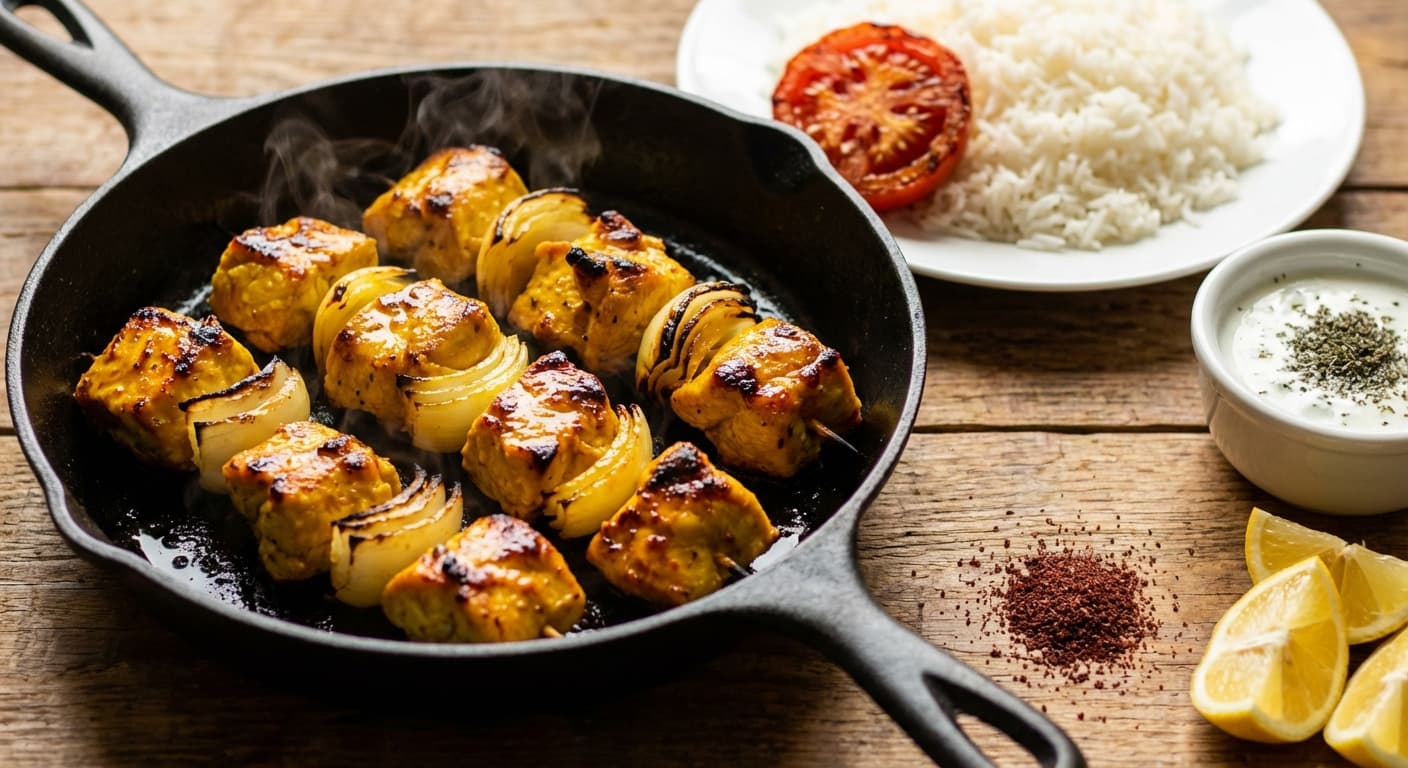
Pan-Seared Joojeh Kebab (جوجه کباب تابهای) — Persian Saffron Skillet Chicken
Persian · Kebabs · 34 min
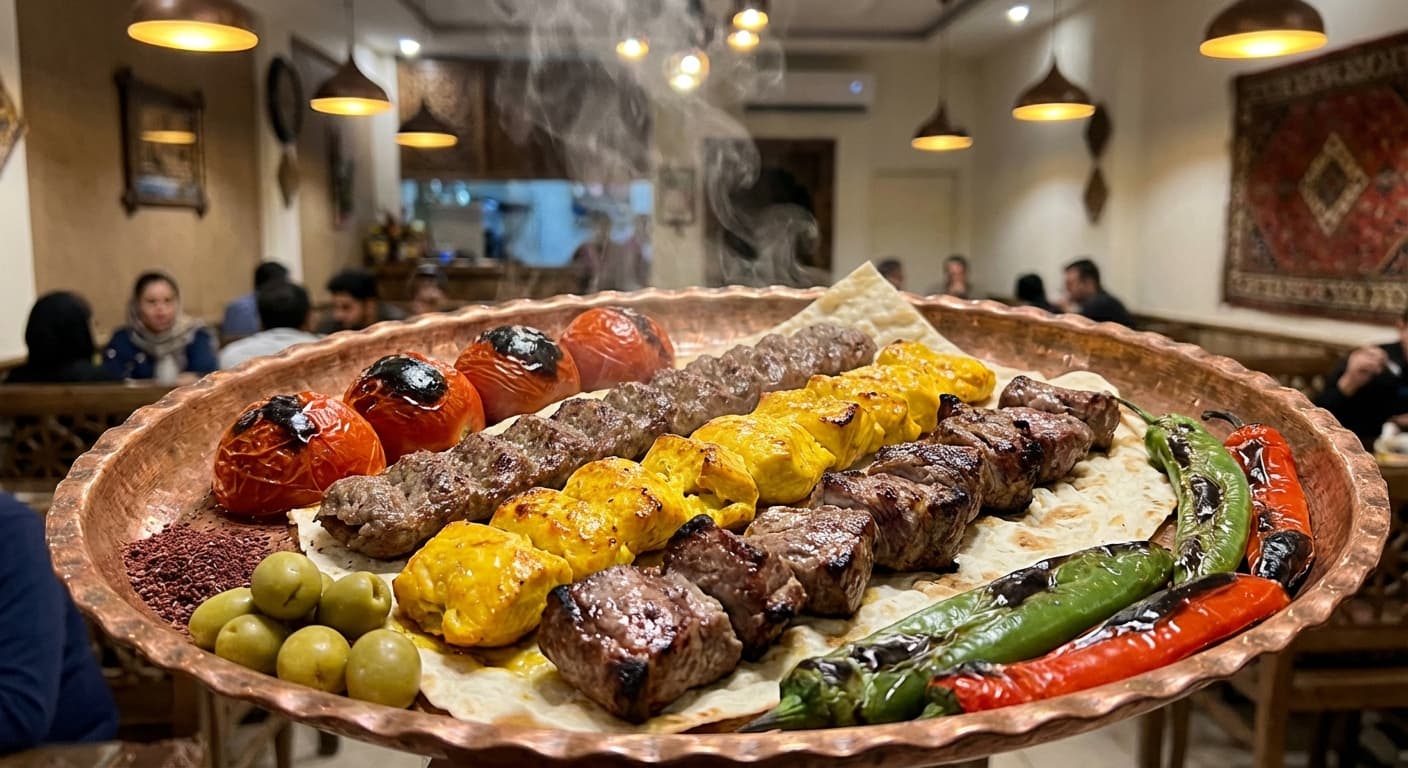
Kabab Vijeh (کباب ویژه) — Royal Persian Mixed Grill Platter
Persian · Kebabs · 70 min
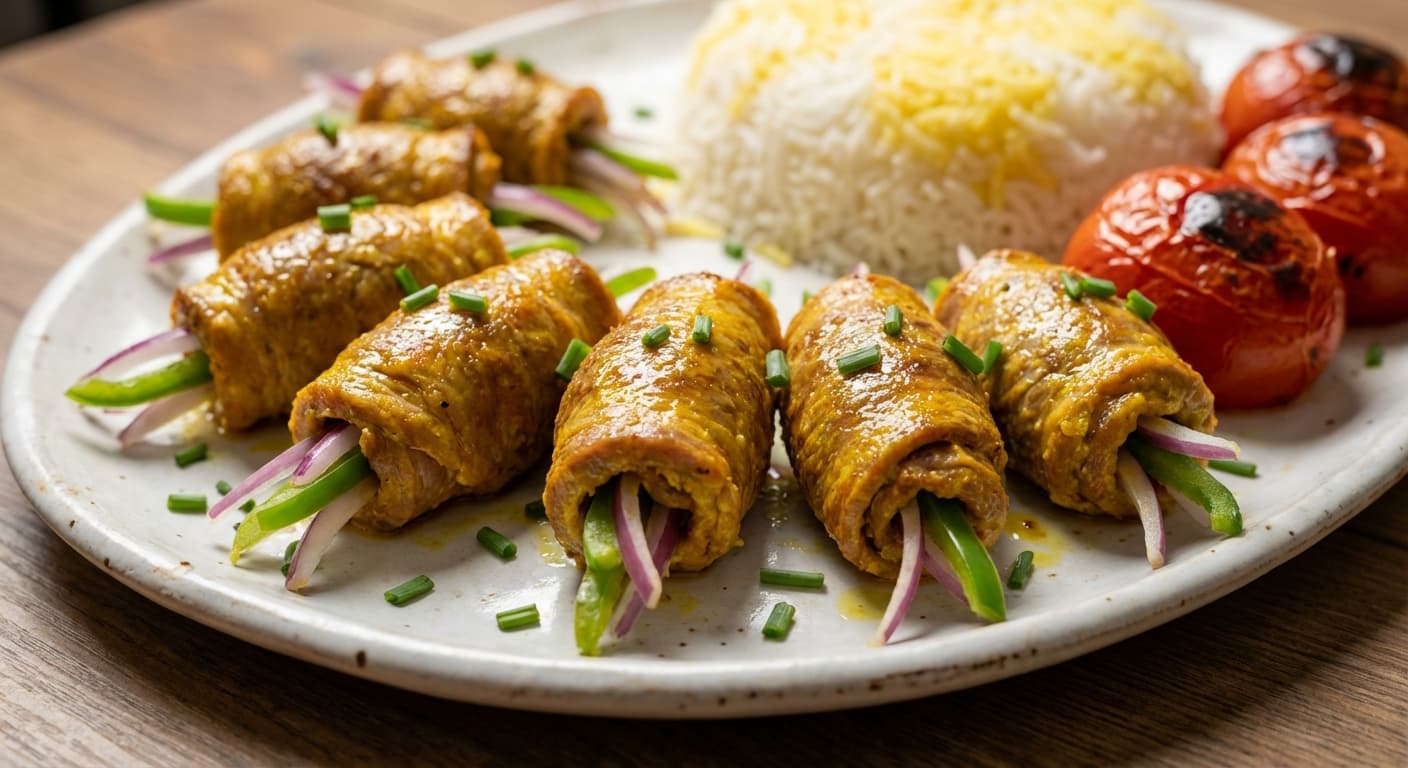
Bulgar Kabab (کباب بلغار) — Persian Rolled Saffron Fillets
Persian · Kebabs · 37 min
Serbian Cheese Gibanica (Гибаница) — Crumpled Filo Pie with White Cheese
Serbian · Appetizers · 65 min
Kazy (Қазы) — Kazakh Horsemeat Rib Sausage
Kazakh · Appetizers · 240 min
Chicken Chygyrtma (Toyuq Çığırtması) — Azerbaijani Chicken with Eggs and Tomatoes
Azerbaijani · Main Courses · 65 min
Turkish Cağ Kebab (Cağ Kebabı) — Erzurum Slow-Roasted Charcoal Lamb Skewer
Turkish · Kebabs · 160 min
Khashlama (Խաշլամա) — Armenian Lamb and Vegetable Stew
Armenian · Stews · 160 min
Reviews
Cooked this recipe?
Tap the stars to rate it — that's all it takes. A few words are welcome but optional.
No ratings yet. Cooked this one? Be the first to rate it — it takes one tap.