Khoresht Loobia va Havij (خورش لوبیا و هویج) — Persian Green Bean & Carrot Stew
Khoresht Loobia va Havij is a vibrant, fragrant Iranian stew slowly simmered with lamb, green beans, and carrots. Saffron and traditional khoresh spices add depth of flavor, and it’s finished with crispy fried potato matchsticks for a pleasant crunch and texture contrast.
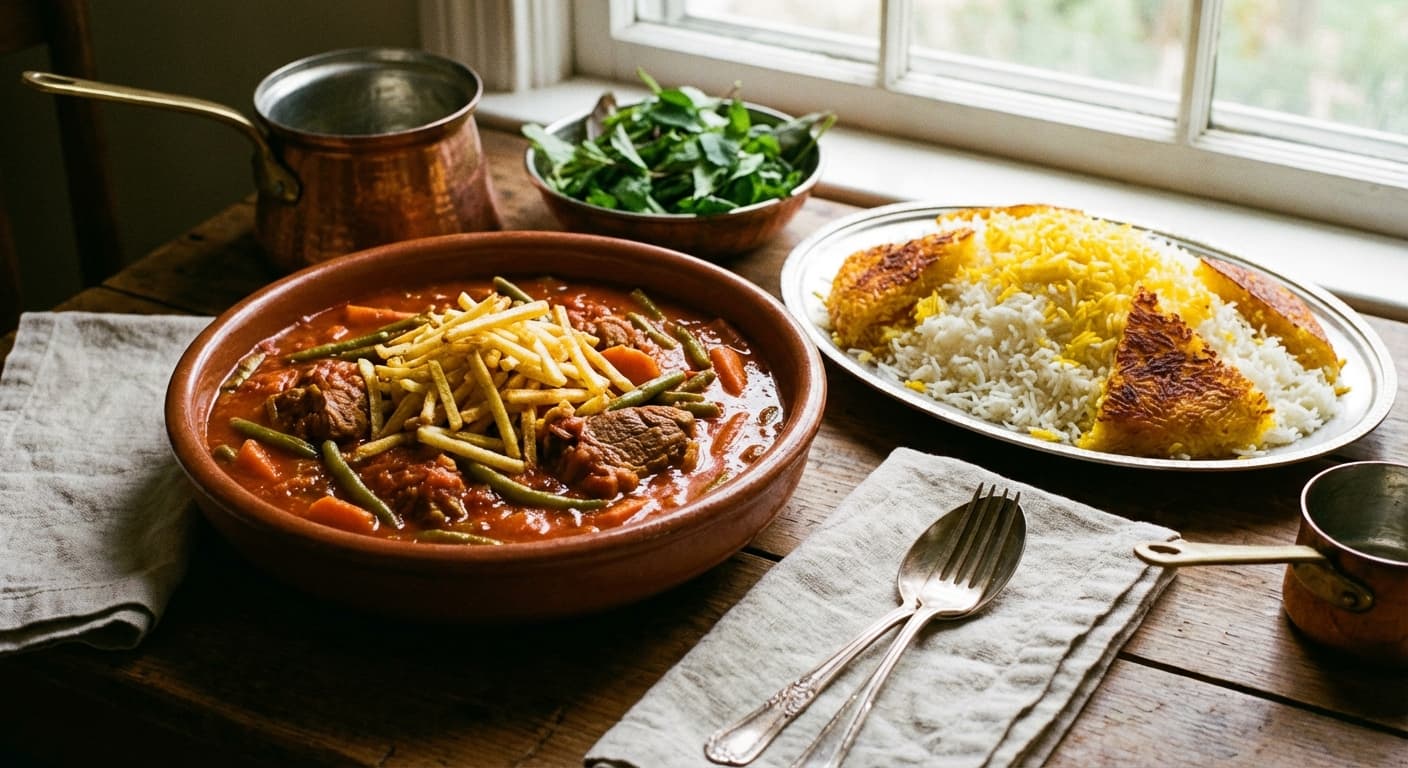
Printable Recipe Card
Servings: 6 · Total: 145 min · Difficulty: medium
Ingredients (quick list)
- 60 ml Liquid oil (neutral, e.g., sunflower) (divided: 30 ml for stew, 30 ml for frying potatoes)
- 250 g Yellow onion (finely diced)
- 700 g Lamb shoulder or stew meat (cut into 3 cm cubes)
- 2 tsp Turmeric powder
- 1 tsp Black pepper (freshly ground)
- 10 g Fine sea salt (start with 7 g, adjust at the end)
- 60 g Tomato paste (about 3 tbsp)
- 2 tsp Persian stew seasoning (Advieh khoresh) (typically includes cinnamon, cardamom, dried lime powder, rose, cumin)
- 1200 ml Water (hot, plus extra if needed)
- 450 g Green beans (trimmed and cut into 3 cm pieces)
- 350 g Carrots (peeled; cut into 6–7 cm batons)
- 0.2 g Saffron threads (ground and bloomed in 45 ml hot water)
+ 2 more in the full ingredients section below.
Steps (summary)
- Bloom the saffron: grind 0.2 g saffron to a powder, then mix with 45 ml hot water (about 80–90°C). Cover and rest 15 minutes. M…
- Build the stew base: heat 30 ml oil in a heavy pot over medium heat. Add diced onion and sauté 10–12 minutes until golden. Add…
- Toast the tomato paste for deep color: push meat to one side, add tomato paste to the bare spot, and fry 2–3 minutes, stirring,…
- Slow-braise the lamb: reduce heat to low, cover slightly ajar, and simmer 60 minutes, stirring every 15–20 minutes. Maintain a…
- Add vegetables in stages: stir in carrots first and simmer 15 minutes. Then add green beans and simmer 20–25 minutes more, unco…
- Finish with saffron and citrus: stir in the bloomed saffron (all liquid) and simmer 5 minutes. Turn off heat, add lemon juice,…
+ 1 more steps in the full instructions section below.
Cultural Background
Khoresh stews are at the heart of Iranian home cooking, and “Khoresht Loobia va Havij” is a favorite for everyday meals thanks to its cheerful color and saffron aroma. Adding fried potato matchsticks at the end is a common home tradition that creates a satisfying contrast in texture and makes the stew more appealing to the whole family.
Equipment
💡 Tips
- For a richer khoresh, brown the lamb well before adding water; color equals flavor in Persian stews.
- Cut green beans to equal lengths so they cook evenly and don’t shred into the sauce.
- Add lemon juice off-heat to keep the citrus bright and prevent bitterness.
- If you prefer a thicker sauce, simmer uncovered the final 10–15 minutes and stir gently to avoid breaking beans.
⚠️ Common Mistakes
❌ Adding tomato paste directly into the liquid without frying
💡 Why: Uncooked paste tastes raw and the stew color stays pale.
✅ Fix: Fry paste in oil 2–3 minutes until it darkens slightly before adding water.
❌ Boiling the stew hard
💡 Why: Rapid boiling toughens lamb and breaks vegetables, making the sauce cloudy.
✅ Fix: Keep a gentle simmer with small bubbles; adjust heat and partially cover the pot.
❌ Adding lemon juice early
💡 Why: Acid can slow tenderizing and the flavor can turn dull or slightly bitter after long cooking.
✅ Fix: Add lemon juice off-heat or in the last 5 minutes, then rest the stew 10 minutes.
❌ Frying wet potato sticks
💡 Why: Moisture causes splattering and leads to limp, oily fries.
✅ Fix: Rinse to remove starch, then dry thoroughly; fry in batches and drain well.
🧊 How to Store
Cool completely, then refrigerate in an airtight container up to 4 days. Reheat gently on low with 60–120 ml water as needed. Freeze stew (without potato topping) up to 2 months; thaw overnight in the fridge and reheat slowly. Fry potatoes fresh for serving.
📅 Make Ahead
Cook the stew 1 day ahead; refrigerate overnight to let flavors deepen and excess fat rise for easy removal. Reheat gently on low and fry potato sticks just before serving for maximum crispness.
🍽️ Pairs Well With
- Chelo (Persian steamed basmati rice) with a little saffron rice on top
- Shirazi salad
- Mast-o-khiar (yogurt with cucumber) if dairy is acceptable
- Torshi (Persian pickles) for extra tang
Regional Variations
- TehranOften finished with a noticeable saffron aroma and served with generous crispy potato sticks; the sauce is kept relatively thick and glossy.
- Shiraz (Fars)More citrus-forward; cooks may increase lemon juice or use limoo amani for a tangier, brighter khoresh served alongside Shirazi salad.
Ingredients
- 60 mlLiquid oil (neutral, e.g., sunflower) (divided: 30 ml for stew, 30 ml for frying potatoes)
- 250 gYellow onion (finely diced)
- 700 gLamb shoulder or stew meat (cut into 3 cm cubes)
- 2 tspTurmeric powder
- 1 tspBlack pepper (freshly ground)
- 10 gFine sea salt (start with 7 g, adjust at the end)
- 60 gTomato paste (about 3 tbsp)
- 2 tspPersian stew seasoning (Advieh khoresh) (typically includes cinnamon, cardamom, dried lime powder, rose, cumin)
- 1200 mlWater (hot, plus extra if needed)
- 450 gGreen beans (trimmed and cut into 3 cm pieces)
- 350 gCarrots (peeled; cut into 6–7 cm batons)
- 0.2 gSaffron threads (ground and bloomed in 45 ml hot water)
- 30 mlFresh lemon juice (about 2 tbsp; add at the end for brightness)
- 350 gPotato (peeled; cut into 6 mm matchsticks; rinsed and thoroughly dried)
🔄 Substitutions
- Lamb shoulder→ Beef chuck (same weight)
- Fresh lemon juice→ Dried lime powder (1 tsp) or 1 small dried lime (limoo amani)
- Green beans→ Flat Romano beans or frozen cut green beans (450 g)
Instructions
- 1
Bloom the saffron: grind 0.2 g saffron to a powder, then mix with 45 ml hot water (about 80–90°C). Cover and rest 15 minutes. Meanwhile trim green beans and cut to 3 cm pieces; cut carrots into batons. Rinse potato matchsticks until water runs clear, then dry completely with towels for best crispness.
- 2
Build the stew base: heat 30 ml oil in a heavy pot over medium heat. Add diced onion and sauté 10–12 minutes until golden. Add lamb cubes and sear 6–8 minutes, turning to brown on most sides. Stir in turmeric and black pepper; cook 60 seconds to toast the spices without burning.
- 3
Toast the tomato paste for deep color: push meat to one side, add tomato paste to the bare spot, and fry 2–3 minutes, stirring, until it darkens slightly and smells sweet. Add advieh and 7 g of the salt; stir 30 seconds. Pour in 1200 ml hot water, scrape the bottom, and bring to a gentle boil.
- 4
Slow-braise the lamb: reduce heat to low, cover slightly ajar, and simmer 60 minutes, stirring every 15–20 minutes. Maintain a quiet bubble; add 100–200 ml hot water only if the level drops below the meat. The goal is tender lamb and a concentrated broth, not a watery stew.
- 5
Add vegetables in stages: stir in carrots first and simmer 15 minutes. Then add green beans and simmer 20–25 minutes more, uncovered for the last 10 minutes to thicken. The beans should be tender but still hold shape, and the sauce should lightly coat a spoon.
- 6
Finish with saffron and citrus: stir in the bloomed saffron (all liquid) and simmer 5 minutes. Turn off heat, add lemon juice, and taste; adjust with remaining salt as needed. Rest the pot, covered, 10 minutes so flavors meld and the surface oil rises slightly like a proper Persian khoresh.
- 7
Make the crispy potato sticks: while the stew rests, heat remaining 30 ml oil in a small pan over medium-high. Fry dried potato matchsticks in batches 6–8 minutes total, stirring, until deep golden. Drain on paper and season with 1 g salt from your measured salt if desired. Serve stew topped with potatoes.
🪪 Recipe Passport
Cultural Background
Khoresh stews are at the heart of Iranian home cooking, and “Khoresht Loobia va Havij” is a favorite for everyday meals thanks to its cheerful color and saffron aroma. Adding fried potato matchsticks at the end is a common home tradition that creates a satisfying contrast in texture and makes the stew more appealing to the whole family.
Regional Variations
Researched from multiple sources and validated by the Zaffaron editorial team. Every recipe is tested for accuracy, measurements, and cultural authenticity.
Nutrition per serving
Pairs well with
If you enjoyed this recipe, here are a few related Zaffaron recipes to try next.
- Kookoo-ye Bademjan va Gharch (کوکو بادمجان و قارچ) — Persian Eggplant and Mushroom Frittata
- Khoresht Morgh-o-Bademjan (خورشت مرغ و بادمجان) — Persian Chicken & Eggplant Stew with Sour Grapes
- Khoreshte Meygoo (خورش میگو) — Southern Persian Shrimp and Potato Stew
- Konsomeh Berenj (کنسومه برنج) — Persian Rice Consommé
Does your family make this differently?
Every family has their own version. Maybe your grandmother adds a secret ingredient, or your aunt has a completely different technique. Preserve your family's version — with their name on it, forever.
You Might Also Like
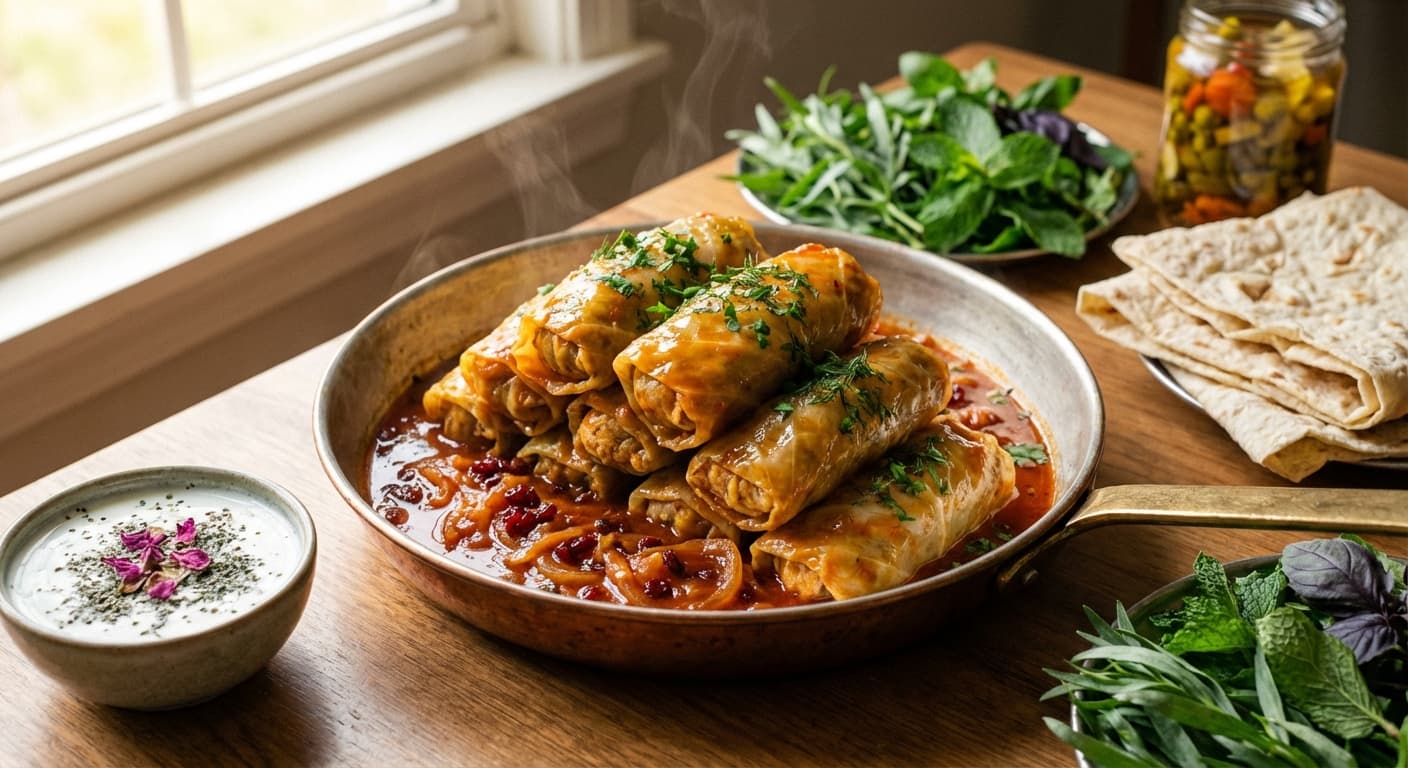
Chicken Stuffed Cabbage Rolls (دلمه کلم با مرغ) — Herb-Scented Persian Dolmeh in Tomato Saffron Sauce
Persian · Main Courses · 90 min
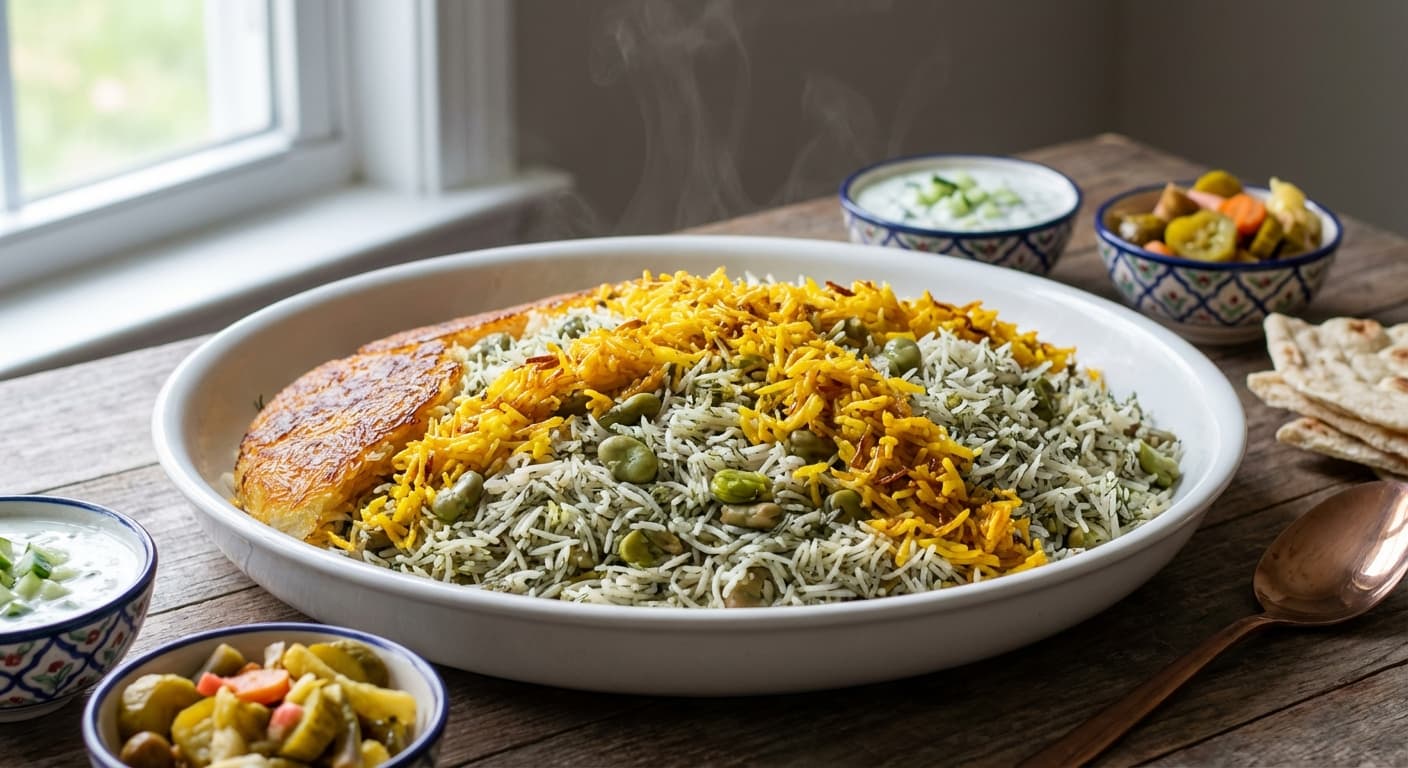
Baghali Polo (باقالی پلو) — Persian Dill and Fava Bean Rice with Saffron
Persian · Rice Dishes · 95 min
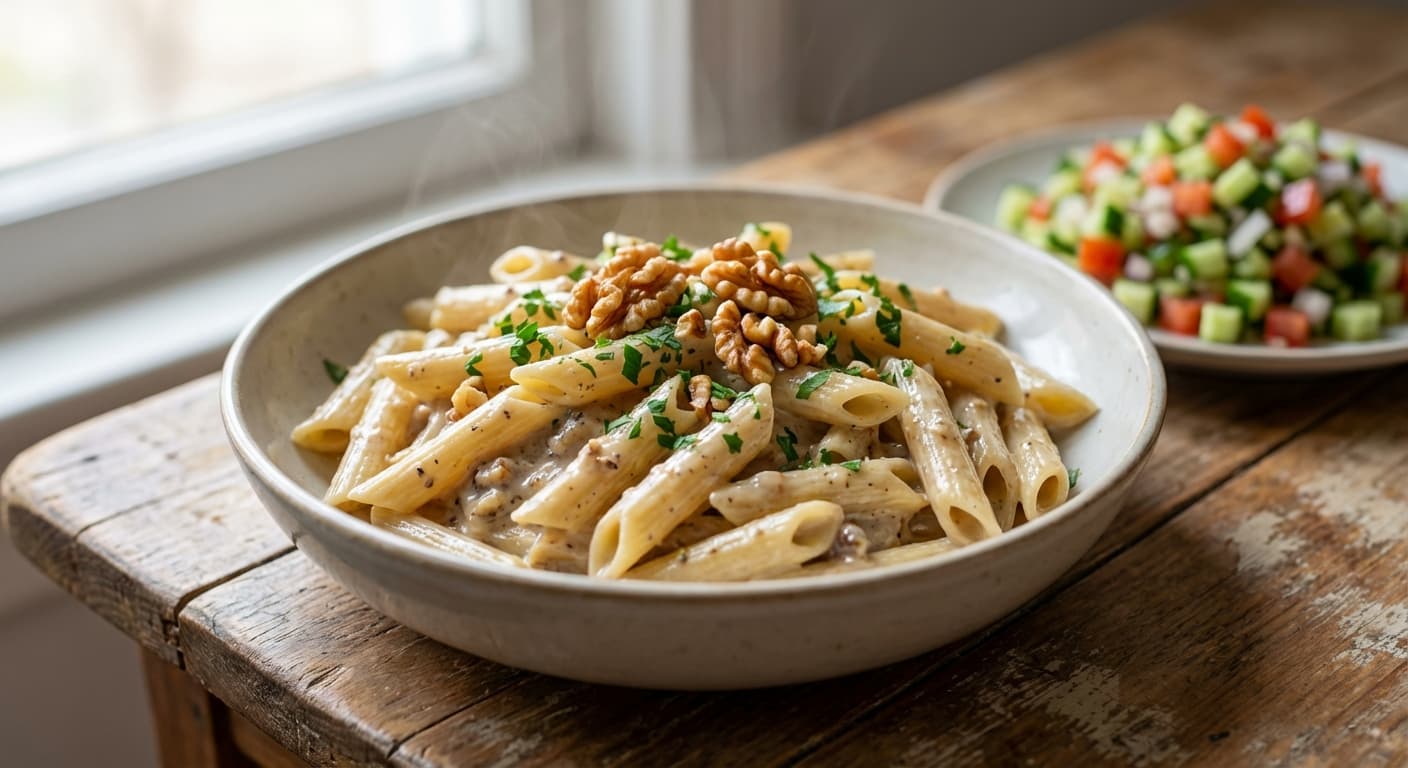
Pasta with Walnut Sauce (پاستا با سس گردو) — Creamy Persian Walnut-Yogurt Pasta
Persian · Main Courses · 35 min
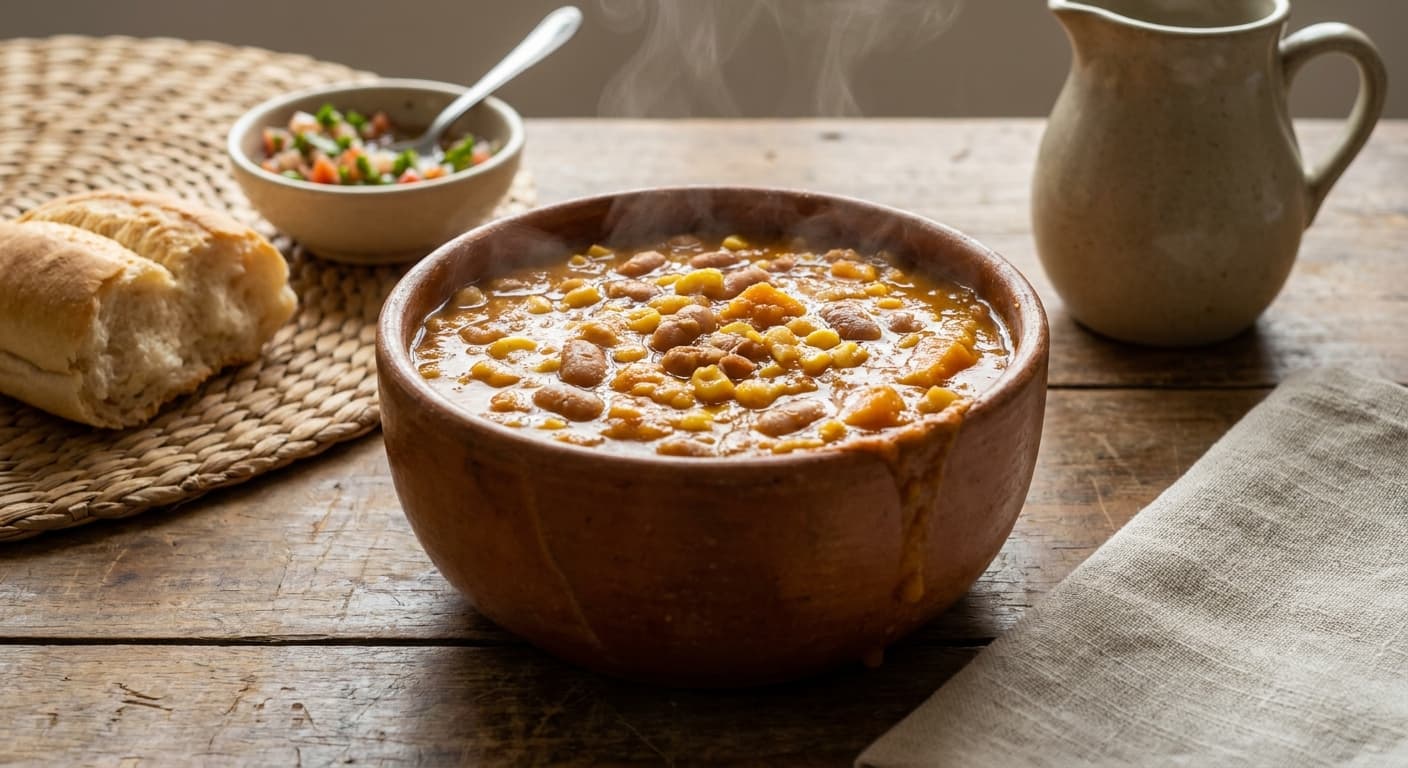
Chilean Fresh Bean Stew (Porotos granados) — Summer Corn and Squash Bean Stew
Chilean · Stews · 80 min
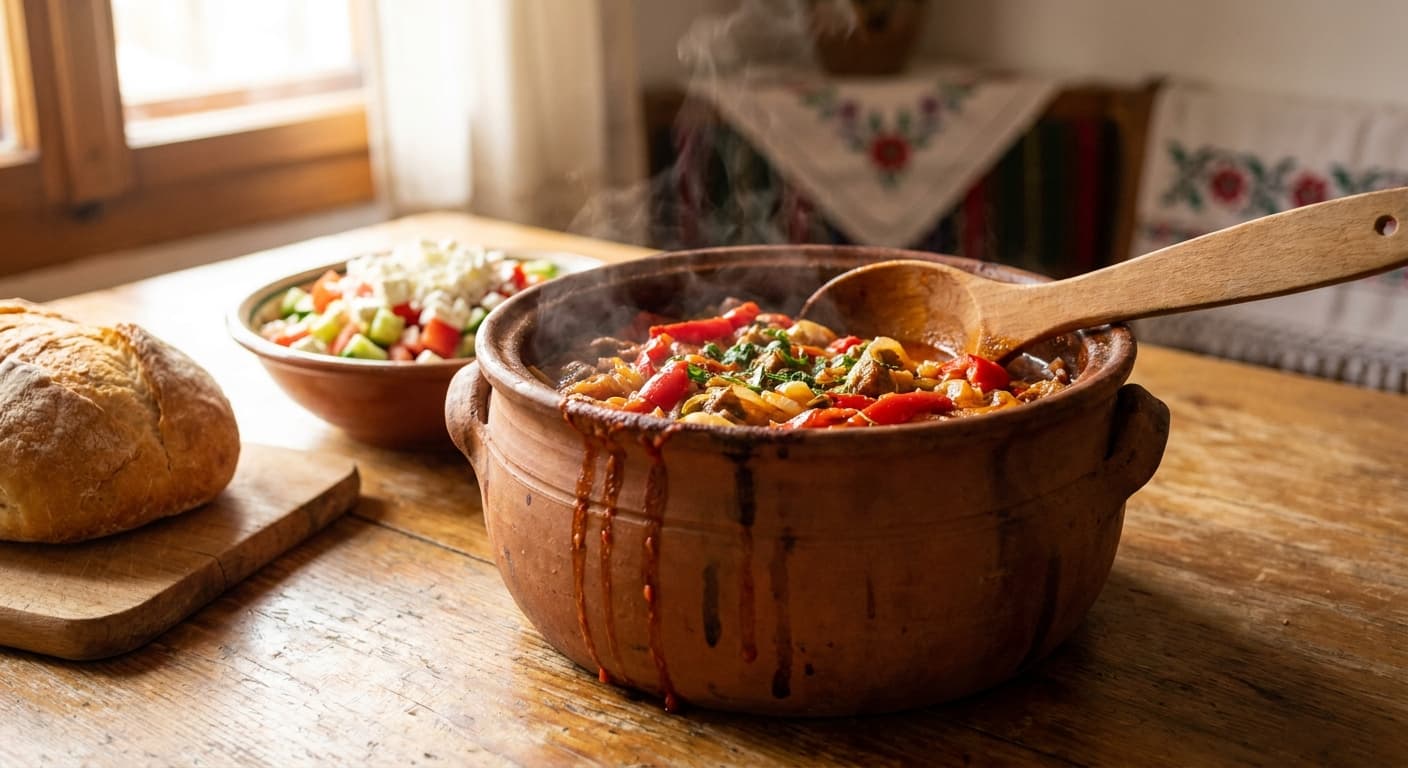
Bulgarian Pork Kavarma (Каварма) — Clay-Pot Pepper and Pork Stew
Bulgarian · Stews · 115 min
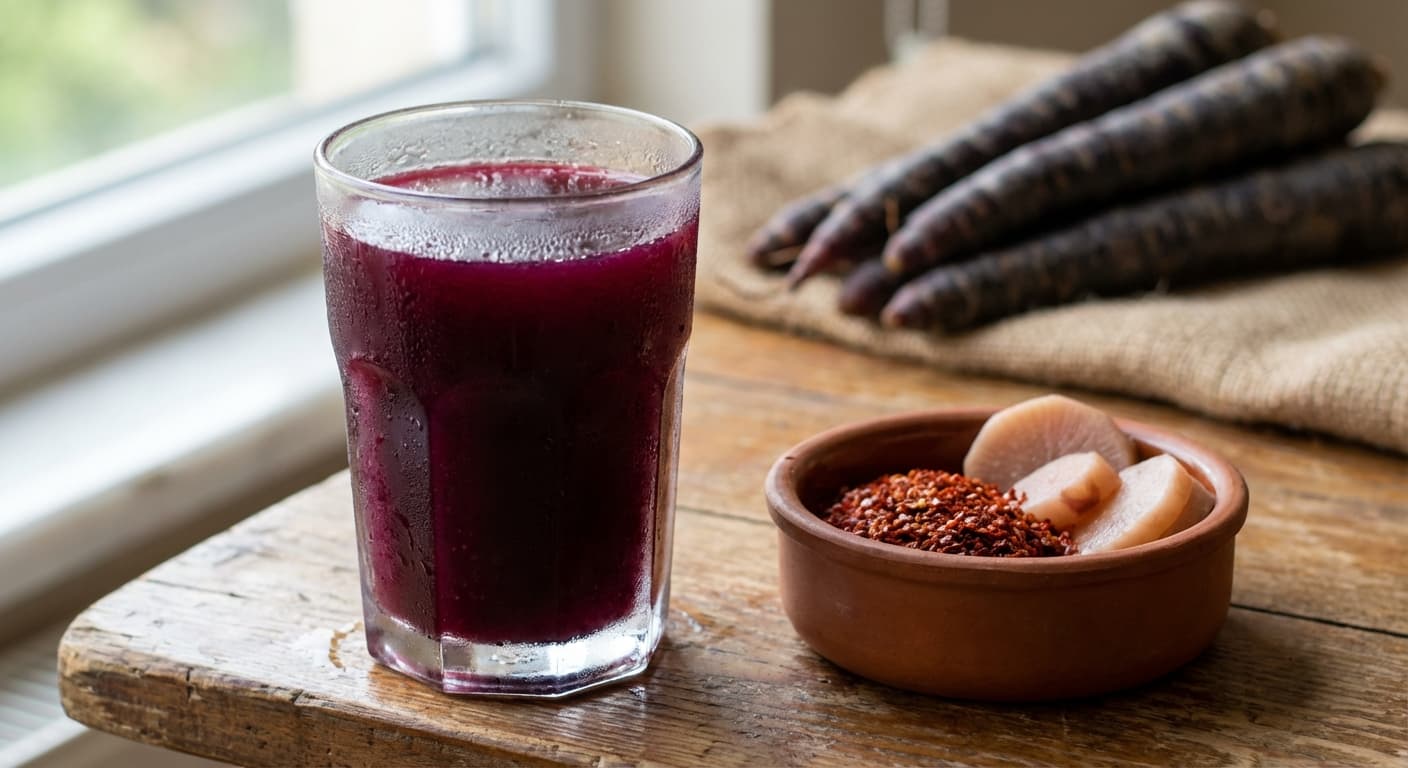
Salgam Juice (Şalgam) — Spicy, tangy fermented black-carrot drink
Turkish · Drinks · 25 min
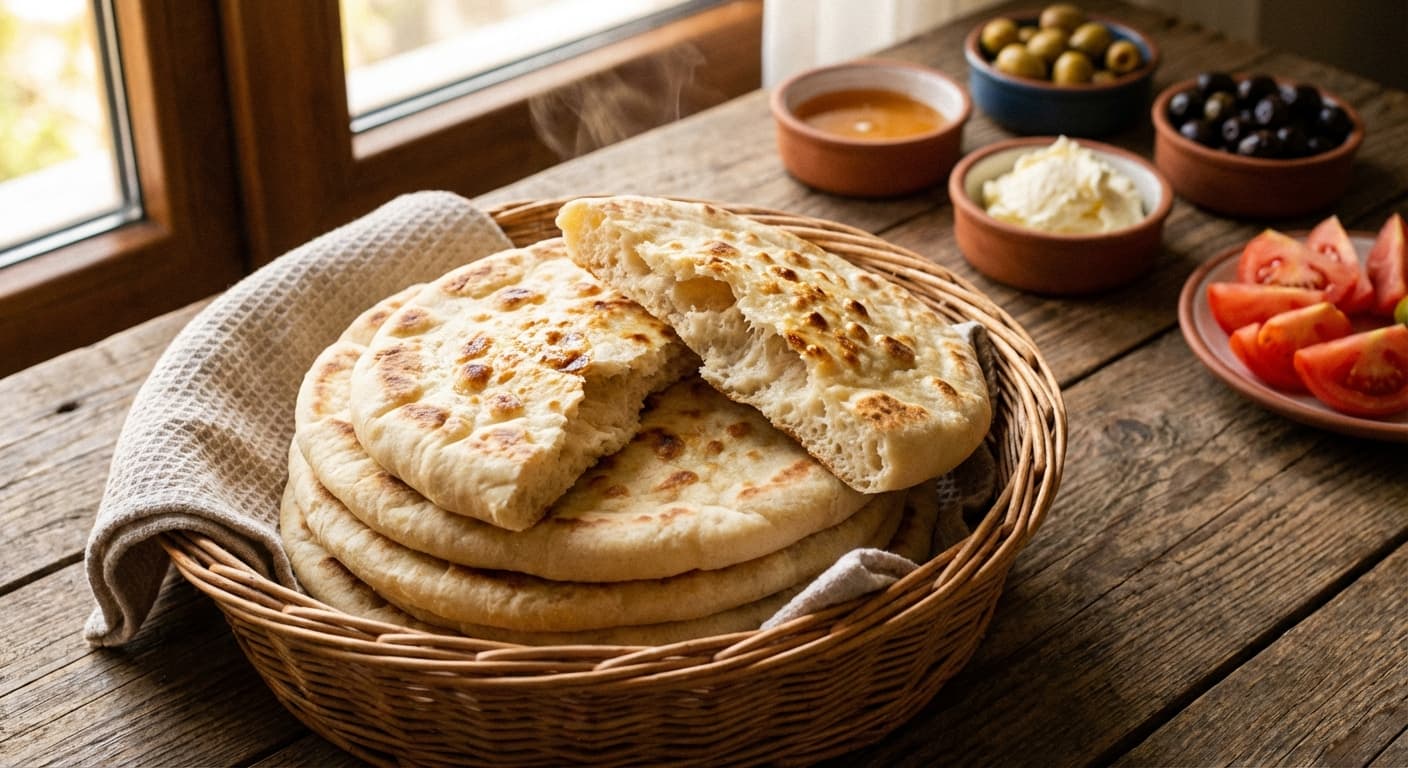
Bazlama (بازلاما) — Puffy Turkish Village Flatbread Cooked on a Saj
Turkish · Breads · 38 min
Cornish Pasty (Cornish Pasty) — Traditional Beef and Swede Hand Pie
British · Main Courses · 100 min
Reviews
Cooked this recipe?
Tap the stars to rate it — that's all it takes. A few words are welcome but optional.
No ratings yet. Cooked this one? Be the first to rate it — it takes one tap.