Mıhlama (Mıhlama) — Black Sea Cornmeal and Cheese Skillet
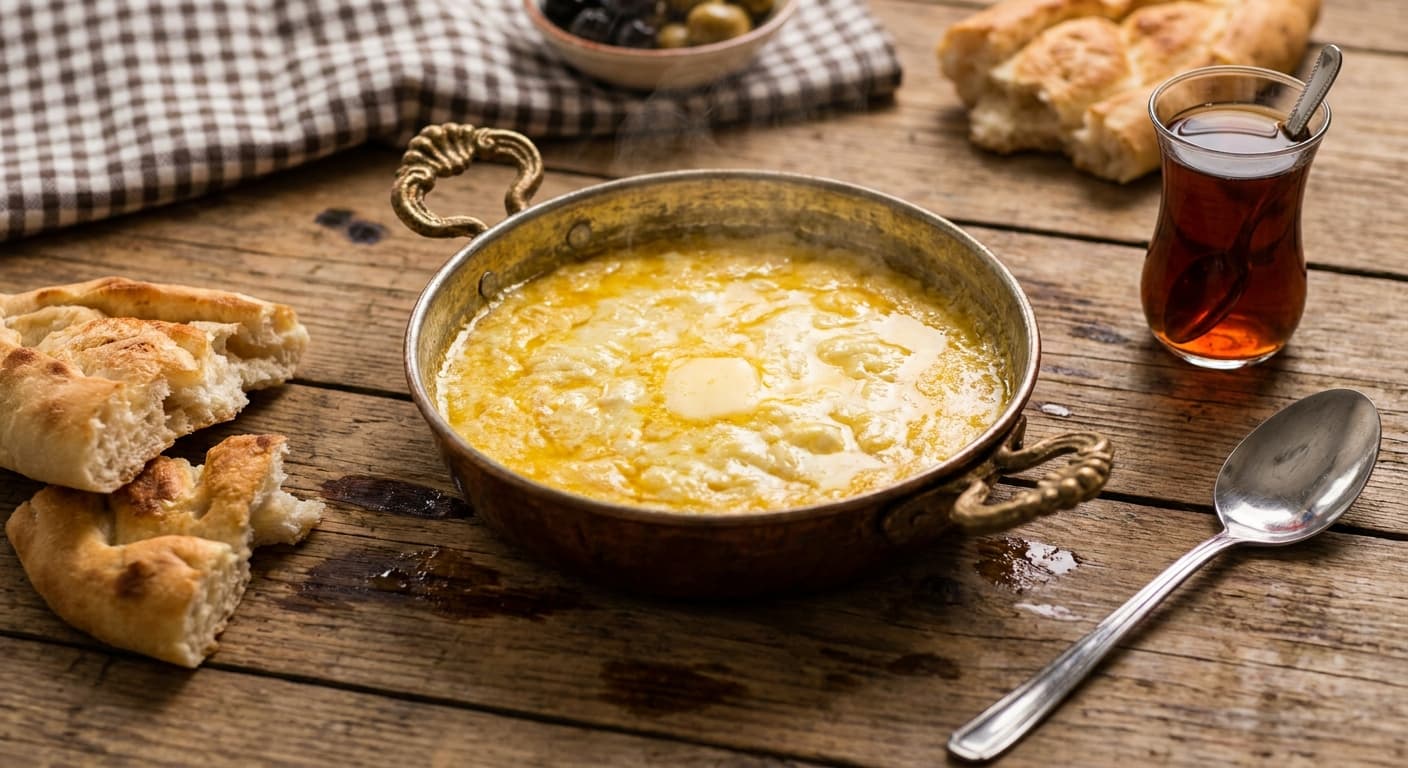
Mıhlama is the molten cornmeal-and-cheese skillet of Turkey’s eastern Black Sea breakfast table. Built on mısır unu, tereyağı, and stringy kolot cheese, it is a kahvaltı staple served with pide rather than a kebab or börek dish.
Printable Recipe Card
Servings: 4 · Total: 25 min · Difficulty: easy
Ingredients (quick list)
- 120 g coarse yellow cornmeal (Turkish mısır unu, preferably stone-ground)
- 100 g unsalted cultured butter (Turkish tereyağı if available)
- 480 ml hot water
- 300 g kolot cheese (grated or finely torn; use fresh, elastic Black Sea-style cheese)
- 3 g fine sea salt
- 0.5 tsp pul biber (not traditional in every household, but common on Turkish breakfast tables)
Steps (summary)
- Grate or finely tear the kolot cheese so it melts quickly and forms long strands. Keep the cheese at cool room temperature for…
- Place a copper sahan or a 24 cm heavy skillet over medium-low heat and add the butter. Let it melt slowly until it foams and th…
- Add the cornmeal to the foaming butter and stir constantly with a wooden spoon for 3 minutes. The mısır unu should absorb the t…
- Pour in 360 ml of the hot water in a steady stream while stirring to prevent lumps. Cook for 4 minutes, stirring often, until t…
- Stir in the remaining 120 ml hot water and the 3 g salt, then lower the heat to low. Simmer for 2 minutes so the cornmeal fully…
- Scatter the kolot cheese evenly over the hot cornmeal and let it sit undisturbed for 45 seconds. Stir slowly in broad folds for…
+ 1 more steps in the full instructions section below.
Cultural Background
Musa Dağdeviren’s work highlights Turkey’s regional depth, and mıhlama shows the eastern Black Sea love of corn, butter, and mountain dairy. It is a home-style kahvaltı dish, not restaurant kebab fare.
Equipment
💡 Tips
- Use low heat after adding the cheese; high heat makes the cheese tighten, separate, and lose its dramatic stretch.
- Kolot cheese is ideal because it melts elastically without becoming greasy, while aged hard cheeses make the dish grainy.
- The final texture should be spoonable but not soupy; if the cornmeal thickens before the cheese is added, stir in exactly 30 ml additional hot water.
⚠️ Common Mistakes
❌ Cooking the cheese too long until it turns rubbery and oily.
✅ Fix: Fold the cheese in over low heat and stop stirring as soon as it melts into long strands.
❌ Adding all the water too quickly and forming lumps in the cornmeal.
✅ Fix: Pour in the first 360 ml hot water steadily while stirring constantly, then add the final 120 ml after the mixture thickens.
❌ Using fine corn flour instead of coarse cornmeal.
✅ Fix: Choose stone-ground mısır unu or medium polenta so the dish has body rather than a paste-like texture.
🧊 How to Store
Mıhlama is best eaten immediately because the cheese firms as it cools. Refrigerate leftovers in an airtight container for up to 2 days, then reheat gently in a skillet with 45 ml hot water per serving, stirring over low heat.
📅 Make Ahead
Grate the cheese and measure the cornmeal, butter, water, and salt up to 12 hours ahead. Cook only just before serving because the signature stretch is strongest in the first few minutes.
🍽️ Pairs Well With
- Warm pide
- Turkish black tea
- sliced tomatoes
- cucumbers
- olives
- honeycomb
- kaymak.
Regional Variations
- In Rize and Trabzon, the dish is often called mıhlama and is prized for visible pools of butter around stretchy local cheese.
- In parts of the eastern Black Sea region, kuymak is made with similar ingredients but may use slightly different cheese ratios and cornmeal texture.
- Some households add a spoonful of kaymak with the butter for a richer breakfast version.
Ingredients
- 120 gcoarse yellow cornmeal (Turkish mısır unu, preferably stone-ground)
- 100 gunsalted cultured butter (Turkish tereyağı if available)
- 480 mlhot water
- 300 gkolot cheese (grated or finely torn; use fresh, elastic Black Sea-style cheese)
- 3 gfine sea salt
- 0.5 tsppul biber (not traditional in every household, but common on Turkish breakfast tables)
🔄 Substitutions
- kolot cheese→ 200 g low-moisture mozzarella mixed with 100 g young kaşar
- coarse yellow cornmeal→ medium-grind polenta
- unsalted cultured butter→ 90 g unsalted butter plus 10 g clarified butter
Instructions
- 1
Grate or finely tear the kolot cheese so it melts quickly and forms long strands. Keep the cheese at cool room temperature for 10 minutes while you measure the cornmeal, butter, hot water, and salt.
- 2
Place a copper sahan or a 24 cm heavy skillet over medium-low heat and add the butter. Let it melt slowly until it foams and the milk solids smell nutty, but do not let the butter brown beyond pale gold.
- 3
Add the cornmeal to the foaming butter and stir constantly with a wooden spoon for 3 minutes. The mısır unu should absorb the tereyağı, darken slightly, and smell toasted without scorching on the bottom of the pan.
- 4
Pour in 360 ml of the hot water in a steady stream while stirring to prevent lumps. Cook for 4 minutes, stirring often, until the mixture thickens into a glossy porridge and begins to pull gently from the sides of the pan.
- 5
Stir in the remaining 120 ml hot water and the 3 g salt, then lower the heat to low. Simmer for 2 minutes so the cornmeal fully hydrates and the surface begins to show small buttery pools.
- 6
Scatter the kolot cheese evenly over the hot cornmeal and let it sit undisturbed for 45 seconds. Stir slowly in broad folds for 1 to 2 minutes, stopping as soon as the cheese melts into stretchy ribbons and the butter rises around the edges.
- 7
Serve the mıhlama immediately in the skillet while it is bubbling and elastic. Sprinkle the optional 0.5 tsp pul biber over one side if desired, and bring it to the table with warm pide for pulling through the cheese, alongside other kahvaltı plates rather than as a meze course.
🪪 Recipe Passport
Cultural Background
Musa Dağdeviren’s work highlights Turkey’s regional depth, and mıhlama shows the eastern Black Sea love of corn, butter, and mountain dairy. It is a home-style kahvaltı dish, not restaurant kebab fare.
Regional Variations
Researched from multiple sources and validated by the Zaffaron editorial team. Every recipe is tested for accuracy, measurements, and cultural authenticity.
📚 Sources & Cultural References
- Musa Dağdeviren — The Turkish Cookbook — (2019)
- Ayla Algar — Classical Turkish Cooking — (1991)
Sources cited by the Zaffaron editorial team during recipe research. Cultural and culinary references supporting authenticity claims.
Nutrition per serving
Pairs well with
If you enjoyed this recipe, here are a few related Zaffaron recipes to try next.
- Tripe Soup (İşkembe Çorbası) — Turkish offal soup served with garlicky vinegar
- Turkish Shish Kebab (Şiş Kebap) — Charcoal-Grilled Marinated Lamb Skewers
- Pistachio Kebab (فستقلی کباب) — Gaziantep-style ground lamb kebab with pistachios
- Smoky Eggplant Salad (Patlıcan Salatası) — Turkish charred eggplant with garlic and olive oil
Does your family make this differently?
Every family has their own version. Maybe your grandmother adds a secret ingredient, or your aunt has a completely different technique. Preserve your family's version — with their name on it, forever.
You Might Also Like
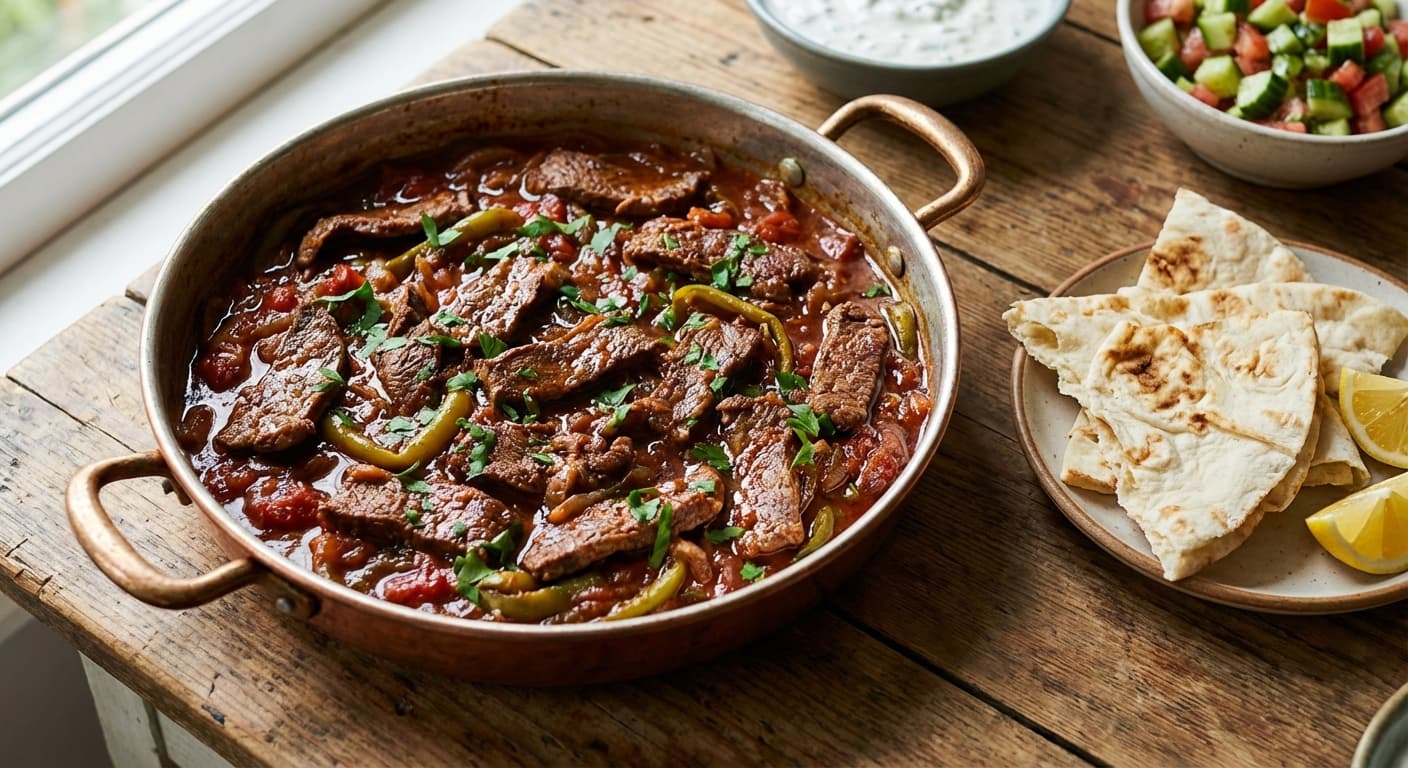
Sac Kavurma (Saç Kavurma) — Thin-Sliced Turkish Meat Sautéed with Onions
Turkish · Main Courses · 38 min
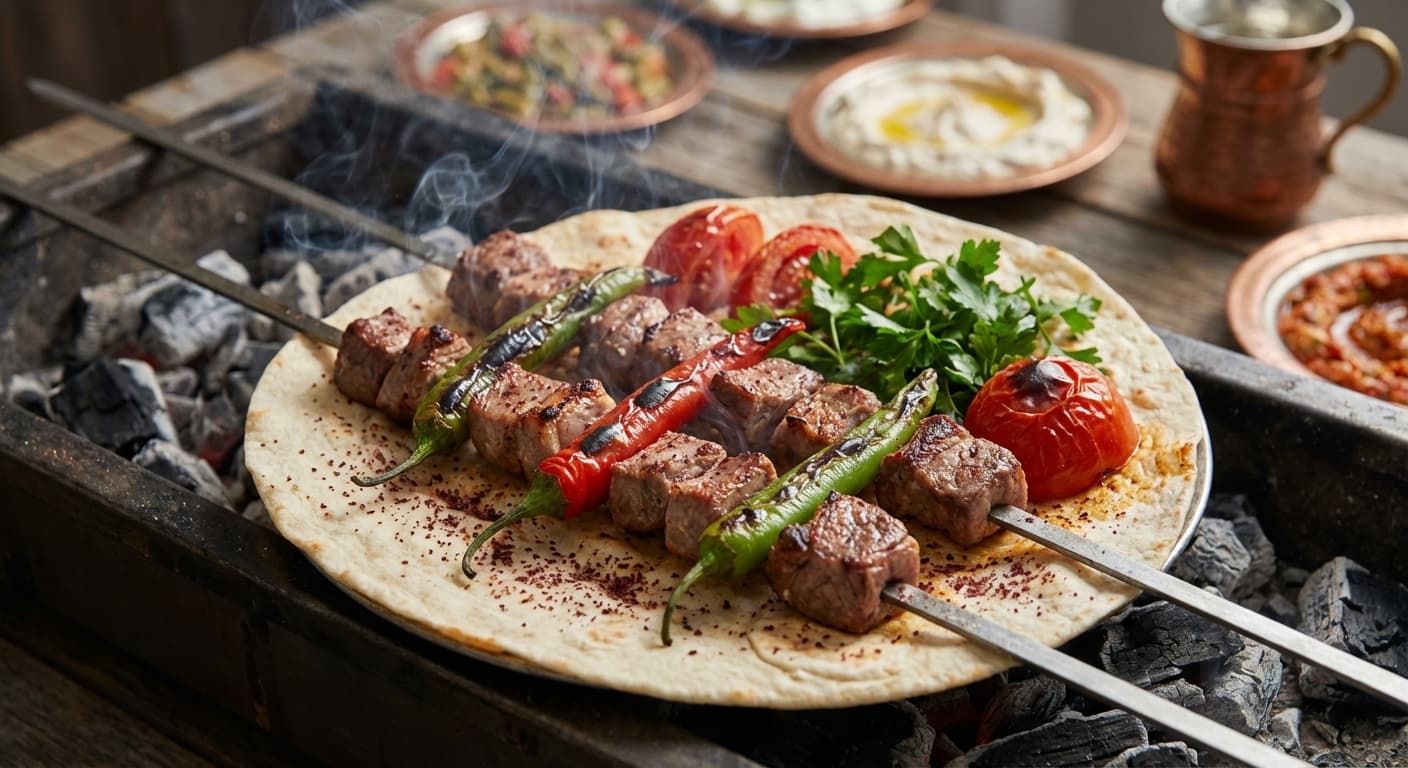
Turkish Shish Kebab (Şiş Kebap) — Charcoal-Grilled Marinated Lamb Skewers
Turkish · Kebabs · 37 min
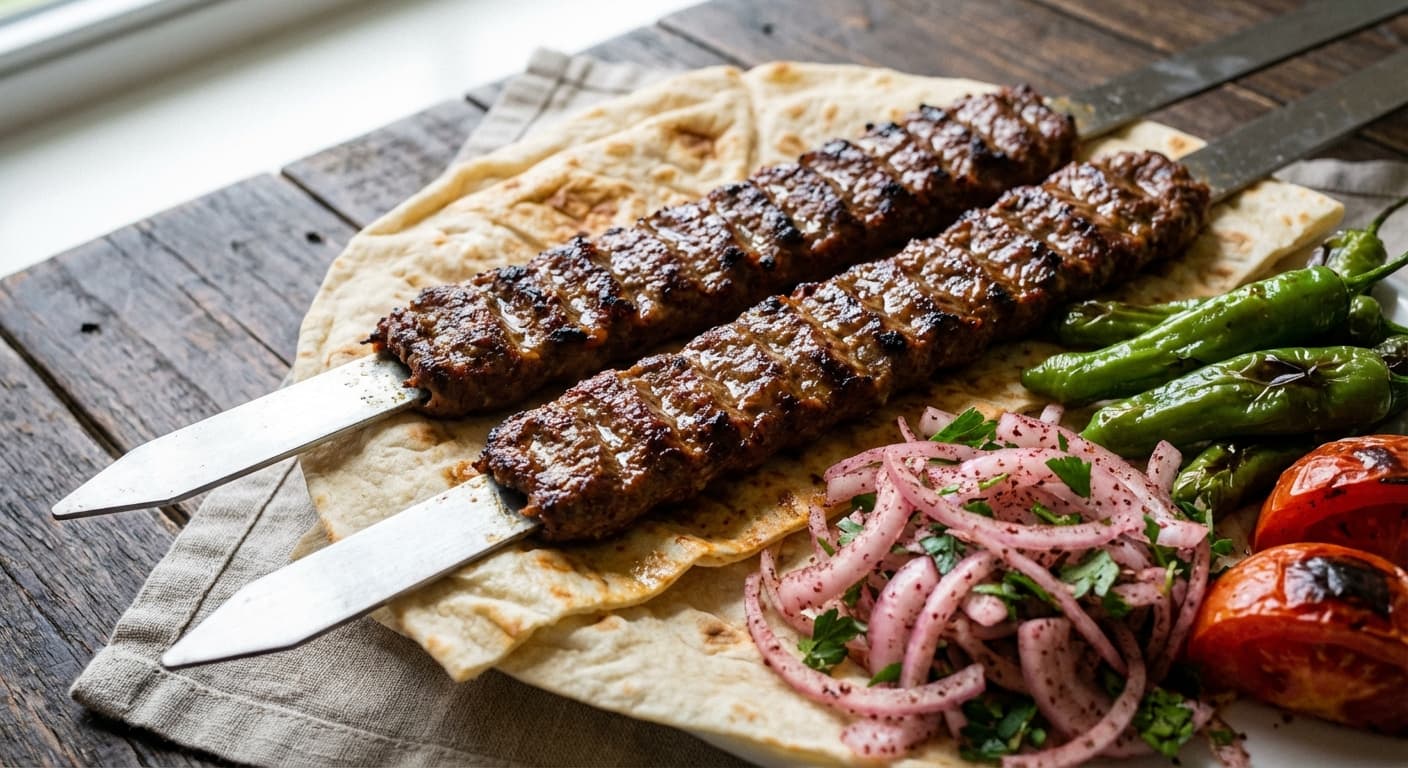
Urfa Kebab (اورفا کباب) — Mild Turkish minced skewer with sumac onions
Turkish · Kebabs · 37 min
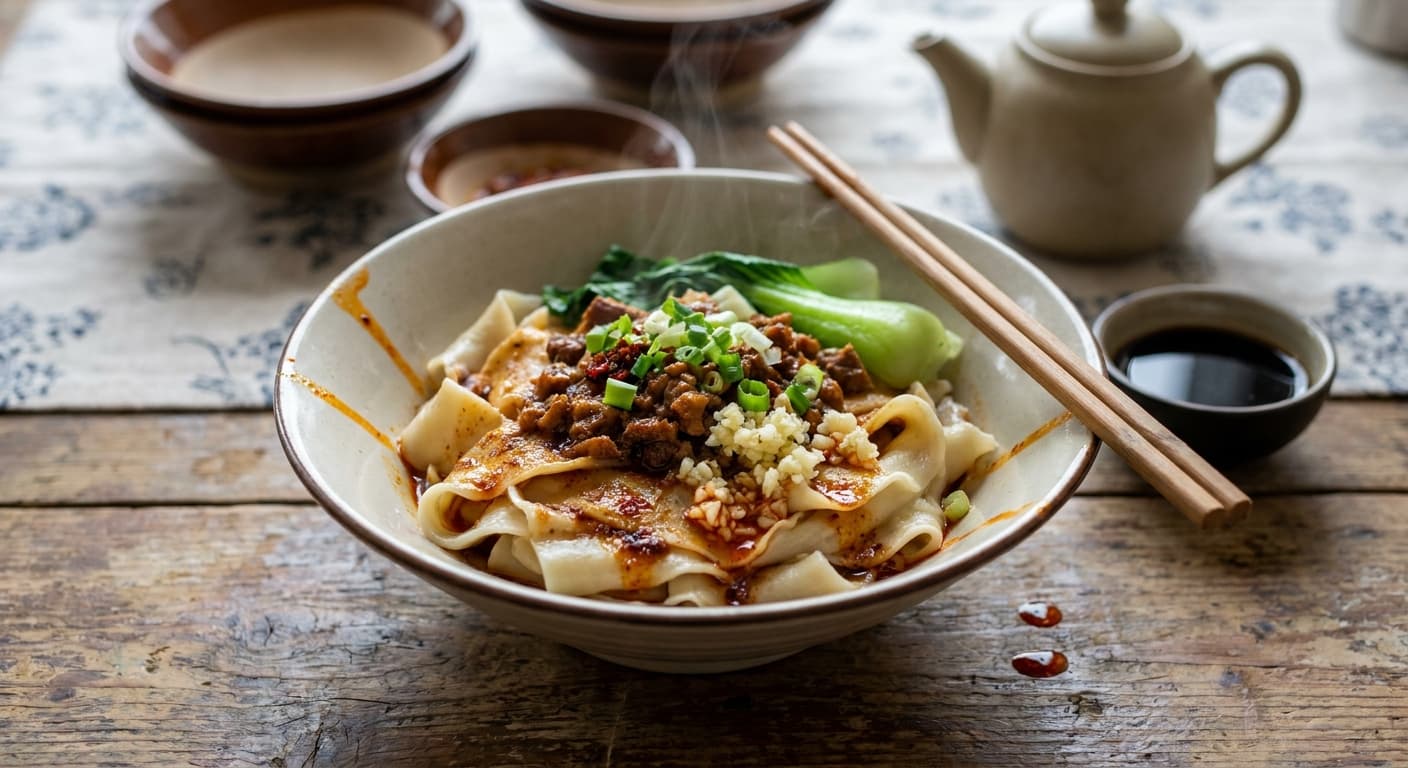
Biangbiang Noodles (油泼扯面) — Xi'an Hand-Pulled Belt Noodles
Chinese · Main Courses · 65 min
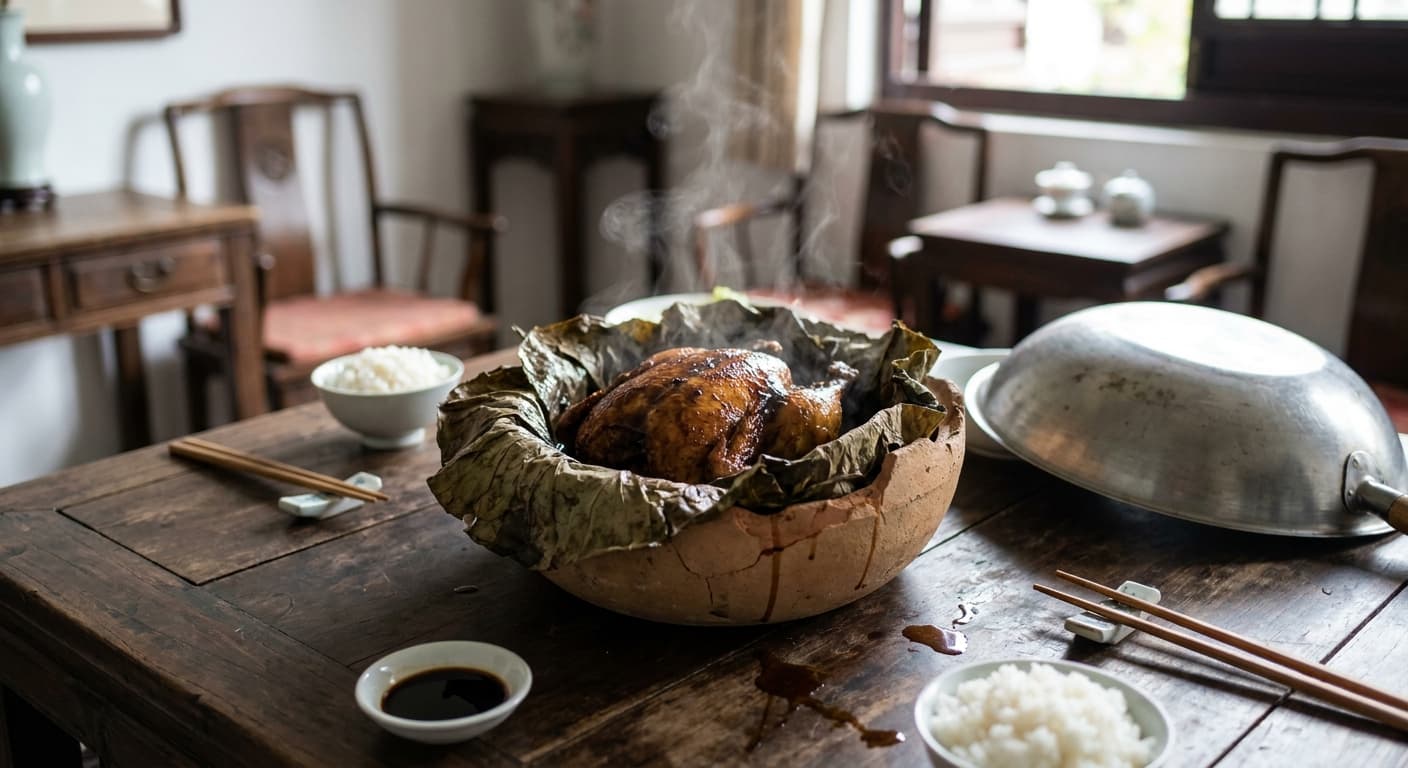
Beggar's Chicken (叫化鸡) — Lotus-Wrapped Clay-Baked Jiangnan Chicken
Chinese · Main Courses · 240 min
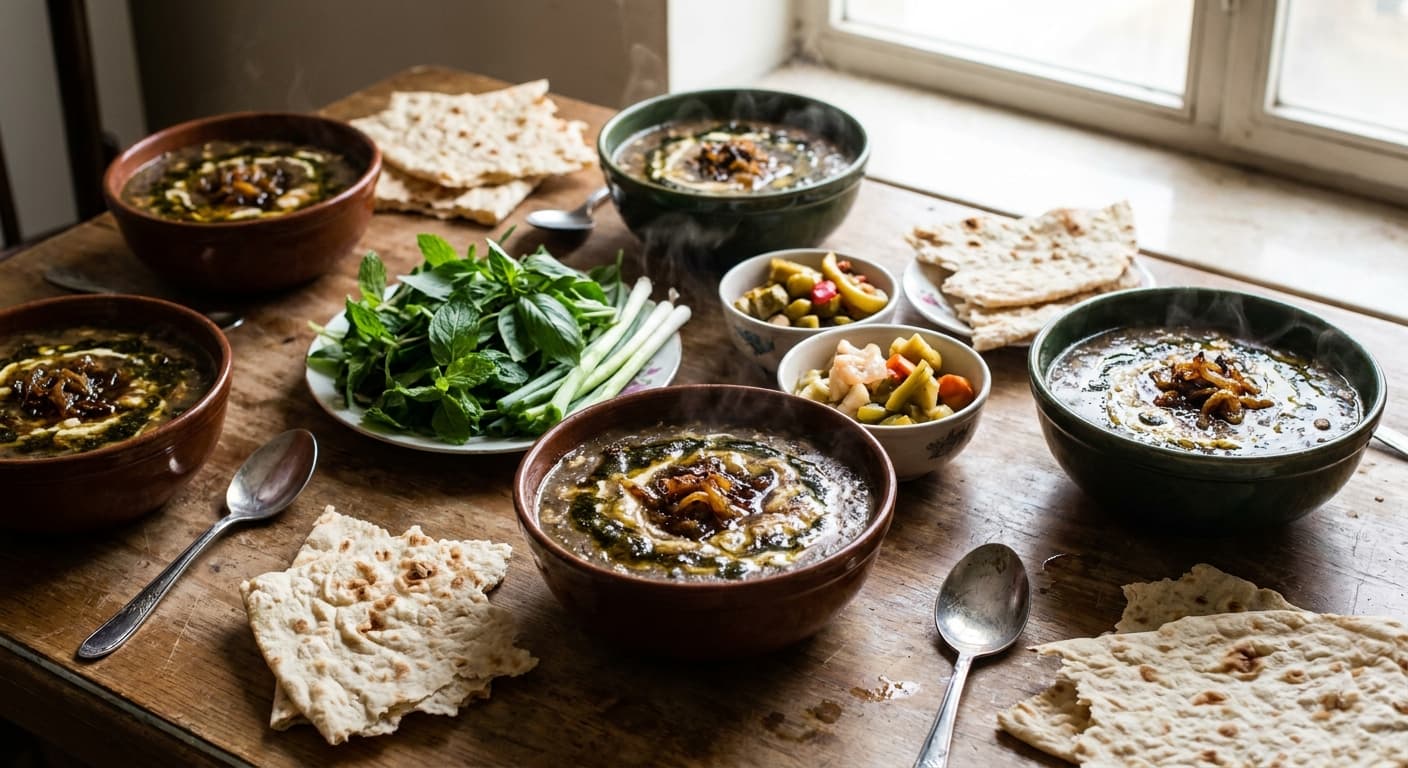
Ash-e Torsh (آش ترش) — Sour Herb and Legume Soup
Persian · Soups · 145 min
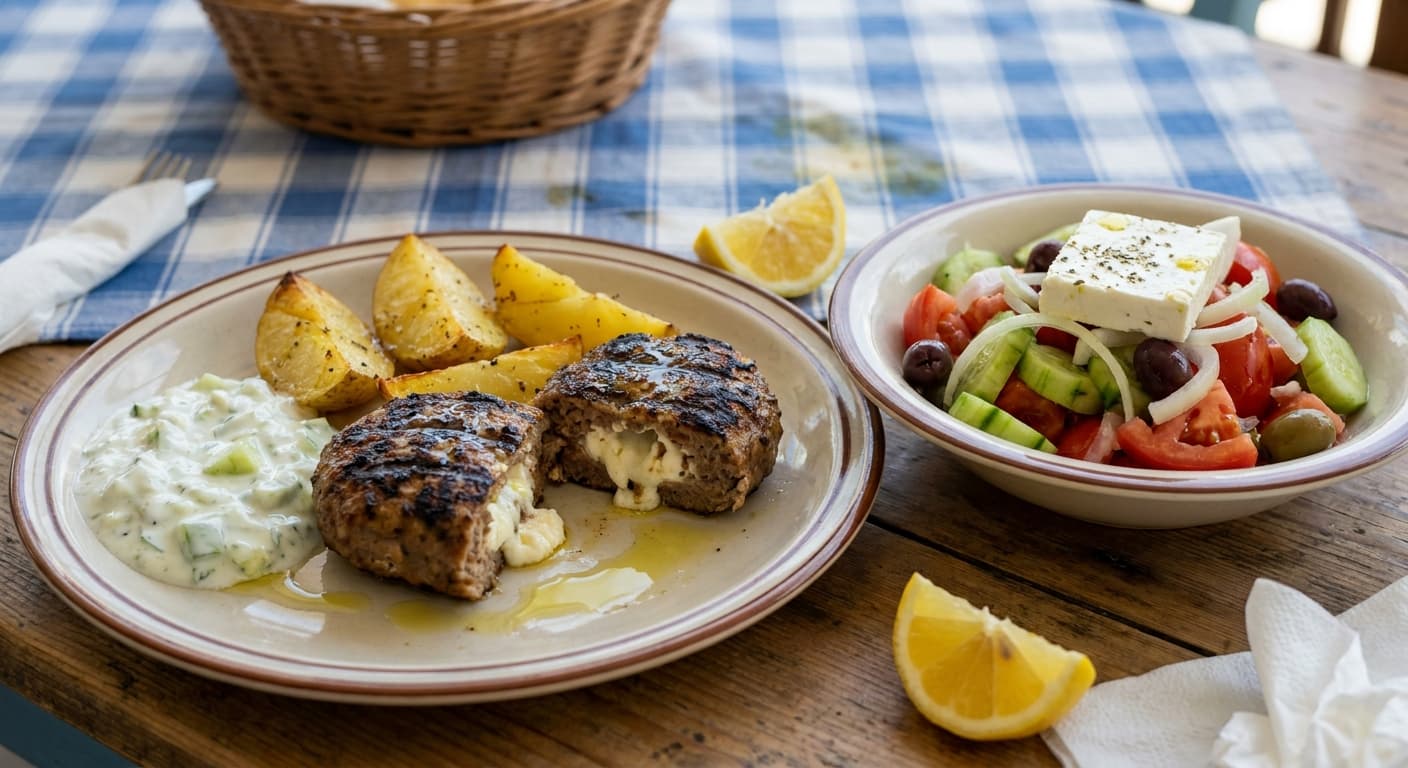
Bifteki (Μπιφτέκι) — Greek Grilled Beef Patties with Herbs
Greek · Main Courses · 39 min
Roulat Panir (رولت پنیر) — Persian Savory Cheese & Walnut Crepe Rolls
Persian · Appetizers · 80 min
Reviews
Cooked this recipe?
Tap the stars to rate it — that's all it takes. A few words are welcome but optional.
No ratings yet. Cooked this one? Be the first to rate it — it takes one tap.