Cig Kofte (Çiğ Köfte) — Isot-kissed bulgur kneaded and served in lettuce
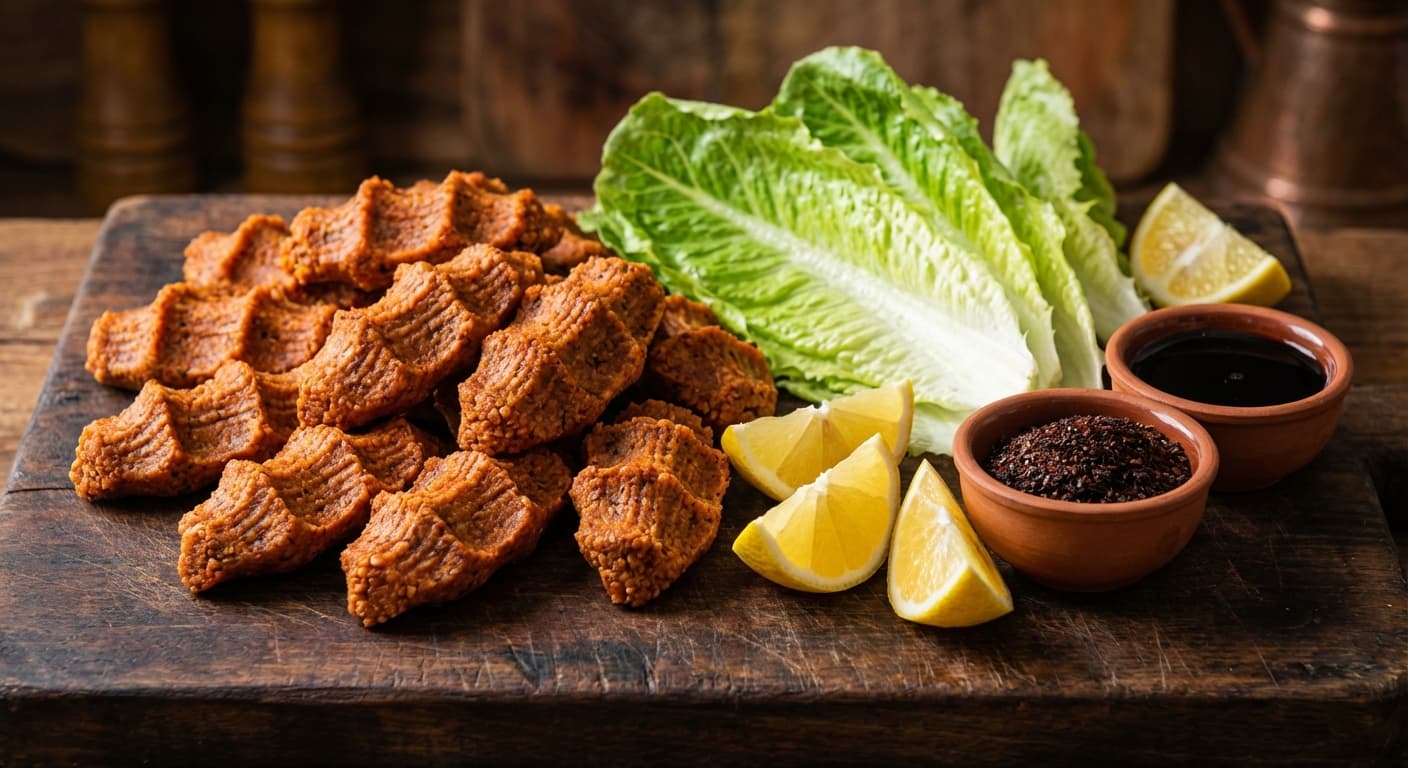
A beloved street-food classic from southeastern Türkiye, çiğ köfte is traditionally kneaded until the bulgur turns silky and cohesive. This meatless modern style leans on Urfa isot, tomato-pepper pastes, and bright lemon, then is served tucked into crisp lettuce leaves.
Printable Recipe Card
Servings: 6 · Total: 25 min · Difficulty: medium
Ingredients (quick list)
- 240 g fine bulgur (köftelik bulgur)
- 180 ml boiling water (for hydrating bulgur)
- 30 g tomato paste
- 40 g red pepper paste (biber salçası) (use mild or hot, but keep the amount the same)
- 10 g Urfa isot pepper flakes (deep, raisiny heat)
- 4 g ground cumin
- 4 g sweet paprika
- 1 g ground black pepper
- 6 g fine salt
- 20 ml pomegranate molasses (nar ekşisi)
- 30 ml fresh lemon juice
- 30 ml extra-virgin olive oil
+ 5 more in the full ingredients section below.
Steps (summary)
- Put the fine bulgur in a wide mixing bowl and pour over the boiling water. Cover tightly and let it stand for 12 minutes so the…
- Uncover and fluff the bulgur with your fingers, breaking up any clumps. Add the tomato paste, red pepper paste, isot, cumin, pa…
- Add the grated onion and knead for 4 minutes until the mixture looks glossier and begins to hold together when squeezed. If any…
- Pour in the pomegranate molasses, lemon juice, and olive oil. Knead for 6 minutes more, pressing and folding repeatedly, until…
- Add the parsley and green onions and knead gently for 1 minute so the herbs distribute without bruising too much. Rest the mixt…
- To shape, pinch off a 35–40 g portion and squeeze it in your palm to create the classic ridged oval. Serve immediately in romai…
Cultural Background
Çiğ köfte is closely tied to Şanlıurfa and the hospitality of southeastern Türkiye, where bold pepper pastes and isot define the table. Today’s meatless version is a nationwide staple, shaped by hand and shared as a social, communal snack.
Equipment
💡 Tips
- Use very fine bulgur labeled köftelik; coarser bulgur will not bind properly even with longer kneading.
- Kneading is the “cooking” step here: aim for a glossy, cohesive paste-like texture before adding herbs.
- If the mix feels dry after step 4, knead in 15 ml additional boiling water; if it feels loose, knead 3 minutes longer to tighten.
⚠️ Common Mistakes
❌ Using coarse bulgur and ending up with a crumbly mixture that will not shape.
✅ Fix: Switch to fine köftelik bulgur and keep the water at 180 ml; knead longer only after hydration is correct.
❌ Adding herbs too early and turning the mixture watery and green-specked but loose.
✅ Fix: Knead the bulgur, pastes, and seasonings until cohesive first, then fold herbs in at the end for structure.
❌ Over-wetting with extra water or lemon, making it sticky and hard to form.
✅ Fix: Knead 3–5 minutes more to tighten, or add 15 g fine bulgur and knead until fully absorbed.
🧊 How to Store
Refrigerate shaped or unshaped çiğ köfte in an airtight container for up to 2 days. Serve cold or let it sit 10 minutes at room temperature; do not reheat, but refresh with 10 ml lemon juice and 10 ml olive oil if it dries out.
📅 Make Ahead
Hydrate the bulgur and mix in the pastes and spices up to 6 hours ahead, then refrigerate covered. Knead in lemon, pomegranate molasses, oil, and herbs just before serving for the freshest aroma and best texture.
🍽️ Pairs Well With
- Lettuce leaves
- lemon wedges
- lavash
- pickled turnips (şalgam turşusu)
- ayran
- sliced cucumbers and tomatoes.
Regional Variations
- Şanlıurfa style often emphasizes isot and a deeper, darker color with a more intense pepper aroma.
- Adana-style versions may lean hotter, using spicier biber salçası and extra chili flakes while keeping the same bulgur base.
- Street-stall style is frequently served as lettuce wraps with generous lemon and sometimes a drizzle of nar ekşisi on top.
Ingredients
- 240 gfine bulgur (köftelik bulgur)
- 180 mlboiling water (for hydrating bulgur)
- 30 gtomato paste
- 40 gred pepper paste (biber salçası) (use mild or hot, but keep the amount the same)
- 10 gUrfa isot pepper flakes (deep, raisiny heat)
- 4 gground cumin
- 4 gsweet paprika
- 1 gground black pepper
- 6 gfine salt
- 20 mlpomegranate molasses (nar ekşisi)
- 30 mlfresh lemon juice
- 30 mlextra-virgin olive oil
- 120 gyellow onion (grated very finely)
- 25 gflat-leaf parsley (finely chopped)
- 30 ggreen onions (finely sliced)
- 12 leafromaine lettuce leaves (washed and dried)
- 6 wedgelemon wedges
🔄 Substitutions
- Urfa isot pepper flakes→ Aleppo pepper flakes
- pomegranate molasses (nar ekşisi)→ 15 ml balsamic vinegar + 10 ml date syrup
- red pepper paste (biber salçası)→ 35 g roasted red pepper purée + 5 g tomato paste
Instructions
- 1
Put the fine bulgur in a wide mixing bowl and pour over the boiling water. Cover tightly and let it stand for 12 minutes so the grains hydrate evenly and soften without turning mushy.
- 2
Uncover and fluff the bulgur with your fingers, breaking up any clumps. Add the tomato paste, red pepper paste, isot, cumin, paprika, black pepper, and salt, then start kneading firmly for 6 minutes to stain the bulgur a deep brick-red.
- 3
Add the grated onion and knead for 4 minutes until the mixture looks glossier and begins to hold together when squeezed. If any onion juice pools, keep kneading so the bulgur absorbs it rather than leaving the mixture wet.
- 4
Pour in the pomegranate molasses, lemon juice, and olive oil. Knead for 6 minutes more, pressing and folding repeatedly, until the mixture becomes smooth, cohesive, and slightly elastic.
- 5
Add the parsley and green onions and knead gently for 1 minute so the herbs distribute without bruising too much. Rest the mixture for 5 minutes to let flavors meld and the bulgur finish absorbing the liquids.
- 6
To shape, pinch off a 35–40 g portion and squeeze it in your palm to create the classic ridged oval. Serve immediately in romaine lettuce leaves with lemon wedges, and add exactly 1 extra squeeze per wrap if you want a brighter finish.
🪪 Recipe Passport
Cultural Background
Çiğ köfte is closely tied to Şanlıurfa and the hospitality of southeastern Türkiye, where bold pepper pastes and isot define the table. Today’s meatless version is a nationwide staple, shaped by hand and shared as a social, communal snack.
Regional Variations
Researched from multiple sources and validated by the Zaffaron editorial team. Every recipe is tested for accuracy, measurements, and cultural authenticity.
Nutrition per serving
Pairs well with
If you enjoyed this recipe, here are a few related Zaffaron recipes to try next.
Does your family make this differently?
Every family has their own version. Maybe your grandmother adds a secret ingredient, or your aunt has a completely different technique. Preserve your family's version — with their name on it, forever.
You Might Also Like
Turkish Shish Kebab (Şiş Kebap) — Charcoal-Grilled Marinated Lamb Skewers
Turkish · Kebabs · 37 min
Urfa Kebab (اورفا کباب) — Mild Turkish minced skewer with sumac onions
Turkish · Kebabs · 37 min
Stuffed Zucchini (Kabak Dolması) — Hollowed zucchini filled with spiced minced meat and rice
Turkish · Main Courses · 90 min
Liptauer Bryndza Cheese Spread (Bryndzová nátierka) — Paprika-spiced Slovak appetizer
Slovak · Appetizers · 20 min
Serbian Cheese Gibanica (Гибаница) — Crumpled Filo Pie with White Cheese
Serbian · Appetizers · 65 min
Lebanese Tabbouleh (تبولة لبنانية) — Parsley Bulgur Herb Salad
Lebanese · Salads · 35 min
Azerbaijani Milk Rice Porridge (Südlü Sıyıq) — Creamy Breakfast Bowl
Azerbaijani · Rice Dishes · 40 min
Samlor Machu Kroeung (សម្លម្ជូរគ្រឿង) — Cambodian Sour Kroeung Beef Soup
Cambodian · Soups · 130 min
Reviews
Cooked this recipe?
Tap the stars to rate it — that's all it takes. A few words are welcome but optional.
No ratings yet. Cooked this one? Be the first to rate it — it takes one tap.