Oshi Siyoh (Оши сиёҳ) — Bukhara-Style Dark Pilaf
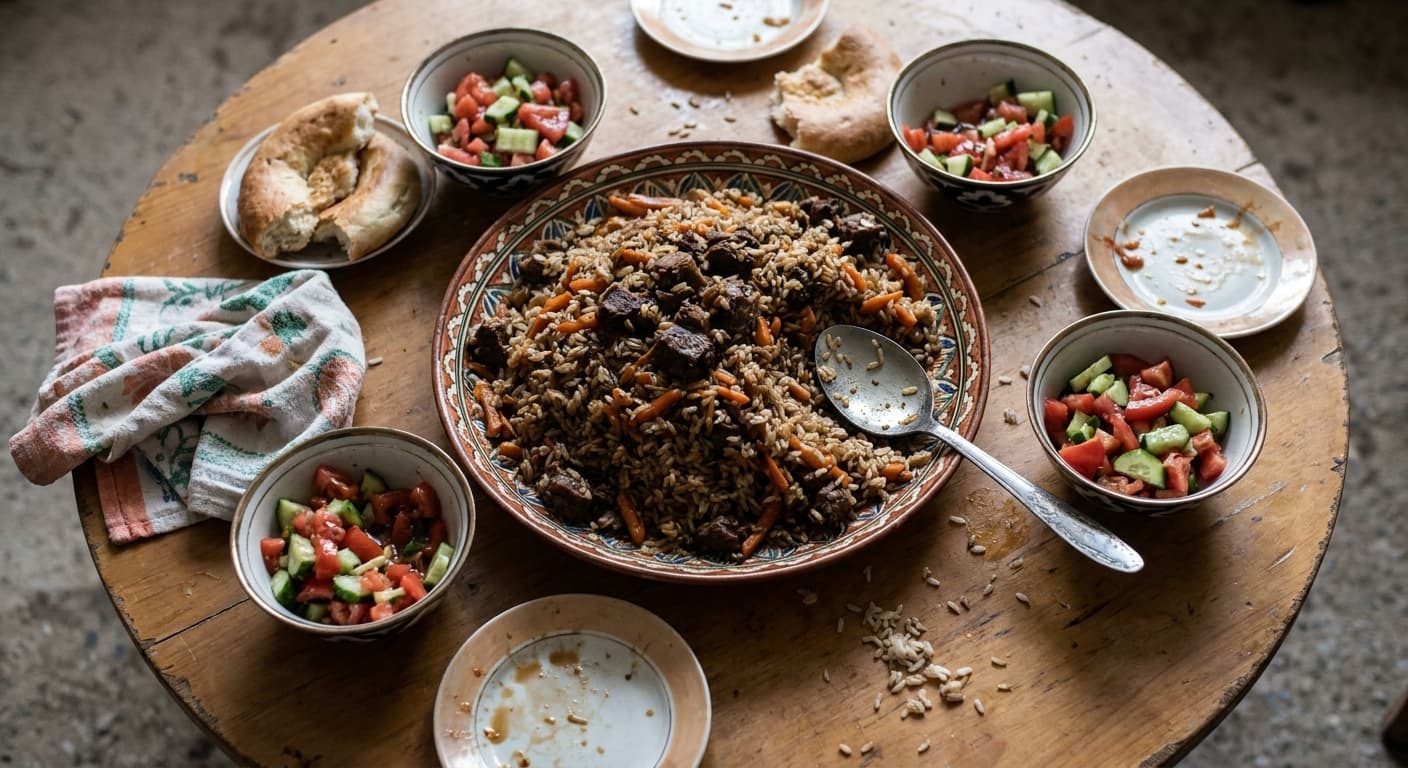
Oshi Siyoh belongs to the Bukhara Tajik tradition of osh tajik, or rice pilaf. This home-style interpretation develops a dark, savory base from deeply browned onions and meat; non, the regional flatbread, can accompany the shared table.
Printable Recipe Card
Servings: 6 · Total: 125 min · Difficulty: medium
Ingredients (quick list)
- 500 g long-grain white rice (Use a firm pilaf rice; aged basmati is a practical substitute.)
- 600 g boneless beef shoulder (Halal-certified, trimmed of external fat and cut into 3 cm cubes.)
- 3 onions (Approximately 400 g total after peeling; slice into 3 mm half-moons.)
- 5 carrots (Approximately 500 g total after peeling; cut into batons approximately 5 cm long and 5 mm thick.)
- 75 ml sunflower oil (A neutral, high-heat cooking oil.)
- 2 tsp cumin seeds
- 10 g fine salt
- 0.5 tsp ground black pepper
- 1500 ml water (For soaking; drain and discard before cooking.)
- 900 ml boiling water (Use 500 ml for the meat base and 400 ml when adding the rice.)
Steps (summary)
- Rinse the rice in a bowl under running cold water, draining repeatedly until the runoff is substantially clearer. Cover with th…
- Pat the beef dry and prepare the onions and carrots to the dimensions given in the ingredient notes. Set a heavy 5–6 liter kaza…
- Add the onions and cook for 15–20 minutes, stirring frequently, until a deep chestnut brown. Reduce the heat to medium as they…
- Add the beef and cook for 8–10 minutes, turning regularly so the exposed surfaces brown. Stir the onions up from the bottom dur…
- Add the carrot batons and cook for 7–8 minutes, folding them through the meat without crushing them. Rub the cumin seeds betwee…
- Carefully pour in 500 ml boiling water and scrape up the browned deposits with a wooden spoon. Bring this meat-and-vegetable ba…
+ 5 more steps in the full instructions section below.
Cultural Background
Bukhara's Tajik foodways share Central Asia's communal pilaf culture, discussed by Glenn Randall Mack and Asele Surina. This recipe is a home-style interpretation; their book provides regional context, not verification of this exact Oshi Siyoh formula.
Equipment
💡 Tips
- The target onion color is deep chestnut brown, not black; scorched onions make the entire pot bitter.
- Use a heavy pot approximately 26–28 cm wide so the rice cooks in an even layer and the onions brown without crowding excessively.
- Rice varieties absorb water differently; use the measured 50 ml adjustments rather than adding an unmeasured splash.
⚠️ Common Mistakes
❌ Burning the onions in an attempt to make the pilaf black.
✅ Fix: Stop at deep chestnut brown and reduce the heat as the onions darken. If they become acrid and blackened, discard them and restart the onion-and-oil base.
❌ Stirring the rice into the meat before steaming.
✅ Fix: Keep the rice as a separate upper layer until cooking and resting are complete. This protects the grains and makes absorption more even.
❌ Adding all the reserve water automatically.
✅ Fix: Use reserve water only when the liquid has evaporated and the grains remain chalky. Add exactly 50 ml per adjustment.
❌ Grating the carrots.
✅ Fix: Cut 5 mm-thick batons so the carrots retain structure through frying, simmering, and steaming.
🧊 How to Store
Divide leftovers into shallow containers and refrigerate within 1 hour; keep at 4°C or below for up to 2 days, or freeze for 1 month. Reheat once, covered, with 15 ml water per serving until steaming throughout and the center reaches 74°C.
📅 Make Ahead
Slice the onions and carrots and cube the beef up to 24 hours ahead; refrigerate separately at 4°C or below. Cook the rice shortly before serving for the best grain separation.
🍽️ Pairs Well With
- Tomato and onion salad
- cucumber salad
- non flatbread
- unsweetened green tea
Regional Variations
- Across Tajik and neighboring Central Asian pilaf traditions, cooks vary the meat, carrot variety, rice, and cooking fat. These are broader regional differences, not verified named variants of Oshi Siyoh.
- Bukhara also has other distinct rice preparations; this dark, absorption-cooked interpretation should not be treated as interchangeable with every Bukharan pilaf.
Ingredients
- 500 glong-grain white rice (Use a firm pilaf rice; aged basmati is a practical substitute.)
- 600 gboneless beef shoulder (Halal-certified, trimmed of external fat and cut into 3 cm cubes.)
- 3onions (Approximately 400 g total after peeling; slice into 3 mm half-moons.)
- 5carrots (Approximately 500 g total after peeling; cut into batons approximately 5 cm long and 5 mm thick.)
- 75 mlsunflower oil (A neutral, high-heat cooking oil.)
- 2 tspcumin seeds
- 10 gfine salt
- 0.5 tspground black pepper
- 1500 mlwater (For soaking; drain and discard before cooking.)
- 900 mlboiling water (Use 500 ml for the meat base and 400 ml when adding the rice.)
🔄 Substitutions
- 600 g boneless beef shoulder→ 600 g boneless lamb shoulder
- 500 g long-grain white rice→ 500 g aged basmati rice
- 75 ml sunflower oil→ 75 ml refined cottonseed oil
Instructions
- 1
Rinse the rice in a bowl under running cold water, draining repeatedly until the runoff is substantially clearer. Cover with the measured 1500 ml water and soak for 30 minutes while preparing the other ingredients.
- 2
Pat the beef dry and prepare the onions and carrots to the dimensions given in the ingredient notes. Set a heavy 5–6 liter kazan or Dutch oven over medium-high heat and heat the oil for approximately 2 minutes, until shimmering but not smoking.
- 3
Add the onions and cook for 15–20 minutes, stirring frequently, until a deep chestnut brown. Reduce the heat to medium as they darken; the aim is pronounced browning, not blackened edges or an acrid smell.
- 4
Add the beef and cook for 8–10 minutes, turning regularly so the exposed surfaces brown. Stir the onions up from the bottom during cooking to prevent them from scorching beneath the meat.
- 5
Add the carrot batons and cook for 7–8 minutes, folding them through the meat without crushing them. Rub the cumin seeds between your palms, then add them with the salt and pepper.
- 6
Carefully pour in 500 ml boiling water and scrape up the browned deposits with a wooden spoon. Bring this meat-and-vegetable base, commonly called zirvak, to a gentle simmer, cover, and cook over low heat for 30 minutes.
- 7
Drain the soaked rice thoroughly and spread it evenly over the meat and vegetables without stirring the layers together. Slowly pour the remaining 400 ml boiling water over the back of a spoon so the rice layer stays level.
- 8
Raise the heat to medium-high and cook uncovered for 10–15 minutes, until the visible surface water has disappeared and steam holes appear. Taste 3 grains from the upper layer; they should be swollen but retain a small firm center, rather than a dry, chalky core.
- 9
If the rice is still distinctly hard and the bottom sounds like it is frying, pour 50 ml of the reserved boiling water around the perimeter and cook for 2 minutes before checking again. Repeat only as needed, using no more than the reserved 150 ml, and do not stir the rice into the meat.
- 10
Gently mound the rice toward the center and make 5 steam channels down through the rice with the handle of a wooden spoon. Cover tightly, reduce the heat to its lowest setting, and steam for 20 minutes.
- 11
Turn off the heat and leave the covered pilaf undisturbed for 10 minutes. Fold the rice, carrots, onions, and beef together gently, lifting from the bottom, then transfer to a warm communal platter and serve immediately.
🪪 Recipe Passport
Cultural Background
Bukhara's Tajik foodways share Central Asia's communal pilaf culture, discussed by Glenn Randall Mack and Asele Surina. This recipe is a home-style interpretation; their book provides regional context, not verification of this exact Oshi Siyoh formula.
Regional Variations
Researched from multiple sources and validated by the Zaffaron editorial team. Every recipe is tested for accuracy, measurements, and cultural authenticity.
📚 Sources & Cultural References
- Glenn Randall Mack and Asele Surina — Food Culture in Russia and Central Asia — (2005)
Sources cited by the Zaffaron editorial team during recipe research. Cultural and culinary references supporting authenticity claims.
Nutrition per serving
Pairs well with
If you enjoyed this recipe, here are a few related Zaffaron recipes to try next.
Does your family make this differently?
Every family has their own version. Maybe your grandmother adds a secret ingredient, or your aunt has a completely different technique. Preserve your family's version — with their name on it, forever.
You Might Also Like
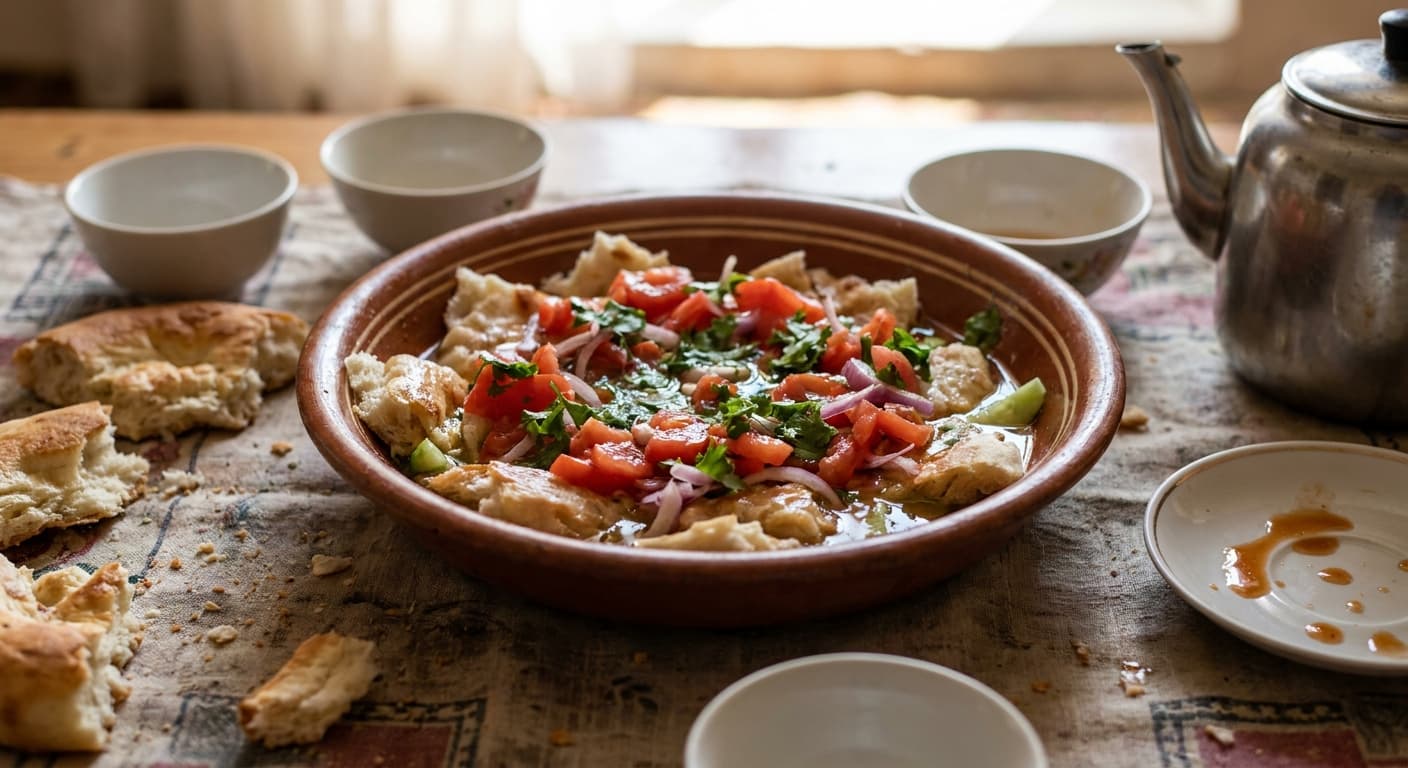
Shakarob (Шакароб) — Tajik Tomato-Onion Bread Salad
Tajik · Salads · 25 min
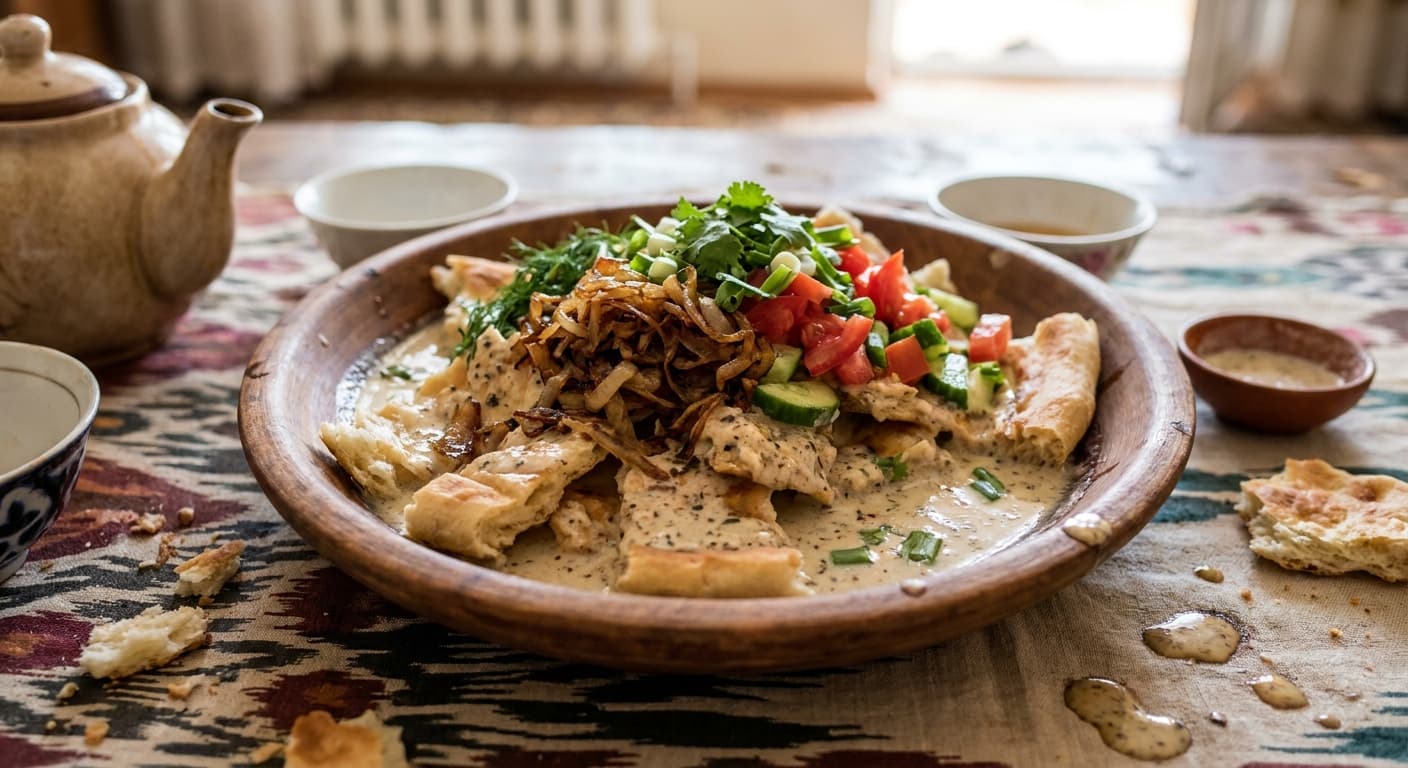
Tajik Qurutob (Қурутоб) — Tangy Bread Salad with Qurut and Fried Onions
Tajik · Main Courses · 40 min
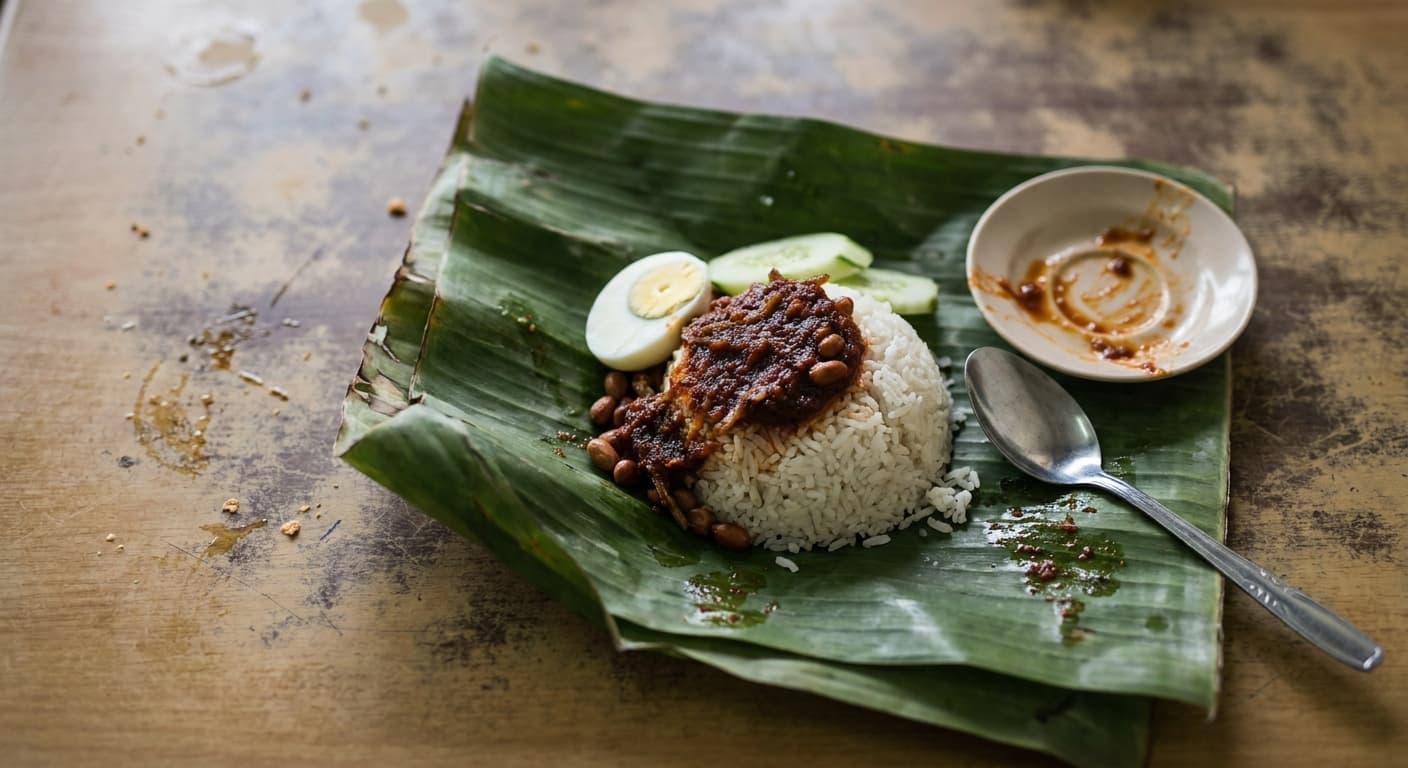
Malaysian Coconut Rice (Nasi Lemak) — Banana-Leaf Breakfast with Sambal Ikan Bilis
Malaysian · Rice Dishes · 95 min
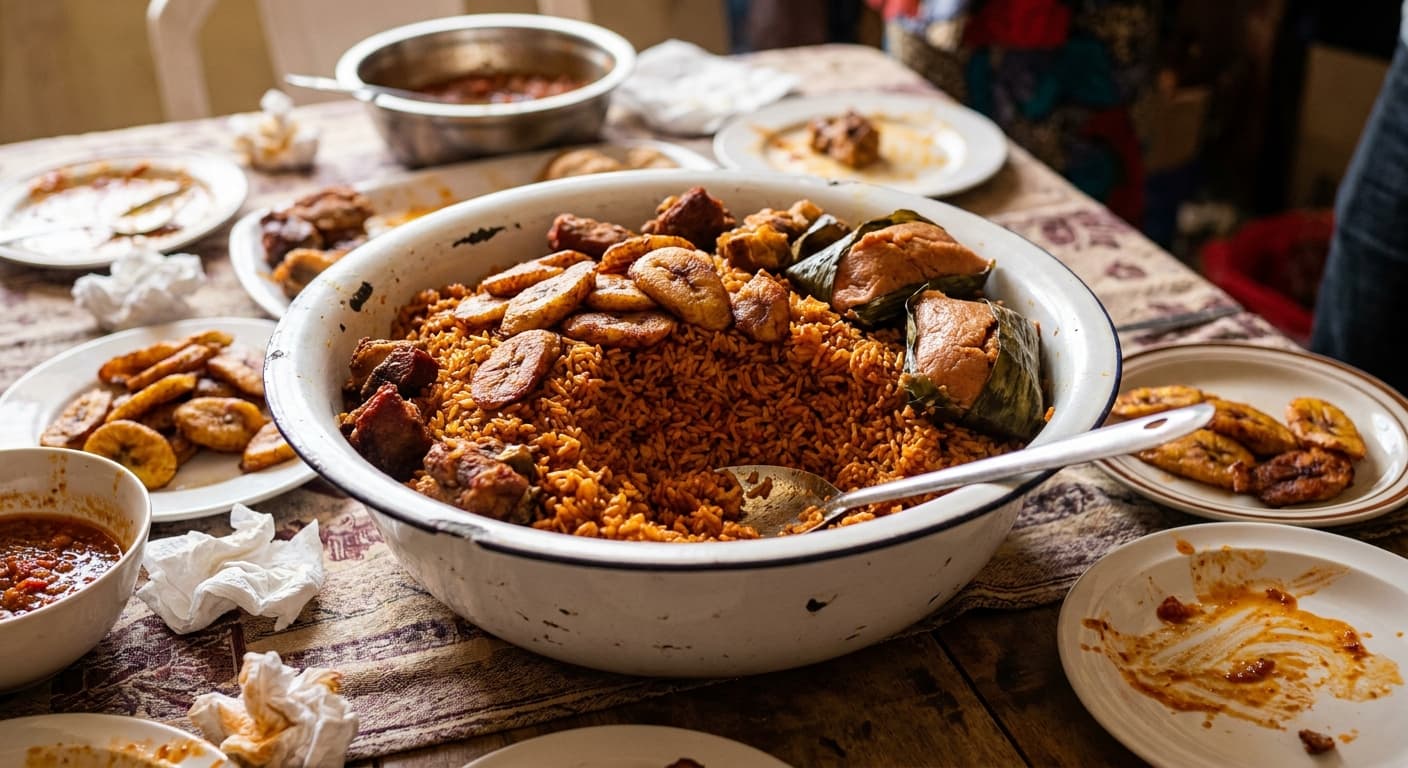
Nigerian Jollof Rice (Jollof Rice) — Smoky Party-Style Tomato Rice
West african · Rice Dishes · 80 min
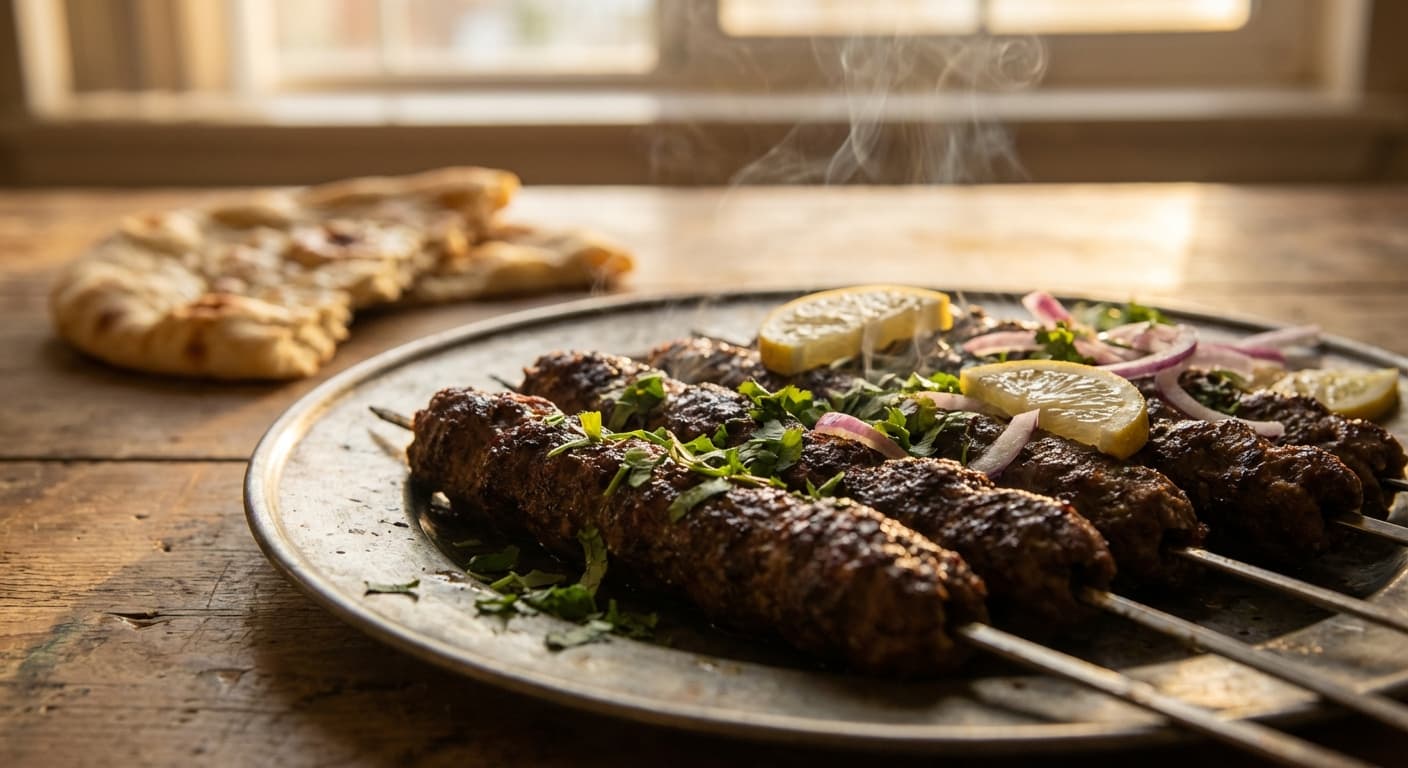
Seekh Kebab (کباب سیخی) — Afghan Grilled Minced Meat Skewers with Cumin
Afghan · Kebabs · 37 min
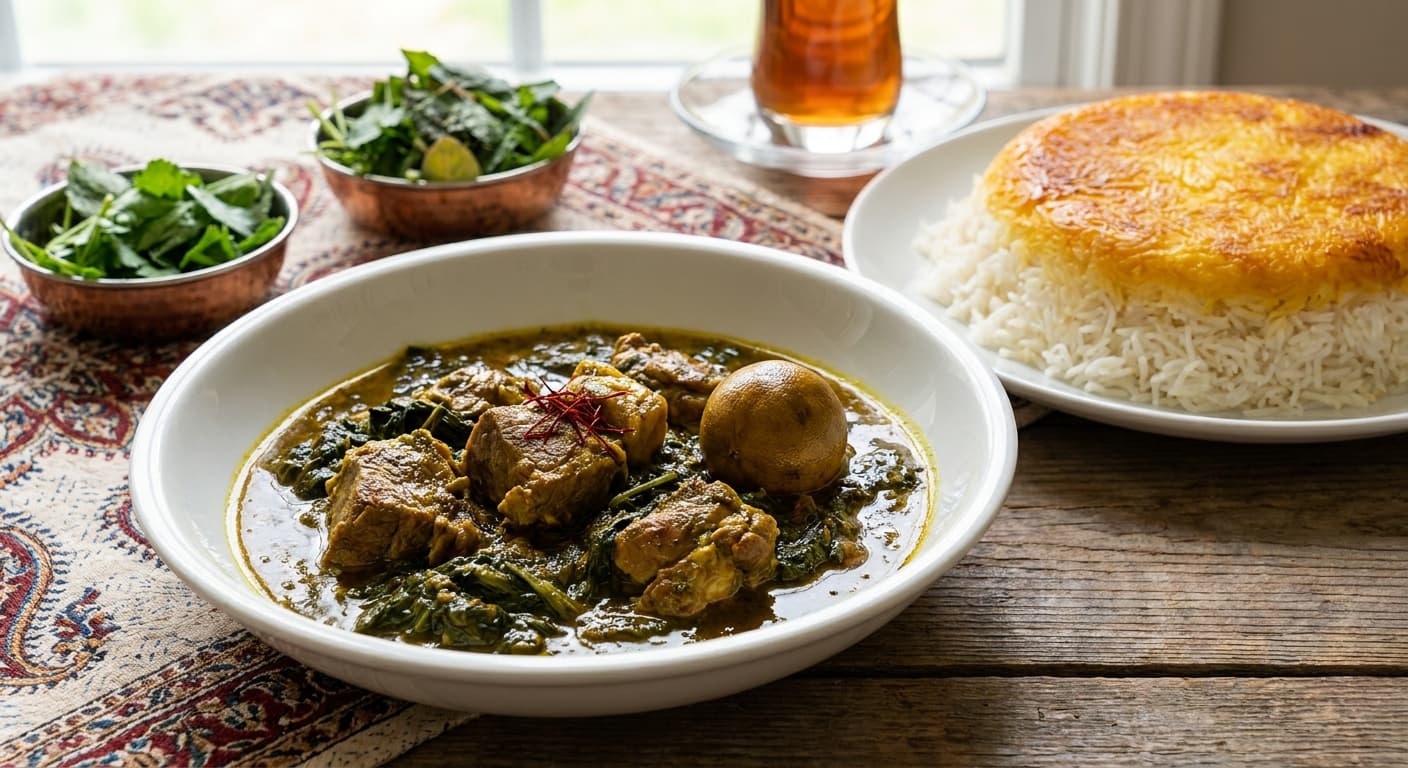
Persian Khoresht Saak (خورش ساک) — Saffron-Cardamom Lamb Stew with Saak Greens
Persian · Stews · 145 min
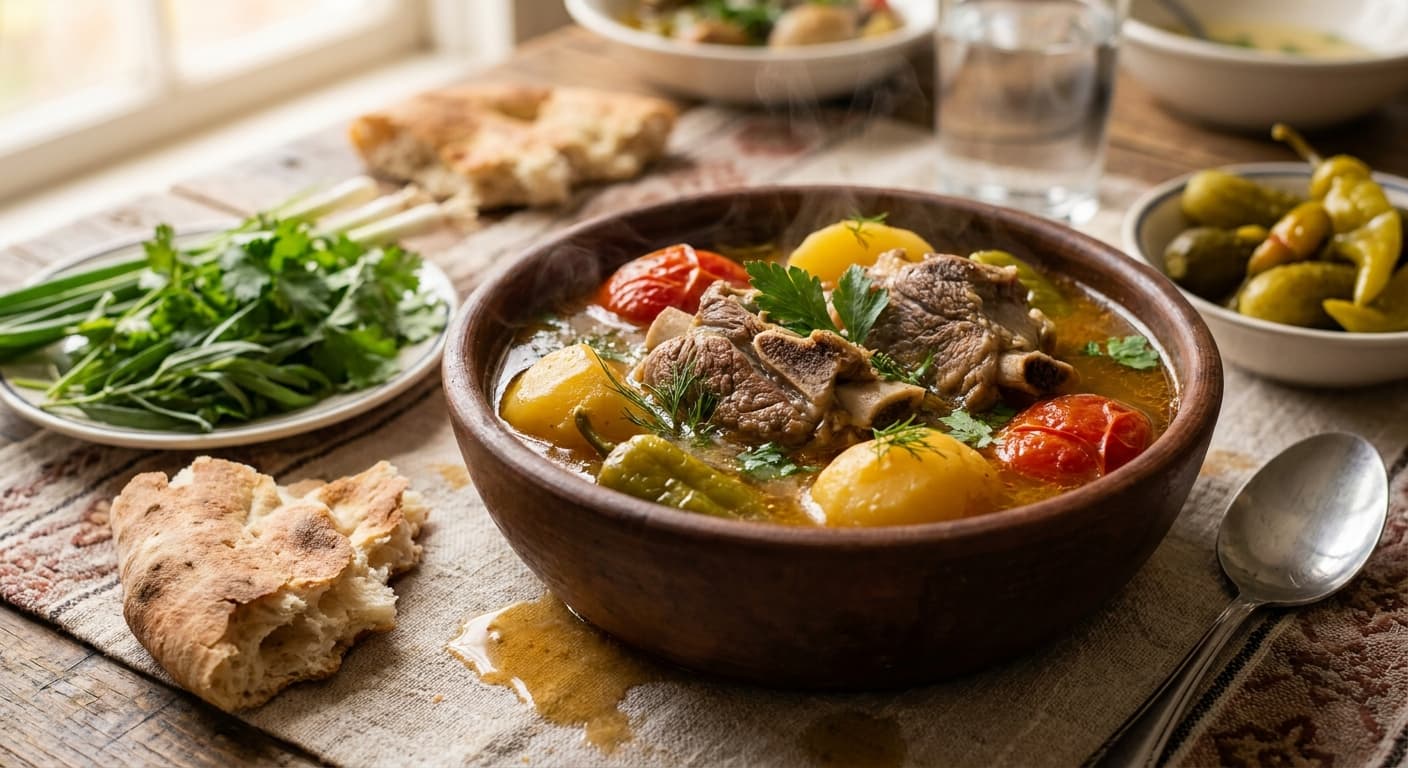
Khashlama (Խաշլամա) — Armenian Lamb and Vegetable Stew
Armenian · Stews · 160 min
Azerbaijani Milk Rice Porridge (Südlü Sıyıq) — Creamy Breakfast Bowl
Azerbaijani · Rice Dishes · 40 min
Reviews
Cooked this recipe?
Tap the stars to rate it — that's all it takes. A few words are welcome but optional.
No ratings yet. Cooked this one? Be the first to rate it — it takes one tap.