Polo Portugali (پلو پرتغالی) — Persian Portuguese-Style Rice
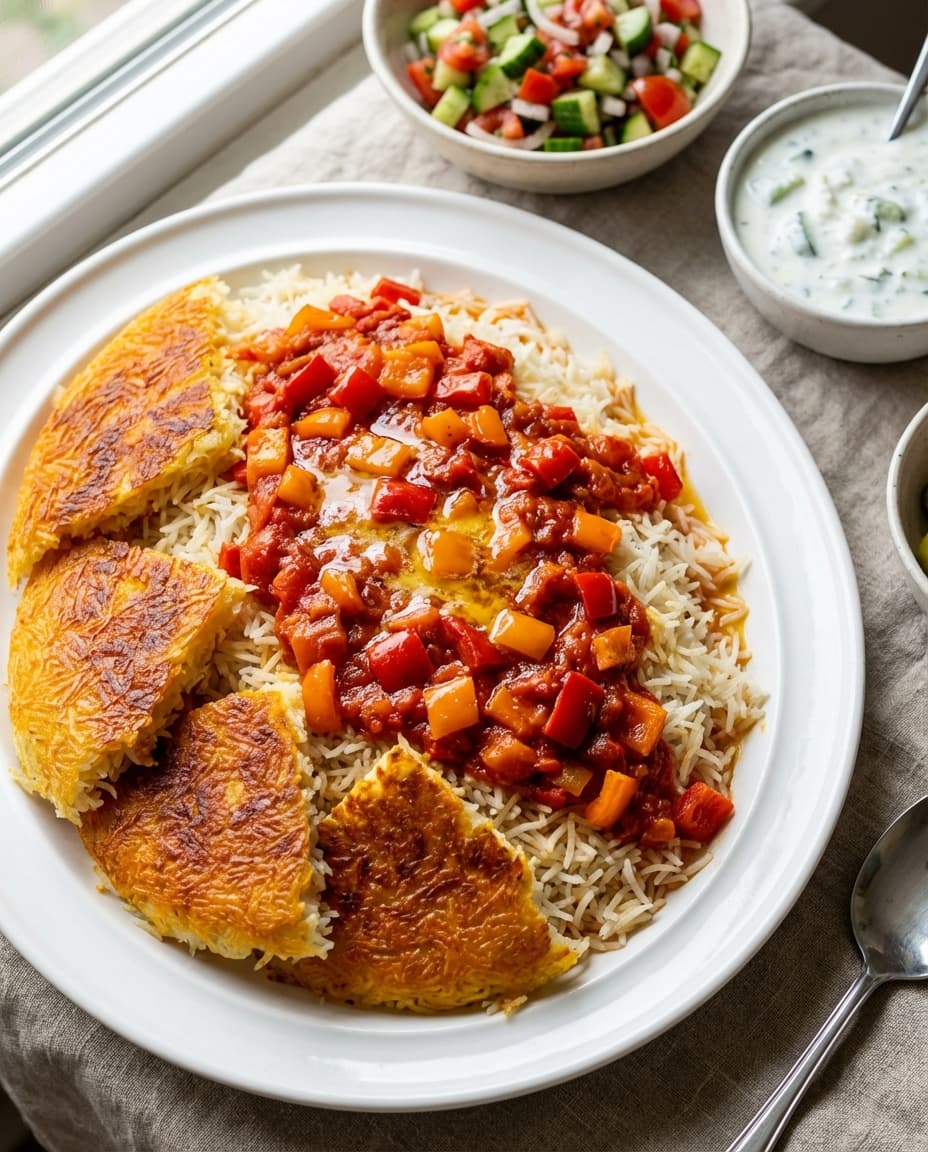
Polo Portugali is a Persian-style tomato rice pilaf simmered in meat broth with onion, sweet bell peppers, and ripe tomatoes, then finished with melted butter for a glossy, savory, comforting result.
Printable Recipe Card
Servings: 6 · Total: 130 min · Difficulty: medium
Ingredients (quick list)
- 450 g Basmati rice (rinsed until water runs mostly clear, then soaked)
- 18 g Fine sea salt (divided (for soaking water, parboil water, and final seasoning))
- 2000 ml Water (for soaking and parboiling (plus more as needed))
- 80 g Unsalted butter (divided; for sautéing and finishing)
- 250 g Yellow onion (finely diced)
- 300 g Sweet bell peppers (seeded and cut into 1 cm dice (use a mix of red and yellow if possible))
- 450 g Ripe tomatoes (grated or finely chopped (or blended briefly))
- 30 g Tomato paste (helps deepen color and umami)
- 480 ml Meat broth (hot; beef or lamb broth preferred, low-sodium if available)
- 30 ml Neutral oil (such as sunflower or canola)
- 120 g Plain yogurt (for a tender, crisp tahdig (optional but recommended))
- 0.2 g Saffron threads (ground and bloomed in hot water (optional))
+ 1 more in the full ingredients section below.
Steps (summary)
- Rinse the basmati rice in several changes of cool water until the water is mostly clear. Soak the rice in 1200 ml water with 6…
- Meanwhile, make the tomato-pepper base. Heat 30 g butter in a wide pan over medium heat (about 170°C surface heat). Add the dic…
- Stir in the tomato paste and cook 2 minutes to remove raw taste. Add the grated tomatoes and 4 g of the salt. Simmer uncovered…
- Bring 800 ml water to a rolling boil in a large pot. Add 8 g salt. Drain the soaked rice and add it to the boiling water. Boil…
- Prepare the pot for steaming. In a nonstick or heavy-bottom pot (24–26 cm), heat the neutral oil over medium heat for 1 minute.…
- Layer the rice and sauce: add one-third of the rice, then spoon over one-third of the tomato-pepper base. Repeat two more times…
+ 2 more steps in the full instructions section below.
Cultural Background
Polo Portugali is a modern Persian home-style rice dish associated with tomato-forward flavors and sweet peppers, reflecting long-standing culinary exchange through trade and travel. It is often prepared as a comforting family meal, especially when a colorful, aromatic rice is desired without heavy spicing.
Equipment
💡 Tips
- Use low-sodium broth so you can control the final salt; tomato paste and broth both concentrate during steaming.
- For deeper flavor, let the tomato-pepper base reduce until you can drag a spoon through and the trail holds for 2 seconds.
- If your rice tends to break, shorten the parboil by 1 minute and handle the grains gently when draining.
- A heavy-bottom pot helps prevent scorching while still producing crisp tahdig.
- For a richer finish, melt the butter and drizzle it over the rice right after fluffing instead of dotting before steaming.
⚠️ Common Mistakes
❌ Overboiling the rice during parboil
💡 Why: If the grains fully cook in the boiling stage, they will break and turn mushy during steaming.
✅ Fix: Boil only until the outside is tender and the center is still firm (6–8 minutes). Drain immediately and rinse briefly to stop cooking.
❌ Using a watery tomato base
💡 Why: Excess moisture makes the final rice clumpy and can prevent proper steaming and tahdig formation.
✅ Fix: Simmer the tomatoes until thick and glossy before adding broth, and keep the broth amount measured and hot.
❌ Burnt tahdig
💡 Why: High heat for too long scorches the bottom before the rice finishes steaming.
✅ Fix: After 8 minutes on medium-high to build steam, reduce to low and keep the lid towel-wrapped to manage condensation.
❌ Salting without accounting for broth
💡 Why: Broth concentrates during steaming, which can push the dish into overly salty territory.
✅ Fix: Prefer low-sodium broth and keep the final salt portion small; taste the tomato-broth base before layering.
🧊 How to Store
Cool leftovers within 2 hours. Refrigerate airtight for up to 4 days. Reheat covered with 1–2 tablespoons water in a pot over low heat for 10–12 minutes, or microwave covered until hot throughout. Tahdig will soften; re-crisp in a dry skillet over medium heat for 3–5 minutes.
📅 Make Ahead
Prepare the tomato-pepper base up to 2 days ahead and refrigerate airtight. Rewarm gently and keep it thick before layering. Rice is best steamed fresh, but leftovers reheat well when covered with a splash of water.
🍽️ Pairs Well With
- Shirazi-style cucumber and tomato salad
- Plain yogurt with dried mint
- Pickled vegetables
- Grilled tomatoes or roasted eggplant
Regional Variations
- Tehran-style home cookingOften made with a stronger tomato paste presence for deeper color and a slightly richer, more concentrated sauce layer, sometimes finished with extra melted butter at the table.
- Northern Iran-inspiredMay include more sweet peppers and softer onions for a sweeter profile, and is sometimes served with a brighter side salad and yogurt to balance the tomato richness.
Ingredients
- 450 gBasmati rice (rinsed until water runs mostly clear, then soaked)
- 18 gFine sea salt (divided (for soaking water, parboil water, and final seasoning))
- 2000 mlWater (for soaking and parboiling (plus more as needed))
- 80 gUnsalted butter (divided; for sautéing and finishing)
- 250 gYellow onion (finely diced)
- 300 gSweet bell peppers (seeded and cut into 1 cm dice (use a mix of red and yellow if possible))
- 450 gRipe tomatoes (grated or finely chopped (or blended briefly))
- 30 gTomato paste (helps deepen color and umami)
- 480 mlMeat broth (hot; beef or lamb broth preferred, low-sodium if available)
- 30 mlNeutral oil (such as sunflower or canola)
- 120 gPlain yogurt (for a tender, crisp tahdig (optional but recommended))
- 0.2 gSaffron threads (ground and bloomed in hot water (optional))
- 30 mlHot water (for blooming saffron (optional))
🔄 Substitutions
- Meat broth→ Chicken broth or vegetable broth
- Basmati rice→ Jasmine rice
- Unsalted butter→ Ghee
Instructions
- 1
Rinse the basmati rice in several changes of cool water until the water is mostly clear. Soak the rice in 1200 ml water with 6 g salt for 45 minutes at room temperature. This helps the grains elongate and cook evenly, especially important for a layered pilaf.
- 2
Meanwhile, make the tomato-pepper base. Heat 30 g butter in a wide pan over medium heat (about 170°C surface heat). Add the diced onion and cook 10–12 minutes, stirring often, until soft and lightly golden. Add bell peppers and cook 6–8 minutes until slightly tender but not mushy.
- 3
Stir in the tomato paste and cook 2 minutes to remove raw taste. Add the grated tomatoes and 4 g of the salt. Simmer uncovered 12–15 minutes over medium-low heat, stirring occasionally, until thick and glossy and most moisture has evaporated. Stir in the hot meat broth and simmer 3 minutes, then turn off heat.
- 4
Bring 800 ml water to a rolling boil in a large pot. Add 8 g salt. Drain the soaked rice and add it to the boiling water. Boil 6–8 minutes, stirring gently once or twice, until the grains are softened on the outside but still firm in the center. Drain immediately and rinse briefly with 200 ml cool water to stop cooking.
- 5
Prepare the pot for steaming. In a nonstick or heavy-bottom pot (24–26 cm), heat the neutral oil over medium heat for 1 minute. If using yogurt tahdig, mix the yogurt with 2 tablespoons (about 30 g) of the drained rice and spread it evenly on the bottom; otherwise, spread a thin layer of rice directly.
- 6
Layer the rice and sauce: add one-third of the rice, then spoon over one-third of the tomato-pepper base. Repeat two more times, finishing with rice on top. Use the handle of a spoon to poke 5–6 holes down to the bottom for steam channels. Dot the top with the remaining 50 g butter in small pieces.
- 7
Cover the lid with a clean kitchen towel and place it on the pot to catch condensation. Steam on medium-high heat for 8 minutes until you see strong steam, then reduce to low (gentle simmer) and cook 35–40 minutes. If the pot seems dry, add 2 tablespoons hot water around the edges and continue steaming.
- 8
Optional saffron finish: bloom the ground saffron in 30 ml hot water for 5 minutes. Scoop 150 g cooked rice from the top, mix with the saffron water, then return it to the pot as a bright garnish. Rest the rice off heat for 10 minutes, then fluff gently and serve with pieces of tahdig.
🪪 Recipe Passport
Cultural Background
Polo Portugali is a modern Persian home-style rice dish associated with tomato-forward flavors and sweet peppers, reflecting long-standing culinary exchange through trade and travel. It is often prepared as a comforting family meal, especially when a colorful, aromatic rice is desired without heavy spicing.
Regional Variations
Researched from multiple sources and validated by the Zaffaron editorial team. Every recipe is tested for accuracy, measurements, and cultural authenticity.
Nutrition per serving
Pairs well with
If you enjoyed this recipe, here are a few related Zaffaron recipes to try next.
Does your family make this differently?
Every family has their own version. Maybe your grandmother adds a secret ingredient, or your aunt has a completely different technique. Preserve your family's version — with their name on it, forever.
You Might Also Like
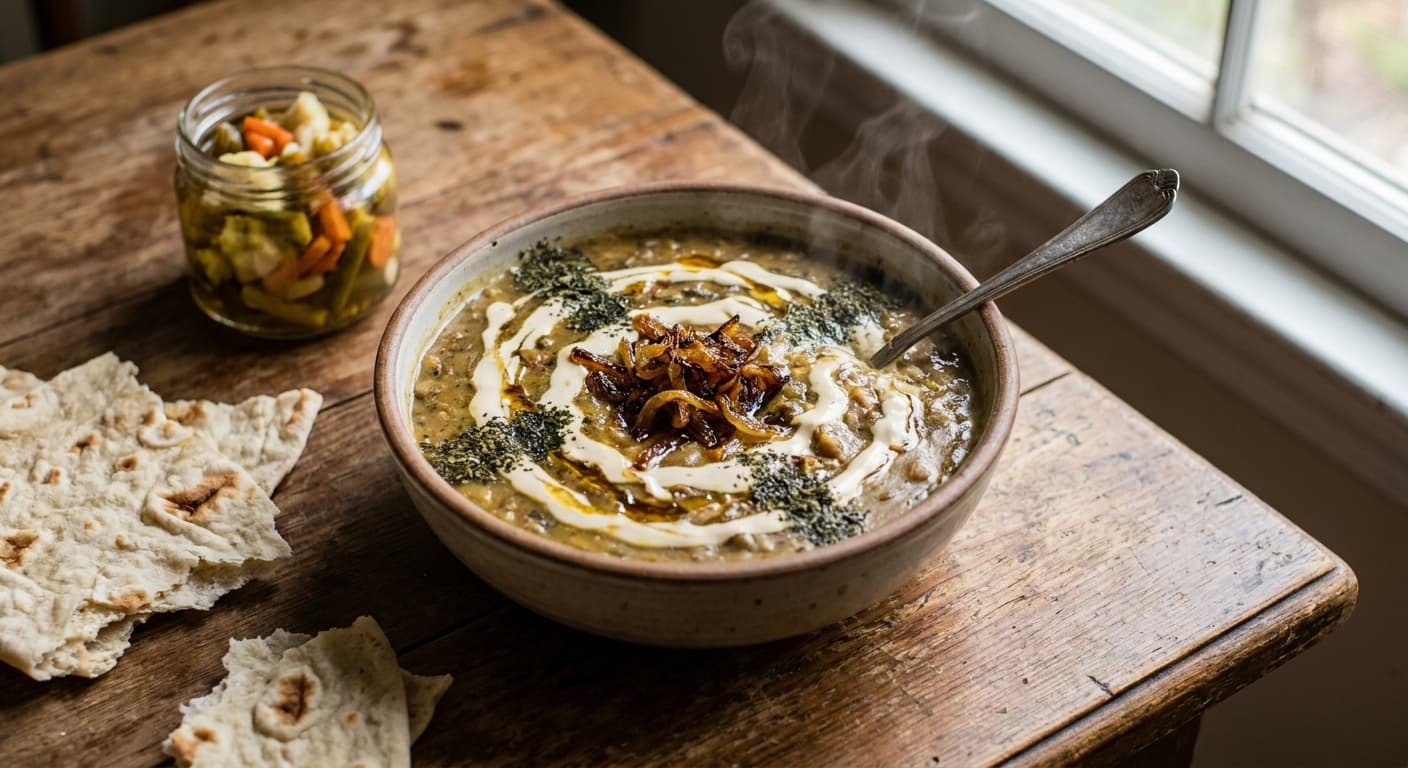
Ash-e Sak (آش ساک) — Gorgani Spinach and Lamb Ash
Persian · Soups · 175 min
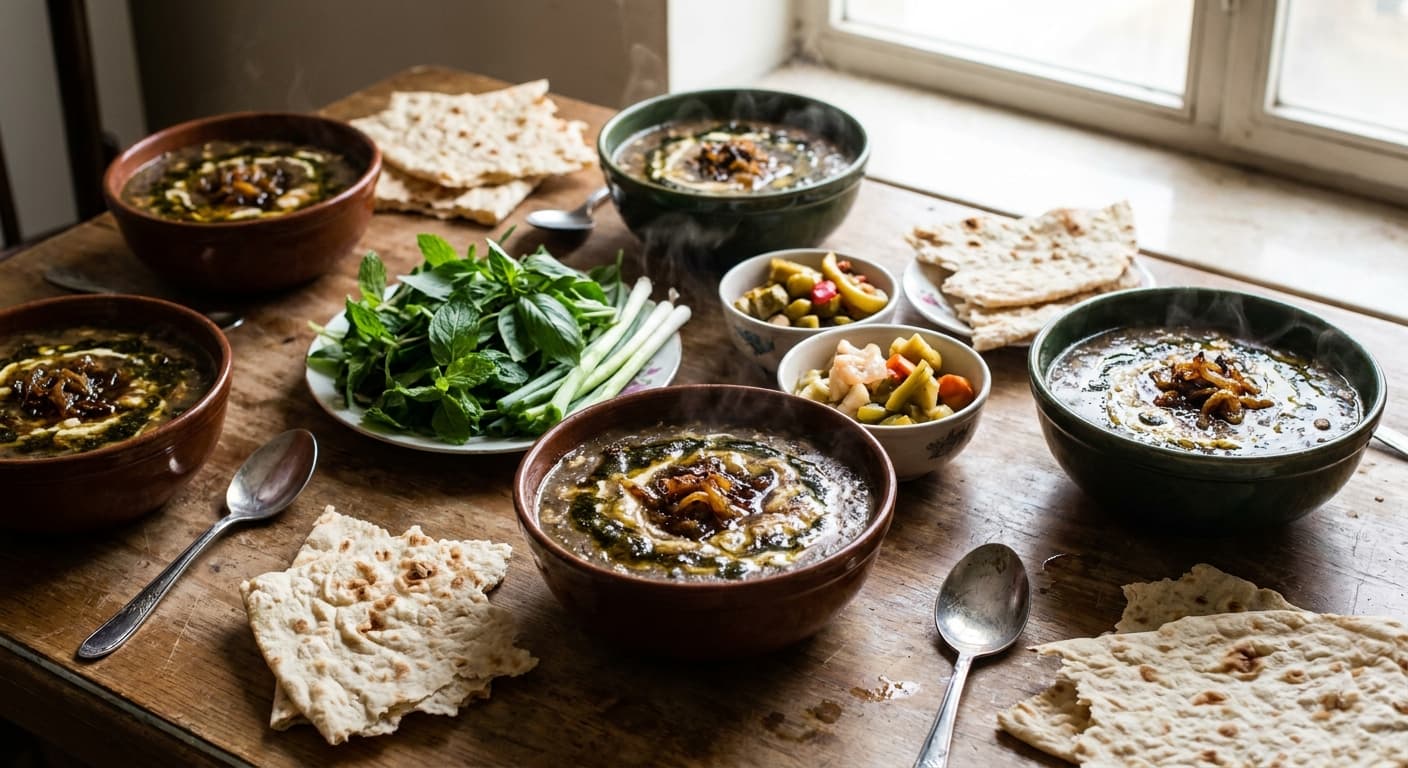
Ash-e Torsh (آش ترش) — Sour Herb and Legume Soup
Persian · Soups · 145 min
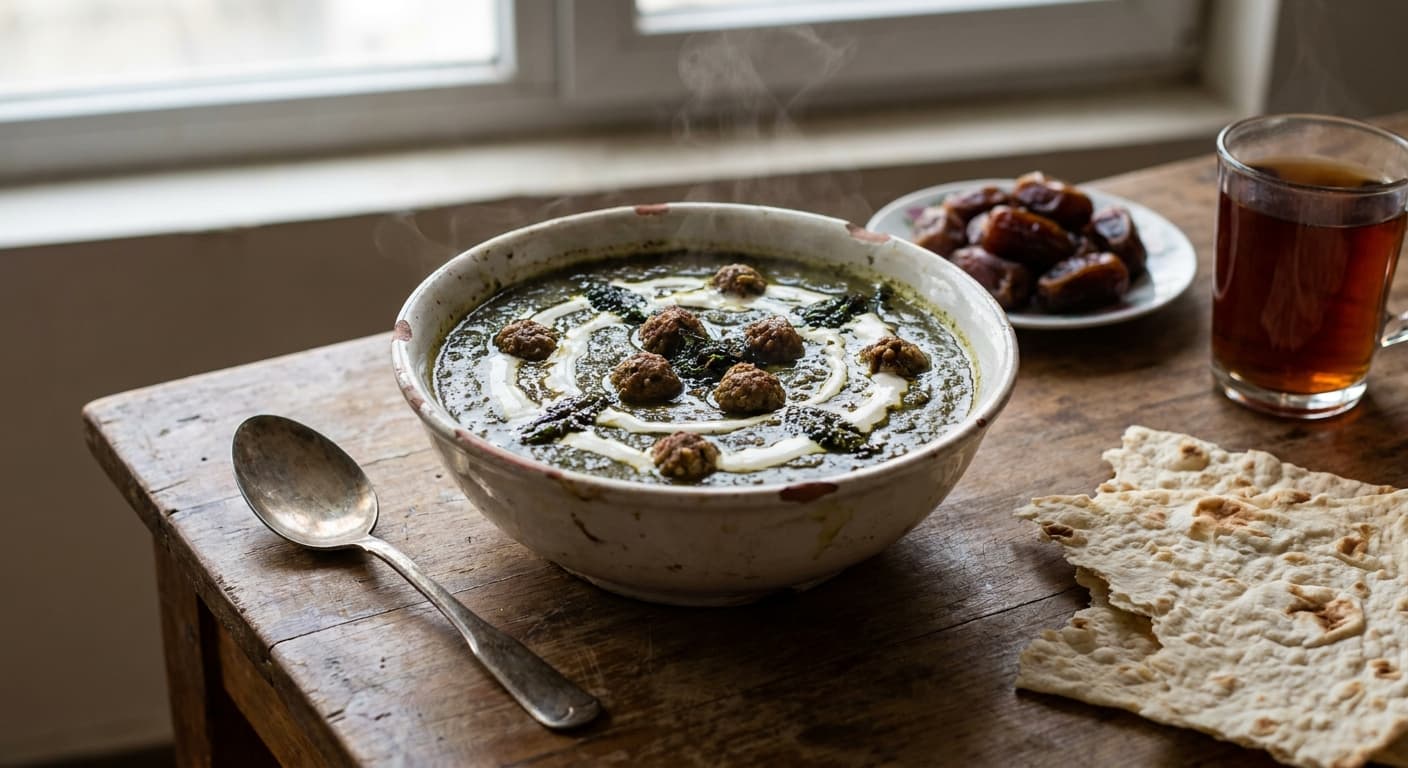
Ash-e Sak (آش ساک) — Golestani Spinach, Legume, and Meatball Soup
Persian · Soups · 175 min
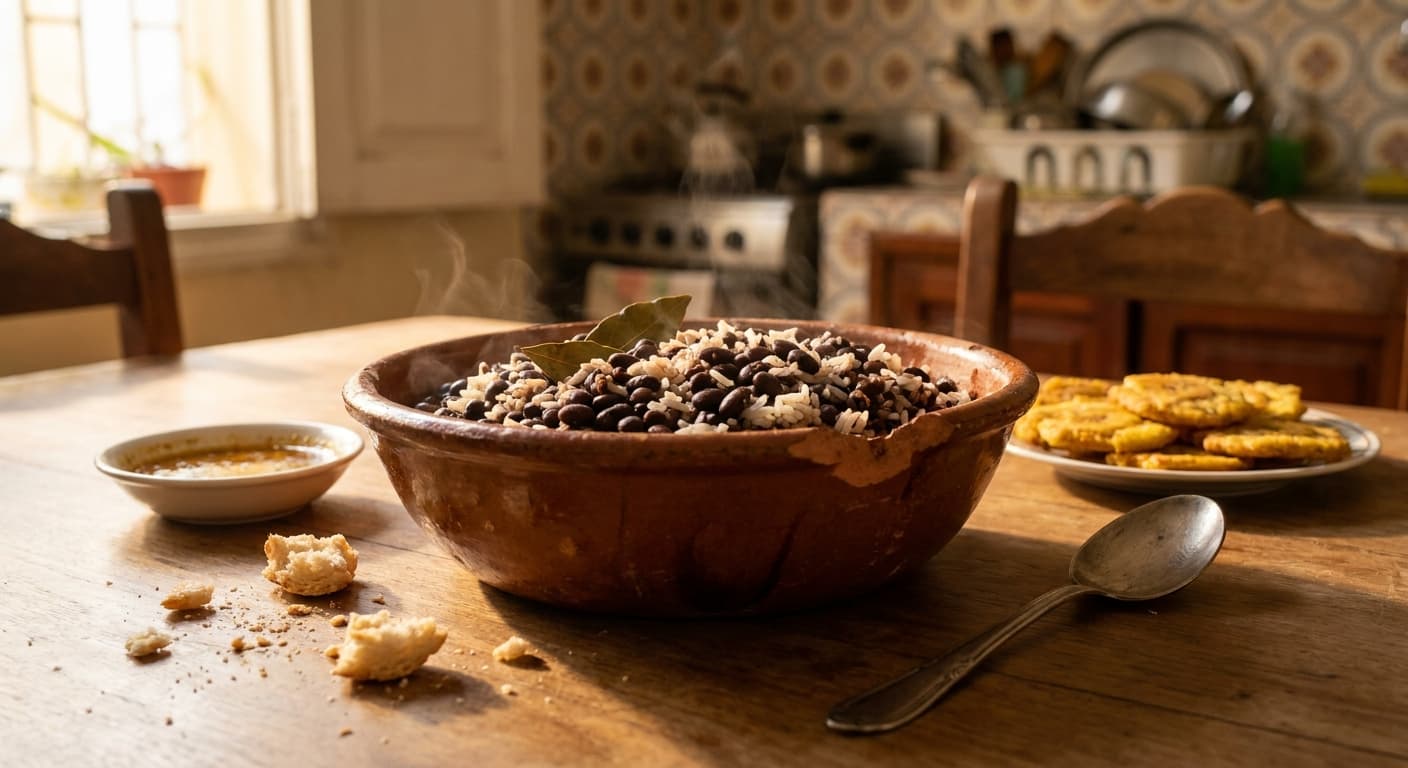
Moros y Cristianos (Moros y Cristianos) — Cuban Black Beans and Rice
Cuban · Rice Dishes · 130 min
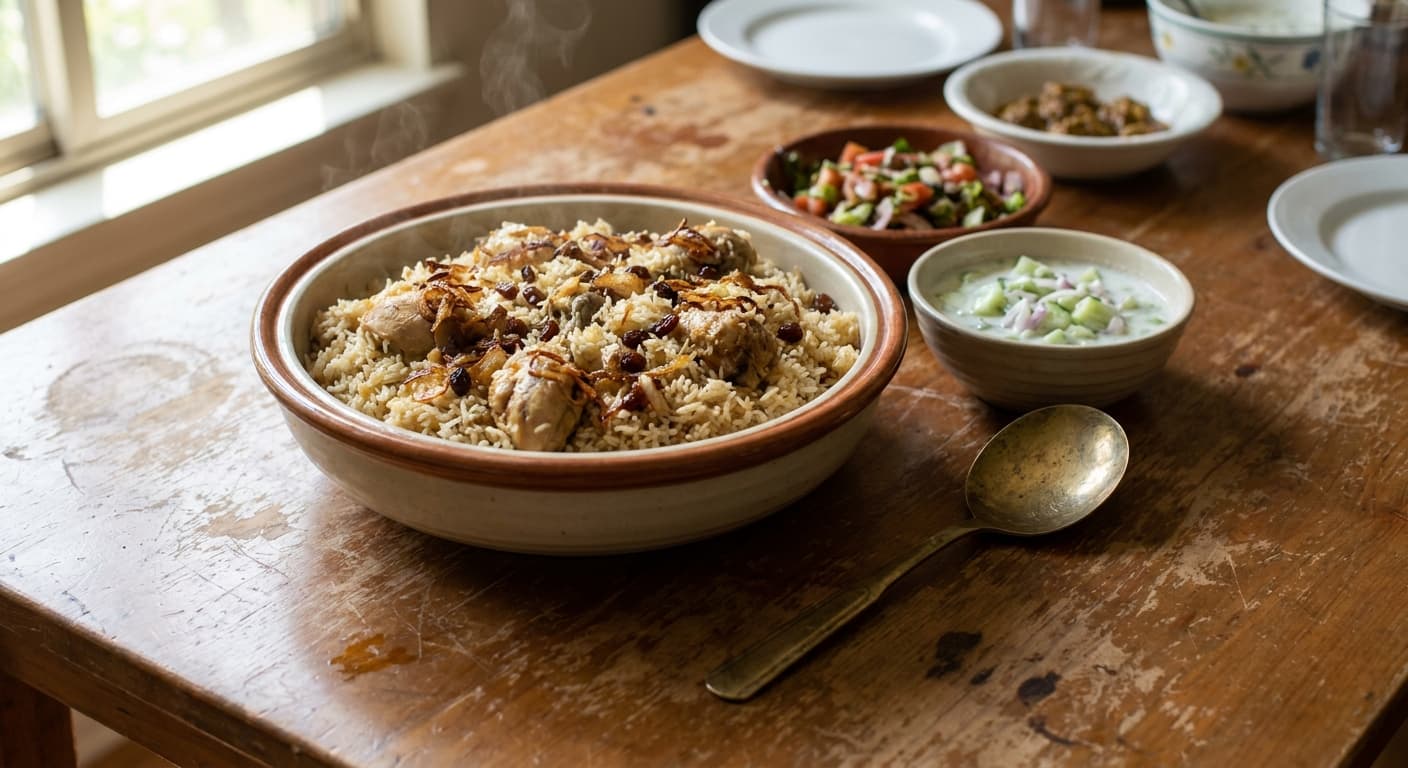
Morog Polao (মোরগ পোলাও) — Bangladeshi Chicken Pilaf
Bangladeshi · Rice Dishes · 100 min
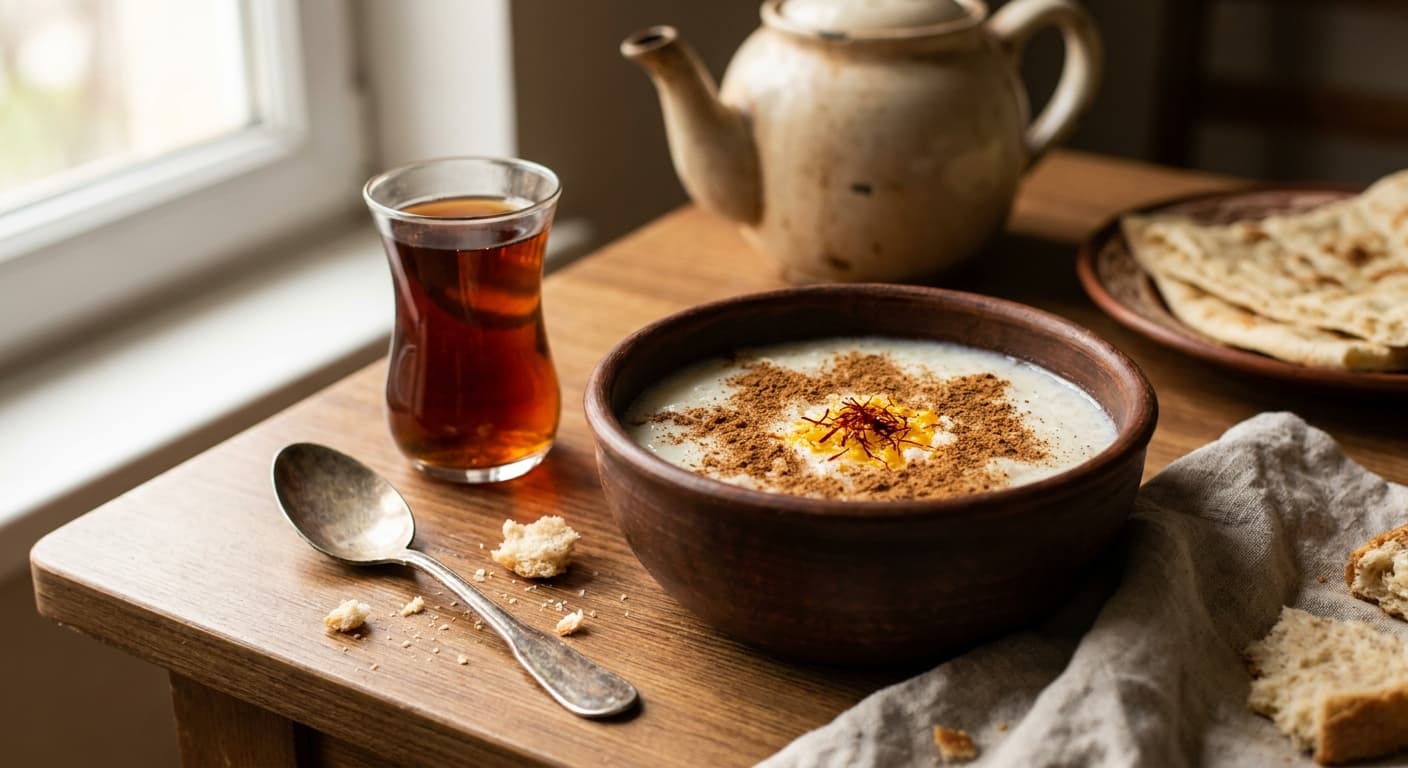
Azerbaijani Milk Rice Porridge (Südlü Sıyıq) — Creamy Breakfast Bowl
Azerbaijani · Rice Dishes · 40 min
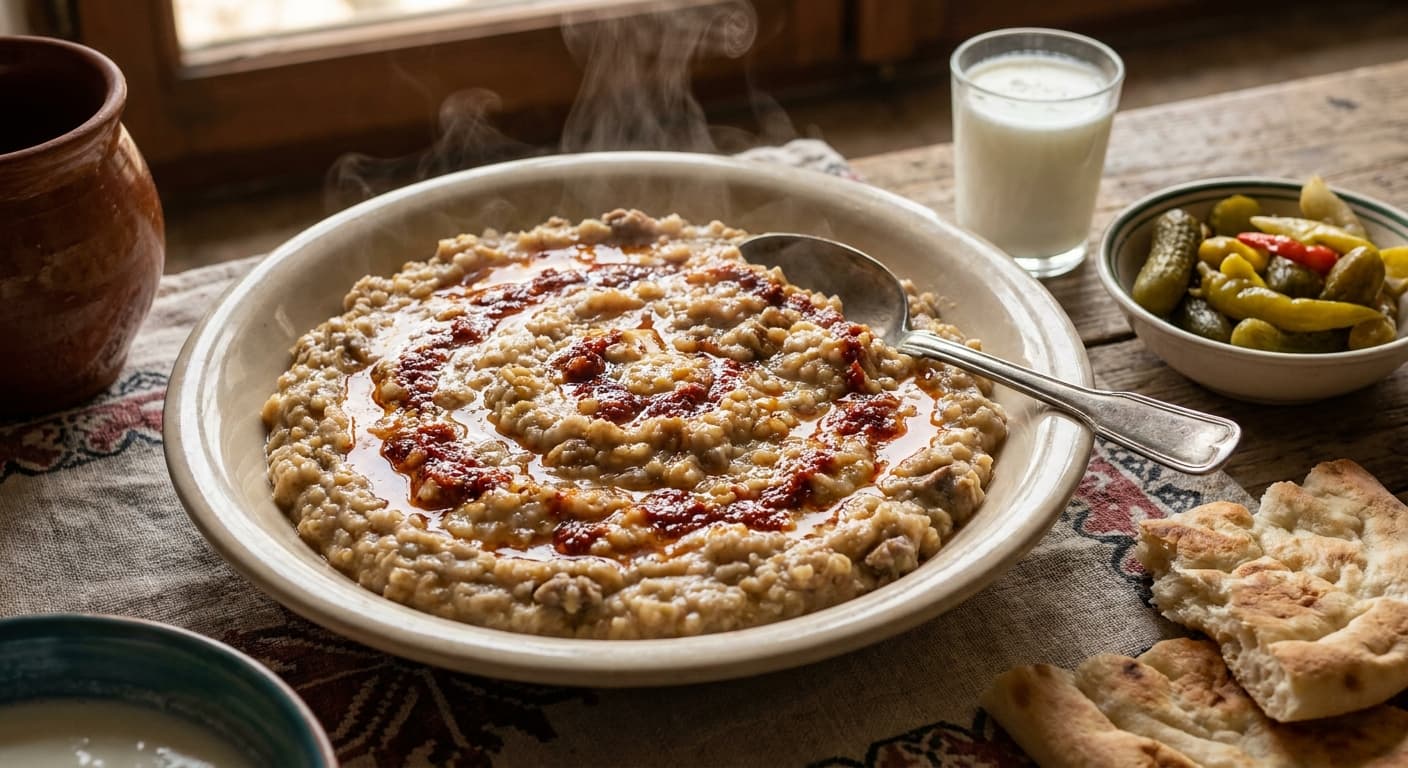
Keshkek (Keşkek) — Creamy Ceremonial Wheat and Lamb Stew
Turkish · Stews · 240 min
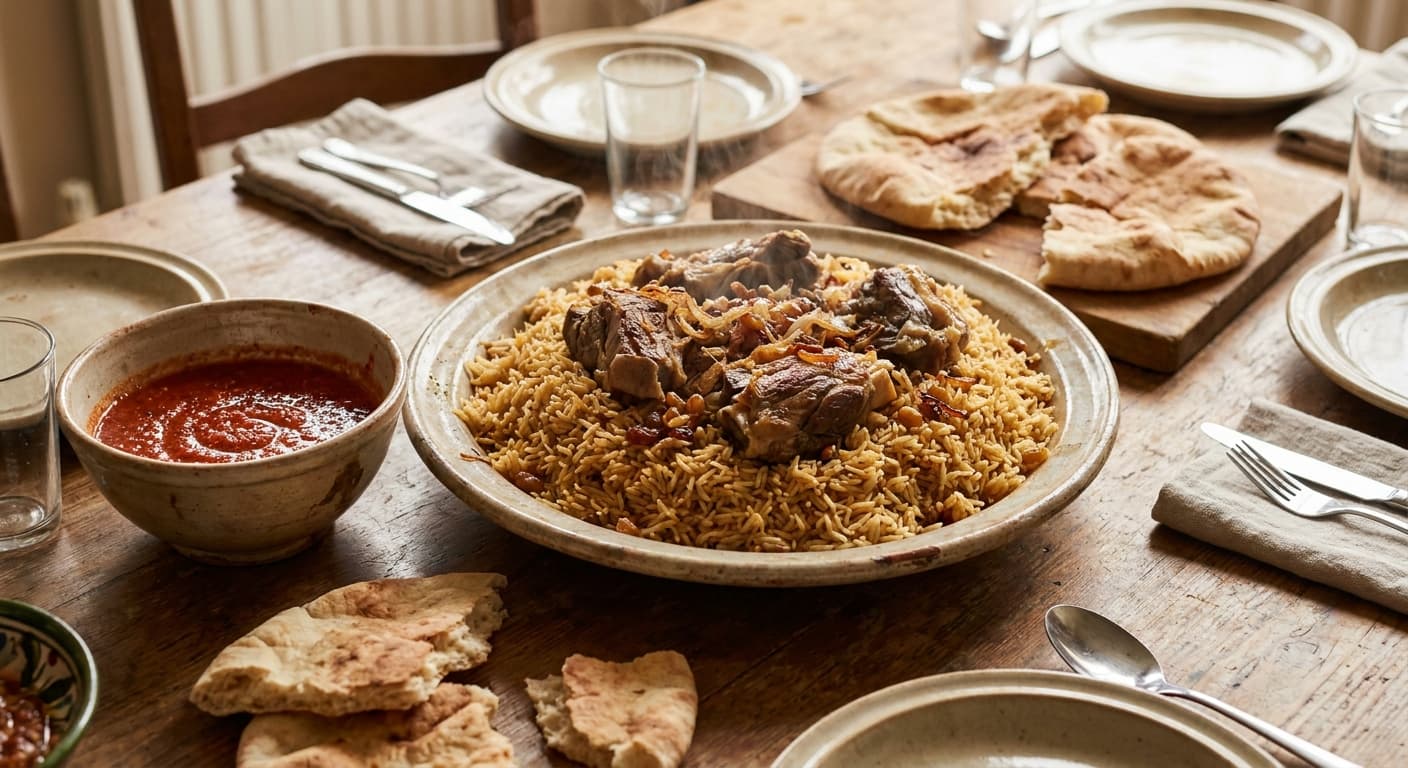
Yemeni Mandi (مندي) — Smoke-Scented Spiced Rice and Lamb
Yemeni · Main Courses · 170 min
Reviews
Cooked this recipe?
Tap the stars to rate it — that's all it takes. A few words are welcome but optional.
No ratings yet. Cooked this one? Be the first to rate it — it takes one tap.