Serbian Cheese Gibanica (Гибаница) — Crumpled Filo Pie with White Cheese
Gibanica is Serbia's beloved crumpled filo pie, rich with eggs, white brined cheese, yogurt, and often kajmak. It is served warm at family tables, celebrations, and casual breakfasts with ajvar or more yogurt.
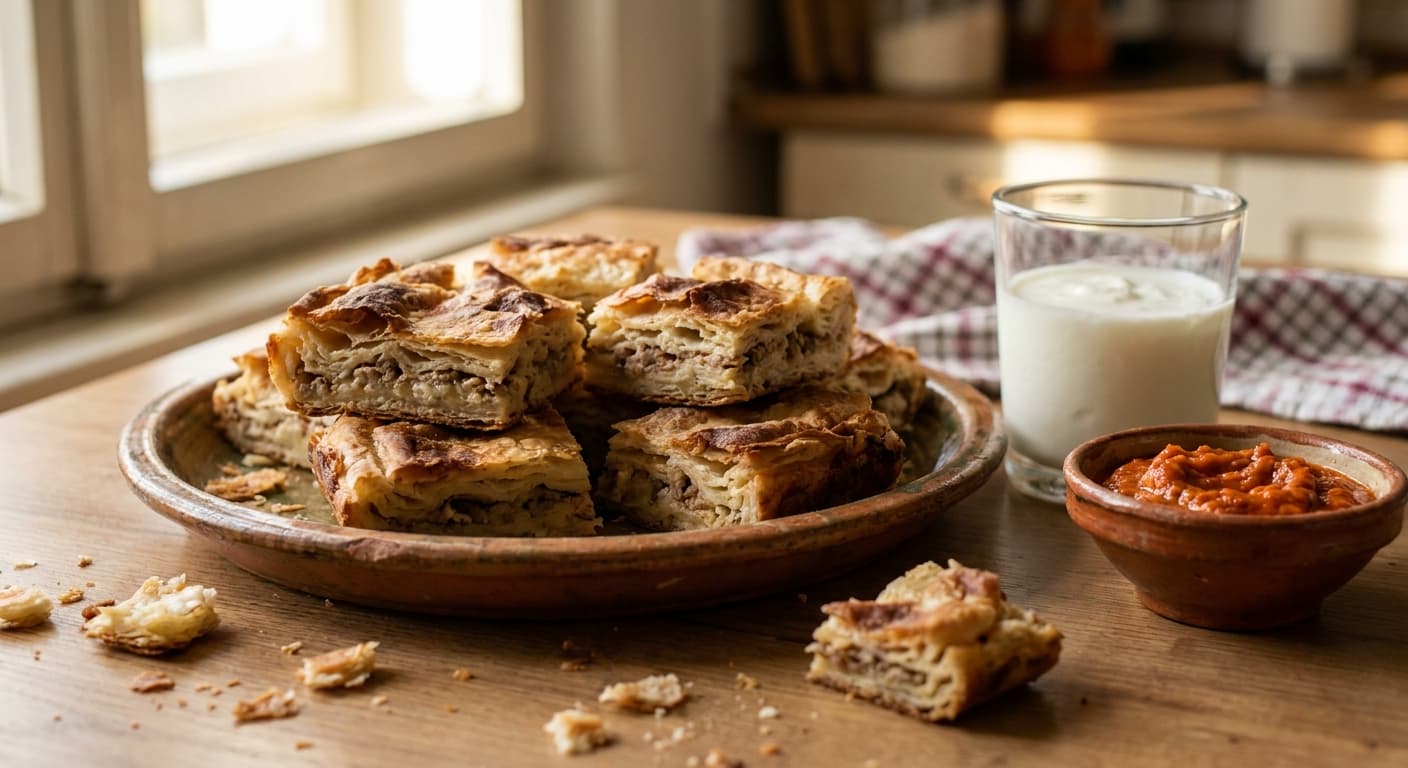
Printable Recipe Card
Servings: 8 · Total: 65 min · Difficulty: easy
Ingredients (quick list)
- 500 g filo pastry (thawed if frozen and kept covered with a barely damp towel)
- 500 g white brined cow's cheese (Serbian-style sir or a firm feta-style cheese)
- 5 large eggs
- 250 g plain full-fat yogurt
- 80 g kajmak (for a richer Serbian filling)
- 200 ml sparkling mineral water
- 100 ml sunflower oil (80 ml for the filling and 20 ml for greasing and finishing)
- 10 g baking powder
- 2 g fine sea salt (reduce to 1 g if the cheese is very salty)
Steps (summary)
- Heat the oven to 190°C and place a rack in the center position. Brush a 33 x 23 cm baking dish with 10 ml of the sunflower oil,…
- Crumble the white brined cheese into a large bowl, leaving some small pea-size pieces for texture. In a separate bowl, whisk th…
- Stir the crumbled cheese into the liquid mixture, keeping the filling loose rather than smooth. Reserve 3 filo sheets for the b…
- Lay 2 reserved filo sheets in the oiled baking dish, letting the edges come slightly up the sides. Take each remaining filo she…
- Continue crumpling, dipping, and arranging the filo until the dish is filled in an even, airy layer. Pour any remaining cheese…
- Let the assembled gibanica stand for 10 minutes so the filo absorbs the egg and yogurt mixture. Bake for 40 to 45 minutes, unti…
+ 1 more steps in the full instructions section below.
Cultural Background
Gibanica is a central Serbian home pie, present at breakfasts, slava tables, and family gatherings. Spasenija Pata Markovic's Veliki narodni kuvar reflects the importance of such cheese-and-filo pies in Serbian cooking.
Equipment
💡 Tips
- Keep the filo covered while assembling; dry sheets crack and will not crumple into the soft, layered texture that defines gibanica.
- Use sparkling mineral water rather than still water because the bubbles help lighten the egg-and-cheese filling.
- Do not compact the dipped filo in the pan; loose folds create the tender interior and crisp golden ridges.
⚠️ Common Mistakes
❌ Pressing the dipped filo tightly into the pan.
✅ Fix: Arrange the sheets loosely so steam can expand the layers and create a light gibanica rather than a dense slab.
❌ Using very dry filo sheets.
✅ Fix: Keep the stack covered with a barely damp towel and work with one sheet at a time.
❌ Cutting the pie immediately after baking.
✅ Fix: Rest it for 15 minutes so the cheese filling sets and the slices hold their shape.
🧊 How to Store
Refrigerate leftover gibanica in an airtight container for up to 3 days. Reheat uncovered in a 170°C oven for 12 to 15 minutes to restore crisp edges; microwaving softens the filo but works for a quick breakfast.
📅 Make Ahead
The cheese filling can be mixed up to 12 hours ahead and refrigerated. Assemble the gibanica just before baking so the filo stays structured and does not become gluey.
🍽️ Pairs Well With
- Plain yogurt
- kajmak
- ajvar
- sliced tomatoes
- cucumber salad
- Serbian pickles.
Regional Variations
- Guzvara-style gibanica uses crumpled filo dipped directly into the filling, giving a rustic, airy texture.
- Layered Serbian gibanica alternates flat filo sheets with cheese filling for neater, more defined slices.
- Some households omit kajmak for a lighter everyday pie, while festive versions add it for extra richness.
Ingredients
- 500 gfilo pastry (thawed if frozen and kept covered with a barely damp towel)
- 500 gwhite brined cow's cheese (Serbian-style sir or a firm feta-style cheese)
- 5large eggs
- 250 gplain full-fat yogurt
- 80 gkajmak (for a richer Serbian filling)
- 200 mlsparkling mineral water
- 100 mlsunflower oil (80 ml for the filling and 20 ml for greasing and finishing)
- 10 gbaking powder
- 2 gfine sea salt (reduce to 1 g if the cheese is very salty)
🔄 Substitutions
- white brined cow's cheese→ firm feta cheese
- kajmak→ clotted cream mixed with cream cheese
- sunflower oil→ neutral grapeseed oil
Instructions
- 1
Heat the oven to 190°C and place a rack in the center position. Brush a 33 x 23 cm baking dish with 10 ml of the sunflower oil, making sure the corners and sides are coated so the gibanica releases cleanly.
- 2
Crumble the white brined cheese into a large bowl, leaving some small pea-size pieces for texture. In a separate bowl, whisk the eggs, yogurt, kajmak, sparkling mineral water, 80 ml sunflower oil, baking powder, and salt until foamy and evenly combined.
- 3
Stir the crumbled cheese into the liquid mixture, keeping the filling loose rather than smooth. Reserve 3 filo sheets for the base and top, then keep the remaining filo covered so it does not dry while you work.
- 4
Lay 2 reserved filo sheets in the oiled baking dish, letting the edges come slightly up the sides. Take each remaining filo sheet one at a time, crumple it loosely in your hands, dip it into the cheese filling, and arrange it in the dish without pressing it flat.
- 5
Continue crumpling, dipping, and arranging the filo until the dish is filled in an even, airy layer. Pour any remaining cheese filling over the top, then cover with the final reserved filo sheet and brush it with the remaining 10 ml sunflower oil.
- 6
Let the assembled gibanica stand for 10 minutes so the filo absorbs the egg and yogurt mixture. Bake for 40 to 45 minutes, until the pie is puffed, deeply golden, and set in the center when the dish is gently shaken.
- 7
Rest the baked gibanica for 15 minutes before cutting, because the filling firms as it cools slightly. Serve warm in squares with plain yogurt, kajmak, or ajvar alongside for a classic Serbian table.
🪪 Recipe Passport
Cultural Background
Gibanica is a central Serbian home pie, present at breakfasts, slava tables, and family gatherings. Spasenija Pata Markovic's Veliki narodni kuvar reflects the importance of such cheese-and-filo pies in Serbian cooking.
Regional Variations
Researched from multiple sources and validated by the Zaffaron editorial team. Every recipe is tested for accuracy, measurements, and cultural authenticity.
📚 Sources & Cultural References
- Spasenija Pata Markovic — Veliki narodni kuvar — (1939)
Sources cited by the Zaffaron editorial team during recipe research. Cultural and culinary references supporting authenticity claims.
Nutrition per serving
Pairs well with
If you enjoyed this recipe, here are a few related Zaffaron recipes to try next.
Does your family make this differently?
Every family has their own version. Maybe your grandmother adds a secret ingredient, or your aunt has a completely different technique. Preserve your family's version — with their name on it, forever.
You Might Also Like
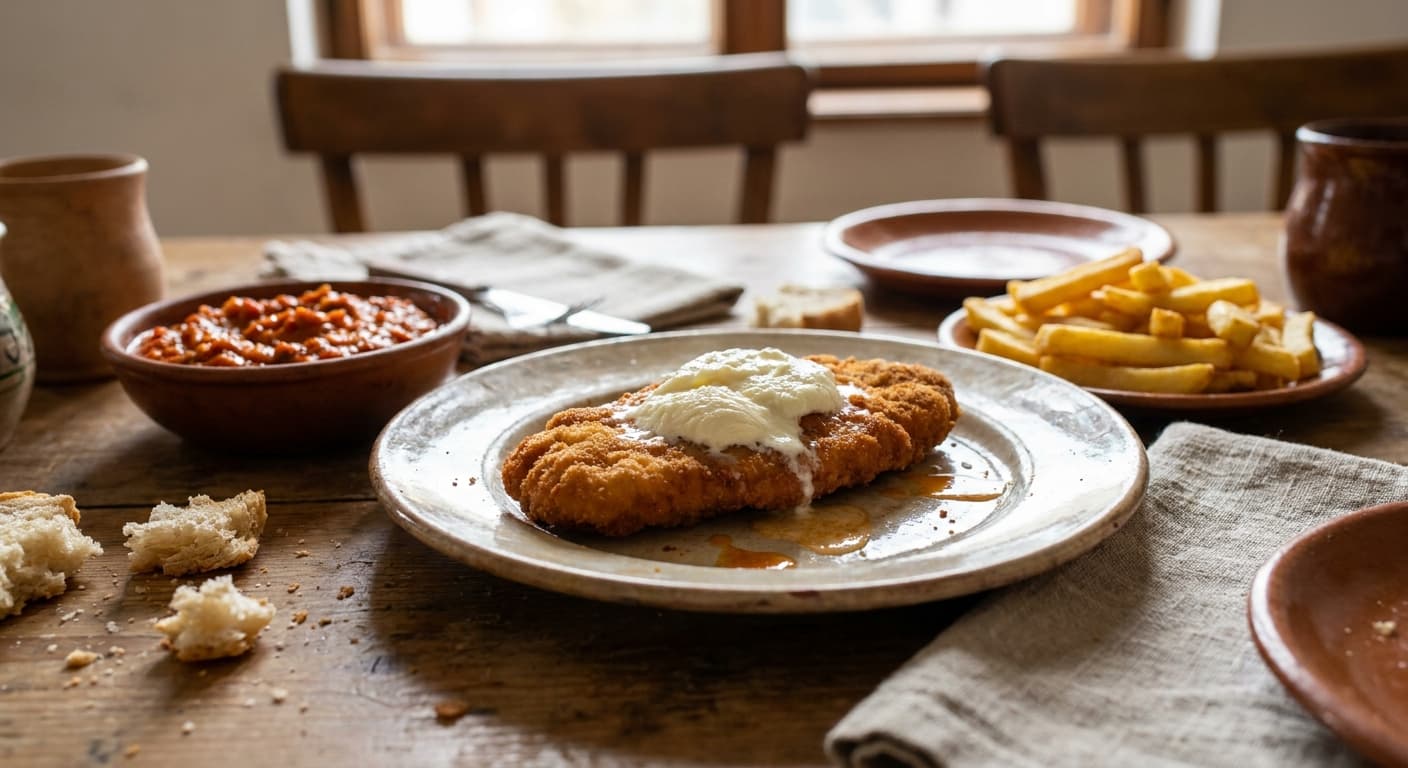
Karadjordje's Schnitzel (Карађорђева шницла) — Serbian Kajmak-Filled Cutlet
Serbian · Main Courses · 48 min
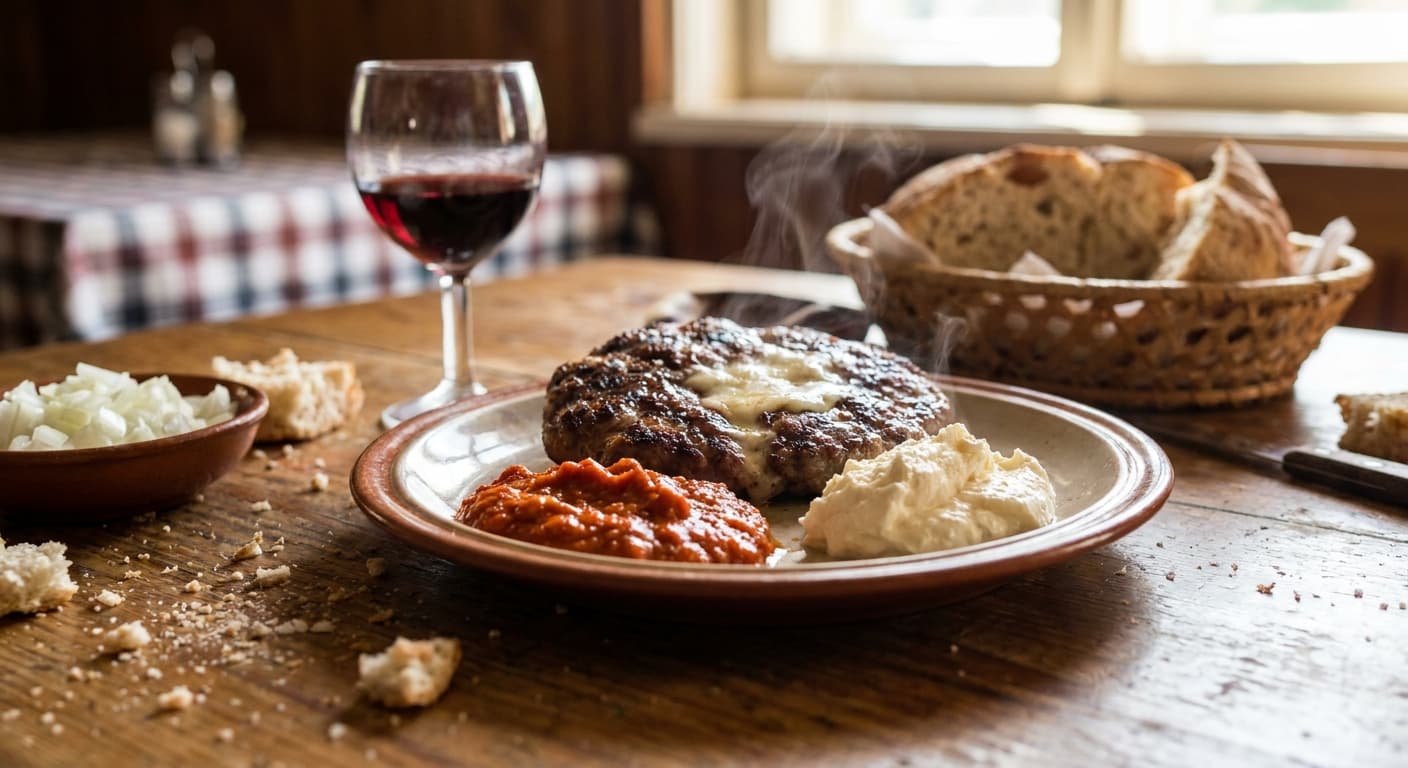
Pljeskavica (Пљескавица) — Serbian Grilled Meat Patty
Serbian · Main Courses · 47 min
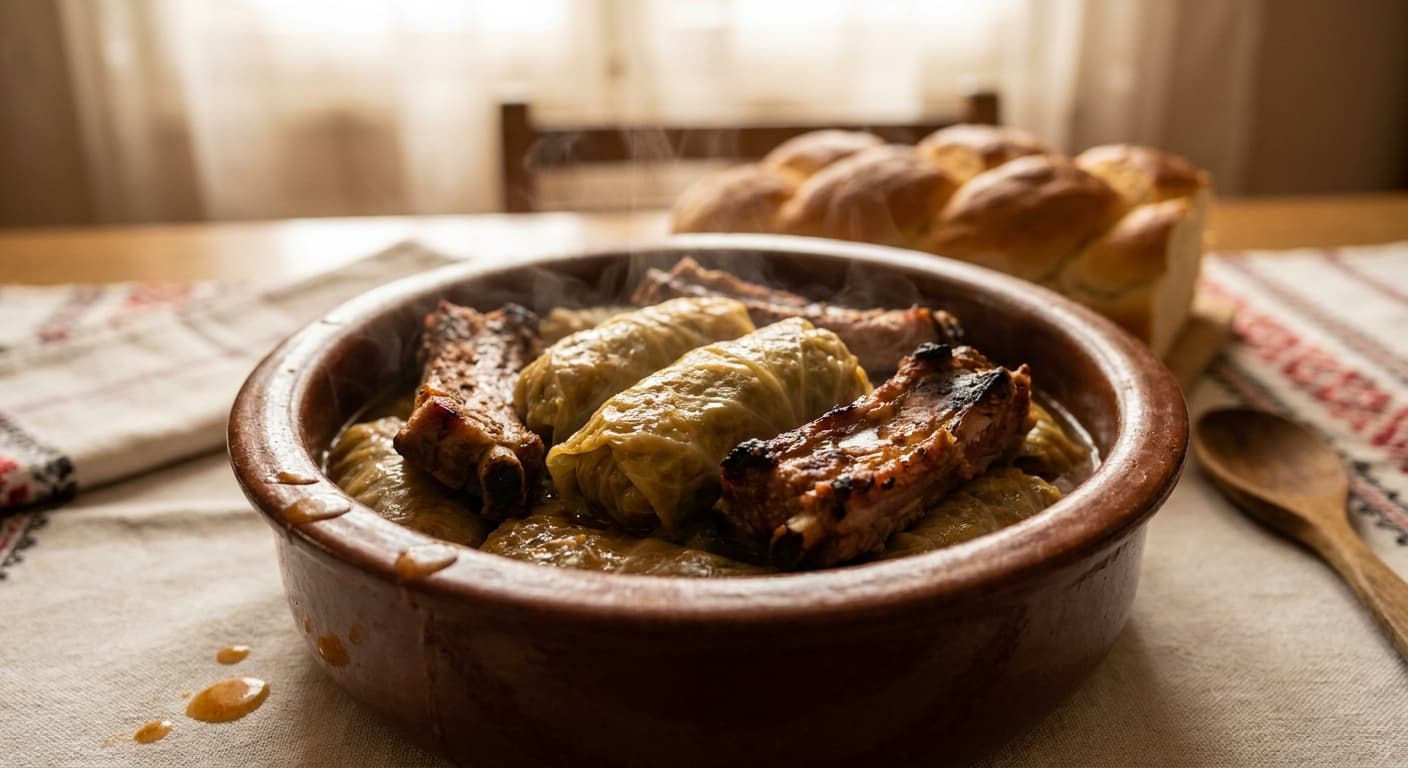
Serbian Sarma (Сарма) — Stuffed Sour Cabbage Rolls
Serbian · Main Courses · 225 min
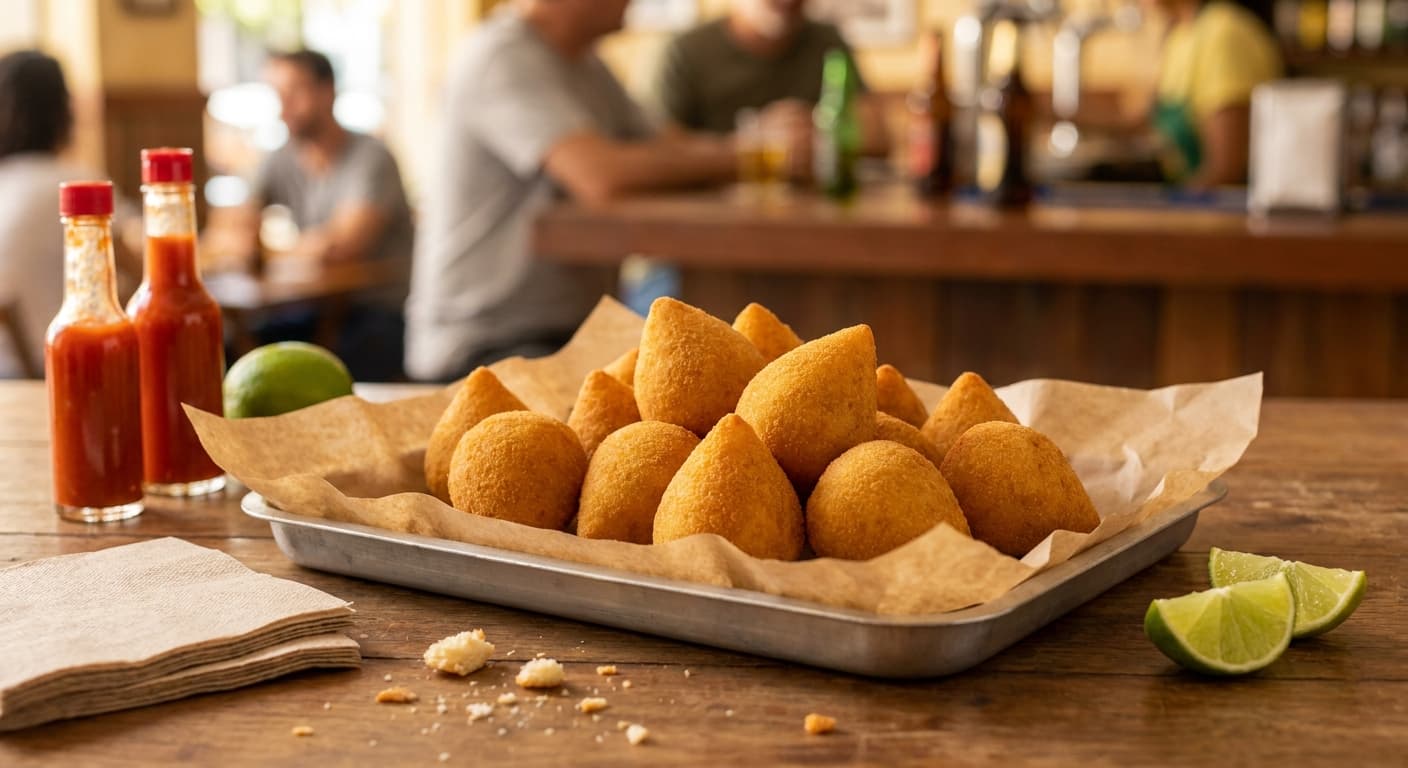
Coxinha (Coxinha) — Brazilian Chicken Croquettes
Brazilian · Appetizers · 130 min
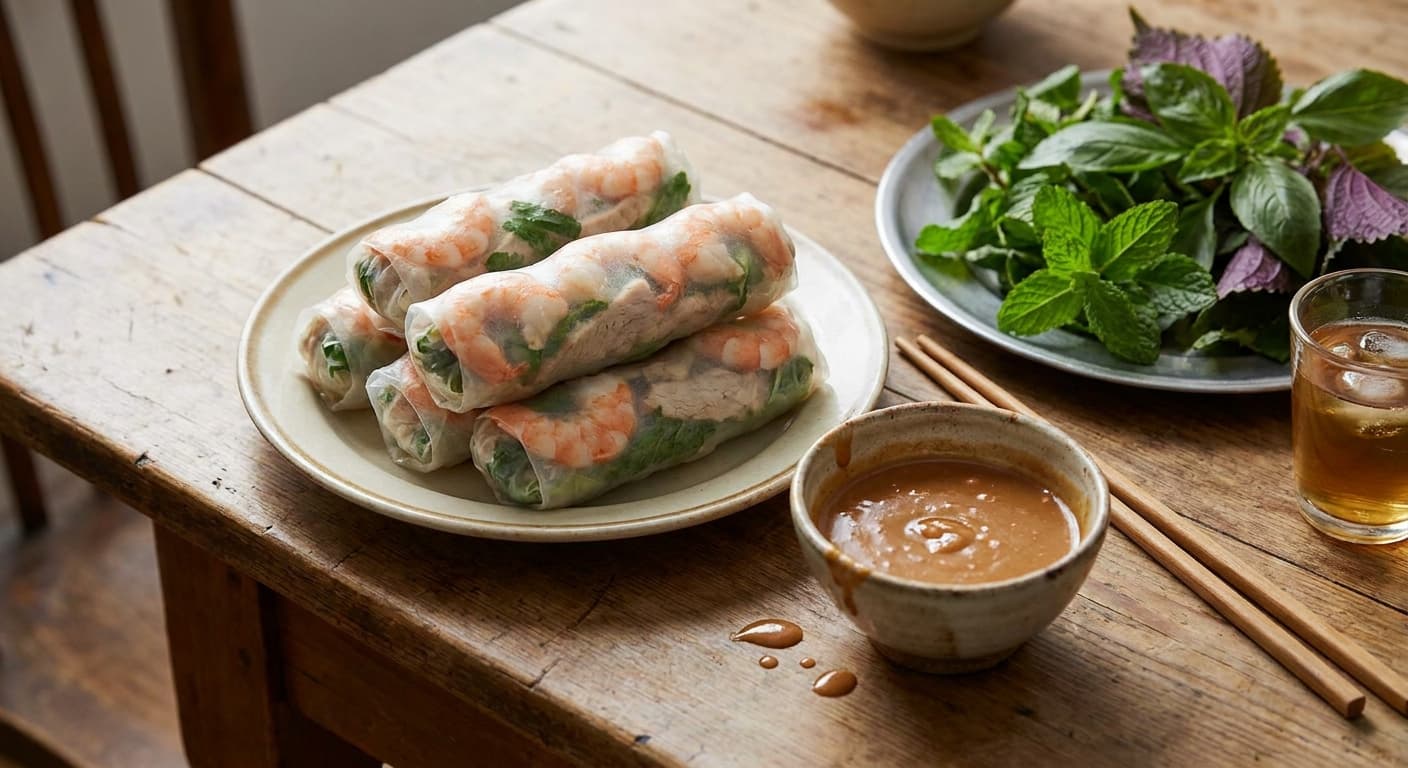
Vietnamese Fresh Spring Rolls (Gỏi Cuốn) — Shrimp, Pork, Herbs, and Peanut Sauce
Vietnamese · Appetizers · 60 min
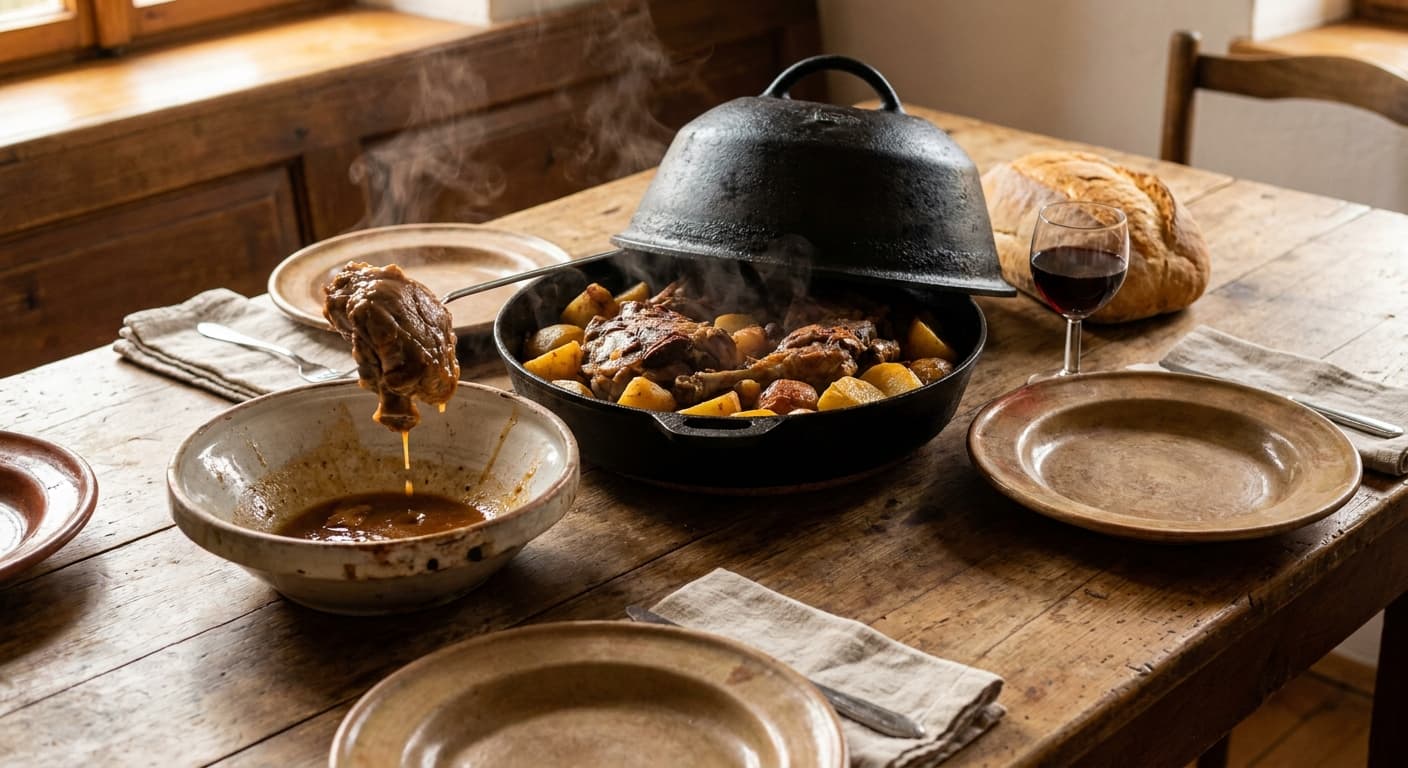
Croatian Peka (Peka) — Dalmatian Ember-Baked Lamb and Potatoes
Croatian · Main Courses · 150 min
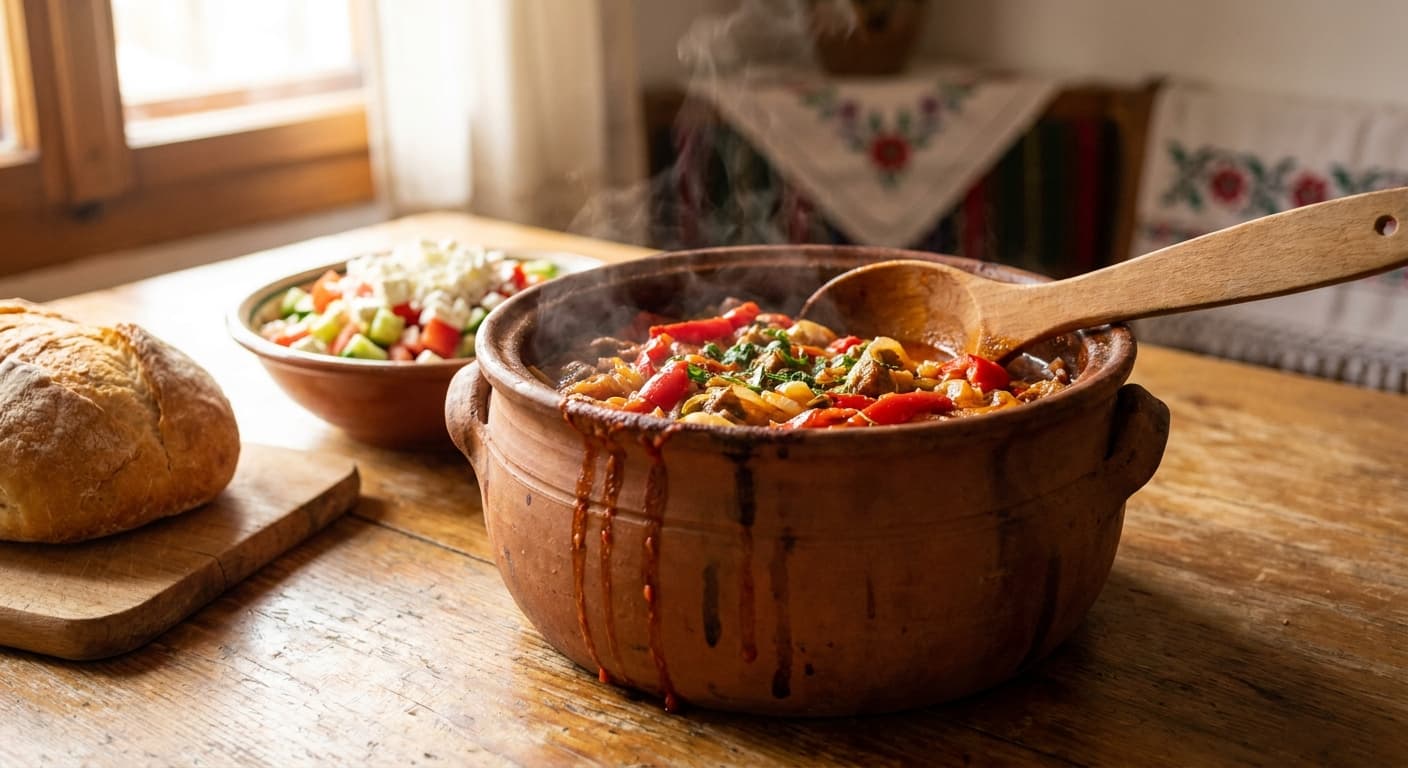
Bulgarian Pork Kavarma (Каварма) — Clay-Pot Pepper and Pork Stew
Bulgarian · Stews · 115 min
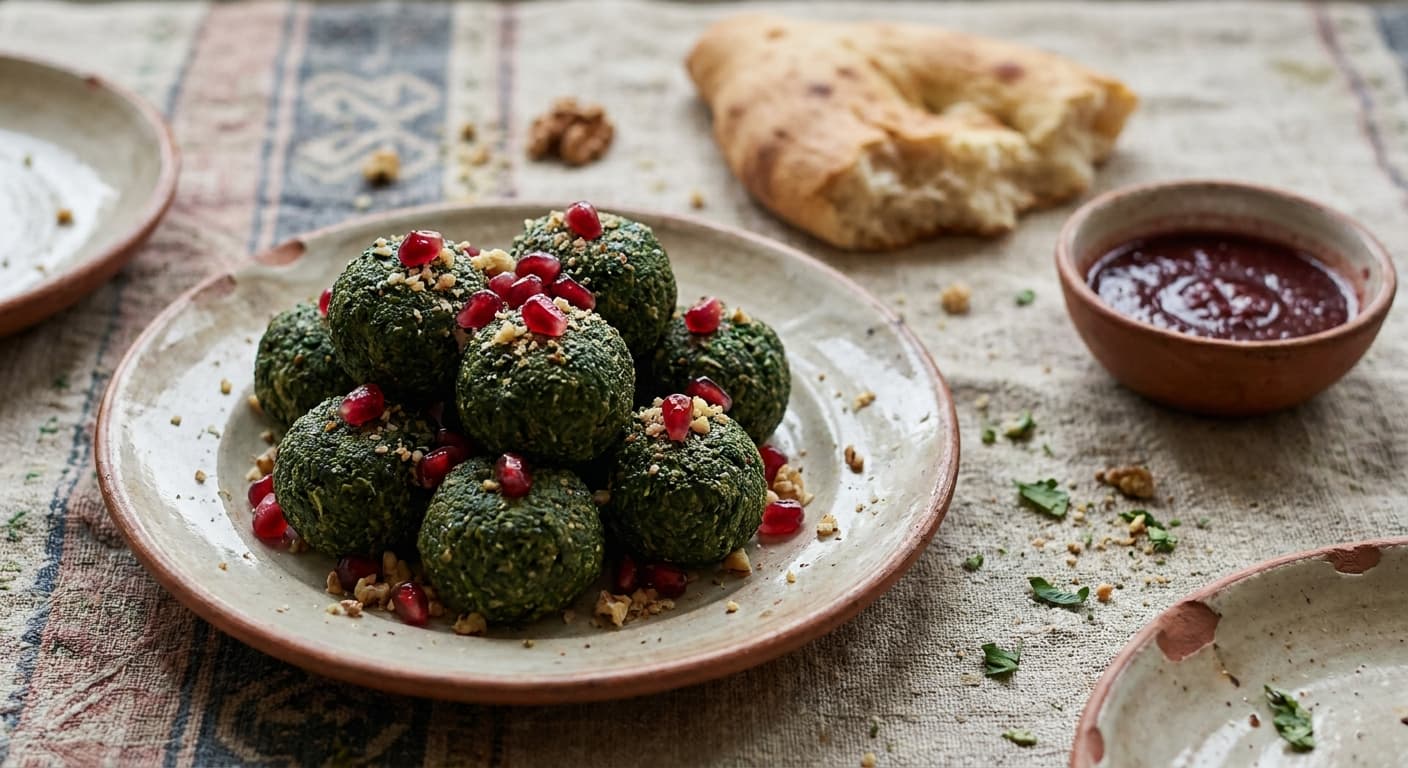
Pkhali (ფხალი) — Georgian Spinach-Walnut Appetizer
Georgian · Appetizers · 35 min
Reviews
Cooked this recipe?
Tap the stars to rate it — that's all it takes. A few words are welcome but optional.
No ratings yet. Cooked this one? Be the first to rate it — it takes one tap.