Nowruz
نوروز
About Nowruz
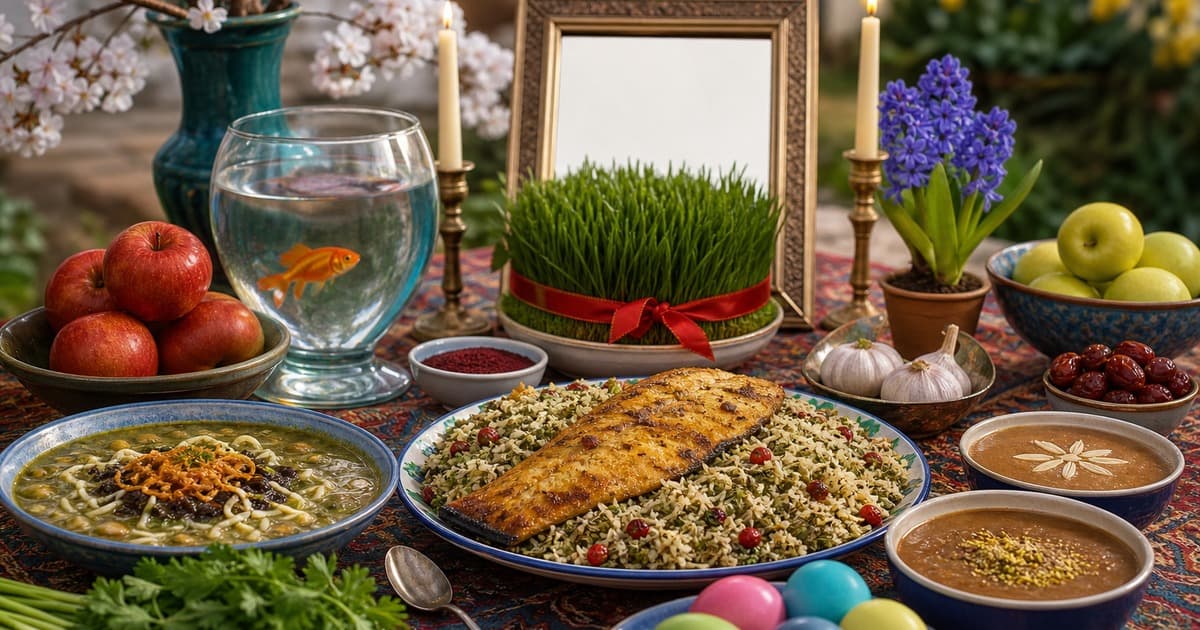
Nowruz welcomes the spring equinox with tables that taste of renewal: green herbs, sweet wheat, bright sourness, and festive rice. In many Iranian homes, Sabzi Polo Mahi is traditionally associated with the New Year meal, while Haft Sin table foods such as sabzeh, apple, vinegar, sumac, and Samanu carry symbolic wishes for growth and sweetness. Across Afghan celebrations, dried-fruit Haft Mewa and rice dishes may appear; Azerbaijani tables often feature plov, dolma, and pastries. In Central Asia, Sumalak is often prepared communally overnight, and Kurdish Newroz gatherings may center fire, picnics, breads, and herbed rice. Ash Reshteh is also commonly served around the season, tying noodles to hopes for life’s unfolding paths.
Signature Dishes
Sabzi Polo Mahi
سبزی پلو ماهی
Samanu
سمنو
Ash Reshteh
آش رشته
Haft Sin table foods
Sumalak
сумалак
Regional Variations
Iran (Persian)
Haft-Sin table with seven 'sin' items; sabzi polo ba mahi as central Nowruz dinner; Chaharshanbe Suri bonfire-jumping; Sizdebedar outdoor picnic on 13th day.
Afghanistan
Haft Mewa (seven dried fruits in syrup) commonly prepared; sabzi chalaw, kabuli pulao adapted for Nowruz; family gathering and gift-giving emphasized over bonfire rituals.
Azerbaijan
Four-Tuesday observance (water, fire, wind, earth); shekerbura, pakhlava, gogal, shor-gogal pastries; plov with herbs and dolma traditionally associated.
Kurdish regions (Iraq, Turkey, Iran, Syria)
Newroz fire-jumping especially in highland communities; special breads, herbed rice, dolma; outdoor picnic gatherings on Nowruz day.
Tajikistan
Sumalak (slow-cooked wheat-germ paste) prepared communally overnight; plov with carrots and lamb; choyhona tea-house gatherings commonly associated.
Uzbekistan
Sumalak communal preparation central; plov with carrots and lamb; naryn noodles often served; choyhona gatherings traditional.
Kazakhstan & Kyrgyzstan
Sumalak/sumolok preparation; communal feasting; plov and noodle dishes commonly associated with the spring equinox observance.
Balkans & Turkey
Nevruz observed regionally with springtime gatherings; varied local food customs; less codified Haft-Sin presence outside diaspora Iranian communities.
Diaspora (North America & Europe)
Persian community Haft-Sin tables; fish-and-herb-rice central; family poetry recitations from Hafez and Saadi commonly featured.
Observance Practices
Khaneh-tekani (spring-cleaning before the equinox)
Iranian and Persianate communities
Haft-Sin table arrangement with seven symbolic 'sin' items
Iran and Persian diaspora
Chaharshanbe Suri bonfire-jumping on eve of last Wednesday before Nowruz
Iran
Family gathering at the exact equinox moment around the sofreh-e haft-sin
Iran and Persian diaspora
Visits to elders and gift exchanges
Sizdebedar outdoor picnic on the 13th day; releasing sabzeh into running water
Iran
Four-Tuesday (Chershenbe) observances honoring water, fire, wind, and earth
Azerbaijan
Communal overnight preparation of sumalak/sumanak
Central Asia (Tajikistan, Uzbekistan, Kazakhstan, Kyrgyzstan)
Preparation of Haft Mewa (seven dried fruits in syrup)
Afghanistan
Newroz fire-jumping in highland communities
Kurdish regions
Poetry recitations from Hafez and Saadi divans
Iranian and Persian diaspora communities
Regions
Cuisines
Related Recipes
Ash Reshteh (آش رشته) — Persian Herb, Bean, and Noodle Soup
signature·Iran / Persian Nowruz
Haft Mewa (هفت میوه) — Afghan Seven-Fruit Nowruz Compote
signature·Afghanistan / Afghan Nowruz
Badambura (بادامبورا) — Azerbaijani Flaky Almond-Filled Pastry
commonly served·Azerbaijan / Novruz
Gogal (گوگال) — Azerbaijani Sweet Saffron and Cardamom Layered Pastry
commonly served·Azerbaijan / Novruz
Baku Pakhlava (باكو پخلاوا) — Azerbaijani Diamond-layer pastry with nuts and saffron syrup
regional variant·Baku / Azerbaijani Novruz