Ramadan Suhoor Ideas
سحریهای ماه رمضان
About Ramadan Suhoor Ideas
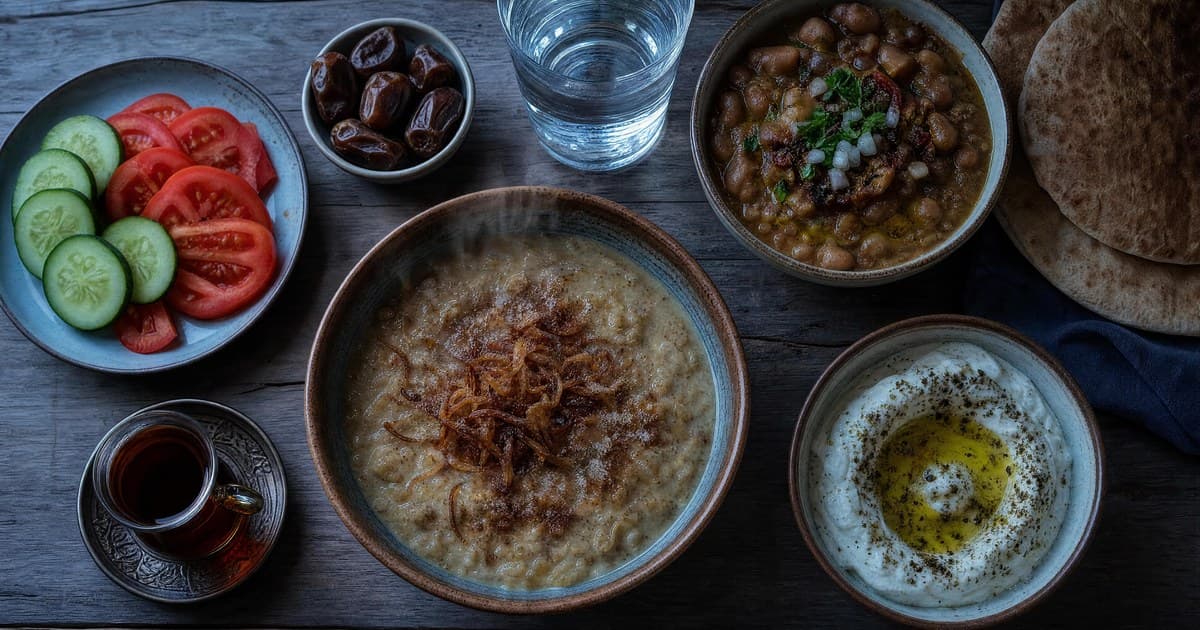
Suhoor is the pre-dawn meal eaten before the Fajr (dawn) prayer signals the start of the daily fast — typically between 3 AM and 4:30 AM depending on the season and latitude. Unlike Iftar's communal feast, Suhoor is intimate, often quiet, and built around foods designed to sustain the body for 14-16 hours of fasting in long days. The Sunnah of Prophet Muhammad ﷺ describes Suhoor as a blessed meal — 'Whoever takes Suhoor, in it lies blessing' — and discourages skipping it. Across regions: Persians and Afghans favor Halim (slow-cooked wheat porridge with shredded meat) for its sustained-energy carbs; Egyptians and Sudanese eat Ful Medames (fava beans with cumin and olive oil) for the same reason; Levantines eat Labneh with za'atar, olive oil, and pita; Turks and Levantines have Menemen (scrambled eggs with tomato and pepper); South Asians eat sweet vermicelli or Paratha with curd; Indonesians eat Bubur (rice porridge) with kerupuk and tempeh. This page maps Suhoor across the Muslim world — emphasizing slow-release carbohydrates, hydration-rich foods, and the quiet pre-dawn rhythm that anchors the spiritual fast.
Signature Dishes
Halim (Persian/Afghan)
حلیم
Ful Medames (Egyptian)
فول مدمس
Sahur Porridge (Southeast Asian)
بوبور
Labneh with Olive Oil (Levantine)
لبنه
Regional Variations
Persian / Iranian / Afghan
Halim (or Haleem — slow-cooked wheat-and-shredded-meat porridge) is the iconic Suhoor staple for sustained-release energy through long-day fasts. Often topped with sugar, cinnamon, and fried onions. Adasi (lentil stew with cumin), Noon-o-Panir-o-Sabzi (bread-cheese-herbs platter), eggs with kashk. Tea throughout. Afghan tradition shares core.
Egyptian / Sudanese
Ful Medames (fava beans stewed slowly with cumin, garlic, lemon, and olive oil) is iconic Egyptian Suhoor — pre-dawn protein-and-fiber for sustained energy. Mahshi (stuffed vegetables), Tameya (Egyptian falafel) often appear. Aseeda Sudanese also slow-energy.
Levantine (Lebanese / Syrian / Palestinian / Jordanian)
Labneh with olive oil and za'atar is the iconic Levantine Suhoor opener; eaten with warm pita bread, olives, fresh tomatoes, cucumbers, and white cheese. Manaqeesh (za'atar or cheese flatbreads) often appear. Adas Soup (lentil) for slower energy.
Turkish
Menemen (scrambled eggs with tomato, green pepper, and white cheese in olive oil), beyaz peynir (white cheese), olives, tomato, cucumber, pekmez (grape molasses) on bread, simit (sesame-encrusted bread ring), çay (tea). Slow-release açma (sweet bread) common.
South Asian (Pakistani / Indian Muslim / Bangladeshi)
Sevaiyan (sweet vermicelli with milk and dry fruits) traditional for slow energy. Paratha (layered flatbread) with curd or sabzi, omelette, dahi (yogurt), lassi to hydrate. Halwa Puri (semolina pudding + puffed flatbread) seasonal.
Indonesian / Malaysian
Bubur (rice porridge — sweet or savory) with kerupuk, tempeh, sambal, kacang panjang. Kolak as Suhoor in some traditions (warm coconut sweet porridge). Sahur Porridge — generic term for varied sweet-and-savory rice-based pre-dawn meal.
Iraqi / Gulf (Saudi / Emirati / Kuwaiti / Qatari)
Kabsa rice with chicken (lighter version for Suhoor), date-and-yogurt platter, Khubz (Arabic flatbread) with cream cheese and honey, fresh fruits. Lentil soup (shorba) common.
Moroccan / Maghrebi
M'semen (Moroccan layered flatbread), Baghrir (semolina pancakes with honey-butter), olives, fresh cheese, mint tea. Slow-release carbs prioritized. Tomato-egg dishes common.
Sub-Saharan African (Somali / Senegalese)
Cambuulo (mung bean porridge) Somali pre-dawn; Anjeero flatbread with sweet tea. Senegalese millet porridge (Sombi) with yogurt for sustained release.
Filipino Muslim (Bangsamoro / Mindanao)
Lugaw (rice porridge with garlic and ginger) Filipino-Muslim Suhoor; Pastil rice-wrapped chicken adaptable as pre-dawn portable meal.
Observance Practices
Suhoor is eaten before Fajr (dawn) call to prayer, typically 3-5 AM depending on latitude and season; the fast begins at Fajr (no more eating/drinking allowed) and ends at Maghrib (sunset)
Prophet Muhammad ﷺ said: 'Take Suhoor, for in it lies blessing.' (Bukhari + Muslim). Skipping Suhoor is discouraged. Even a sip of water counts as Suhoor and earns the blessing
Slow-release carbohydrates (oats, whole-grain breads, dates, fava beans, lentils) and hydration-rich foods (yogurt, fruits, watermelon, cucumber) are prioritized to sustain 14-16 hour fasts in long days
Sunni, Shia, Sufi, Wahhabi, and Salafi communities all practice Suhoor with shared Sunnah framing
Avoid heavy/salty/sugary foods that increase thirst; the spiritual focus is gratitude and moderation, not excess
After eating, the intention (niyyah) for the day's fast is renewed: 'I intend to fast tomorrow in the month of Ramadan, fulfilling the duty toward Allah'