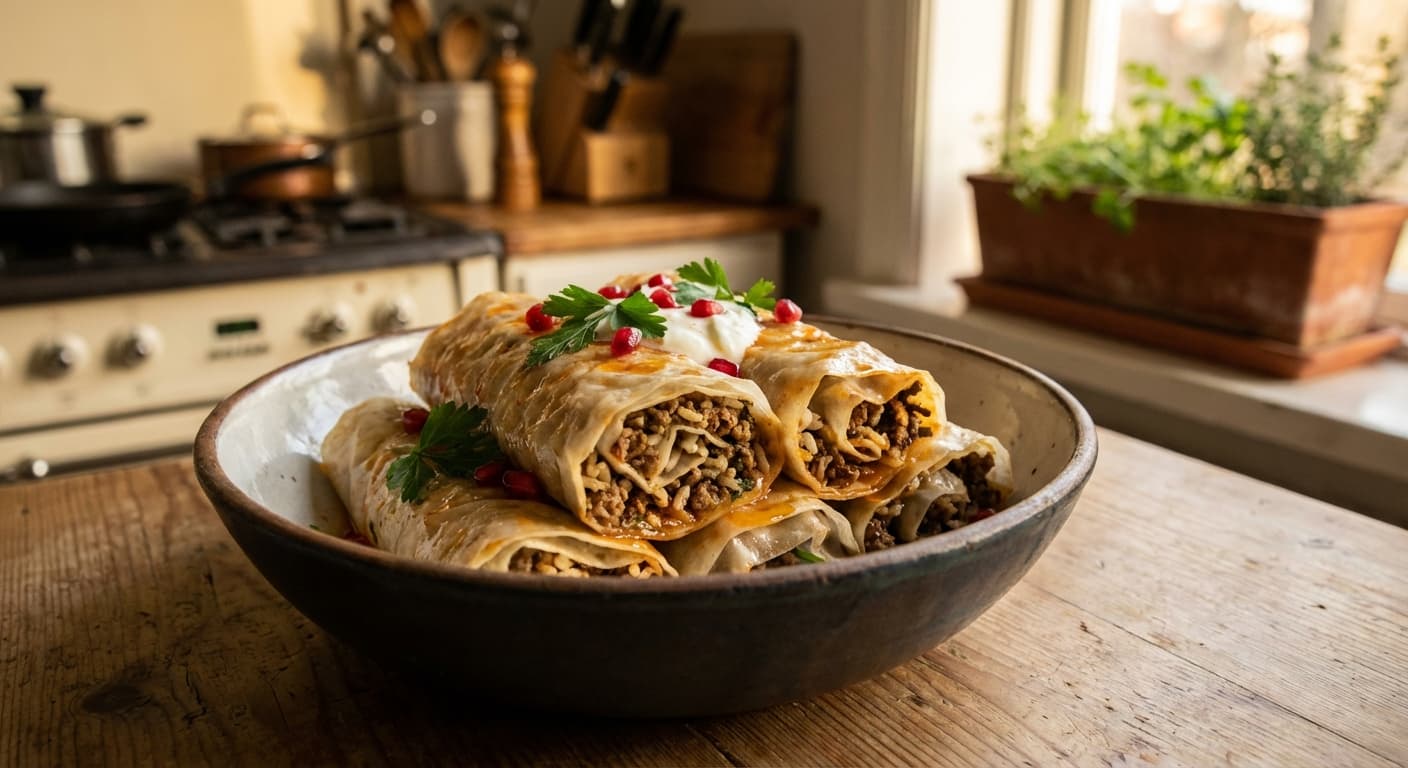
Dolmeh Ba Nan Lavash (دلمه با نان لواش) — Persian Stuffed Lavash Bread
A refined Persian-style dolmeh made by wrapping a fragrant herb, rice, and ground meat filling in tender lavash layers, then gently steaming in a saffron-tomato sauce for a bright, aromatic finish.
Printable Recipe Card
Servings: 6 · Total: 130 min · Difficulty: medium
Ingredients (quick list)
- 180 g Basmati rice (rinsed until water runs mostly clear)
- 1500 ml Water (for parboiling rice)
- 10 g Fine sea salt (for parboiling rice water)
- 400 g Ground lamb (15–20% fat preferred; or use ground beef)
- 200 g Yellow onion (finely grated or very finely minced)
- 60 g Parsley (finely chopped (leaves and tender stems))
- 15 g Fresh mint (finely chopped)
- 10 g Fresh tarragon (finely chopped)
- 2 tsp Ground turmeric
- 1 tsp Black pepper (freshly ground)
- 2 tbsp Ghee (or neutral oil)
- 240 g Lavash bread (about 4 large sheets; soft and pliable)
+ 4 more in the full ingredients section below.
Steps (summary)
- Parboil the rice: bring 1500 ml water to a rolling boil, then stir in 10 g salt. Add 180 g rinsed basmati rice and boil 6–7 min…
- Cook the aromatics and meat: warm 2 tbsp ghee in a wide skillet over medium heat (about 175°C). Add 200 g grated onion and saut…
- Season and perfume the filling: stir in 2 tsp turmeric, 1 tsp black pepper, and 6 g salt; cook 60 seconds to toast the spices.…
- Prepare the steaming sauce: in a bowl, dissolve 2 tbsp tomato paste in 360 ml hot water. Stir in 2 tbsp lemon juice, 1 tsp suga…
- Soften and portion the lavash: if the lavash feels brittle, lightly mist with up to 120 ml water, stack, and cover 5 minutes to…
- Fill and roll: place a lavash rectangle on a board with the long side facing you. Spoon about 110–130 g filling in a log near t…
+ 2 more steps in the full instructions section below.
Cultural Background
Dolmeh is a broad family of stuffed dishes served across Iran and neighboring regions, often associated with home cooking and gatherings. Using flatbread as a wrapper is a practical adaptation seen in some households, highlighting how dolmeh techniques can be applied to locally available staples.
Equipment
💡 Tips
- Choose soft, fresh lavash; if it cracks when folded, mist lightly with water and rest covered before rolling.
- Cooling the filling for 10 minutes prevents steam from weakening the lavash and helps you roll tighter cylinders.
- Keep the simmer gentle; a hard boil can shred the lavash and make the sauce cloudy.
- For extra aroma, add 1 tsp dried rose petals to the saffron bloom and strain before adding (optional).
- Uniform roll size matters: it ensures the centers heat through at the same time without over-softening the outer lavash.
⚠️ Common Mistakes
❌ Overcooking the rice during parboil
💡 Why: Fully cooked rice turns mushy after steaming and can tear the lavash from excess moisture.
✅ Fix: Boil only until the outside is tender and the center is firm (6–7 minutes), then drain and cool before mixing.
❌ Rolling while the filling is steaming hot
💡 Why: Hot filling releases steam that weakens the bread and makes seams split during steaming.
✅ Fix: Cool the filling 10 minutes; it should feel warm, not hot, before rolling.
❌ Boiling the pot aggressively
💡 Why: A hard boil agitates the rolls, breaks seams, and can make the lavash gummy.
✅ Fix: Bring to a simmer, then reduce to low and maintain a gentle bubble for 35–40 minutes.
❌ Using dry, brittle lavash without softening
💡 Why: Cracks create leaks, so sauce floods the filling and the rolls fall apart.
✅ Fix: Mist lightly with measured water, rest covered 5 minutes, and keep pieces covered while assembling.
🧊 How to Store
Refrigerate cooled rolls in an airtight container with a little sauce for up to 3 days. Reheat covered in a pot with 2–3 tbsp water over low heat for 10–12 minutes, or microwave covered at 600W in 60-second bursts until hot. Freeze up to 2 months; thaw overnight in the fridge before reheating.
📅 Make Ahead
Prepare the filling up to 24 hours ahead and refrigerate. Assemble rolls up to 8 hours ahead, arrange in the pot, cover, and refrigerate; add the sauce just before cooking. If cooking from cold, add 5–8 minutes to the gentle steaming time.
🍽️ Pairs Well With
- Plain yogurt or strained yogurt with cucumber and dried mint
- Shirazi salad (cucumber
- tomato
- onion
- lemon)
- Fresh herbs platter and radishes
- Pickled vegetables
Regional Variations
- Tehran-style home cookingOften uses a simpler herb mix heavy on parsley and mint, with a mild tomato-based steaming liquid and a tighter, smaller roll for easy serving at gatherings.
- Northwestern Iran (Azerbaijani-influenced)May include more aromatic herbs and a slightly tangier sauce profile, sometimes leaning on lemon or sour grape products when available, while keeping the same stuffed-and-steamed technique.
Ingredients
- 180 gBasmati rice (rinsed until water runs mostly clear)
- 1500 mlWater (for parboiling rice)
- 10 gFine sea salt (for parboiling rice water)
- 400 gGround lamb (15–20% fat preferred; or use ground beef)
- 200 gYellow onion (finely grated or very finely minced)
- 60 gParsley (finely chopped (leaves and tender stems))
- 15 gFresh mint (finely chopped)
- 10 gFresh tarragon (finely chopped)
- 2 tspGround turmeric
- 1 tspBlack pepper (freshly ground)
- 2 tbspGhee (or neutral oil)
- 240 gLavash bread (about 4 large sheets; soft and pliable)
- 2 tbspTomato paste
- 2 tbspLemon juice (fresh)
- 1 tspGranulated sugar (balances the tomato and lemon)
- 0.25 tspSaffron threads (ground and bloomed in hot water)
🔄 Substitutions
- Ground lamb→ Ground beef (80/20) or ground turkey (dark meat preferred)
- Fresh tarragon→ Fresh dill (same amount) or 1 tsp dried tarragon
- Lavash bread→ Thin wheat tortillas or yufka sheets
Instructions
- 1
Parboil the rice: bring 1500 ml water to a rolling boil, then stir in 10 g salt. Add 180 g rinsed basmati rice and boil 6–7 minutes until the grains are softened on the outside but still firm in the center. Drain immediately and rinse briefly with cool water to stop cooking; set aside to steam-dry 10 minutes.
- 2
Cook the aromatics and meat: warm 2 tbsp ghee in a wide skillet over medium heat (about 175°C). Add 200 g grated onion and sauté 6–8 minutes until pale gold and most moisture evaporates. Add 400 g ground lamb, breaking it up, and cook 8–10 minutes until no pink remains and the fat turns clear.
- 3
Season and perfume the filling: stir in 2 tsp turmeric, 1 tsp black pepper, and 6 g salt; cook 60 seconds to toast the spices. Add 60 g parsley, 15 g mint, and 10 g tarragon; sauté 2 minutes just until fragrant and wilted. Remove from heat, then fold in the parboiled rice until evenly mixed; cool 10 minutes so the lavash will not tear.
- 4
Prepare the steaming sauce: in a bowl, dissolve 2 tbsp tomato paste in 360 ml hot water. Stir in 2 tbsp lemon juice, 1 tsp sugar, and 3 g salt. Bloom saffron by crushing 0.25 tsp threads and steeping in 30 ml boiling water for 5 minutes, then add the saffron liquid to the sauce for color and aroma.
- 5
Soften and portion the lavash: if the lavash feels brittle, lightly mist with up to 120 ml water, stack, and cover 5 minutes to become pliable. Cut each sheet into rectangles about 20×25 cm. Keep pieces covered with a towel to prevent drying while you assemble.
- 6
Fill and roll: place a lavash rectangle on a board with the long side facing you. Spoon about 110–130 g filling in a log near the bottom third, leaving 2 cm borders. Fold the sides inward, then roll tightly into a neat cylinder. Repeat to make 10–12 rolls, aiming for uniform size for even steaming.
- 7
Arrange for steaming: grease a 24–26 cm heavy pot with 1 tbsp ghee. Pour in about one-third of the sauce. Arrange the lavash rolls seam-side down in a snug single layer (or two layers if needed), then pour the remaining sauce evenly over the top. Cover with a lid wrapped in a clean towel to catch condensation.
- 8
Steam gently: set the pot over medium heat until you hear a steady simmer (6–8 minutes), then reduce to low. Steam 35–40 minutes, keeping the sauce at a gentle bubble so the lavash stays intact. Rest off heat 10 minutes before serving to let the rolls set and absorb the sauce.
🪪 Recipe Passport
Cultural Background
Dolmeh is a broad family of stuffed dishes served across Iran and neighboring regions, often associated with home cooking and gatherings. Using flatbread as a wrapper is a practical adaptation seen in some households, highlighting how dolmeh techniques can be applied to locally available staples.
Regional Variations
Researched from multiple sources and validated by the Zaffaron editorial team. Every recipe is tested for accuracy, measurements, and cultural authenticity.
Nutrition per serving
Pairs well with
If you enjoyed this recipe, here are a few related Zaffaron recipes to try next.
Does your family make this differently?
Every family has their own version. Maybe your grandmother adds a secret ingredient, or your aunt has a completely different technique. Preserve your family's version — with their name on it, forever.
You Might Also Like
Katteh Tond (کته تند) — Spicy Caspian-Style One-Pot Chicken Rice
Persian · Rice Dishes · 85 min
Saffron Sweet Rice (پلو شیرینی زعفرانی) — Festive Persian milk-saffron rice with nuts
Persian · Rice Dishes · 75 min
Ash-e Sak (آش ساک) — Gorgani Spinach and Lamb Ash
Persian · Soups · 175 min
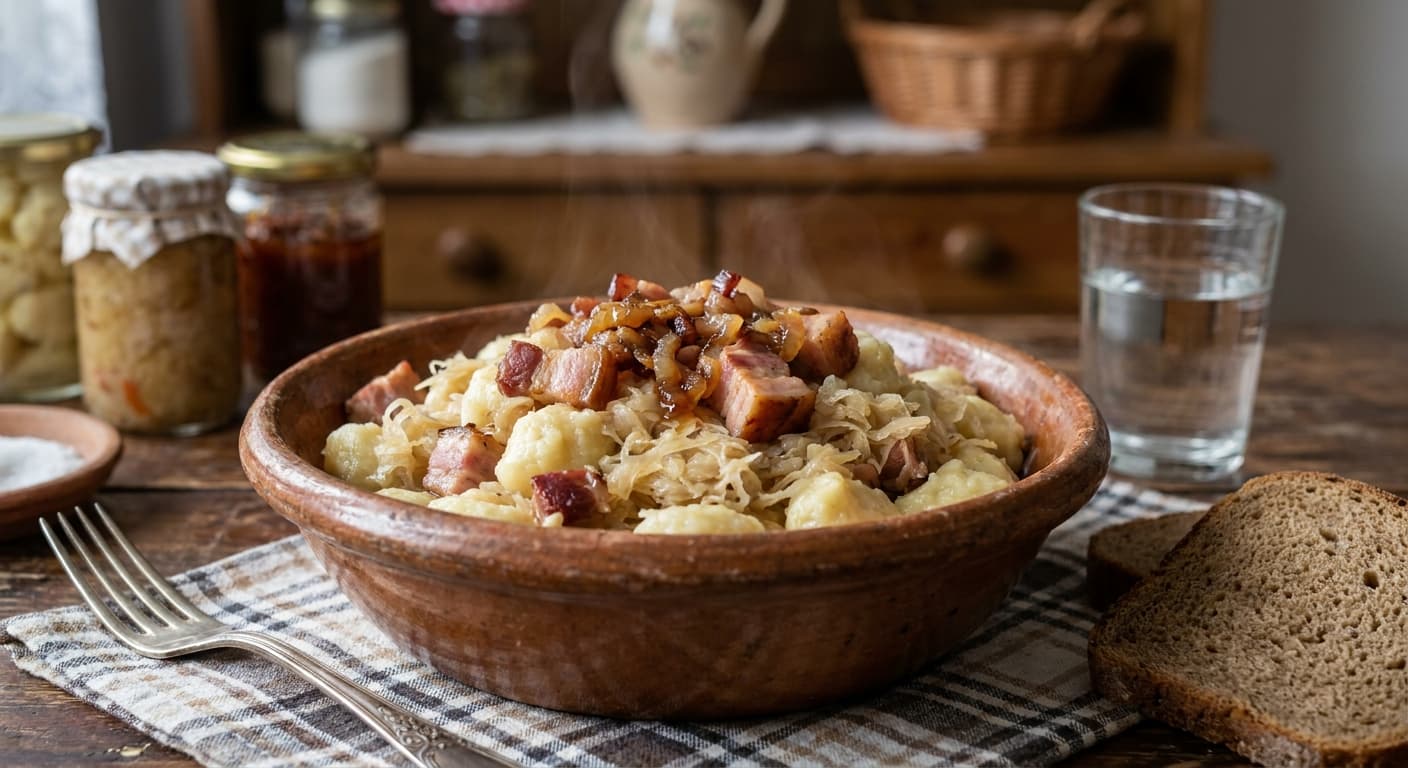
Potato Dumplings with Smoked Meat (Strapačky s údeným mäsom) — Rustic Slovak Halušky with Sauerkraut
Slovak · Main Courses · 70 min
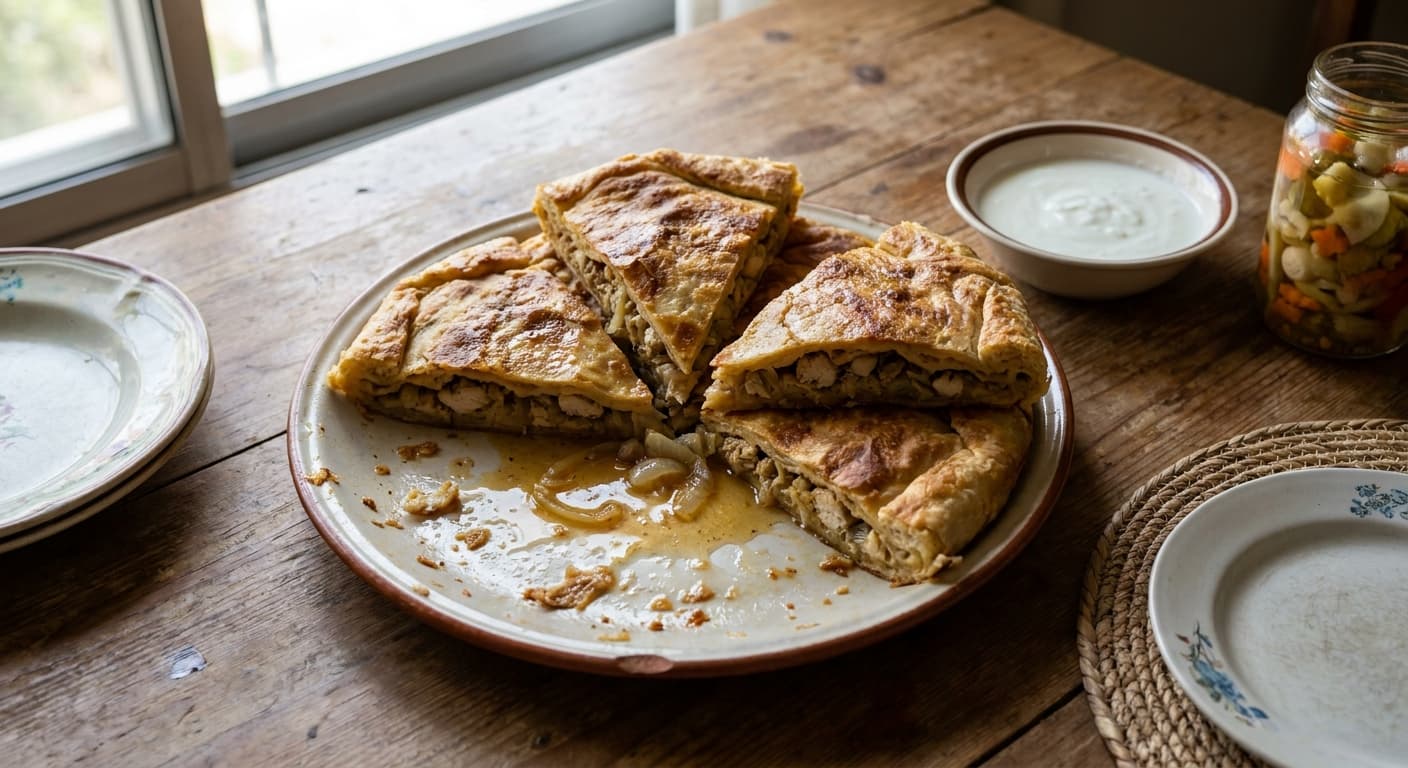
Makmoura (مكمورة) — Jordanian Layered Chicken Bread Pie
Jordanian · Main Courses · 185 min
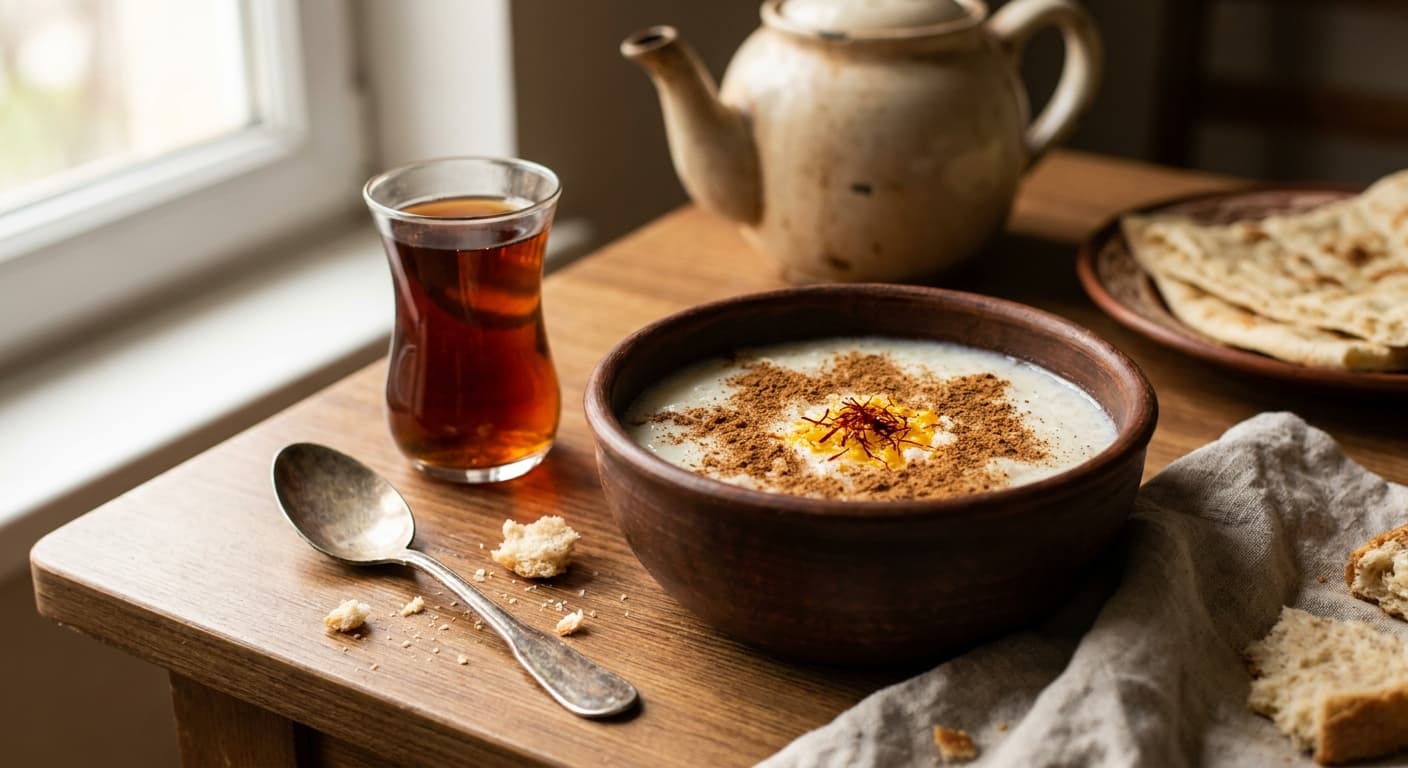
Azerbaijani Milk Rice Porridge (Südlü Sıyıq) — Creamy Breakfast Bowl
Azerbaijani · Rice Dishes · 40 min
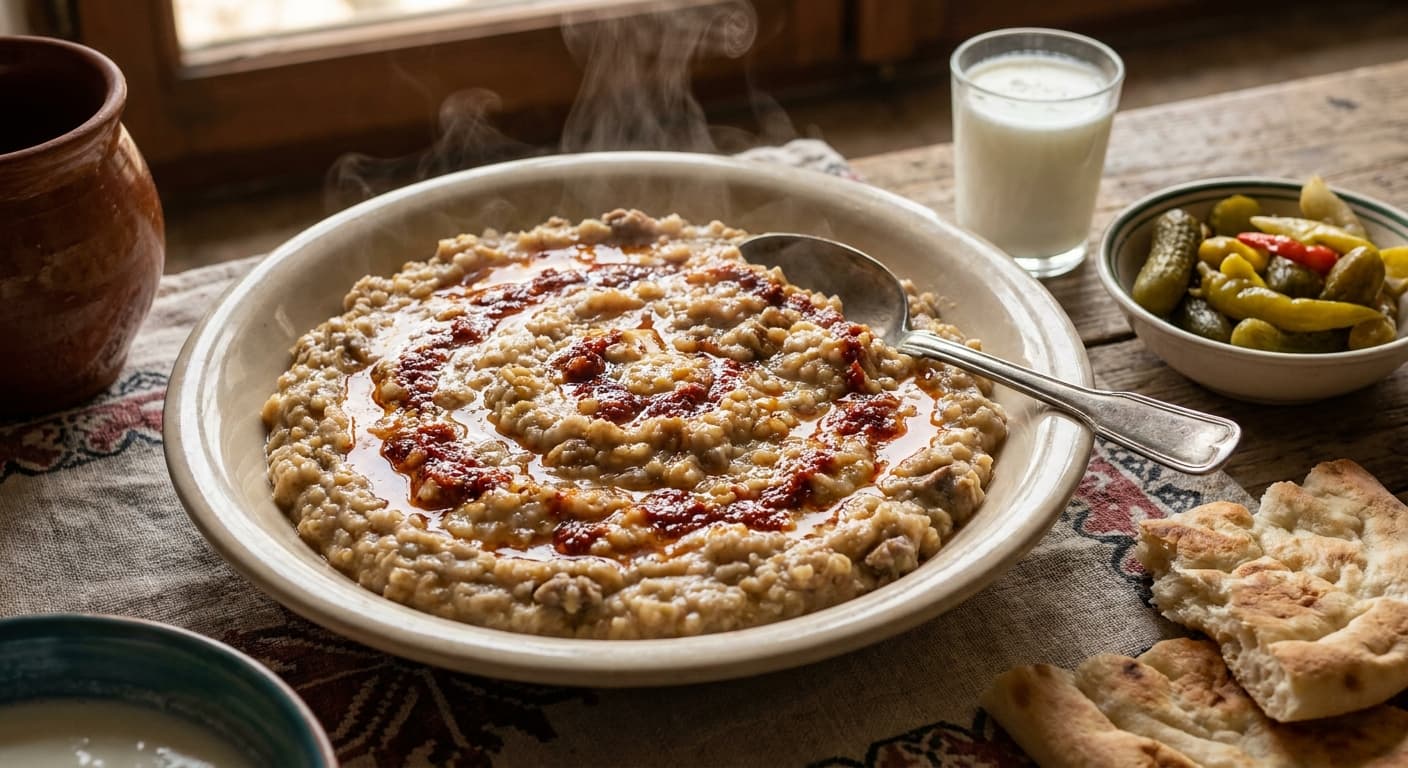
Keshkek (Keşkek) — Creamy Ceremonial Wheat and Lamb Stew
Turkish · Stews · 240 min
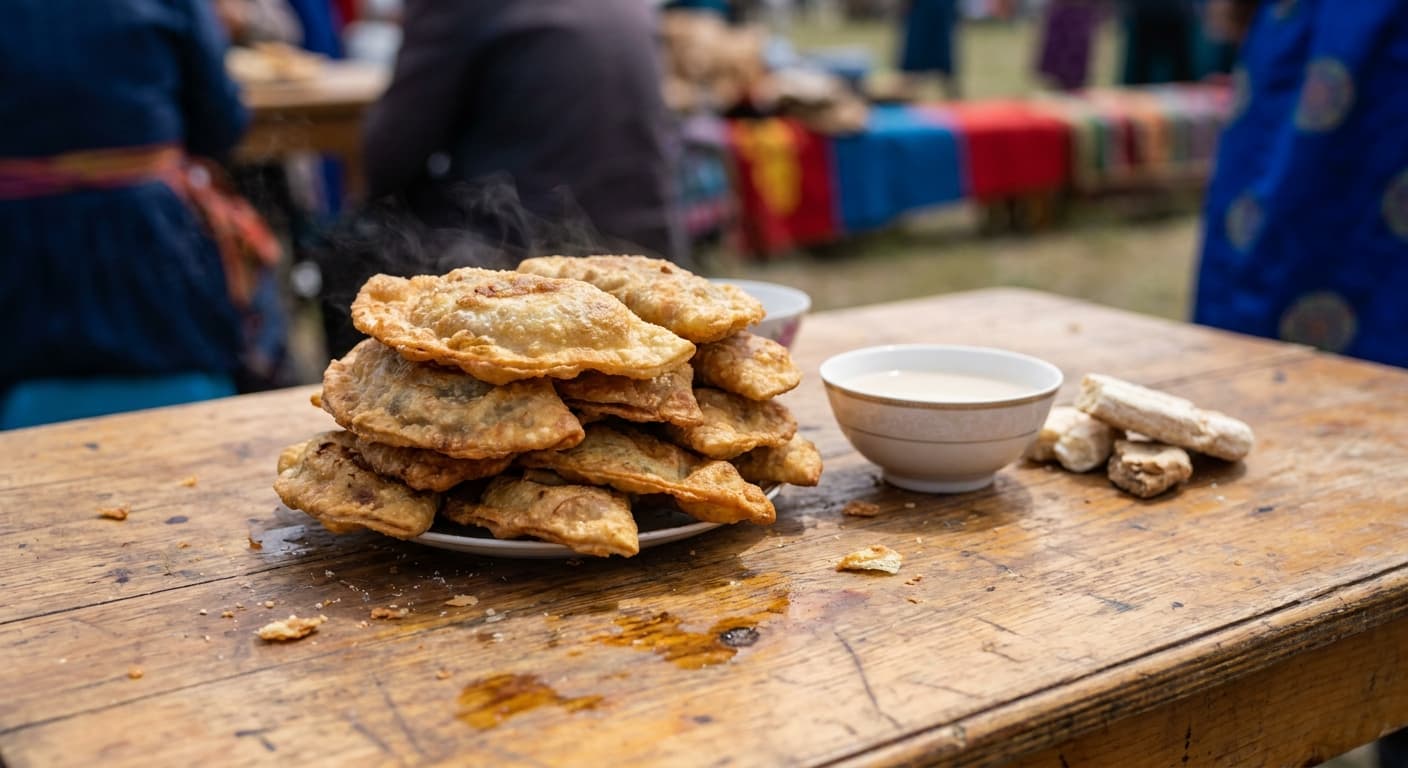
Khuushuur (Хуушуур) — Crisp Mongolian Fried Meat Pockets
Mongolian · Main Courses · 70 min
Reviews
Cooked this recipe?
Tap the stars to rate it — that's all it takes. A few words are welcome but optional.
No ratings yet. Cooked this one? Be the first to rate it — it takes one tap.