Norwegian Lamb and Cabbage Stew (Fårikål) — Peppery Autumn National Dish
Fårikål, sometimes written farikal without the Norwegian letter, is Norway's beloved autumn stew of lamb, cabbage, salt, and whole peppercorns. It is humble, fragrant, and traditionally served with boiled potatoes.
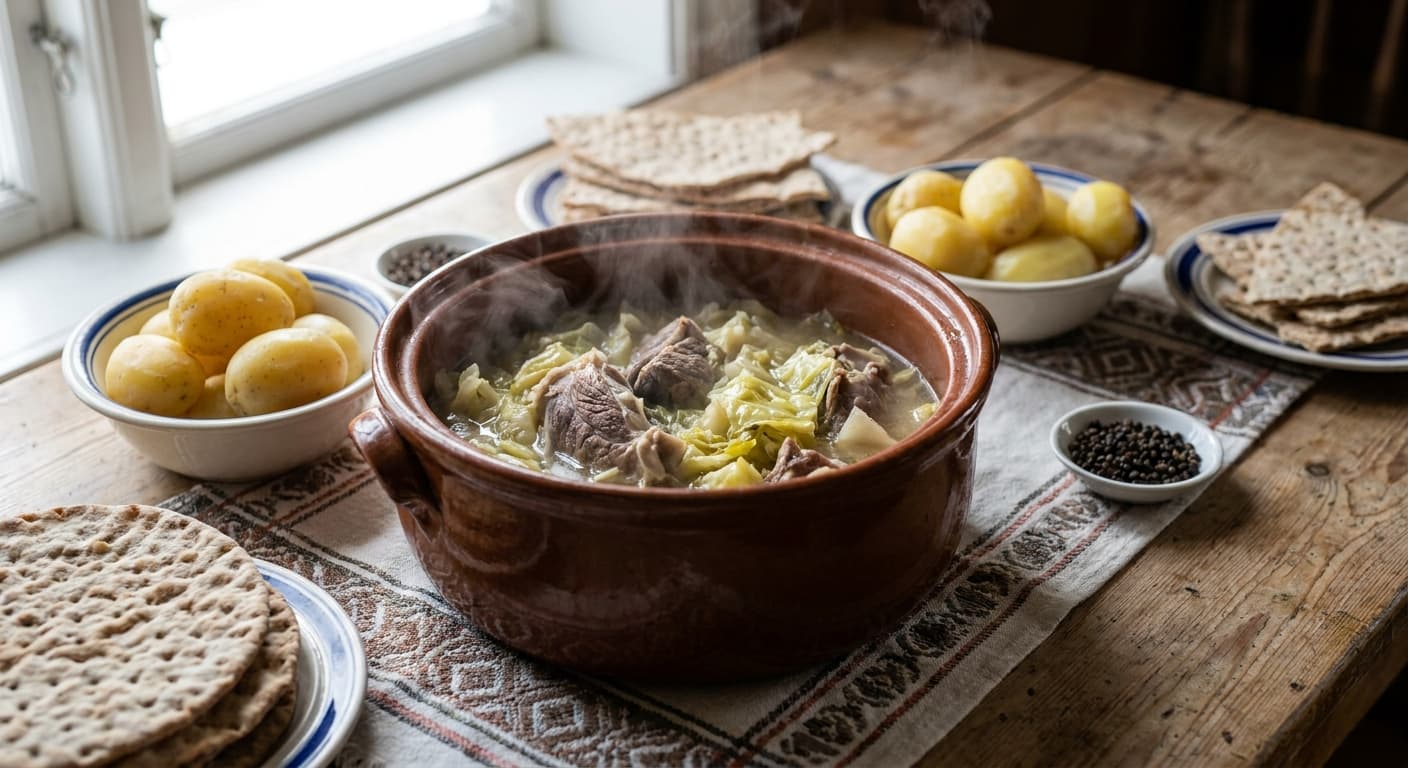
Printable Recipe Card
Servings: 6 · Total: 170 min · Difficulty: easy
Ingredients (quick list)
- 1.6 kg bone-in lamb shoulder or neck slices (cut into 4 cm pieces; use halal-certified lamb if required)
- 1.6 kg green cabbage (cored and cut into broad wedges)
- 14 g whole black peppercorns
- 18 g fine sea salt
- 20 g wheat flour (traditional light thickener)
- 600 ml cold water
- 1.2 kg waxy potatoes (peeled or scrubbed, then boiled separately)
Steps (summary)
- Pat the lamb dry and trim only very large pieces of hard surface fat, leaving enough fat to enrich the broth. Cut the cabbage i…
- Place a layer of lamb in the bottom of a heavy 5 l pot, then add a layer of cabbage wedges. Sprinkle with part of the salt, pep…
- Pour the cold water down the side of the pot so the flour and seasonings stay distributed between the layers. Bring the pot jus…
- Cover the pot and cook gently for 2 hours, shaking the pot every 30 minutes instead of stirring so the cabbage wedges remain in…
- While the stew finishes, boil the potatoes in salted water for 18 to 22 minutes, depending on their size. Drain them well and k…
- Taste the broth and adjust with 2 g additional fine sea salt only if needed for balance. Serve the fårikål in deep bowls with l…
Cultural Background
Fårikål is widely regarded as Norway's national dish and is especially tied to autumn lamb season and Fårikål Day. Andreas Viestad presents this kind of plain, seasonal cooking as central to Norwegian food identity.
Equipment
💡 Tips
- Use bone-in lamb shoulder, neck, or breast because the bones give the broth its characteristic depth.
- Do not brown the meat; fårikål is meant to taste clean, sweet from cabbage, and sharply aromatic from whole peppercorns.
- Let the pot rest for 10 minutes before serving so the broth settles and the lamb becomes easier to portion.
⚠️ Common Mistakes
❌ Boiling the stew hard
✅ Fix: Keep it at a low, covered simmer so the lamb tenderizes and the cabbage stays in recognizable wedges.
❌ Using lean boneless lamb only
✅ Fix: Choose bone-in shoulder, neck, breast, or shank so the broth has body and a traditional flavor.
❌ Stirring frequently
✅ Fix: Shake the pot gently instead, because stirring crushes the softened cabbage and clouds the broth.
🧊 How to Store
Cool leftovers within 2 hours and refrigerate in a covered container for up to 3 days. Reheat gently in a covered pot over low heat with 60 ml water if the broth has thickened; avoid hard boiling so the cabbage does not break apart.
📅 Make Ahead
Fårikål improves after resting overnight. Cook the stew fully, chill it quickly, then reheat slowly the next day; boil the potatoes fresh just before serving.
🍽️ Pairs Well With
- Boiled potatoes
- flatbrød
- rye lefse
- lingonberry preserves.
Regional Variations
- Some Norwegian households omit the flour entirely for a clearer, thinner broth.
- Many cooks tie the peppercorns in a small muslin bag, while others leave them loose for the classic rustic experience.
- In parts of western Norway, fattier lamb breast is favored for a richer pot.
Ingredients
- 1.6 kgbone-in lamb shoulder or neck slices (cut into 4 cm pieces; use halal-certified lamb if required)
- 1.6 kggreen cabbage (cored and cut into broad wedges)
- 14 gwhole black peppercorns
- 18 gfine sea salt
- 20 gwheat flour (traditional light thickener)
- 600 mlcold water
- 1.2 kgwaxy potatoes (peeled or scrubbed, then boiled separately)
🔄 Substitutions
- wheat flour→ potato starch
- bone-in lamb shoulder or neck slices→ bone-in lamb breast or shank pieces
- whole black peppercorns→ coarsely cracked black pepper
Instructions
- 1
Pat the lamb dry and trim only very large pieces of hard surface fat, leaving enough fat to enrich the broth. Cut the cabbage into sturdy wedges so the pieces soften slowly without disappearing into the fårikål.
- 2
Place a layer of lamb in the bottom of a heavy 5 l pot, then add a layer of cabbage wedges. Sprinkle with part of the salt, peppercorns, and flour, then repeat the layering until all the lamb and cabbage are used.
- 3
Pour the cold water down the side of the pot so the flour and seasonings stay distributed between the layers. Bring the pot just to a simmer over medium heat, then immediately reduce the heat to low.
- 4
Cover the pot and cook gently for 2 hours, shaking the pot every 30 minutes instead of stirring so the cabbage wedges remain intact. The fårikål is ready when the lamb is very tender and the cabbage has released a sweet, peppery broth.
- 5
While the stew finishes, boil the potatoes in salted water for 18 to 22 minutes, depending on their size. Drain them well and keep them warm, because potatoes are the classic Norwegian partner for this dish.
- 6
Taste the broth and adjust with 2 g additional fine sea salt only if needed for balance. Serve the fårikål in deep bowls with lamb, cabbage, broth, and several potatoes on the side, warning diners that the whole peppercorns are intentionally left in the stew.
🪪 Recipe Passport
Cultural Background
Fårikål is widely regarded as Norway's national dish and is especially tied to autumn lamb season and Fårikål Day. Andreas Viestad presents this kind of plain, seasonal cooking as central to Norwegian food identity.
Regional Variations
Researched from multiple sources and validated by the Zaffaron editorial team. Every recipe is tested for accuracy, measurements, and cultural authenticity.
📚 Sources & Cultural References
- Andreas Viestad — Kitchen of Light: New Scandinavian Cooking — (2003)
- Magnus Nilsson — The Nordic Cookbook — (2015)
Sources cited by the Zaffaron editorial team during recipe research. Cultural and culinary references supporting authenticity claims.
Nutrition per serving
Pairs well with
If you enjoyed this recipe, here are a few related Zaffaron recipes to try next.
- Norwegian Fish Balls (Fiskeboller) — Tender whitefish dumplings in curry cream sauce
- Lutefisk (lutefisk) — Lye-Cured Cod with Potatoes and Pea Stew
- Rakfisk (Rakfisk) — Norwegian Fermented Trout with Lefse and Potatoes
- Norwegian Sour Cream Porridge (Rømmegrøt) — Festive Dairy Porridge with Cinnamon Sugar
Does your family make this differently?
Every family has their own version. Maybe your grandmother adds a secret ingredient, or your aunt has a completely different technique. Preserve your family's version — with their name on it, forever.
You Might Also Like
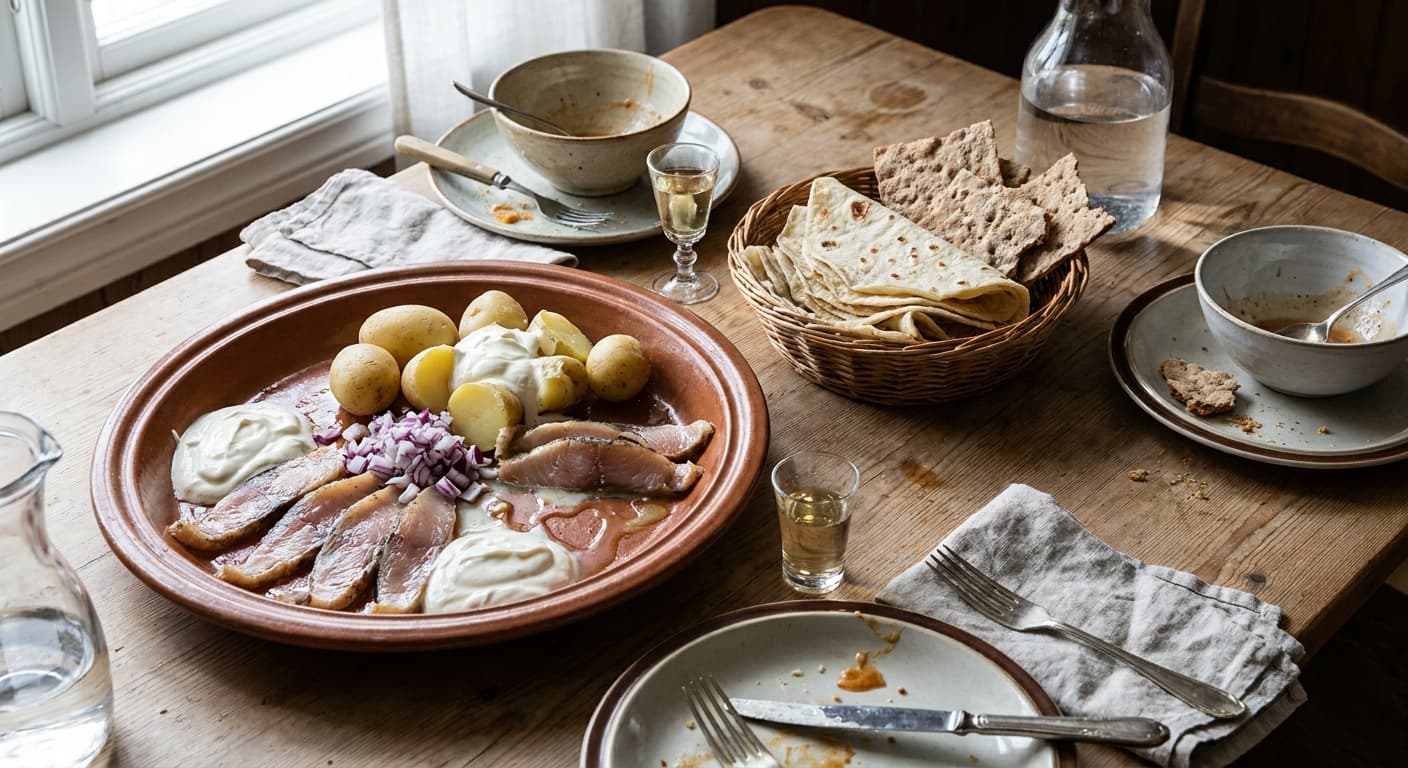
Rakfisk (Rakfisk) — Norwegian Fermented Trout with Lefse and Potatoes
Norwegian · Main Courses · 45 min
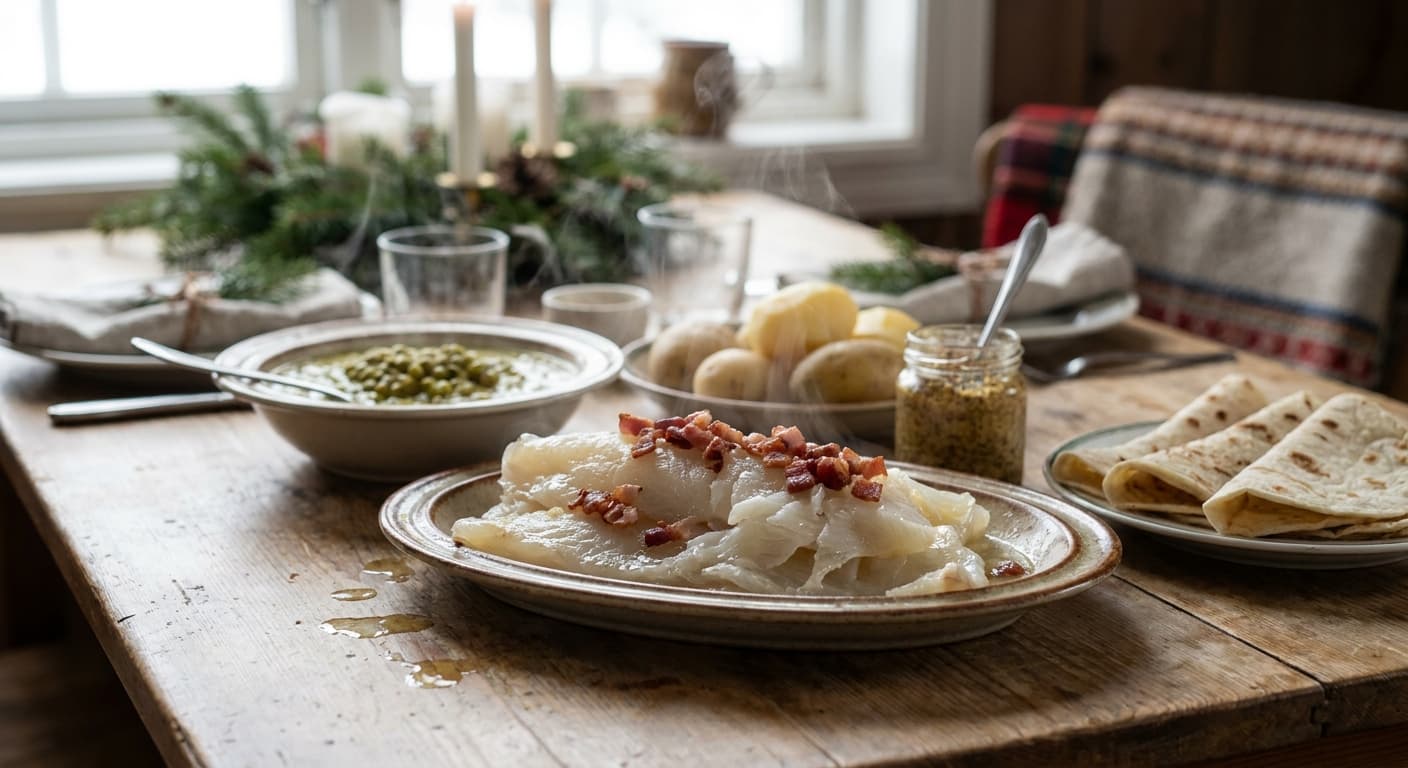
Lutefisk (lutefisk) — Lye-Cured Cod with Potatoes and Pea Stew
Norwegian · Main Courses · 90 min
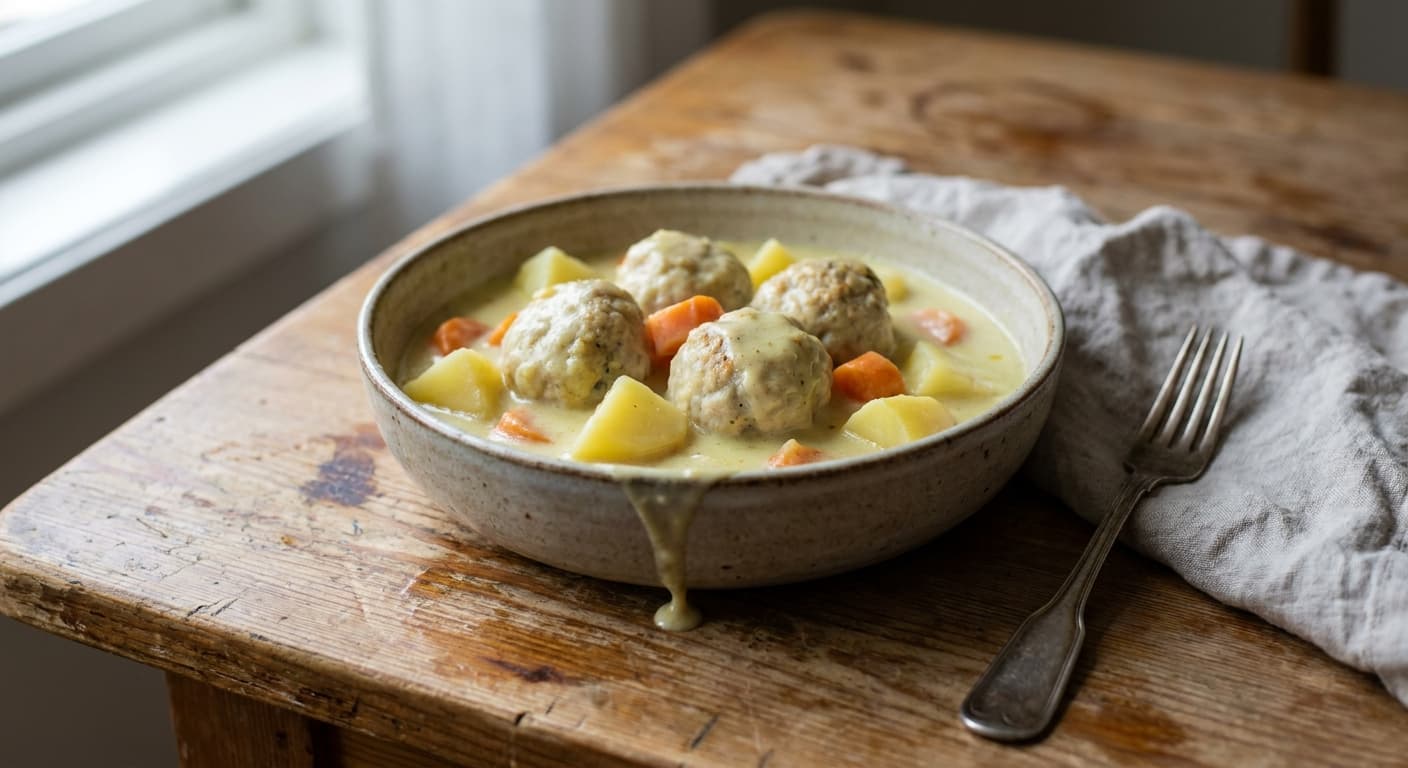
Norwegian Fish Balls (Fiskeboller) — Tender whitefish dumplings in curry cream sauce
Norwegian · Main Courses · 70 min
Fahsa (فحسة) — Bubbling Yemeni Shredded Lamb Stew
Yemeni · Stews · 140 min
Or Lam (ເອາະຫຼາມ) — Luang Prabang Herb Stew
Laotian · Stews · 155 min
Rye Bread and Beer Porridge (Øllebrød) — Traditional Danish Breakfast
Danish · Main Courses · 65 min
Swedish Crispbread (Knäckebröd) — Thin Rye Crackers for Smörgåsbord
Swedish · Breads · 105 min
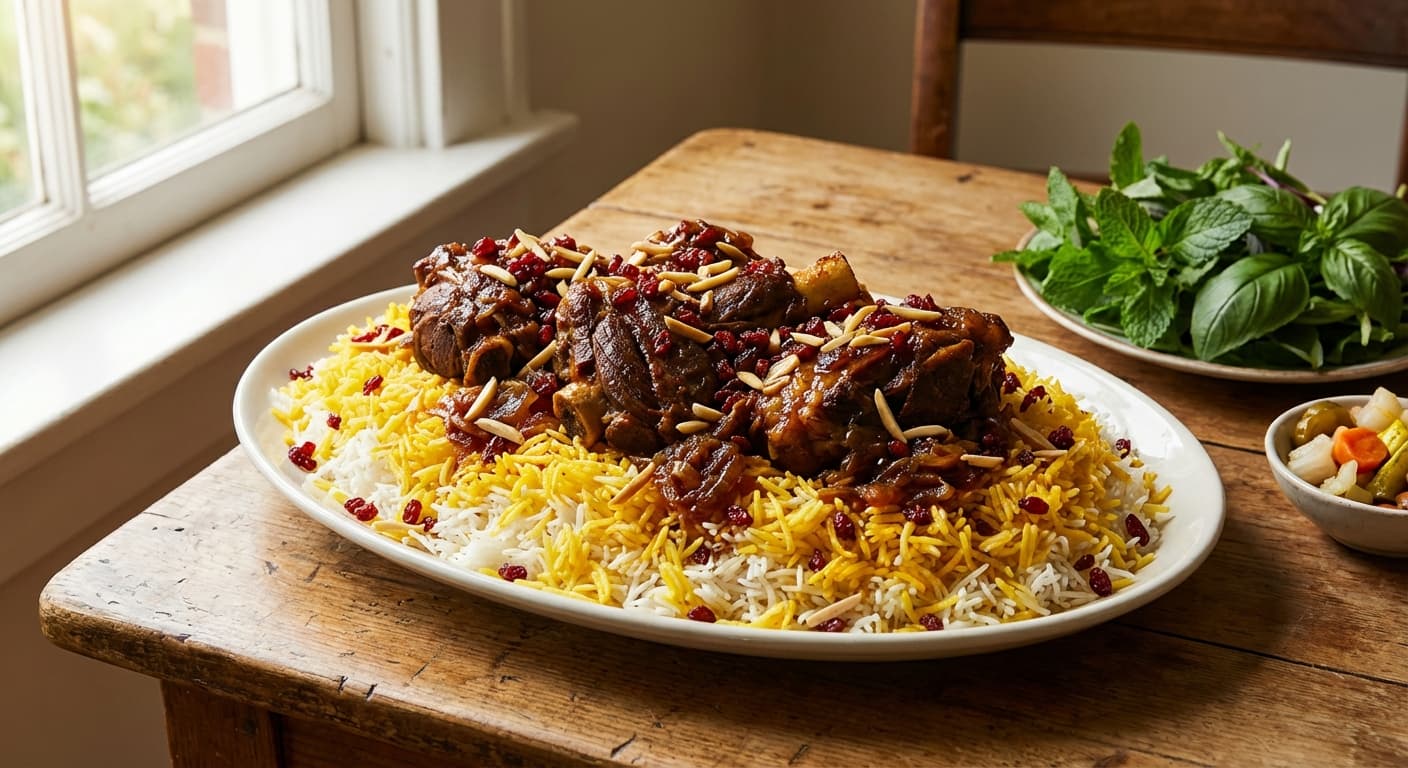
Chelo Goosht Semnani (چلو گوشت سمنانی) — Semnani Rice with Lamb
Persian · Rice Dishes · 240 min
Reviews
Cooked this recipe?
Tap the stars to rate it — that's all it takes. A few words are welcome but optional.
No ratings yet. Cooked this one? Be the first to rate it — it takes one tap.