Egyptian Karkadeh (كركديه) — Chilled Hibiscus Tea
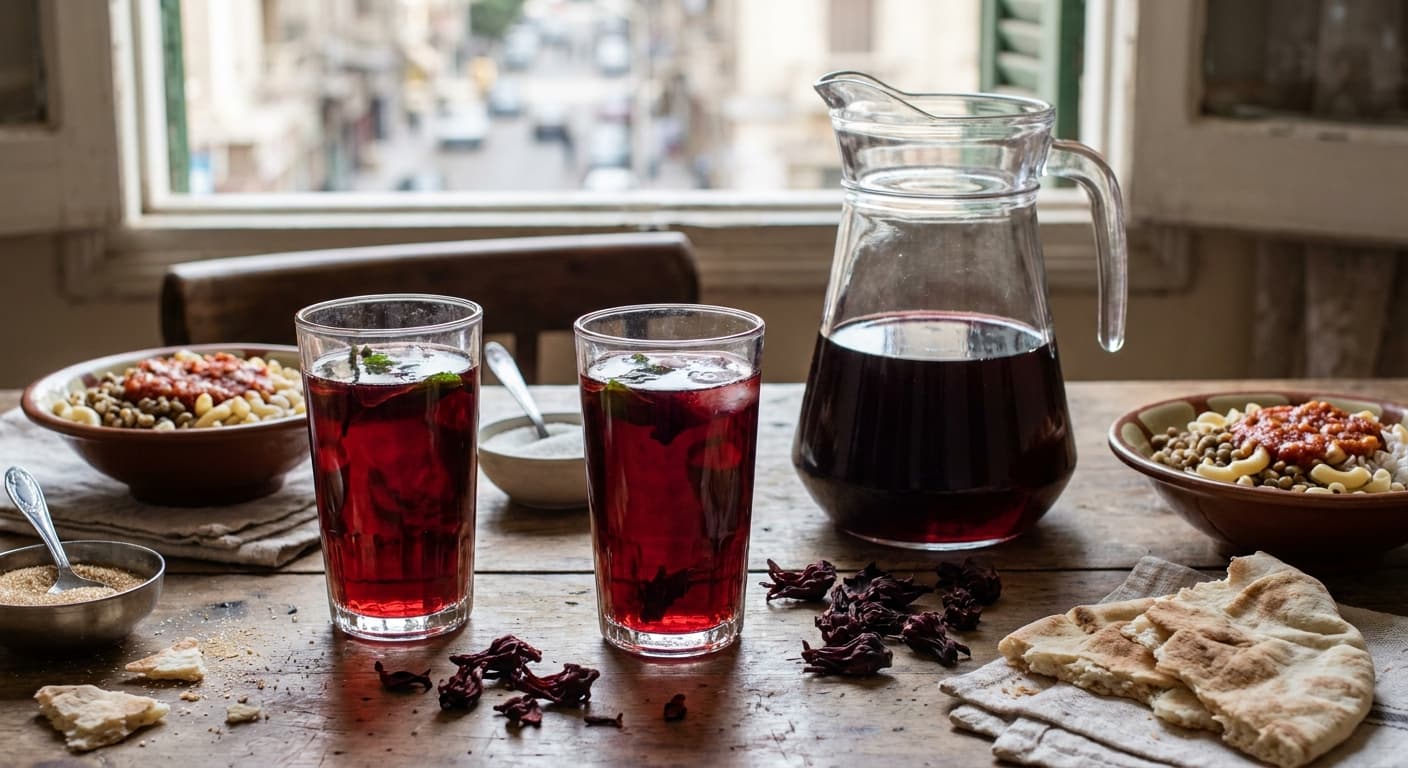
Karkadeh is Egypt’s ruby-red hibiscus infusion, served hot or chilled from homes to street stalls. Its tartness refreshes beside koshary, mahshi, or aish baladi meals, especially in summer and Ramadan.
Printable Recipe Card
Servings: 6 · Total: 18 min · Difficulty: easy
Ingredients (quick list)
- 50 g dried hibiscus calyces (quickly rinsed and drained)
- 1500 ml filtered water
- 120 g granulated sugar
- 6 sprig fresh mint (optional but common for a chilled pitcher)
- 300 g ice
Steps (summary)
- Place the dried hibiscus calyces in a fine-mesh sieve and rinse them under cool running water for 10 seconds. This removes any…
- Bring 1000 ml of the filtered water to a gentle boil in a medium saucepan. Add the rinsed hibiscus, reduce the heat to low, and…
- Turn off the heat, cover the pan, and steep the hibiscus for 15 minutes. Do not boil it longer, because over-extraction can mak…
- Strain the infusion through a fine-mesh sieve into a heatproof pitcher, pressing the calyces gently with the back of a spoon. S…
- Chill the pitcher for at least 2 hours, or serve immediately over the measured ice for a faster cold version. Pour into glasses…
Cultural Background
Claudia Roden records karkadeh as a beloved Egyptian hibiscus drink with roots in Nile Valley hospitality. In Egypt it appears at home, in cafes, and at Ramadan iftar tables as a cooling, nonalcoholic refreshment.
Equipment
💡 Tips
- For the clearest flavor, steep covered off the heat after the short simmer rather than boiling the hibiscus continuously.
- Use a glass or stainless-steel pitcher because hibiscus can stain porous plastics and may react slightly with aluminum.
- Adjust sweetness by changing the sugar to 90 g for a sharper drink or 150 g for a street-stall-style sweet karkadeh.
⚠️ Common Mistakes
❌ Boiling the hibiscus for too long
✅ Fix: Simmer for only 5 minutes, then steep off the heat so the color deepens without bitterness.
❌ Adding sugar after the drink is fully chilled
✅ Fix: Dissolve the sugar while the infusion is warm so the sweetness distributes evenly.
❌ Skipping the rinse
✅ Fix: Rinse the dried calyces briefly to remove grit without washing away too much flavor.
🧊 How to Store
Store karkadeh in a covered glass pitcher in the refrigerator for up to 4 days. Stir before serving, as flavor concentrates slightly over time; serve cold over fresh ice or warm gently without boiling.
📅 Make Ahead
Make the infusion up to 2 days ahead and refrigerate it in a covered glass pitcher. Add mint only just before serving so it stays fresh and does not turn the drink grassy.
🍽️ Pairs Well With
- Koshary
- mahshi
- aish baladi
- taameya
- basbousa
- fresh dates.
Regional Variations
- In Upper Egypt, a stronger, darker karkadeh is often made with a higher hibiscus-to-water ratio.
- For winter service, Egyptians may drink karkadeh warm instead of chilled, using the same infusion method.
- During Ramadan, families often prepare a large pitcher in advance and serve it very cold at iftar.
Ingredients
- 50 gdried hibiscus calyces (quickly rinsed and drained)
- 1500 mlfiltered water
- 120 ggranulated sugar
- 6 sprigfresh mint (optional but common for a chilled pitcher)
- 300 gice
🔄 Substitutions
- granulated sugar→ 100 g agave syrup
- dried hibiscus calyces→ 12 hibiscus tea bags
- fresh mint→ 6 thin lemon slices
Instructions
- 1
Place the dried hibiscus calyces in a fine-mesh sieve and rinse them under cool running water for 10 seconds. This removes any sand or field dust while preserving the vivid tart flavor that defines Egyptian karkadeh.
- 2
Bring 1000 ml of the filtered water to a gentle boil in a medium saucepan. Add the rinsed hibiscus, reduce the heat to low, and simmer for 5 minutes until the liquid turns a deep garnet red.
- 3
Turn off the heat, cover the pan, and steep the hibiscus for 15 minutes. Do not boil it longer, because over-extraction can make the drink harsh rather than cleanly tart.
- 4
Strain the infusion through a fine-mesh sieve into a heatproof pitcher, pressing the calyces gently with the back of a spoon. Stir in the sugar while the liquid is still warm, then add the remaining 500 ml filtered water.
- 5
Chill the pitcher for at least 2 hours, or serve immediately over the measured ice for a faster cold version. Pour into glasses and garnish each serving with 1 mint sprig if desired, especially when serving alongside koshary, mahshi, or aish baladi at an Egyptian family table.
🪪 Recipe Passport
Cultural Background
Claudia Roden records karkadeh as a beloved Egyptian hibiscus drink with roots in Nile Valley hospitality. In Egypt it appears at home, in cafes, and at Ramadan iftar tables as a cooling, nonalcoholic refreshment.
Regional Variations
Researched from multiple sources and validated by the Zaffaron editorial team. Every recipe is tested for accuracy, measurements, and cultural authenticity.
📚 Sources & Cultural References
- Claudia Roden — A Book of Middle Eastern Food — (1968)
- Magda Mehdawy — My Egyptian Grandmother’s Kitchen — (2006)
Sources cited by the Zaffaron editorial team during recipe research. Cultural and culinary references supporting authenticity claims.
Nutrition per serving
Pairs well with
If you enjoyed this recipe, here are a few related Zaffaron recipes to try next.
Does your family make this differently?
Every family has their own version. Maybe your grandmother adds a secret ingredient, or your aunt has a completely different technique. Preserve your family's version — with their name on it, forever.
You Might Also Like
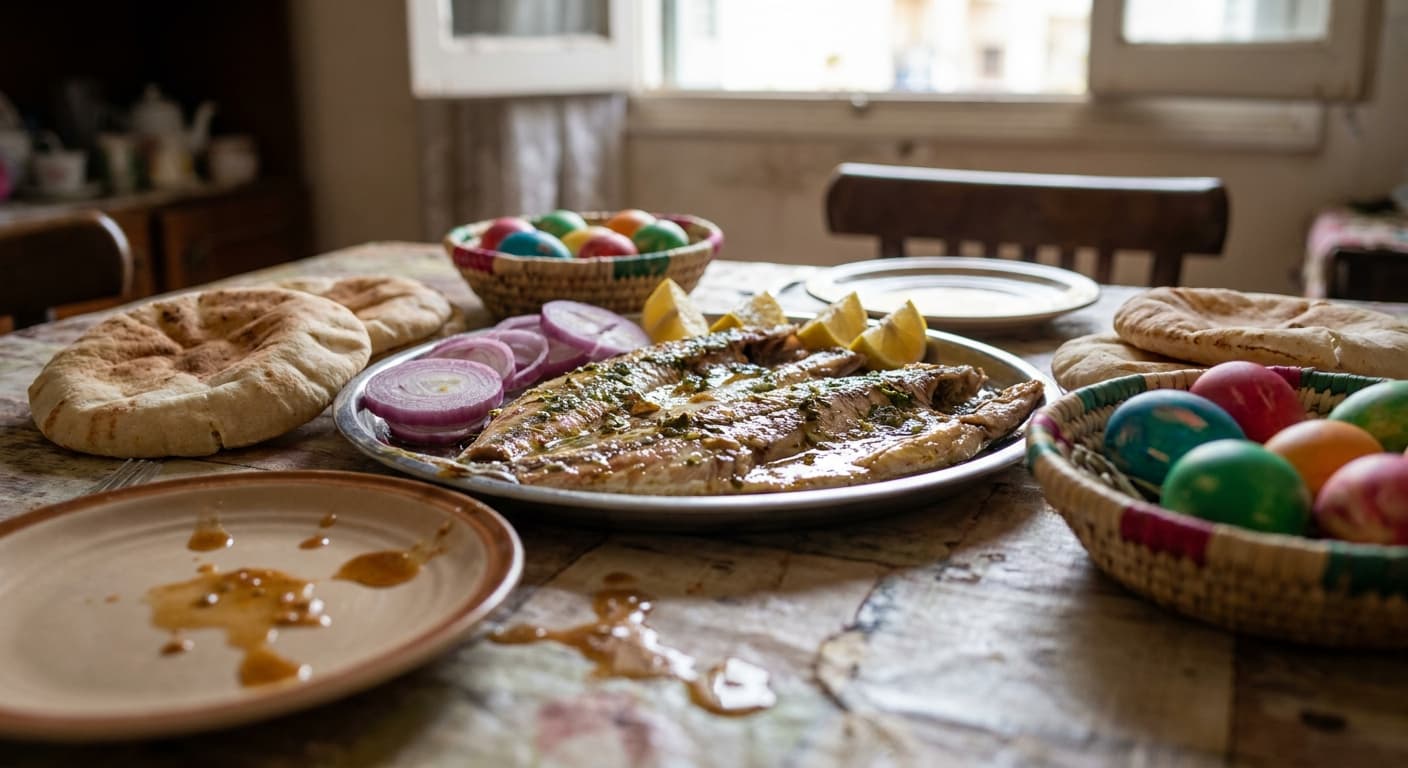
Feseekh (فسيخ) — Egyptian Salt-Cured Mullet for Sham el-Nessim
Egyptian · Main Courses · 30 min
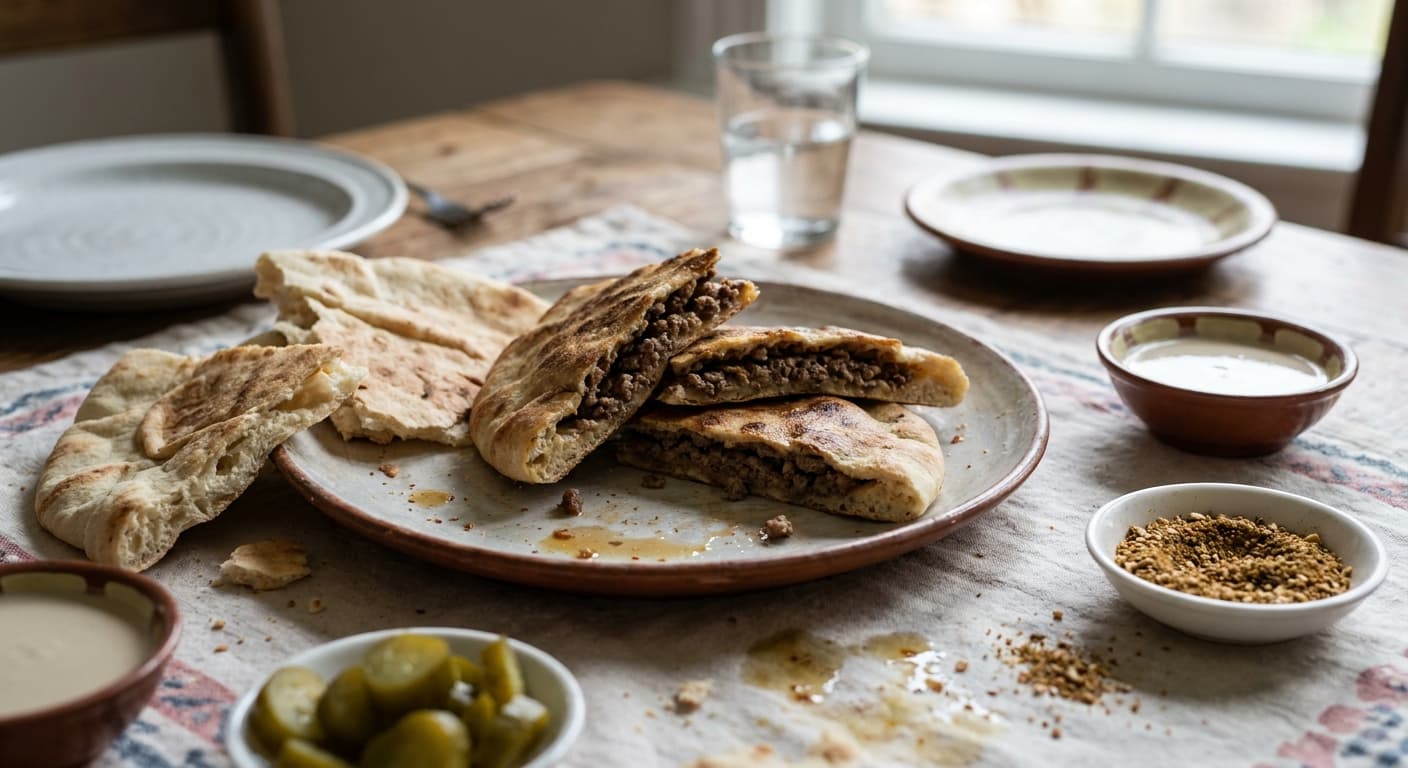
Hawawshi (حواوشي) — Egyptian Spiced Meat-Stuffed Baladi Bread
Egyptian · Main Courses · 55 min
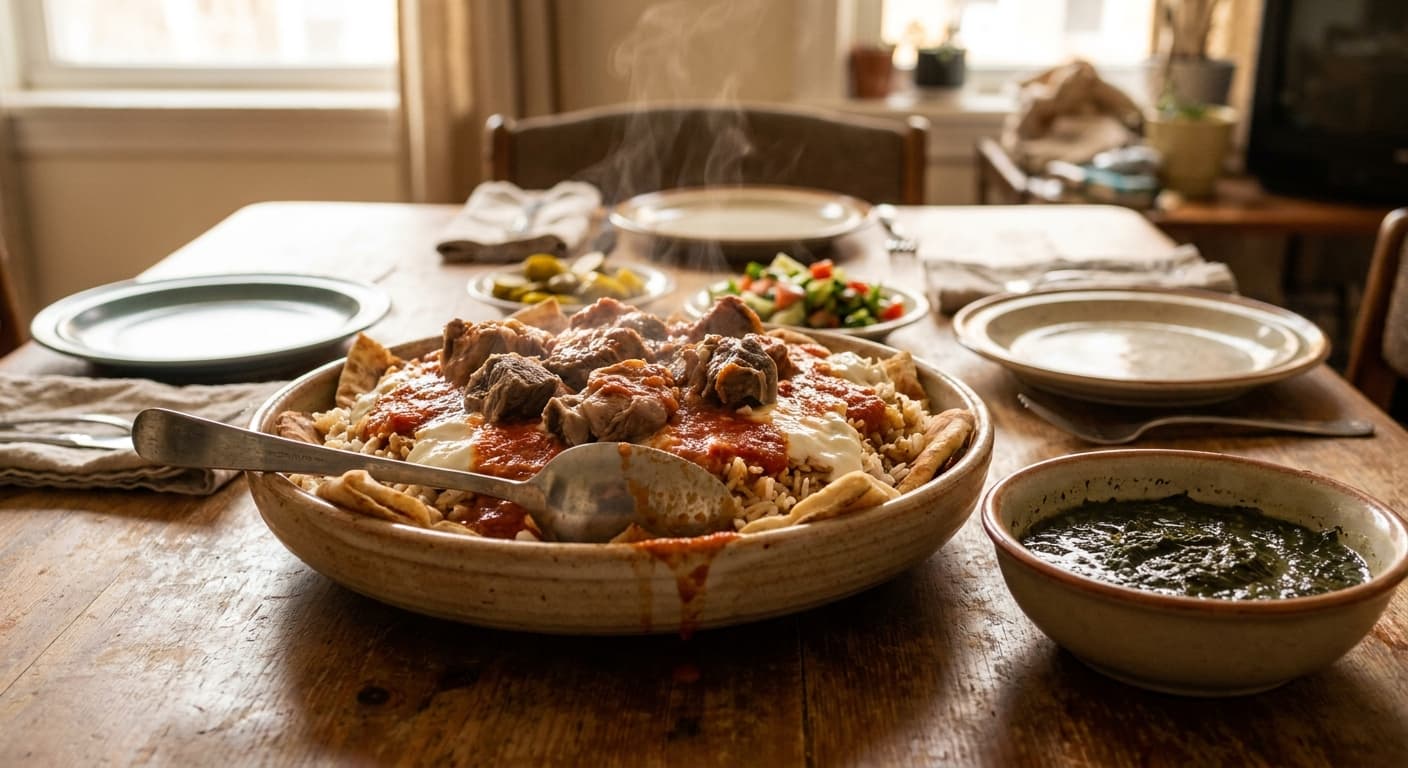
Egyptian Fatta (فتة) — Layered Meat, Rice, and Crisp Bread
Egyptian · Main Courses · 145 min
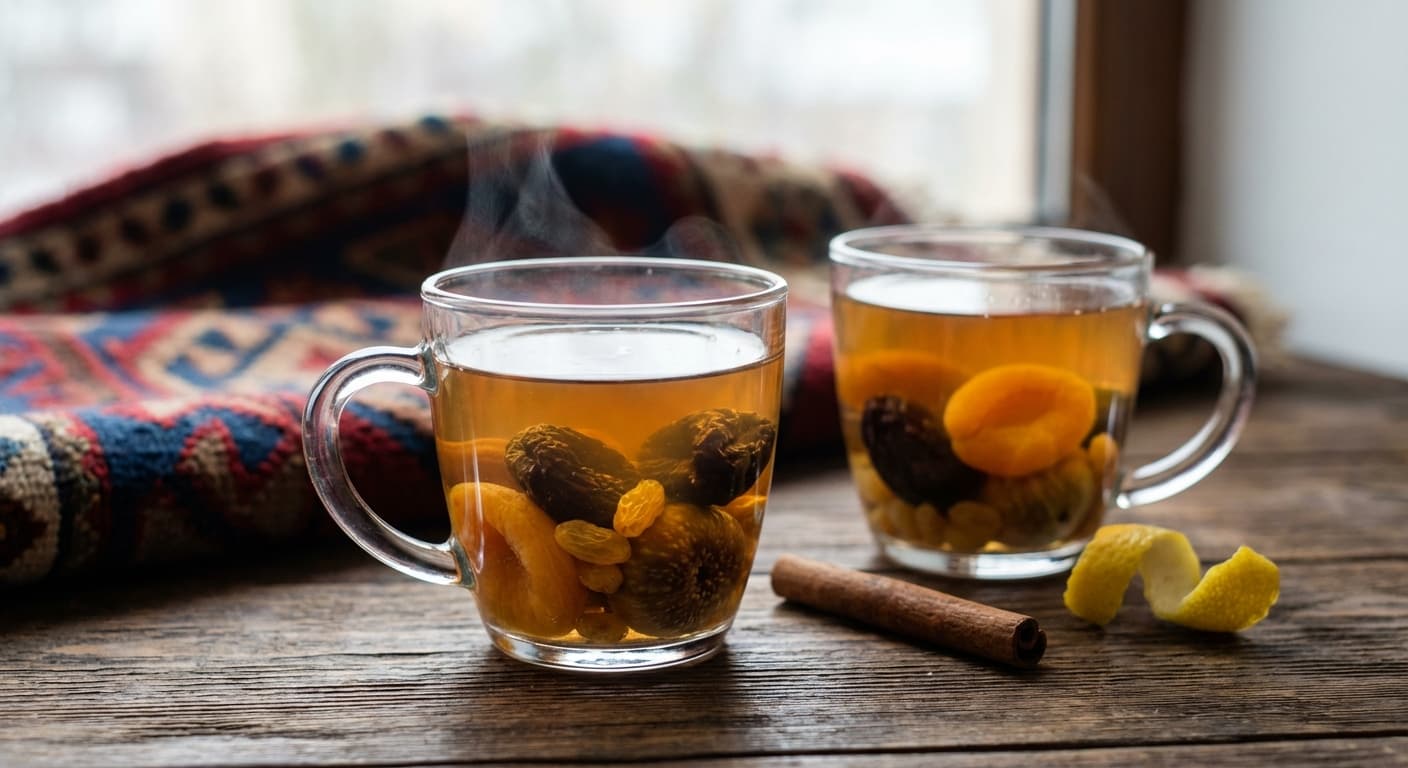
Xoshab (Xoşab) — Azerbaijani Dried Fruit Compote Scented with Cinnamon
Azerbaijani · Drinks · 45 min
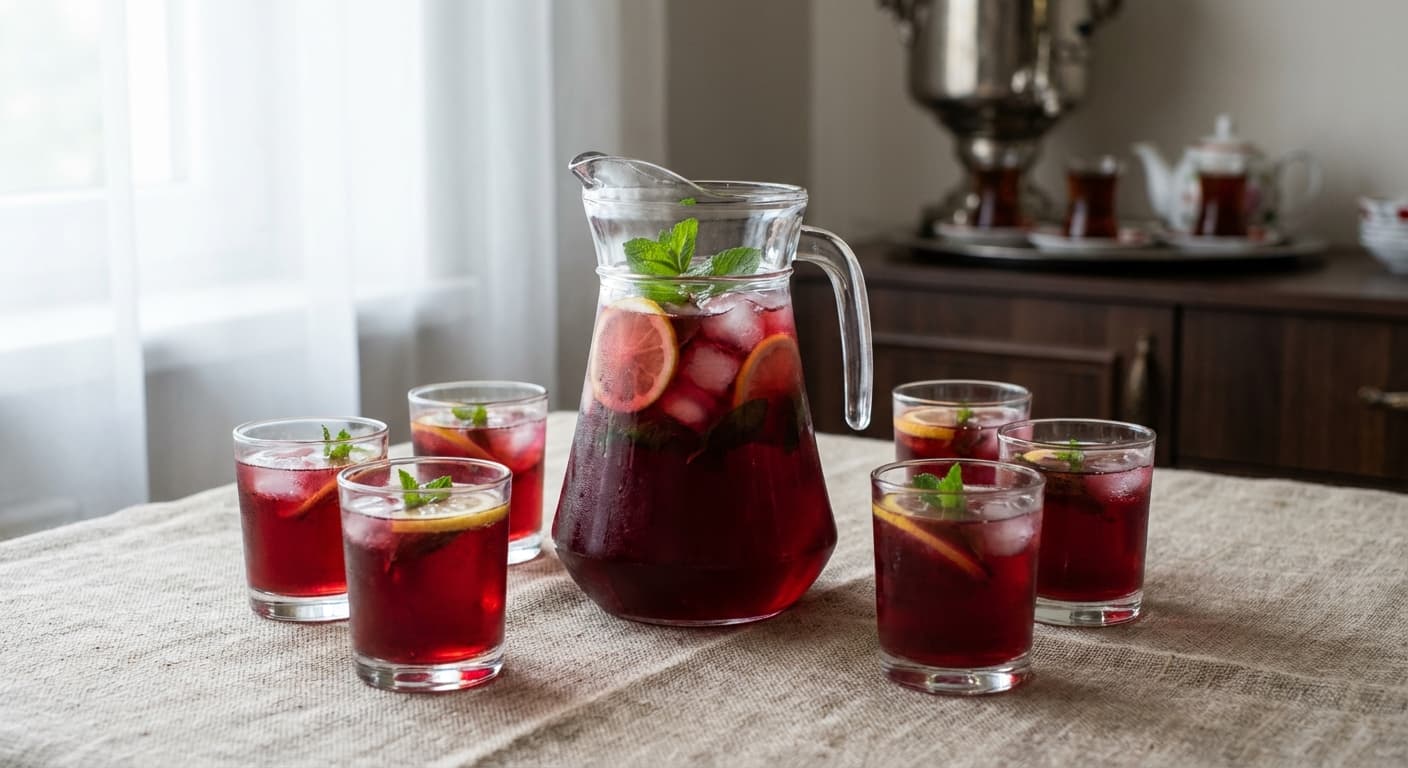
Sharbat (Şərbət) — Azerbaijani Fruit Syrup Summer Drink
Azerbaijani · Drinks · 25 min
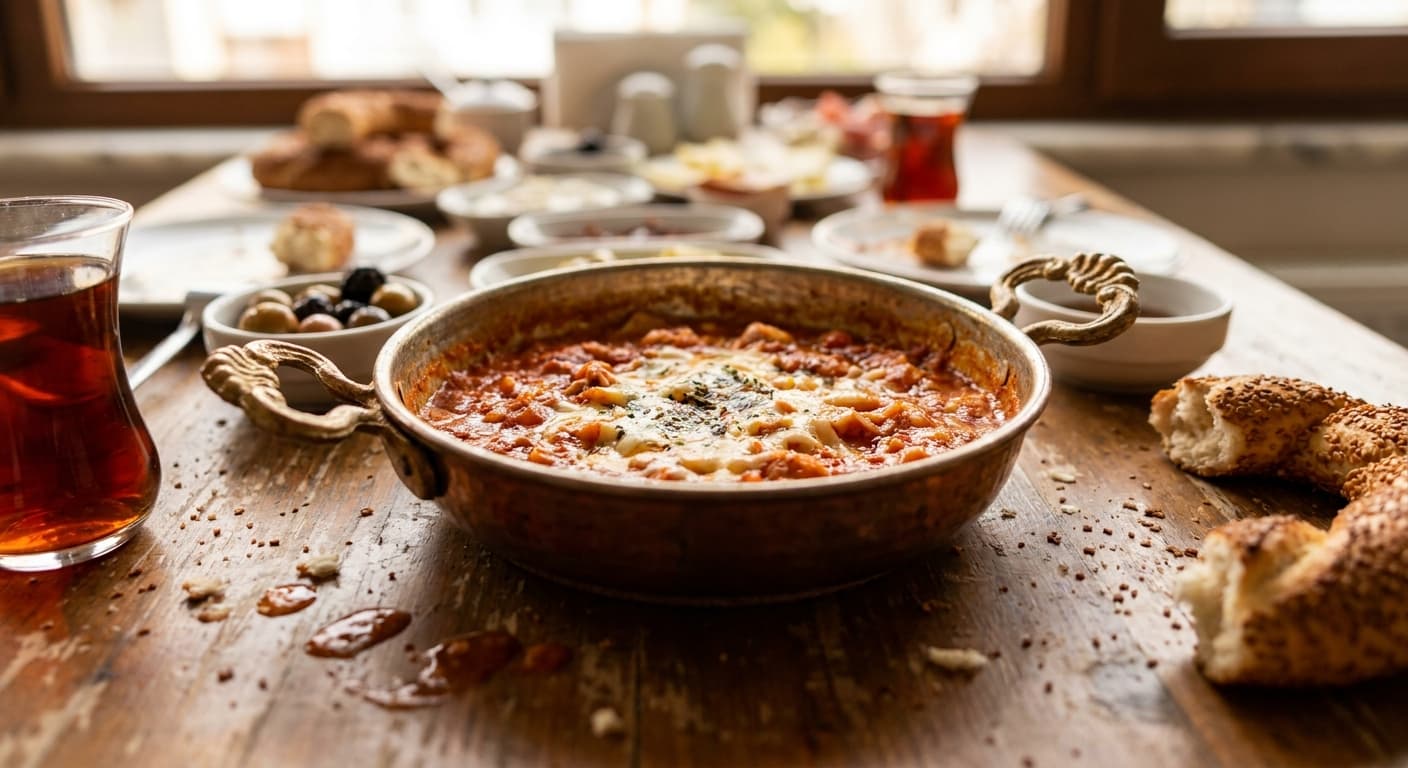
Turkish Menemen (Menemen) — Soft Eggs with Tomatoes and Peppers
Turkish · Main Courses · 37 min
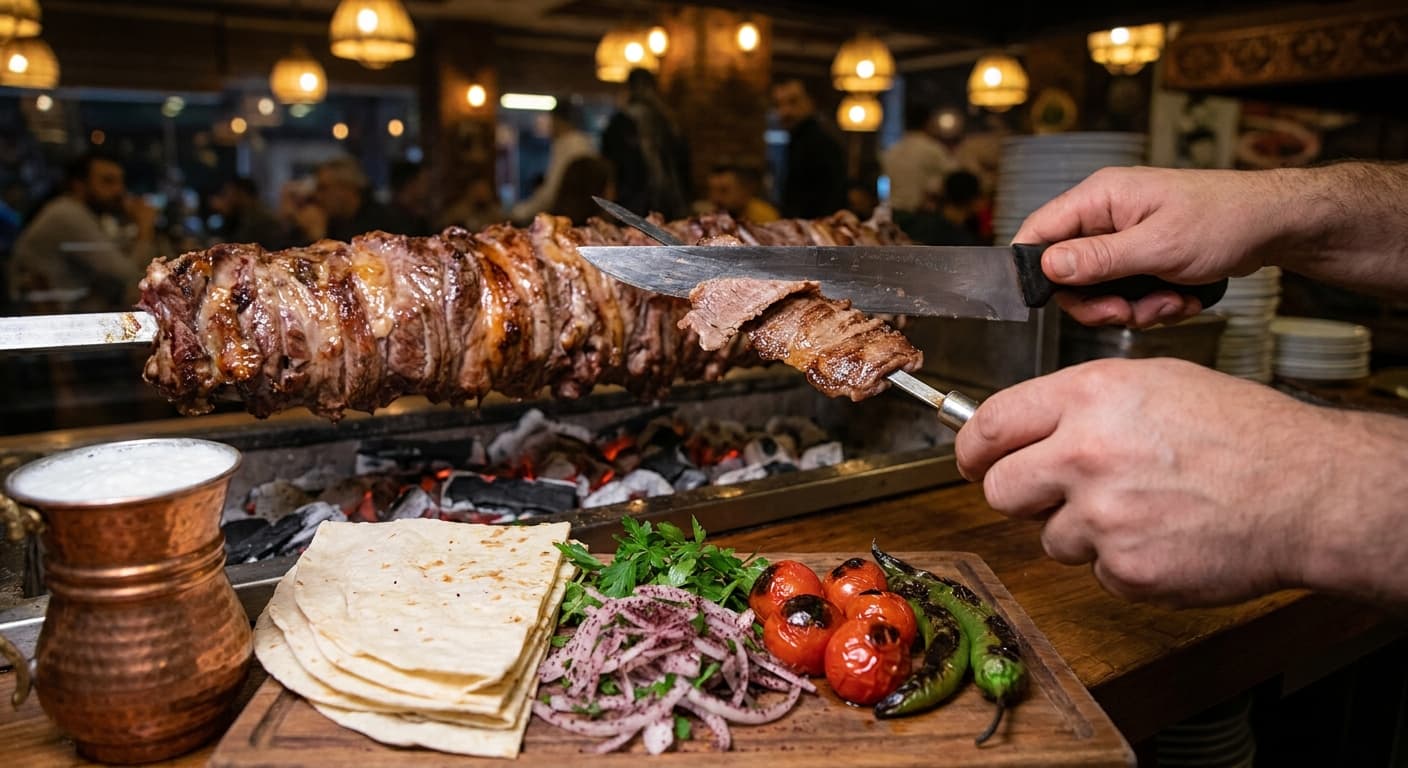
Turkish Cağ Kebab (Cağ Kebabı) — Erzurum Slow-Roasted Charcoal Lamb Skewer
Turkish · Kebabs · 160 min
Jellab (جلاب) — Moroccan Date-Raisin Drink with Pine Nuts
Moroccan · Drinks · 30 min
Reviews
Cooked this recipe?
Tap the stars to rate it — that's all it takes. A few words are welcome but optional.
No ratings yet. Cooked this one? Be the first to rate it — it takes one tap.