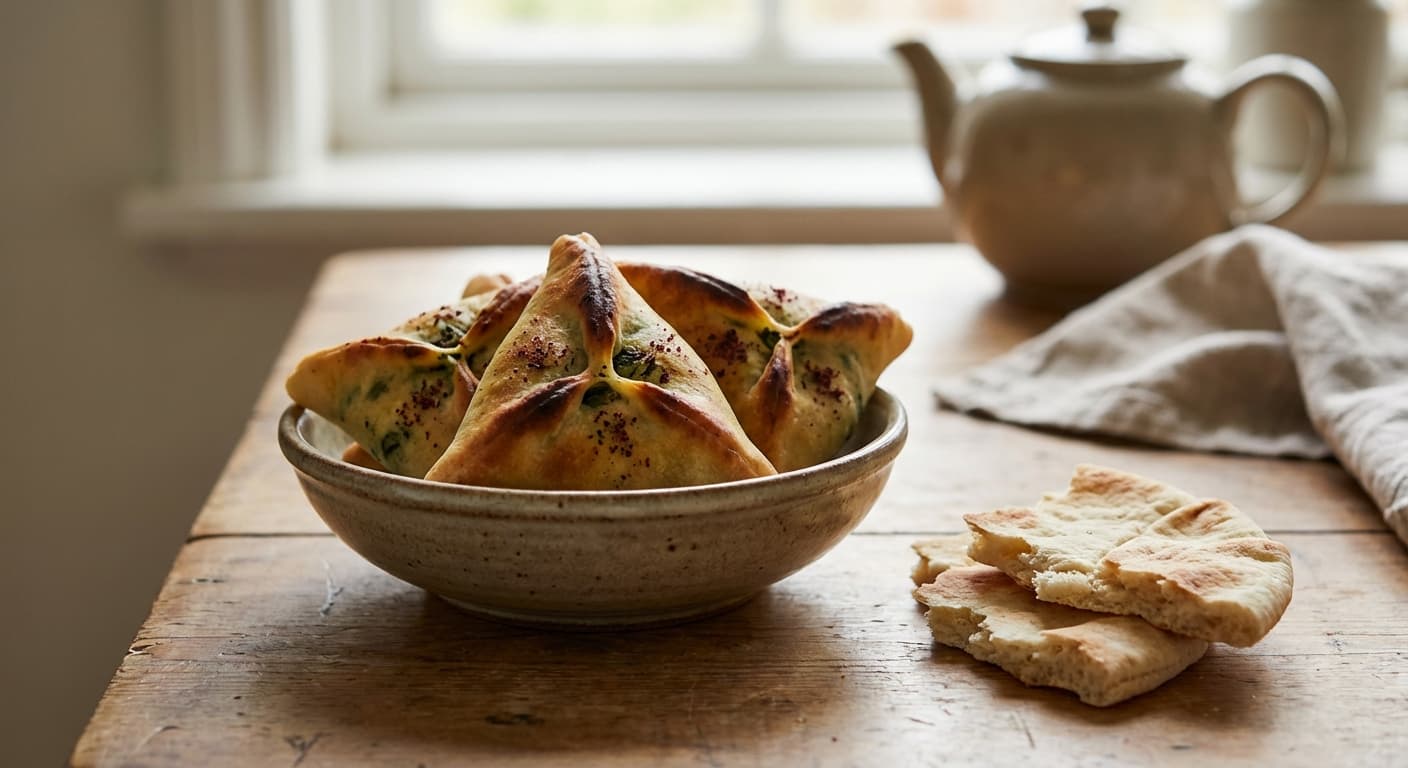
Fatayer Sabanekh (فطاير سبانخ) — Levantine Spinach Pies with Sumac
Soft, golden Levantine spinach pies filled with oniony spinach, bright sumac, and tart pomegranate molasses. A classic mezze-style bake that balances citrusy tang with warm, savory dough.
Printable Recipe Card
Servings: 12 · Total: 113 min · Difficulty: medium
Ingredients (quick list)
- 500 g All-purpose flour (plus extra for dusting)
- 7 g Active dry yeast (1 packet)
- 12 g Granulated sugar (helps activate yeast)
- 8 g Fine sea salt
- 20 g Dry milk powder (for softer crumb and better browning)
- 45 ml Vegetable oil (plus extra to oil the bowl)
- 300 ml Hot water (about 45–50°C/113–122°F; warm, not boiling)
- 700 g Fresh spinach (washed well, thick stems removed, finely chopped)
- 250 g Yellow onions (finely diced)
- 18 g Ground sumac (about 2 tbsp, adjust to taste)
- 30 ml Pomegranate molasses (about 2 tbsp)
- 30 ml Fresh lemon juice (about 2 tbsp)
+ 2 more in the full ingredients section below.
Steps (summary)
- Make the dough: In a large bowl, whisk flour, dry milk powder, sugar, and salt. Sprinkle in yeast and whisk again. Add vegetabl…
- First rise: Lightly oil a clean bowl, place the dough inside, and turn to coat. Cover tightly and let rise in a warm spot (24–2…
- Prepare spinach and onions: Put chopped spinach in a colander set over a bowl. Sprinkle with 6 g salt, toss well, and rest 15 m…
- Mix the filling: In a bowl, combine the squeezed spinach-onion mixture with sumac, pomegranate molasses, lemon juice, olive oil…
- Divide and rest: Punch down the risen dough and transfer to a lightly floured surface. Divide into 12 equal pieces (about 70 g…
- Shape fatayer: Roll each ball into a 12–13 cm (5 in) round, keeping the center slightly thicker than the edges. Place 2 heaped…
+ 1 more steps in the full instructions section below.
Cultural Background
Spinach fatayer are a widely enjoyed baked snack across the Levant, commonly served as part of mezze spreads and in bakeries as everyday street food. They are often prepared for gatherings because they travel well and can be eaten warm or at room temperature.
Equipment
💡 Tips
- Squeezing the spinach very dry is the main secret: excess liquid can open seams and make the centers soggy.
- If the dough springs back while rolling, cover and rest the pieces 5 more minutes before shaping.
- For a deeper tang, let the mixed filling sit 10 minutes before stuffing so the sumac blooms in the acids.
- Seal confidently: pinch seams twice—first to close, second to reinforce—especially at the three corners.
- For extra browning without egg, brush with oil and bake on the lower rack for the last 3 minutes.
⚠️ Common Mistakes
❌ Filling leaks or the triangles open in the oven
💡 Why: Spinach was not squeezed dry enough or seams were not pinched firmly, creating steam pressure inside.
✅ Fix: Salt and rest the spinach, then squeeze until nearly dry. Pinch seams twice and avoid overfilling; keep 1.5 cm (1/2 in) border of dough for sealing.
❌ Dough feels tough and shrinks while rolling
💡 Why: Gluten is tight from insufficient resting or too much flour during rolling.
✅ Fix: Rest dough balls 10 minutes (or longer if needed) and dust lightly. Roll from the center outward, rotating the dough to keep it even.
❌ Pies brown too quickly on top but stay pale underneath
💡 Why: Tray placed too high or oven heat uneven, so the base does not get enough direct heat.
✅ Fix: Bake on the middle-lower rack and preheat fully for 20 minutes. Use a dark metal sheet pan if available, and rotate trays at minute 10.
🧊 How to Store
Cool completely, then store airtight in the refrigerator up to 4 days. Reheat on a sheet pan at 180°C/350°F for 8–10 minutes. Freeze baked pies up to 2 months; reheat from frozen at 180°C/350°F for 12–15 minutes until hot throughout.
📅 Make Ahead
Prepare the dough and filling up to 1 day ahead. Refrigerate dough lightly oiled in a covered container; bring to room temperature 45 minutes before shaping. Keep filling refrigerated and squeeze again if any liquid collects. You can also shape and refrigerate unbaked pies 6 hours; bake straight from cold, adding 2–3 minutes.
🍽️ Pairs Well With
- Labneh or thick plain yogurt with olive oil
- Cucumber-tomato salad
- Mint tea or black tea
- Pickled turnips or mixed pickles
Regional Variations
- Lebanon and SyriaOften shaped as open triangles, with a sharper tang from extra lemon and sumac; some versions include a small amount of tomato for color and acidity.
- Jordan and PalestineCommonly enriched with more olive oil in the filling and sometimes baked smaller for mezze platters; pomegranate molasses may be used more generously for a sweet-tart finish.
Ingredients
- 500 gAll-purpose flour (plus extra for dusting)
- 7 gActive dry yeast (1 packet)
- 12 gGranulated sugar (helps activate yeast)
- 8 gFine sea salt
- 20 gDry milk powder (for softer crumb and better browning)
- 45 mlVegetable oil (plus extra to oil the bowl)
- 300 mlHot water (about 45–50°C/113–122°F; warm, not boiling)
- 700 gFresh spinach (washed well, thick stems removed, finely chopped)
- 250 gYellow onions (finely diced)
- 18 gGround sumac (about 2 tbsp, adjust to taste)
- 30 mlPomegranate molasses (about 2 tbsp)
- 30 mlFresh lemon juice (about 2 tbsp)
- 45 mlExtra-virgin olive oil (about 3 tbsp)
- 1 gBlack pepper (about 1/2 tsp)
🔄 Substitutions
- Fresh spinach→ Frozen spinach, thawed and squeezed very dry
- Dry milk powder→ Omit and add 15 ml more vegetable oil
- Pomegranate molasses→ 15 ml lemon juice + 10 g brown sugar
Instructions
- 1
Make the dough: In a large bowl, whisk flour, dry milk powder, sugar, and salt. Sprinkle in yeast and whisk again. Add vegetable oil and hot water (45–50°C/113–122°F). Mix with a spoon until shaggy, then knead 8–10 minutes by hand (or 6 minutes in a mixer) until smooth and elastic.
- 2
First rise: Lightly oil a clean bowl, place the dough inside, and turn to coat. Cover tightly and let rise in a warm spot (24–27°C/75–80°F) for 60 minutes, or until doubled. If your kitchen is cool, place the bowl in an unheated oven with the light on to maintain gentle warmth.
- 3
Prepare spinach and onions: Put chopped spinach in a colander set over a bowl. Sprinkle with 6 g salt, toss well, and rest 15 minutes to release water. Add diced onions to the colander and massage the mixture firmly for 1 minute, then squeeze in handfuls until very dry; discard the liquid.
- 4
Mix the filling: In a bowl, combine the squeezed spinach-onion mixture with sumac, pomegranate molasses, lemon juice, olive oil, and black pepper. Taste and adjust tang: add 5 ml more lemon juice for brightness or 1–2 g more sumac for extra citrusy bite. Keep the filling uncovered to avoid condensation.
- 5
Divide and rest: Punch down the risen dough and transfer to a lightly floured surface. Divide into 12 equal pieces (about 70 g each). Shape into tight balls, cover with a towel, and rest 10 minutes so the gluten relaxes. Meanwhile, heat the oven to 230°C/445°F and line 2 baking sheets.
- 6
Shape fatayer: Roll each ball into a 12–13 cm (5 in) round, keeping the center slightly thicker than the edges. Place 2 heaped tablespoons (about 45–50 g) filling in the center. Pinch three points of the circle toward the center to form a triangle, then pinch the seams firmly to seal.
- 7
Bake: Arrange on trays with at least 3 cm (1 in) spacing. Brush the tops lightly with vegetable oil for color. Bake 16–18 minutes, rotating trays at minute 10, until the bottoms are browned and the tops are golden. Cool 10 minutes on a rack so the filling sets and the crust stays tender.
🪪 Recipe Passport
Cultural Background
Spinach fatayer are a widely enjoyed baked snack across the Levant, commonly served as part of mezze spreads and in bakeries as everyday street food. They are often prepared for gatherings because they travel well and can be eaten warm or at room temperature.
Regional Variations
Researched from multiple sources and validated by the Zaffaron editorial team. Every recipe is tested for accuracy, measurements, and cultural authenticity.
Nutrition per serving
Pairs well with
If you enjoyed this recipe, here are a few related Zaffaron recipes to try next.
- Frikeh Djej (فريكة دجاج) — Lebanese Freekeh Pilaf with Roasted Chicken Pieces
- Kebbeh bil Sanieh (كبة بالصينية) — Lebanese Baked Bulgur and Lamb Casserole
- Loubieh bil Zeit (لوبيا بالزيت) — Lebanese Green Beans Braised in Olive Oil and Tomato
- Mdardara (مجدّرة) — Lebanese Lentil-Rice with Deep Caramelized Onions
Does your family make this differently?
Every family has their own version. Maybe your grandmother adds a secret ingredient, or your aunt has a completely different technique. Preserve your family's version — with their name on it, forever.
You Might Also Like
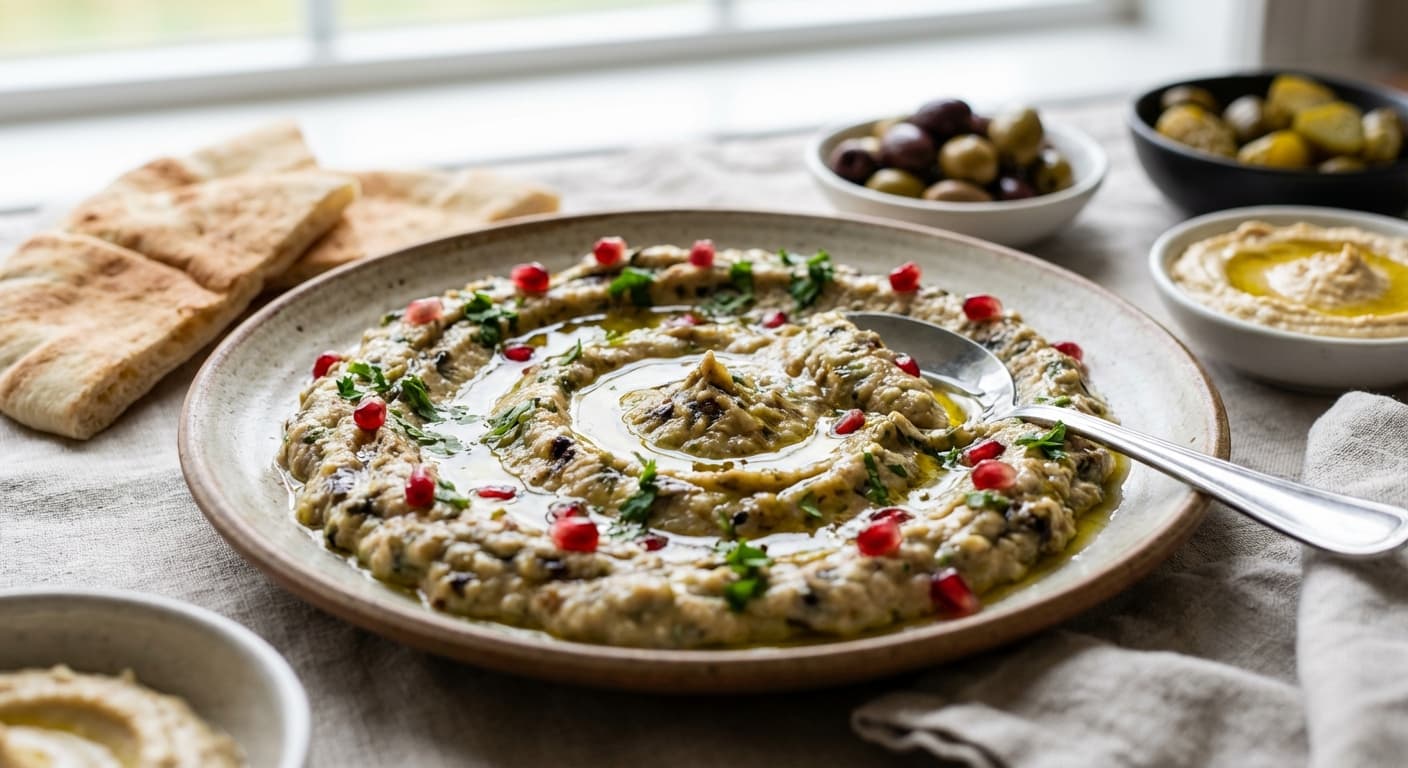
Baba Ghanoush (بابا غنّوج) — Lebanese Smoky Eggplant Dip with Tahini
Lebanese · Appetizers · 50 min
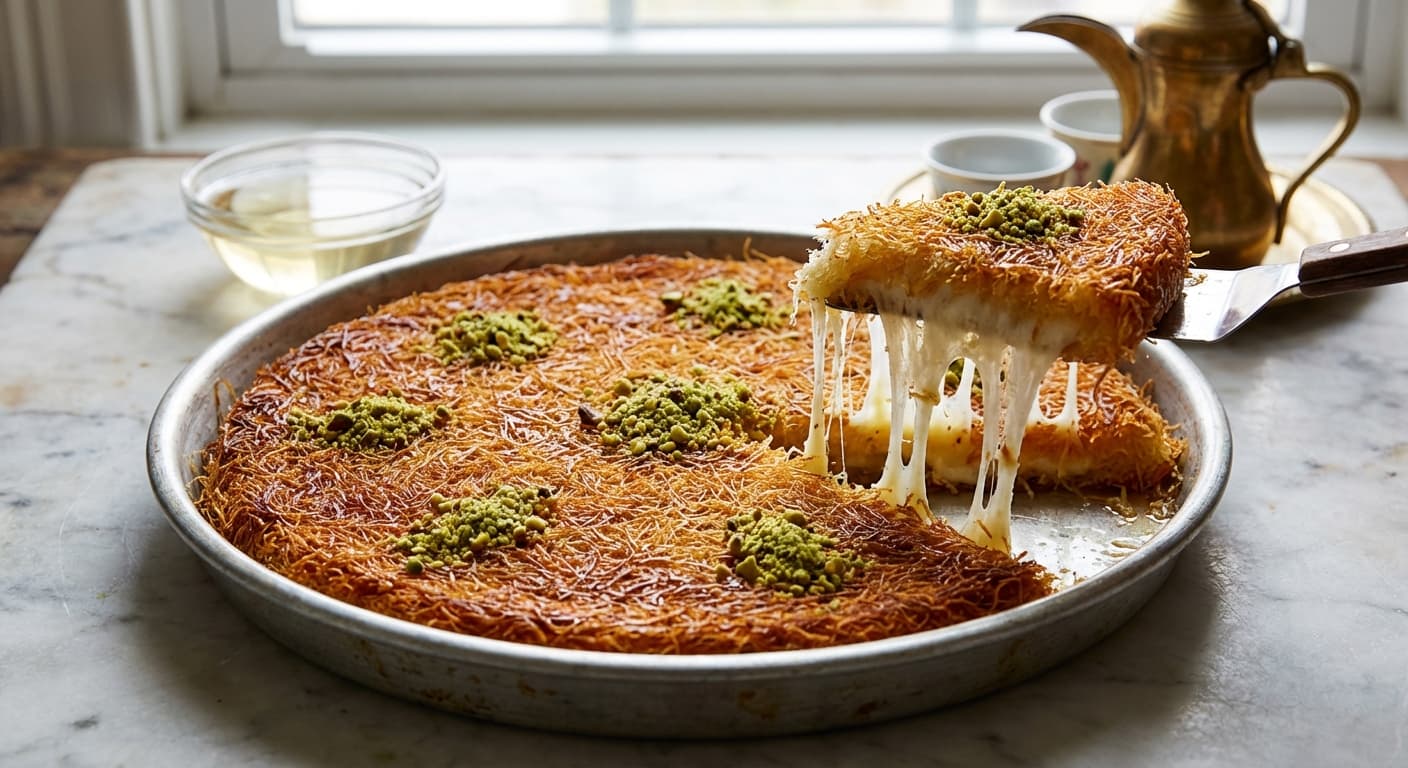
Knafeh (كنافة) — Lebanese Cheese-Filled Pastry with Orange Blossom Syrup
Lebanese · Desserts · 50 min
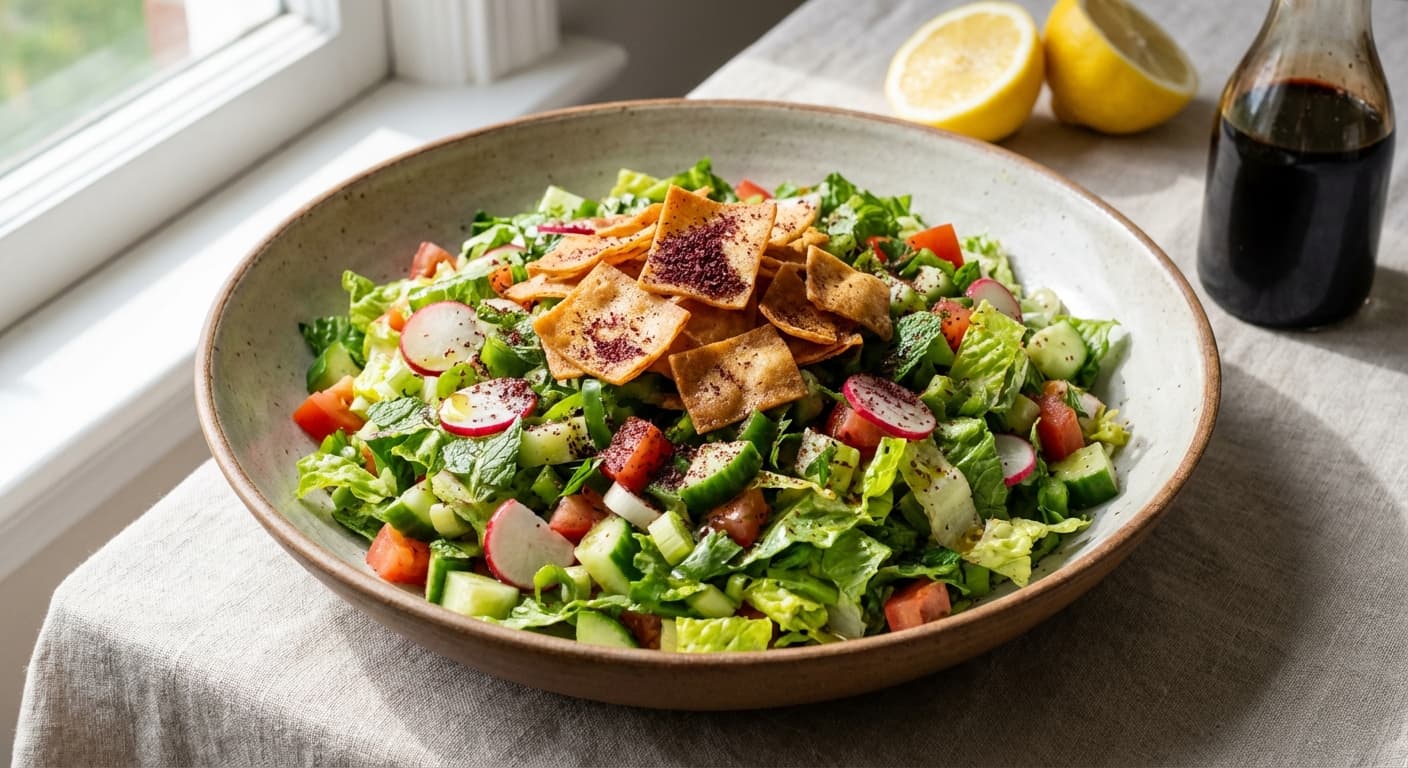
Fattoush (فتوش) — Lebanese Crispy Bread Salad with Sumac Dressing
Lebanese · Salads · 28 min
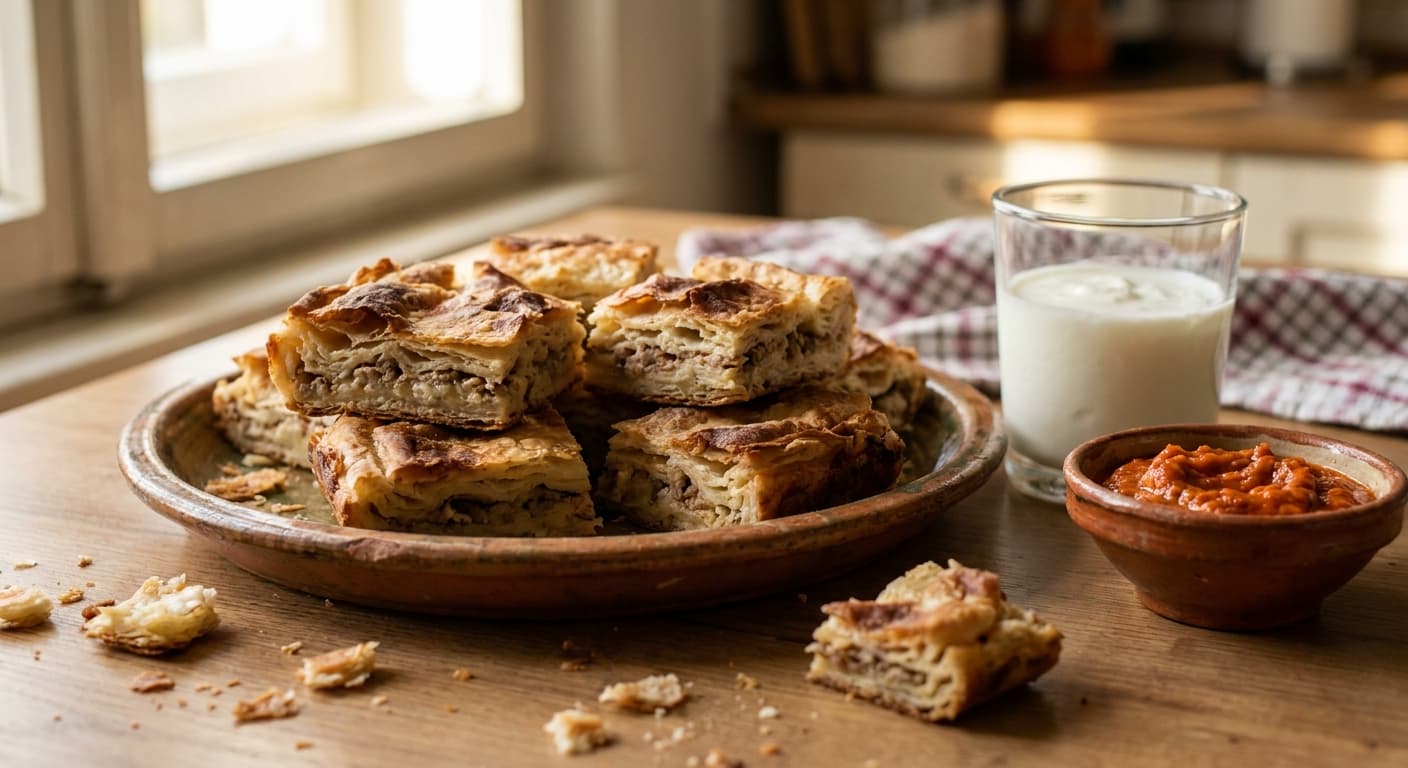
Serbian Cheese Gibanica (Гибаница) — Crumpled Filo Pie with White Cheese
Serbian · Appetizers · 65 min
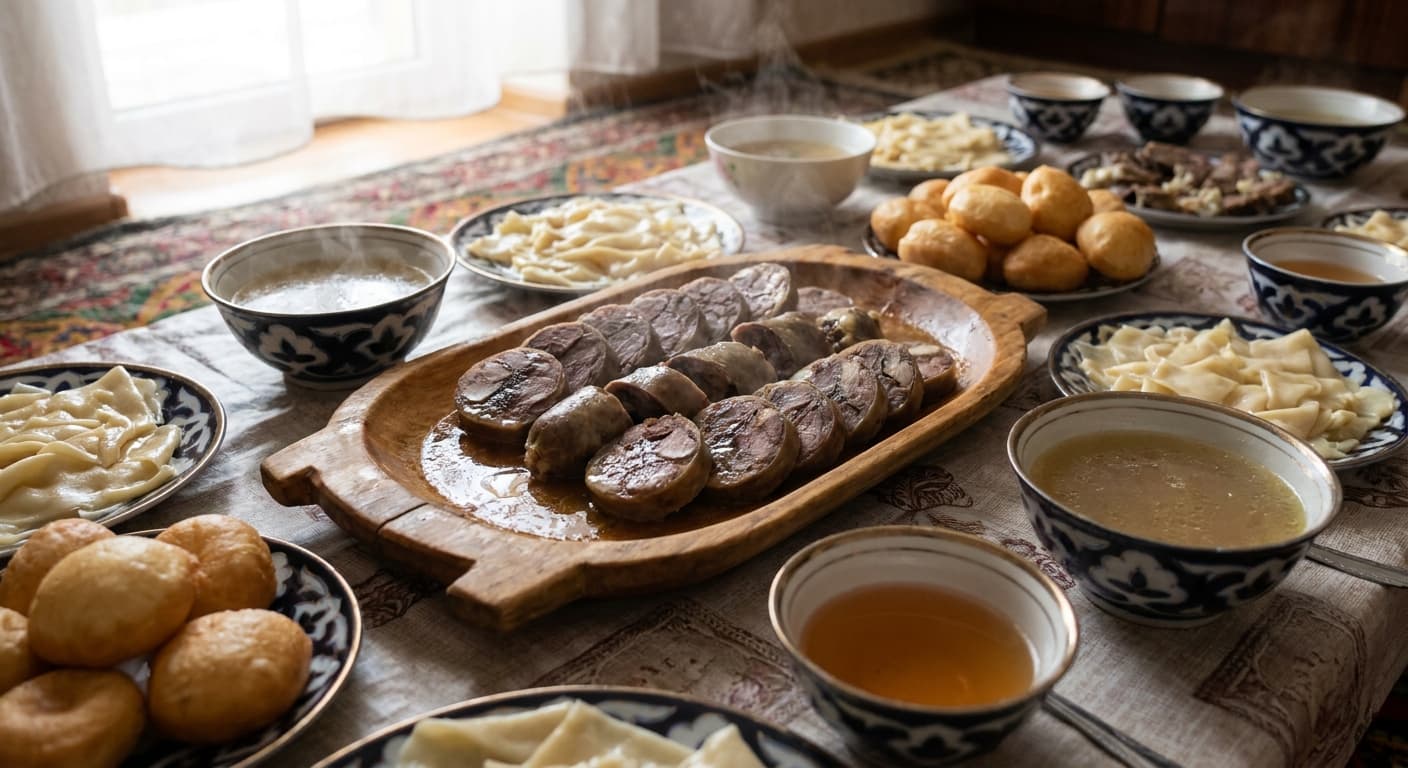
Kazy (Қазы) — Kazakh Horsemeat Rib Sausage
Kazakh · Appetizers · 240 min
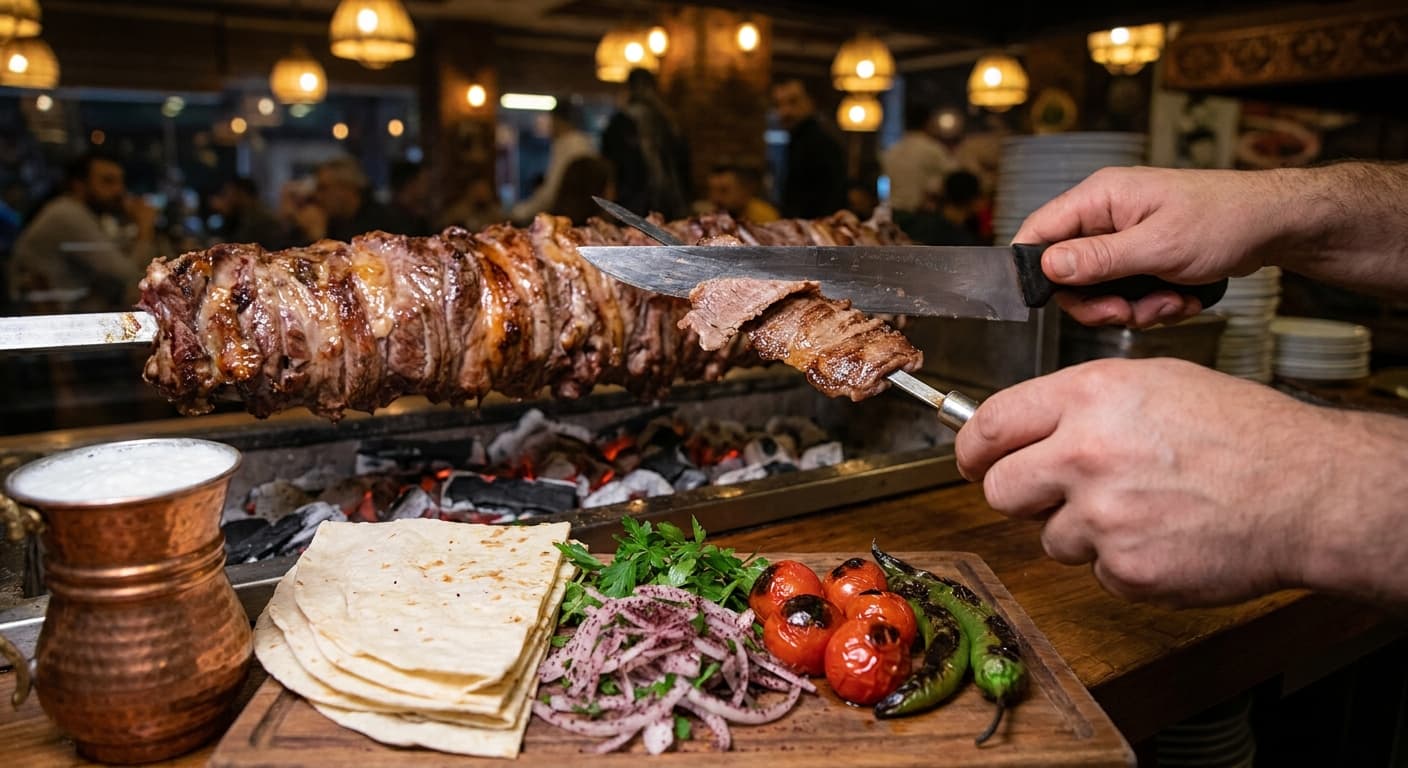
Turkish Cağ Kebab (Cağ Kebabı) — Erzurum Slow-Roasted Charcoal Lamb Skewer
Turkish · Kebabs · 160 min
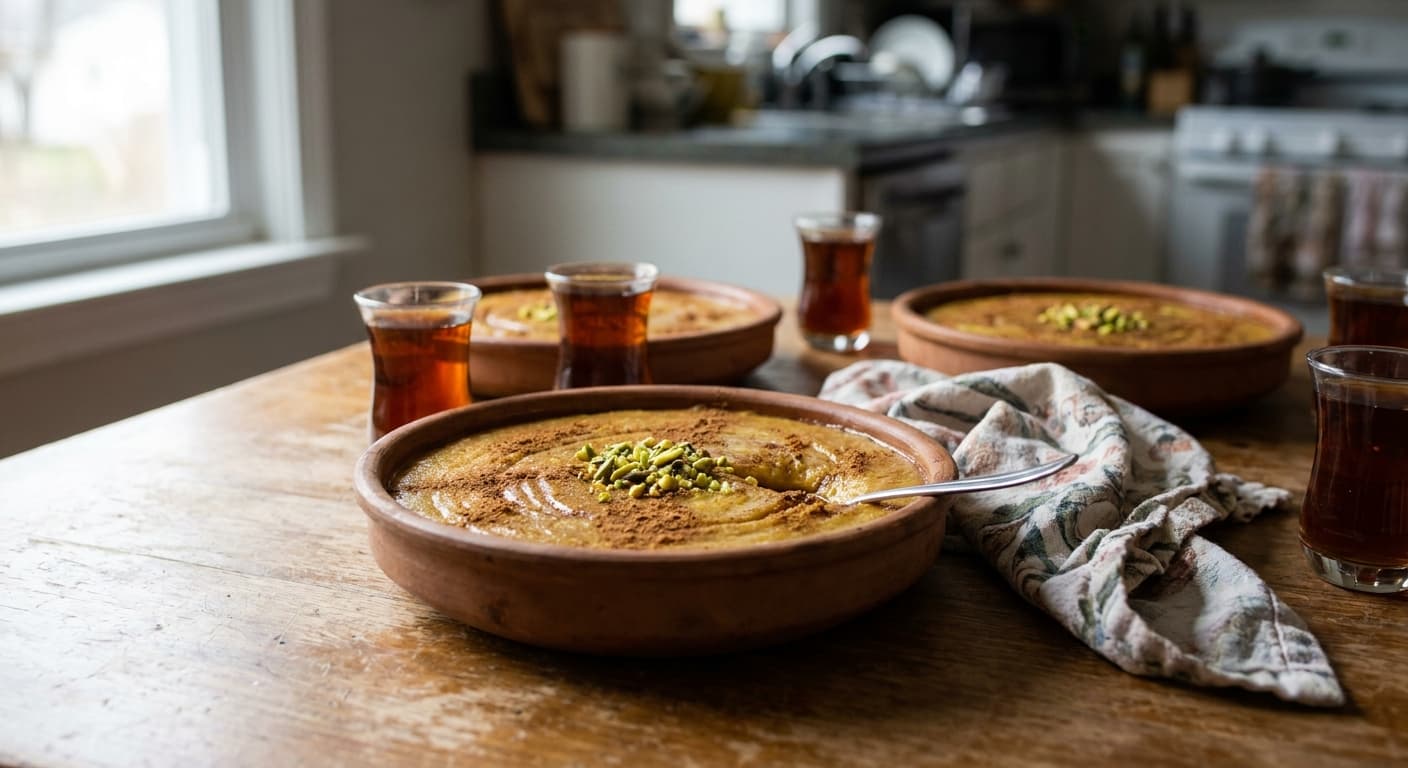
Persian Kachi (کاچی) — Saffron Rosewater Pudding
Persian · Desserts · 45 min
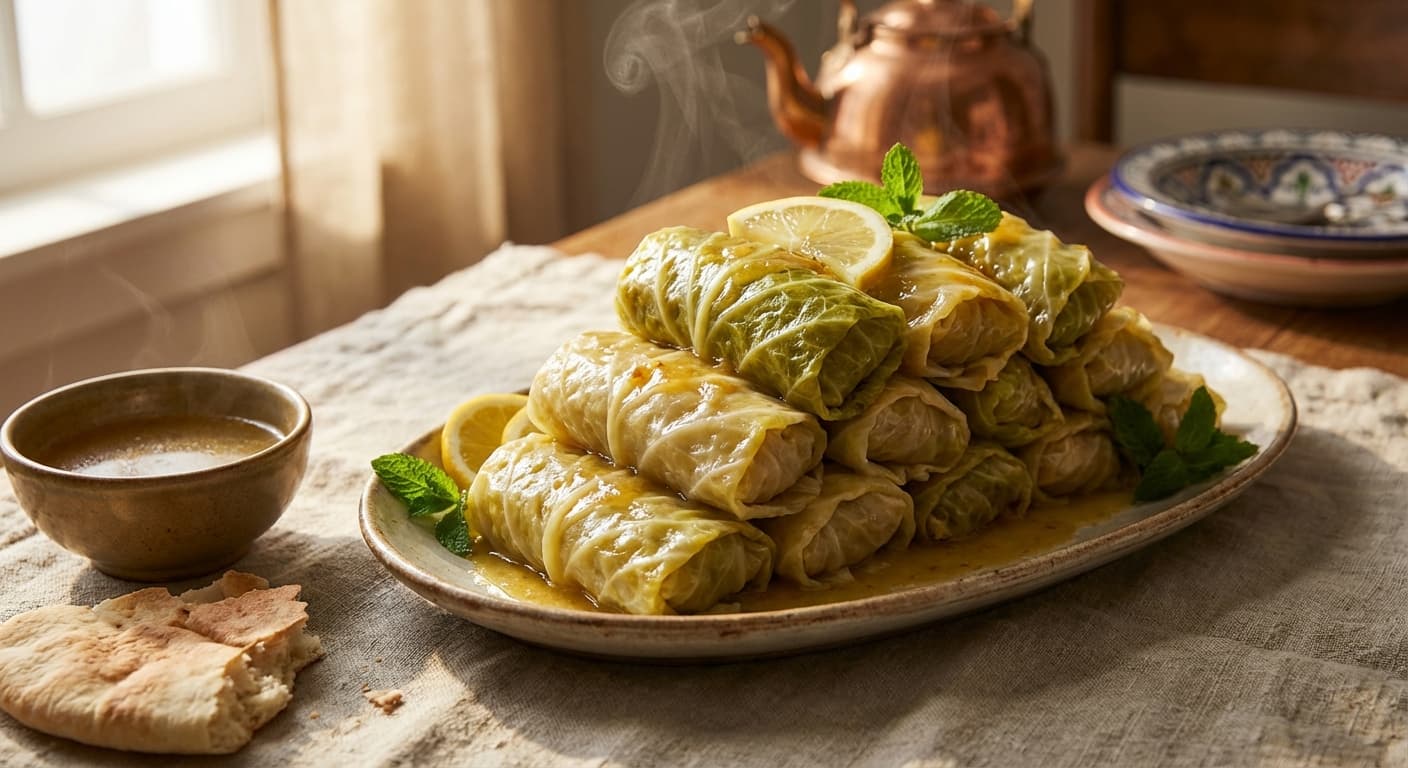
Malfouf Mahshi (ملفوف محشي) — Lebanese Stuffed Cabbage Rolls in Lemon-Garlic Broth
Lebanese · Main Courses · 120 min
Reviews
Cooked this recipe?
Tap the stars to rate it — that's all it takes. A few words are welcome but optional.
No ratings yet. Cooked this one? Be the first to rate it — it takes one tap.