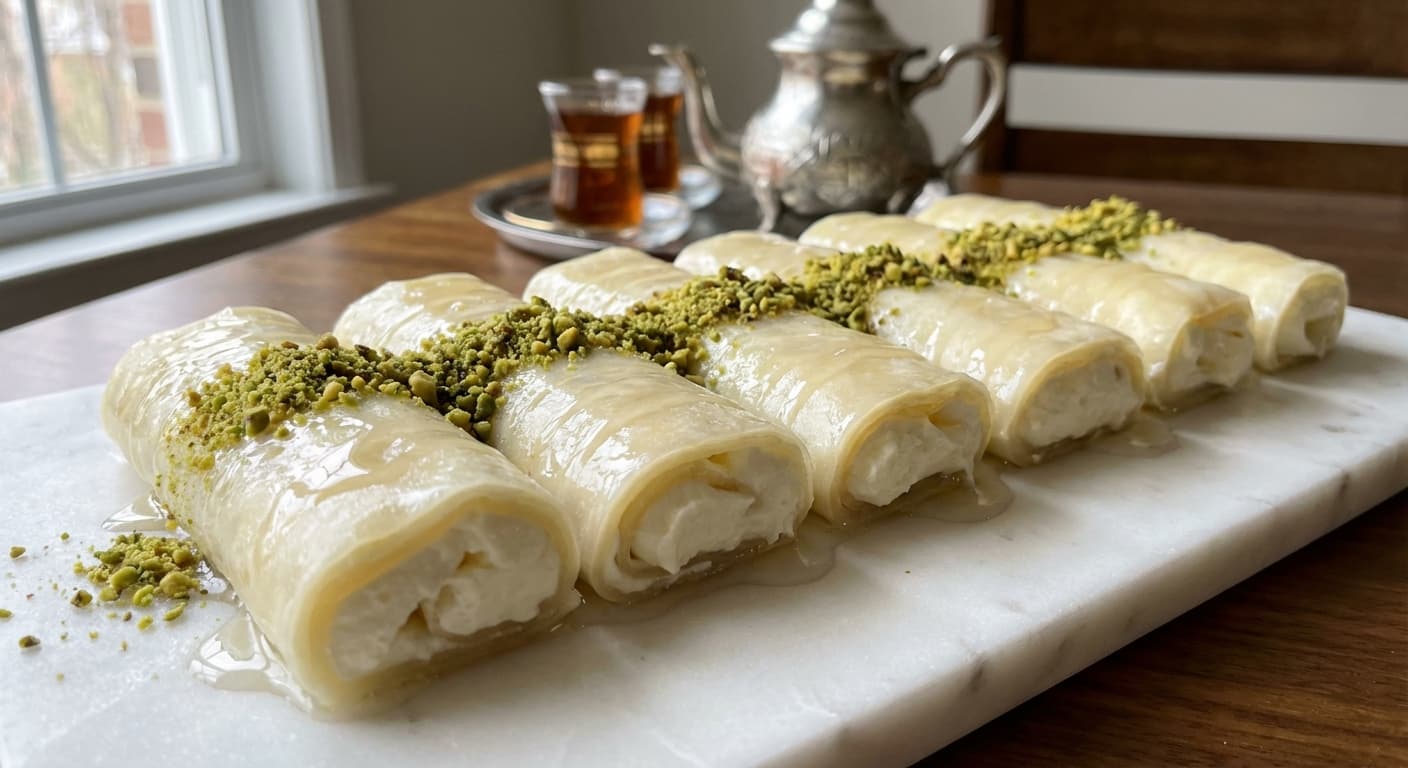
Halawet el Jibn (حلاوة الجبن) — Lebanese Sweet Cheese Rolls with Ashta
A beloved Lebanese pastry where a stretchy sweet cheese dough is rolled around silky ashta and finished with fragrant syrup. Often served in Levantine sweet shops, it highlights rose, orange blossom, and pistachio in a delicate, milky bite.
Printable Recipe Card
Servings: 8 · Total: 70 min · Difficulty: hard
Ingredients (quick list)
- 250 g Granulated sugar (For ater (syrup))
- 180 ml Water
- 10 ml Lemon juice (About 2 tsp)
- 5 ml Orange blossom water (1 tsp)
- 5 ml Rose water (1 tsp)
- 500 ml Whole milk
- 250 ml Heavy cream (35% fat)
- 35 g Cornstarch (About 4 tbsp)
- 300 g Fresh mozzarella (Low-moisture mozzarella also works; see substitutions)
- 200 g Akawi cheese (Desalted; see step 4)
- 160 g Semolina flour (Fine semolina (farina))
- 40 g Ground pistachios (Unsalted)
Steps (summary)
- Make the syrup first so it can cool completely. Combine the sugar and water in a small saucepan over medium heat and stir for 1…
- Prepare the ashta (cream filling) and chill it so it pipes cleanly. Whisk the milk, heavy cream, sugar, and cornstarch in a sau…
- Set up your work area before making the cheese dough because it must be shaped while warm. Line a tray with parchment and light…
- Desalt the akawi so the finished rolls taste milky-sweet instead of salty. Cut the akawi into small cubes, cover with 1000 ml w…
- Cook the semolina base to create the classic stretchy structure. In a wide nonstick pan, whisk the semolina, 240 ml water, and…
- Melt in the cheeses and knead until the dough becomes elastic and smooth. Reduce heat to low, add the mozzarella and desalted a…
+ 4 more steps in the full instructions section below.
Cultural Background
Halawet el Jibn is a hallmark of Levantine patisseries, especially in Lebanon and Syria, where it’s displayed as glossy white rolls crowned with pistachio. Its signature comes from the sweet cheese dough technique and the perfumed ater syrup used across the region’s festive desserts.
Equipment
💡 Tips
- Keep the syrup cool and the dough warm: cold syrup prevents melting the ashta, and warm dough prevents cracking during rolling.
- Roll between parchment sheets to avoid sticking and to keep the surface smooth without adding extra starch or flour.
- If the dough cools and stiffens, warm it for 10–15 seconds at a time in the microwave (covered) and knead briefly to restore elasticity.
⚠️ Common Mistakes
❌ Using hot syrup on the rolls
✅ Fix: Cool the syrup fully to room temperature before brushing or spooning so the ashta stays firm and the dough doesn’t turn gummy.
❌ Dough tearing while rolling
✅ Fix: Roll between parchment while warm, rest 2 minutes if it fights back, and avoid adding flour which makes the dough grainy.
❌ Over-salty finished dessert
✅ Fix: Soak akawi (or halloumi) twice and taste a small piece before using; if still salty, soak 10 minutes more and drain well.
🧊 How to Store
Refrigerate rolls in a single layer in an airtight container for up to 2 days. Keep syrup separate when possible and add just before serving to prevent softening. Serve cold or let sit 10 minutes at room temp; do not microwave or the ashta may melt and leak.
📅 Make Ahead
Make the syrup up to 7 days ahead and refrigerate, then bring to room temperature before serving. Cook the ashta up to 24 hours ahead and keep chilled with plastic wrap on the surface. Assemble the rolls up to 6 hours ahead and refrigerate, adding syrup and pistachio just before serving.
🍽️ Pairs Well With
- Arabic coffee
- mint tea
- fresh berries
- extra ater syrup.
Regional Variations
- Tripoli-style presentation often uses extra ashta on top and a heavier pistachio coating for a richer finish.
- Some Lebanese pastry shops replace part of the ashta with clotted cream for a denser, more luxurious filling.
- A modern variation adds a thin layer of crushed pistachio inside the roll before piping ashta for extra nuttiness.
Ingredients
- 250 gGranulated sugar (For ater (syrup))
- 180 mlWater
- 10 mlLemon juice (About 2 tsp)
- 5 mlOrange blossom water (1 tsp)
- 5 mlRose water (1 tsp)
- 500 mlWhole milk
- 250 mlHeavy cream (35% fat)
- 35 gCornstarch (About 4 tbsp)
- 300 gFresh mozzarella (Low-moisture mozzarella also works; see substitutions)
- 200 gAkawi cheese (Desalted; see step 4)
- 160 gSemolina flour (Fine semolina (farina))
- 40 gGround pistachios (Unsalted)
🔄 Substitutions
- Akawi cheese→ Halloumi (desalted by soaking) or a 50/50 mix of feta and mozzarella
- Fresh mozzarella→ Low-moisture mozzarella
- Cornstarch→ Rice starch
Instructions
- 1
Make the syrup first so it can cool completely. Combine the sugar and water in a small saucepan over medium heat and stir for 1 minute until the sugar dissolves, then stop stirring and bring to a steady simmer for 8 minutes. Add the lemon juice, simmer 1 minute more, then remove from heat and stir in the orange blossom water and rose water; cool to room temperature.
- 2
Prepare the ashta (cream filling) and chill it so it pipes cleanly. Whisk the milk, heavy cream, sugar, and cornstarch in a saucepan until perfectly smooth, then cook over medium heat, whisking constantly, for 6–8 minutes until thick and glossy like pastry cream. Off the heat, stir in the orange blossom water and rose water, spread into a shallow dish, cover the surface directly with plastic wrap, and refrigerate for at least 30 minutes.
- 3
Set up your work area before making the cheese dough because it must be shaped while warm. Line a tray with parchment and lightly brush it with a few drops of syrup to prevent sticking, then place another sheet of parchment ready for rolling. Fit a piping bag with a 12–14 mm round tip (or cut a 12 mm opening) and refrigerate it until needed.
- 4
Desalt the akawi so the finished rolls taste milky-sweet instead of salty. Cut the akawi into small cubes, cover with 1000 ml water, and soak 20 minutes, then drain and squeeze gently; repeat the soak once more for 20 minutes and drain well. Pat dry so excess water does not weaken the dough.
- 5
Cook the semolina base to create the classic stretchy structure. In a wide nonstick pan, whisk the semolina, 240 ml water, and 60 g sugar until no lumps remain, then cook over medium heat for 6–7 minutes, stirring constantly with a sturdy spatula, until it forms a thick, glossy paste that pulls away from the pan. Stir in the rose water and orange blossom water and cook 30 seconds more to bloom the aroma.
- 6
Melt in the cheeses and knead until the dough becomes elastic and smooth. Reduce heat to low, add the mozzarella and desalted akawi, and stir continuously for 3–5 minutes until fully melted and the mixture turns stretchy and cohesive. Transfer to a lightly syrup-brushed parchment sheet, cover with another parchment sheet, and rest 5 minutes so it is warm but manageable.
- 7
Roll the dough into a thin rectangle while it is still warm and pliable. Using a rolling pin over the parchment, roll to about 3 mm thickness into a rectangle roughly 30 x 40 cm, lifting the parchment occasionally to prevent creases. If the dough resists or tears, let it rest 2 minutes and continue rolling gently rather than forcing it.
- 8
Trim and portion the dough for neat rolls. Trim the edges to square the rectangle, then cut it into 8 equal strips about 5 cm wide and 40 cm long. Keep the strips covered with parchment so they do not dry out while you fill.
- 9
Fill with chilled ashta and roll into logs with even thickness. Transfer the cold ashta to the piping bag and pipe a continuous line down the center of each strip, using about 55–60 g ashta per roll for consistent results. Roll each strip around the filling, seam-side down, and gently press the seam to seal without squeezing out the cream.
- 10
Finish in the traditional sweet-shop style with syrup and pistachio. Spoon 20 ml of cooled syrup over each serving (or brush lightly for a drier finish), then sprinkle ground pistachios along the top. Chill 15 minutes before serving so the rolls slice cleanly and the flavors of rose and orange blossom settle.
🪪 Recipe Passport
Cultural Background
Halawet el Jibn is a hallmark of Levantine patisseries, especially in Lebanon and Syria, where it’s displayed as glossy white rolls crowned with pistachio. Its signature comes from the sweet cheese dough technique and the perfumed ater syrup used across the region’s festive desserts.
Regional Variations
Researched from multiple sources and validated by the Zaffaron editorial team. Every recipe is tested for accuracy, measurements, and cultural authenticity.
Nutrition per serving
Pairs well with
If you enjoyed this recipe, here are a few related Zaffaron recipes to try next.
Does your family make this differently?
Every family has their own version. Maybe your grandmother adds a secret ingredient, or your aunt has a completely different technique. Preserve your family's version — with their name on it, forever.
You Might Also Like
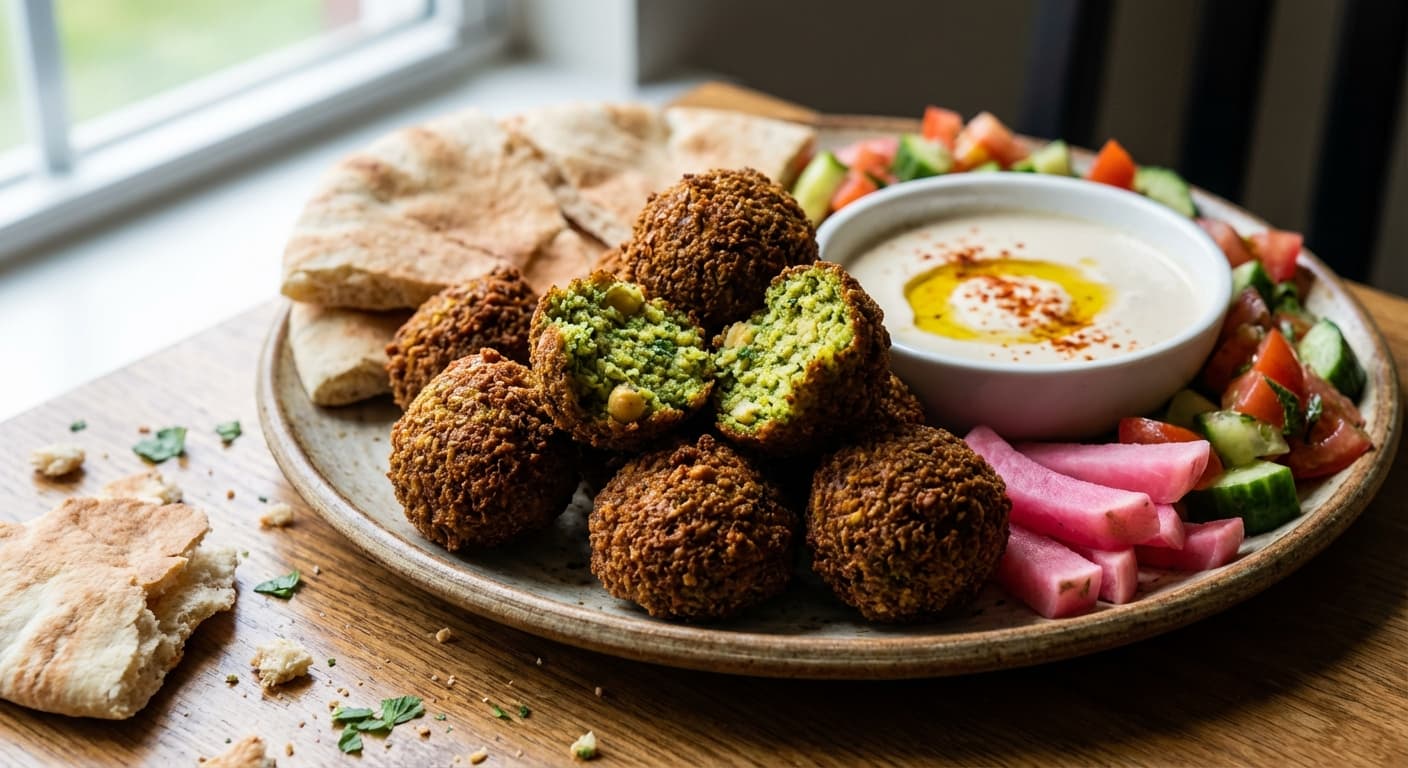
Authentic Falafel Khaneghi (فلافل خانگی) — Crispy Herb-Flecked Chickpea Fritters
Lebanese · Appetizers · 40 min
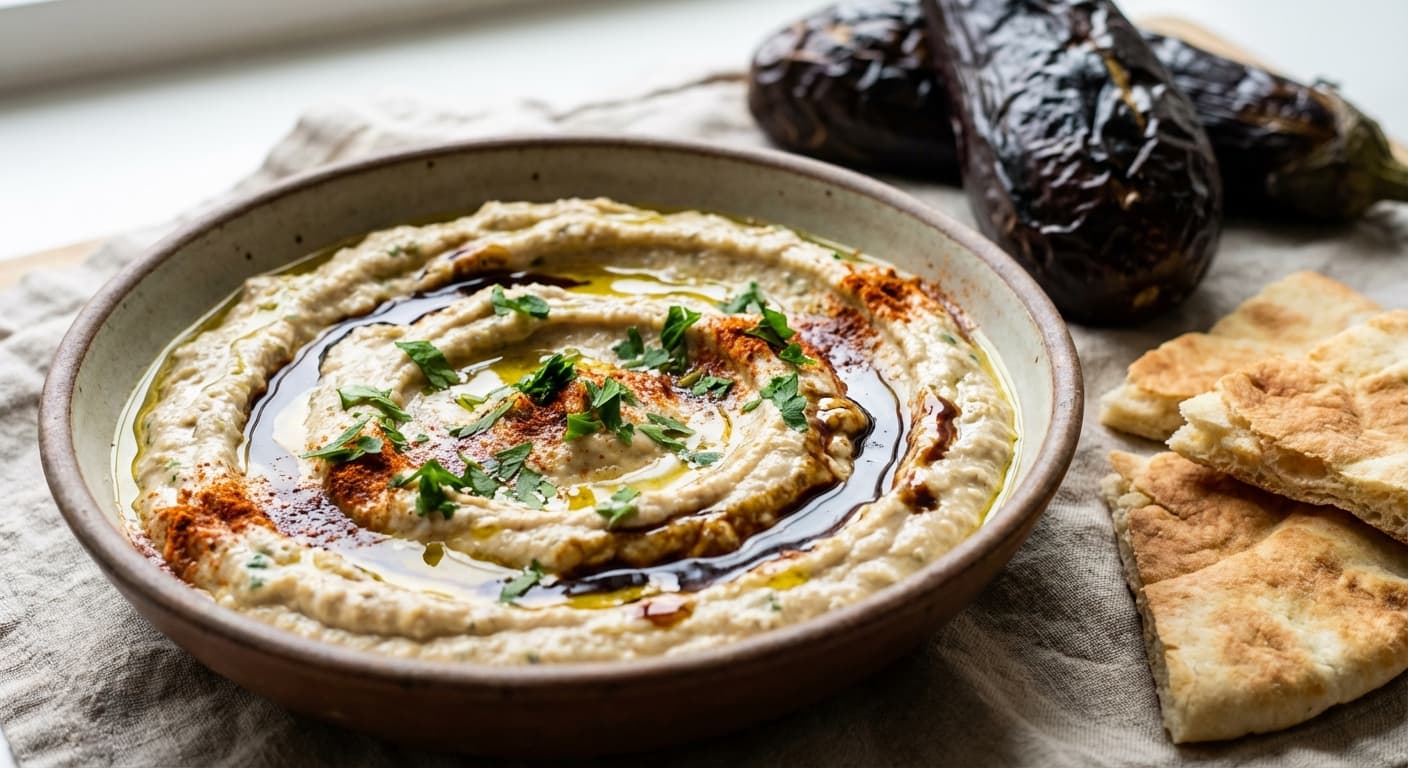
Smoky Muttabal Ba Badenjan with Kashk (متبل باذنجان) — Charred Eggplant Dip with Tangy Fermented Depth
Lebanese · Appetizers · 70 min
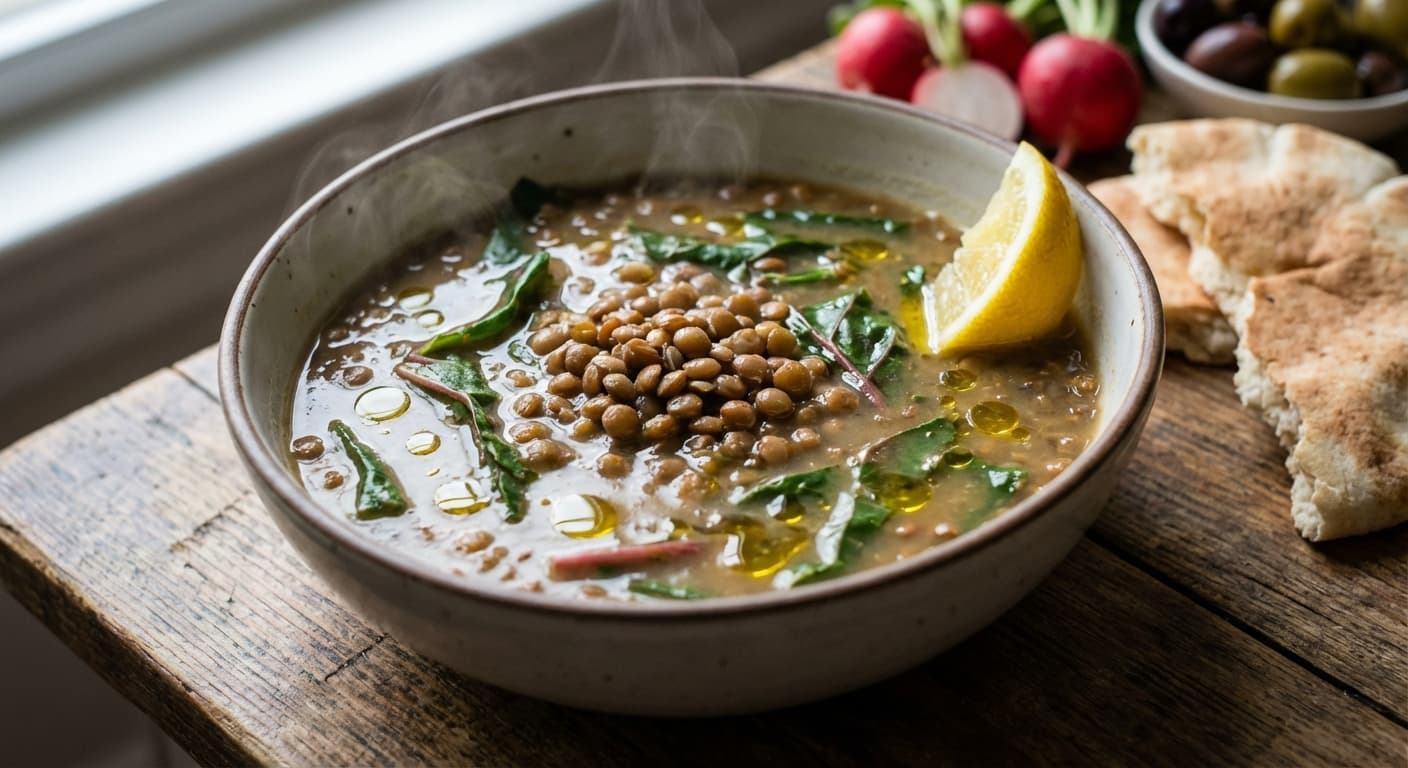
Adas bil Hamod (عدس بالحامض) — Lebanese Lentil Soup with Swiss Chard and Lemon
Lebanese · Soups · 60 min
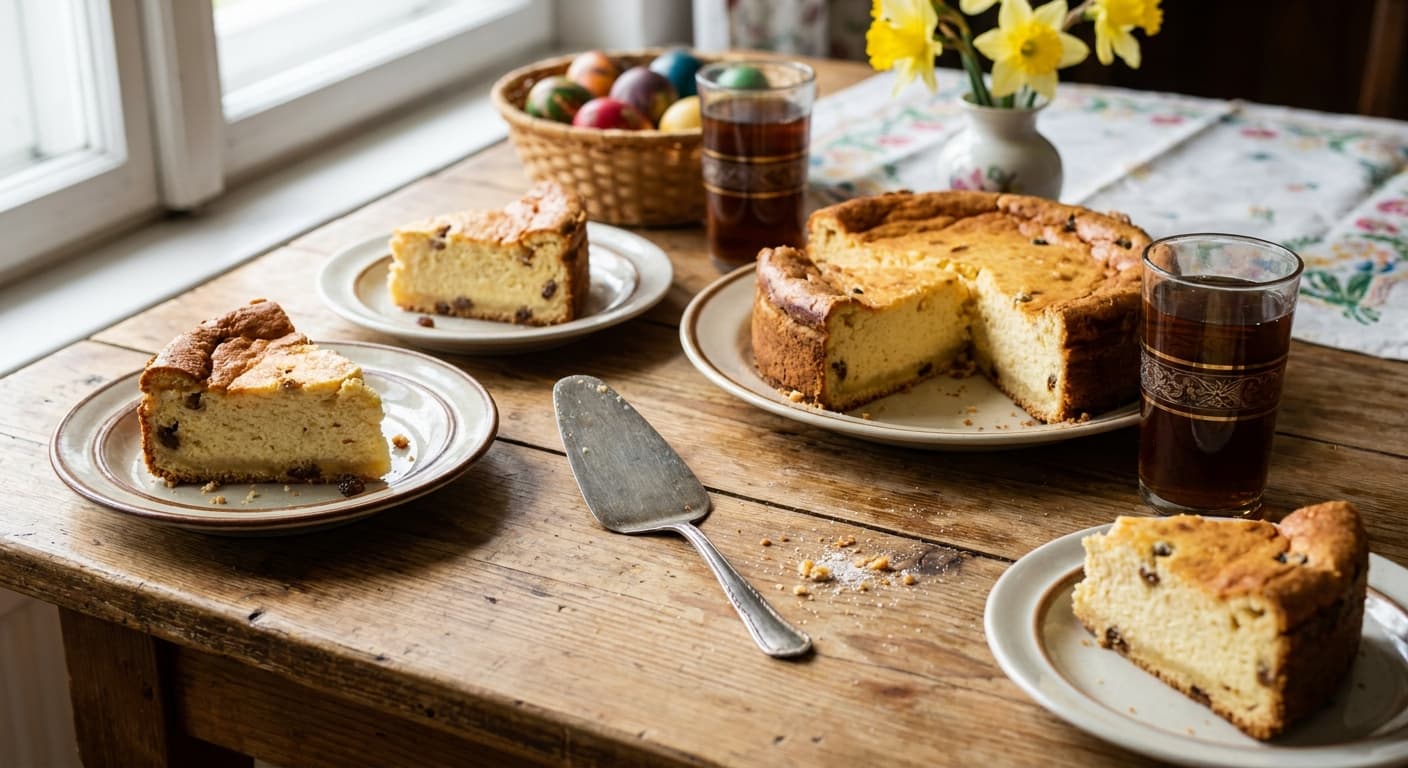
Sernik (Sernik) — Polish Baked Twarog Cheesecake
Polish · Desserts · 105 min
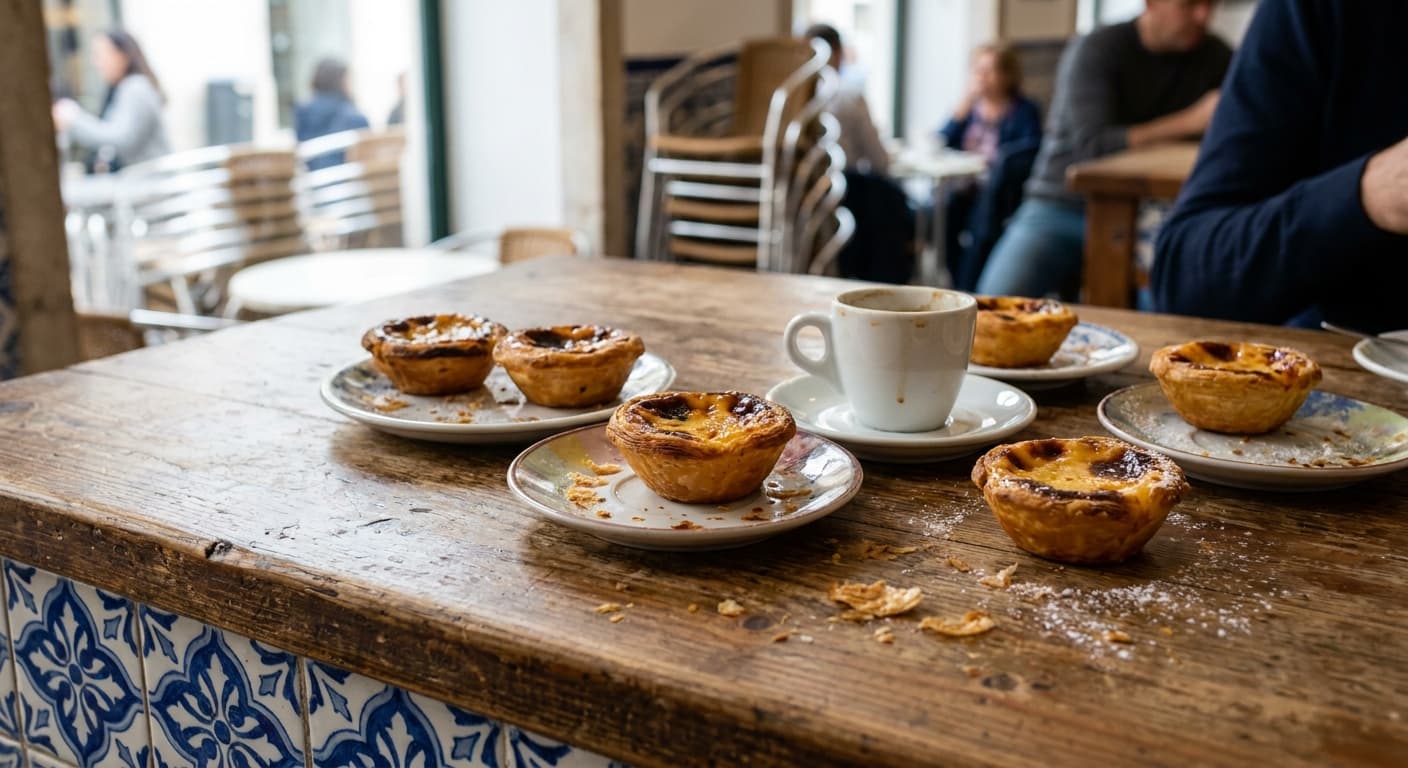
Portuguese Custard Tarts (Pastéis de Nata) — Flaky Lisbon-Style Custard Pastries
Portuguese · Desserts · 87 min
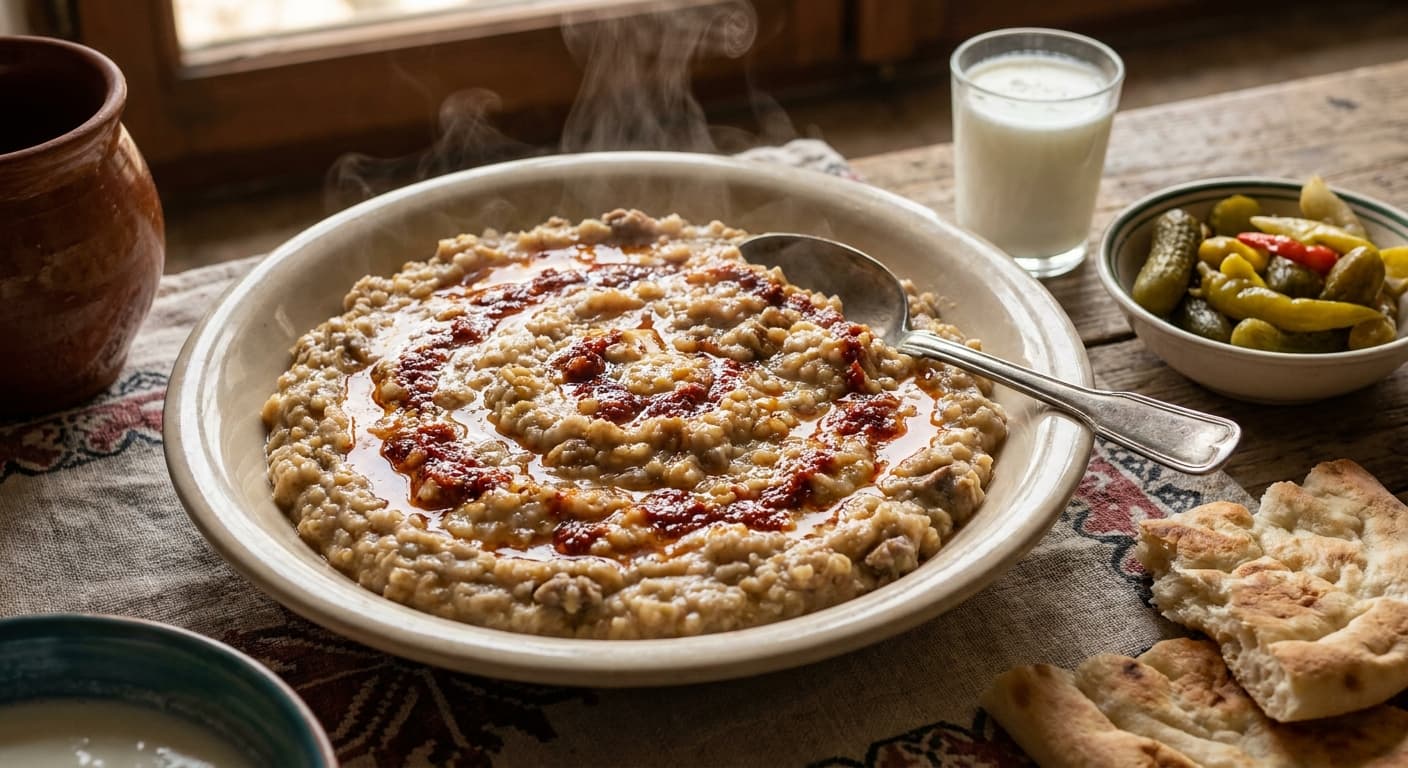
Keshkek (Keşkek) — Creamy Ceremonial Wheat and Lamb Stew
Turkish · Stews · 240 min
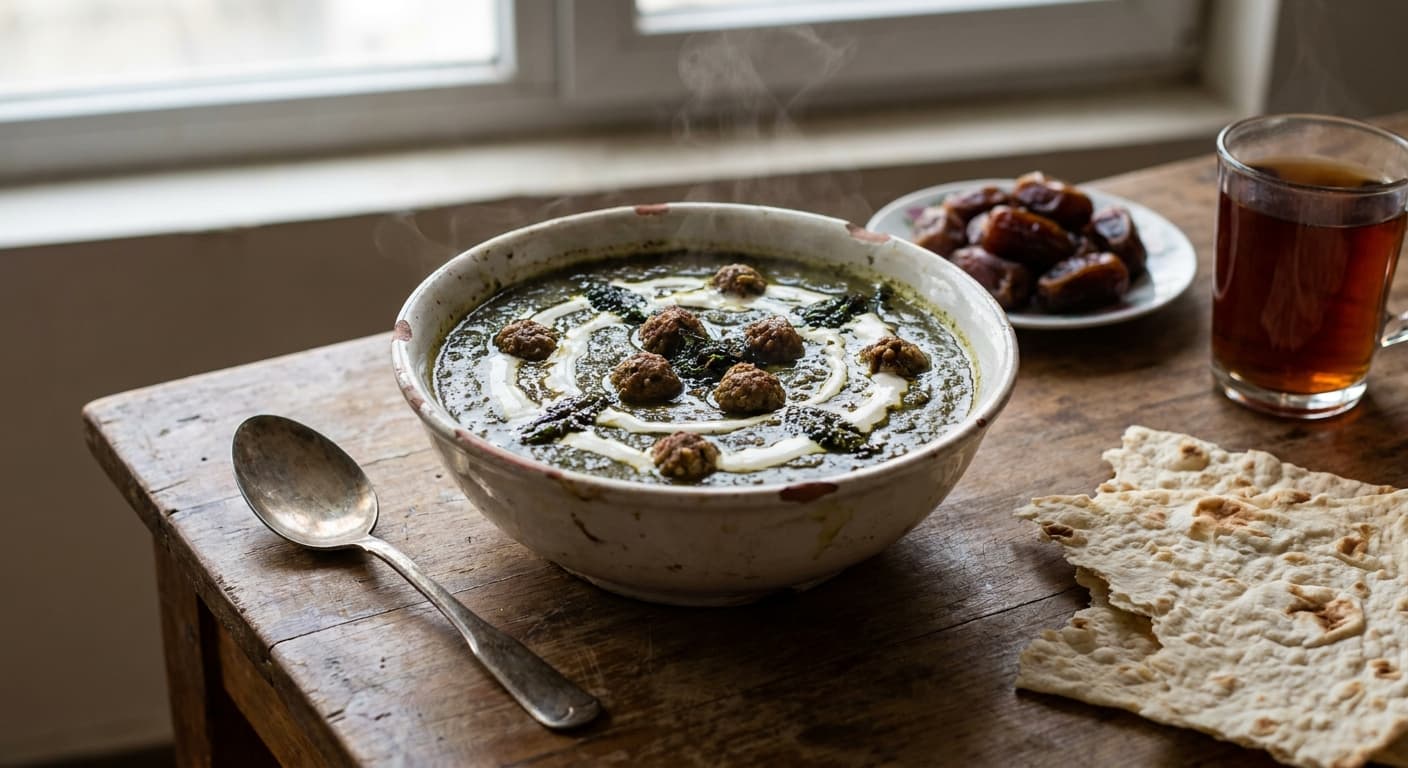
Ash-e Sak (آش ساک) — Golestani Spinach, Legume, and Meatball Soup
Persian · Soups · 175 min
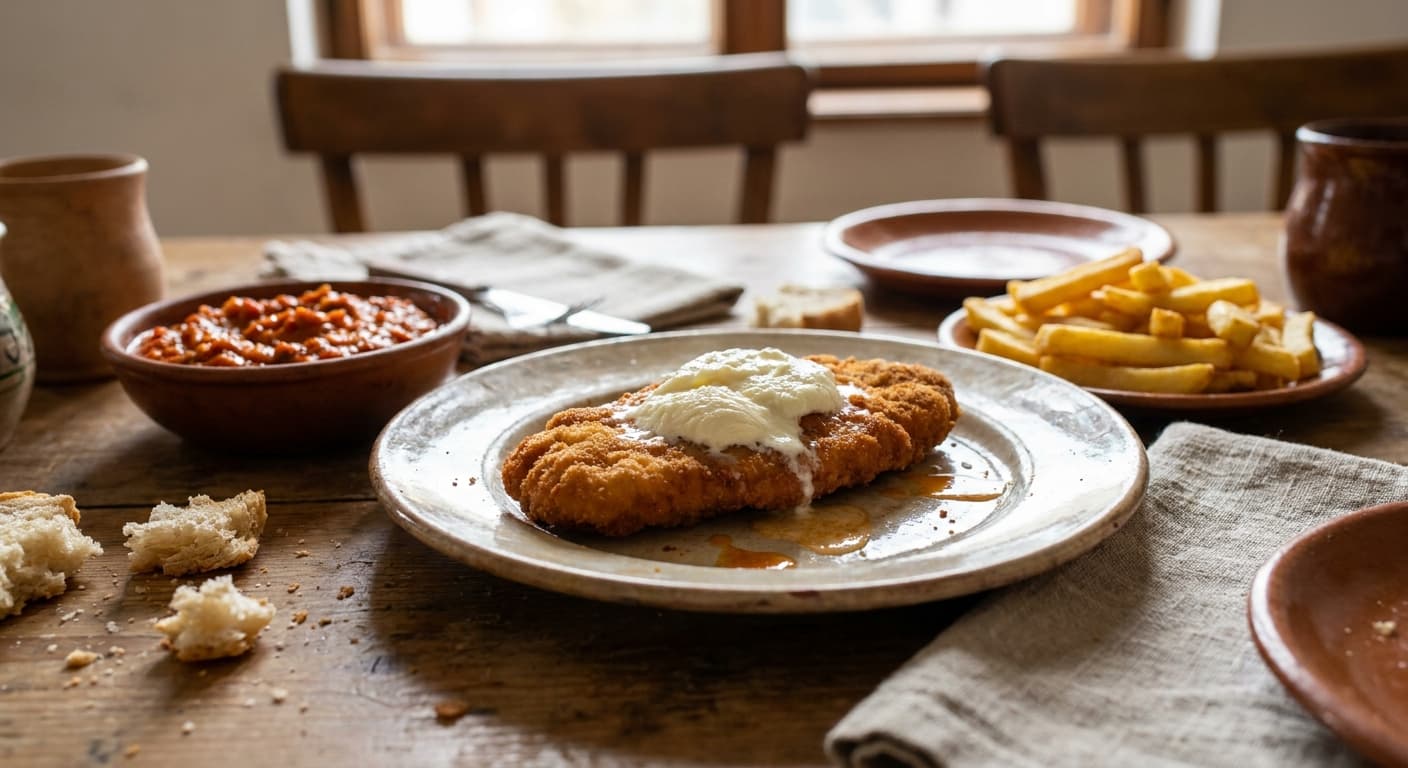
Karadjordje's Schnitzel (Карађорђева шницла) — Serbian Kajmak-Filled Cutlet
Serbian · Main Courses · 48 min
Reviews
Cooked this recipe?
Tap the stars to rate it — that's all it takes. A few words are welcome but optional.
No ratings yet. Cooked this one? Be the first to rate it — it takes one tap.