Georgian Khinkali (ხინკალი) — Juicy Meat Soup Dumplings
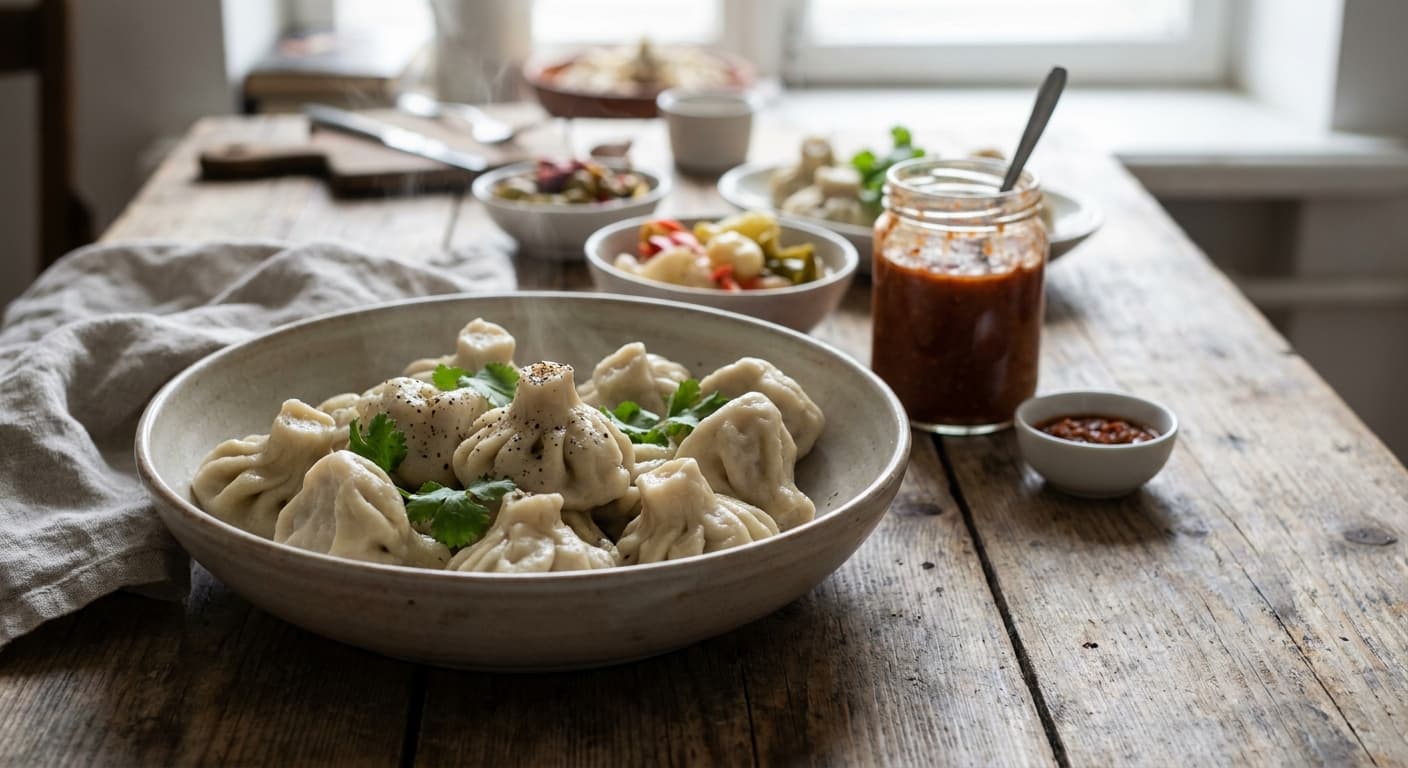
Khinkali are Georgian pleated dumplings filled with spiced meat and broth. They are a beloved mountain-origin dish now served at family tables, taverns, and supra feasts across Georgia.
Printable Recipe Card
Servings: 6 · Total: 100 min · Difficulty: medium
Ingredients (quick list)
- 600 g all-purpose flour
- 300 ml cool water
- 10 g fine sea salt
- 500 g ground beef (20 percent fat is ideal)
- 300 g ground pork shoulder
- 250 g yellow onion (finely minced)
- 2 clove garlic (grated)
- 25 g fresh cilantro (finely chopped)
- 15 g flat-leaf parsley (finely chopped)
- 3 g freshly ground black pepper
- 2 tsp ground coriander
- 1 tsp ground caraway (Georgian dzira-style flavor)
+ 3 more in the full ingredients section below.
Steps (summary)
- Make the dough by combining the flour and 10 g salt in a large bowl, then pour in 300 ml cool water. Mix until shaggy, knead fo…
- Prepare the filling while the dough rests. Combine the beef, pork, onion, garlic, cilantro, parsley, 12 g salt, black pepper, c…
- Divide the rested dough into 24 equal pieces of about 37 g each. Roll each piece into a thin round about 14 cm wide, keeping th…
- Place about 45 g of filling in the center of one wrapper. Lift the edge and pleat it around the filling, making 18 to 22 folds…
- Set each shaped khinkali on a lightly floured tray without letting them touch. Keep them covered with a clean towel while you s…
- Bring 4 l water and 30 g salt to a lively boil in a wide pot. Lower the heat slightly, add 8 khinkali at a time, and stir gentl…
+ 2 more steps in the full instructions section below.
Cultural Background
Khinkali are associated with Georgia’s mountain regions, especially areas such as Khevi, Mtiuleti, and Tusheti, then spread into urban tavern culture. Their pleats, broth, and hand-held eating ritual are central to the experience.
Equipment
💡 Tips
- Do not reduce the water in the filling; the loose mixture creates the signature broth inside each dumpling.
- Roll the wrapper edges thinner than the center so the pleated top is not overly doughy.
- Boil khinkali in batches in a wide pot, because crowded dumplings tear and release their juice.
⚠️ Common Mistakes
❌ Using a stiff, dry filling
✅ Fix: Mix in the full 300 ml ice-cold water gradually until the filling is loose enough to form broth inside the dumpling.
❌ Rolling wrappers too small or too thick
✅ Fix: Roll each wrapper to about 14 cm wide and keep the edges thin so the pleated top cooks through.
❌ Boiling too many dumplings at once
✅ Fix: Cook in batches of about 8 in a wide pot so the khinkali can move freely without tearing.
🧊 How to Store
Cooked khinkali are best eaten immediately, while the broth is trapped inside. Refrigerate leftovers in a covered container for up to 2 days and reheat by steaming for 6 minutes; microwaving often toughens the dough.
📅 Make Ahead
The dough and filling can be prepared up to 12 hours ahead and refrigerated separately. Shape khinkali shortly before boiling, or freeze shaped dumplings on a tray and boil from frozen.
🍽️ Pairs Well With
- Freshly ground black pepper
- Georgian pickles
- tomato and cucumber salad
- tkemali
- dry red Georgian wine.
Regional Variations
- Khevsuruli khinkali are often made without herbs, emphasizing meat, onion, pepper, and broth.
- Kalakuri khinkali, common in cities such as Tbilisi, include cilantro and parsley for a fresher aroma.
- Mushroom khinkali use chopped mushrooms and onion instead of meat, creating a popular fasting or vegetarian version.
Ingredients
- 600 gall-purpose flour
- 300 mlcool water
- 10 gfine sea salt
- 500 gground beef (20 percent fat is ideal)
- 300 gground pork shoulder
- 250 gyellow onion (finely minced)
- 2 clovegarlic (grated)
- 25 gfresh cilantro (finely chopped)
- 15 gflat-leaf parsley (finely chopped)
- 3 gfreshly ground black pepper
- 2 tspground coriander
- 1 tspground caraway (Georgian dzira-style flavor)
- 0.5 tspred chile flakes
- 300 mlice-cold water
- 4 lwater
🔄 Substitutions
- ground pork shoulder→ ground lamb
- ground caraway→ ground cumin
- fresh cilantro→ additional flat-leaf parsley
Instructions
- 1
Make the dough by combining the flour and 10 g salt in a large bowl, then pour in 300 ml cool water. Mix until shaggy, knead for 10 minutes until firm and smooth, then cover and rest for 30 minutes so the gluten relaxes.
- 2
Prepare the filling while the dough rests. Combine the beef, pork, onion, garlic, cilantro, parsley, 12 g salt, black pepper, coriander, caraway, and chile flakes, then gradually mix in 300 ml ice-cold water until the meat looks loose, glossy, and spoonable.
- 3
Divide the rested dough into 24 equal pieces of about 37 g each. Roll each piece into a thin round about 14 cm wide, keeping the center slightly thicker than the edges so the dumpling can hold its broth.
- 4
Place about 45 g of filling in the center of one wrapper. Lift the edge and pleat it around the filling, making 18 to 22 folds if possible, then twist the gathered top firmly to seal and create the traditional knob.
- 5
Set each shaped khinkali on a lightly floured tray without letting them touch. Keep them covered with a clean towel while you shape the rest, because dry edges can crack during boiling.
- 6
Bring 4 l water and 30 g salt to a lively boil in a wide pot. Lower the heat slightly, add 8 khinkali at a time, and stir gently in one direction for the first minute so they do not stick to the bottom.
- 7
Boil each batch for 8 to 10 minutes after the dumplings float and the dough turns satiny. Lift them out with a slotted spoon, drain well, and transfer immediately to a large warm platter.
- 8
Serve khinkali very hot with plenty of freshly ground black pepper. Eat them by holding the top knot, biting a small opening, sipping the broth first, then eating the dumpling while usually leaving the thick knob behind.
🪪 Recipe Passport
Cultural Background
Khinkali are associated with Georgia’s mountain regions, especially areas such as Khevi, Mtiuleti, and Tusheti, then spread into urban tavern culture. Their pleats, broth, and hand-held eating ritual are central to the experience.
Regional Variations
Researched from multiple sources and validated by the Zaffaron editorial team. Every recipe is tested for accuracy, measurements, and cultural authenticity.
📚 Sources & Cultural References
- Darra Goldstein — The Georgian Feast — (1993)
- Carla Capalbo — Tasting Georgia: A Food and Wine Journey in the Caucasus — (2017)
Sources cited by the Zaffaron editorial team during recipe research. Cultural and culinary references supporting authenticity claims.
Nutrition per serving
Pairs well with
If you enjoyed this recipe, here are a few related Zaffaron recipes to try next.
Does your family make this differently?
Every family has their own version. Maybe your grandmother adds a secret ingredient, or your aunt has a completely different technique. Preserve your family's version — with their name on it, forever.
You Might Also Like
Chakapuli (ჩაქაფული) — Georgian Spring Lamb, Tarragon, and Sour Plum Stew
Georgian · Stews · 135 min
Satsivi (საცივი) — Georgian Chicken in Walnut Sauce
Georgian · Main Courses · 105 min
Georgian Khachapuri Adjaruli (აჭარული ხაჭაპური) — Boat-Shaped Cheese Bread
Georgian · Breads · 53 min
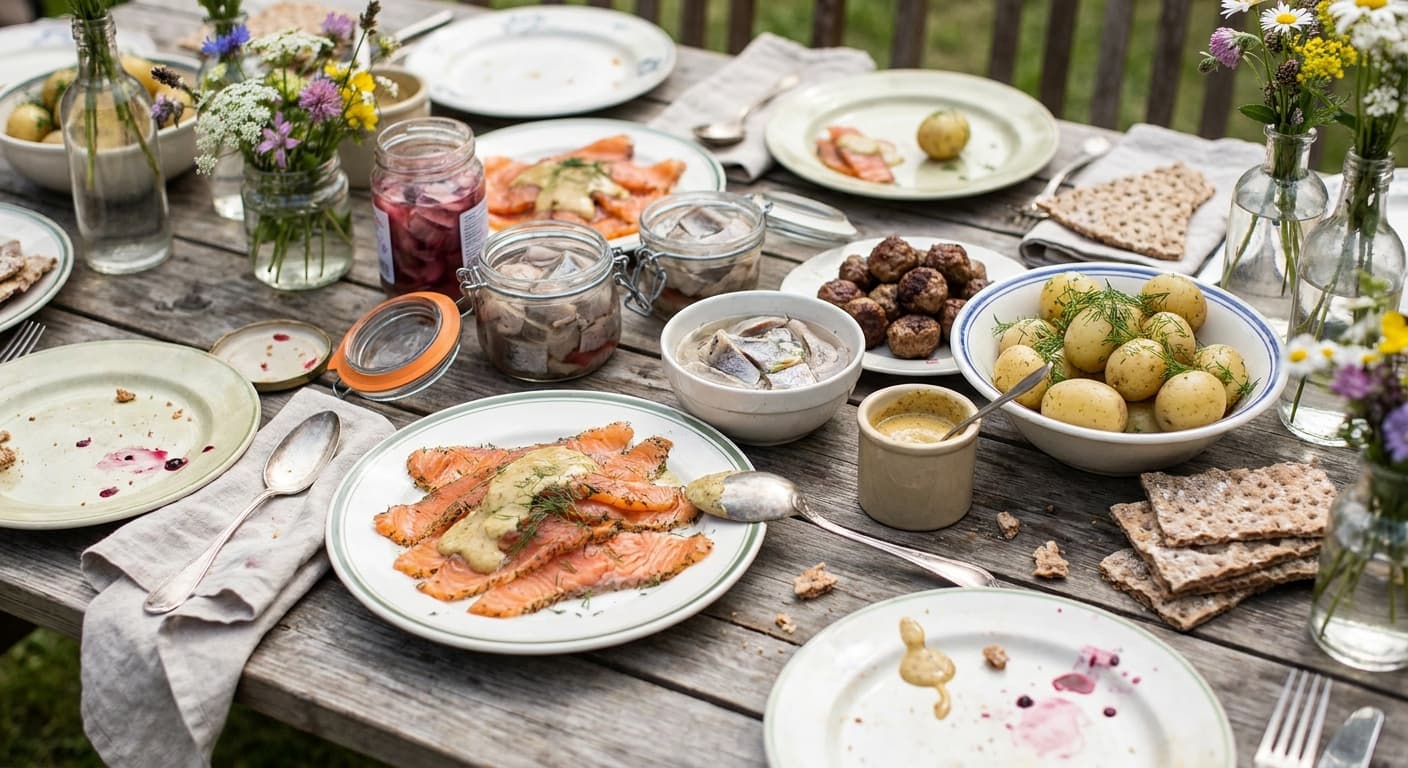
Swedish Smörgåsbord (Smörgåsbord) — Classic Buffet with Gravlax, Sill, and Köttbullar
Swedish · Main Courses · 115 min
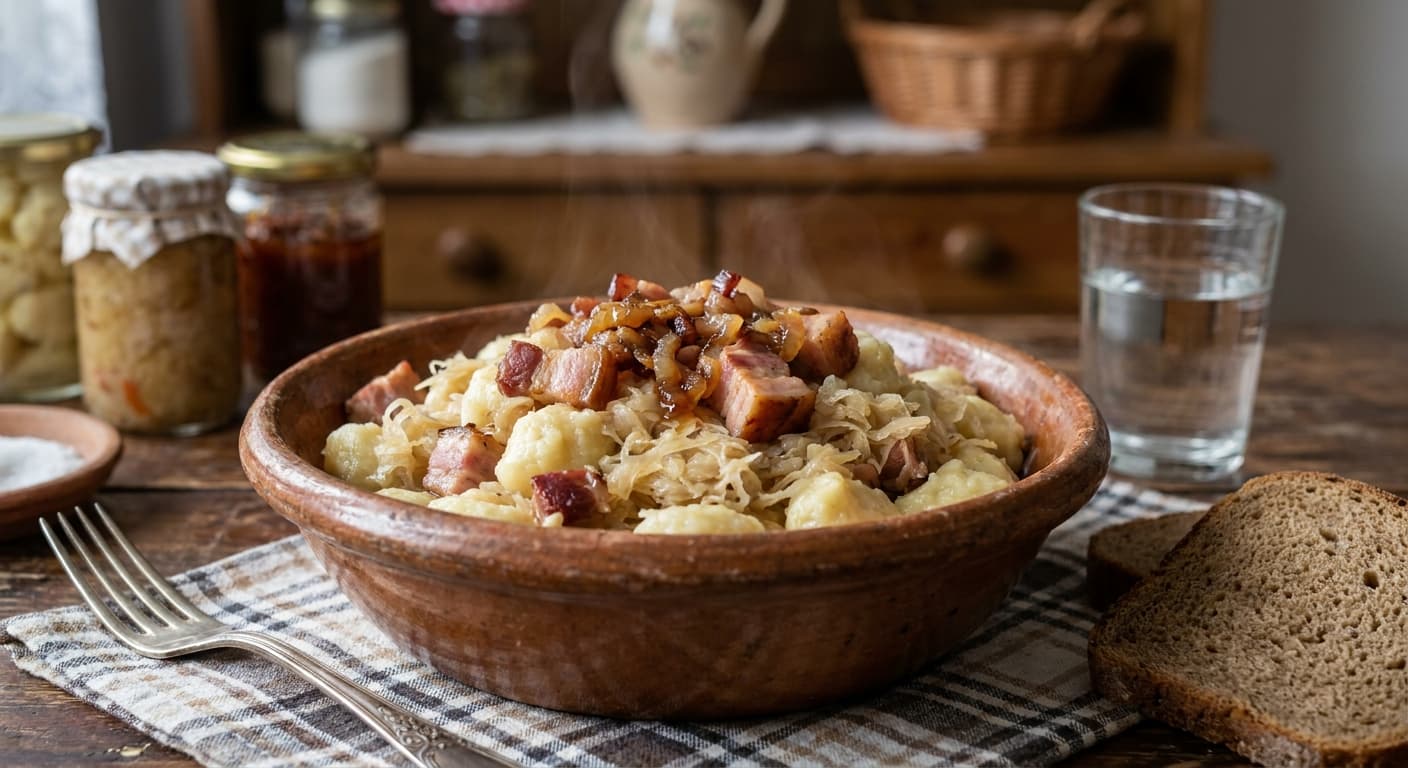
Potato Dumplings with Smoked Meat (Strapačky s údeným mäsom) — Rustic Slovak Halušky with Sauerkraut
Slovak · Main Courses · 70 min
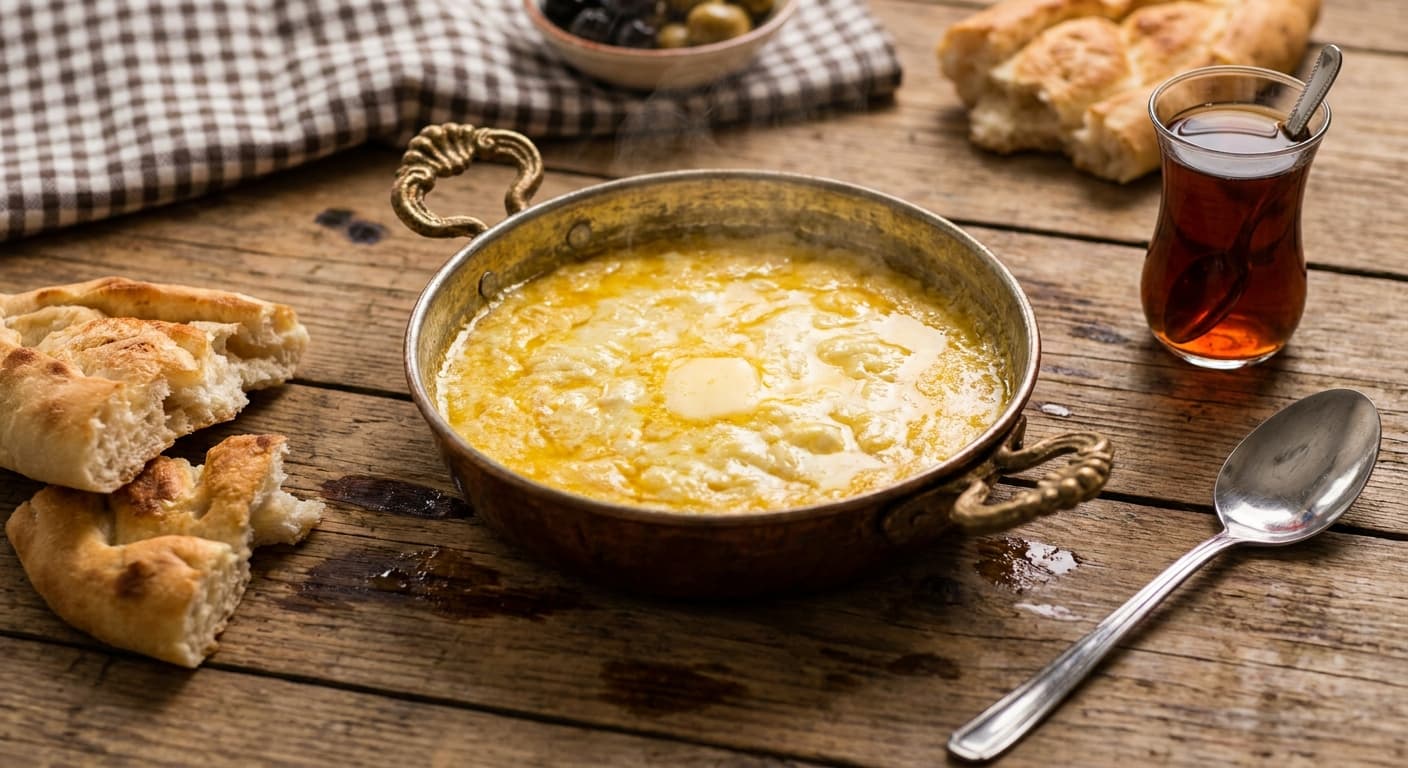
Mıhlama (Mıhlama) — Black Sea Cornmeal and Cheese Skillet
Turkish · Main Courses · 25 min
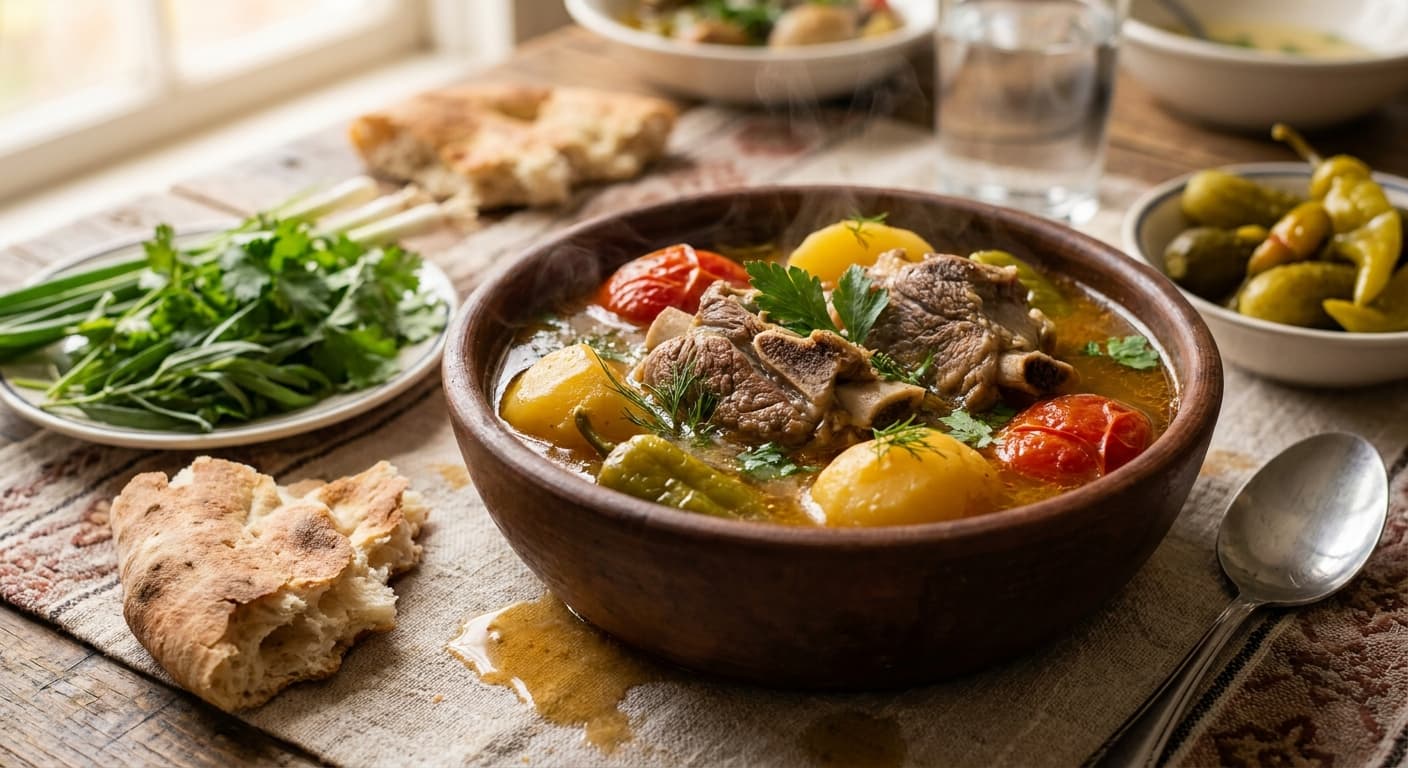
Khashlama (Խաշլամա) — Armenian Lamb and Vegetable Stew
Armenian · Stews · 160 min
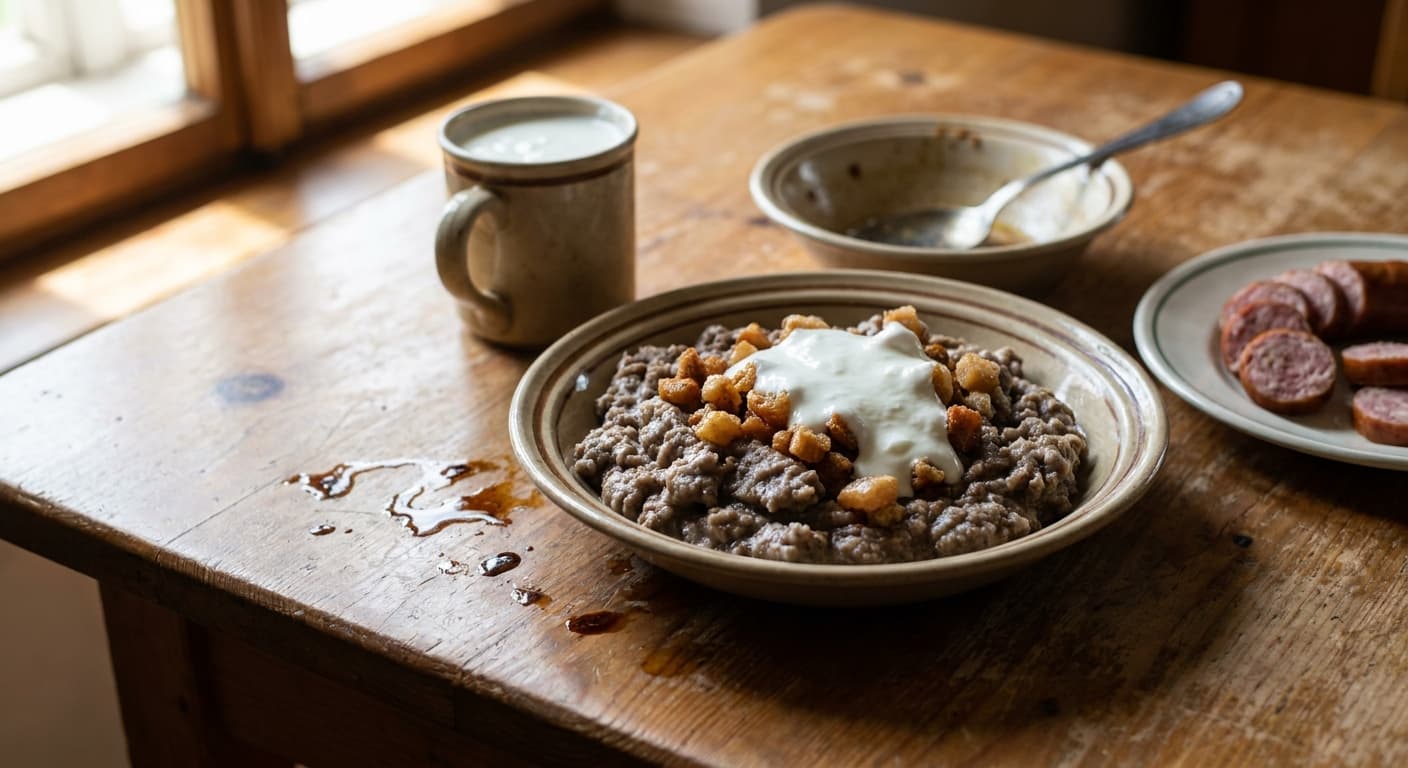
Buckwheat Žganci (Ajdovi žganci) — Slovenian Buckwheat Crumbs with Cracklings
Slovenian · Side Dishes · 45 min
Reviews
Cooked this recipe?
Tap the stars to rate it — that's all it takes. A few words are welcome but optional.
No ratings yet. Cooked this one? Be the first to rate it — it takes one tap.