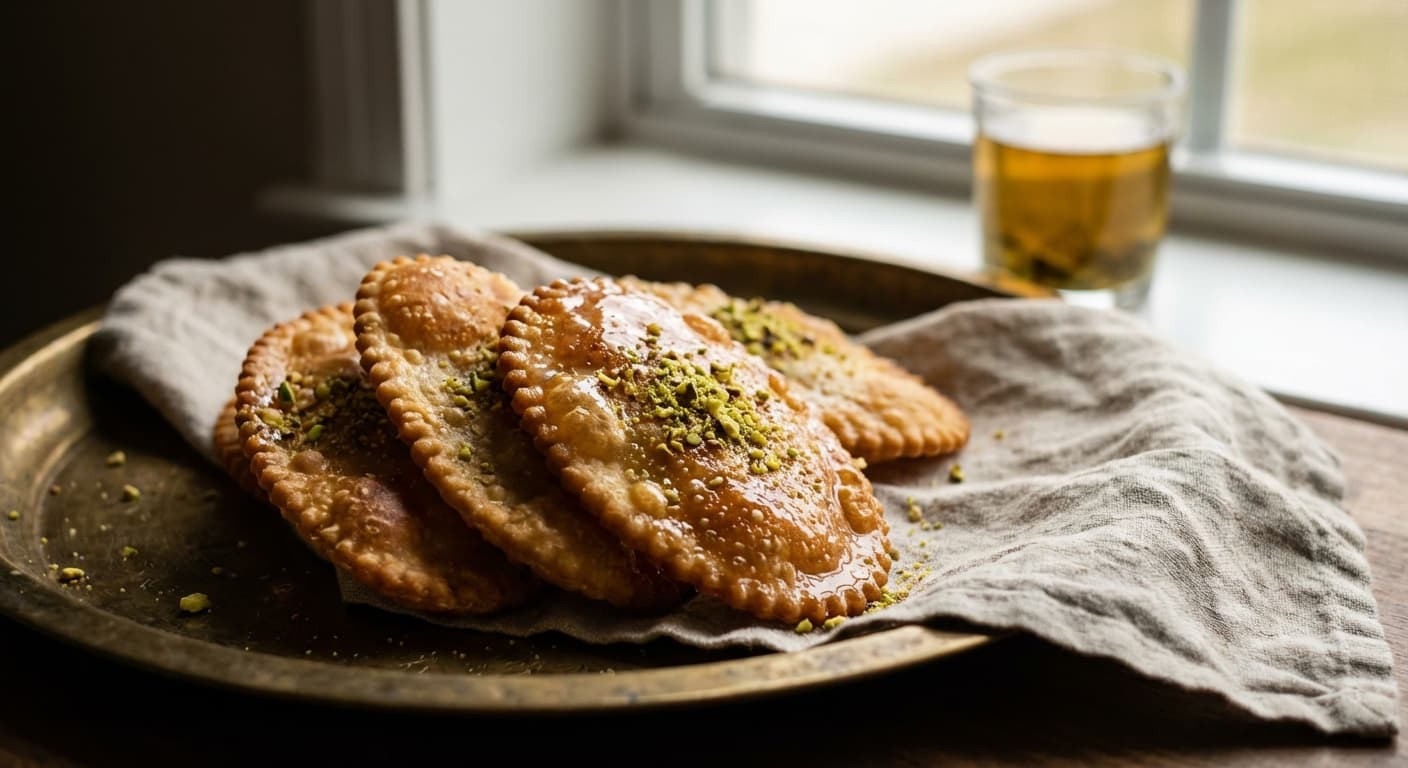
Gosh-e Fil (گوش فیل) — Afghan Elephant Ear Pastries with Cardamom
Gosh-e Fil are crisp, puffed Afghan-style fritter pastries shaped like “elephant ears,” scented with cardamom and finished with syrup. They’re a festive tea-time sweet often served to guests, especially during holidays and family gatherings.
Printable Recipe Card
Servings: 10 · Total: 60 min · Difficulty: medium
Ingredients (quick list)
- 360 g all-purpose flour (plus 20 g for dusting)
- 6 g baking powder (about 1 1/2 tsp)
- 3 g fine salt (about 1/2 tsp)
- 2 tsp ground cardamom (freshly ground if possible)
- 180 g plain yogurt (full-fat preferred)
- 25 g granulated sugar
- 1 large egg
- 40 g unsalted butter (melted and cooled slightly)
- 60 ml water (add gradually; you may need 45–75 ml depending on flour)
- 900 ml neutral frying oil (sunflower or canola; for 5–6 cm depth)
- 15 ml lemon juice (1 tbsp)
- 6 pod green cardamom pods (lightly crushed)
+ 2 more in the full ingredients section below.
Steps (summary)
- Make the syrup first so it can cool and thicken properly. In a small saucepan, combine the sugar, water, crushed cardamom pods,…
- Reduce heat to medium-low and simmer the syrup for 8–10 minutes until it looks slightly glossy and reaches a light syrup consis…
- Prepare the dough by whisking flour, baking powder, salt, and ground cardamom in a mixing bowl to distribute the leavening even…
- Add the wet mixture to the dry ingredients and mix with a spoon until a shaggy dough forms. Add the water gradually and knead f…
- Cover the dough and let it rest for 20 minutes at room temperature to relax the gluten. This rest makes rolling easier and help…
- Pour frying oil into a wide, heavy pot to a depth of about 5–6 cm and heat to 175°C. While the oil heats, divide the dough into…
+ 4 more steps in the full instructions section below.
Cultural Background
Elephant ear pastries are beloved across Afghanistan and neighboring regions as a symbol of hospitality, often offered with tea to honor guests. Their cardamom-and-syrup fragrance echoes celebration sweets served during Eid and family milestones.
Equipment
💡 Tips
- Keep the syrup at room temperature and the pastries hot; this contrast helps the coating set quickly without soaking through.
- Roll to 2–3 mm thickness for the best puff and crunch; thicker dough fries up bready instead of crisp.
- Maintain oil at 170–180°C; cooler oil increases greasiness, while hotter oil browns too fast before the center puffs.
⚠️ Common Mistakes
❌ Syrup makes the pastries soft and heavy.
✅ Fix: Cool the syrup to room temperature and dip briefly (3–4 seconds) only on one side, then set on a rack to dry.
❌ Pastries absorb too much oil and taste greasy.
✅ Fix: Keep oil between 170–180°C and avoid overcrowding; drain for 30–45 seconds before dipping in syrup.
❌ Dough snaps back and won’t roll thin.
✅ Fix: Rest the dough for 20 minutes, then roll with light flouring; if needed, rest another 10 minutes.
🧊 How to Store
Store fully cooled pastries in a loosely covered container at room temperature for up to 24 hours to preserve crispness. For best texture, re-crisp on a tray in a 160°C oven for 6–8 minutes; avoid microwaving, which makes them chewy.
📅 Make Ahead
Prepare and cool the syrup up to 3 days ahead and refrigerate it in a sealed jar; bring to room temperature before using. The dough can be mixed, covered, and refrigerated for up to 12 hours, then rested 20 minutes before rolling.
🍽️ Pairs Well With
- Afghan green tea
- black tea with cardamom
- fresh fruit
- lightly sweetened yogurt.
Regional Variations
- Some Afghan households skip rose water and rely on cardamom-only syrup for a cleaner spice aroma.
- In parts of the region, the pastries are dusted with powdered sugar instead of being dipped in syrup for a drier crunch.
- A few versions add a pinch of saffron to the syrup for a golden hue and deeper fragrance.
Ingredients
- 360 gall-purpose flour (plus 20 g for dusting)
- 6 gbaking powder (about 1 1/2 tsp)
- 3 gfine salt (about 1/2 tsp)
- 2 tspground cardamom (freshly ground if possible)
- 180 gplain yogurt (full-fat preferred)
- 25 ggranulated sugar
- 1large egg
- 40 gunsalted butter (melted and cooled slightly)
- 60 mlwater (add gradually; you may need 45–75 ml depending on flour)
- 900 mlneutral frying oil (sunflower or canola; for 5–6 cm depth)
- 15 mllemon juice (1 tbsp)
- 6 podgreen cardamom pods (lightly crushed)
- 10 mlrose water (2 tsp)
- 25 gpistachios (finely chopped)
🔄 Substitutions
- plain yogurt→ kefir
- pistachios→ toasted sliced almonds
- rose water→ orange blossom water
Instructions
- 1
Make the syrup first so it can cool and thicken properly. In a small saucepan, combine the sugar, water, crushed cardamom pods, and lemon juice, then bring to a gentle boil over medium heat.
- 2
Reduce heat to medium-low and simmer the syrup for 8–10 minutes until it looks slightly glossy and reaches a light syrup consistency. Turn off the heat, stir in the rose water, and let it cool to room temperature; strain out the pods if you prefer a smooth syrup.
- 3
Prepare the dough by whisking flour, baking powder, salt, and ground cardamom in a mixing bowl to distribute the leavening evenly. In a second bowl, whisk yogurt, sugar, egg, and melted butter until smooth and uniform.
- 4
Add the wet mixture to the dry ingredients and mix with a spoon until a shaggy dough forms. Add the water gradually and knead for 6–8 minutes until the dough is smooth and supple; it should feel soft but not sticky, so dust with a little flour only if needed.
- 5
Cover the dough and let it rest for 20 minutes at room temperature to relax the gluten. This rest makes rolling easier and helps the pastries puff more evenly in the oil.
- 6
Pour frying oil into a wide, heavy pot to a depth of about 5–6 cm and heat to 175°C. While the oil heats, divide the dough into 10 equal pieces (about 65–70 g each) and keep them covered to prevent drying.
- 7
On a lightly floured surface, roll one piece into an oval about 18–20 cm long and 2–3 mm thick, keeping the classic ‘ear’ shape. Cut a 3–4 cm slit near the center to encourage bubbling and an airy, rippled texture during frying.
- 8
Fry one or two ovals at a time, sliding them into the oil carefully so the temperature stays steady. Fry for 60–90 seconds per side, spooning hot oil over the top as it puffs, until deeply golden with crisp edges.
- 9
Lift the pastry out and drain on a rack or paper-lined tray for 30–45 seconds so excess oil drips away. While still hot, dip one side into the cooled syrup for 3–4 seconds, then set it back on a rack so the syrup can set without making it soggy.
- 10
Repeat rolling and frying with the remaining dough pieces, adjusting heat to keep the oil around 170–180°C. Finish by sprinkling chopped pistachios over the syrupy side while it is still tacky, then let the pastries cool for 10 minutes before serving.
🪪 Recipe Passport
Cultural Background
Elephant ear pastries are beloved across Afghanistan and neighboring regions as a symbol of hospitality, often offered with tea to honor guests. Their cardamom-and-syrup fragrance echoes celebration sweets served during Eid and family milestones.
Regional Variations
Researched from multiple sources and validated by the Zaffaron editorial team. Every recipe is tested for accuracy, measurements, and cultural authenticity.
Nutrition per serving
Pairs well with
If you enjoyed this recipe, here are a few related Zaffaron recipes to try next.
- Khichiri Qorooti (خچری قروتی) — Afghan Rice and Mung Beans with Dried Yogurt Sauce
- Mantu (منتو) — Afghan Steamed Dumplings with Yogurt and Lentil Sauce
- Qabili Uzbeki (قابلی اوزبکی) — Afghan Carrot and Raisin Pilaf with Chicken
- Sheer Khurma (شیر خرما) — Afghan vermicelli milk dessert with dates and nuts
Does your family make this differently?
Every family has their own version. Maybe your grandmother adds a secret ingredient, or your aunt has a completely different technique. Preserve your family's version — with their name on it, forever.
You Might Also Like
Kabob Barg (کباب برگ) — Afghan Grilled Marinated Lamb Skewers, Tender and Smoky
Afghan · Kebabs · 37 min
Shir Berenj (شیربرنج) — Afghan Milk Rice Pudding with Cardamom
Afghan · Desserts · 65 min
Shola Goshti (شوله گوشتی) — Afghan Wheat and Lamb Porridge Comfort Food
Afghan · Main Courses · 205 min
Bhapa Pitha (ভাপা পিঠা) — Steamed Rice Cakes with Coconut and Date Palm Jaggery
Bangladeshi · Desserts · 67 min
Watalappan (වටලප්පන්) — Sri Lankan Coconut Jaggery Custard
Sri lankan · Desserts · 70 min
Authentic Kabab Koobideh (کباب کوبیده) — Persian Minced Lamb Skewers
Persian · Kebabs · 40 min
Uzbek Dimlama (Dimlama) — Layered Lamb and Vegetable Stew
Uzbek · Stews · 125 min
Cornbread (Cornbread) — Classic Cast-Iron American Quick Bread
American · Breads · 40 min
Reviews
Cooked this recipe?
Tap the stars to rate it — that's all it takes. A few words are welcome but optional.
No ratings yet. Cooked this one? Be the first to rate it — it takes one tap.