Finnish Oven-Baked Squeaky Cheese (Leipäjuusto) — Warm Bread Cheese with Cloudberry Jam
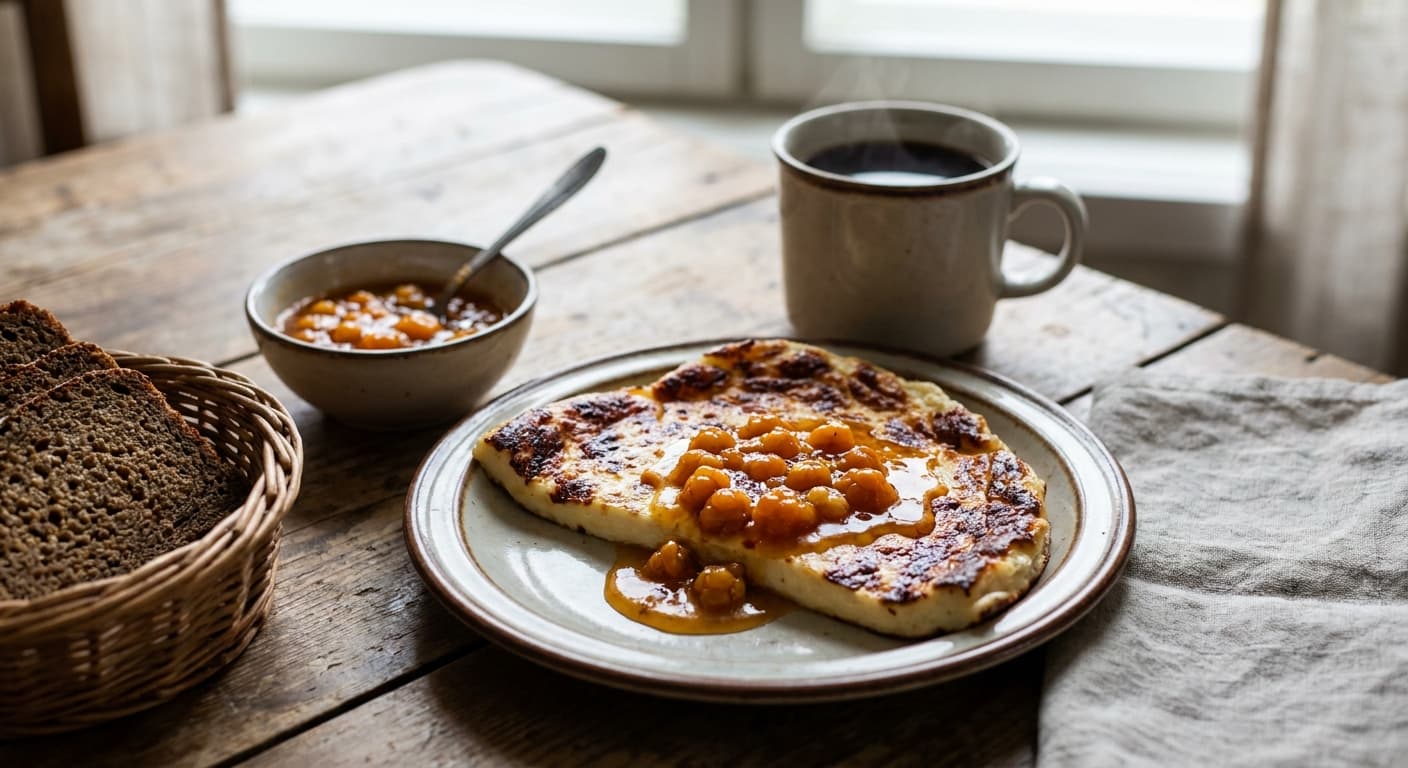
Leipäjuusto is a Finnish baked fresh cheese with a springy, squeaky bite and browned surface. This home version sets milk with rennet, bakes the curd, and serves it warm with cloudberry jam or mustikka preserves.
Printable Recipe Card
Servings: 6 · Total: 85 min · Difficulty: medium
Ingredients (quick list)
- 2 l whole milk (not ultra-pasteurized)
- 250 ml heavy cream
- 120 ml cultured buttermilk (adds mild tang)
- 2.5 ml calcium chloride solution (30% solution, helpful for pasteurized milk)
- 2.5 ml liquid microbial rennet
- 60 ml cool non-chlorinated water (divided for diluting calcium chloride and rennet)
- 6 g fine sea salt
- 10 g unsalted butter (for the pan)
- 180 g cloudberry jam
- 120 g mustikka blueberry compote (optional Finnish berry alternative)
Steps (summary)
- Sanitize a large pot, slotted spoon, knife, colander, and cheesecloth with boiling water, then let them air-dry. Good cleanline…
- Pour the whole milk and heavy cream into the pot and warm gently to 32°C, stirring often so the bottom does not scorch. Stir in…
- Dilute the calcium chloride in 30 ml of the cool non-chlorinated water, then stir it into the milk for 30 seconds. Dilute the l…
- Check for a clean break by inserting a knife at an angle and lifting the curd; it should split cleanly with pale whey pooling i…
- Cut the curd into 2 cm cubes with a long knife, reaching all the way to the bottom of the pot. Rest the cut curd for 5 minutes,…
- Line a colander with cheesecloth and ladle the curds into it, keeping the curds as intact as possible. Sprinkle the fine sea sa…
+ 4 more steps in the full instructions section below.
Cultural Background
Leipäjuusto is a beloved Finnish fresh cheese, especially associated with northern dairy traditions and berry preserves. Beatrice Ojakangas presents it within the Finnish home-cooking world of coffee tables, dairy, and seasonal berries.
Equipment
💡 Tips
- Use milk that is pasteurized but not ultra-pasteurized; ultra-pasteurized milk often sets weakly and gives a fragile curd.
- Keep the curd movements slow and broad after adding rennet, because aggressive stirring makes the cheese grainy instead of springy.
- For the classic squeak, serve leipäjuusto warm; reheating briefly restores its elastic texture.
⚠️ Common Mistakes
❌ Using ultra-pasteurized milk
✅ Fix: Choose pasteurized whole milk that is not ultra-pasteurized, and include calcium chloride for a cleaner set.
❌ Overstirring the curd after it sets
✅ Fix: Use slow, gentle movements and stop stirring as soon as the curds feel slightly firm.
❌ Baking until dry and tough
✅ Fix: Bake only until the surface browns in spots and the cheese is set; finish briefly under the broiler if more color is needed.
🧊 How to Store
Wrap leftover leipäjuusto tightly and refrigerate for up to 4 days. Reheat slices in a 180°C oven for 6 minutes or in a dry skillet for 2 minutes per side, then serve immediately with jam.
📅 Make Ahead
The cheese can be made 1 day ahead, chilled whole, and reheated before serving. Keep the jam separate until the cheese is hot so the browned surface stays distinct.
🍽️ Pairs Well With
- Cloudberry jam
- mustikka compote
- strong Finnish coffee
- ruisleipä.
Regional Variations
- In Lapland and northern Finland, leipäjuusto is often served warm with cloudberry jam.
- Some households pour hot coffee over cubes of leipäjuusto, creating a distinctive coffee-and-cheese bowl.
- Older farmhouse versions may use richer milk from cows, goats, or reindeer depending on region and availability.
Ingredients
- 2 lwhole milk (not ultra-pasteurized)
- 250 mlheavy cream
- 120 mlcultured buttermilk (adds mild tang)
- 2.5 mlcalcium chloride solution (30% solution, helpful for pasteurized milk)
- 2.5 mlliquid microbial rennet
- 60 mlcool non-chlorinated water (divided for diluting calcium chloride and rennet)
- 6 gfine sea salt
- 10 gunsalted butter (for the pan)
- 180 gcloudberry jam
- 120 gmustikka blueberry compote (optional Finnish berry alternative)
🔄 Substitutions
- liquid microbial rennet→ liquid animal rennet
- cloudberry jam→ mustikka blueberry compote
- cultured buttermilk→ plain kefir
Instructions
- 1
Sanitize a large pot, slotted spoon, knife, colander, and cheesecloth with boiling water, then let them air-dry. Good cleanliness is important because leipäjuusto is a fresh cheese and will not be aged long enough to develop protective acidity.
- 2
Pour the whole milk and heavy cream into the pot and warm gently to 32°C, stirring often so the bottom does not scorch. Stir in the cultured buttermilk, cover the pot, and let the milk stand for 30 minutes so it develops a gentle dairy tang.
- 3
Dilute the calcium chloride in 30 ml of the cool non-chlorinated water, then stir it into the milk for 30 seconds. Dilute the liquid microbial rennet in the remaining 30 ml of water, stir it in with 20 slow up-and-down strokes, cover the pot, and leave it undisturbed for 35 minutes.
- 4
Check for a clean break by inserting a knife at an angle and lifting the curd; it should split cleanly with pale whey pooling in the cut. If the curd is still soft, cover the pot and wait 10 more minutes before cutting.
- 5
Cut the curd into 2 cm cubes with a long knife, reaching all the way to the bottom of the pot. Rest the cut curd for 5 minutes, then stir very gently for 10 minutes while raising the temperature to 38°C to help the curds firm without becoming rubbery.
- 6
Line a colander with cheesecloth and ladle the curds into it, keeping the curds as intact as possible. Sprinkle the fine sea salt evenly over the curds, fold the cloth over the top, and drain for 15 minutes.
- 7
Butter a shallow 20 cm round baking dish or ovenproof skillet and transfer the drained curd into it. Press the curd into an even 2 cm thick round, then place a small plate and a 1 kg weight on top for 20 minutes to compact the cheese.
- 8
Heat the oven to 250°C with the rack in the upper third. Remove the weight and cloth, then bake the cheese for 12 to 16 minutes until the surface is set and lightly blistered with brown spots.
- 9
Switch on the broiler for 1 to 3 minutes if the leipäjuusto needs deeper speckled browning, watching constantly to prevent burning. The finished cheese should be firm enough to lift, pale inside, and browned in patches on the surface.
- 10
Rest the baked cheese for 5 minutes, then cut it into wedges or squares while still warm. Serve with cloudberry jam, mustikka compote, strong coffee, and slices of ruisleipä if you want a fuller Finnish coffee table.
🪪 Recipe Passport
Cultural Background
Leipäjuusto is a beloved Finnish fresh cheese, especially associated with northern dairy traditions and berry preserves. Beatrice Ojakangas presents it within the Finnish home-cooking world of coffee tables, dairy, and seasonal berries.
Regional Variations
Researched from multiple sources and validated by the Zaffaron editorial team. Every recipe is tested for accuracy, measurements, and cultural authenticity.
📚 Sources & Cultural References
- Beatrice Ojakangas — The Finnish Cookbook — (1964)
- Magnus Nilsson — The Nordic Cookbook — (2015)
Sources cited by the Zaffaron editorial team during recipe research. Cultural and culinary references supporting authenticity claims.
Nutrition per serving
Pairs well with
If you enjoyed this recipe, here are a few related Zaffaron recipes to try next.
Does your family make this differently?
Every family has their own version. Maybe your grandmother adds a secret ingredient, or your aunt has a completely different technique. Preserve your family's version — with their name on it, forever.
You Might Also Like
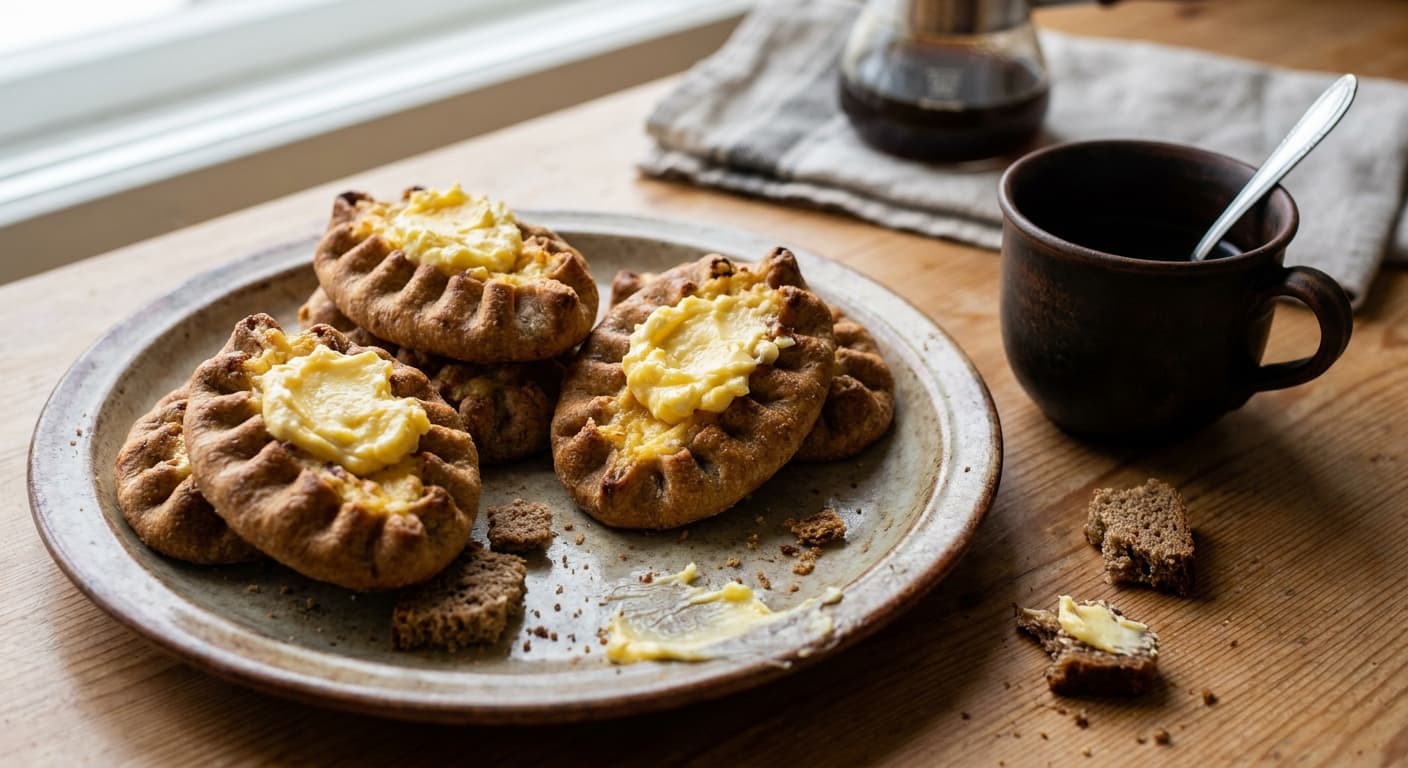
Karelian Pasties (Karjalanpiirakka) — Rye Crusts Filled with Rice Porridge
Finnish · Breads · 115 min
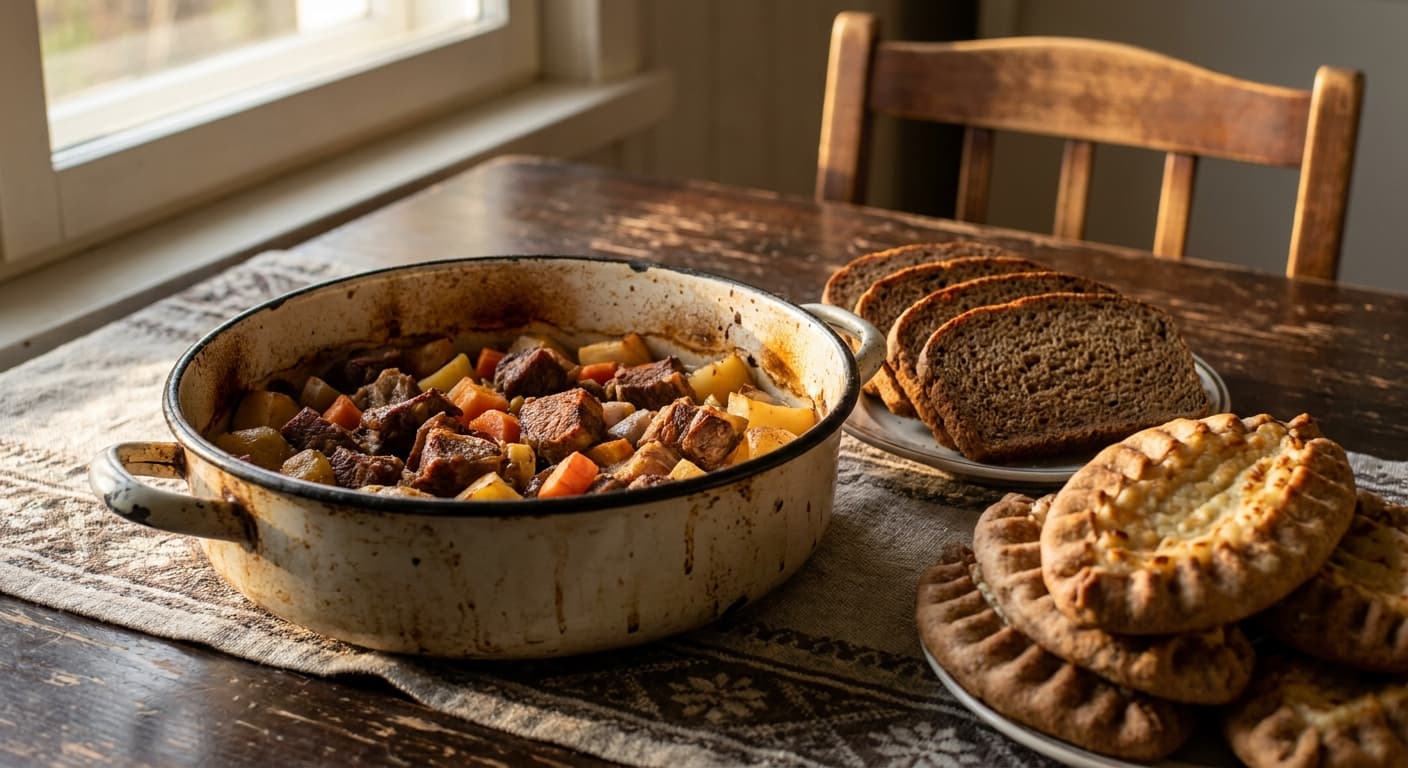
Karelian Hot Pot (Karjalanpaisti) — Finnish Oven-Braised Meat Stew
Finnish · Stews · 230 min
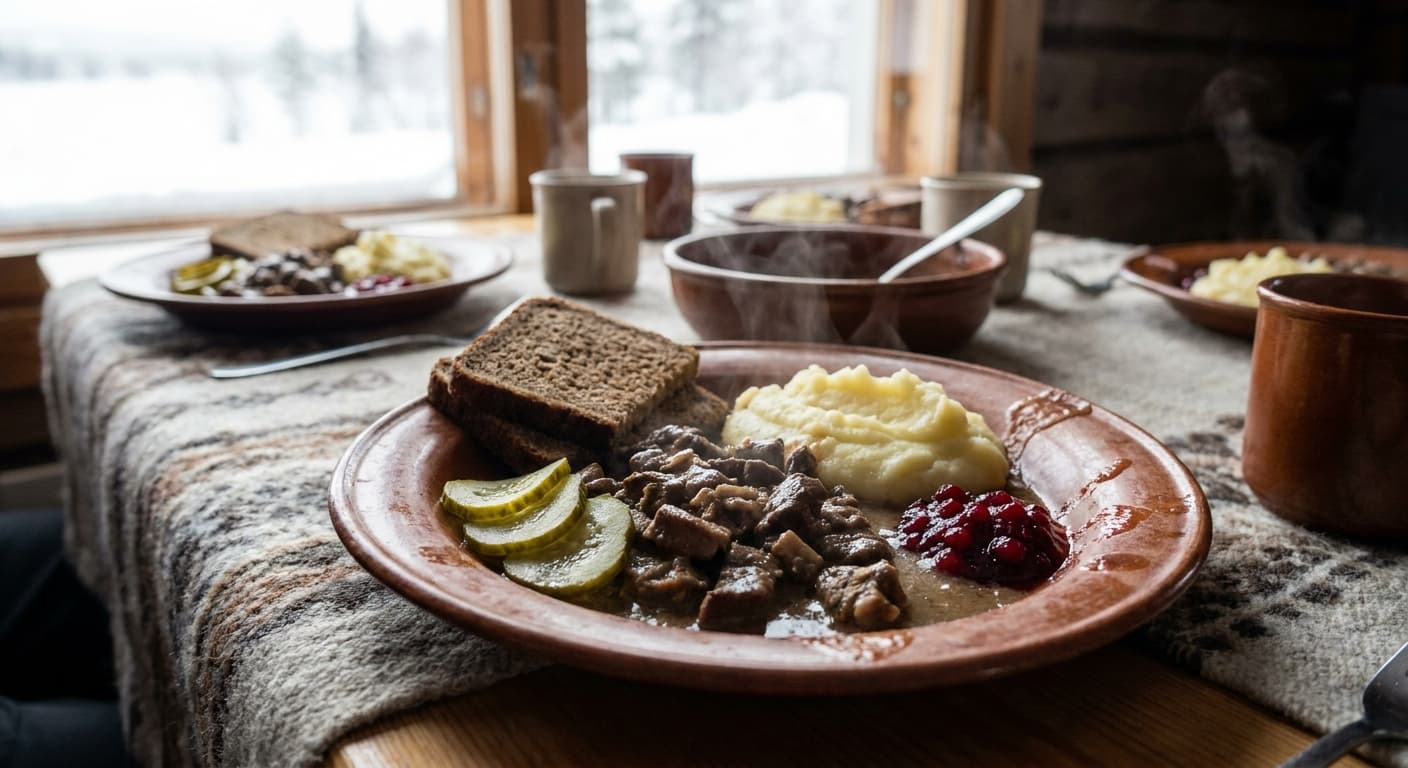
Sautéed Reindeer (Poronkäristys) — Finnish Lapland Comfort Plate
Finnish · Main Courses · 70 min
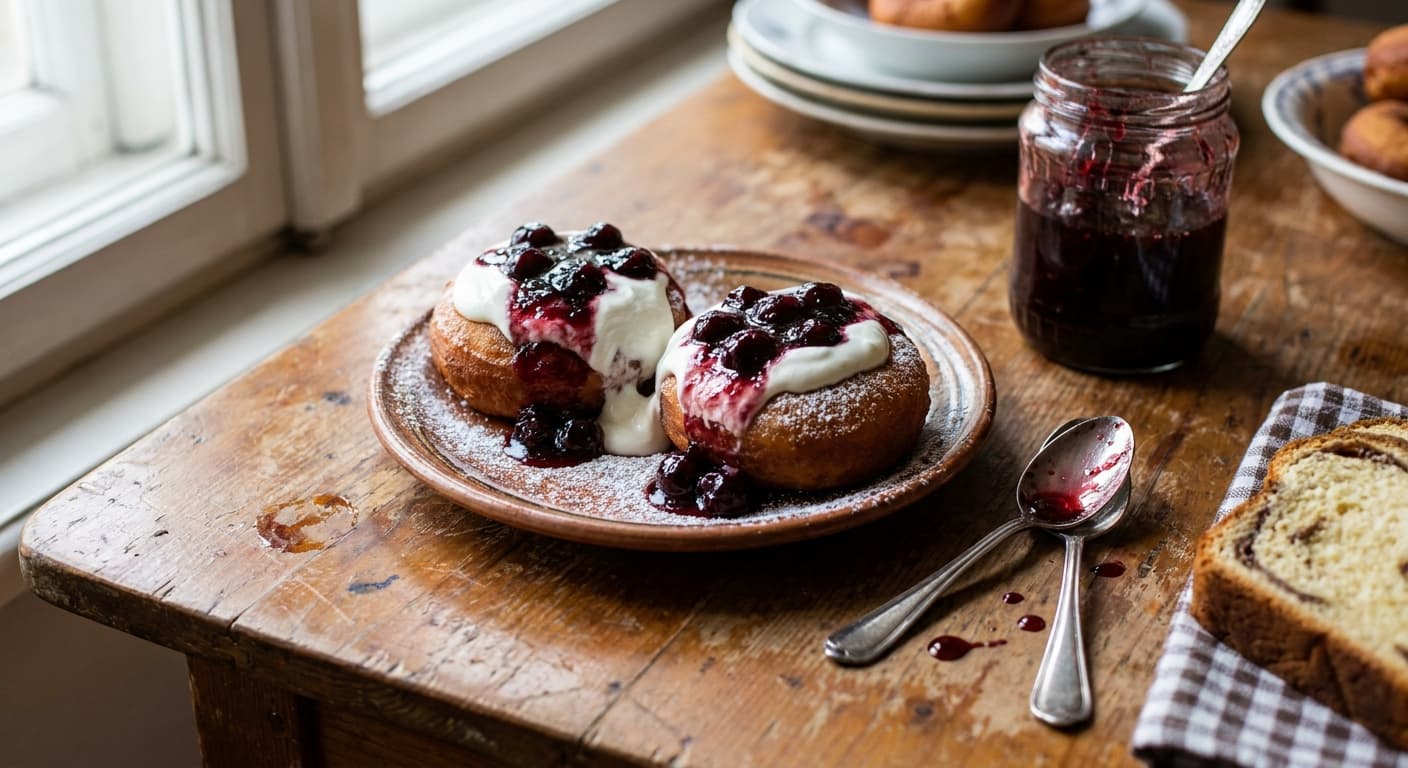
Romanian Cheese Doughnuts (Papanași) — Fried Curd-Cheese Rings with Sour Cream and Jam
Romanian · Desserts · 45 min
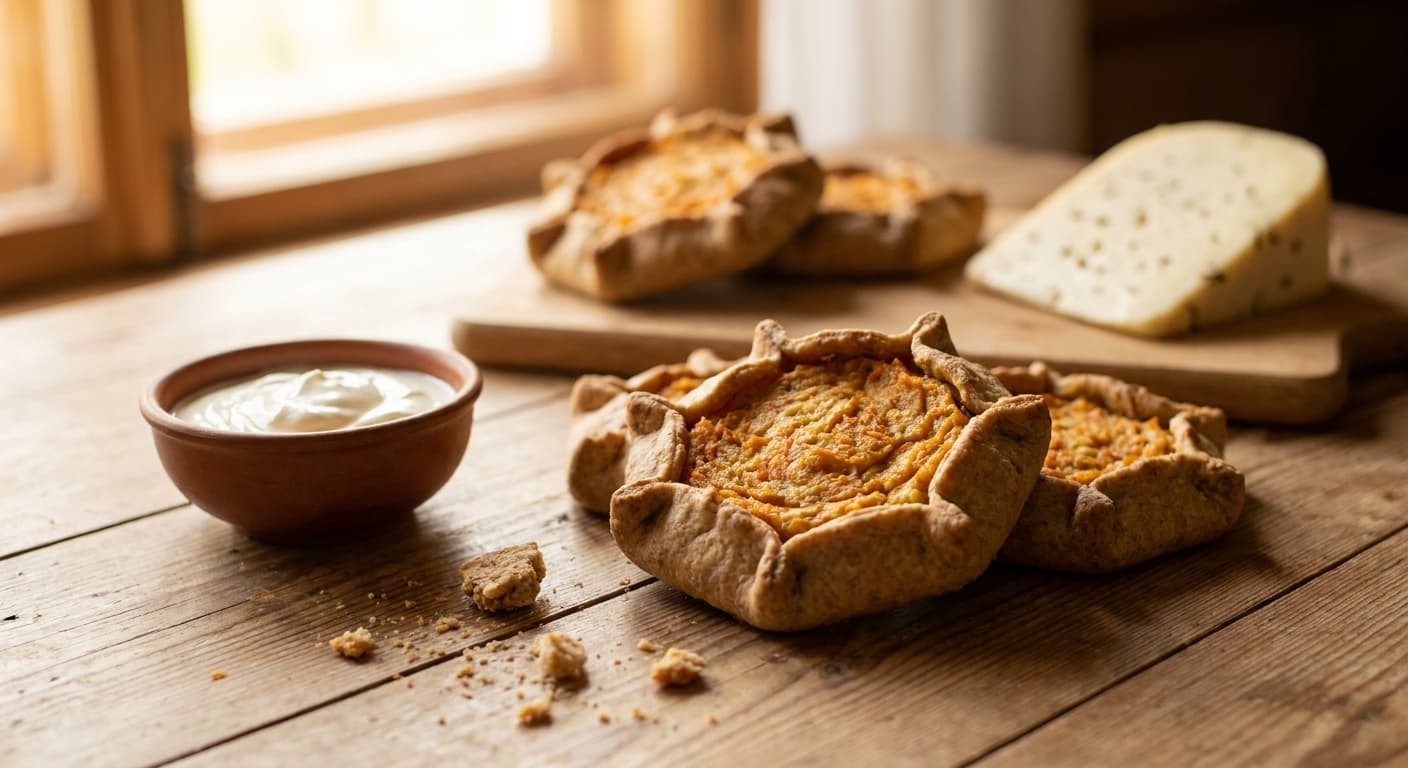
Sklandrausis (Sklandrausis) — Latvian Rye Carrot-Potato Tart
Latvian · Desserts · 100 min
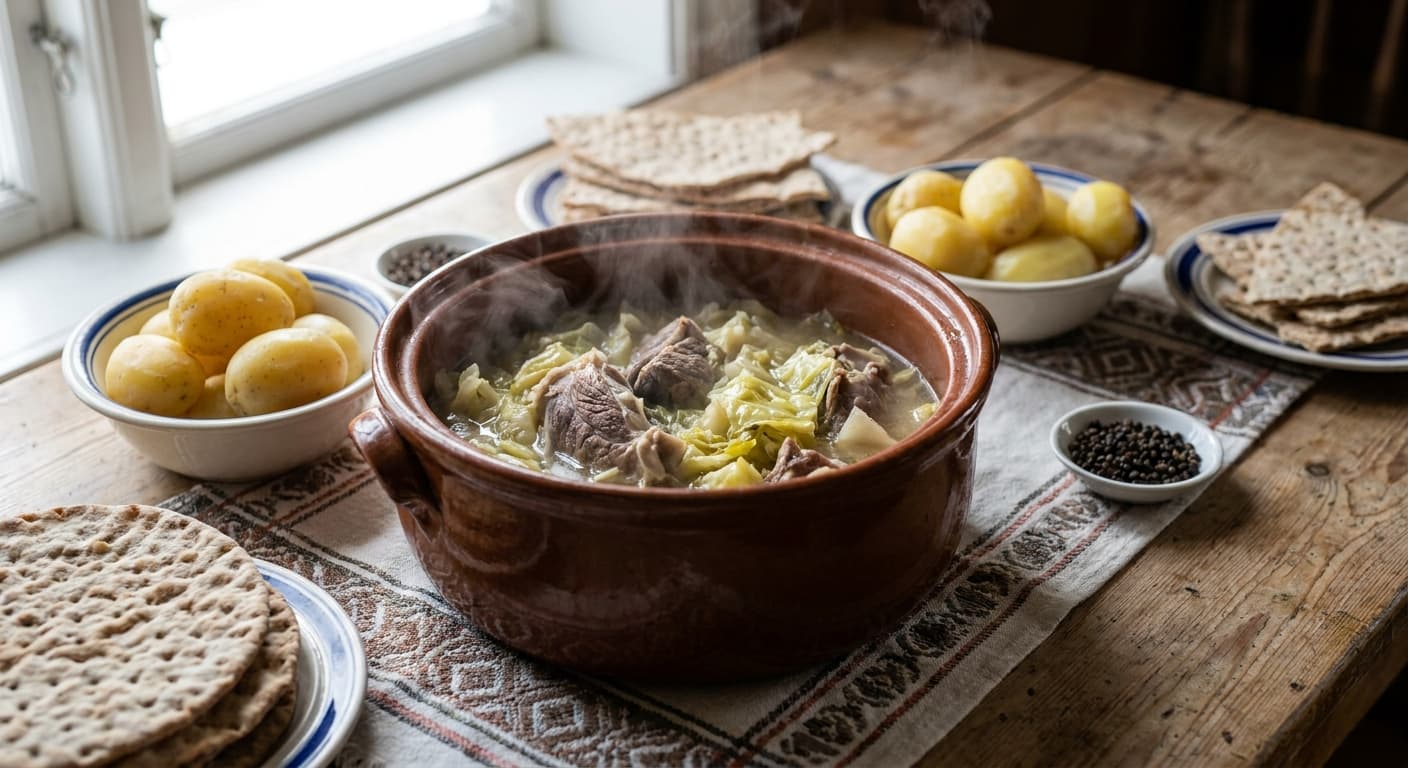
Norwegian Lamb and Cabbage Stew (Fårikål) — Peppery Autumn National Dish
Norwegian · Stews · 170 min
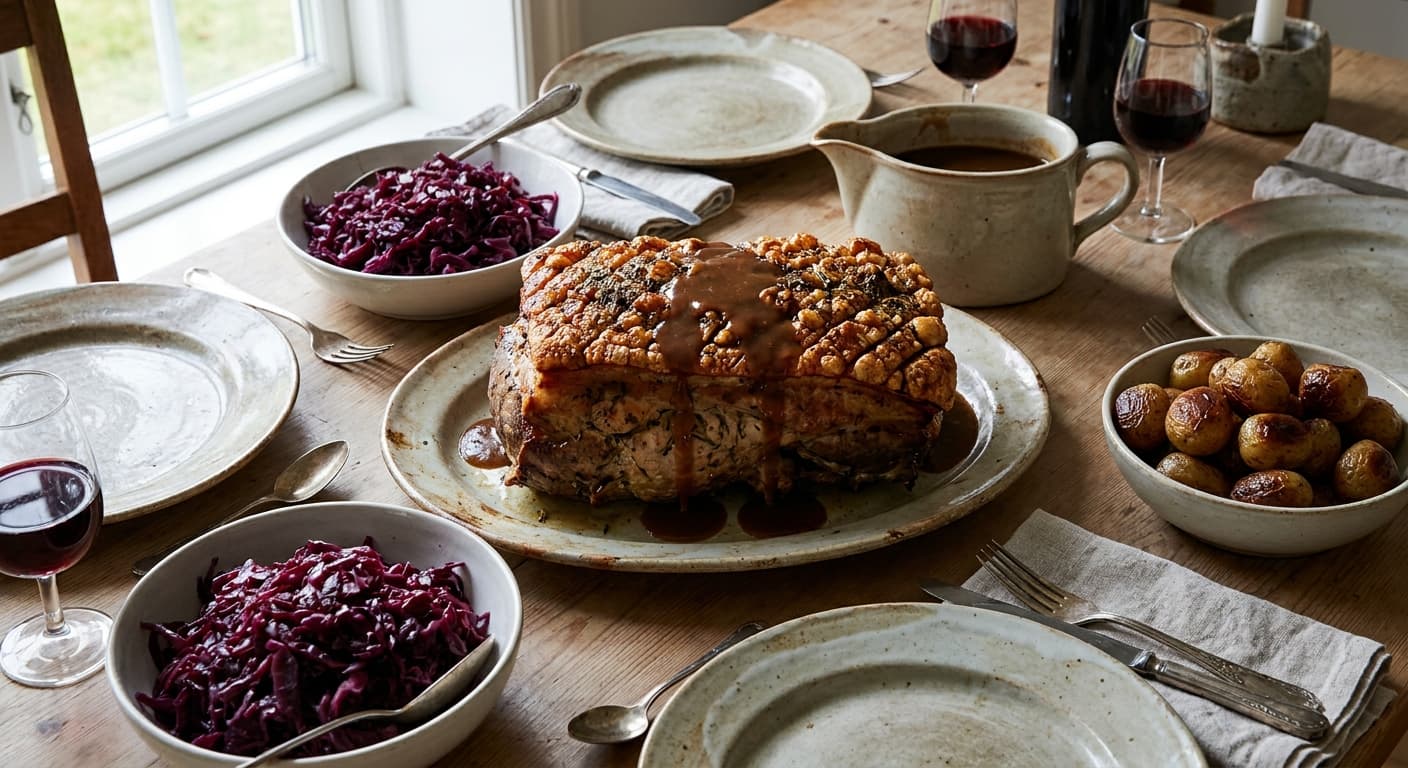
Danish Roast Pork with Crackling (Flæskesteg) — Crisp-Rinded Christmas Pork
Danish · Main Courses · 130 min
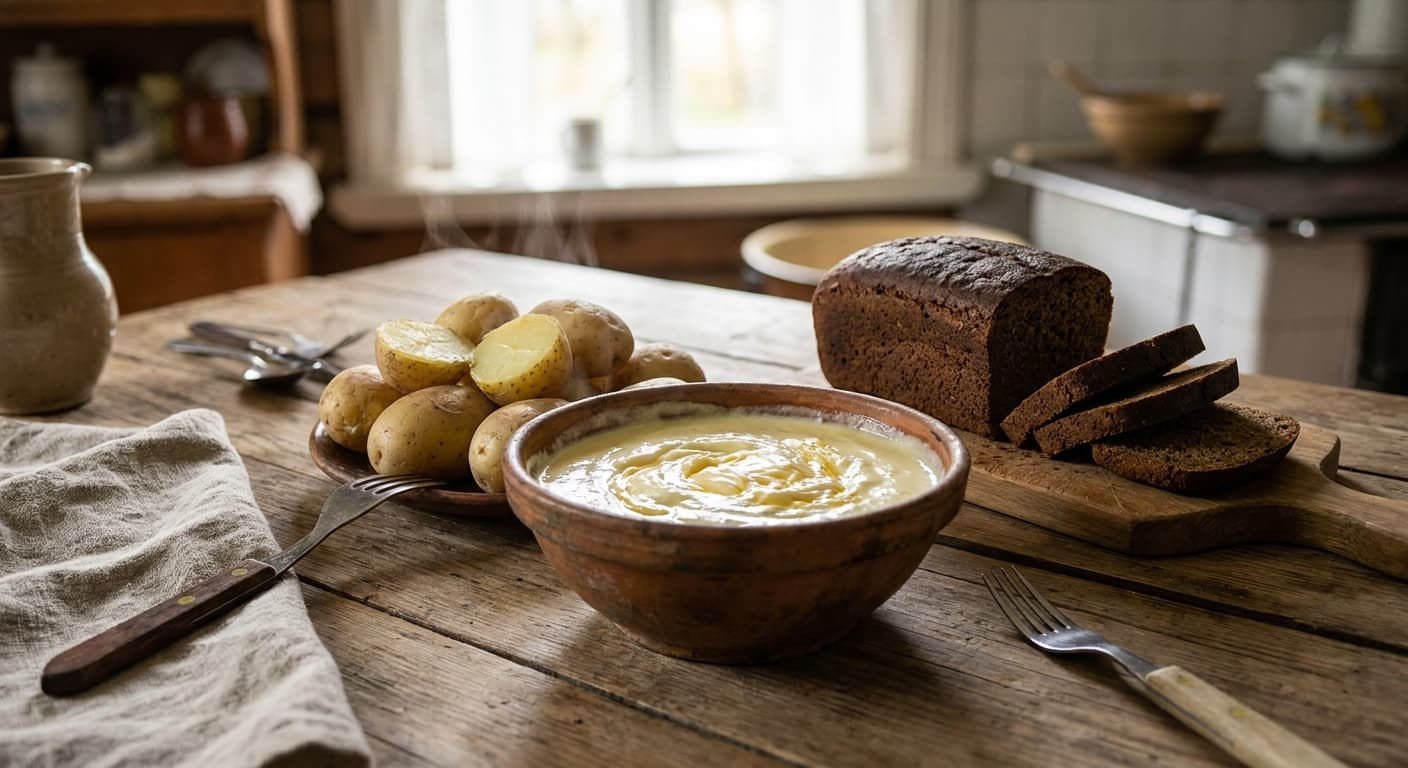
Samogitian Kastinys (Žemaičių kastinys) — Warm Cultured Cream Spread
Lithuanian · Side Dishes · 45 min
Reviews
Cooked this recipe?
Tap the stars to rate it — that's all it takes. A few words are welcome but optional.
No ratings yet. Cooked this one? Be the first to rate it — it takes one tap.