Kaak (كعك) — Lebanese Sesame Bread Rings with a Crisp Crust
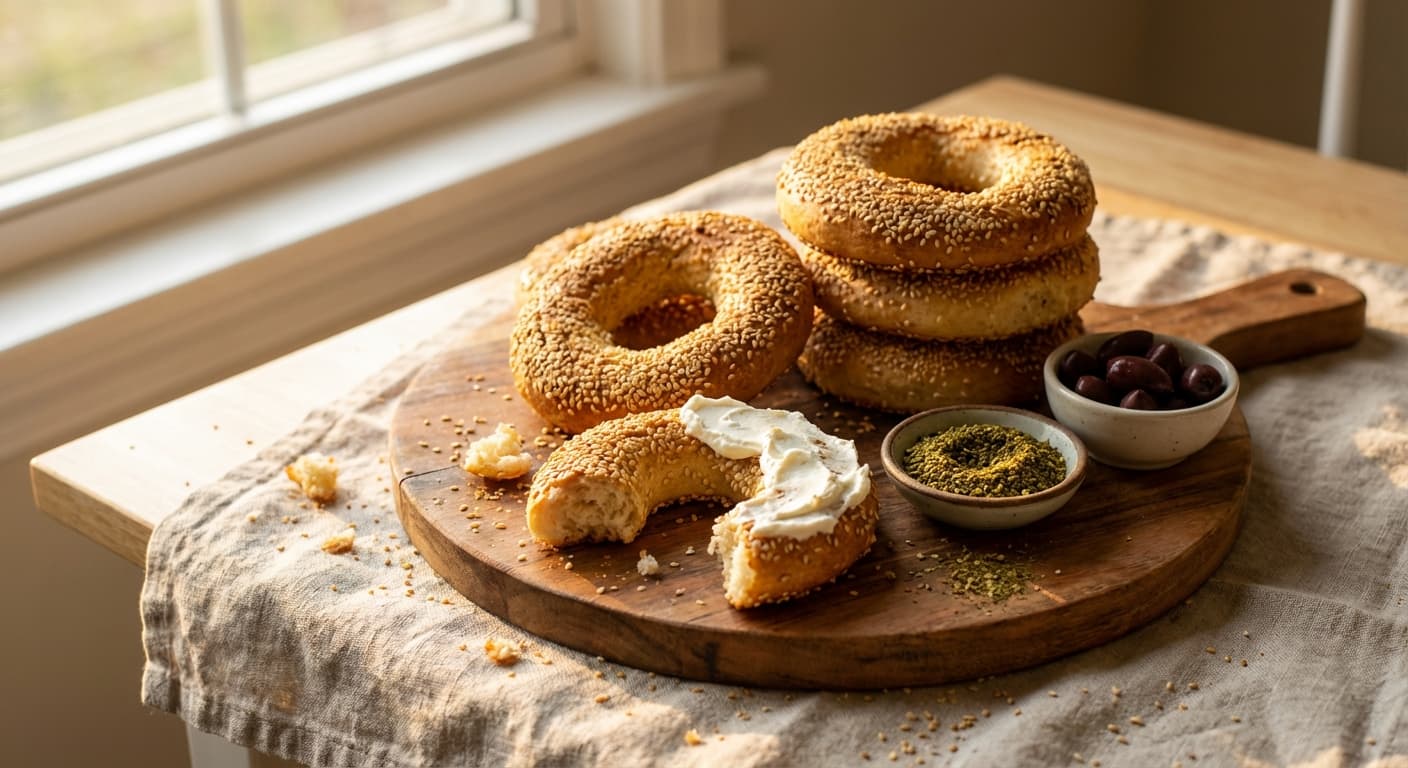
Kaak are iconic Lebanese street-bread rings, often sold warm and heavily coated in sesame. Their lightly sweet, aromatic dough bakes up crisp outside and tender within, perfect for breakfast or a savory sandwich.
Printable Recipe Card
Servings: 8 · Total: 43 min · Difficulty: medium
Ingredients (quick list)
- 500 g all-purpose flour (plus 20 g for dusting as needed)
- 7 g instant yeast (1 standard packet)
- 25 g granulated sugar (about 2 tbsp)
- 8 g fine sea salt (about 1 1/4 tsp)
- 2 tsp ground mahleb (traditional aromatic spice from cherry pits)
- 1 tsp ground anise (optional but classic)
- 240 ml whole milk (warmed to about 38–40°C)
- 60 ml water (warm, about 38–40°C)
- 60 ml olive oil (about 1/4 cup)
- 1 egg (large)
- 120 g sesame seeds (toasted for deeper flavor)
- 30 ml pomegranate molasses (for the traditional tacky dip)
Steps (summary)
- Combine the flour, instant yeast, sugar, salt, mahleb, and anise in a large mixing bowl and whisk until evenly distributed. Thi…
- In a separate bowl, whisk together the warm milk, warm water, olive oil, and egg until smooth and uniform. Pour the wet mixture…
- Knead the dough for 8–10 minutes by hand (or 6–7 minutes in a stand mixer on medium-low) until it becomes elastic and slightly…
- Shape the dough into a tight ball and place it in a lightly oiled bowl, turning once to coat the surface. Cover and let it rise…
- Line two baking sheets with parchment and preheat the oven to 220°C. Punch down the dough gently, then divide it into 8 equal p…
- Roll each piece into a rope about 45–50 cm long, keeping the thickness even from end to end. Form a large ring and pinch the en…
+ 3 more steps in the full instructions section below.
Cultural Background
In Lebanon, kaak is a beloved bakery and street staple—often carried in stacks by vendors and eaten on the go. The sesame crust and mahleb-anise scent are instantly recognizable, linking everyday breakfasts to Levantine baking traditions.
Equipment
💡 Tips
- Toast the sesame seeds in a dry pan for 4–5 minutes over medium heat, stirring every 20 seconds, then cool completely before coating for maximum aroma.
- For a crisper street-style kaak, bake until the rings are a shade darker than typical dinner rolls and cool fully on a rack to avoid steam-softening.
- If your kitchen is cool, proof the dough in an oven with the light on; aim for a dough temperature around 24–27°C for reliable rise.
⚠️ Common Mistakes
❌ Dough turns dense and tight after adding too much flour.
✅ Fix: Keep the dough slightly tacky and add flour only in 10 g increments; a softer dough bakes lighter and less dry.
❌ Sesame falls off after baking.
✅ Fix: Dip into the thinned pomegranate molasses while the surface is clean and slightly moist, then press firmly into sesame for full contact.
❌ Rings come out pale and soft instead of crisp.
✅ Fix: Bake at 220°C until deeply golden and cool on a rack; if needed, extend baking by 2–3 minutes for a drier crust.
🧊 How to Store
Store cooled kaak in an airtight container at room temperature for up to 2 days. Re-crisp in a 180°C oven for 4–6 minutes, then cool 2 minutes on a rack; avoid microwaving, which softens the crust.
📅 Make Ahead
Mix and knead the dough, then refrigerate it covered for up to 16 hours for slower fermentation and deeper flavor. Shape, coat, and proof at room temperature for 25–35 minutes before baking.
🍽️ Pairs Well With
- Labneh
- za'atar and olive oil
- akkawi cheese
- cucumbers and tomatoes
- black tea
- olives.
Regional Variations
- Beirut-style street kaak is often larger and more oval, sometimes split and filled with cheese or za'atar.
- Some bakeries add a pinch of ground mastic or extra anise for a more perfumed aroma.
- A sweeter version increases sugar slightly and may be finished with a light syrup glaze before sesame.
Ingredients
- 500 gall-purpose flour (plus 20 g for dusting as needed)
- 7 ginstant yeast (1 standard packet)
- 25 ggranulated sugar (about 2 tbsp)
- 8 gfine sea salt (about 1 1/4 tsp)
- 2 tspground mahleb (traditional aromatic spice from cherry pits)
- 1 tspground anise (optional but classic)
- 240 mlwhole milk (warmed to about 38–40°C)
- 60 mlwater (warm, about 38–40°C)
- 60 mlolive oil (about 1/4 cup)
- 1egg (large)
- 120 gsesame seeds (toasted for deeper flavor)
- 30 mlpomegranate molasses (for the traditional tacky dip)
🔄 Substitutions
- ground mahleb→ ground fennel seed
- whole milk→ water
- pomegranate molasses→ honey
Instructions
- 1
Combine the flour, instant yeast, sugar, salt, mahleb, and anise in a large mixing bowl and whisk until evenly distributed. This prevents salty pockets and ensures the aromatics are consistent through every ring.
- 2
In a separate bowl, whisk together the warm milk, warm water, olive oil, and egg until smooth and uniform. Pour the wet mixture into the dry ingredients and mix until a shaggy dough forms with no dry flour remaining.
- 3
Knead the dough for 8–10 minutes by hand (or 6–7 minutes in a stand mixer on medium-low) until it becomes elastic and slightly tacky but not sticky. If the dough clings heavily to your hands, knead in additional flour in 10 g increments, keeping the dough soft for a tender crumb.
- 4
Shape the dough into a tight ball and place it in a lightly oiled bowl, turning once to coat the surface. Cover and let it rise at warm room temperature for 60–75 minutes, until doubled in volume and airy when pressed.
- 5
Line two baking sheets with parchment and preheat the oven to 220°C. Punch down the dough gently, then divide it into 8 equal pieces (about 110 g each) to ensure even baking and consistent ring size.
- 6
Roll each piece into a rope about 45–50 cm long, keeping the thickness even from end to end. Form a large ring and pinch the ends firmly, then create the classic kaak shape by pulling one side outward to make an oval with a slightly thicker ‘handle’ section.
- 7
Mix the pomegranate molasses with 45 ml water in a shallow bowl to create a thin, sticky dip. Dip the top side of each ring into the mixture, then press immediately into the toasted sesame seeds so they adhere in a thick, even layer.
- 8
Arrange the rings sesame-side up on the prepared baking sheets, leaving at least 5 cm between each. Cover loosely and proof for 15–20 minutes, just until slightly puffed; this short proof helps the rings stay crisp rather than bready.
- 9
Bake for 16–18 minutes, rotating trays halfway through, until deeply golden with a crisp exterior and a dry-sounding tap on the bottom. Cool on a rack for at least 10 minutes before serving so the crust sets and the sesame stays crunchy.
🪪 Recipe Passport
Cultural Background
In Lebanon, kaak is a beloved bakery and street staple—often carried in stacks by vendors and eaten on the go. The sesame crust and mahleb-anise scent are instantly recognizable, linking everyday breakfasts to Levantine baking traditions.
Regional Variations
Researched from multiple sources and validated by the Zaffaron editorial team. Every recipe is tested for accuracy, measurements, and cultural authenticity.
Nutrition per serving
Pairs well with
If you enjoyed this recipe, here are a few related Zaffaron recipes to try next.
- Muhammara (محمرة) — Lebanese Walnut-Pepper Dip with Pomegranate Molasses
- Sayadieh (صيادية) — Lebanese Spiced Fish with Caramelized Onion Rice
- Lahm bi Ajeen (لحم بعجين) — Lebanese Lamb-Topped Flatbread with Spiced Tomato
- Man'oushe-Style Lebanese Flatbread Pizza (مناقيش) — Sausage and Eggs Brunch Flatbread
Does your family make this differently?
Every family has their own version. Maybe your grandmother adds a secret ingredient, or your aunt has a completely different technique. Preserve your family's version — with their name on it, forever.
You Might Also Like
Smoky Muttabal Ba Badenjan with Kashk (متبل باذنجان) — Charred Eggplant Dip with Tangy Fermented Depth
Lebanese · Appetizers · 70 min
Adas bil Hamod (عدس بالحامض) — Lebanese Lentil Soup with Swiss Chard and Lemon
Lebanese · Soups · 60 min
Malfouf Mahshi (ملفوف محشي) — Lebanese Stuffed Cabbage Rolls in Lemon-Garlic Broth
Lebanese · Main Courses · 120 min
Bazlama (بازلاما) — Puffy Turkish Village Flatbread Cooked on a Saj
Turkish · Breads · 38 min
Amritsari Kulcha (अमृतसरी कुलचा) — Tandoor-Baked Stuffed Leavened Bread
Indian · Breads · 65 min
Ash-e Torsh (آش ترش) — Sour Herb and Legume Soup
Persian · Soups · 145 min
Keshkek (Keşkek) — Creamy Ceremonial Wheat and Lamb Stew
Turkish · Stews · 240 min
Cornbread (Cornbread) — Classic Cast-Iron American Quick Bread
American · Breads · 40 min
Reviews
Cooked this recipe?
Tap the stars to rate it — that's all it takes. A few words are welcome but optional.
No ratings yet. Cooked this one? Be the first to rate it — it takes one tap.