Hungarian Goulash (Gulyás) — Paprika Beef and Potato Soup
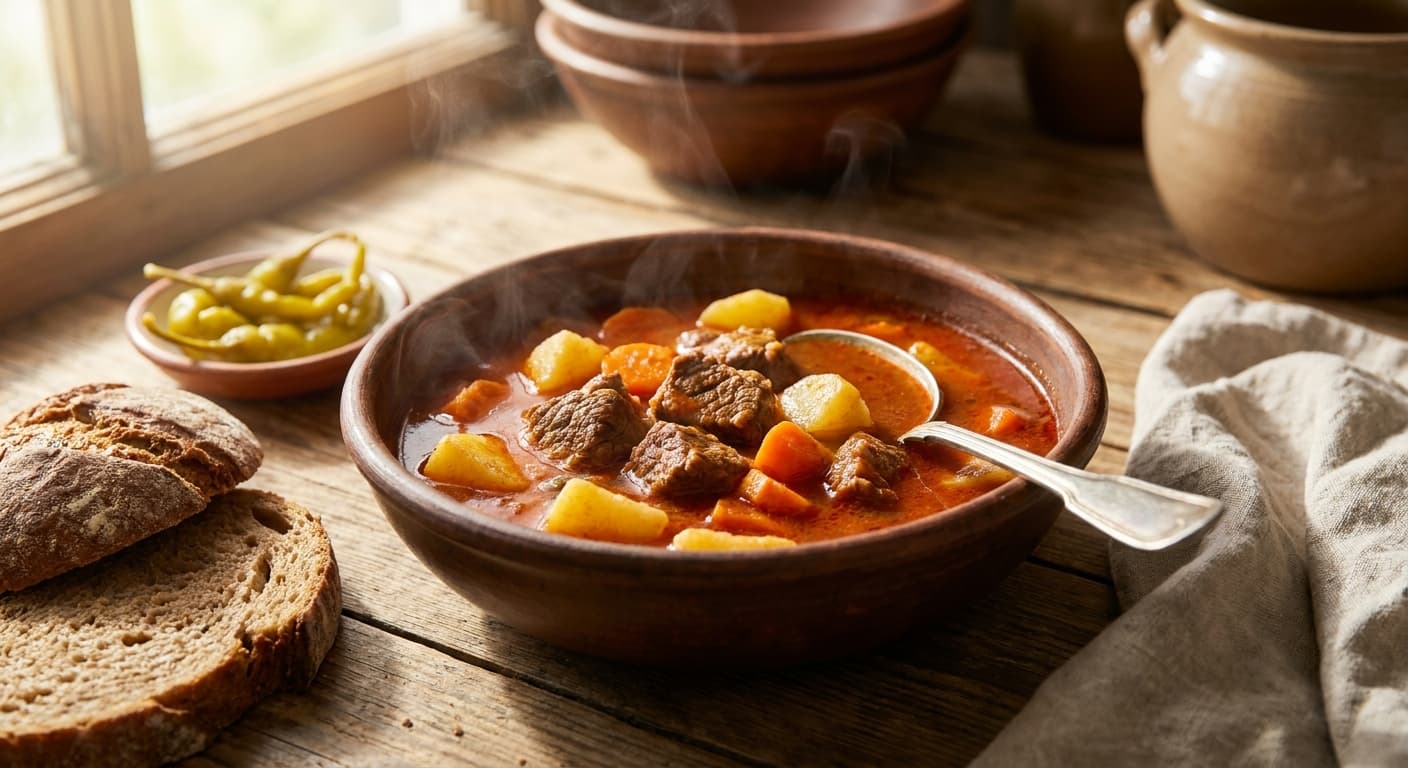
Gulyás is Hungary’s iconic paprika-scented cattlemen’s soup, traditionally cooked with beef, onions, potatoes, and small pinched dumplings called csipetke. It is hearty but brothy, not a thick restaurant stew.
Printable Recipe Card
Servings: 6 · Total: 180 min · Difficulty: medium
Ingredients (quick list)
- 900 g beef chuck (cut into 3 cm cubes)
- 40 g pork lard
- 450 g yellow onions (finely chopped)
- 3 clove garlic (minced)
- 25 g sweet Hungarian paprika
- 2 g hot Hungarian paprika
- 2 tsp caraway seeds (lightly crushed)
- 12 g fine sea salt
- 1 tsp ground black pepper
- 1 leaf bay leaf
- 1 ripe tomato (about 120 g, peeled and chopped)
- 1 Hungarian wax pepper (seeded and chopped; use green bell pepper if unavailable)
+ 7 more in the full ingredients section below.
Steps (summary)
- Pat the beef cubes dry with paper towels and season them with 4 g of the measured salt. Let the meat stand at room temperature…
- Melt the pork lard in a heavy 5 l pot or Dutch oven over medium heat. Add the onions and cook for 18 to 22 minutes, stirring of…
- Add the garlic and crushed caraway seeds and cook for 1 minute, just until fragrant. Pull the pot off the heat, stir in both pa…
- Return the pot to medium-high heat and add the beef with any juices from the bowl. Stir for 6 to 8 minutes until the meat loses…
- Add the remaining 1.65 l water, the remaining 8 g salt, black pepper, bay leaf, tomato, and Hungarian wax pepper. Bring the liq…
- Add the carrots, parsnip, and potatoes to the pot and stir carefully so the vegetables settle into the broth. Simmer uncovered…
+ 3 more steps in the full instructions section below.
Cultural Background
Gulyás began as a herdsmen’s kettle dish on the Hungarian plains and became a national symbol through paprika, cattle culture, and communal outdoor cooking. In Hungary it is usually a soup, not the thick stew often served abroad.
Equipment
💡 Tips
- Use fresh, deep-red Hungarian paprika; old paprika tastes dusty and turns the soup dull.
- Always remove the pot from direct heat before adding paprika, because burned paprika becomes bitter within seconds.
- Keep the simmer gentle after the beef is added; aggressive boiling toughens the meat and clouds the broth.
⚠️ Common Mistakes
❌ Adding paprika over high heat and letting it fry dry.
✅ Fix: Take the pot off the burner, stir in the paprika briefly, and add water immediately to prevent bitterness.
❌ Making the soup too thick like a floury stew.
✅ Fix: Use the measured water and maintain a brothy consistency; the csipetke will add only light body.
❌ Cooking potatoes from the start with the beef.
✅ Fix: Add potatoes only after the beef has simmered for about 90 minutes so they stay intact.
🧊 How to Store
Cool leftovers within 2 hours and refrigerate in airtight containers for up to 4 days. Reheat gently on the stovetop with 60 to 120 ml water if the dumplings have thickened the broth; freeze without csipetke for up to 3 months.
📅 Make Ahead
Cook the beef base through step 5 up to 2 days ahead, then chill it. Reheat gently and add the potatoes, vegetables, and fresh csipetke shortly before serving.
🍽️ Pairs Well With
- Crusty white bread
- cucumber salad
- pickled hot peppers
- dry Hungarian red wine.
Regional Variations
- Alföld-style gulyás often includes more root vegetables and a pronounced caraway aroma.
- Bográcsgulyás is cooked outdoors in a hanging kettle, often with a smokier flavor from the fire.
- Some Transdanubian versions add a little celery root and omit csipetke for a clearer broth.
Ingredients
- 900 gbeef chuck (cut into 3 cm cubes)
- 40 gpork lard
- 450 gyellow onions (finely chopped)
- 3 clovegarlic (minced)
- 25 gsweet Hungarian paprika
- 2 ghot Hungarian paprika
- 2 tspcaraway seeds (lightly crushed)
- 12 gfine sea salt
- 1 tspground black pepper
- 1 leafbay leaf
- 1ripe tomato (about 120 g, peeled and chopped)
- 1Hungarian wax pepper (seeded and chopped; use green bell pepper if unavailable)
- 250 gcarrots (peeled and cut into 2 cm pieces)
- 150 gparsnip (peeled and cut into 2 cm pieces)
- 600 gwaxy potatoes (peeled and cut into 3 cm cubes)
- 1.8 lwater
- 1eggs
- 80 gall-purpose flour
- 6 sprigflat-leaf parsley (leaves chopped)
🔄 Substitutions
- pork lard→ beef dripping
- Hungarian wax pepper→ green bell pepper
- parsnip→ celeriac
Instructions
- 1
Pat the beef cubes dry with paper towels and season them with 4 g of the measured salt. Let the meat stand at room temperature for 20 minutes while you chop the vegetables, because dry, slightly tempered beef browns and stews more evenly.
- 2
Melt the pork lard in a heavy 5 l pot or Dutch oven over medium heat. Add the onions and cook for 18 to 22 minutes, stirring often, until they are soft, golden, and reduced but not dark brown.
- 3
Add the garlic and crushed caraway seeds and cook for 1 minute, just until fragrant. Pull the pot off the heat, stir in both paprikas for 20 seconds, and immediately add 150 ml of the measured water so the paprika blooms without scorching.
- 4
Return the pot to medium-high heat and add the beef with any juices from the bowl. Stir for 6 to 8 minutes until the meat loses its raw color and is well coated in the onion-paprika base.
- 5
Add the remaining 1.65 l water, the remaining 8 g salt, black pepper, bay leaf, tomato, and Hungarian wax pepper. Bring the liquid to a gentle boil, then reduce the heat to low, cover partly, and simmer for 90 minutes until the beef is beginning to turn tender.
- 6
Add the carrots, parsnip, and potatoes to the pot and stir carefully so the vegetables settle into the broth. Simmer uncovered for 30 to 35 minutes, until the potatoes are tender and the beef can be pierced easily with a fork.
- 7
While the vegetables cook, make the csipetke by mixing the egg, flour, and 1 g salt into a firm dough. Knead it for 2 minutes, then pinch off pea-sized bits with flour-dusted fingers and spread them on a lightly floured plate.
- 8
Drop the csipetke into the gently bubbling goulash and cook for 5 to 7 minutes, stirring once or twice so they do not stick together. The dumplings are done when they float and taste tender but still slightly chewy.
- 9
Remove the bay leaf and rest the goulash off the heat for 10 minutes before serving. Ladle it into deep bowls and finish each serving with chopped parsley, keeping the texture brothy rather than reducing it into a thick stew.
🪪 Recipe Passport
Cultural Background
Gulyás began as a herdsmen’s kettle dish on the Hungarian plains and became a national symbol through paprika, cattle culture, and communal outdoor cooking. In Hungary it is usually a soup, not the thick stew often served abroad.
Regional Variations
Researched from multiple sources and validated by the Zaffaron editorial team. Every recipe is tested for accuracy, measurements, and cultural authenticity.
📚 Sources & Cultural References
- George Lang — The Cuisine of Hungary — (1971)
- Károly Gundel — Gundel's Hungarian Cookbook — (1992)
Sources cited by the Zaffaron editorial team during recipe research. Cultural and culinary references supporting authenticity claims.
Nutrition per serving
Pairs well with
If you enjoyed this recipe, here are a few related Zaffaron recipes to try next.
Does your family make this differently?
Every family has their own version. Maybe your grandmother adds a secret ingredient, or your aunt has a completely different technique. Preserve your family's version — with their name on it, forever.
You Might Also Like
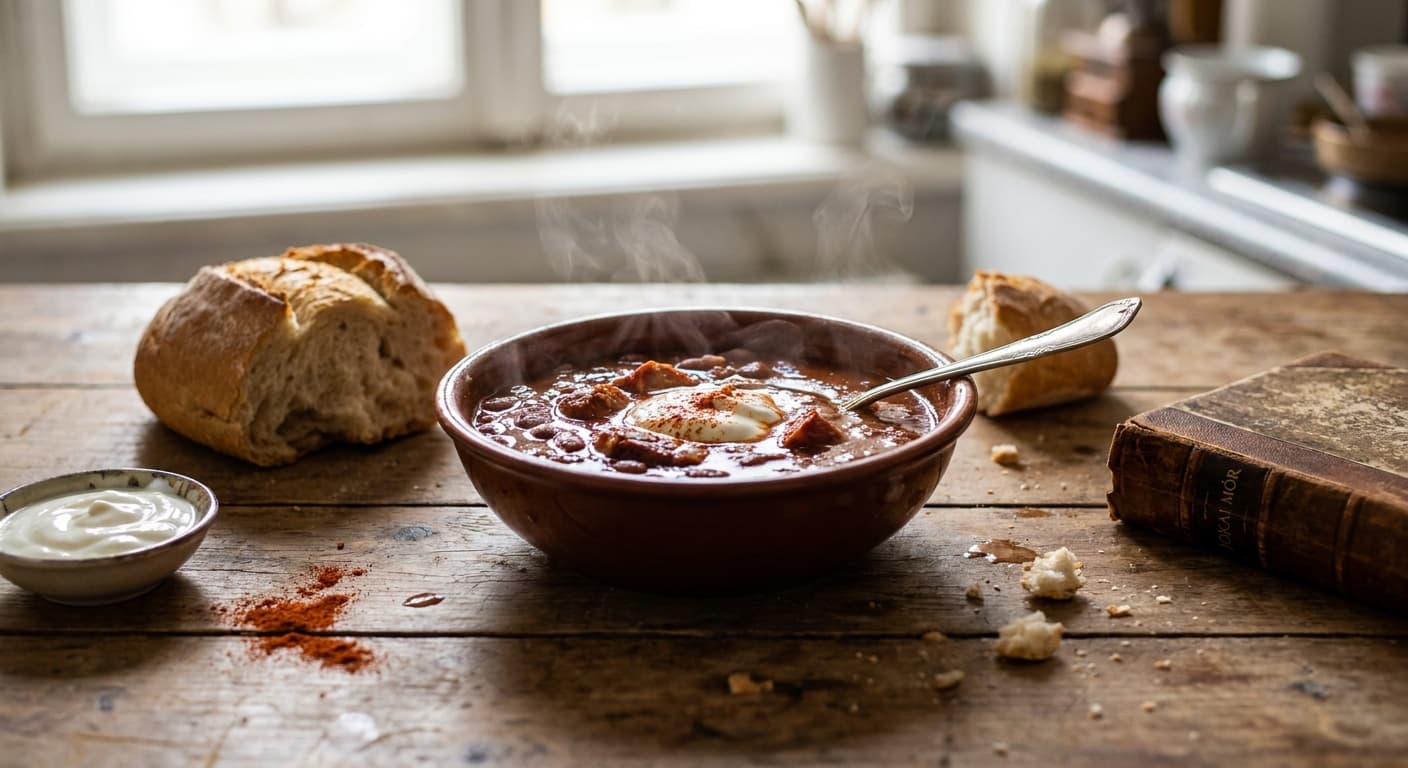
Jókai Bean Soup (Jókai-bableves) — Smoked Pork and Tejföl Bean Soup
Hungarian · Soups · 185 min
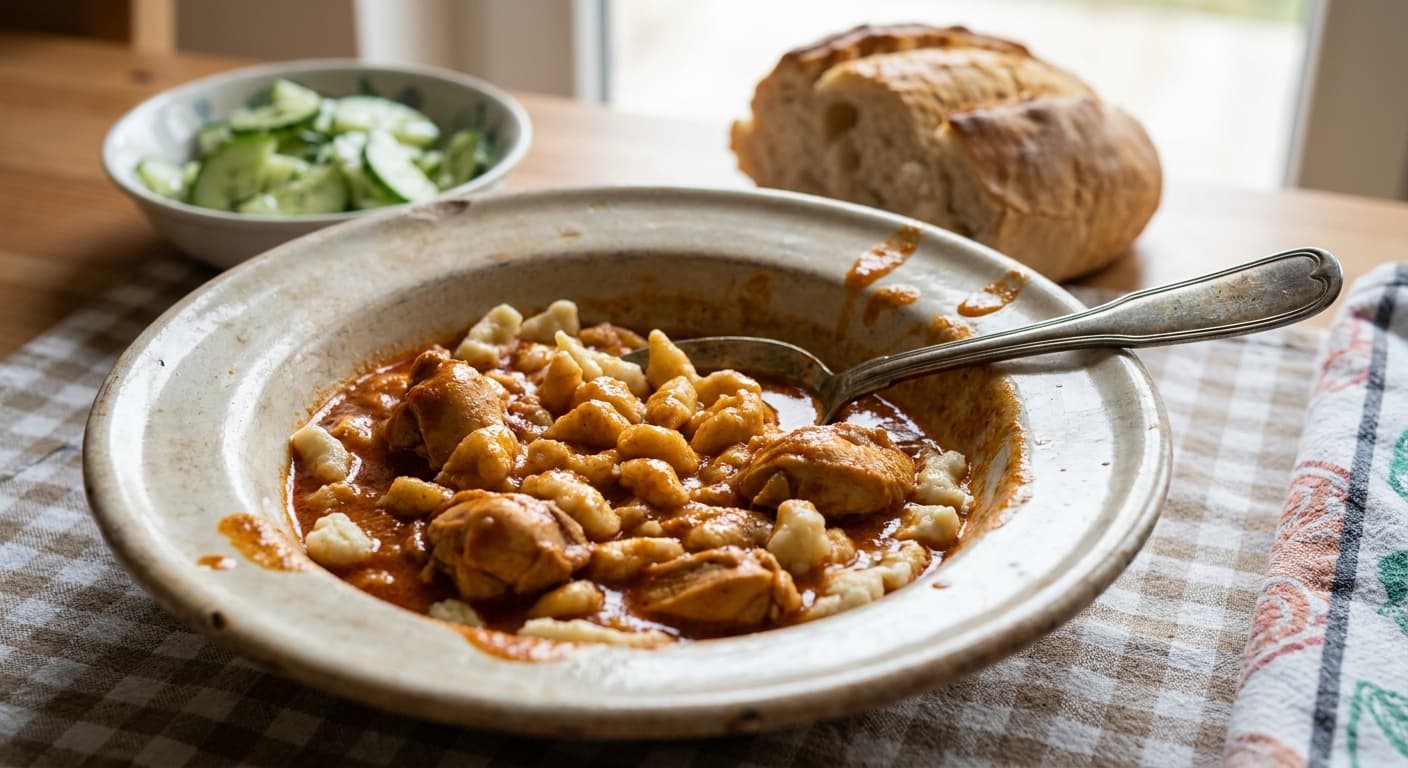
Hungarian Chicken Paprikash (Csirkepaprikás) — Paprika-Braised Chicken with Sour Cream
Hungarian · Stews · 75 min

Chimney Cake (Kürtőskalács) — Hungarian Spiral Pastry with Cinnamon Sugar
Hungarian · Desserts · 59 min
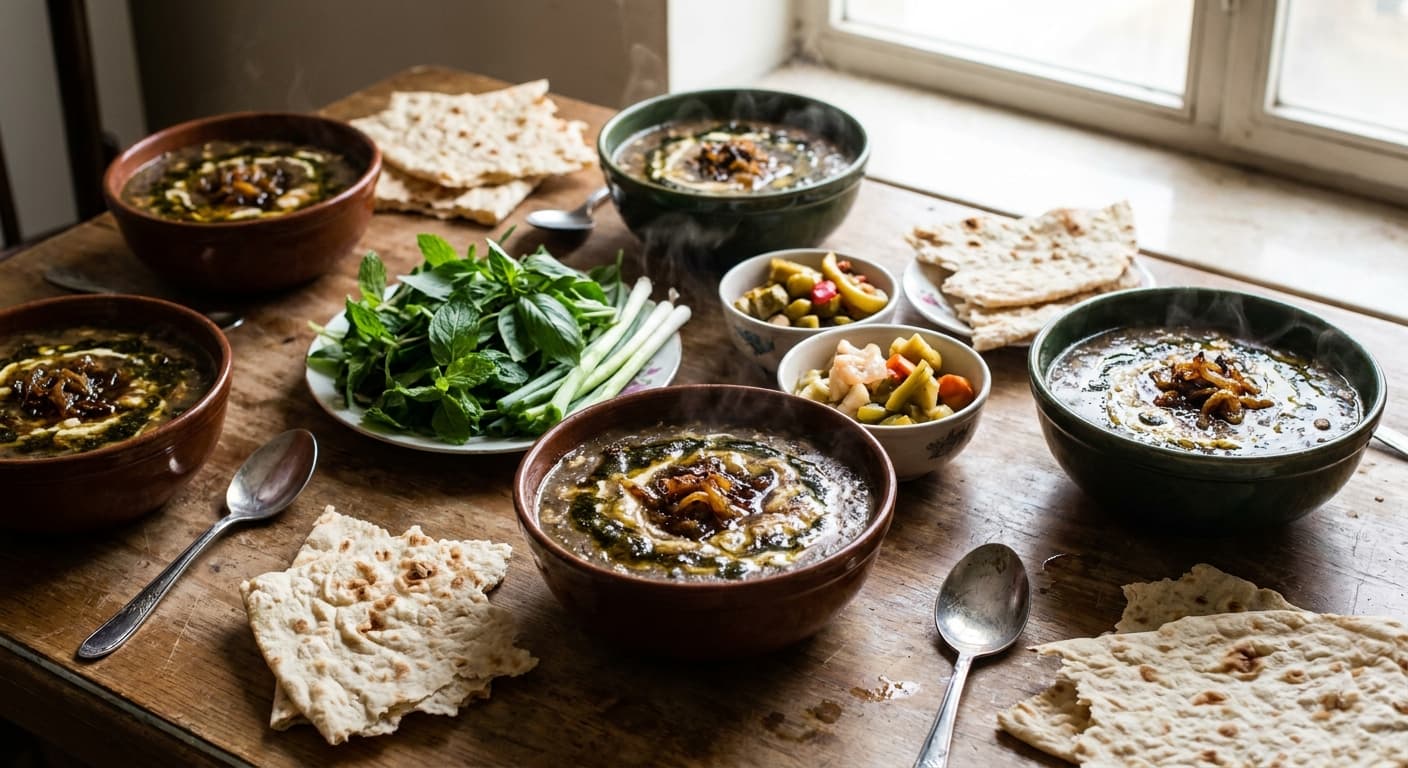
Ash-e Torsh (آش ترش) — Sour Herb and Legume Soup
Persian · Soups · 145 min
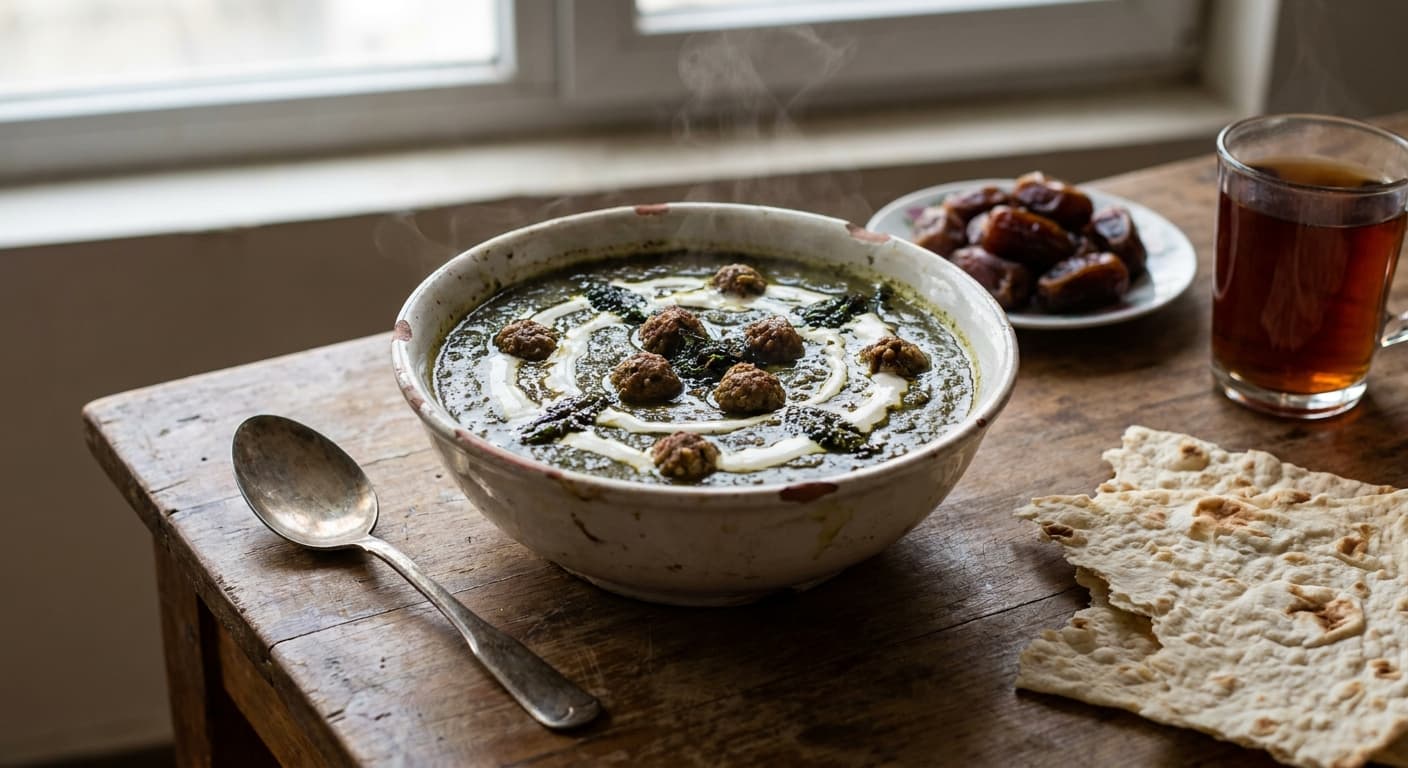
Ash-e Sak (آش ساک) — Golestani Spinach, Legume, and Meatball Soup
Persian · Soups · 175 min
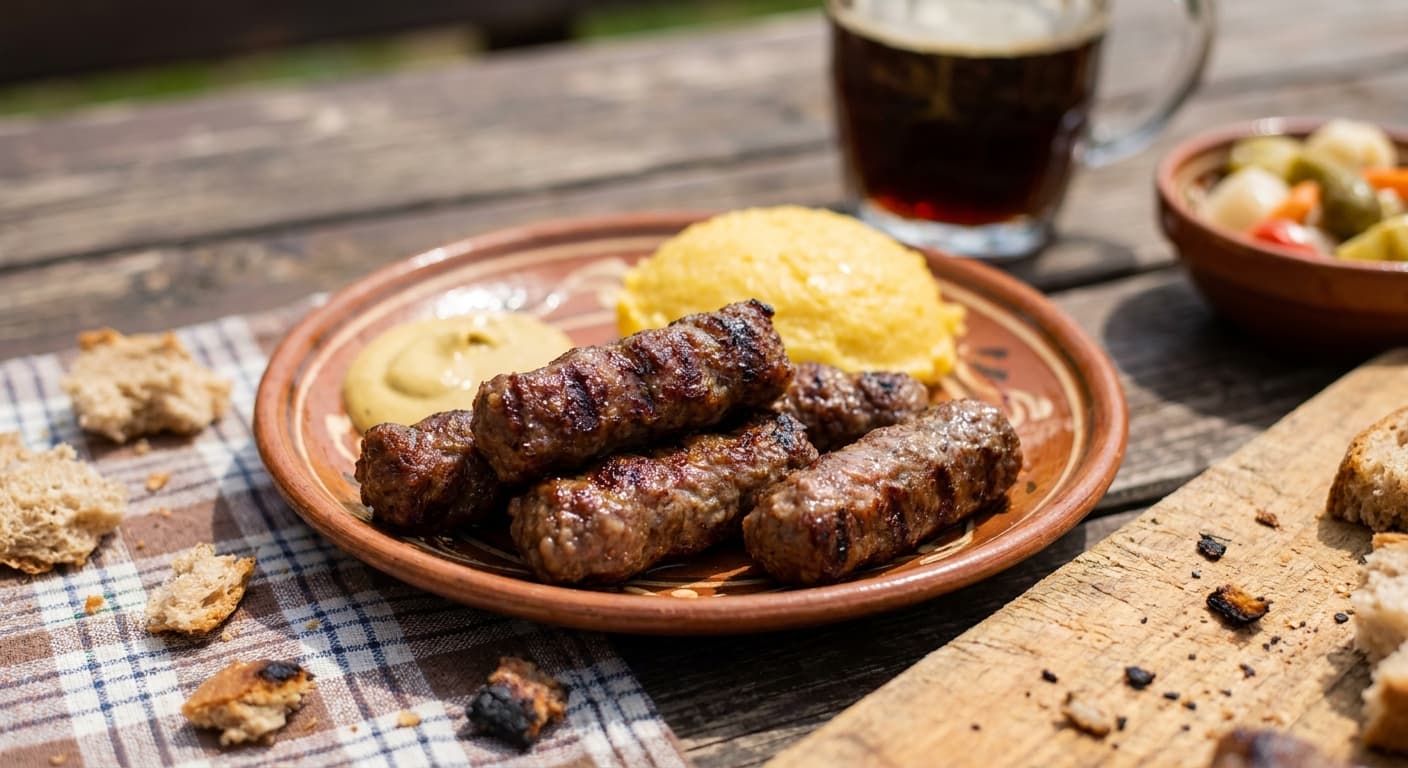
Mici (Mititei) — Romanian Grilled Garlic Sausages
Romanian · Kebabs · 47 min
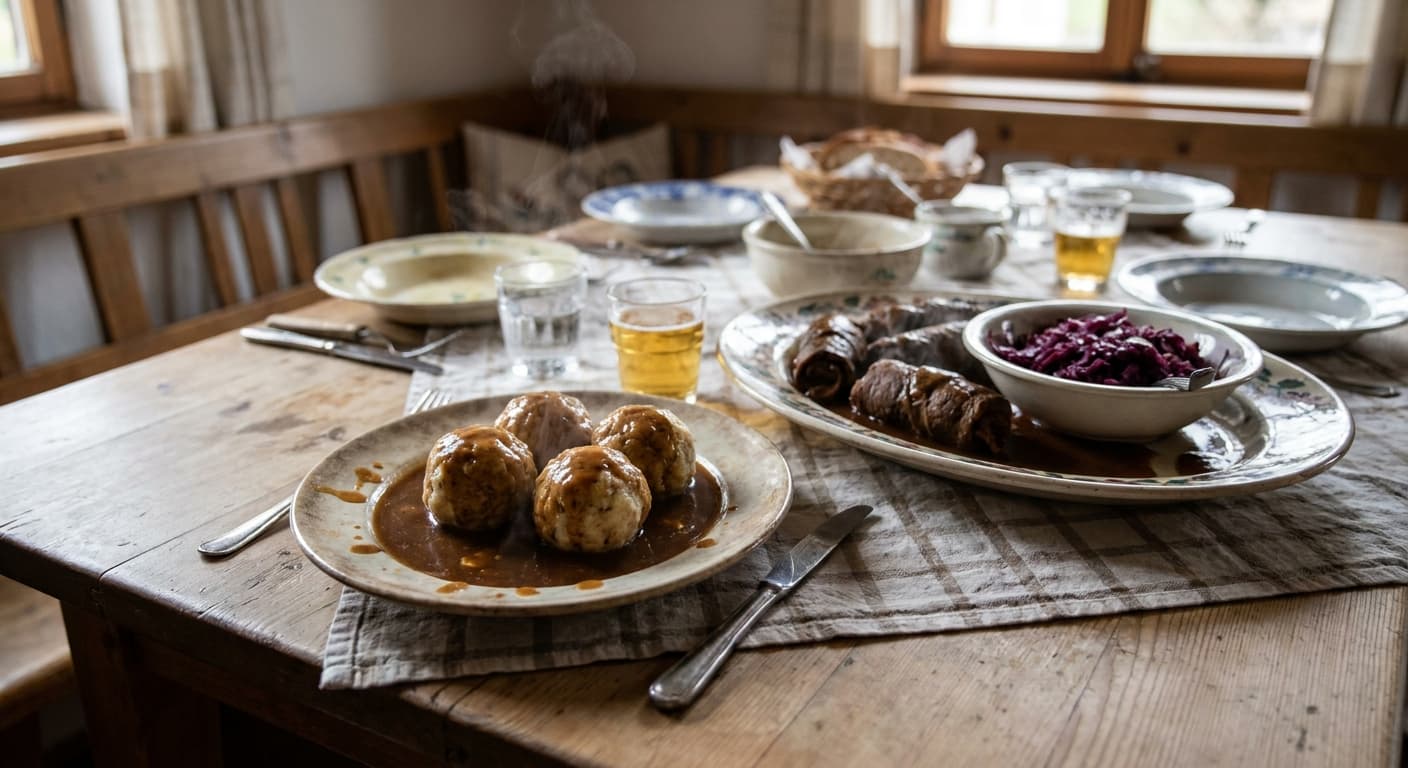
German Bread Dumplings (Semmelknödel) — Bavarian Bread Dumplings
German · Side Dishes · 50 min
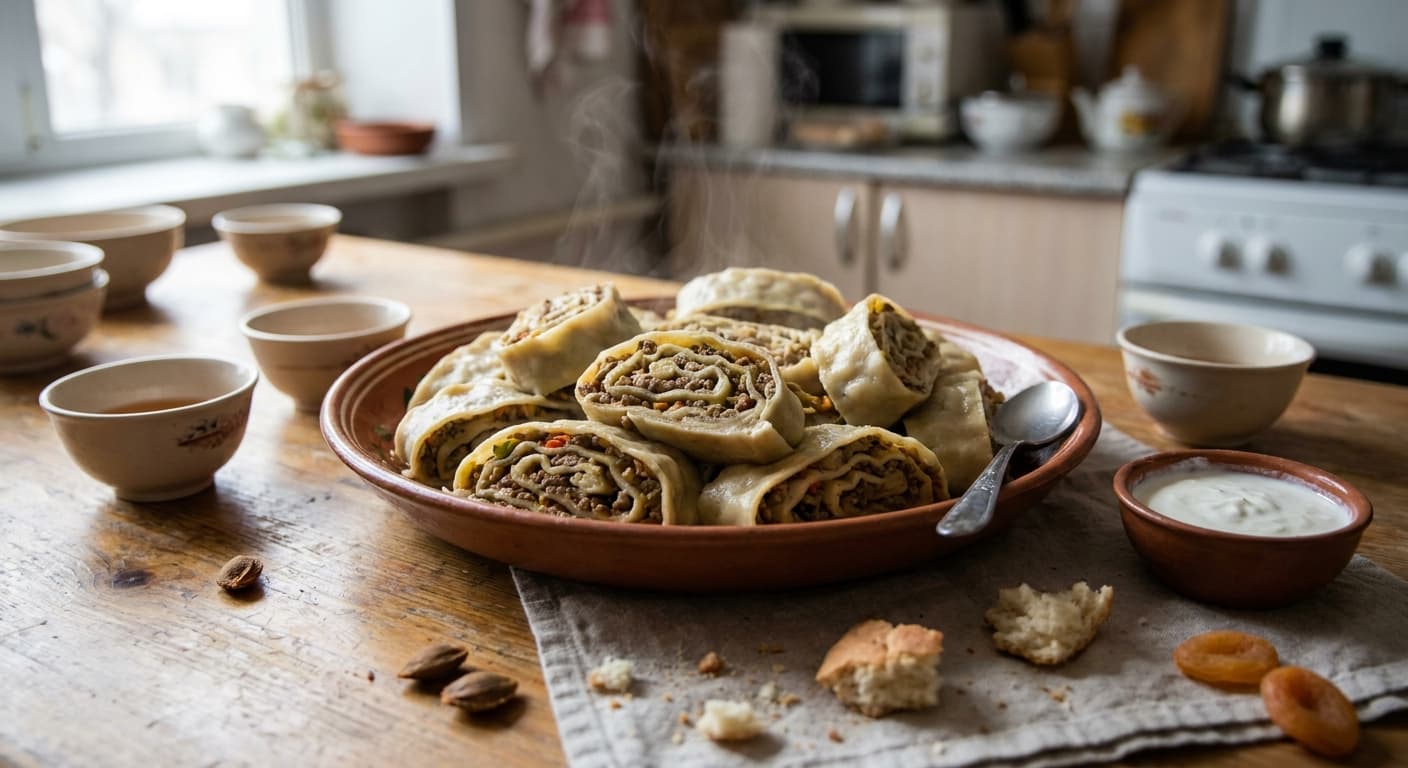
Orromo (Оромо) — Kyrgyz Steamed Rolled Dumpling with Lamb and Pumpkin
Kyrgyz · Main Courses · 105 min
Reviews
Cooked this recipe?
Tap the stars to rate it — that's all it takes. A few words are welcome but optional.
No ratings yet. Cooked this one? Be the first to rate it — it takes one tap.