Khorak-e Rangin-e Sabzijat (خوراک رنگین سبزیجات) — Summer Vegetable Medley
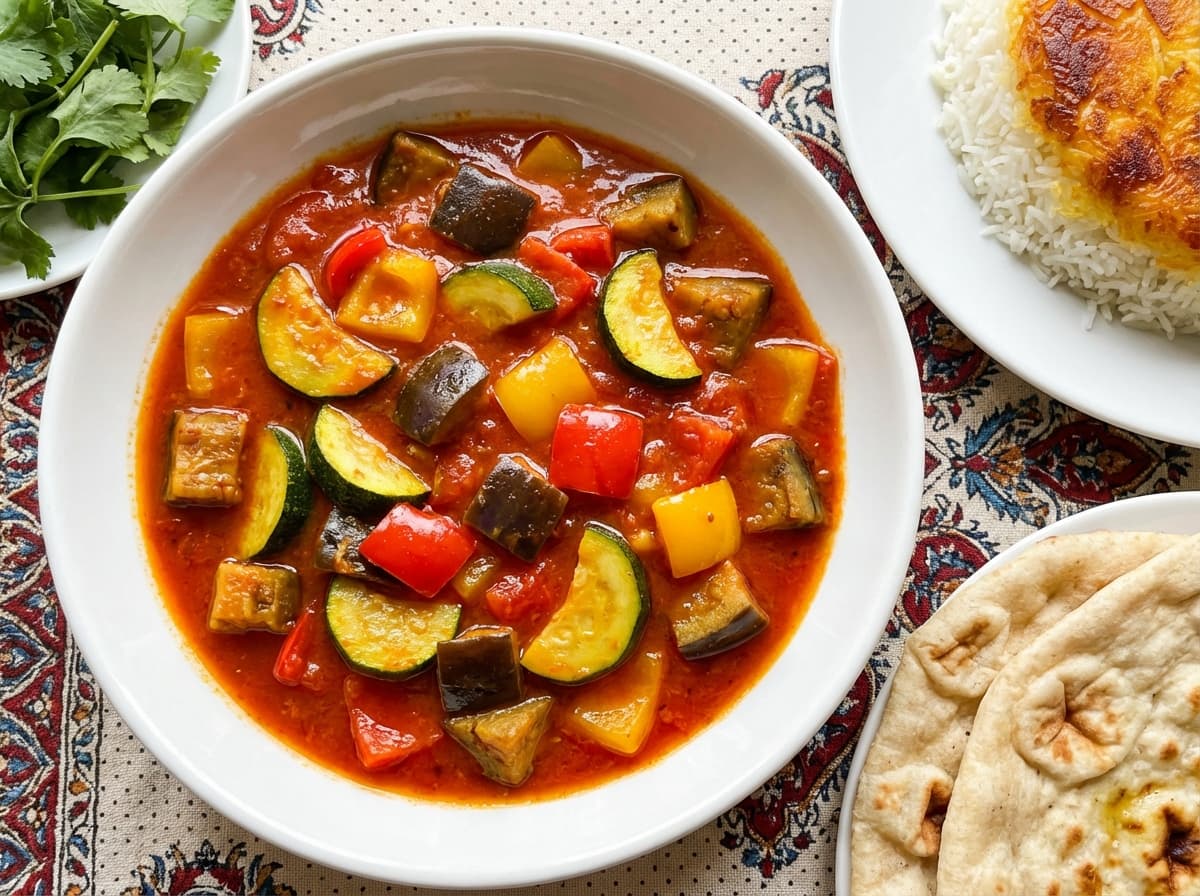
Khorak-e Rangin-e Sabzijat is a homemade Iranian stew made with summer vegetables, gently simmered with turmeric and the aroma of garlic and onions until it becomes silky in texture with a warm, balanced flavor—ideal for a light lunch or a plant-based dinner.
Printable Recipe Card
Servings: 4 · Total: 80 min · Difficulty: easy
Ingredients (quick list)
- 450 g Eggplant (globe eggplant), peeled in alternating stripes, cut into 2.5 cm cubes (Choose firm, glossy eggplants; cubing helps them cook evenly)
- 10 g Kosher salt (For salting eggplant to reduce bitterness and oil absorption)
- 300 g Zucchini, cut into 2 cm half-moons (Medium zucchini; avoid very large watery ones)
- 180 g Red bell pepper, deseeded, cut into 2.5 cm squares (About 1 large pepper)
- 180 g Yellow bell pepper, deseeded, cut into 2.5 cm squares (About 1 large pepper)
- 500 g Tomatoes, grated on the large holes (skins discarded) or finely chopped (Ripe summer tomatoes give the best sweetness and body)
- 220 g Onion, finely diced (About 1 large onion)
- 18 g Garlic cloves, minced (About 5–6 cloves; mince finely so it perfumes the stew)
- 60 ml Olive oil (Divided: for sautéing and searing vegetables)
- 2 tsp Ground turmeric (Earthy warmth and golden color)
- 1 tsp Black pepper, freshly ground (Adjust to taste)
- 240 ml Water (Add gradually to control stew thickness)
Steps (summary)
- Place the eggplant cubes in a colander set over a bowl. Sprinkle evenly with 10 g kosher salt, toss, and let stand 20 minutes t…
- Heat 30 ml olive oil in a wide, heavy pot over medium-high heat (about 190°C surface heat). Add eggplant in a single layer and…
- Lower heat to medium. Add the remaining 30 ml olive oil, then sauté onion with 1 tablespoon water for 8–10 minutes, stirring, u…
- Stir in turmeric and black pepper and toast 30 seconds to bloom the spices. Add red and yellow bell peppers; cook 5 minutes, st…
- Return eggplant and zucchini to the pot. Add 240 ml water, stir gently, and bring to a steady simmer. Cover and cook on low hea…
- Uncover and simmer 5–8 minutes to concentrate the sauce to a spoon-coating consistency. Turn off heat and rest the stew 10 minu…
Cultural Background
Vegetable khorak is an everyday, well-loved dish in Iranian home cooking, using minimal ingredients to draw out the maximum aroma and flavor from seasonal produce. The combination of turmeric, onions, and tomatoes is a signature of many Iranian home-style stews, and it’s commonly served with rice or bread as a complete meal.
Equipment
💡 Tips
- Searing eggplant before simmering keeps it intact and reduces the amount of oil it absorbs.
- Grating tomatoes creates a smooth, naturally thick sauce without needing paste or flour.
- Keep bell peppers slightly al dente for a true “rangin” (rainbow) look and fresher flavor.
⚠️ Common Mistakes
❌ Skipping the eggplant salting and drying step
💡 Why: Wet, unsalted eggplant absorbs more oil and can taste bitter, turning the stew greasy.
✅ Fix: Salt eggplant with 10 g kosher salt for 20 minutes, rinse briefly, and pat completely dry before searing.
❌ Cooking all vegetables from raw directly in the tomato sauce
💡 Why: Eggplant can collapse and peppers can turn dull, losing the ‘rangin’ look and layered texture.
✅ Fix: Sear eggplant and zucchini first, then simmer gently; add peppers to the sauce base before the long simmer.
❌ Boiling on high heat
💡 Why: Rapid boiling breaks vegetables and makes the sauce watery instead of glossy and thick.
✅ Fix: Maintain a low simmer, covered, then finish uncovered for 5–8 minutes to reduce to the right consistency.
🧊 How to Store
Cool to room temperature within 2 hours, then refrigerate in an airtight container up to 4 days. Reheat gently on low heat with 30–60 ml water to loosen. Freeze up to 2 months; thaw overnight in the fridge and rewarm slowly to preserve vegetable texture.
📅 Make Ahead
Prepare and cut all vegetables up to 24 hours ahead; store separately in airtight containers in the refrigerator (keep eggplant unsalted until cooking day). The finished stew tastes even better after resting overnight; reheat gently on low heat for 10–12 minutes.
🍽️ Pairs Well With
- Chelo (steamed Persian rice)
- Kateh (Persian-style absorption rice)
- Sangak or lavash
- Shirazi salad
Regional Variations
- Tehran (home-style)Often cooked thicker and served as a ‘khorak’ with sangak; vegetables are cut smaller and simmered longer for a more unified, silky texture.
- Shiraz/FarsTypically brighter and lighter: peppers are kept more crisp and the stew is finished with a slightly looser tomato sauce to spoon over kateh rice.
Ingredients
- 450 gEggplant (globe eggplant), peeled in alternating stripes, cut into 2.5 cm cubes (Choose firm, glossy eggplants; cubing helps them cook evenly)
- 10 gKosher salt (For salting eggplant to reduce bitterness and oil absorption)
- 300 gZucchini, cut into 2 cm half-moons (Medium zucchini; avoid very large watery ones)
- 180 gRed bell pepper, deseeded, cut into 2.5 cm squares (About 1 large pepper)
- 180 gYellow bell pepper, deseeded, cut into 2.5 cm squares (About 1 large pepper)
- 500 gTomatoes, grated on the large holes (skins discarded) or finely chopped (Ripe summer tomatoes give the best sweetness and body)
- 220 gOnion, finely diced (About 1 large onion)
- 18 gGarlic cloves, minced (About 5–6 cloves; mince finely so it perfumes the stew)
- 60 mlOlive oil (Divided: for sautéing and searing vegetables)
- 2 tspGround turmeric (Earthy warmth and golden color)
- 1 tspBlack pepper, freshly ground (Adjust to taste)
- 240 mlWater (Add gradually to control stew thickness)
🔄 Substitutions
- Olive oil→ Grapeseed oil
- Fresh tomatoes (500 g)→ Canned crushed tomatoes (450 g) + 1 tsp sugar (4 g)
- Eggplant (450 g)→ Japanese eggplant (500 g)
Instructions
- 1
Place the eggplant cubes in a colander set over a bowl. Sprinkle evenly with 10 g kosher salt, toss, and let stand 20 minutes to draw out bitterness and reduce oil absorption. Rinse quickly under cool water, then pat very dry with a clean towel; moisture will prevent proper browning.
- 2
Heat 30 ml olive oil in a wide, heavy pot over medium-high heat (about 190°C surface heat). Add eggplant in a single layer and sear 6–8 minutes, turning twice, until lightly browned on several sides. Transfer to a plate. Add zucchini and sear 3–4 minutes, just to color; transfer.
- 3
Lower heat to medium. Add the remaining 30 ml olive oil, then sauté onion with 1 tablespoon water for 8–10 minutes, stirring, until soft and golden at the edges. Add minced garlic and cook 60–90 seconds until fragrant, keeping it from browning to avoid bitterness.
- 4
Stir in turmeric and black pepper and toast 30 seconds to bloom the spices. Add red and yellow bell peppers; cook 5 minutes, stirring, until slightly softened but still bright. Pour in the grated tomatoes and scrape the pot bottom; simmer uncovered 10–12 minutes until thick and jammy.
- 5
Return eggplant and zucchini to the pot. Add 240 ml water, stir gently, and bring to a steady simmer. Cover and cook on low heat 20–25 minutes, stirring once halfway, until eggplant is silky and peppers are tender. Taste and adjust seasoning with additional salt if needed.
- 6
Uncover and simmer 5–8 minutes to concentrate the sauce to a spoon-coating consistency. Turn off heat and rest the stew 10 minutes; this settling time helps the vegetables absorb the tomato-turmeric base and prevents breaking. Serve warm with rice or flatbread, spooning sauce over the top.
🪪 Recipe Passport
Cultural Background
Vegetable khorak is an everyday, well-loved dish in Iranian home cooking, using minimal ingredients to draw out the maximum aroma and flavor from seasonal produce. The combination of turmeric, onions, and tomatoes is a signature of many Iranian home-style stews, and it’s commonly served with rice or bread as a complete meal.
Regional Variations
Researched from multiple sources and validated by the Zaffaron editorial team. Every recipe is tested for accuracy, measurements, and cultural authenticity.
Nutrition per serving
Pairs well with
If you enjoyed this recipe, here are a few related Zaffaron recipes to try next.
- Khorak Makaroni ba Mahi (خوراک ماکارونی با ماهی) — Persian-Style Fish Pasta with Citrus Herbs
- Khorak Morgh va Pooneh (خوراک مرغ و پونه) — Persian Chicken and Mint Stew with Narenj
- Khorak-e Goosht o Felfel (خوراک گوشت و فلفل) — Persian Meat and Pepper Sauté
- Khorak-e Loobia Sabz (خوراک لوبیا سبز) — Persian-Style Green Bean and Sausage Medley
Does your family make this differently?
Every family has their own version. Maybe your grandmother adds a secret ingredient, or your aunt has a completely different technique. Preserve your family's version — with their name on it, forever.
You Might Also Like
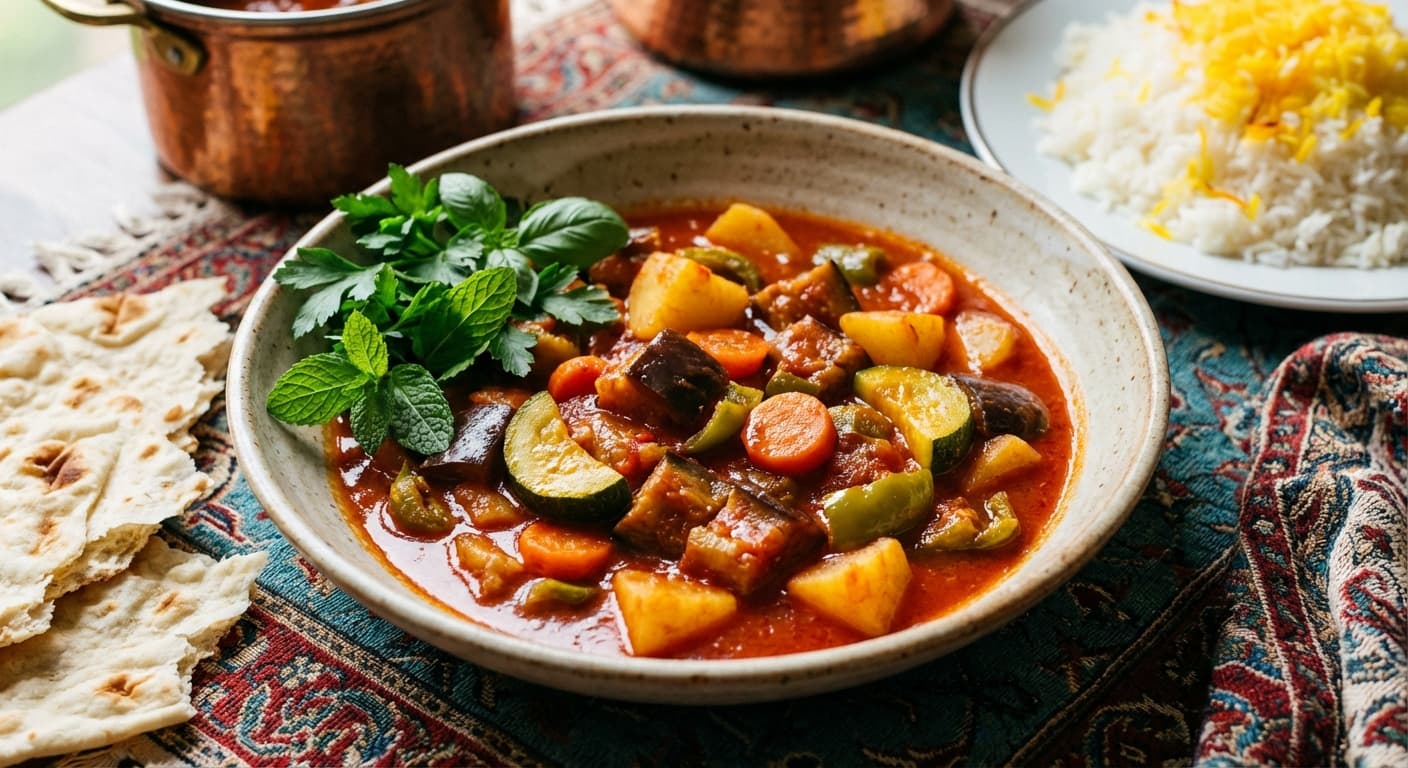
Yatimcheh (یتیمچه) — Persian Slow-Cooked Summer Vegetable Stew
Persian · Stews · 100 min
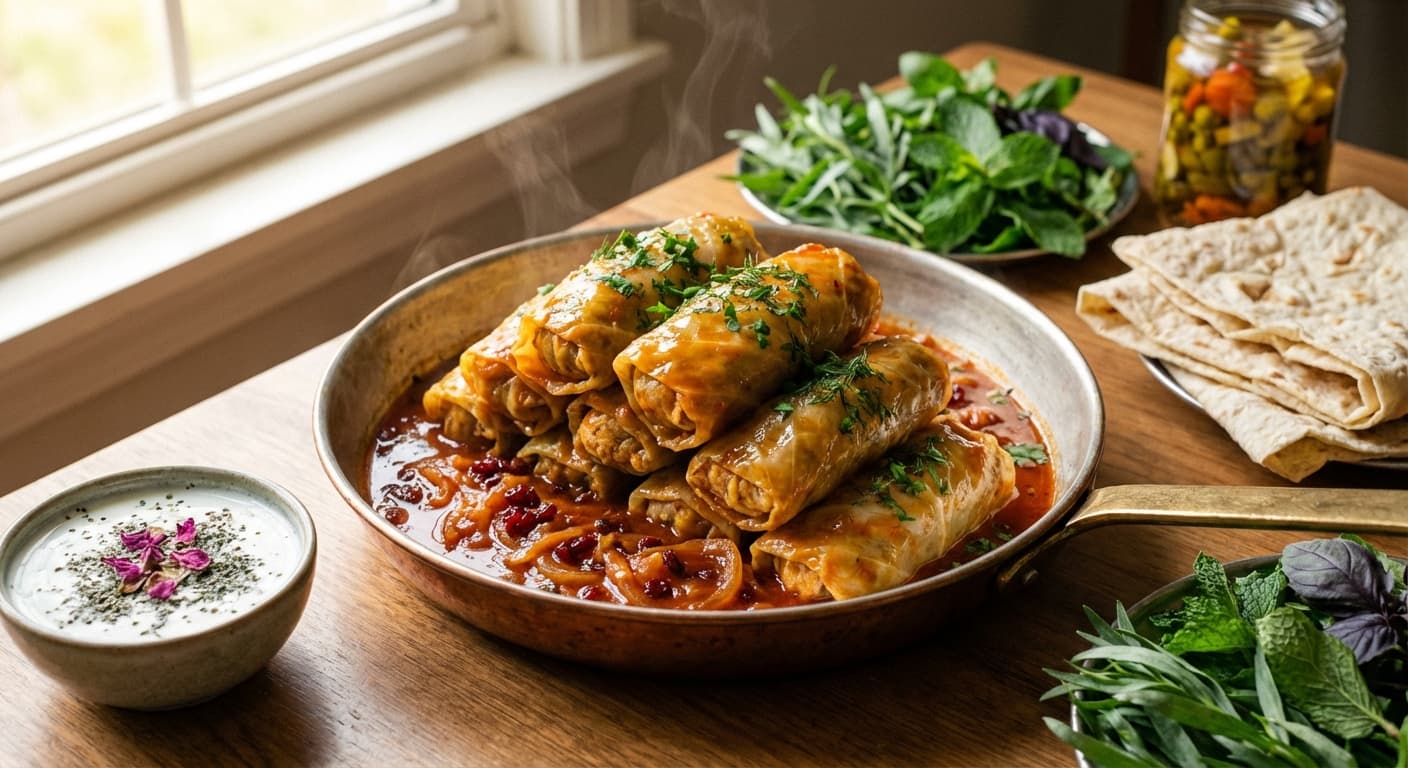
Chicken Stuffed Cabbage Rolls (دلمه کلم با مرغ) — Herb-Scented Persian Dolmeh in Tomato Saffron Sauce
Persian · Main Courses · 90 min
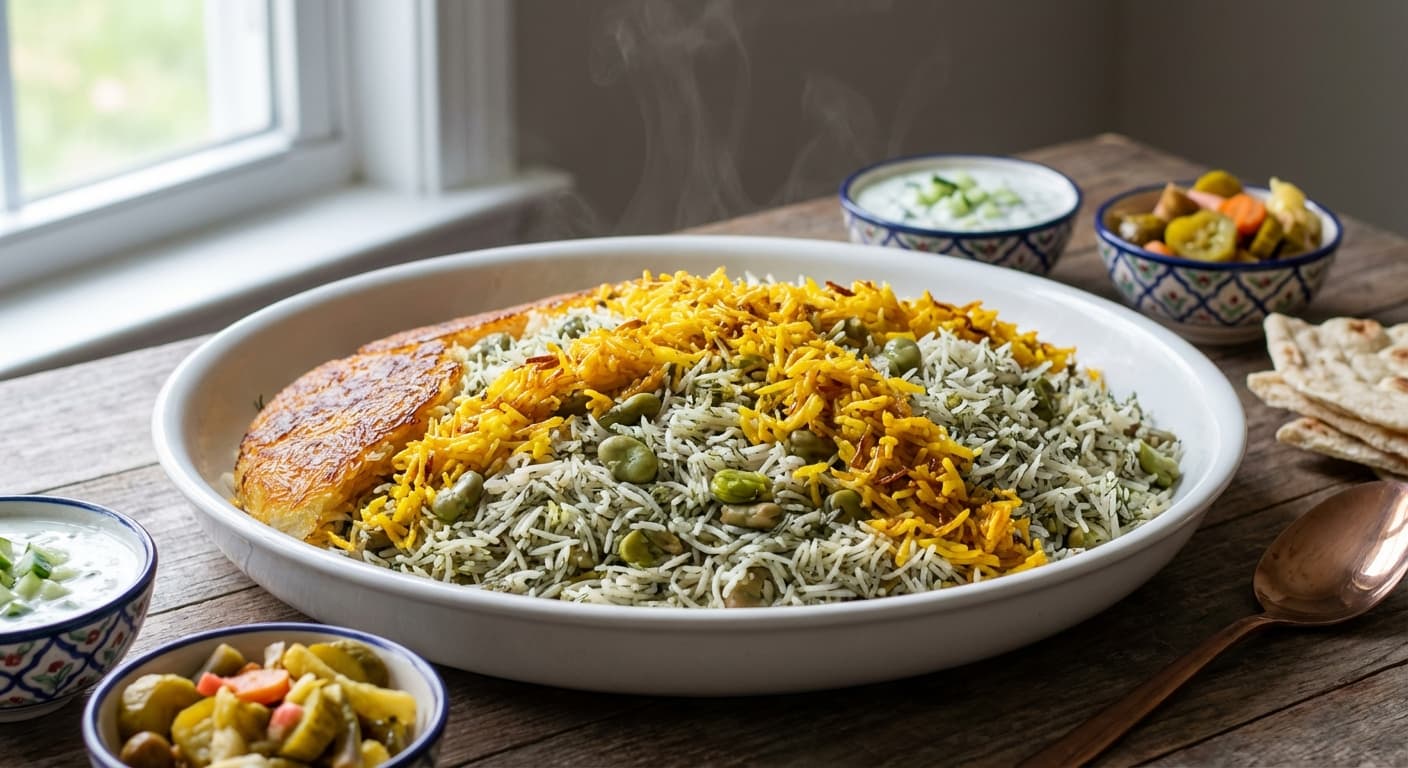
Baghali Polo (باقالی پلو) — Persian Dill and Fava Bean Rice with Saffron
Persian · Rice Dishes · 95 min
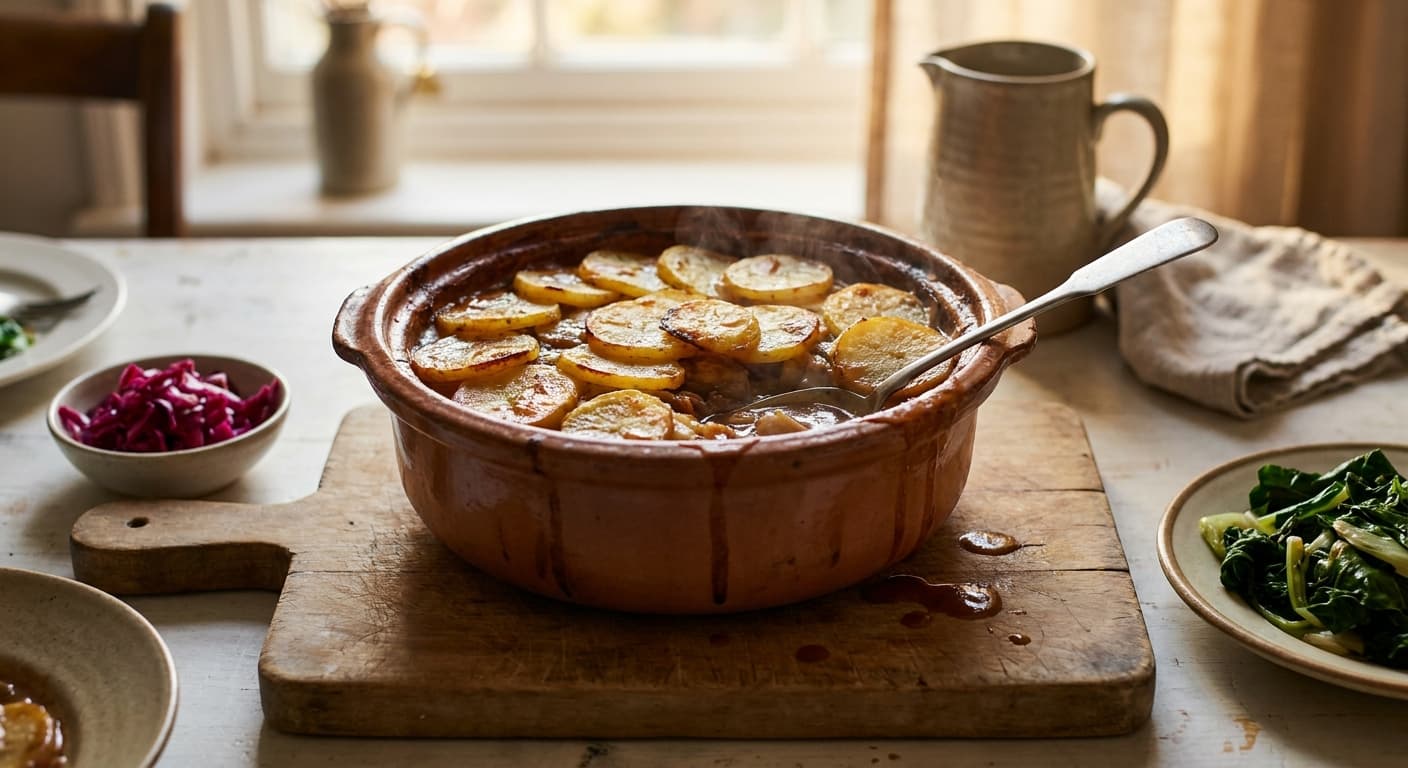
Lancashire Hotpot (Lancashire Hotpot) — Lamb and Potato Oven Stew
British · Stews · 180 min
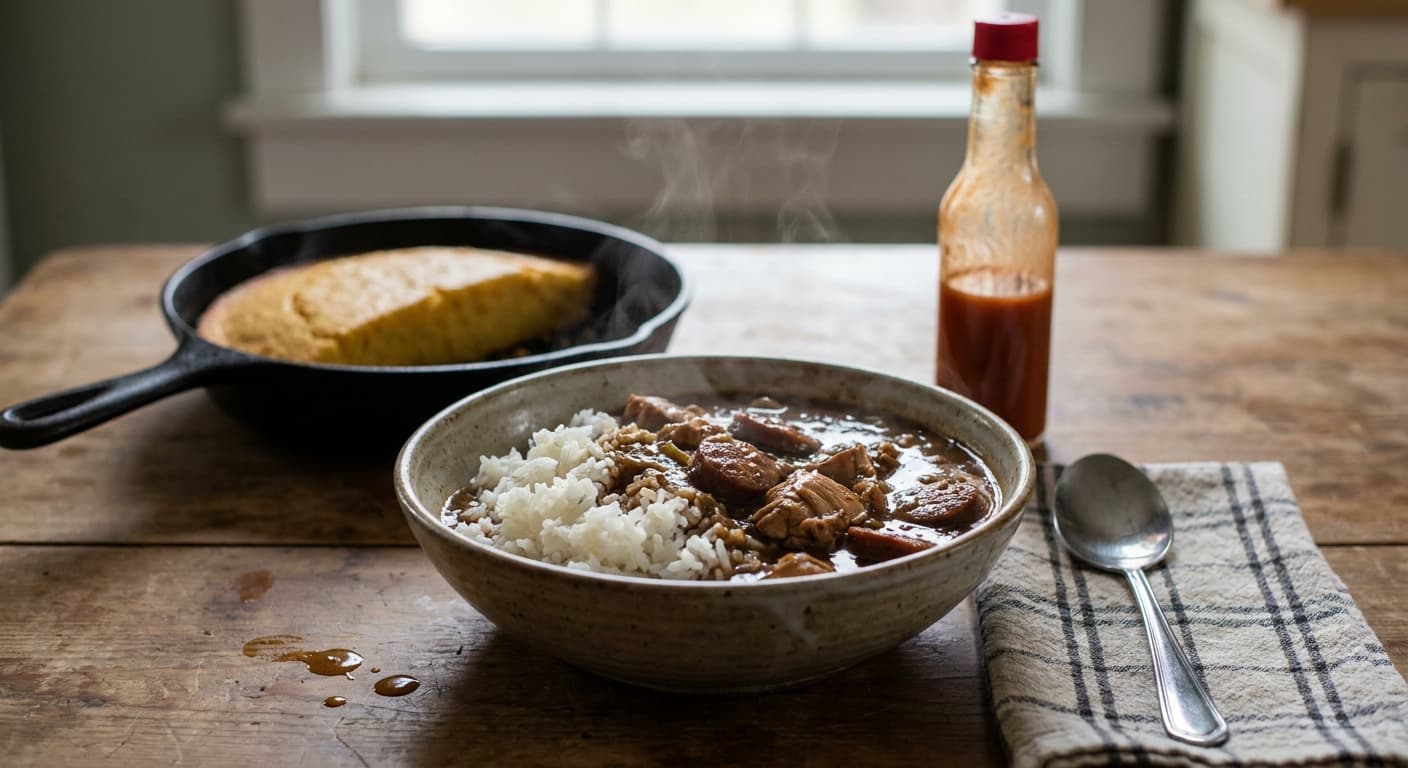
Chicken and Andouille Gumbo (English) — Louisiana Roux Stew
American · Stews · 120 min
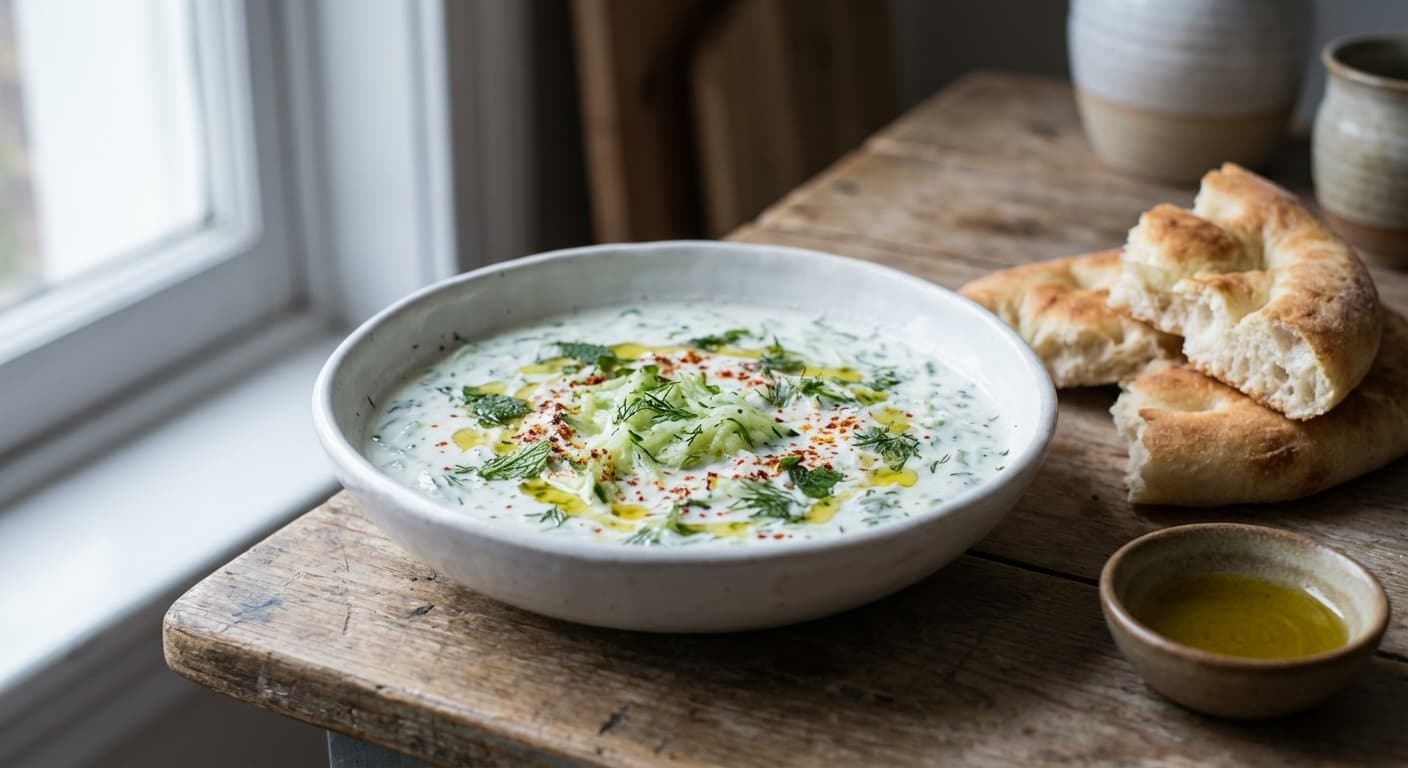
Cacık (Yoğurtlu Salatalık Mezesi) — Chilled Turkish Yogurt, Cucumber & Mint Dip
Turkish · Appetizers · 15 min
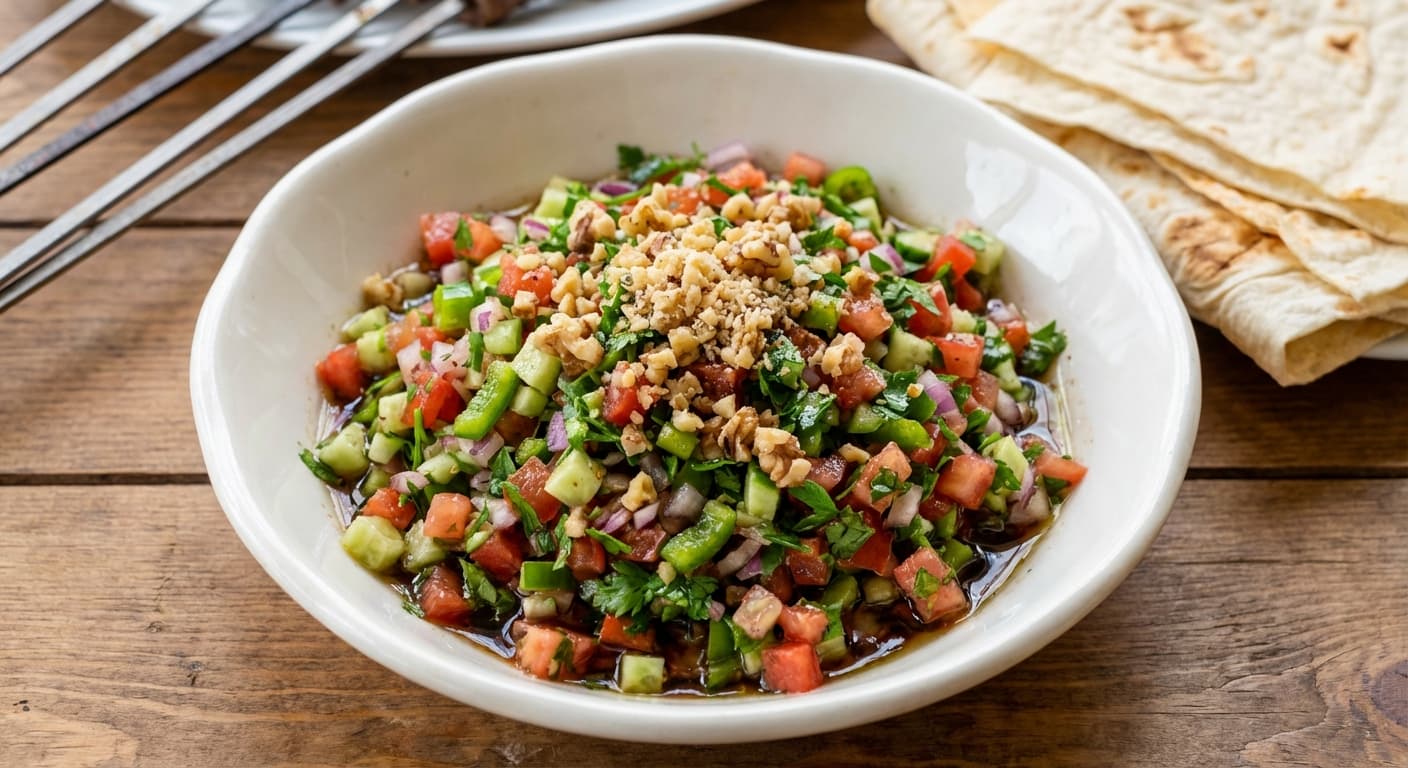
Gavurdağı Salad (Gavurdağı Salatası) — Finely Chopped Walnut & Pomegranate Salad
Turkish · Salads · 20 min
Pork Sinigang (Sinigang na Baboy) — Filipino Tamarind-Sour Pork Soup
Filipino · Soups · 120 min
Reviews
Cooked this recipe?
Tap the stars to rate it — that's all it takes. A few words are welcome but optional.
No ratings yet. Cooked this one? Be the first to rate it — it takes one tap.