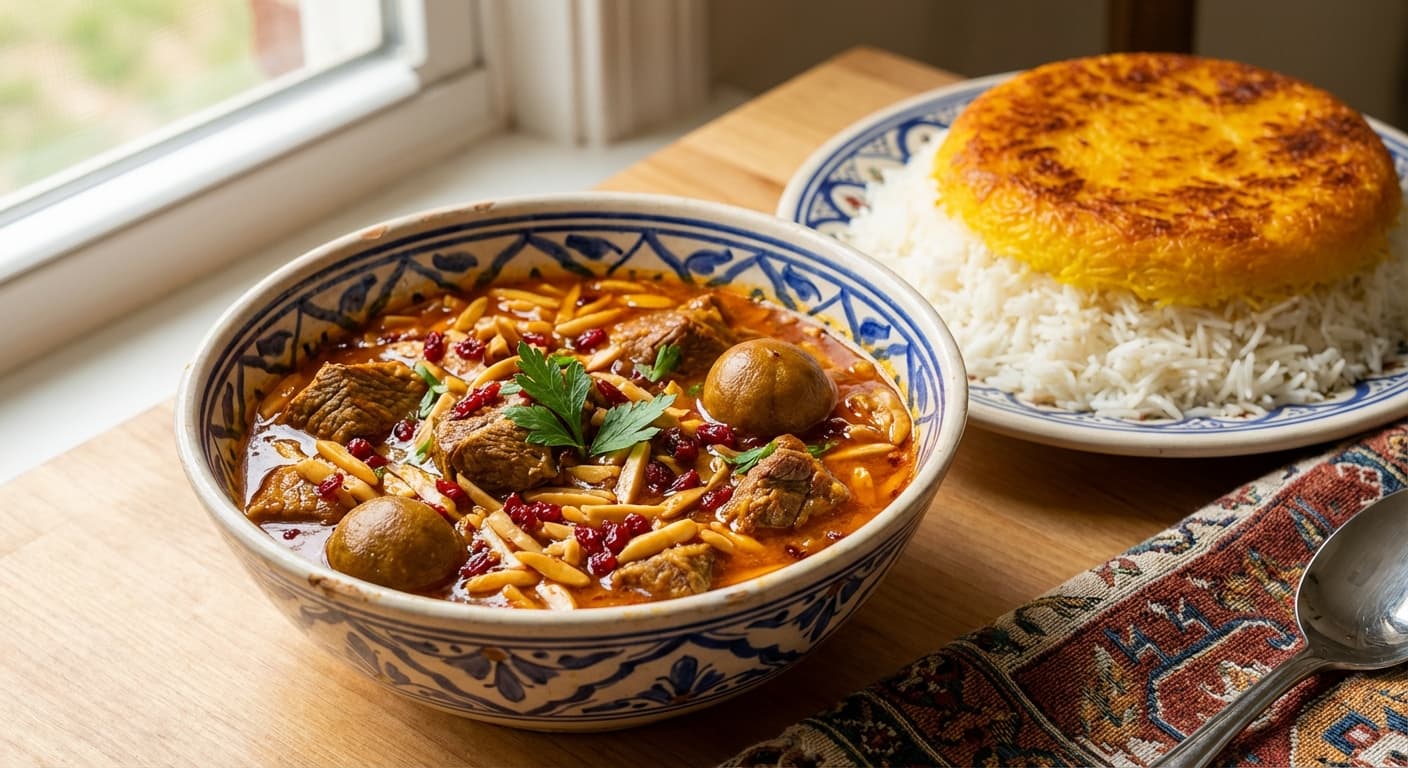
Khoresh Khelal Badam (خورش خلال بادام) — Kermanshahi Almond Stew
An elegant Kermanshahi Persian stew of tender beef, slivered almonds, black barberries, and dried limes in a saffron-scented broth. Savory, tangy, and aromatic, traditionally served with rice for celebrations.
Printable Recipe Card
Servings: 6 · Total: 170 min · Difficulty: medium
Ingredients (quick list)
- 800 g Beef stew meat (chuck or shoulder), cut into 3 cm cubes (Trim large surface fat; keep some marbling for tenderness)
- 250 g Yellow onion, finely diced (About 1 large onion)
- 45 ml Cooking oil (neutral) (About 3 tbsp)
- 30 g Tomato paste (About 2 tbsp)
- 3 Dried limes (Pierce each 6–8 times to prevent bitterness and help infusion)
- 150 g Slivered almonds (Soak to keep them plump and prevent splitting)
- 40 g Black barberries (dried) (Rinse quickly and drain well)
- 0.25 tsp Saffron threads (Grind and bloom for best color and aroma)
- 60 ml Hot water (for blooming saffron) (Just off the boil)
- 10 g Fine sea salt (About 1 3/4 tsp; adjust to taste)
- 1 tsp Ground black pepper (Freshly ground preferred)
- 1.5 tsp Ground turmeric (For color and warmth)
+ 2 more in the full ingredients section below.
Steps (summary)
- Bloom the saffron: grind the saffron threads to a powder, then stir with 60 ml hot water. Cover and steep 15 minutes. Meanwhile…
- Brown the base: in a heavy pot over medium-high heat, warm 45 ml oil for 1 minute. Add diced onion and cook 10–12 minutes, stir…
- Cook the tomato paste: push meat and onions to one side. Add tomato paste to the cleared area and fry 2–3 minutes, stirring con…
- Simmer gently: bring to a boil over high heat, then reduce to low so the stew barely bubbles. Skim any foam for the first 10 mi…
- Add almonds and build the broth: stir in drained slivered almonds. Simmer uncovered 20 minutes to slightly thicken the sauce wh…
- Finish with barberries: in the last 5 minutes, gently stir in the black barberries so they soften but stay distinct. If using r…
Cultural Background
This almond stew is associated with Kermanshah cooking and is often prepared for guests and special meals because of its refined ingredients like saffron, almonds, and barberries. It reflects a tradition of balancing rich meat stews with tart fruit and citrus notes, commonly served alongside steamed rice.
Equipment
💡 Tips
- Piercing dried limes helps them release flavor without bursting; if a lime splits, remove it after 10 minutes to avoid bitterness.
- For a clearer, jewel-toned stew, use water instead of stock and rely on browning onions and tomato paste for depth.
- Keep the simmer very gentle; hard boiling can toughen beef and make almonds break down.
- If the stew tastes flat, add 1–2 tbsp hot water and simmer 5 minutes; concentrated salt can mask saffron and citrus notes.
- For extra crunch, reserve 20 g almonds, toast them dry in a pan 3 minutes, and sprinkle on top at serving.
⚠️ Common Mistakes
❌ Boiling the stew hard for speed
💡 Why: High heat tightens meat fibers and can make the broth cloudy while breaking almonds.
✅ Fix: Keep a very gentle simmer (small bubbles) and extend cooking time until beef turns tender.
❌ Adding barberries too early
💡 Why: They can turn dull, lose their bright tang, and disintegrate into the sauce.
✅ Fix: Stir them in during the last 5 minutes so they soften while staying distinct.
❌ Skipping the tomato paste frying step
💡 Why: Raw tomato paste tastes metallic and can dominate the saffron and dried lime aroma.
✅ Fix: Fry the paste 2–3 minutes in oil until it darkens slightly and smells sweet.
❌ Letting dried limes burst open
💡 Why: Exposed interior can release harsh bitterness into the stew.
✅ Fix: Pierce the limes instead of cracking them; if one splits, remove it and balance with a little water and extra saffron.
🧊 How to Store
Cool to room temperature within 2 hours, then refrigerate in an airtight container for up to 3 days. Reheat gently over low heat with 60–120 ml water to loosen the sauce; avoid vigorous boiling to keep almonds intact. Freeze up to 2 months; thaw overnight in the fridge before reheating.
📅 Make Ahead
Cook the stew through Step 5 up to 2 days ahead and refrigerate. Reheat gently, then add barberries and rosewater (if using) just before serving to keep their flavor bright and the aroma fresh.
🍽️ Pairs Well With
- Persian steamed rice (chelow)
- Saffron rice with crispy rice crust
- Shirazi salad
- Plain yogurt or cucumber-yogurt
- Fresh herbs and radishes
Regional Variations
- Kermanshah (home-style)Often finished with a small amount of rosewater and a slightly thicker sauce, with almonds kept noticeably firm for contrast.
- Tehran (restaurant-style)Commonly made with a clearer, more saffron-forward broth and sometimes a touch more tomato paste for deeper color, served very neatly over rice.
Ingredients
- 800 gBeef stew meat (chuck or shoulder), cut into 3 cm cubes (Trim large surface fat; keep some marbling for tenderness)
- 250 gYellow onion, finely diced (About 1 large onion)
- 45 mlCooking oil (neutral) (About 3 tbsp)
- 30 gTomato paste (About 2 tbsp)
- 3Dried limes (Pierce each 6–8 times to prevent bitterness and help infusion)
- 150 gSlivered almonds (Soak to keep them plump and prevent splitting)
- 40 gBlack barberries (dried) (Rinse quickly and drain well)
- 0.25 tspSaffron threads (Grind and bloom for best color and aroma)
- 60 mlHot water (for blooming saffron) (Just off the boil)
- 10 gFine sea salt (About 1 3/4 tsp; adjust to taste)
- 1 tspGround black pepper (Freshly ground preferred)
- 1.5 tspGround turmeric (For color and warmth)
- 1200 mlWater or unsalted beef stock (Use water for a cleaner saffron profile; stock for deeper body)
- 10 mlRosewater (About 2 tsp; optional but traditional in many households)
🔄 Substitutions
- Beef stew meat→ Lamb shoulder, cut into 3 cm cubes
- Black barberries (dried)→ Red barberries (dried) or dried sour cherries
- Dried limes→ Fresh lime juice + lime zest
Instructions
- 1
Bloom the saffron: grind the saffron threads to a powder, then stir with 60 ml hot water. Cover and steep 15 minutes. Meanwhile, soak the slivered almonds in cool water for 20 minutes, then drain well. Quickly rinse the black barberries, drain, and set aside; do not soak them long or they lose tartness.
- 2
Brown the base: in a heavy pot over medium-high heat, warm 45 ml oil for 1 minute. Add diced onion and cook 10–12 minutes, stirring, until deeply golden. Add beef, turmeric, black pepper, and 3/4 of the salt. Sear 8–10 minutes, turning, until most sides are browned and the pot bottom has caramelized bits.
- 3
Cook the tomato paste: push meat and onions to one side. Add tomato paste to the cleared area and fry 2–3 minutes, stirring constantly, until it darkens slightly and smells sweet rather than raw. Stir everything together, then pour in 1200 ml water or unsalted stock, scraping the bottom to dissolve the browned fond.
- 4
Simmer gently: bring to a boil over high heat, then reduce to low so the stew barely bubbles. Skim any foam for the first 10 minutes. Add the pierced dried limes. Cover and simmer 75–90 minutes, stirring occasionally, until the beef is tender but not falling apart; add 60–120 ml extra water if the level drops below the meat.
- 5
Add almonds and build the broth: stir in drained slivered almonds. Simmer uncovered 20 minutes to slightly thicken the sauce while keeping almonds pleasantly firm. Add the bloomed saffron (all of it) and simmer 10 minutes more. Taste and adjust with the remaining salt; the broth should be savory with a bright, citrusy tang.
- 6
Finish with barberries: in the last 5 minutes, gently stir in the black barberries so they soften but stay distinct. If using rosewater, add it in the final 1 minute, then turn off the heat. Rest the stew, covered, for 10 minutes to let the saffron and dried lime aromas round out before serving with steamed rice.
🪪 Recipe Passport
Cultural Background
This almond stew is associated with Kermanshah cooking and is often prepared for guests and special meals because of its refined ingredients like saffron, almonds, and barberries. It reflects a tradition of balancing rich meat stews with tart fruit and citrus notes, commonly served alongside steamed rice.
Regional Variations
Researched from multiple sources and validated by the Zaffaron editorial team. Every recipe is tested for accuracy, measurements, and cultural authenticity.
Nutrition per serving
Pairs well with
If you enjoyed this recipe, here are a few related Zaffaron recipes to try next.
Does your family make this differently?
Every family has their own version. Maybe your grandmother adds a secret ingredient, or your aunt has a completely different technique. Preserve your family's version — with their name on it, forever.
You Might Also Like
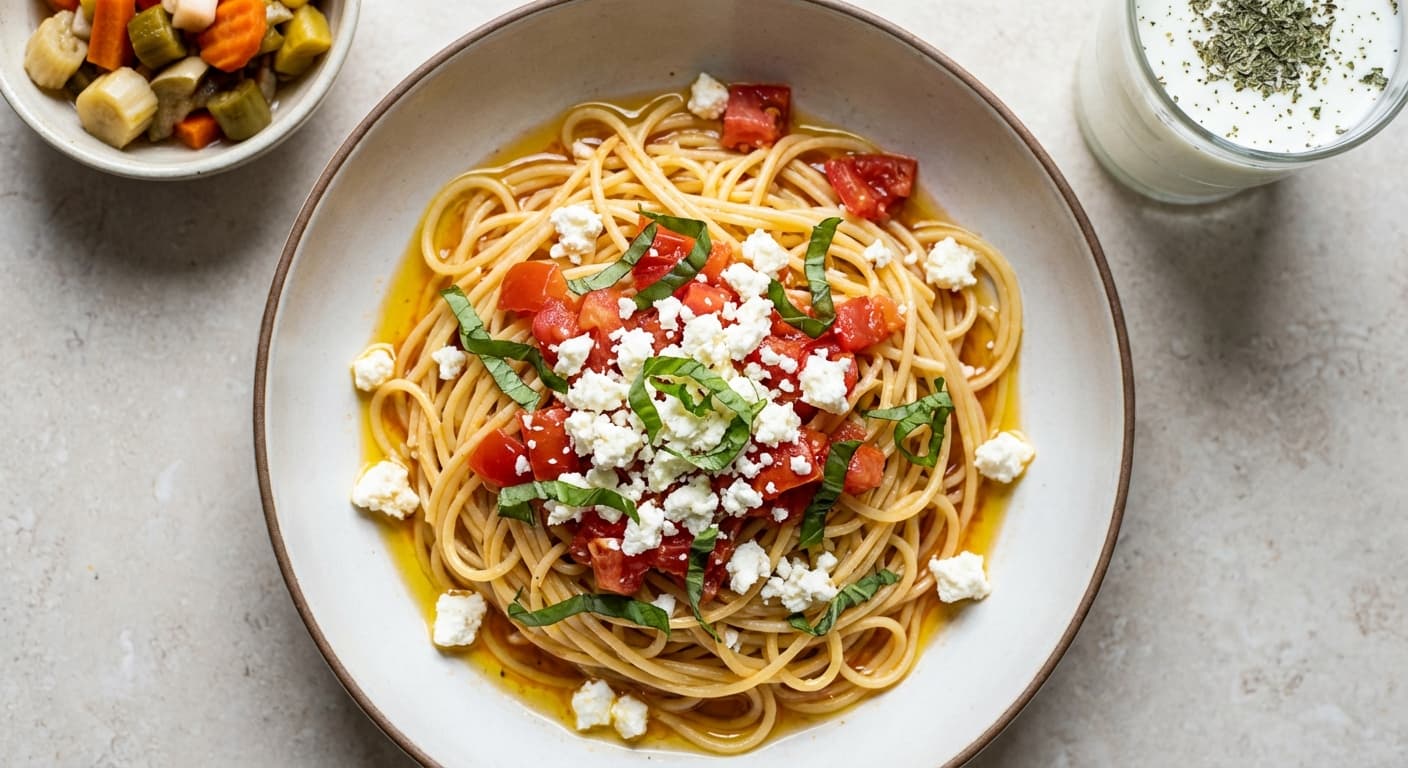
Pastay Paniri (پاستای پنیری) — Persian-Style Cheesy Pasta with Fresh Tomatoes
Persian · Main Courses · 27 min
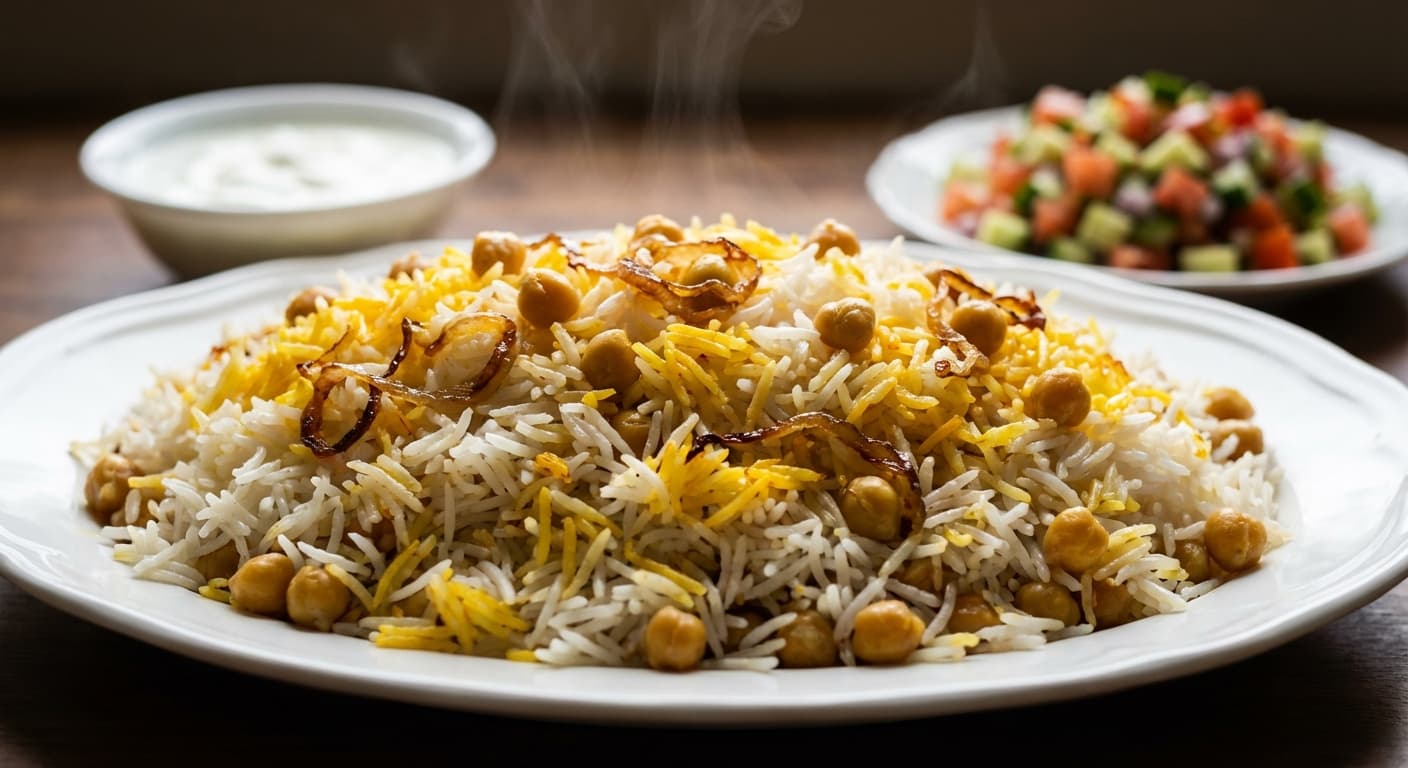
Nokhod Polo (نخود پلو) — Saffron Chickpea Rice with Warm Spices
Persian · Rice Dishes · 80 min
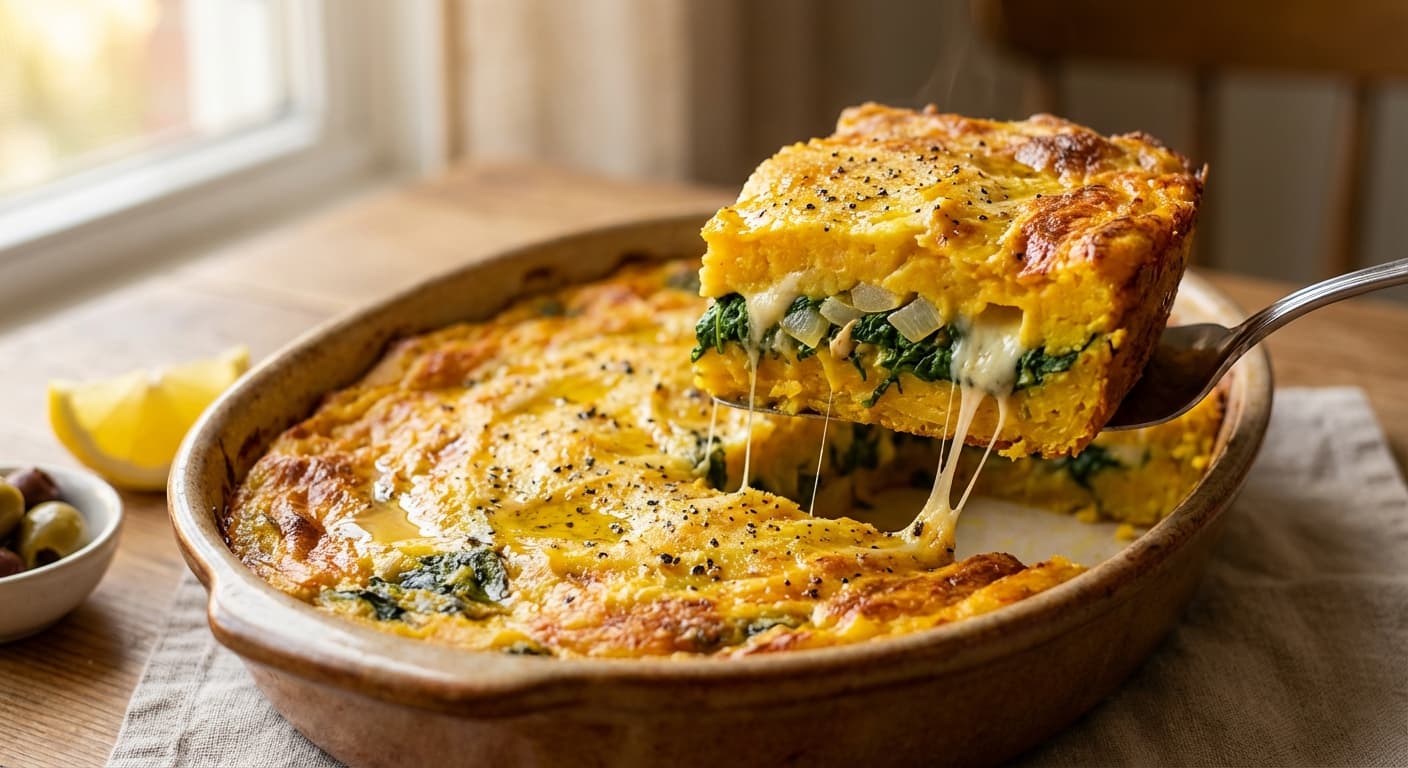
Golden Turmeric Potato and Spinach Casserole (غراتان سیبزمینی و اسفناج) — Mediterranean-Inspired Layered Gratin
Persian · Main Courses · 70 min
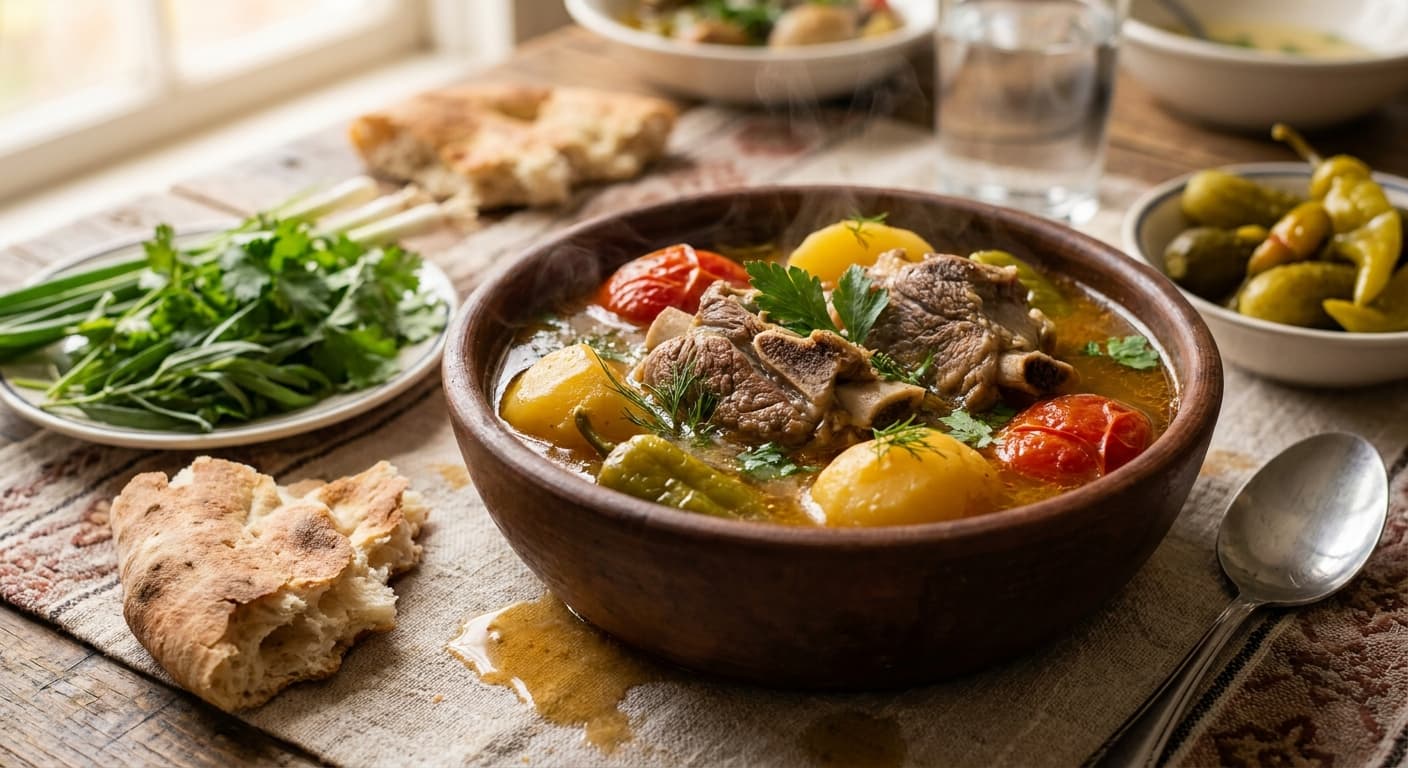
Khashlama (Խաշլամա) — Armenian Lamb and Vegetable Stew
Armenian · Stews · 160 min
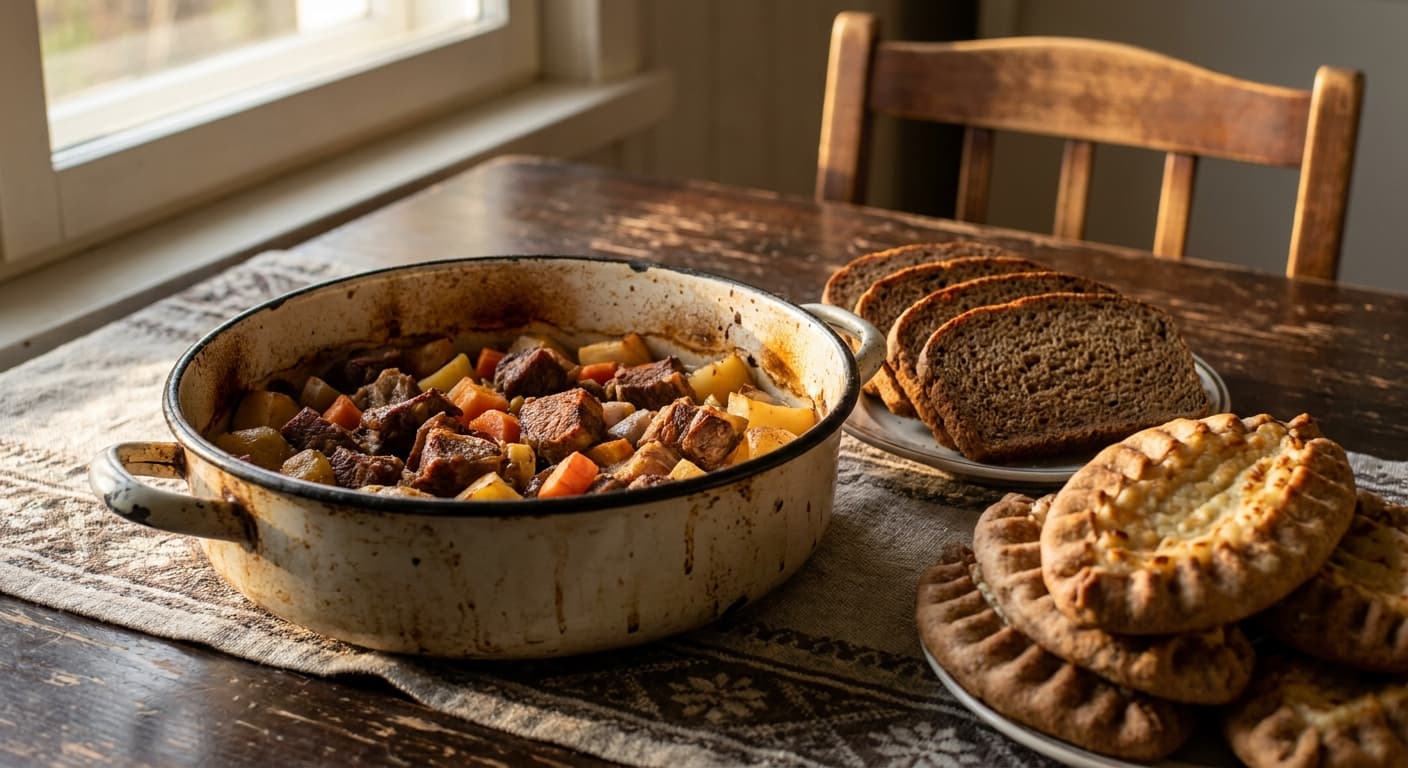
Karelian Hot Pot (Karjalanpaisti) — Finnish Oven-Braised Meat Stew
Finnish · Stews · 230 min
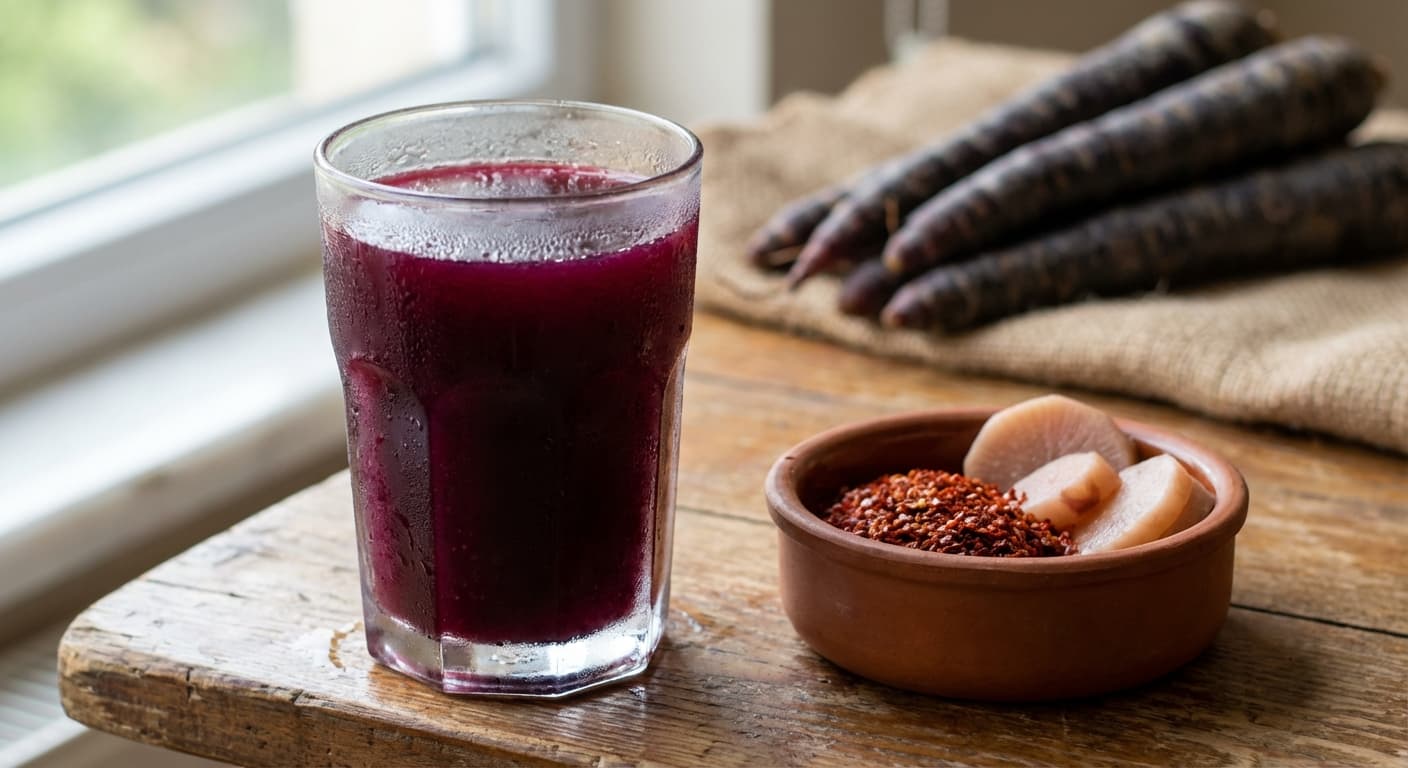
Salgam Juice (Şalgam) — Spicy, tangy fermented black-carrot drink
Turkish · Drinks · 25 min
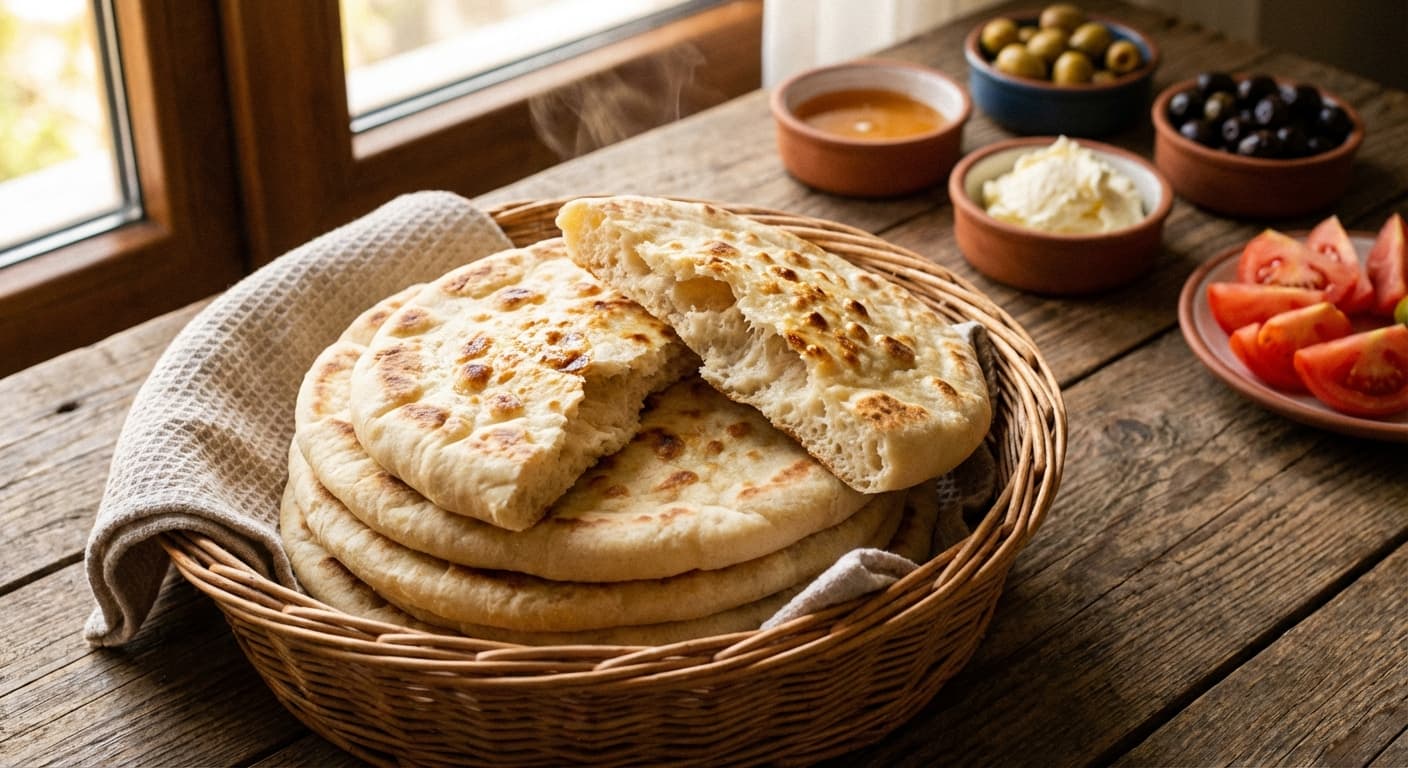
Bazlama (بازلاما) — Puffy Turkish Village Flatbread Cooked on a Saj
Turkish · Breads · 38 min
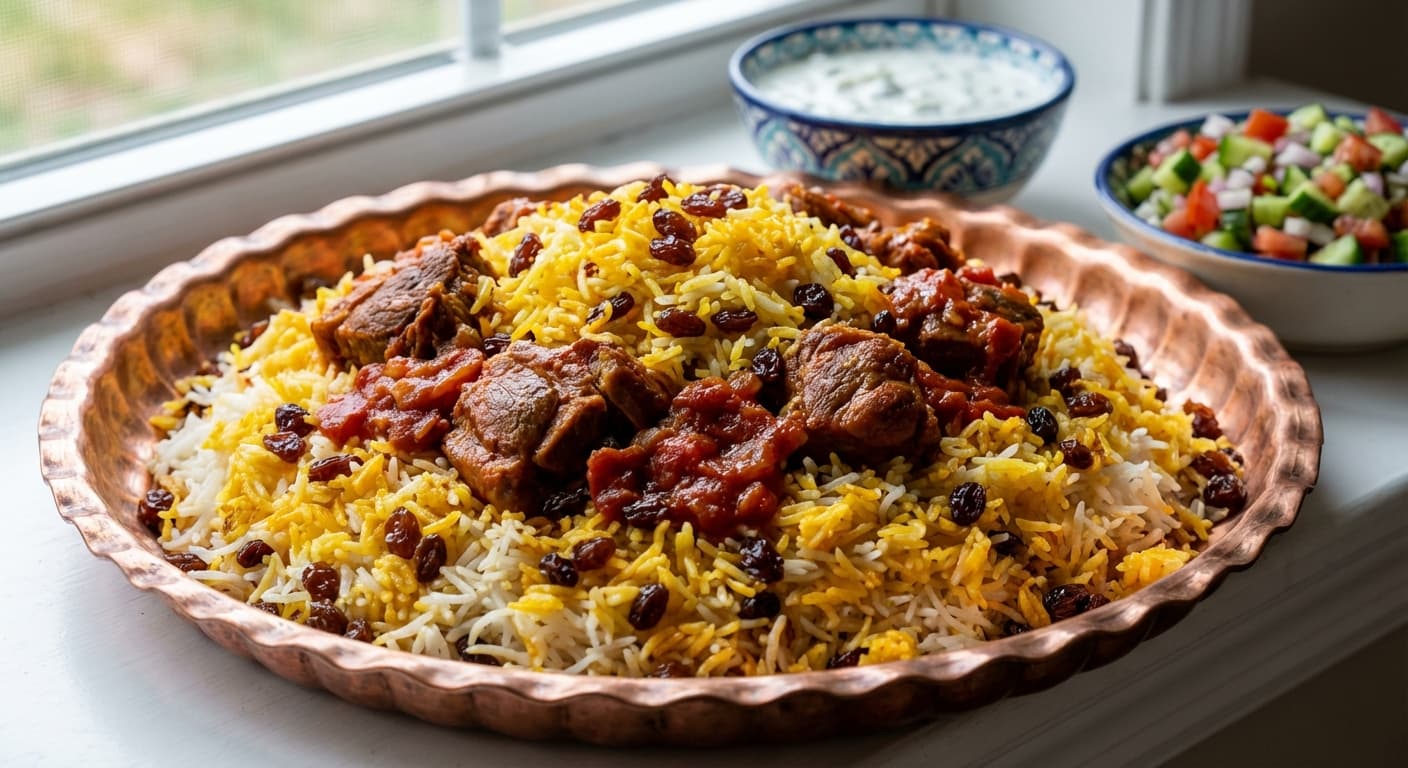
Kashmish Polow (کشمش پلو) — Persian Raisin Rice with Slow-Cooked Lamb
Persian · Rice Dishes · 155 min
Reviews
Cooked this recipe?
Tap the stars to rate it — that's all it takes. A few words are welcome but optional.
No ratings yet. Cooked this one? Be the first to rate it — it takes one tap.