Khoresh-e Tareh Kordi (خورش تره کردی با گوشت بره)
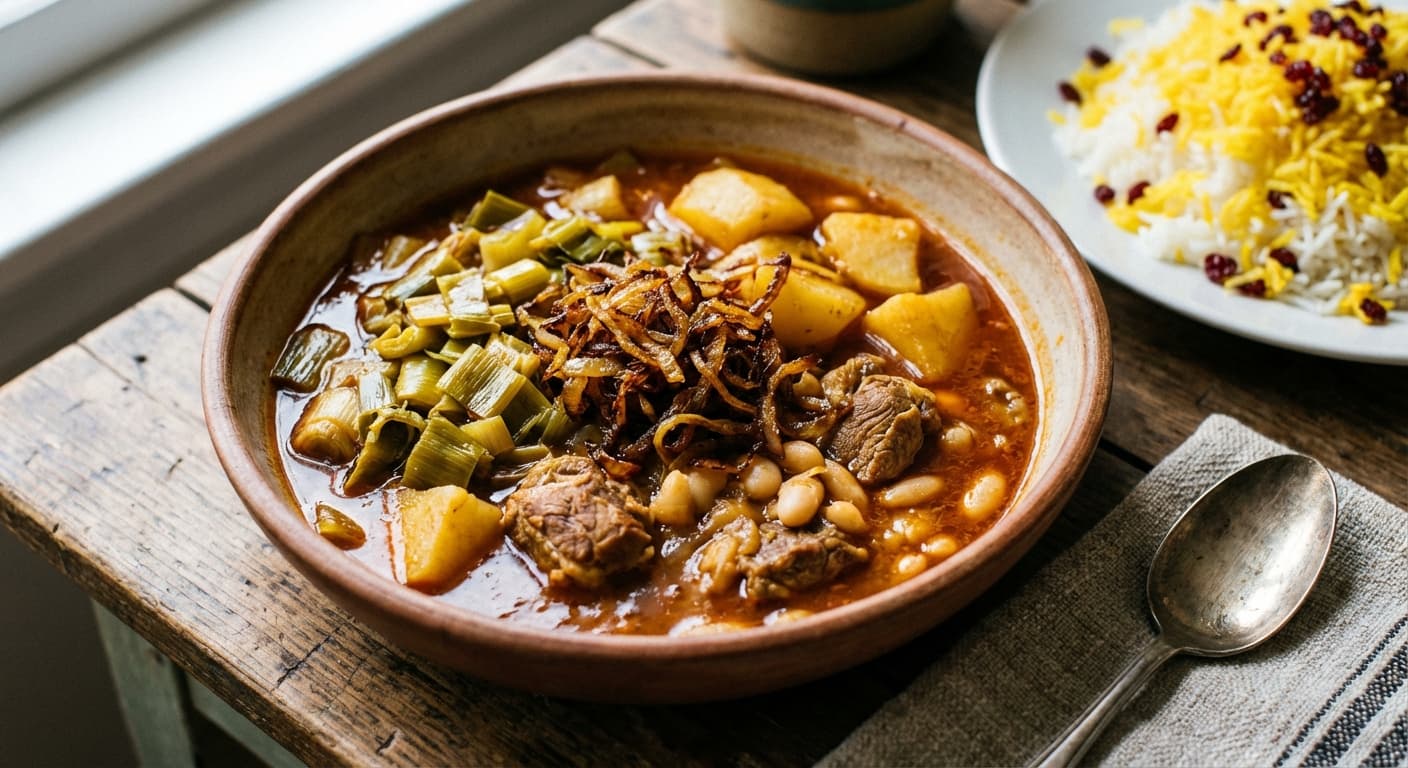
Khoresh-e Tareh Kordi is a warm, fragrant stew from western Iran made with leeks/Persian tareh, tender lamb, white beans, and potatoes. Layering the ingredients, along with fried onions and dried lime powder, creates a tangy, aromatic, deeply savory flavor.
Printable Recipe Card
Servings: 6 · Total: 300 min · Difficulty: medium
Ingredients (quick list)
- 250 g White beans (dry) (soaked 12 hours, then drained)
- 800 g Fresh leeks (white and light-green parts, cleaned well and sliced 5 mm)
- 450 g Potatoes (peeled and cut into 3 cm chunks)
- 300 g Tomatoes (grated or finely chopped)
- 300 g Yellow onions (thinly sliced for piaz dagh)
- 90 ml Vegetable oil (divided for frying onions and sautéing leeks)
- 700 g Lamb stew meat (shoulder or leg, 4 cm cubes)
- 12 g Sea salt (about 2 tsp, divided)
- 6 g Advieh (Persian mixed spices) (about 2 tsp)
- 6 g Dried lime powder (limoo amani powder) (about 2 tsp; add gradually to taste)
- 1200 ml Water (hot, plus more as needed)
Steps (summary)
- Soak the dry white beans in 1.5 L cold water for 12 hours, changing the water once halfway. Drain, rinse, then parboil in fresh…
- Make piaz dagh: heat 60 ml vegetable oil in a heavy pot over medium heat (about 170°C oil shimmer). Add sliced onions and fry 1…
- In the same pot, raise heat to medium-high. Add lamb cubes and sear 6–8 minutes, turning to brown most sides. Sprinkle in 4 g s…
- Add the parboiled beans and 1200 ml hot water. Bring to a boil, skim any foam for 2 minutes, then reduce to a gentle simmer. Co…
- Meanwhile, clean leeks thoroughly: split lengthwise, rinse between layers, then slice. In a wide skillet, heat remaining 30 ml…
- Layering (Kurdish-style): gently spoon sautéed leeks over the simmering stew without aggressively mixing. Add potato chunks on…
+ 2 more steps in the full instructions section below.
Cultural Background
In the Kurdish regions of western Iran, tareh stew is a hearty, nourishing homemade dish that comes to life with plenty of tareh and golden fried onions. The traditional method of layering the ingredients while cooking helps preserve the herbs’ texture and allows the flavors to meld gradually.
Equipment
💡 Tips
- For cleaner leek flavor, use only white and light-green parts; keep dark greens for stock.
- If limoo powder tastes bitter, reduce to 4 g and add 10 ml fresh lemon juice at the end instead.
- Keep the simmer very gentle after adding potatoes so they hold their shape and don’t cloud the stew.
- If you want a deeper color, cook the tomato-onion base until oil visibly separates before adding water.
⚠️ Common Mistakes
❌ Not washing leeks thoroughly
💡 Why: Sand trapped between layers makes the stew gritty
✅ Fix: Split lengthwise, rinse between layers, then soak sliced leeks in a bowl of water 5 minutes and lift out; discard sandy water.
❌ Adding limoo powder too early and boiling hard
💡 Why: High heat can extract bitterness and dull the citrus aroma
✅ Fix: Add limoo powder in the last 8–10 minutes and keep the simmer gentle.
❌ Stirring aggressively after adding potatoes and leeks
💡 Why: Potatoes break down, beans split, and the stew turns cloudy and heavy
✅ Fix: Layer leeks and potatoes, simmer undisturbed, then fold once gently after a 10-minute rest.
❌ Under-cooking the tomato-onion base
💡 Why: Raw tomato taste stays sharp and the stew lacks depth
✅ Fix: Cook tomatoes 6–7 minutes until darker and oil separates before adding water.
🧊 How to Store
Cool to room temperature within 2 hours, then refrigerate in an airtight container up to 4 days. Reheat gently over low heat with 60–120 ml water to loosen. Freeze up to 2 months; thaw overnight in the fridge and reheat slowly to prevent potatoes from turning grainy.
📅 Make Ahead
Soak and parboil beans up to 2 days ahead and refrigerate. Piaz dagh can be made 3 days ahead; store refrigerated and rewarm briefly. The full stew tastes better the next day—reheat gently and adjust with 60–120 ml water.
🍽️ Pairs Well With
- Persian steamed rice (chelow) with saffron
- Torshi (Persian pickles)
- Sabzi khordan (fresh herb platter)
- Plain yogurt or mast-o-khiar (optional)
Regional Variations
- KermanshahOften richer with more piaz dagh and a slightly thicker consistency; some cooks add a touch more advieh for warmth and serve with local flatbread.
- Sanandaj (Kurdistan)Leek-forward and brighter; limoo amani is emphasized, and potatoes may be cut larger and placed strictly on top to keep the stew clear and layered.
Ingredients
- 250 gWhite beans (dry) (soaked 12 hours, then drained)
- 800 gFresh leeks (white and light-green parts, cleaned well and sliced 5 mm)
- 450 gPotatoes (peeled and cut into 3 cm chunks)
- 300 gTomatoes (grated or finely chopped)
- 300 gYellow onions (thinly sliced for piaz dagh)
- 90 mlVegetable oil (divided for frying onions and sautéing leeks)
- 700 gLamb stew meat (shoulder or leg, 4 cm cubes)
- 12 gSea salt (about 2 tsp, divided)
- 6 gAdvieh (Persian mixed spices) (about 2 tsp)
- 6 gDried lime powder (limoo amani powder) (about 2 tsp; add gradually to taste)
- 1200 mlWater (hot, plus more as needed)
🔄 Substitutions
- Lamb stew meat→ Beef chuck, 700 g
- White beans (dry), 250 g→ Canned cannellini beans, 2 cans (2 × 400 g), drained and rinsed
- Dried lime powder (limoo amani powder), 6 g→ Whole dried limes (limoo amani), 2 pieces, pierced
Instructions
- 1
Soak the dry white beans in 1.5 L cold water for 12 hours, changing the water once halfway. Drain, rinse, then parboil in fresh water for 20 minutes over medium heat. Drain again. This reduces cooking time and keeps the beans creamy, not blown-out, inside the stew.
- 2
Make piaz dagh: heat 60 ml vegetable oil in a heavy pot over medium heat (about 170°C oil shimmer). Add sliced onions and fry 18–22 minutes, stirring often, until deep golden-brown. Remove half of the fried onions for garnish; leave the rest in the pot as the flavor base.
- 3
In the same pot, raise heat to medium-high. Add lamb cubes and sear 6–8 minutes, turning to brown most sides. Sprinkle in 4 g salt (about 3/4 tsp) and all the advieh; sauté 60 seconds until fragrant. Add grated tomatoes and cook 6–7 minutes until the mixture darkens and oil separates.
- 4
Add the parboiled beans and 1200 ml hot water. Bring to a boil, skim any foam for 2 minutes, then reduce to a gentle simmer. Cover and cook 60 minutes, stirring every 15 minutes, until lamb is halfway tender and beans are softening but still intact.
- 5
Meanwhile, clean leeks thoroughly: split lengthwise, rinse between layers, then slice. In a wide skillet, heat remaining 30 ml oil over medium heat. Sauté leeks 12–15 minutes, stirring, until softened and lightly sweet with no browning. This step builds the stew’s signature earthy sweetness.
- 6
Layering (Kurdish-style): gently spoon sautéed leeks over the simmering stew without aggressively mixing. Add potato chunks on top in an even layer. Cover and simmer 35–45 minutes on low, until potatoes are tender and lamb pulls apart easily. Add 2–4 tbsp hot water only if the stew thickens too fast.
- 7
Season and finish: sprinkle in limoo amani powder and remaining 8 g salt gradually, simmering 8–10 minutes to bloom the citrus aroma. Taste for balance—bright but not sharp. Turn off heat, rest covered 10 minutes so layers settle, then gently fold once from bottom to top.
- 8
Serve the khoresh hot in a wide bowl so the leeks and potatoes stay visible. Top with the reserved fried onions. For best texture, ladle some broth first, then add meat, beans, and vegetables. This stew shines with a thick, glossy broth—neither watery nor paste-like.
🪪 Recipe Passport
Cultural Background
In the Kurdish regions of western Iran, tareh stew is a hearty, nourishing homemade dish that comes to life with plenty of tareh and golden fried onions. The traditional method of layering the ingredients while cooking helps preserve the herbs’ texture and allows the flavors to meld gradually.
Regional Variations
Researched from multiple sources and validated by the Zaffaron editorial team. Every recipe is tested for accuracy, measurements, and cultural authenticity.
Nutrition per serving
Pairs well with
If you enjoyed this recipe, here are a few related Zaffaron recipes to try next.
Does your family make this differently?
Every family has their own version. Maybe your grandmother adds a secret ingredient, or your aunt has a completely different technique. Preserve your family's version — with their name on it, forever.
You Might Also Like
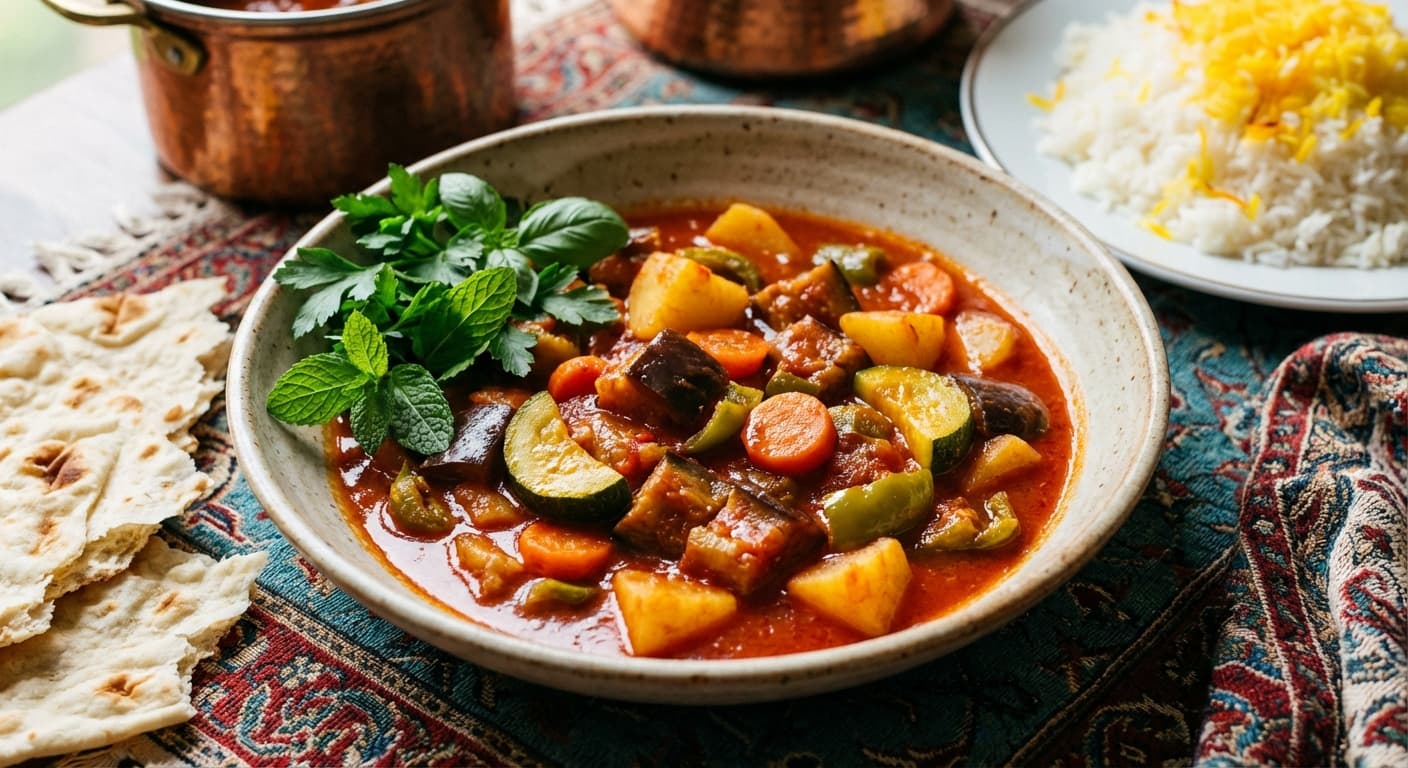
Yatimcheh (یتیمچه) — Persian Slow-Cooked Summer Vegetable Stew
Persian · Stews · 100 min
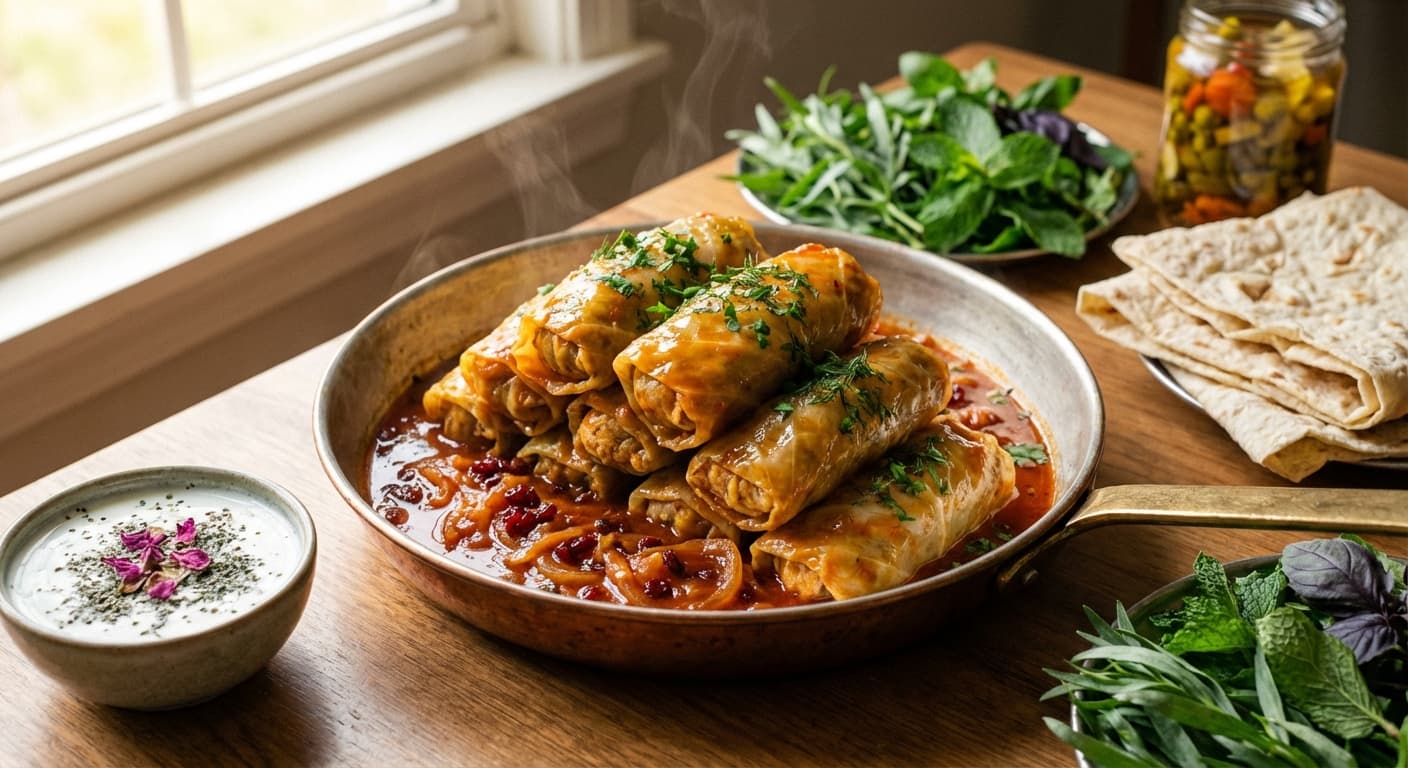
Chicken Stuffed Cabbage Rolls (دلمه کلم با مرغ) — Herb-Scented Persian Dolmeh in Tomato Saffron Sauce
Persian · Main Courses · 90 min
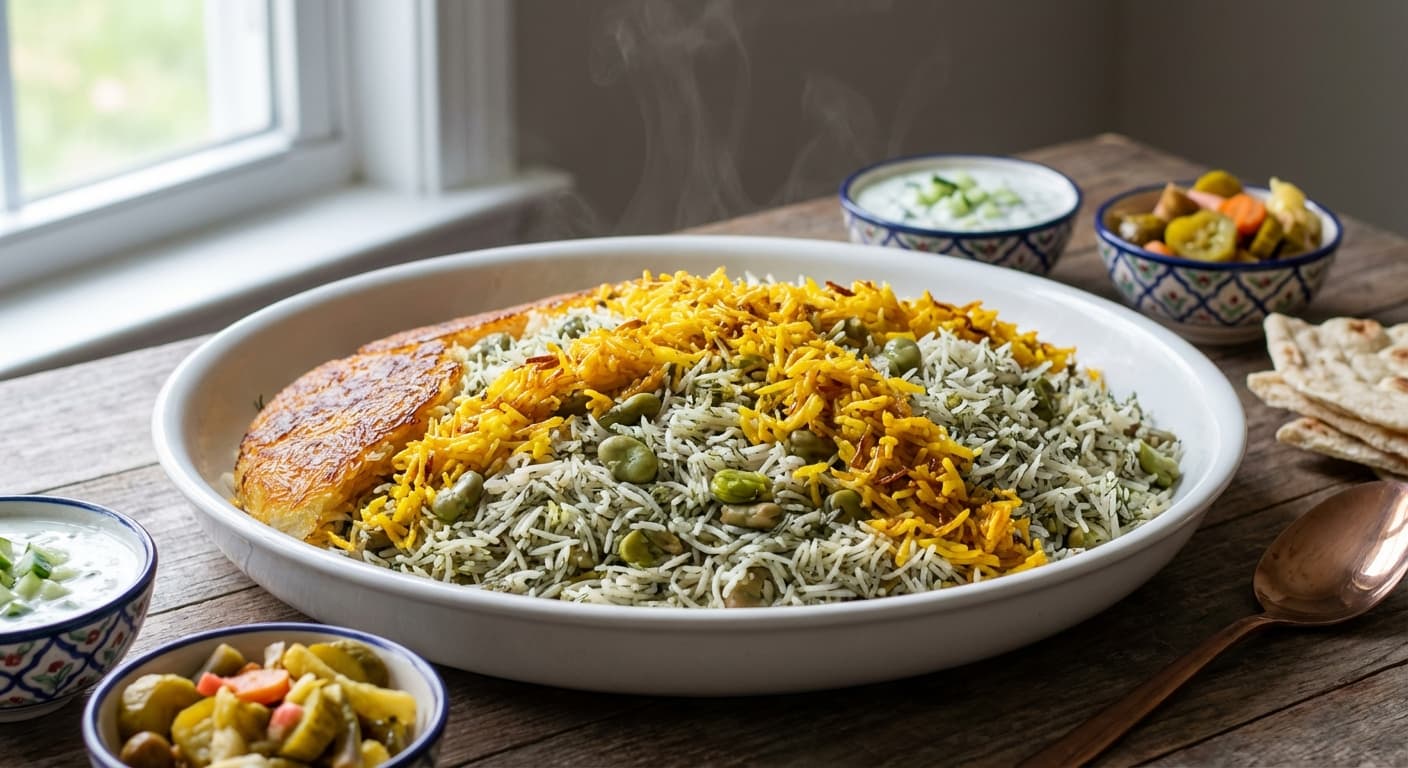
Baghali Polo (باقالی پلو) — Persian Dill and Fava Bean Rice with Saffron
Persian · Rice Dishes · 95 min
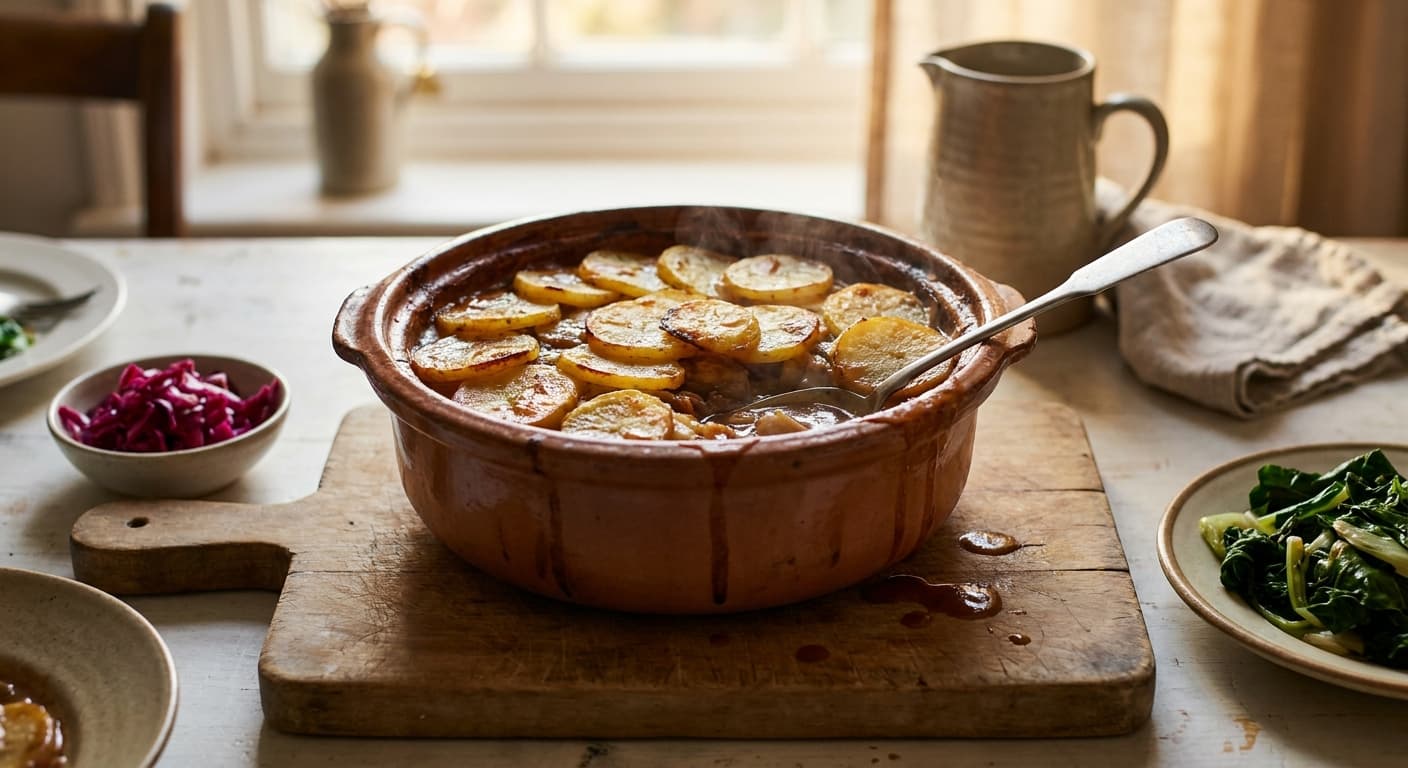
Lancashire Hotpot (Lancashire Hotpot) — Lamb and Potato Oven Stew
British · Stews · 180 min
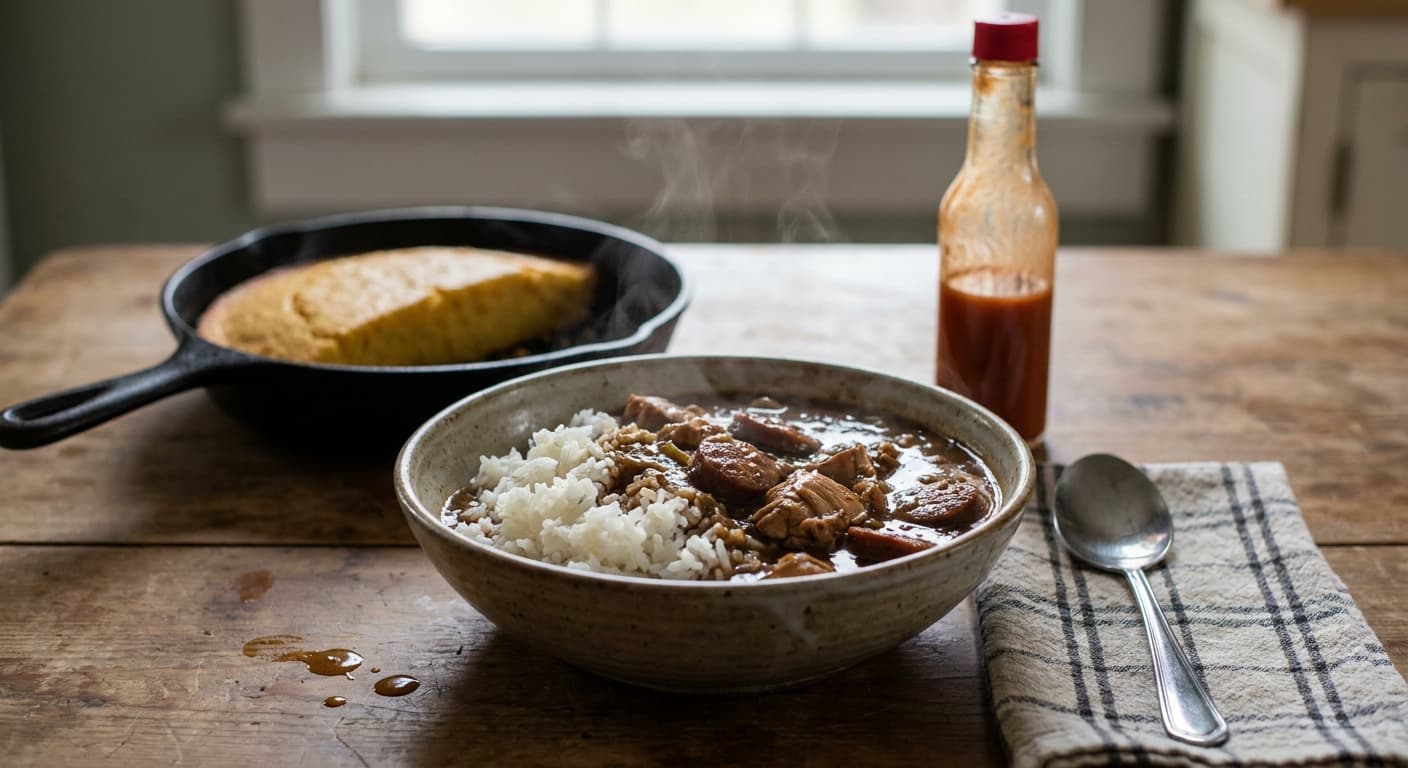
Chicken and Andouille Gumbo (English) — Louisiana Roux Stew
American · Stews · 120 min
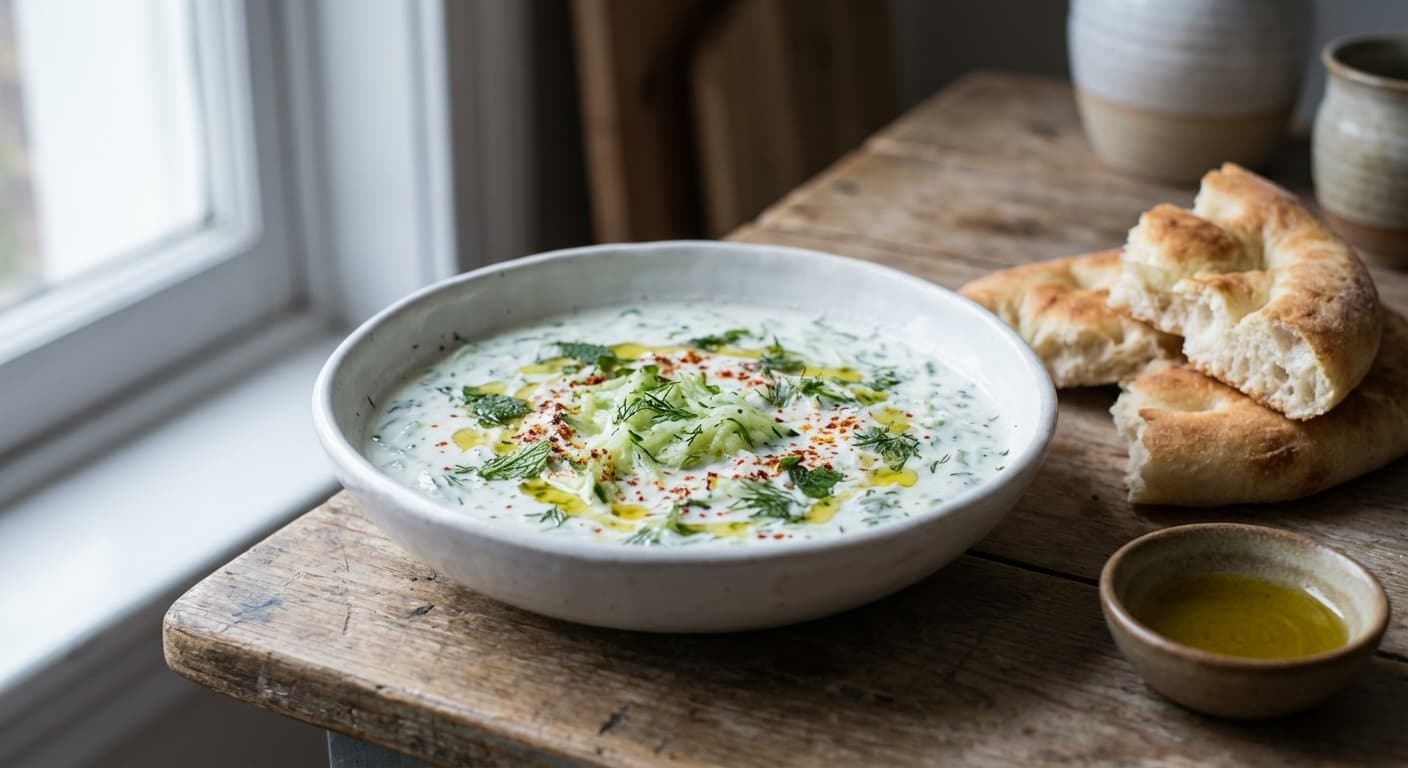
Cacık (Yoğurtlu Salatalık Mezesi) — Chilled Turkish Yogurt, Cucumber & Mint Dip
Turkish · Appetizers · 15 min
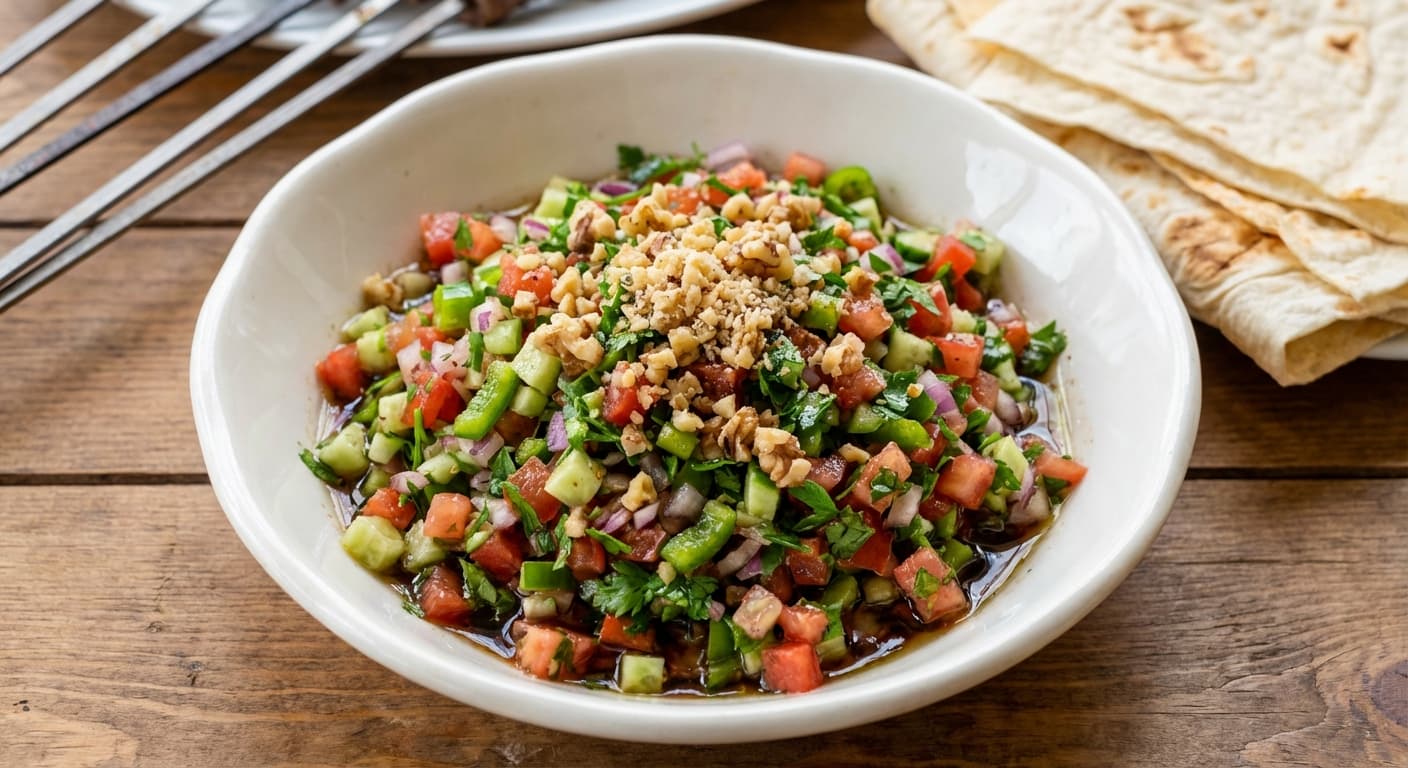
Gavurdağı Salad (Gavurdağı Salatası) — Finely Chopped Walnut & Pomegranate Salad
Turkish · Salads · 20 min
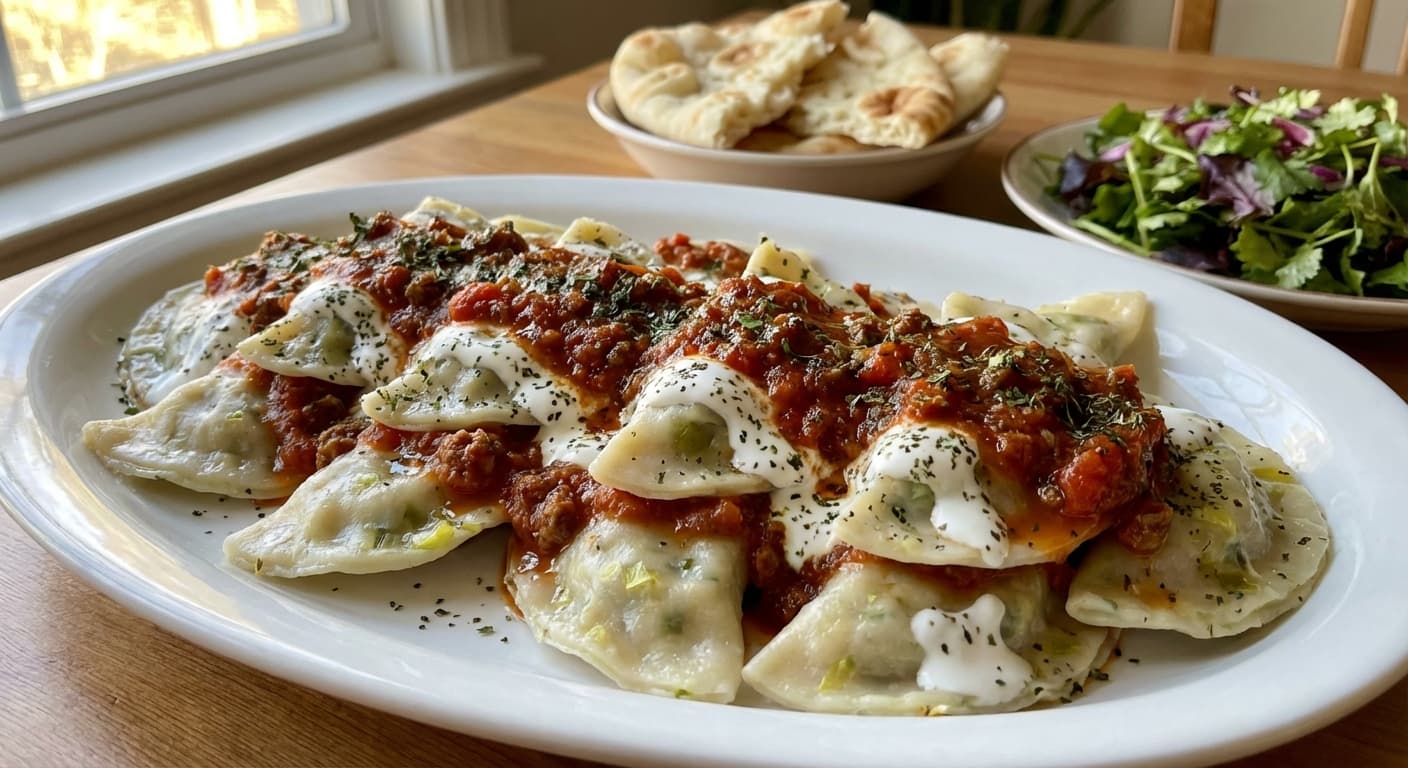
Ashak (آشک) — Afghan Leek Dumplings with Yogurt and Tomato Sauce
Afghan · Main Courses · 120 min
Reviews
Cooked this recipe?
Tap the stars to rate it — that's all it takes. A few words are welcome but optional.
No ratings yet. Cooked this one? Be the first to rate it — it takes one tap.