Khoresht Choghaleh Badam (خورش چغاله بادام) — Persian Spring Green Almond Stew
Khoresht Choghaleh Badam is a prized Iranian spring stew built around tart young green almonds and a mint-parsley base. It’s traditionally served with steamed rice, celebrating the short season when choghaleh badam is at its brightest.
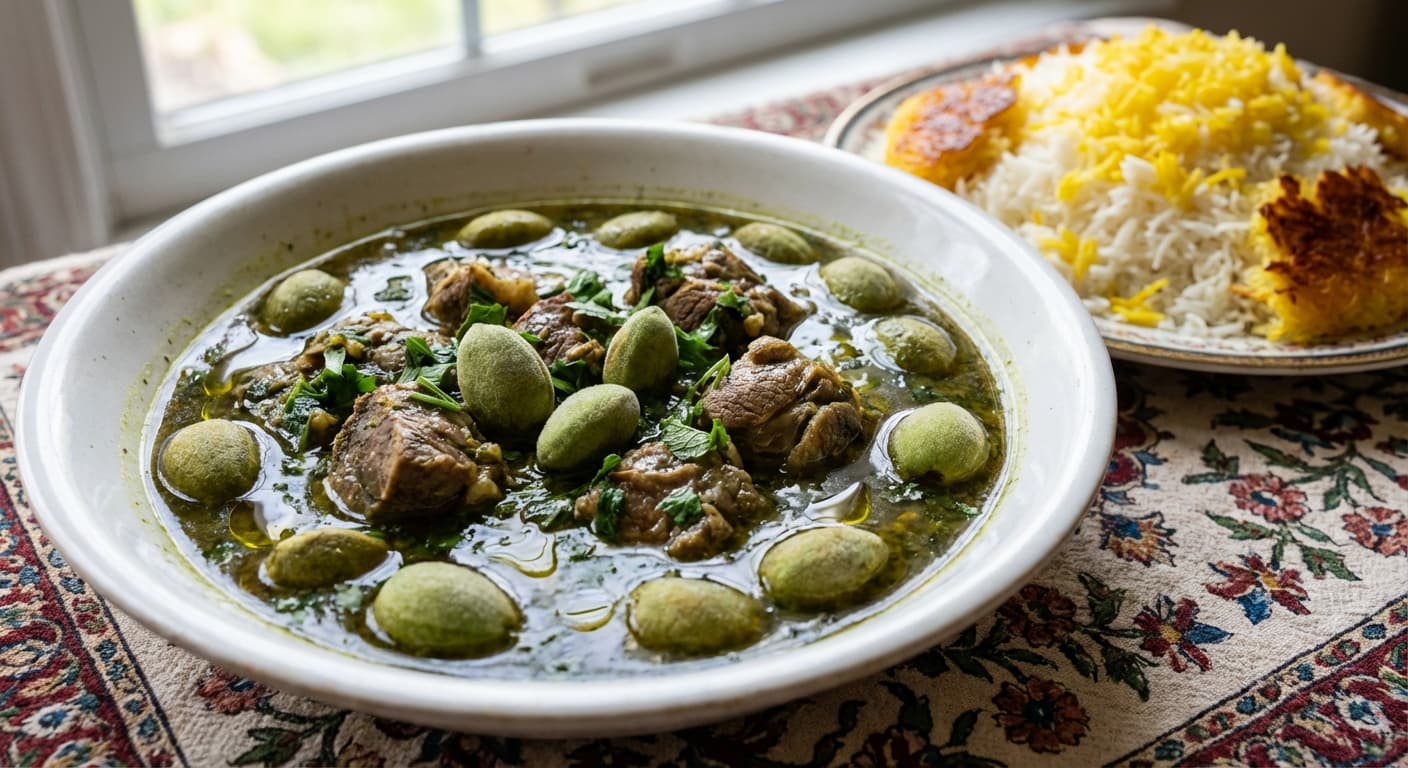
Printable Recipe Card
Servings: 4 · Total: 135 min · Difficulty: medium
Ingredients (quick list)
- 600 g lamb stew meat, 3 cm cubes (boneless shoulder or leg)
- 200 g yellow onion, finely diced
- 45 ml vegetable oil (divided)
- 2 tsp ground turmeric
- 7 g fine sea salt (about 1 1/4 tsp)
- 1 tsp black pepper
- 900 ml water
- 120 g fresh parsley leaves, finely chopped (packed, stems removed)
- 30 g fresh mint leaves, finely chopped (packed, stems removed)
- 300 g green almonds (choghaleh badam), rinsed (small and firm; trim any long stems)
- 30 ml lemon juice (about 2 tbsp)
Steps (summary)
- Pat the lamb dry and keep it at room temperature for 10 minutes so it browns evenly. Chop the parsley and mint very finely, kee…
- Heat 30 ml vegetable oil in a heavy pot over medium-high heat until it shimmers. Add the diced onion and cook for 10–12 minutes…
- Add the lamb and spread it in a single layer so it sears rather than steams. Cook for 6–8 minutes, turning occasionally, until…
- Pour in 900 ml water and scrape the bottom of the pot to dissolve the browned bits into the broth. Bring to a gentle boil, then…
- While the meat simmers, heat the remaining 15 ml vegetable oil in a skillet over medium heat. Add the chopped parsley and mint…
- Stir the sautéed herb mixture into the pot and return the stew to a gentle simmer. Cover and cook 25 minutes so the herbs mello…
+ 2 more steps in the full instructions section below.
Cultural Background
This seasonal khoresht is closely tied to early spring in Iran, when young green almonds appear briefly in markets. Families cook it as a celebration of renewal, pairing its bright tartness with rice for a balanced, festive meal.
Equipment
💡 Tips
- Keep the herb sauté on medium heat and stir continuously for 6–8 minutes; burnt mint will turn the stew bitter.
- Add green almonds only in the last 15–20 minutes so they stay bright and tart rather than turning olive and soft.
- If the stew looks thin, simmer uncovered for 10 minutes at the end to concentrate the broth without overcooking the almonds.
⚠️ Common Mistakes
❌ Over-frying the mint and parsley until they smell smoky.
✅ Fix: Sauté on medium heat and stop when the herbs darken slightly and turn very fragrant; if they brown, start a fresh batch.
❌ Adding green almonds at the beginning of cooking.
✅ Fix: Add them only for the last 15–20 minutes so they keep their tart bite and don’t fall apart.
❌ Boiling the stew hard after adding lemon juice.
✅ Fix: Simmer gently for 3 minutes, then rest; aggressive boiling can dull the brightness and toughen the meat edges.
🧊 How to Store
Cool leftovers within 2 hours, then refrigerate in an airtight container for up to 3 days. Reheat gently over low heat with 30–60 ml water to loosen; avoid hard boiling so the herbs stay bright and the almonds don’t turn mushy.
📅 Make Ahead
Chop the herbs and onion up to 24 hours ahead and refrigerate separately in airtight containers. You can also brown the meat and onions earlier, then finish simmering the stew the next day for even better flavor.
🍽️ Pairs Well With
- Chelow (steamed Persian rice)
- tahdig
- torshi
- fresh herbs (sabzi khordan)
- mast-o-khiar.
Regional Variations
- Tehran-style: a little more lemon juice for a sharper tang and a looser, brothier consistency.
- Shiraz-style: sometimes finished with a small pinch of dried mint for extra perfume alongside fresh herbs.
- Northern Iran: may include a few sour plums with the green almonds for deeper, fruitier acidity.
Ingredients
- 600 glamb stew meat, 3 cm cubes (boneless shoulder or leg)
- 200 gyellow onion, finely diced
- 45 mlvegetable oil (divided)
- 2 tspground turmeric
- 7 gfine sea salt (about 1 1/4 tsp)
- 1 tspblack pepper
- 900 mlwater
- 120 gfresh parsley leaves, finely chopped (packed, stems removed)
- 30 gfresh mint leaves, finely chopped (packed, stems removed)
- 300 ggreen almonds (choghaleh badam), rinsed (small and firm; trim any long stems)
- 30 mllemon juice (about 2 tbsp)
🔄 Substitutions
- lamb stew meat→ beef chuck, 3 cm cubes
- green almonds (choghaleh badam)→ fresh sour plums (goje sabz), pitted
- fresh mint leaves→ dried mint
Instructions
- 1
Pat the lamb dry and keep it at room temperature for 10 minutes so it browns evenly. Chop the parsley and mint very finely, keeping them separate from the meat so the herbs don’t oxidize while you sear.
- 2
Heat 30 ml vegetable oil in a heavy pot over medium-high heat until it shimmers. Add the diced onion and cook for 10–12 minutes, stirring often, until deeply golden and lightly caramelized for a true “fried onion” base.
- 3
Add the lamb and spread it in a single layer so it sears rather than steams. Cook for 6–8 minutes, turning occasionally, until most sides are browned, then stir in turmeric, salt, and black pepper and cook 60 seconds to bloom the spices.
- 4
Pour in 900 ml water and scrape the bottom of the pot to dissolve the browned bits into the broth. Bring to a gentle boil, then reduce to low, cover, and simmer for 60 minutes until the meat is starting to turn tender.
- 5
While the meat simmers, heat the remaining 15 ml vegetable oil in a skillet over medium heat. Add the chopped parsley and mint and sauté for 6–8 minutes, stirring constantly, until the herbs darken slightly and smell fragrant but are not burnt.
- 6
Stir the sautéed herb mixture into the pot and return the stew to a gentle simmer. Cover and cook 25 minutes so the herbs mellow and the broth takes on a vivid green, minty aroma.
- 7
Add the green almonds and stir carefully so they stay intact. Simmer uncovered for 15–20 minutes until the almonds are tender-crisp and pleasantly tart, and the stew thickens slightly.
- 8
Stir in the lemon juice and simmer 3 minutes to round out the sour notes without dulling them. Rest the stew off the heat for 10 minutes before serving so the flavors settle and the surface oil rises for a classic khoresht finish.
🪪 Recipe Passport
Cultural Background
This seasonal khoresht is closely tied to early spring in Iran, when young green almonds appear briefly in markets. Families cook it as a celebration of renewal, pairing its bright tartness with rice for a balanced, festive meal.
Regional Variations
Researched from multiple sources and validated by the Zaffaron editorial team. Every recipe is tested for accuracy, measurements, and cultural authenticity.
Nutrition per serving
Pairs well with
If you enjoyed this recipe, here are a few related Zaffaron recipes to try next.
Does your family make this differently?
Every family has their own version. Maybe your grandmother adds a secret ingredient, or your aunt has a completely different technique. Preserve your family's version — with their name on it, forever.
You Might Also Like
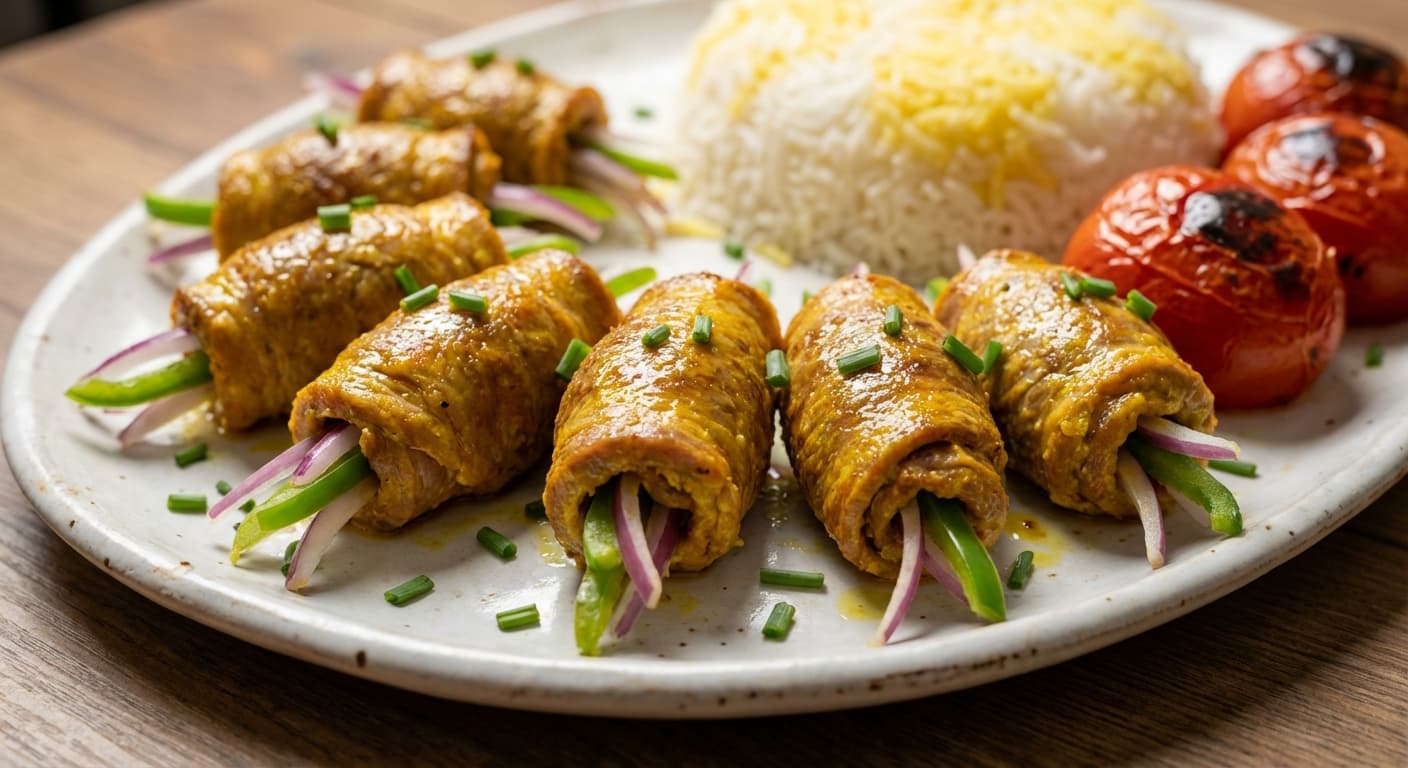
Bulgar Kabab (کباب بلغار) — Persian Rolled Saffron Fillets
Persian · Kebabs · 37 min
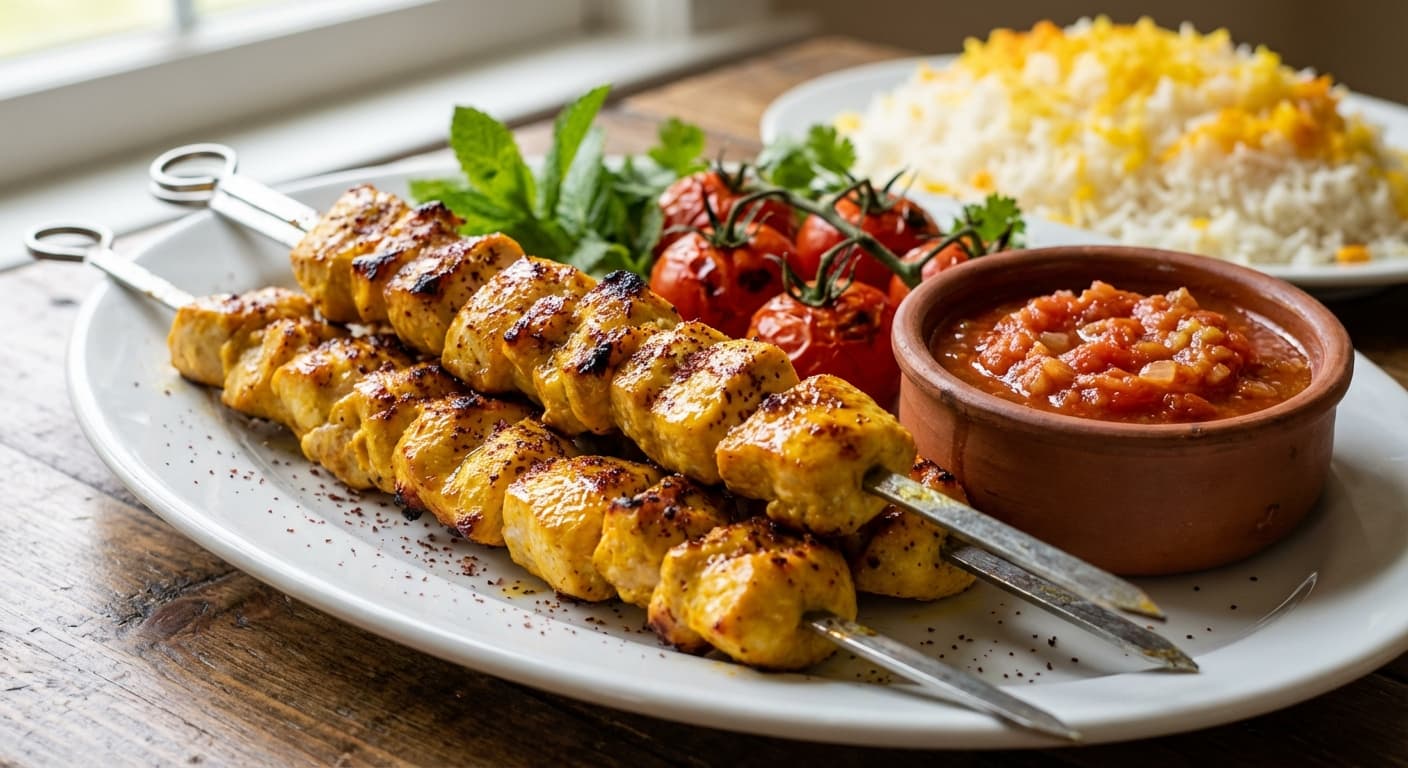
Jujeh Kabab (جوجه کباب) — Saffron-Turmeric Chicken with Rustic Tomato Sauce
Persian · Kebabs · 45 min
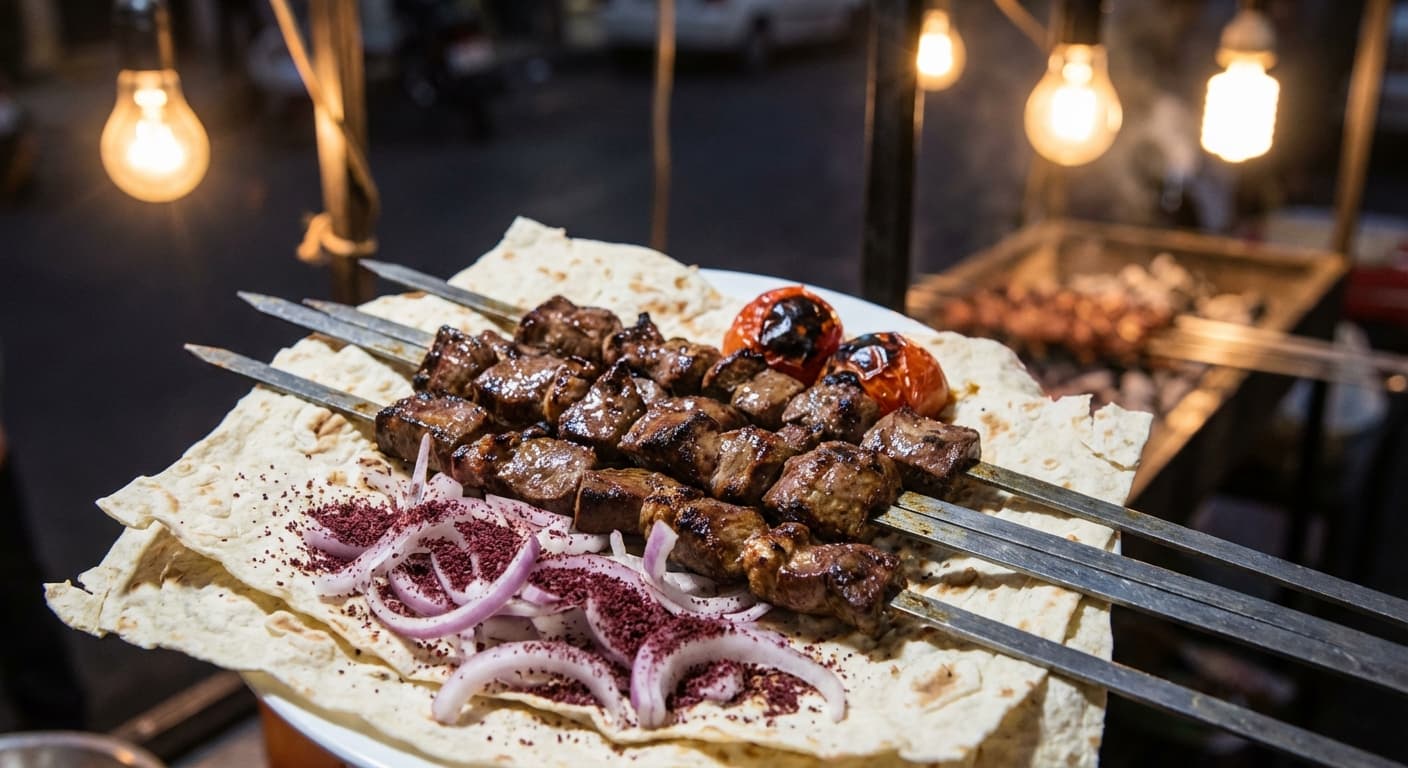
Jigar Kabab (جگر کباب) — Classic Persian Lamb Liver Skewers
Persian · Kebabs · 33 min
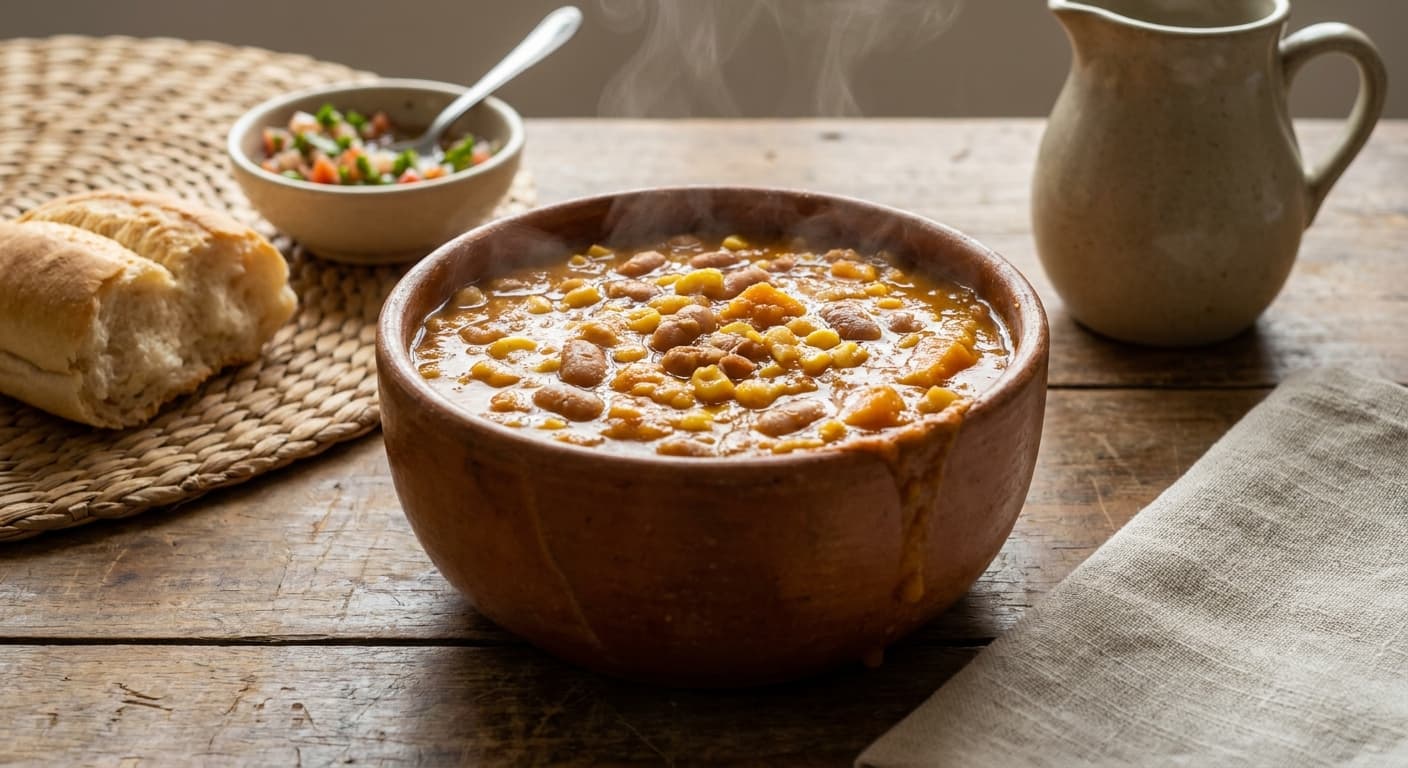
Chilean Fresh Bean Stew (Porotos granados) — Summer Corn and Squash Bean Stew
Chilean · Stews · 80 min
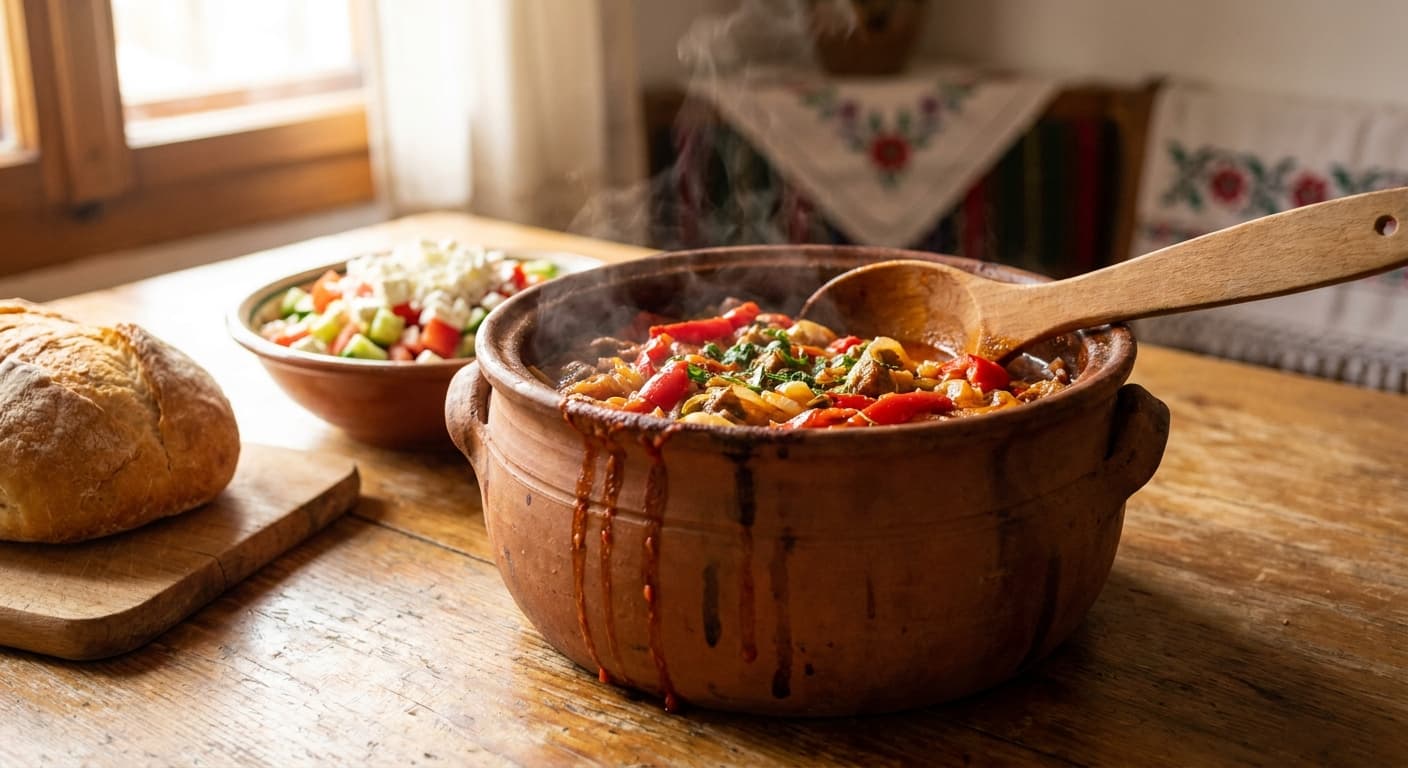
Bulgarian Pork Kavarma (Каварма) — Clay-Pot Pepper and Pork Stew
Bulgarian · Stews · 115 min
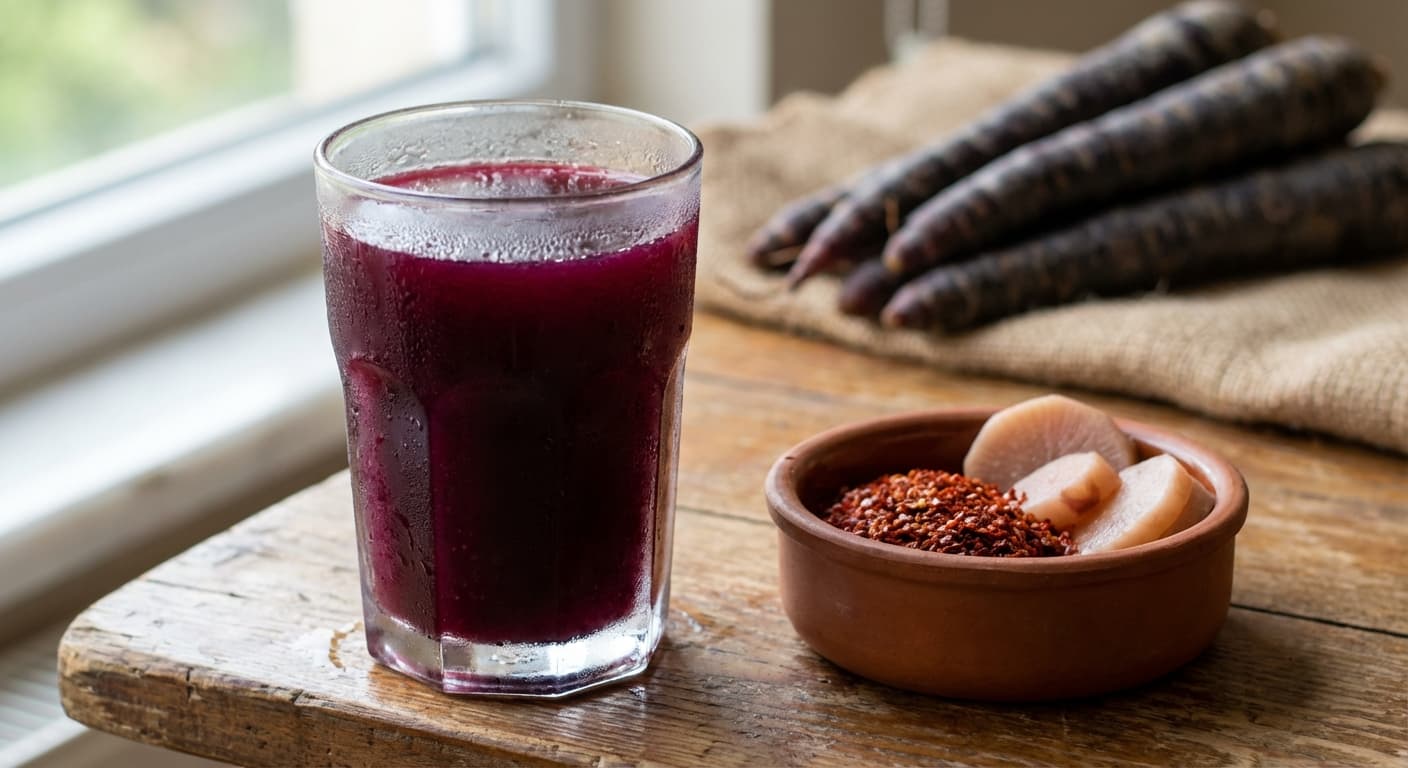
Salgam Juice (Şalgam) — Spicy, tangy fermented black-carrot drink
Turkish · Drinks · 25 min
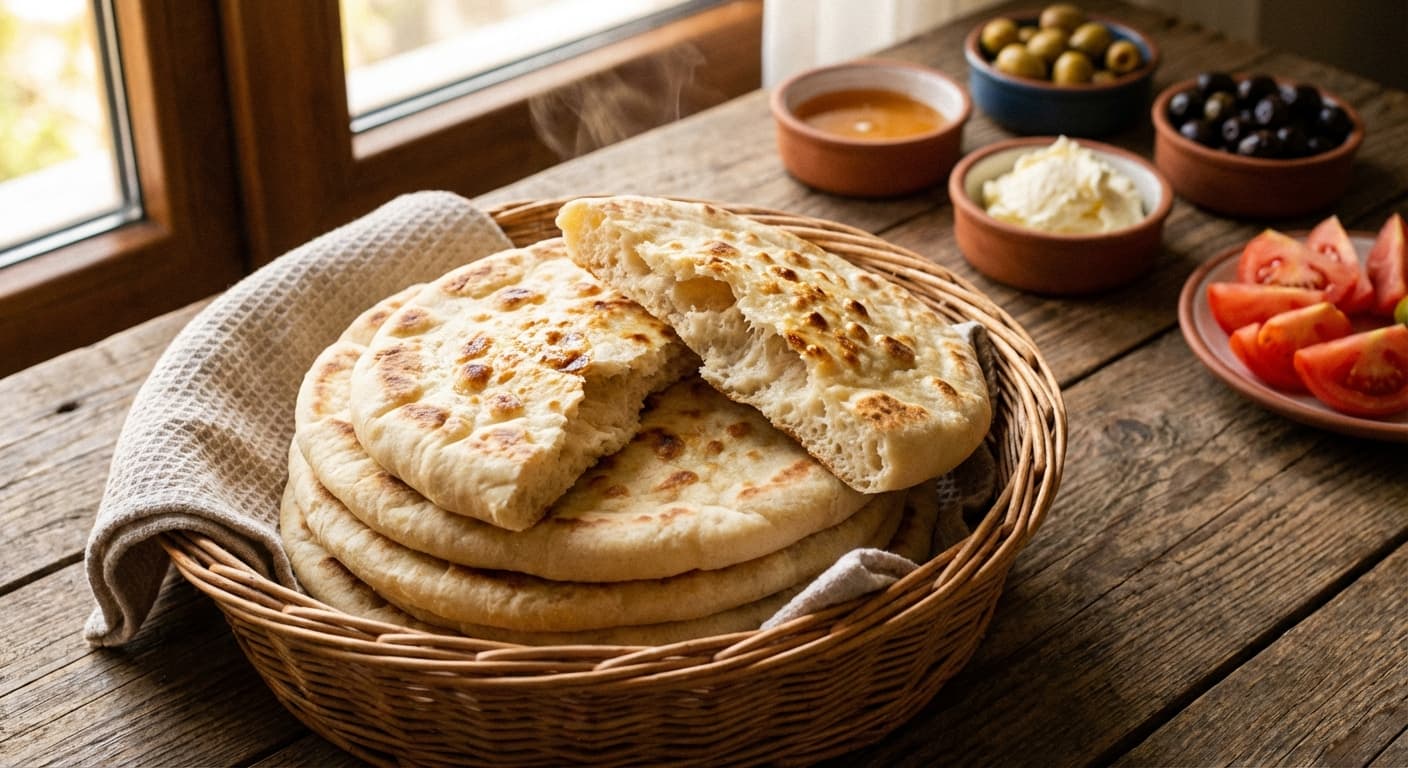
Bazlama (بازلاما) — Puffy Turkish Village Flatbread Cooked on a Saj
Turkish · Breads · 38 min
Palak Paneer (पालक पनीर) — Creamy Spinach and Paneer Curry
Indian · Main Courses · 50 min
Reviews
Cooked this recipe?
Tap the stars to rate it — that's all it takes. A few words are welcome but optional.
No ratings yet. Cooked this one? Be the first to rate it — it takes one tap.