Kuku-ye Morgh (کوکو مرغ) — Persian Chicken Herb Frittata
Kuku-ye Morgh is a Persian chicken-and-herb frittata, pan-fried until golden and fluffy. Tender shredded chicken, aromatic greens, and warm turmeric make it ideal for gatherings, picnics, or a light meal.
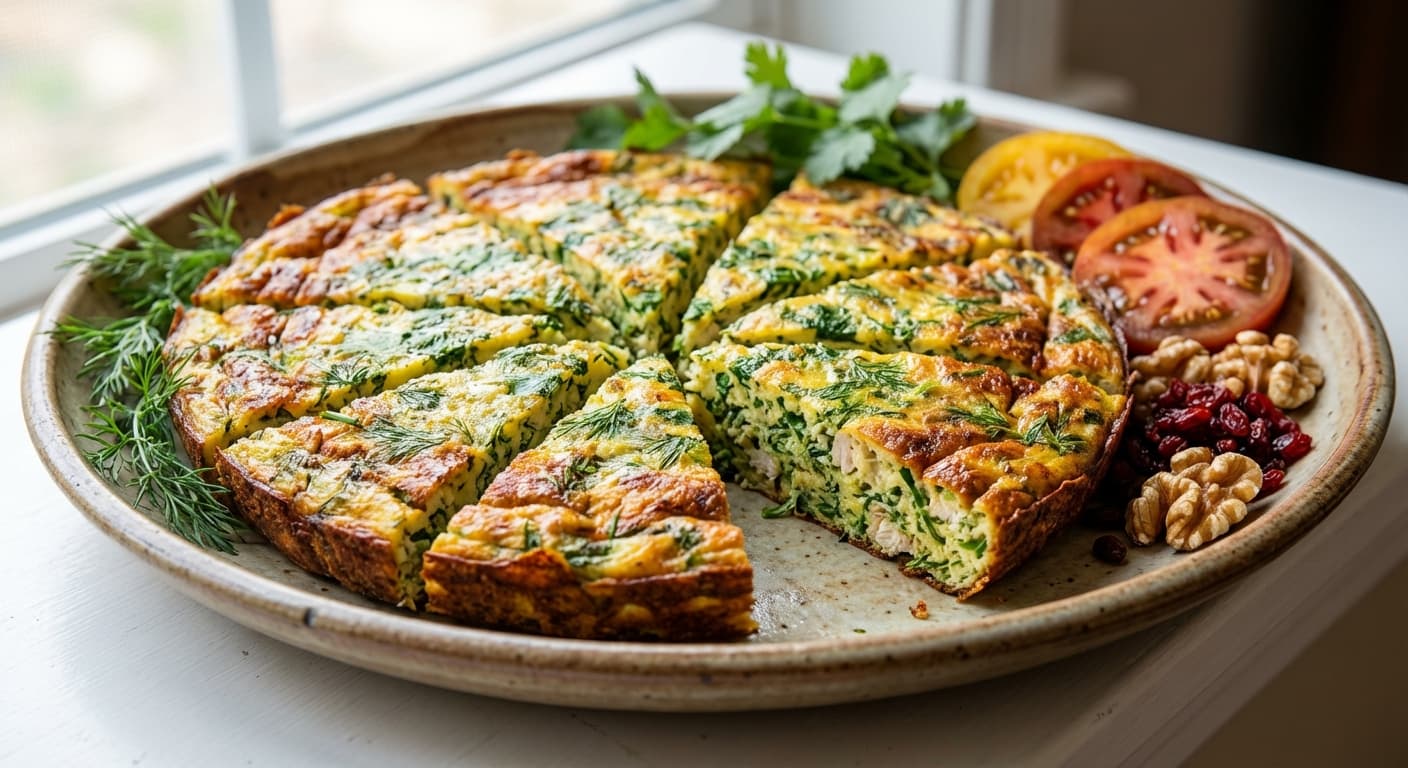
Printable Recipe Card
Servings: 6 · Total: 80 min · Difficulty: medium
Ingredients (quick list)
- 350 g Chicken breast, boneless skinless (poached and finely shredded)
- 900 ml Water (for poaching)
- 120 g Onion (grated on the large holes, then squeezed dry)
- 6 large Eggs (at room temperature)
- 2 tsp Turmeric, ground
- 1.25 tsp Salt (plus more to taste after cooking if needed)
- 0.75 tsp Black pepper, ground
- 45 g Parsley (finely chopped (about 1.5 packed cups))
- 25 g Cilantro (finely chopped (about 1 packed cup))
- 15 g Dill (finely chopped (about 0.75 packed cup))
- 60 ml Vegetable oil (divided, for pan-frying)
Steps (summary)
- Poach the chicken: place the chicken breast in a small pot and add 900 ml water. Bring to a gentle simmer over medium heat, the…
- Prepare the onion and herbs: grate the onion, then squeeze it firmly in a clean towel until mostly dry to prevent a watery kuku…
- Make the batter: in a large bowl whisk the eggs for 30–45 seconds until uniform and slightly foamy. Whisk in turmeric, salt, an…
- Heat the pan: set a 24–26 cm nonstick skillet over medium heat for 2 minutes. Add 30 ml vegetable oil and swirl to coat. When t…
- Cook the first side: cook covered for 10–12 minutes on medium-low until the edges are set and golden and the center is mostly s…
- Flip and finish: slide the kuku onto a plate. Add the remaining 30 ml oil to the skillet, then invert the kuku back into the pa…
Cultural Background
Kuku is a well-known family of Persian egg-based dishes often prepared with abundant herbs and served as a main or side. Chicken kuku is commonly made for gatherings and practical meals because it travels well and tastes good warm or at room temperature.
Equipment
💡 Tips
- Squeezing the grated onion very dry is the easiest way to avoid a soggy, pale kuku.
- Chop herbs finely and pat dry; wet herbs release steam and prevent a crisp, golden crust.
- For a thicker kuku, use a smaller skillet (22–24 cm) and extend cooking 2–3 minutes per side on low heat.
- If browning too fast, lower the heat; kuku should cook gently so the center sets without drying out.
- A thin spatula and a flat plate make flipping safer than tossing in the pan.
⚠️ Common Mistakes
❌ Using onion and herbs that are too wet
💡 Why: Extra moisture steams the mixture, leading to a pale crust and a soft, watery interior.
✅ Fix: Squeeze grated onion very dry and pat chopped herbs dry; uncover the pan briefly near the end of the first side to evaporate surface moisture.
❌ Cooking over heat that is too high
💡 Why: The outside browns before the center sets, causing tearing during flipping and a dry crust.
✅ Fix: Use medium-low heat after adding the mixture and cook gently with a lid; extend time rather than increasing heat.
❌ Shredding chicken in large strands
💡 Why: Large pieces prevent clean slicing and create uneven pockets that can make the kuku crumble.
✅ Fix: Shred very finely or chop the cooked chicken; aim for small, even pieces that bind well with the eggs.
❌ Flipping too early
💡 Why: If the first side is not set, the kuku can break and stick.
✅ Fix: Wait until edges are golden and the center is mostly set; loosen edges with a spatula and use a flat plate to invert confidently.
🧊 How to Store
Cool completely, then refrigerate in an airtight container for up to 3 days. Reheat in a lightly oiled skillet over low heat 3–5 minutes per side, or warm in a 160°C/320°F oven for 8–10 minutes. Freeze wedges (wrapped well) up to 2 months; thaw overnight in the refrigerator.
📅 Make Ahead
Poach and shred the chicken up to 2 days ahead and refrigerate. Chop herbs and grate/squeeze onion up to 12 hours ahead; store separately, well covered. Mix and cook the kuku just before serving, or cook fully and reheat gently in a skillet to restore crisp edges.
🍽️ Pairs Well With
- Flatbread or lavash-style bread
- Plain yogurt or a yogurt-cucumber side
- Tomato and cucumber salad
- Pickles and fresh herbs
Regional Variations
- Tehran-style home cookingOften made thicker in a smaller skillet and cut into diamond shapes for serving at room temperature, making it convenient for picnics and packed meals.
- Northern Iran (Caspian-influenced)Typically more herb-forward, sometimes increasing dill and parsley for a greener color and fresher aroma, while keeping the texture soft and moist.
Ingredients
- 350 gChicken breast, boneless skinless (poached and finely shredded)
- 900 mlWater (for poaching)
- 120 gOnion (grated on the large holes, then squeezed dry)
- 6 largeEggs (at room temperature)
- 2 tspTurmeric, ground
- 1.25 tspSalt (plus more to taste after cooking if needed)
- 0.75 tspBlack pepper, ground
- 45 gParsley (finely chopped (about 1.5 packed cups))
- 25 gCilantro (finely chopped (about 1 packed cup))
- 15 gDill (finely chopped (about 0.75 packed cup))
- 60 mlVegetable oil (divided, for pan-frying)
🔄 Substitutions
- Chicken breast→ Cooked chicken thigh meat (shredded)
- Fresh parsley, cilantro, and dill→ Frozen mixed herbs
- Vegetable oil→ Grapeseed oil or sunflower oil
Instructions
- 1
Poach the chicken: place the chicken breast in a small pot and add 900 ml water. Bring to a gentle simmer over medium heat, then reduce to low, cover, and cook 14–18 minutes until the thickest part reaches 74°C/165°F. Rest 10 minutes, then shred very finely with two forks.
- 2
Prepare the onion and herbs: grate the onion, then squeeze it firmly in a clean towel until mostly dry to prevent a watery kuku. Finely chop parsley, cilantro, and dill. Spread herbs on a plate and pat dry; excess moisture can cause steaming instead of browning during frying.
- 3
Make the batter: in a large bowl whisk the eggs for 30–45 seconds until uniform and slightly foamy. Whisk in turmeric, salt, and black pepper. Fold in the squeezed onion, chopped herbs, and shredded chicken until evenly distributed and the mixture looks thick and scoopable.
- 4
Heat the pan: set a 24–26 cm nonstick skillet over medium heat for 2 minutes. Add 30 ml vegetable oil and swirl to coat. When the oil shimmers, pour in the kuku mixture and smooth the top with a spatula. Reduce heat to medium-low and cover with a lid.
- 5
Cook the first side: cook covered for 10–12 minutes on medium-low until the edges are set and golden and the center is mostly set but still slightly glossy. Uncover for the last 1 minute to let surface moisture evaporate, which helps the kuku flip cleanly without tearing.
- 6
Flip and finish: slide the kuku onto a plate. Add the remaining 30 ml oil to the skillet, then invert the kuku back into the pan. Cook uncovered 7–9 minutes until deeply golden and the center reaches 71°C/160°F. Rest 5 minutes, then cut into wedges or diamonds.
🪪 Recipe Passport
Cultural Background
Kuku is a well-known family of Persian egg-based dishes often prepared with abundant herbs and served as a main or side. Chicken kuku is commonly made for gatherings and practical meals because it travels well and tastes good warm or at room temperature.
Regional Variations
Researched from multiple sources and validated by the Zaffaron editorial team. Every recipe is tested for accuracy, measurements, and cultural authenticity.
Nutrition per serving
Pairs well with
If you enjoyed this recipe, here are a few related Zaffaron recipes to try next.
Does your family make this differently?
Every family has their own version. Maybe your grandmother adds a secret ingredient, or your aunt has a completely different technique. Preserve your family's version — with their name on it, forever.
You Might Also Like
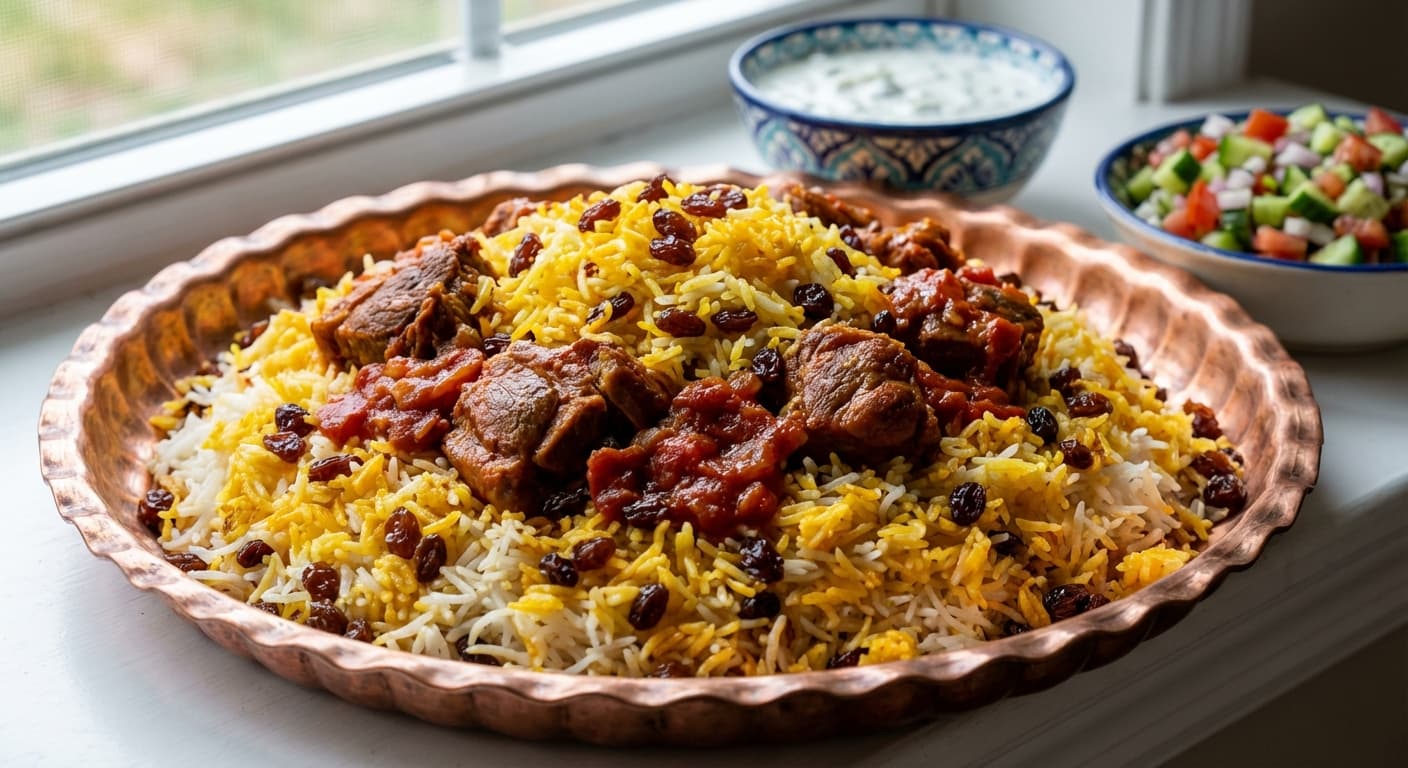
Kashmish Polow (کشمش پلو) — Persian Raisin Rice with Slow-Cooked Lamb
Persian · Rice Dishes · 155 min
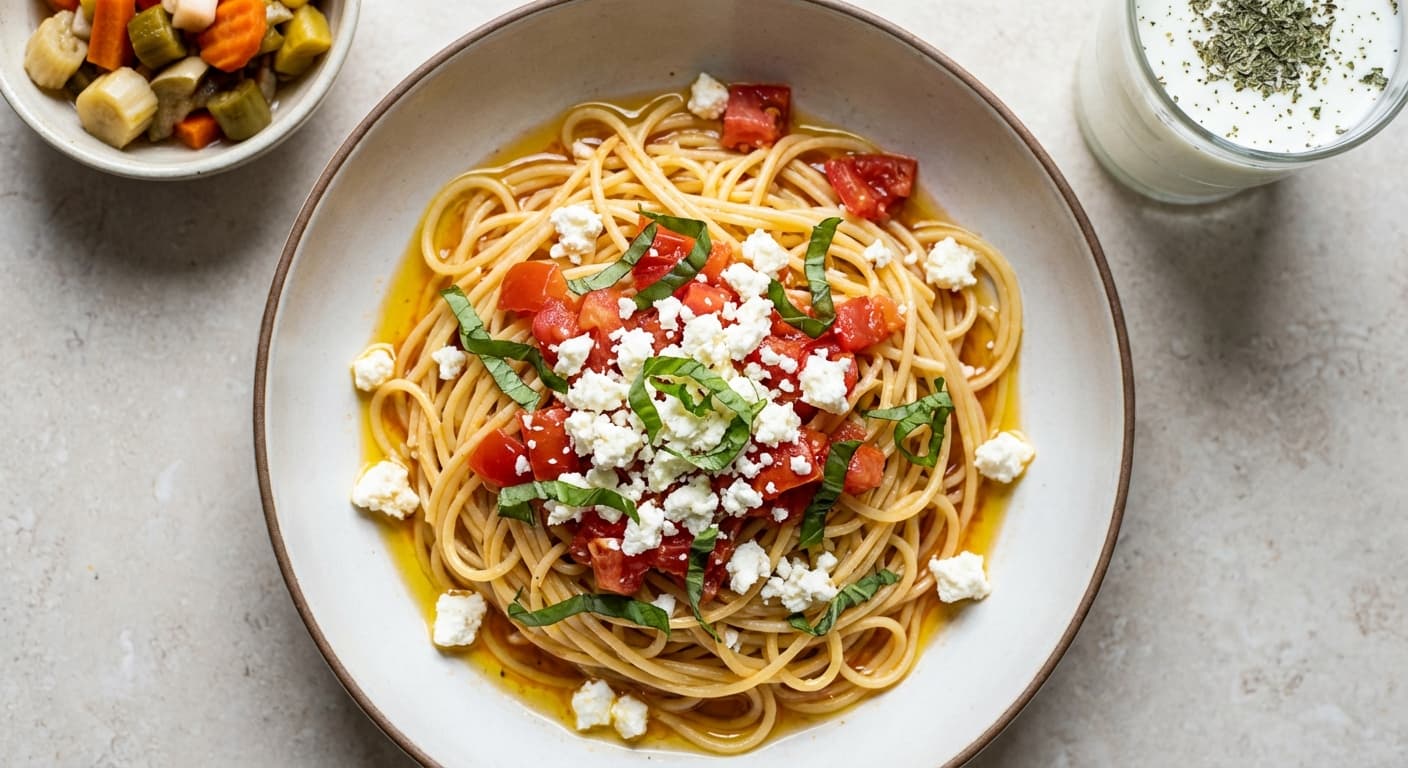
Pastay Paniri (پاستای پنیری) — Persian-Style Cheesy Pasta with Fresh Tomatoes
Persian · Main Courses · 27 min
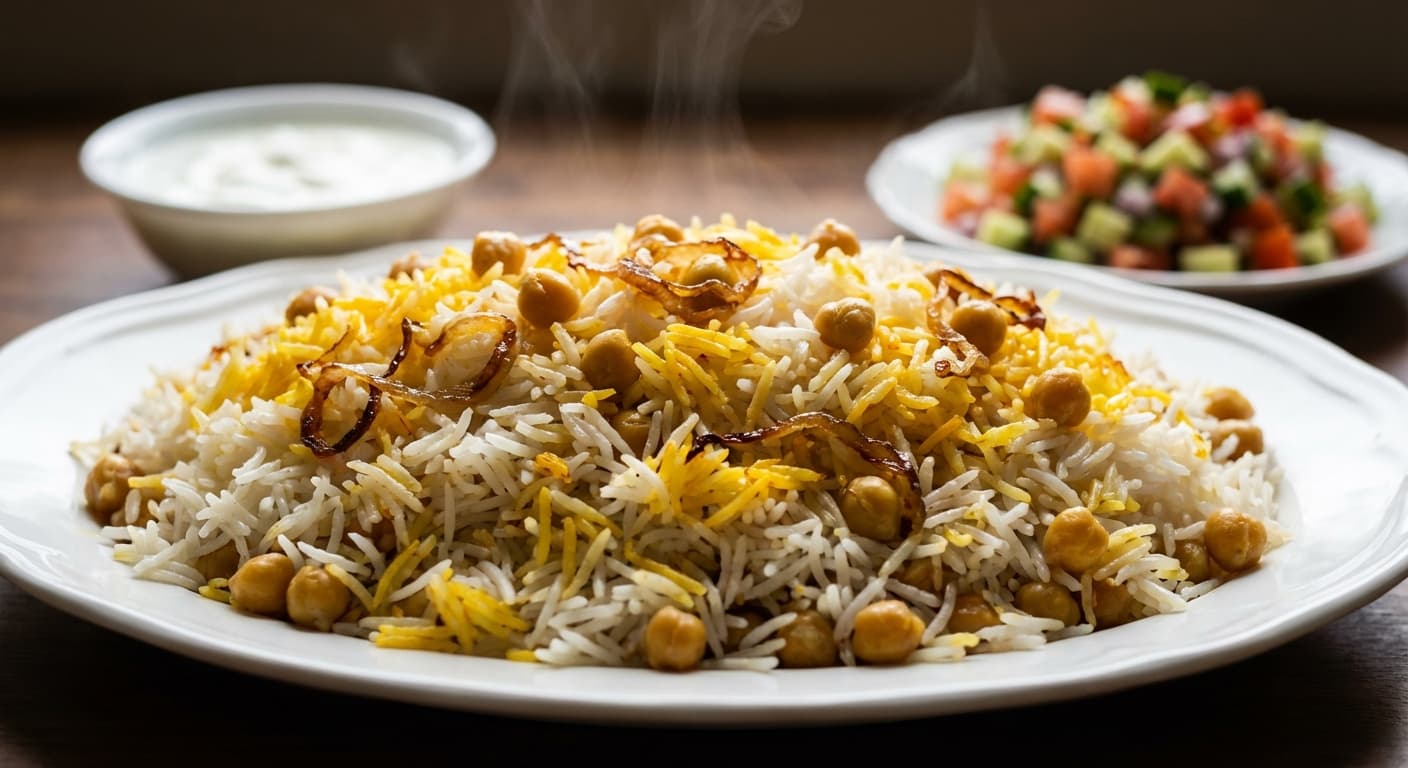
Nokhod Polo (نخود پلو) — Saffron Chickpea Rice with Warm Spices
Persian · Rice Dishes · 80 min
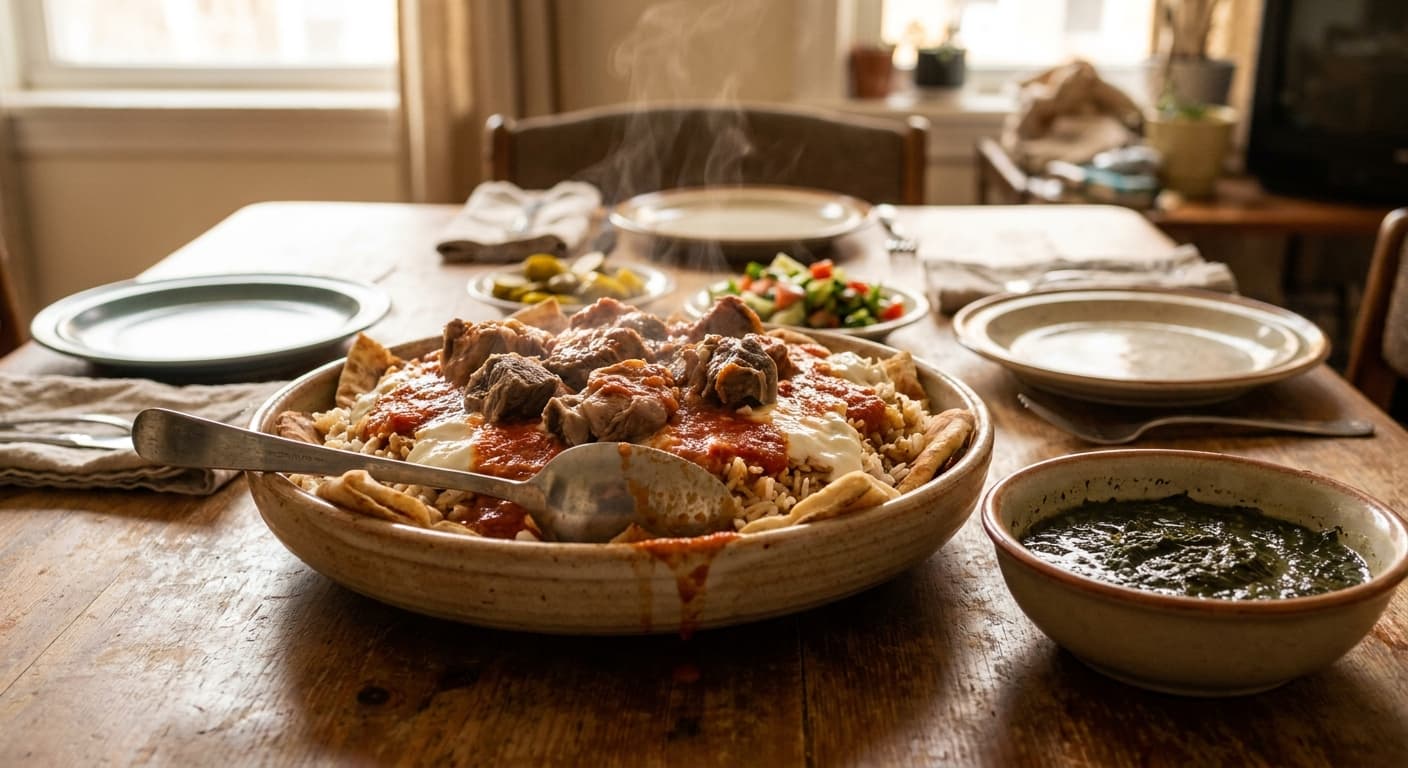
Egyptian Fatta (فتة) — Layered Meat, Rice, and Crisp Bread
Egyptian · Main Courses · 145 min
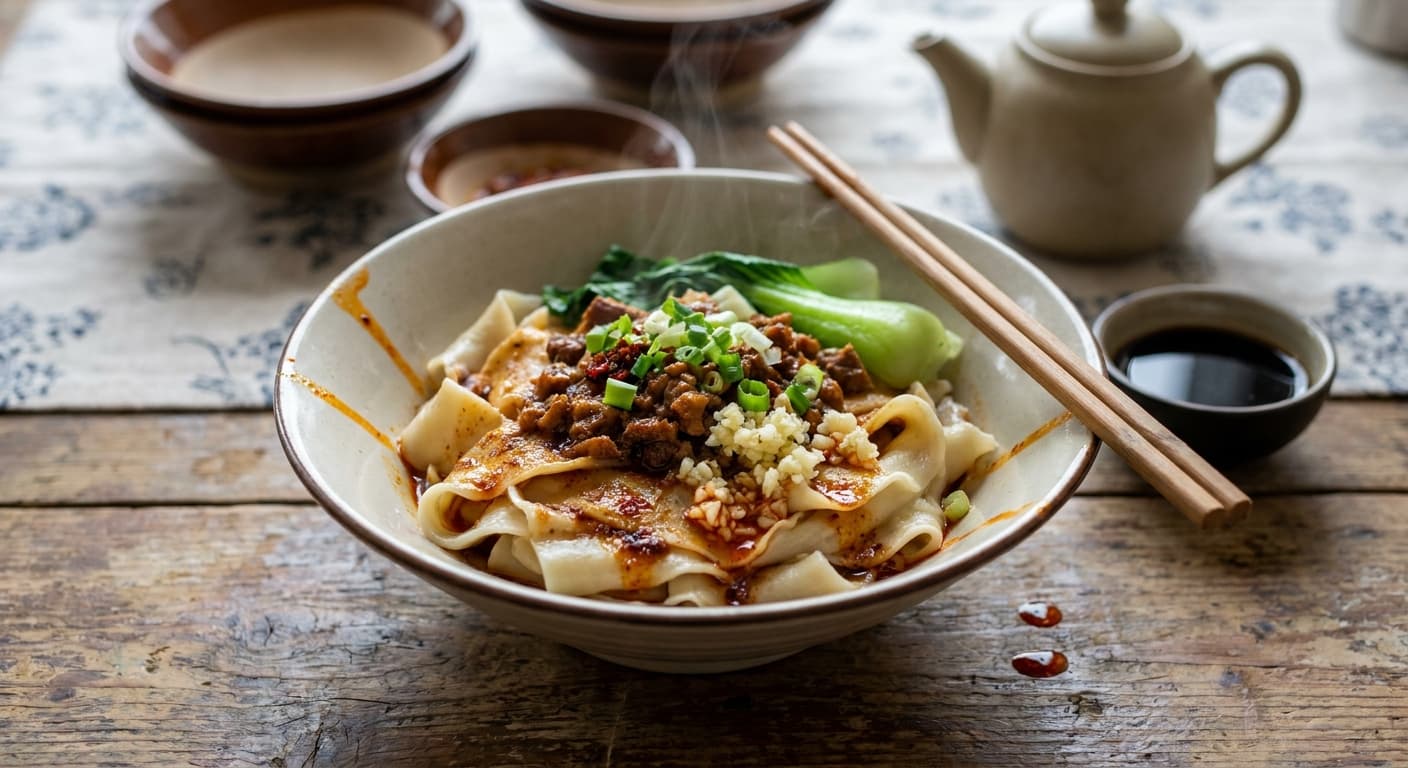
Biangbiang Noodles (油泼扯面) — Xi'an Hand-Pulled Belt Noodles
Chinese · Main Courses · 65 min
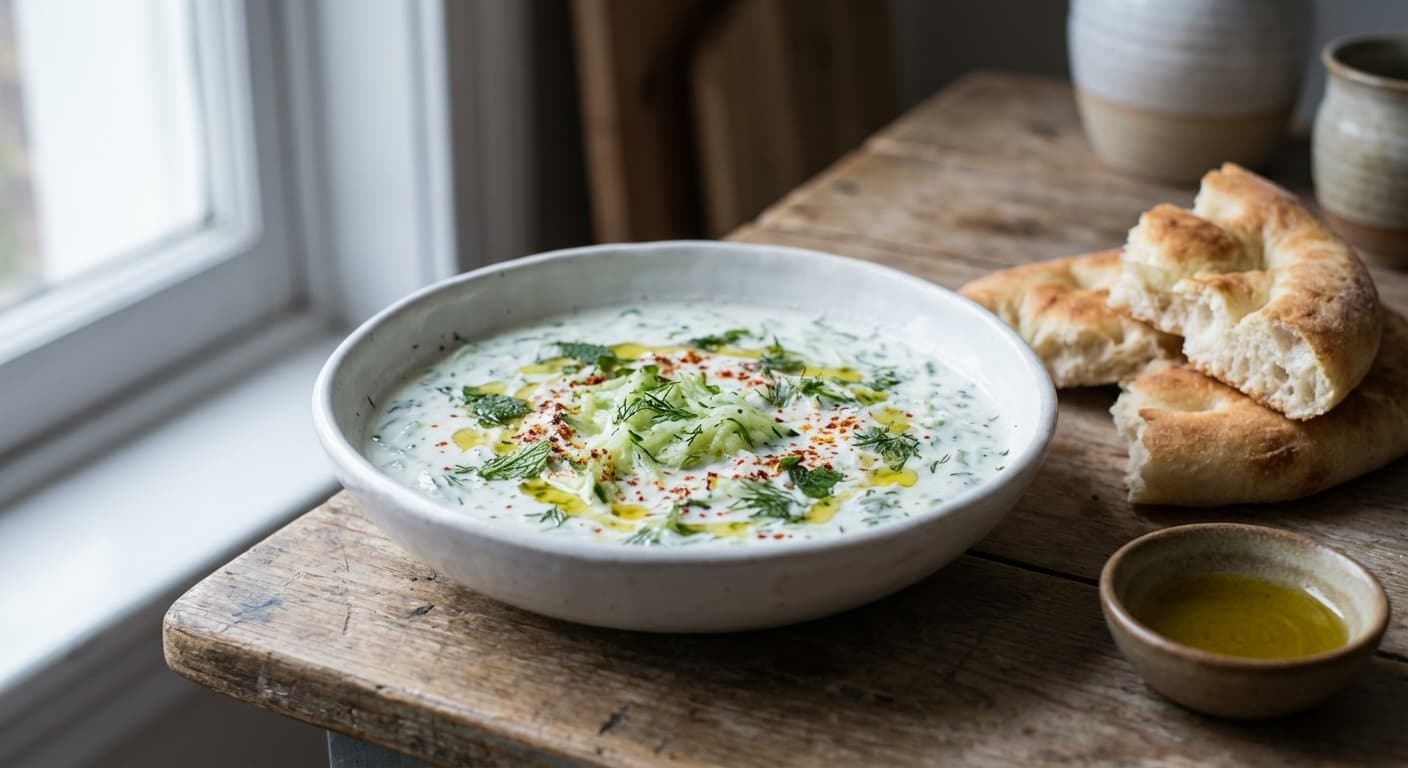
Cacık (Yoğurtlu Salatalık Mezesi) — Chilled Turkish Yogurt, Cucumber & Mint Dip
Turkish · Appetizers · 15 min
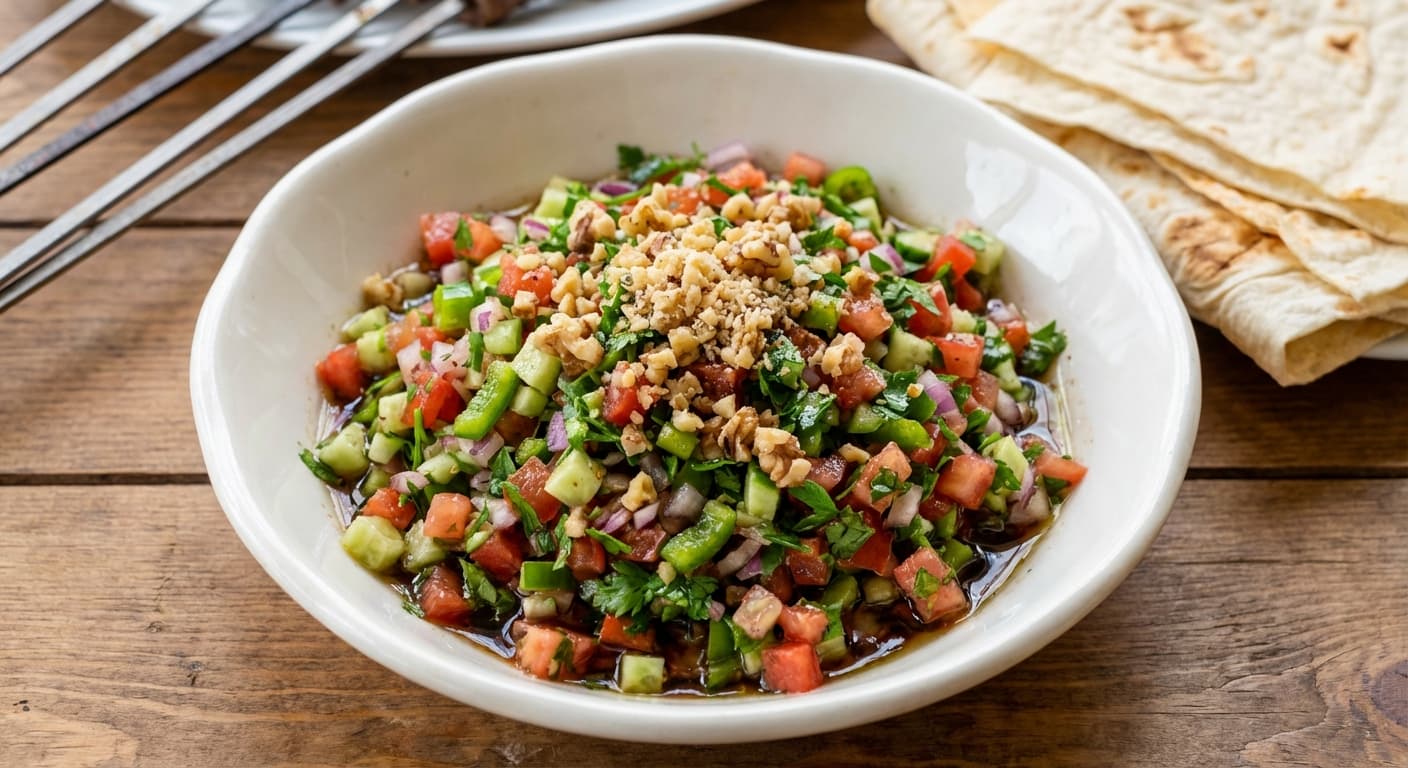
Gavurdağı Salad (Gavurdağı Salatası) — Finely Chopped Walnut & Pomegranate Salad
Turkish · Salads · 20 min
Besso (በሶ) — Ethiopian Roasted Barley Bites
Ethiopian · Appetizers · 20 min
Reviews
Cooked this recipe?
Tap the stars to rate it — that's all it takes. A few words are welcome but optional.
No ratings yet. Cooked this one? Be the first to rate it — it takes one tap.