Layali Lubnan (ليالي لبنان) — Lebanese Nights Semolina Pudding with Ashta Cream
Layali Lubnan is a beloved Lebanese dessert of silky semolina pudding topped with ashta cream and perfumed with orange blossom and rose. It’s served chilled, then finished with pistachios and sweet syrup for a classic Levantine “nights” treat.
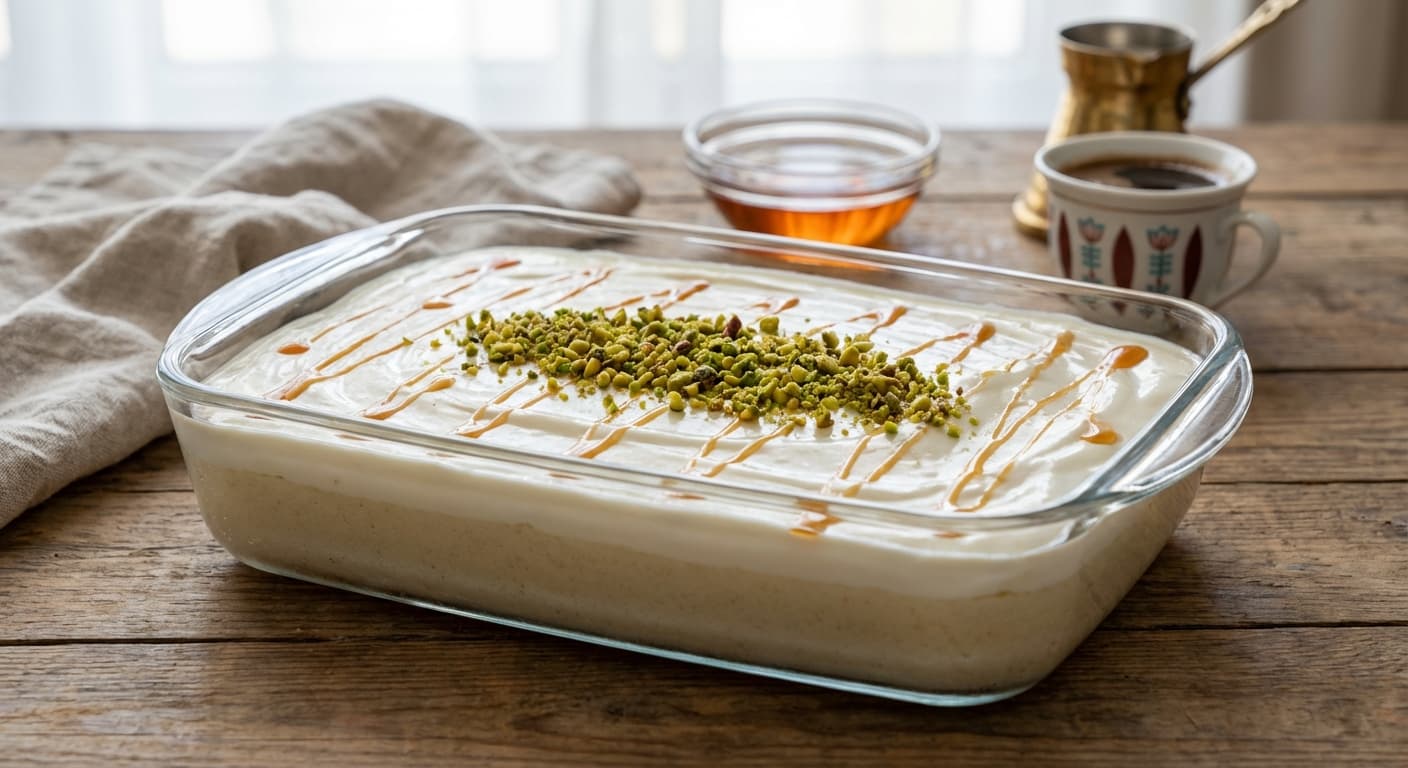
Printable Recipe Card
Servings: 8 · Total: 35 min · Difficulty: medium
Ingredients (quick list)
- 1000 ml whole milk
- 90 g fine semolina (also called farina; use fine, not coarse)
- 120 g granulated sugar
- 10 ml orange blossom water (about 2 tsp)
- 5 ml rose water (about 1 tsp)
- 0.5 g mastic (optional; finely ground)
- 20 g cornstarch
- 250 ml heavy cream
- 200 ml water
- 15 ml lemon juice (1 tbsp)
- 40 g pistachios (finely chopped)
Steps (summary)
- Make the syrup first so it can cool completely before serving. Combine the sugar and water in a small saucepan and bring to a b…
- Stir in the lemon juice and simmer 1 minute more to prevent crystallization. Turn off the heat, mix in the orange blossom water…
- Prepare the semolina pudding base by placing the milk and sugar in a medium heavy-bottomed pot over medium heat. Whisk until th…
- Rain in the fine semolina while whisking continuously to avoid lumps. Keep whisking 4–6 minutes until the mixture thickens to a…
- Remove the pot from the heat and immediately whisk in the orange blossom water and rose water, plus the ground mastic if using.…
- Make the ashta cream layer by whisking the cornstarch with 100 ml of the milk until completely smooth. Add the remaining 400 ml…
+ 3 more steps in the full instructions section below.
Cultural Background
A staple of Lebanese patisseries and home tables, Layali Lubnan showcases the Levant’s love of milk desserts scented with orange blossom and rose. It’s commonly served at gatherings and celebrations, where chilled trays are sliced and shared family-style.
Equipment
💡 Tips
- Whisk the semolina in gradually and keep the heat at medium to prevent graininess; the base should thicken in 4–6 minutes, not seize instantly.
- Cool the semolina layer about 20 minutes before adding ashta so the cream sits on top instead of sinking into the base.
- For a brighter, more traditional finish, chill the syrup fully and drizzle right before serving to keep the top glossy and the pistachios crisp.
⚠️ Common Mistakes
❌ Adding semolina too quickly, causing lumps in the base.
✅ Fix: Sprinkle semolina in a thin stream while whisking continuously, then whisk 1–2 minutes more until perfectly smooth.
❌ Pouring hot ashta onto a fully hot base, making the layers blend.
✅ Fix: Let the semolina layer cool 20 minutes and the ashta cool 5 minutes before layering so the top stays distinct.
❌ Overboiling the syrup until thick like honey.
✅ Fix: Simmer 6–7 minutes total; it should be lightly viscous when cool, not heavy or sticky.
🧊 How to Store
Refrigerate tightly covered for up to 3 days. Keep syrup separate and drizzle only when serving to avoid a soggy top; if already sauced, expect softer texture. Serve straight from the fridge—reheating is not recommended for clean layers.
📅 Make Ahead
Prepare the syrup up to 7 days ahead and refrigerate in a sealed jar. Assemble the full dessert up to 24 hours ahead; keep covered and add syrup and pistachios only at serving for the freshest texture.
🍽️ Pairs Well With
- Arabic coffee
- mint tea
- fresh berries
- extra syrup on the side.
Regional Variations
- Some Lebanese cooks skip the ashta layer and serve the semolina pudding topped with thick clotted cream at the table.
- In parts of the Levant, the base is made slightly thicker with an extra 10–15 g semolina for sharper, cleaner slices.
- A modern patisserie style adds a thin layer of crushed sweet biscuits under the semolina for extra texture.
Ingredients
- 1000 mlwhole milk
- 90 gfine semolina (also called farina; use fine, not coarse)
- 120 ggranulated sugar
- 10 mlorange blossom water (about 2 tsp)
- 5 mlrose water (about 1 tsp)
- 0.5 gmastic (optional; finely ground)
- 20 gcornstarch
- 250 mlheavy cream
- 200 mlwater
- 15 mllemon juice (1 tbsp)
- 40 gpistachios (finely chopped)
🔄 Substitutions
- mastic→ 0.5 g finely grated mahleb
- heavy cream→ evaporated milk
- pistachios→ toasted sliced almonds
Instructions
- 1
Make the syrup first so it can cool completely before serving. Combine the sugar and water in a small saucepan and bring to a boil, then reduce to a steady simmer for 6 minutes until slightly thickened.
- 2
Stir in the lemon juice and simmer 1 minute more to prevent crystallization. Turn off the heat, mix in the orange blossom water, and set the syrup aside to cool to room temperature.
- 3
Prepare the semolina pudding base by placing the milk and sugar in a medium heavy-bottomed pot over medium heat. Whisk until the sugar dissolves and the milk is steaming but not boiling.
- 4
Rain in the fine semolina while whisking continuously to avoid lumps. Keep whisking 4–6 minutes until the mixture thickens to a smooth, pourable pudding that briefly holds whisk trails.
- 5
Remove the pot from the heat and immediately whisk in the orange blossom water and rose water, plus the ground mastic if using. Pour the pudding into a 23 x 33 cm (9 x 13 in) dish and spread it evenly, then let it cool 20 minutes so the surface sets.
- 6
Make the ashta cream layer by whisking the cornstarch with 100 ml of the milk until completely smooth. Add the remaining 400 ml milk, heavy cream, and sugar to a saucepan and heat over medium, whisking until hot.
- 7
Whisk in the cornstarch slurry and cook 3–5 minutes, stirring constantly, until the cream thickens to a soft custard consistency. Turn off the heat and stir in the orange blossom water and rose water, then cool 5 minutes so it won’t melt the base.
- 8
Spoon the warm ashta over the semolina base and gently spread to the edges in an even layer. Cover the dish tightly and refrigerate at least 4 hours until fully chilled and sliceable.
- 9
To serve, cut into 8 squares and drizzle each portion with 20–25 ml of cooled syrup. Finish with chopped pistachios and serve cold for the cleanest layers and best floral aroma.
🪪 Recipe Passport
Cultural Background
A staple of Lebanese patisseries and home tables, Layali Lubnan showcases the Levant’s love of milk desserts scented with orange blossom and rose. It’s commonly served at gatherings and celebrations, where chilled trays are sliced and shared family-style.
Regional Variations
Researched from multiple sources and validated by the Zaffaron editorial team. Every recipe is tested for accuracy, measurements, and cultural authenticity.
Nutrition per serving
Pairs well with
If you enjoyed this recipe, here are a few related Zaffaron recipes to try next.
Does your family make this differently?
Every family has their own version. Maybe your grandmother adds a secret ingredient, or your aunt has a completely different technique. Preserve your family's version — with their name on it, forever.
You Might Also Like
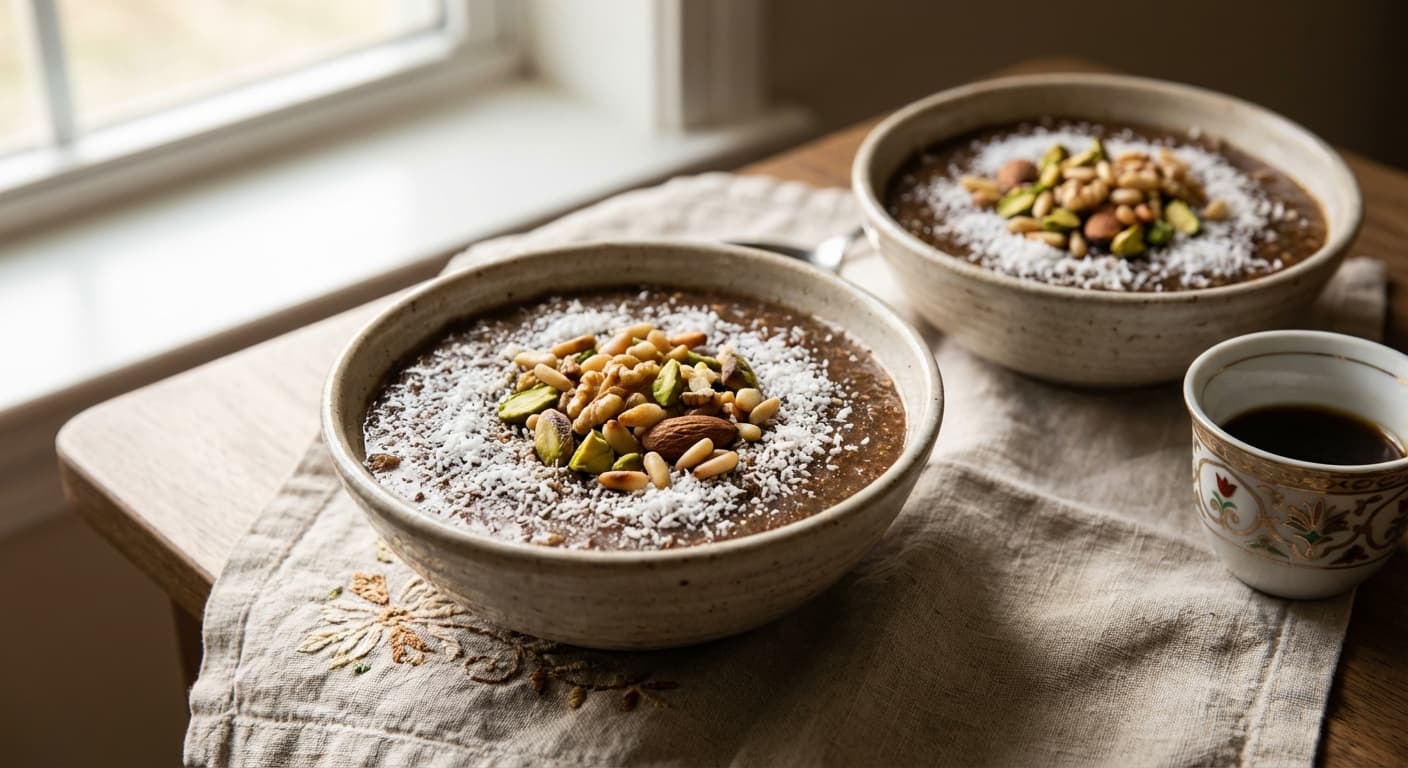
Meghli (مغلي) — Lebanese Spiced Rice Pudding with Nuts
Lebanese · Desserts · 40 min
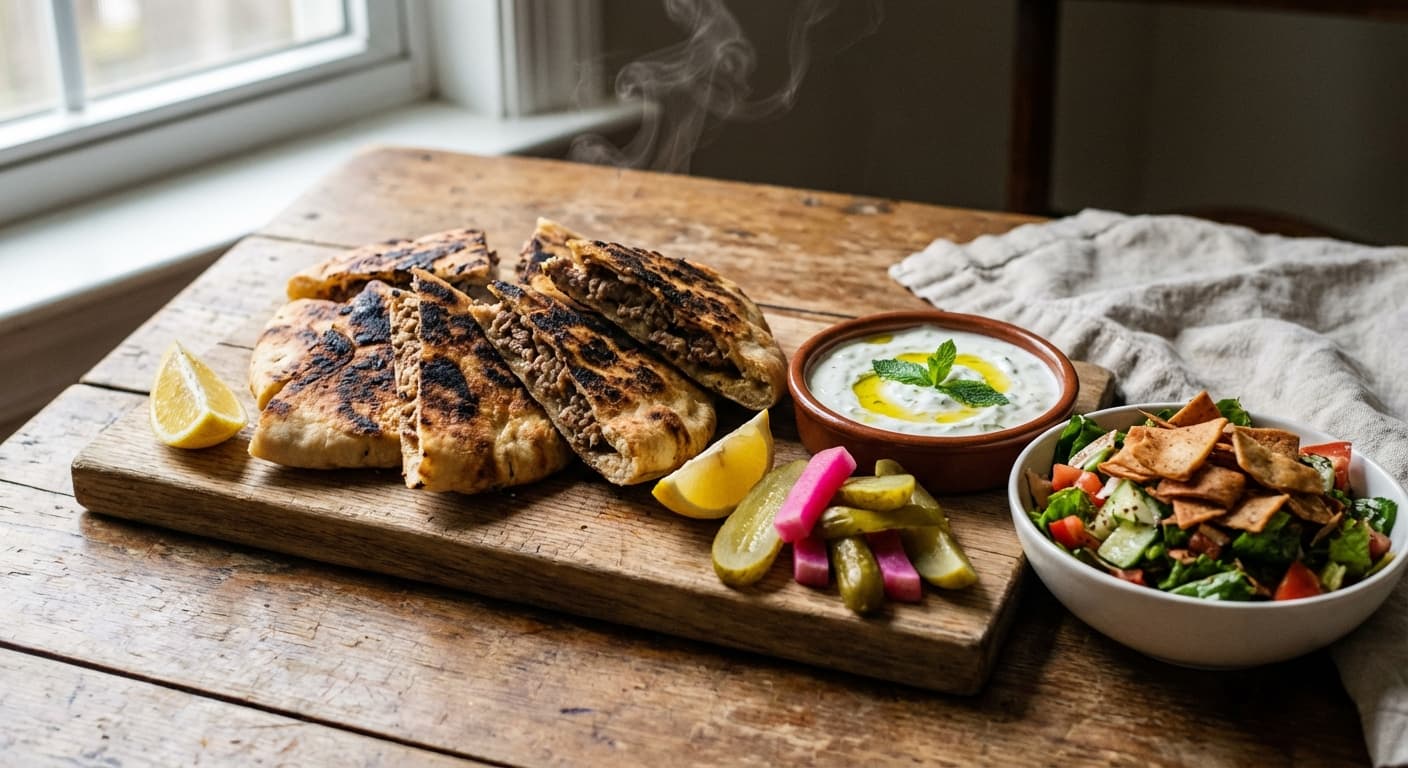
Arayess (عرايس) — Lebanese Grilled Stuffed Pita with Spiced Meat
Lebanese · Kebabs · 34 min
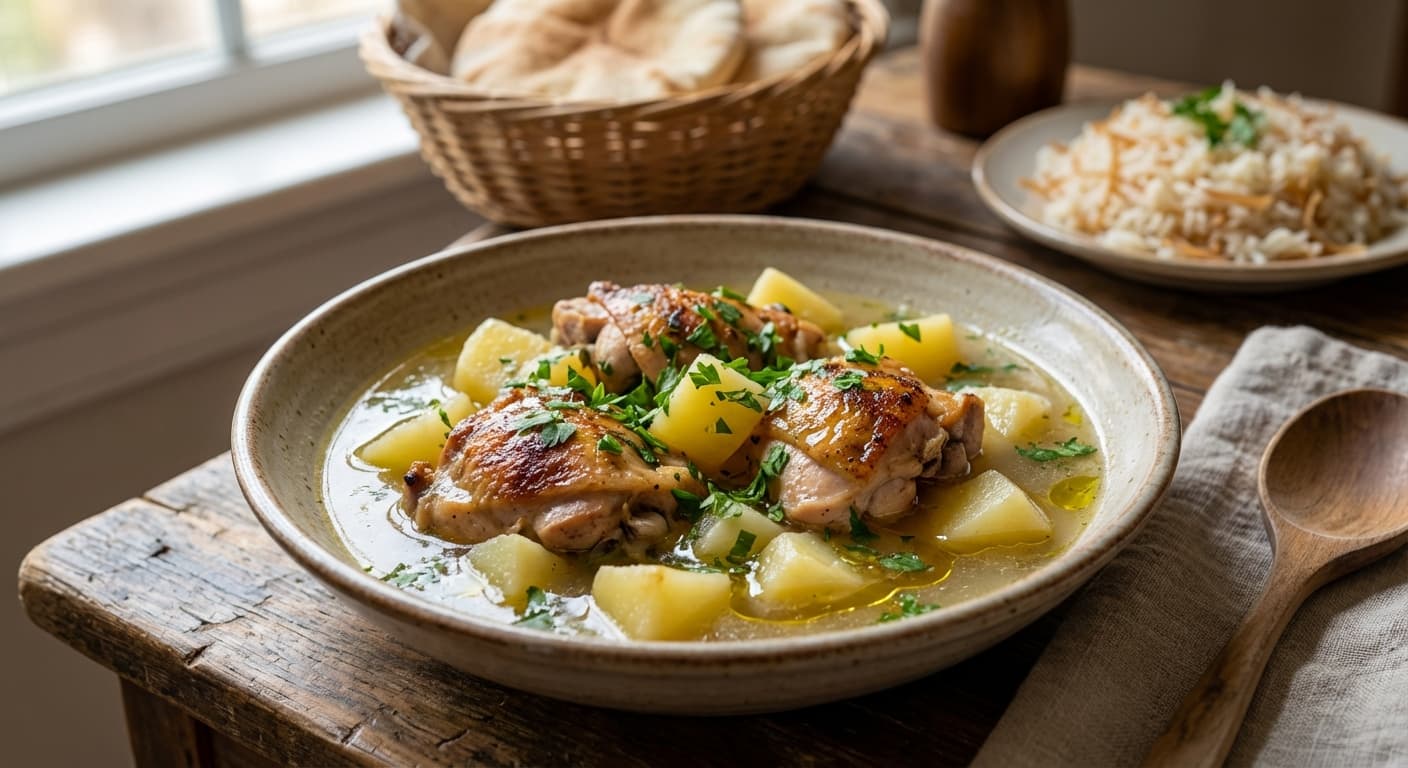
Djej Bi Batata (دجاج ببطاطا) — Lebanese Chicken Stew with Potatoes and Garlic
Lebanese · Stews · 75 min
Brigadeiro (Brigadeiro) — Brazilian Chocolate Party Truffles
Brazilian · Desserts · 37 min
Crème Brûlée (Crème brûlée) — Classic Vanilla Custard with Caramelized Sugar
French · Desserts · 60 min
Mıhlama (Mıhlama) — Black Sea Cornmeal and Cheese Skillet
Turkish · Main Courses · 25 min
Ash-e Sak (آش ساک) — Gorgani Spinach and Lamb Ash
Persian · Soups · 175 min
Noodl Ba Sooya Va Felfel (نودل با سویا و فلفل) — Persian Soy and Pepper Noodles
Persian · Main Courses · 40 min
Reviews
Cooked this recipe?
Tap the stars to rate it — that's all it takes. A few words are welcome but optional.
No ratings yet. Cooked this one? Be the first to rate it — it takes one tap.