Nargesi (نرگسی) — Persian Spinach and Egg Skillet
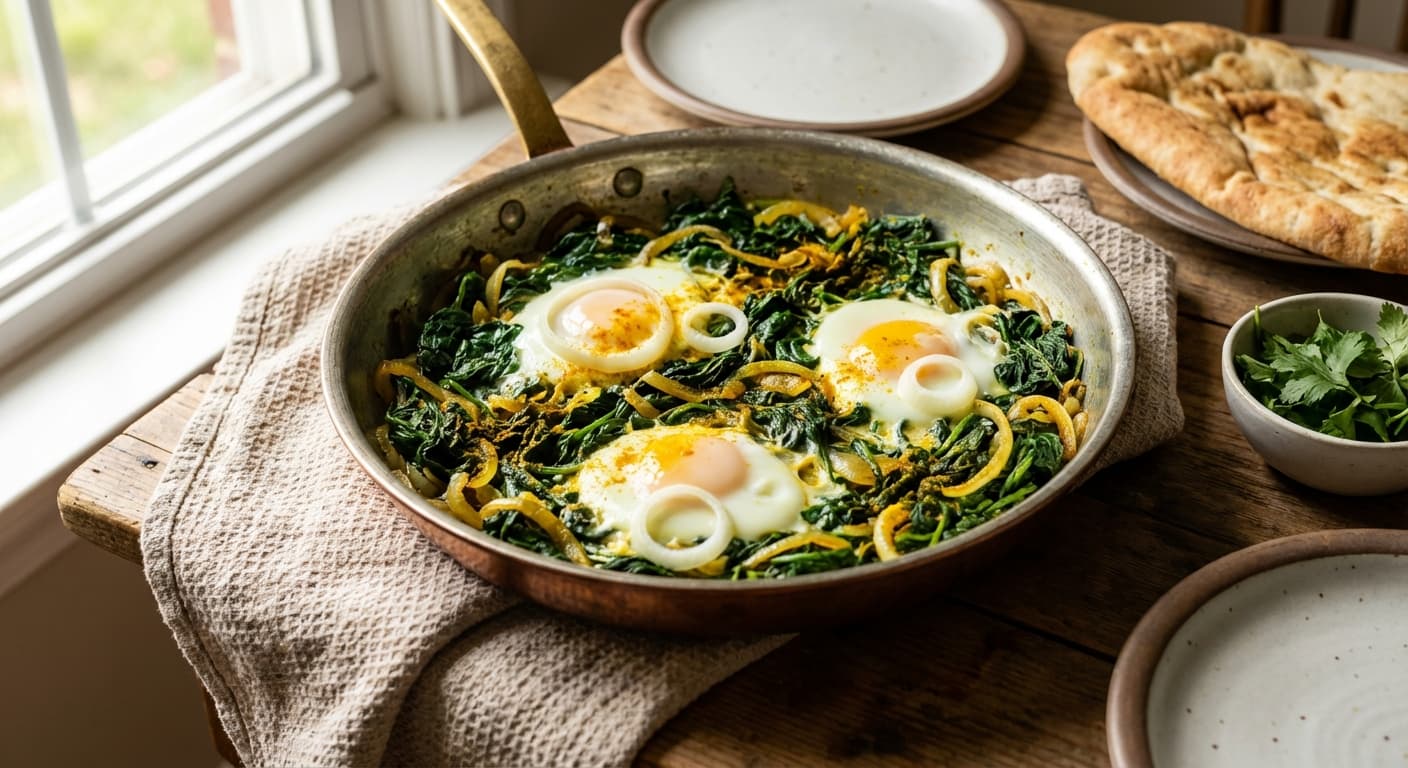
A classic Persian skillet of turmeric-scented spinach and deeply caramelized onions, finished with softly set eggs. Simple, nourishing, and quick, its white-and-gold look recalls the narcissus flower it is named for.
Printable Recipe Card
Servings: 4 · Total: 45 min · Difficulty: easy
Ingredients (quick list)
- 700 g Fresh spinach (washed well, tough stems removed; roughly chopped if leaves are large)
- 250 g Yellow onion (thinly sliced (about 1 large))
- 12 g Garlic (finely minced (about 3 cloves))
- 45 ml Olive oil (divided)
- 2 tsp Ground turmeric
- 1.25 tsp Fine sea salt (plus more to taste)
- 0.75 tsp Black pepper (freshly ground, plus more to taste)
- 6 Large eggs (at room temperature if possible)
- 60 ml Water (to help steam the spinach if needed)
Steps (summary)
- Heat a large, heavy skillet (28–30 cm / 11–12 in) over medium heat for 2 minutes. Add 30 ml olive oil, then the sliced onion an…
- Add the minced garlic and cook 45–60 seconds until fragrant. Stir in the turmeric and black pepper and cook 20–30 seconds to bl…
- Once all spinach is in, sprinkle in the remaining 3/4 tsp salt. Cook 5–7 minutes, stirring occasionally, until fully wilted and…
- Taste and adjust salt and pepper. Use a spoon to make 6 small wells in the spinach mixture. Crack one egg into each well. Reduc…
- Turn off the heat and rest, covered, for 2 minutes to finish gently. Serve straight from the skillet while warm. For neat porti…
Cultural Background
Nargesi is a home-style Persian dish named for its resemblance to the narcissus flower, with bright yolks set against pale whites and green spinach. It is commonly prepared as a quick, nourishing meal and is often served with bread or rice in everyday family cooking.
Equipment
💡 Tips
- For deeper onion flavor, cook the onions slowly over medium-low heat for the full 15 minutes; the sweetness balances spinach bitterness.
- Dry the spinach well after washing; excess water prevents sautéing and makes the dish watery.
- If you prefer a drier, more concentrated skillet, keep the pan uncovered after wilting and cook 2–3 extra minutes to evaporate moisture before adding eggs.
- Room-temperature eggs set more evenly and reduce the risk of overcooked whites with undercooked yolks.
⚠️ Common Mistakes
❌ Rushing the onions
💡 Why: Pale onions taste sharp and don’t provide the sweetness that balances spinach.
✅ Fix: Cook 12–15 minutes over medium to medium-low, stirring often, until deeply golden; add 1–2 tbsp water if the pan threatens to scorch.
❌ Adding eggs while the spinach is watery
💡 Why: Excess liquid makes eggs spread and steam unevenly, leading to rubbery whites and diluted flavor.
✅ Fix: Uncover and sauté until moisture evaporates; if needed, raise heat to medium for 1–2 minutes while stirring before making wells for the eggs.
❌ Cooking eggs on too high heat
💡 Why: High heat toughens whites before yolks warm through.
✅ Fix: Reduce to low, cover, and cook gently 5–8 minutes; rest 2 minutes off heat to finish without overcooking.
❌ Burning turmeric and garlic
💡 Why: Both can turn bitter quickly in hot oil.
✅ Fix: Add garlic first for under 1 minute, then turmeric for only 20–30 seconds, and immediately add spinach to cool the pan.
🧊 How to Store
Cool leftovers within 2 hours. Refrigerate in an airtight container for up to 3 days. Reheat gently in a covered skillet over low heat for 5–7 minutes; add 1–2 tbsp water if dry. Eggs will firm up on reheating; for best texture, cook eggs fresh and store only the spinach base.
📅 Make Ahead
Cook the onion-spinach base up to 2 days ahead and refrigerate. Rewarm in a skillet over medium-low until hot and any moisture evaporates, then add eggs and cook fresh just before serving for the best texture.
🍽️ Pairs Well With
- Warm flatbread (lavash or pita)
- Steamed basmati rice
- Plain yogurt or cucumber-yogurt salad
- Fresh herbs and radishes
Regional Variations
- Tehran and central IranOften kept simple with onion, turmeric, and eggs, served with bread for a quick supper; some cooks prefer firmer yolks for easier portioning.
- Northern Iran (Caspian region)Sometimes enriched with extra garlic and a slightly higher ratio of greens; it may be served alongside fresh herbs and pickles for a brighter table.
Ingredients
- 700 gFresh spinach (washed well, tough stems removed; roughly chopped if leaves are large)
- 250 gYellow onion (thinly sliced (about 1 large))
- 12 gGarlic (finely minced (about 3 cloves))
- 45 mlOlive oil (divided)
- 2 tspGround turmeric
- 1.25 tspFine sea salt (plus more to taste)
- 0.75 tspBlack pepper (freshly ground, plus more to taste)
- 6Large eggs (at room temperature if possible)
- 60 mlWater (to help steam the spinach if needed)
🔄 Substitutions
- Fresh spinach→ Frozen chopped spinach, thawed and squeezed dry
- Olive oil→ Neutral oil (sunflower or grapeseed) or ghee
- Large eggs→ Extra-large eggs
Instructions
- 1
Heat a large, heavy skillet (28–30 cm / 11–12 in) over medium heat for 2 minutes. Add 30 ml olive oil, then the sliced onion and 1/2 tsp salt. Cook 12–15 minutes, stirring every 1–2 minutes, until the onion is deeply golden and lightly caramelized; lower heat slightly if it browns too fast.
- 2
Add the minced garlic and cook 45–60 seconds until fragrant. Stir in the turmeric and black pepper and cook 20–30 seconds to bloom the spice. Add the remaining 15 ml olive oil, then add spinach in 2–3 batches, turning with tongs so it wilts evenly without overflowing the pan.
- 3
Once all spinach is in, sprinkle in the remaining 3/4 tsp salt. Cook 5–7 minutes, stirring occasionally, until fully wilted and most moisture has evaporated. If the pan looks dry before the spinach wilts, add up to 60 ml water, cover, and steam 2 minutes, then uncover to cook off excess liquid.
- 4
Taste and adjust salt and pepper. Use a spoon to make 6 small wells in the spinach mixture. Crack one egg into each well. Reduce heat to low, cover with a lid, and cook 5–8 minutes until whites are set and yolks are still soft; cook 1–2 minutes longer for firmer yolks.
- 5
Turn off the heat and rest, covered, for 2 minutes to finish gently. Serve straight from the skillet while warm. For neat portions, slide a spatula under each egg and lift with some spinach and onion beneath, keeping yolks intact for the classic white-and-gold ‘narcissus’ look.
🪪 Recipe Passport
Cultural Background
Nargesi is a home-style Persian dish named for its resemblance to the narcissus flower, with bright yolks set against pale whites and green spinach. It is commonly prepared as a quick, nourishing meal and is often served with bread or rice in everyday family cooking.
Regional Variations
Researched from multiple sources and validated by the Zaffaron editorial team. Every recipe is tested for accuracy, measurements, and cultural authenticity.
Nutrition per serving
Pairs well with
If you enjoyed this recipe, here are a few related Zaffaron recipes to try next.
Does your family make this differently?
Every family has their own version. Maybe your grandmother adds a secret ingredient, or your aunt has a completely different technique. Preserve your family's version — with their name on it, forever.
You Might Also Like
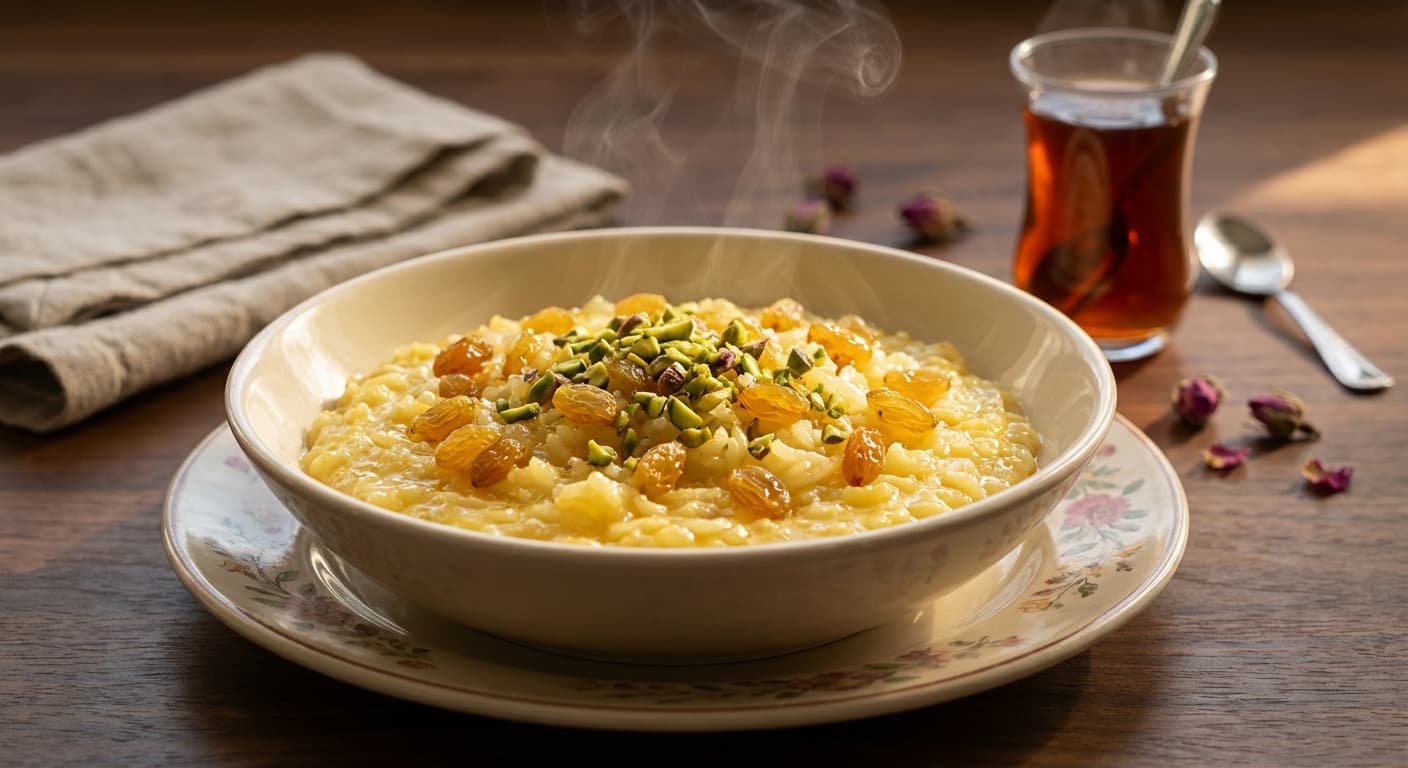
Saffron Sweet Rice (پلو شیرینی زعفرانی) — Festive Persian milk-saffron rice with nuts
Persian · Rice Dishes · 75 min
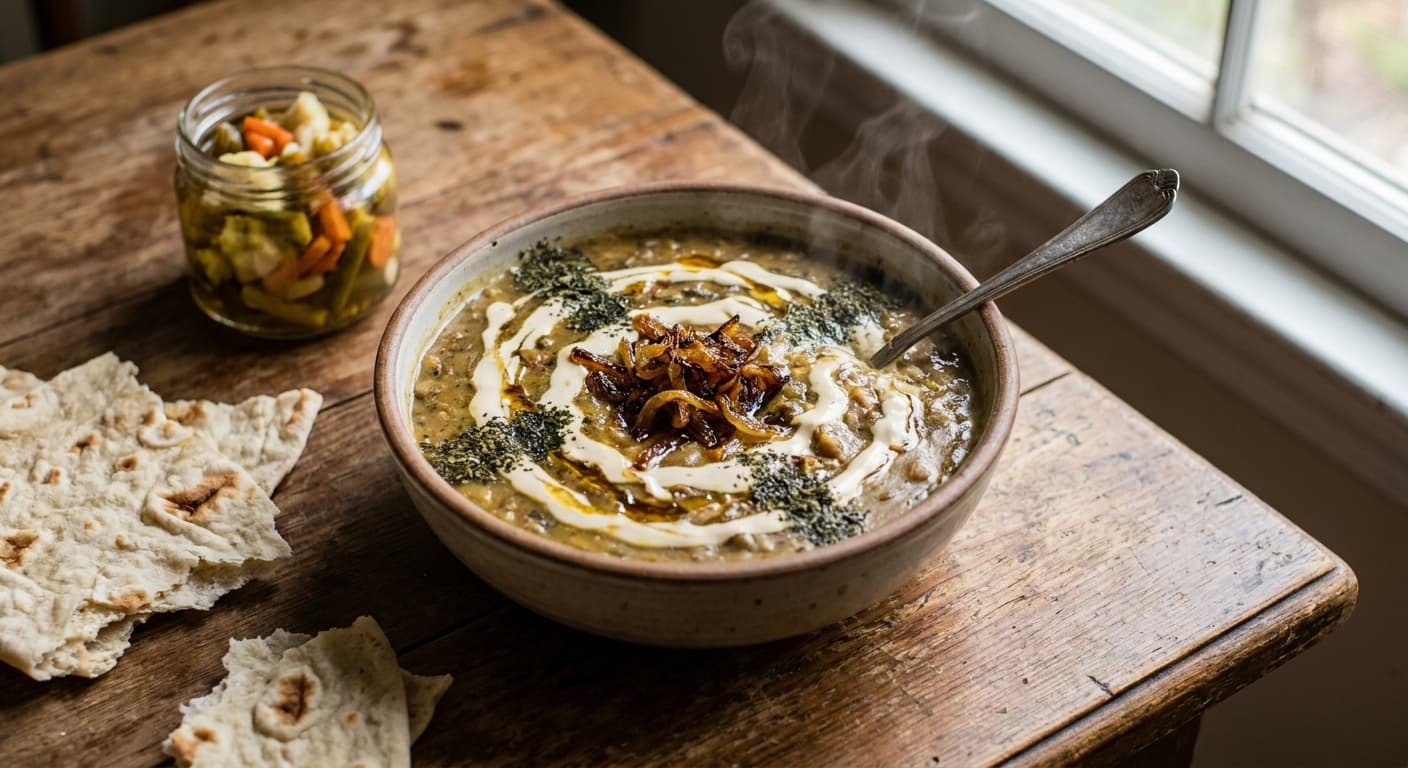
Ash-e Sak (آش ساک) — Gorgani Spinach and Lamb Ash
Persian · Soups · 175 min
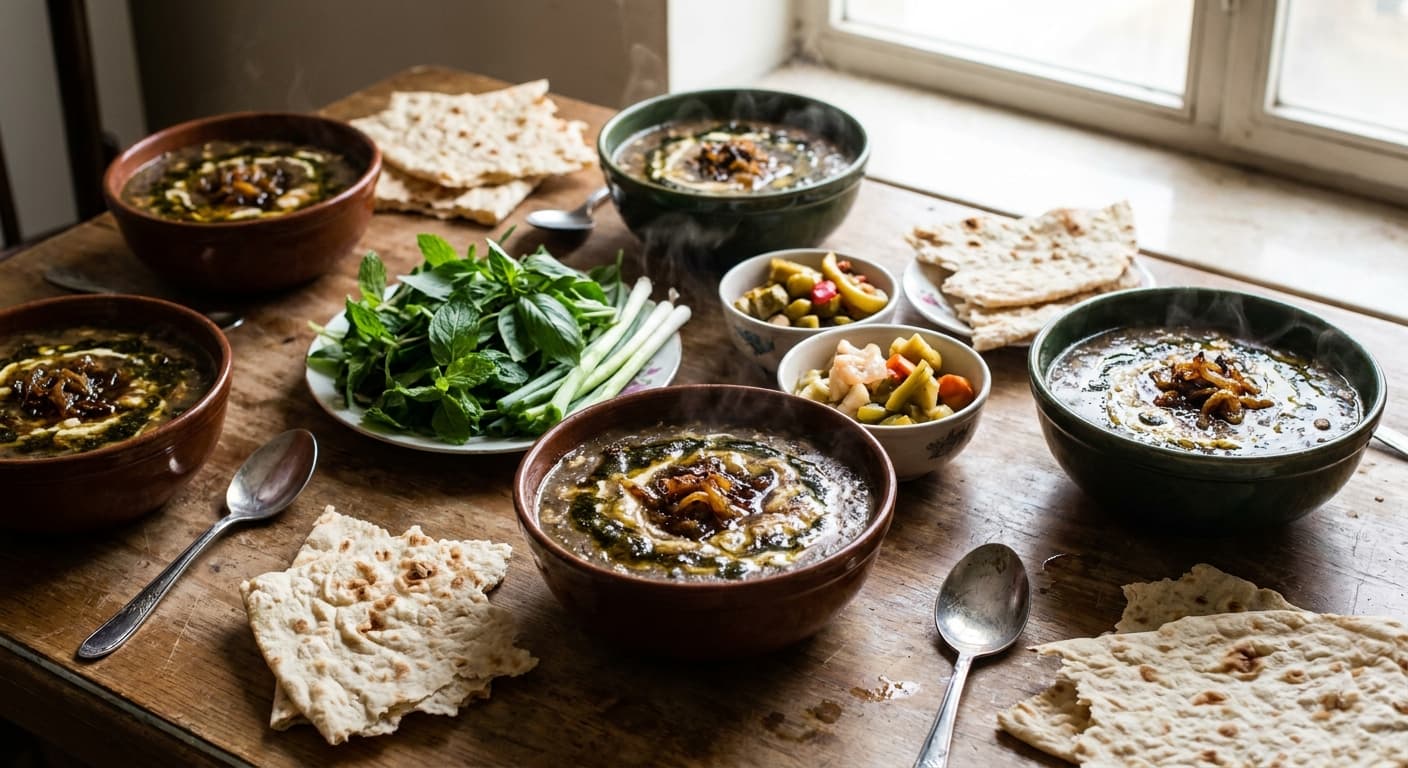
Ash-e Torsh (آش ترش) — Sour Herb and Legume Soup
Persian · Soups · 145 min
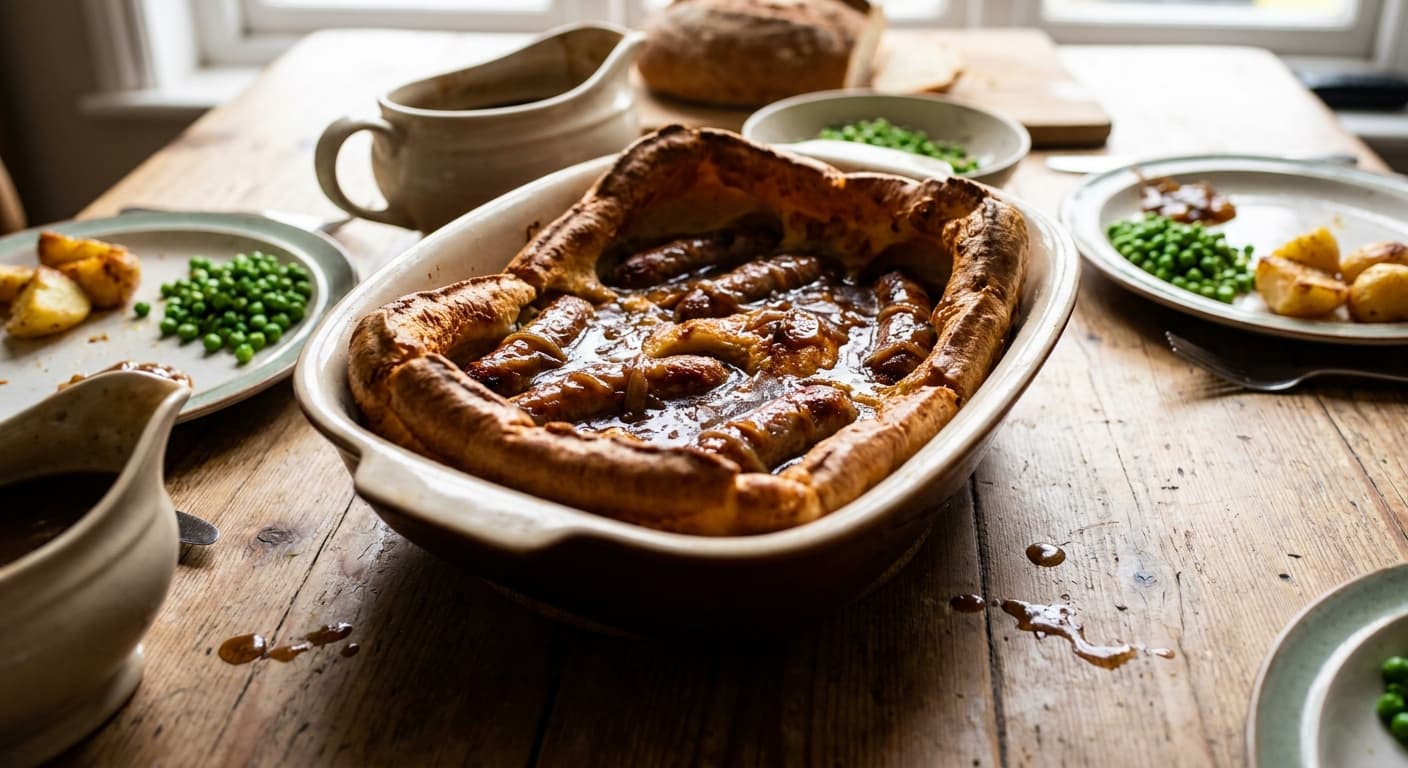
Toad in the Hole (Toad in the Hole) — Sausages Baked in Yorkshire Pudding Batter
British · Main Courses · 65 min
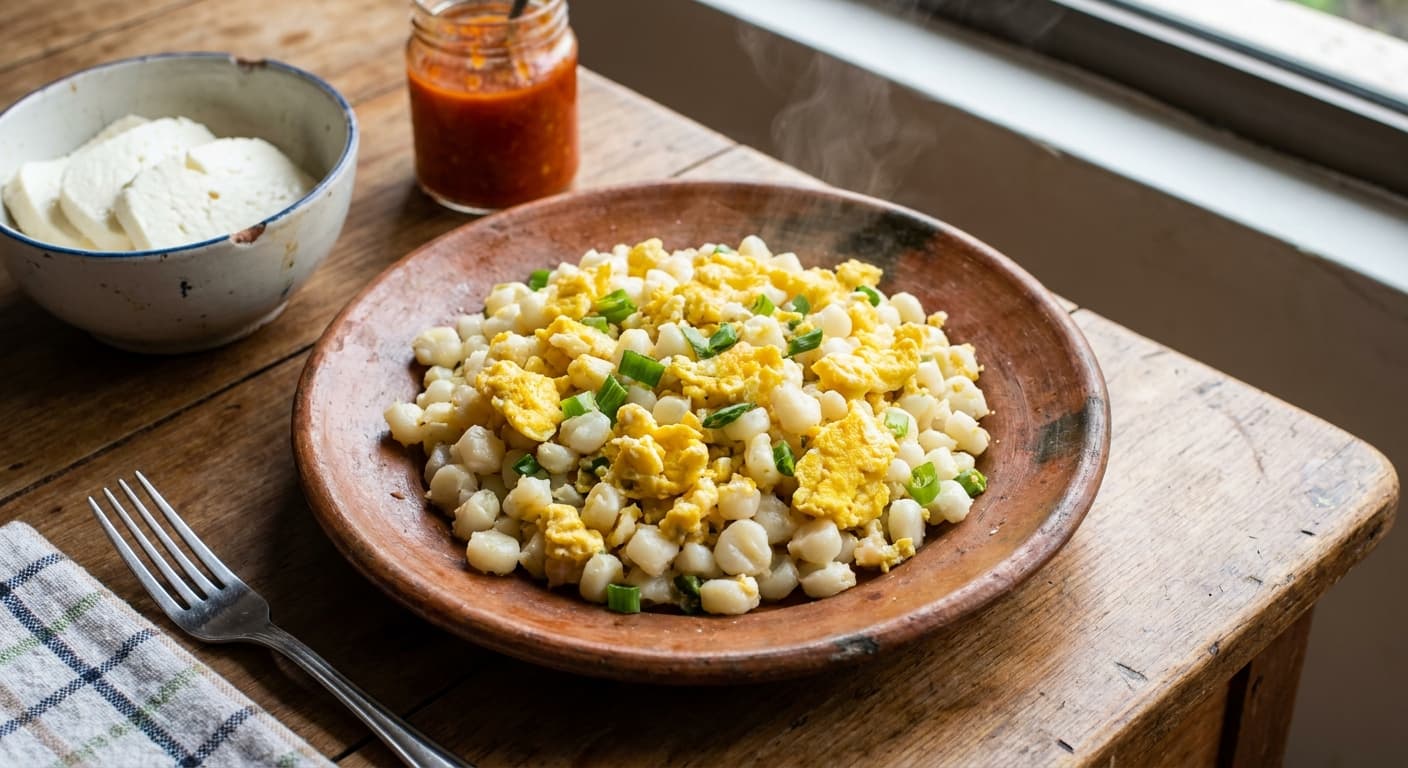
Scrambled Hominy and Eggs (Mote pillo) — Ecuadorian Highland Breakfast
Ecuadorian · Main Courses · 25 min
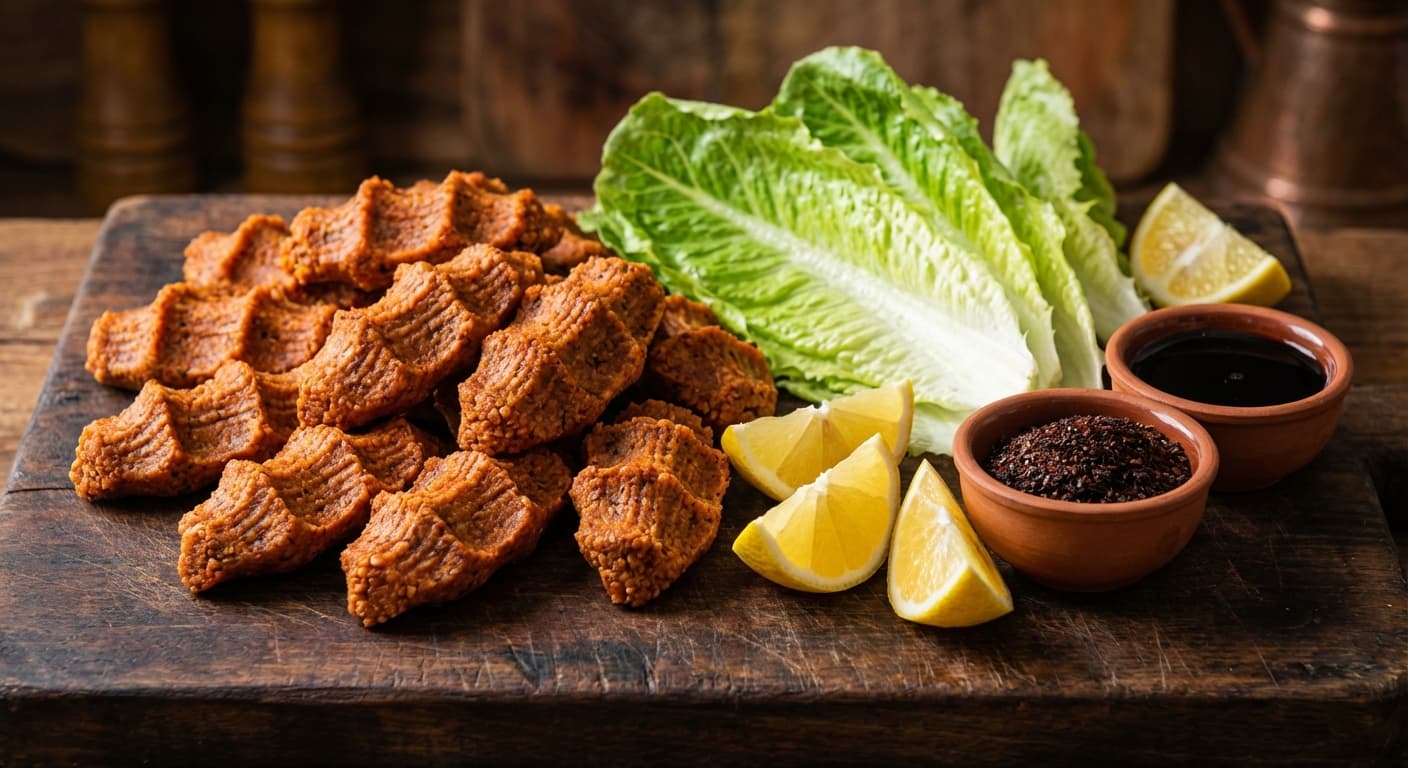
Cig Kofte (Çiğ Köfte) — Isot-kissed bulgur kneaded and served in lettuce
Turkish · Appetizers · 25 min
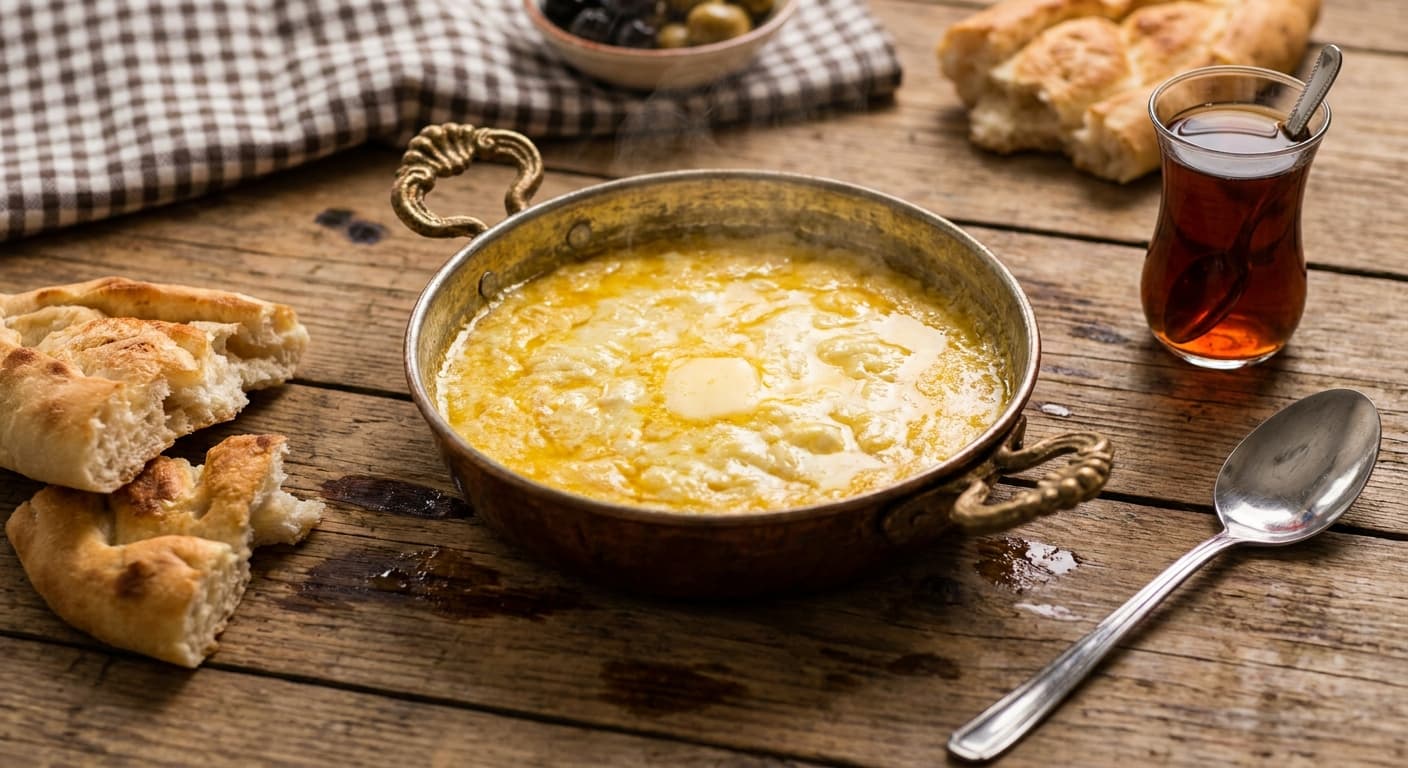
Mıhlama (Mıhlama) — Black Sea Cornmeal and Cheese Skillet
Turkish · Main Courses · 25 min
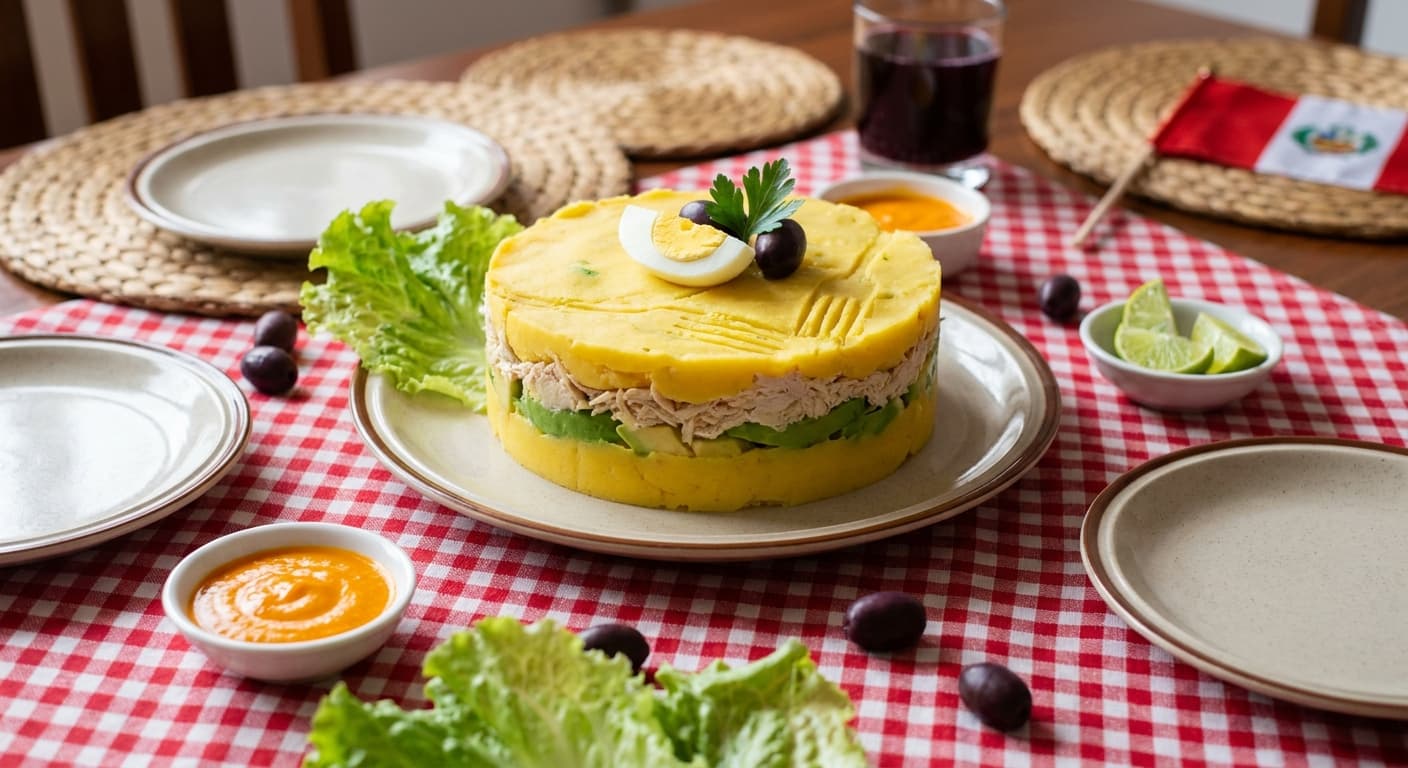
Lima-Style Causa (Causa Limeña) — Chilled Potato Terrine with Chicken and Avocado
Peruvian · Appetizers · 70 min
Reviews
Cooked this recipe?
Tap the stars to rate it — that's all it takes. A few words are welcome but optional.
No ratings yet. Cooked this one? Be the first to rate it — it takes one tap.