Polo Afghani Fasl (پلو افغانی فصل) — Seasonal Afghan Vegetable Rice
A fragrant, layered basmati rice dish with seasonal vegetables, warm cinnamon, and saffron. Finished with a golden, crispy tahdig, it’s a colorful harvest-style pilaf that’s comforting yet celebratory.
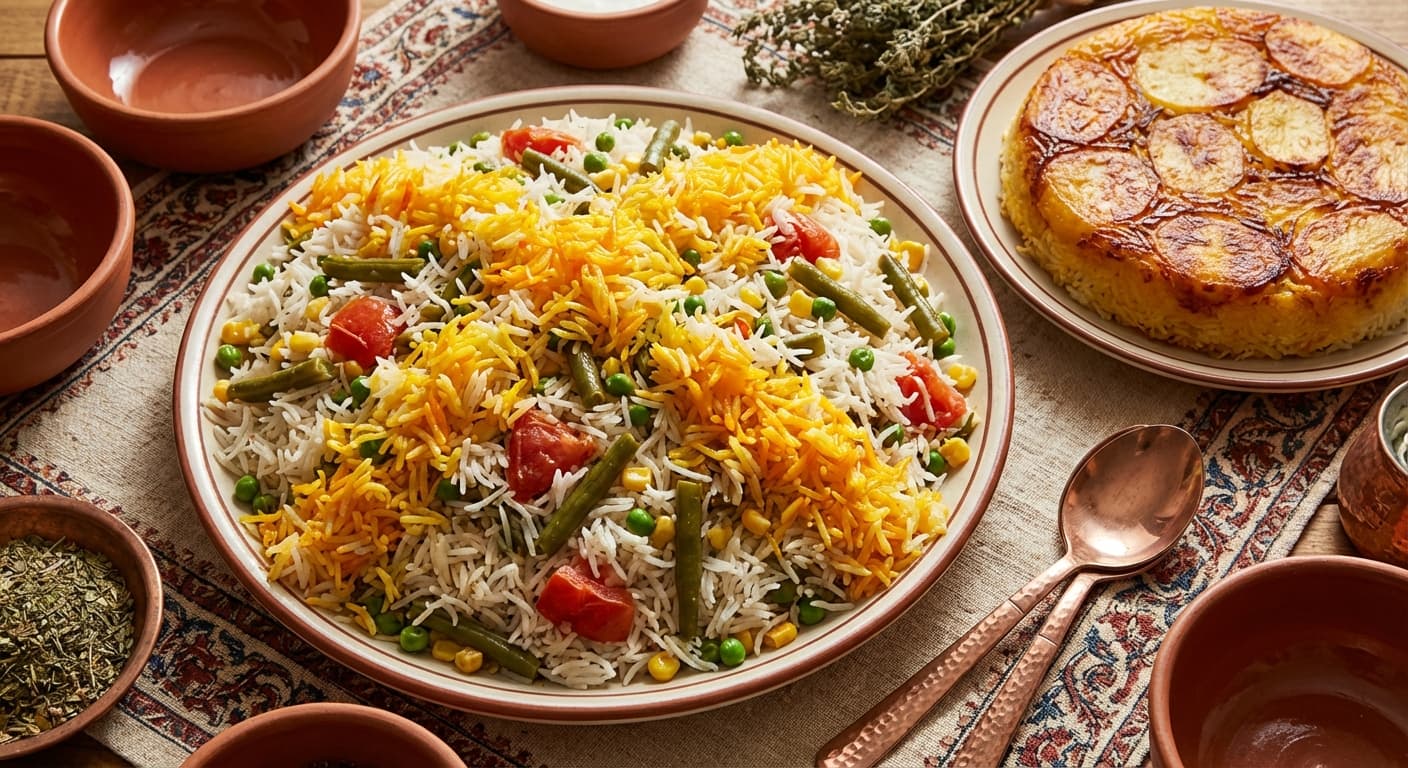
Printable Recipe Card
Servings: 6 · Total: 120 min · Difficulty: medium
Ingredients (quick list)
- 500 g Basmati rice (rinsed until water runs mostly clear, then soaked)
- 1500 ml Water (for parboiling rice (plus extra for soaking and rinsing))
- 18 g Fine sea salt (divided (for soaking water, parboiling water, and vegetables))
- 0.25 tsp Saffron threads (crushed)
- 45 ml Hot water (to bloom saffron)
- 1 tsp Ground cinnamon
- 0.75 tsp Ground black pepper
- 1.5 tsp Garlic powder
- 60 ml Neutral oil (such as sunflower or canola, divided)
- 30 g Unsalted butter (optional but recommended for aroma and browning)
- 350 g Potato (peeled and sliced into 3 mm rounds)
- 250 g Green beans (trimmed and cut into 2 cm pieces)
+ 4 more in the full ingredients section below.
Steps (summary)
- Rinse the basmati rice in several changes of cold water until mostly clear. Soak it in plenty of cold water with 6 g of the sal…
- Cook the vegetables: heat 30 ml neutral oil in a wide skillet over medium heat. Add diced onion and sauté 8–10 minutes until tr…
- Parboil the rice: bring 1500 ml water to a lively boil in a large pot. Drain the soaked rice and add it to the boiling water. B…
- Prepare the potato tahdig: in the same pot, heat 30 ml neutral oil and add the butter over medium heat until the butter melts a…
- Layer the rice and vegetables: add one-third of the parboiled rice over the potatoes, then spoon half the vegetable mixture in…
- Steam (dam) the polo: wrap the lid with a clean kitchen towel and cover the pot tightly to catch condensation. Cook over medium…
+ 1 more steps in the full instructions section below.
Cultural Background
Layered, steamed rice dishes with a crisp bottom crust are widely enjoyed across Persianate and Central/South Asian food traditions. Seasonal vegetable pilafs are often associated with spring and harvest cooking, reflecting what is available from local farms and markets. This style of rice is commonly served for family gatherings because it is both festive and practical to make in a large pot.
Equipment
💡 Tips
- For the cleanest tahdig release, let the pot rest off heat for 10 minutes; the crust contracts slightly and separates from the pot.
- Keep the vegetable mixture thick and saucy, not watery; excess liquid can make the rice gummy and soften the tahdig.
- If using frozen peas or corn, add them in the last 5 minutes of the vegetable simmer to prevent dull color and overcooking.
- Use a heavy-bottomed nonstick or well-seasoned pot for the most reliable tahdig, especially if you are new to Persian-style steaming.
⚠️ Common Mistakes
❌ Overboiling the rice during parboil
💡 Why: If the grains fully cook before steaming, they break and turn sticky, and the final layers lose definition.
✅ Fix: Boil only until elongated with a slightly firm center (6–8 minutes). Drain immediately and rinse briefly with cold water.
❌ Vegetable mixture too watery
💡 Why: Extra liquid seeps into the rice, making it gummy and preventing the potato tahdig from crisping.
✅ Fix: Simmer uncovered for 2–4 minutes at the end if needed, until the mixture is thick and coats the vegetables.
❌ Heat too high during steaming
💡 Why: High heat can burn the tahdig before the rice finishes steaming and can create harsh toasted flavors.
✅ Fix: Use medium heat only for the first 8 minutes to build steam, then switch to very low for 45 minutes; a heat diffuser helps on powerful burners.
❌ Lifting the lid repeatedly
💡 Why: Steam escapes, extending cook time and causing uneven texture; condensation can drip back and soften the crust.
✅ Fix: Wrap the lid with a towel and avoid opening until the 45-minute steam is complete.
🧊 How to Store
Cool leftovers within 2 hours. Refrigerate in an airtight container for up to 4 days. Reheat covered with 1–2 tbsp water in a saucepan on low for 10–12 minutes, or microwave covered in 60–90 second bursts. Tahdig is best fresh; re-crisp in a skillet with 1 tsp oil over medium heat for 3–5 minutes.
📅 Make Ahead
You can cook the vegetable mixture up to 2 days ahead and refrigerate it airtight. On cooking day, parboil the rice and assemble layers as written. For best tahdig, steam and serve the same day; fully cooked leftovers reheat well but the crust will soften.
🍽️ Pairs Well With
- Plain yogurt with cucumber and mint
- Shirazi-style chopped salad
- Pickled vegetables
- Black tea or a light yogurt drink
Regional Variations
- Kabul-style market pilaf approachOften includes more aromatic accents such as caramelized onions and a stronger saffron finish, with vegetables kept in distinct layers for a more dramatic presentation.
- Iranian home-style vegetable polo techniqueUses the same parboil-and-steam method but may swap the tahdig base to flatbread or plain rice, and may add herbs like dill or chives depending on season.
Ingredients
- 500 gBasmati rice (rinsed until water runs mostly clear, then soaked)
- 1500 mlWater (for parboiling rice (plus extra for soaking and rinsing))
- 18 gFine sea salt (divided (for soaking water, parboiling water, and vegetables))
- 0.25 tspSaffron threads (crushed)
- 45 mlHot water (to bloom saffron)
- 1 tspGround cinnamon
- 0.75 tspGround black pepper
- 1.5 tspGarlic powder
- 60 mlNeutral oil (such as sunflower or canola, divided)
- 30 gUnsalted butter (optional but recommended for aroma and browning)
- 350 gPotato (peeled and sliced into 3 mm rounds)
- 250 gGreen beans (trimmed and cut into 2 cm pieces)
- 180 gGreen peas (fresh or frozen)
- 180 gCorn kernels (fresh or frozen)
- 250 gTomato (grated or finely chopped (about 2 medium))
- 200 gYellow onion (finely diced)
🔄 Substitutions
- Saffron threads→ 1/2 tsp ground turmeric
- Green beans→ Asparagus cut into 2 cm pieces
- Neutral oil + butter→ 90 ml neutral oil (no butter)
Instructions
- 1
Rinse the basmati rice in several changes of cold water until mostly clear. Soak it in plenty of cold water with 6 g of the salt for 30 minutes (this time is included in prep). Meanwhile, crush the saffron and bloom it in 45 ml hot water for 10 minutes; keep covered to preserve aroma.
- 2
Cook the vegetables: heat 30 ml neutral oil in a wide skillet over medium heat. Add diced onion and sauté 8–10 minutes until translucent and lightly golden. Stir in tomato and cook 6 minutes until thickened. Add green beans, peas, corn, 120 ml water, remaining 12 g salt, garlic powder, black pepper, and cinnamon; cover and simmer 12–15 minutes until beans are tender-crisp and the mixture is saucy, not watery.
- 3
Parboil the rice: bring 1500 ml water to a lively boil in a large pot. Drain the soaked rice and add it to the boiling water. Boil 6–8 minutes, stirring gently once or twice, until the grains are elongated and the center is slightly firm. Drain immediately in a colander and rinse briefly with 250 ml cold water to stop cooking and reduce surface starch.
- 4
Prepare the potato tahdig: in the same pot, heat 30 ml neutral oil and add the butter over medium heat until the butter melts and foams. Arrange potato slices in a single, slightly overlapping layer on the bottom. Cook 2 minutes to start setting the base, then reduce heat to low. This preheating helps the potatoes crisp evenly without burning later.
- 5
Layer the rice and vegetables: add one-third of the parboiled rice over the potatoes, then spoon half the vegetable mixture in an even layer. Repeat with another third of rice and the remaining vegetables, finishing with the last third of rice. Drizzle 2 tablespoons (30 ml) of the bloomed saffron liquid over the top and use the back of a spoon to make 5–6 steam holes down to the bottom.
- 6
Steam (dam) the polo: wrap the lid with a clean kitchen towel and cover the pot tightly to catch condensation. Cook over medium heat for 8 minutes to build steam, then reduce to very low heat and steam 45 minutes. Avoid lifting the lid; steady low heat is key for fluffy grains and a crisp, golden tahdig.
- 7
Rest and unmold: turn off heat and rest, covered, for 10 minutes. Gently fluff the top rice with a fork, keeping layers mostly intact. To serve, spoon rice and vegetables onto a platter. For the tahdig, place a plate over the pot and invert carefully; if needed, loosen edges with a thin spatula and invert again for a clean release.
🪪 Recipe Passport
Cultural Background
Layered, steamed rice dishes with a crisp bottom crust are widely enjoyed across Persianate and Central/South Asian food traditions. Seasonal vegetable pilafs are often associated with spring and harvest cooking, reflecting what is available from local farms and markets. This style of rice is commonly served for family gatherings because it is both festive and practical to make in a large pot.
Regional Variations
Researched from multiple sources and validated by the Zaffaron editorial team. Every recipe is tested for accuracy, measurements, and cultural authenticity.
Nutrition per serving
Pairs well with
If you enjoyed this recipe, here are a few related Zaffaron recipes to try next.
- Puré-e Sib Zamini (پوره سیب زمینی) — Persian Potato Purée
- Polo Makhlout (پلو مخلوط) — Persian Mixed Rice with Meat and Herbs
- Polo Shirini Zaferani (پلو شیرینی زعفرانی) — Persian Saffron Sweet Rice
- Polow-e Loobia ba Koofteh Rizeh (پلو لوبیا با کوفته ریزه) — Persian Rice with Black-Eyed Peas and Mini Soy Meatballs
Does your family make this differently?
Every family has their own version. Maybe your grandmother adds a secret ingredient, or your aunt has a completely different technique. Preserve your family's version — with their name on it, forever.
You Might Also Like
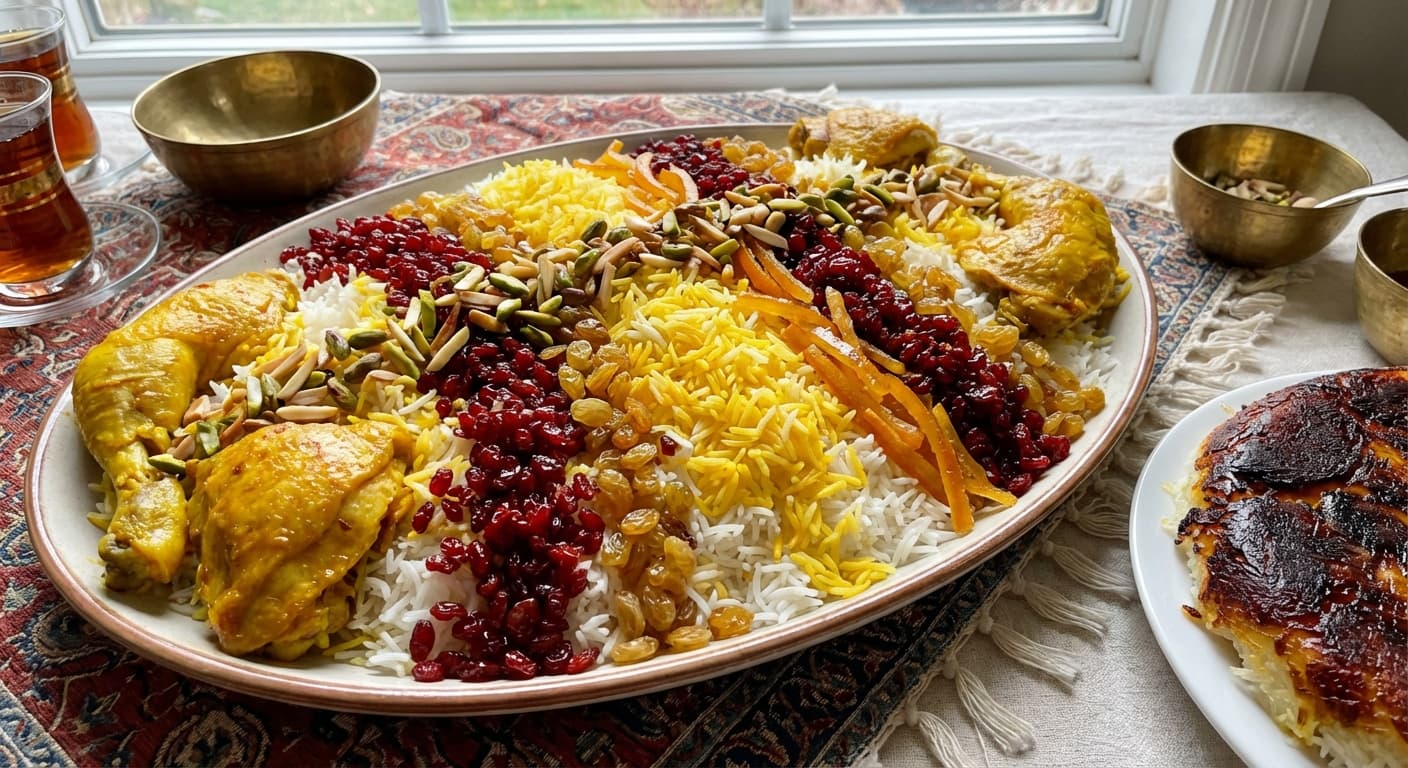
Jeweled Rice (مرصع پلو) — Festive Persian rice with saffron chicken and jeweled fruits
Persian · Rice Dishes · 135 min
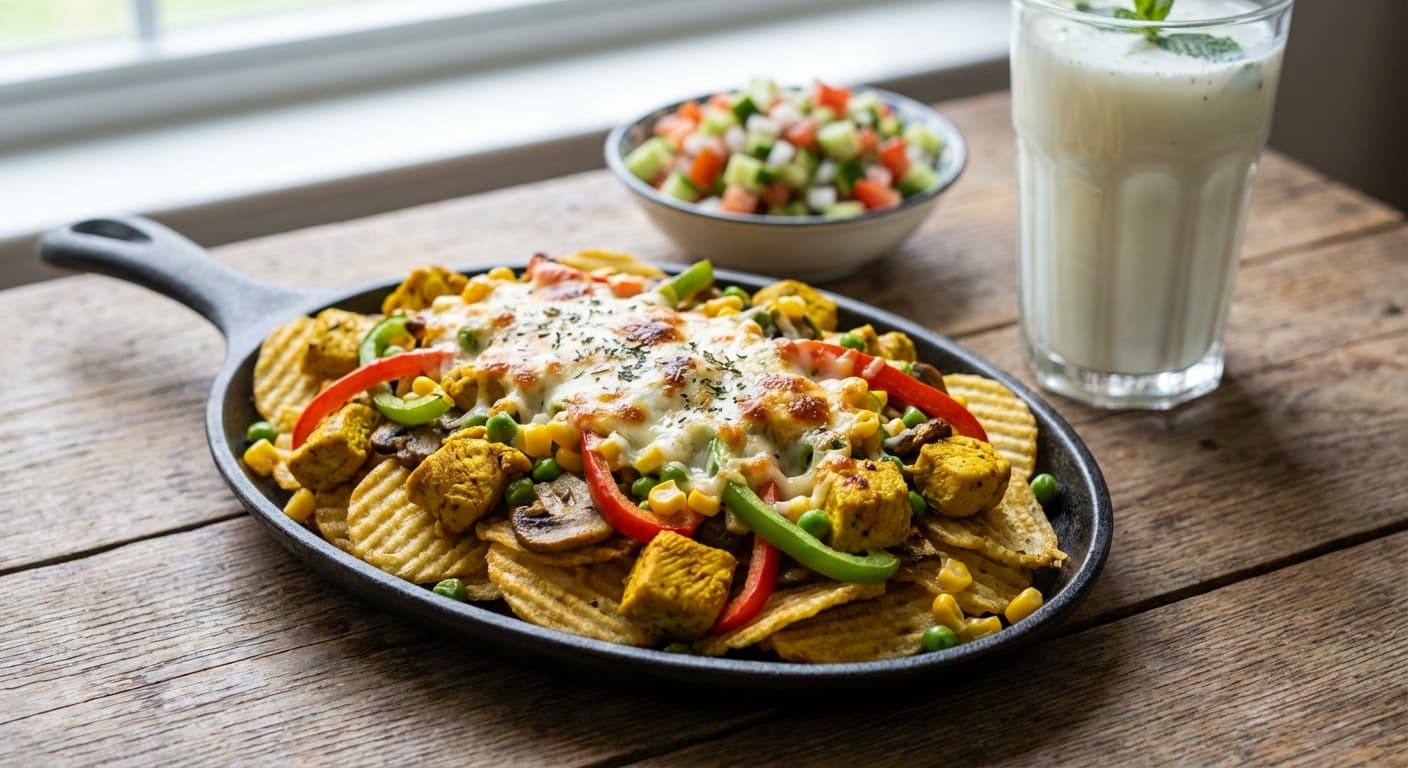
Persian-Style Pizza-Chips (خوراک چیپس و پنیر) — Street-Food Chip Bake with Chicken and Mozzarella
Persian · Main Courses · 45 min
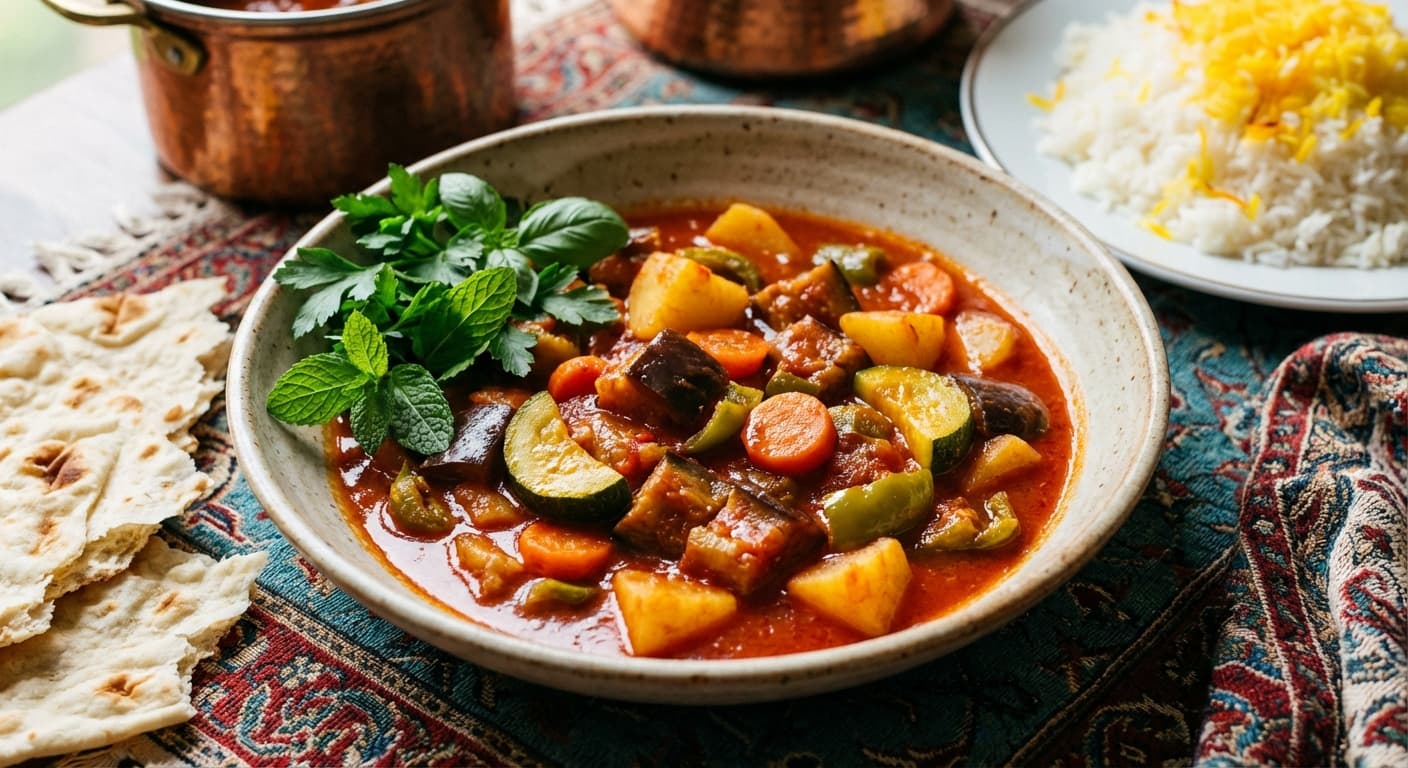
Yatimcheh (یتیمچه) — Persian Slow-Cooked Summer Vegetable Stew
Persian · Stews · 100 min
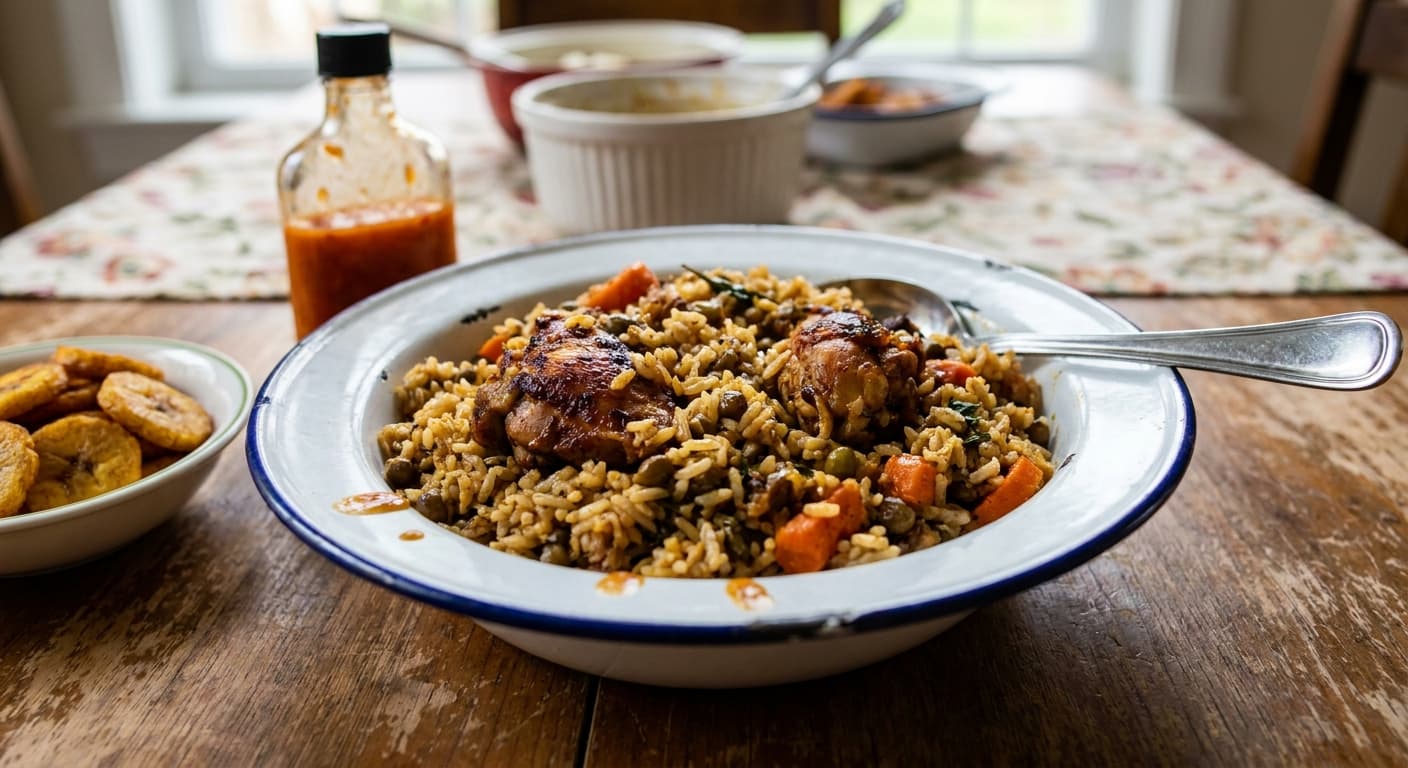
Trinidadian Pelau (Pelau) — Caramel-Browned Chicken, Rice, and Pigeon Peas
Trinidadian · Rice Dishes · 85 min
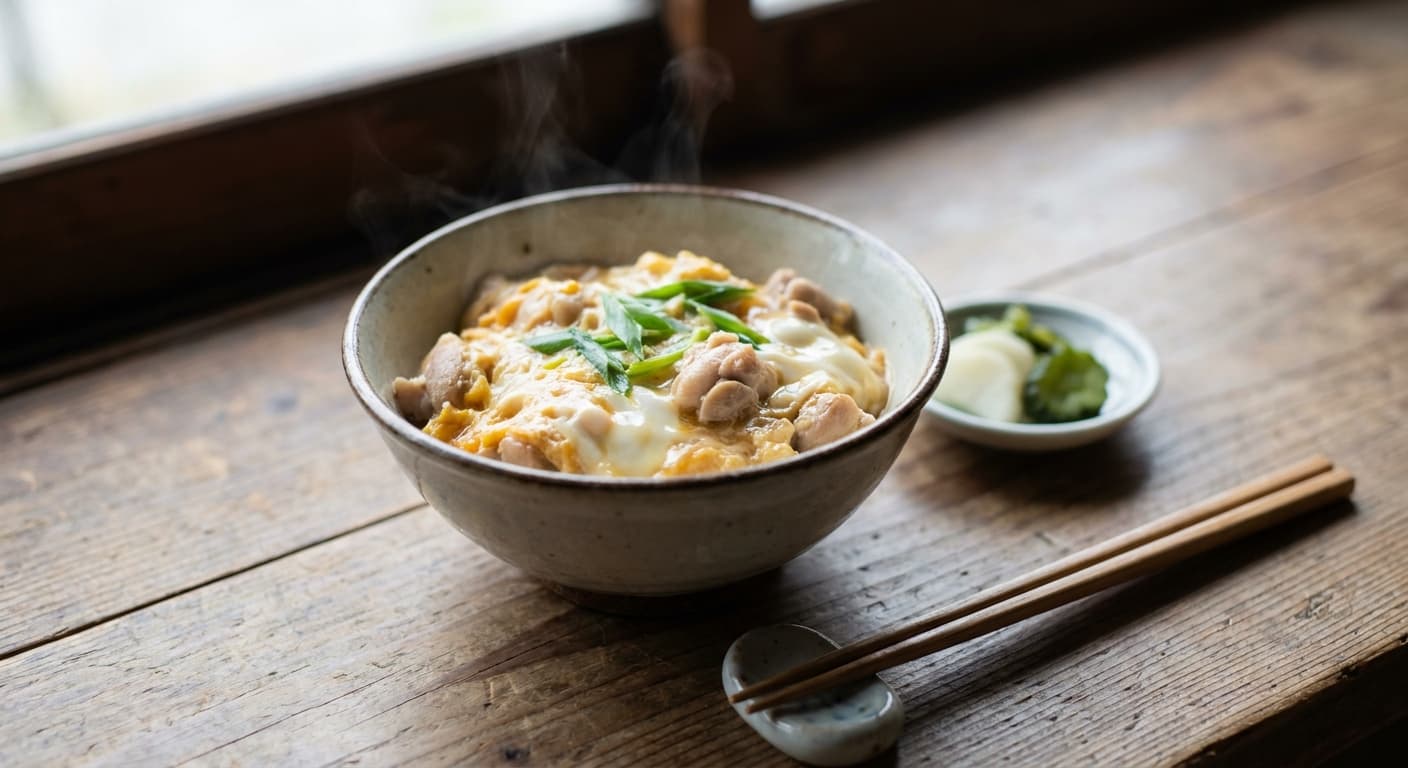
Japanese Oyakodon (親子丼) — Chicken and Egg Rice Bowl
Japanese · Rice Dishes · 29 min
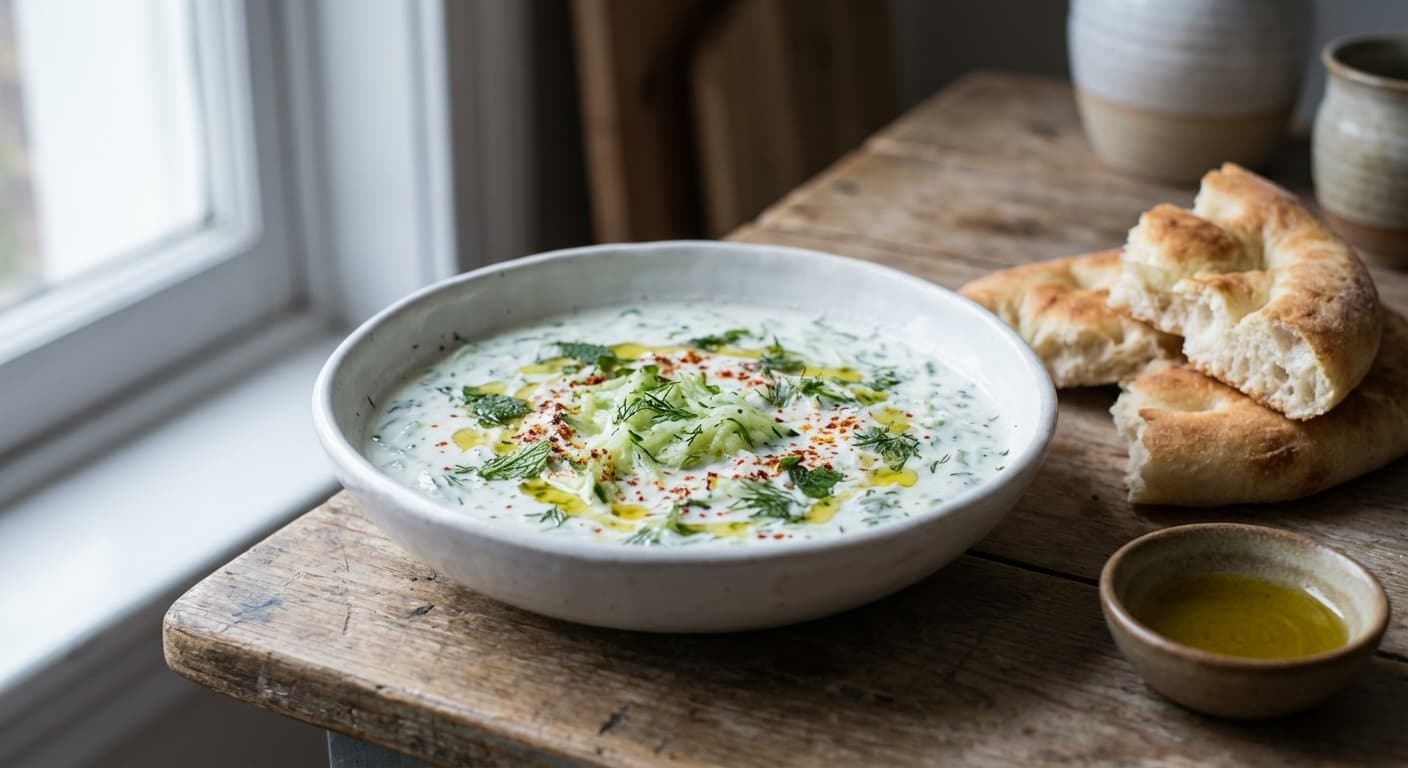
Cacık (Yoğurtlu Salatalık Mezesi) — Chilled Turkish Yogurt, Cucumber & Mint Dip
Turkish · Appetizers · 15 min
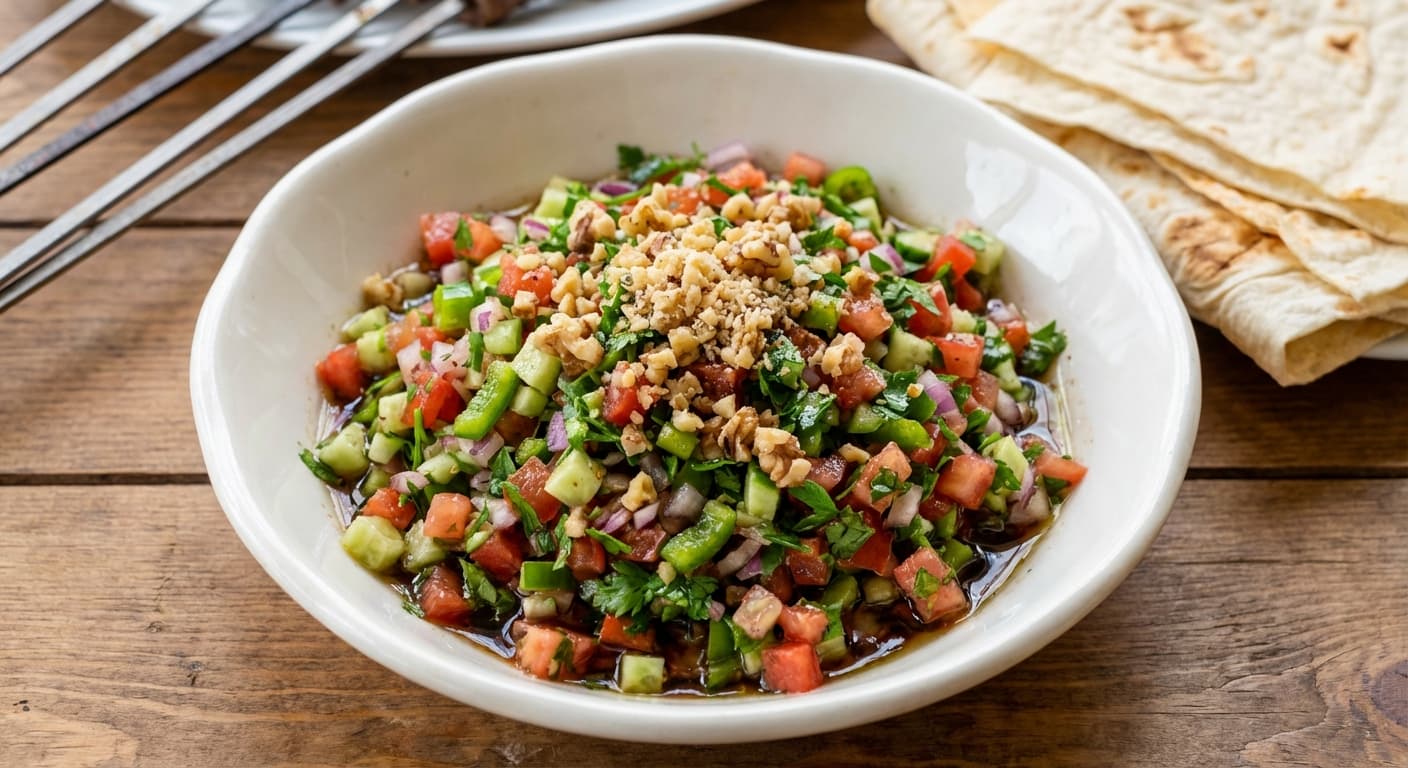
Gavurdağı Salad (Gavurdağı Salatası) — Finely Chopped Walnut & Pomegranate Salad
Turkish · Salads · 20 min
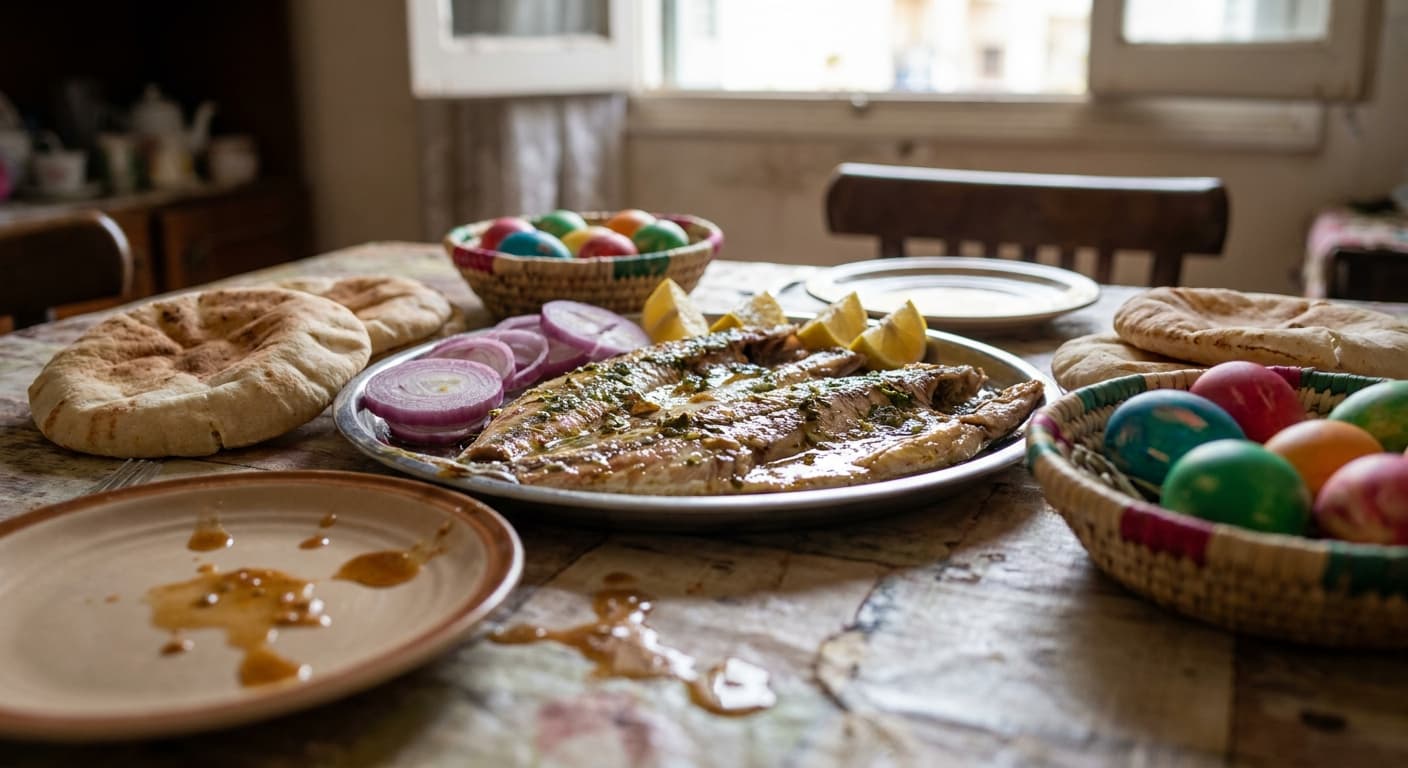
Feseekh (فسيخ) — Egyptian Salt-Cured Mullet for Sham el-Nessim
Egyptian · Main Courses · 30 min
Reviews
Cooked this recipe?
Tap the stars to rate it — that's all it takes. A few words are welcome but optional.
No ratings yet. Cooked this one? Be the first to rate it — it takes one tap.