Mastoba (Мастоба) — Tajik Rice and Beef Soup
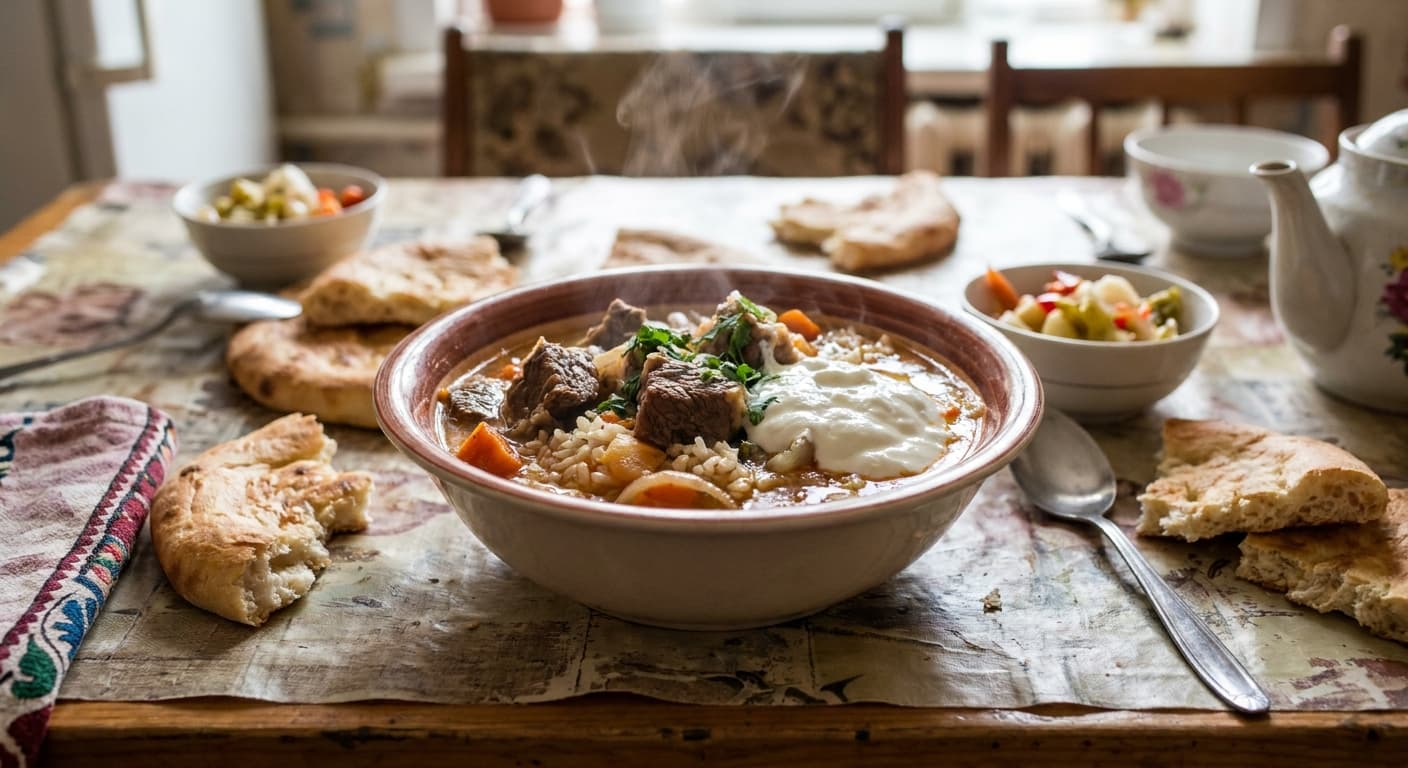
Mastoba is a hearty Tajik soup of beef, rice, and vegetables, served with tangy chakka, a strained cultured yogurt. Its gently thickened broth makes a satisfying family meal, traditionally accompanied by non, the region's round bread.
Printable Recipe Card
Servings: 6 · Total: 100 min · Difficulty: easy
Ingredients (quick list)
- 500 g boneless beef chuck (Trim excess surface fat and cut into 1.5 cm cubes.)
- 30 ml sunflower oil
- 1 large onion (Approximately 200 g peeled; finely dice.)
- 2 carrots (Approximately 180 g total after trimming; cut into 1 cm dice.)
- 1 green bell pepper (Approximately 120 g after removing the stem and seeds; dice.)
- 2 ripe tomatoes (Approximately 300 g total; finely chop.)
- 2 clove garlic (Finely chop.)
- 1 tsp cumin seeds (Lightly crush.)
- 0.5 tsp ground black pepper
- 8 g fine salt
- 1800 ml water
- 2 medium potatoes (Approximately 300 g peeled; cut into 1.5 cm cubes.)
+ 3 more in the full ingredients section below.
Steps (summary)
- Rinse the rice in a fine-mesh sieve under cold running water for 30 seconds, then drain. Pat the beef dry and prepare the veget…
- Heat the sunflower oil in a heavy 4-liter pot over medium-high heat. Brown the beef in two batches for approximately 8 minutes…
- Return all the beef and its juices to the pot, then add the onion, carrots, and green pepper. Cook over medium heat for 7 minut…
- Add the tomatoes, garlic, cumin, black pepper, and salt. Cook for 5 minutes, stirring and scraping the base of the pot, until t…
- Pour in the 1800 ml water and bring to a boil, allowing approximately 5 minutes. Reduce the heat, partially cover, and simmer g…
- Add the potatoes and drained rice, then return the soup to a gentle simmer. Cook partially covered for 20 minutes, stirring eve…
+ 2 more steps in the full instructions section below.
Cultural Background
Mastoba belongs to Tajik home cooking and the wider Central Asian tradition of substantial rice soups. Glenn Randall Mack and Asele Surina's Food Culture in Russia and Central Asia provides regional context for the accompanying bread and cultured dairy.
Equipment
💡 Tips
- Keep the beef cubes close to 1.5 cm across; larger pieces need substantially longer cooking before the rice goes in.
- Use plain, unsalted chakka rather than sweetened yogurt or dried salted qurut, which changes both the seasoning and consistency.
- For a thinner soup after standing, stir in 150 ml boiling water and heat gently for 2 minutes before serving.
⚠️ Common Mistakes
❌ Adding rice before the beef is nearly tender.
✅ Fix: Test a beef cube first; it should yield to a fork with slight resistance. Continue simmering the meat before adding the rice if necessary.
❌ Boiling chakka directly in the soup.
✅ Fix: Add it to individual bowls after cooking so the cultured dairy stays creamy rather than separating.
❌ Using excess rice and turning the soup into porridge.
✅ Fix: Weigh 120 g uncooked rice for six servings and stop cooking when the grains are tender.
🧊 How to Store
Refrigerate the soup and chakka separately within 2 hours, using shallow containers. Keep for up to 3 days, or freeze the soup without chakka for 2 months. Reheat to 74°C, adding 50–100 ml water per portion because the rice absorbs broth.
📅 Make Ahead
Cook the beef and vegetable base through step 5 up to 2 days ahead and refrigerate promptly. Bring it back to a simmer, then add the potatoes and rice shortly before serving for the best texture.
🍽️ Pairs Well With
- Tajik non bread
- cucumber and tomato salad
- sliced radishes
Regional Variations
- Tajik household versions vary between beef and lamb and differ in their use of potatoes and sweet peppers.
- Related Uzbek mastava belongs to the same rice-soup family, with household differences in vegetables, seasoning, and cultured-dairy accompaniments.
Ingredients
- 500 gboneless beef chuck (Trim excess surface fat and cut into 1.5 cm cubes.)
- 30 mlsunflower oil
- 1large onion (Approximately 200 g peeled; finely dice.)
- 2carrots (Approximately 180 g total after trimming; cut into 1 cm dice.)
- 1green bell pepper (Approximately 120 g after removing the stem and seeds; dice.)
- 2ripe tomatoes (Approximately 300 g total; finely chop.)
- 2 clovegarlic (Finely chop.)
- 1 tspcumin seeds (Lightly crush.)
- 0.5 tspground black pepper
- 8 gfine salt
- 1800 mlwater
- 2medium potatoes (Approximately 300 g peeled; cut into 1.5 cm cubes.)
- 120 gwhite medium-grain rice (Uncooked weight.)
- 240 gplain unsalted chakka (Strained cultured yogurt; nutrition assumes approximately 5% fat.)
- 12 sprigfresh cilantro (Approximately 12 g; finely chop the leaves and tender stems.)
🔄 Substitutions
- boneless beef chuck→ 500 g boneless lamb shoulder
- plain unsalted chakka→ 240 g plain whole-milk Greek-style yogurt
- white medium-grain rice→ 120 g white long-grain rice
Instructions
- 1
Rinse the rice in a fine-mesh sieve under cold running water for 30 seconds, then drain. Pat the beef dry and prepare the vegetables to the sizes specified so they cook evenly.
- 2
Heat the sunflower oil in a heavy 4-liter pot over medium-high heat. Brown the beef in two batches for approximately 8 minutes total, transferring the first batch to a plate while the second cooks.
- 3
Return all the beef and its juices to the pot, then add the onion, carrots, and green pepper. Cook over medium heat for 7 minutes, stirring frequently, until the onion softens and the vegetables begin to color.
- 4
Add the tomatoes, garlic, cumin, black pepper, and salt. Cook for 5 minutes, stirring and scraping the base of the pot, until the tomatoes soften and release their juices.
- 5
Pour in the 1800 ml water and bring to a boil, allowing approximately 5 minutes. Reduce the heat, partially cover, and simmer gently for 30 minutes, or until the beef is nearly tender; tougher beef may require an additional 15–20 minutes before the next step.
- 6
Add the potatoes and drained rice, then return the soup to a gentle simmer. Cook partially covered for 20 minutes, stirring every 5 minutes to prevent the rice from catching, until the potatoes are tender and the rice is soft but still recognizable.
- 7
Remove the pot from the heat and let the soup stand for 5 minutes; it should remain spoonable, with broth surrounding the rice and vegetables. Stir the chakka in a separate bowl until smooth, keeping it out of the boiling soup to prevent curdling.
- 8
Divide the soup evenly among six bowls and top each with 40 g chakka. Divide the chopped cilantro equally among the bowls and serve immediately, allowing each diner to stir the cultured yogurt into the broth.
🪪 Recipe Passport
Cultural Background
Mastoba belongs to Tajik home cooking and the wider Central Asian tradition of substantial rice soups. Glenn Randall Mack and Asele Surina's Food Culture in Russia and Central Asia provides regional context for the accompanying bread and cultured dairy.
Regional Variations
Researched with AI assistance from culinary references and checked by Zaffaron's automated quality pipeline. Recipes are not individually kitchen-tested; see our editorial policy.
📚 Sources & Cultural References
- Glenn Randall Mack and Asele Surina — Food Culture in Russia and Central Asia — (2005)
Sources cited during AI-assisted recipe research. Cultural and culinary references supporting authenticity claims.
Nutrition per serving
Pairs well with
If you enjoyed this recipe, here are a few related Zaffaron recipes to try next.
Does your family make this differently?
Every family has their own version. Maybe your grandmother adds a secret ingredient, or your aunt has a completely different technique. Preserve your family's version — with their name on it, forever.
You Might Also Like
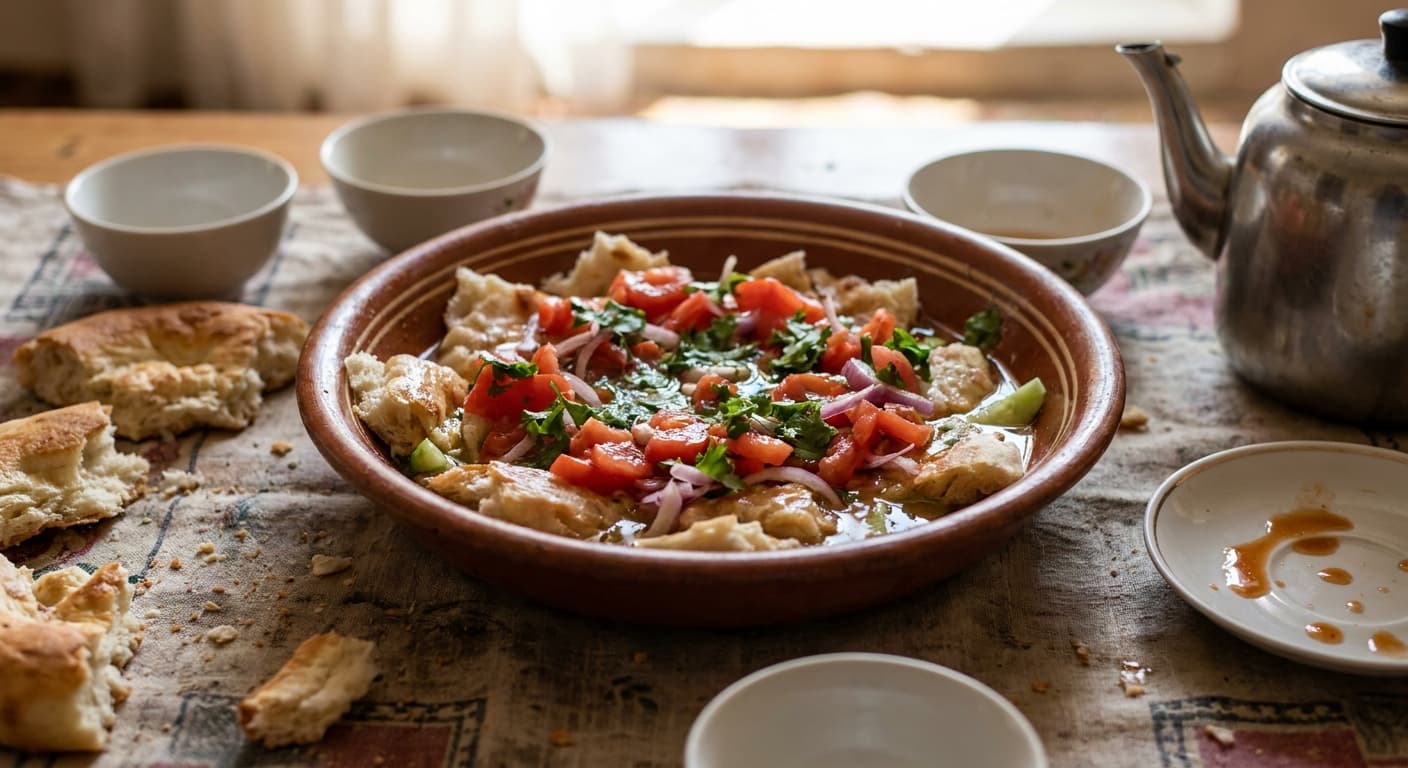
Shakarob (Шакароб) — Tajik Tomato-Onion Bread Salad
Tajik · Salads · 25 min
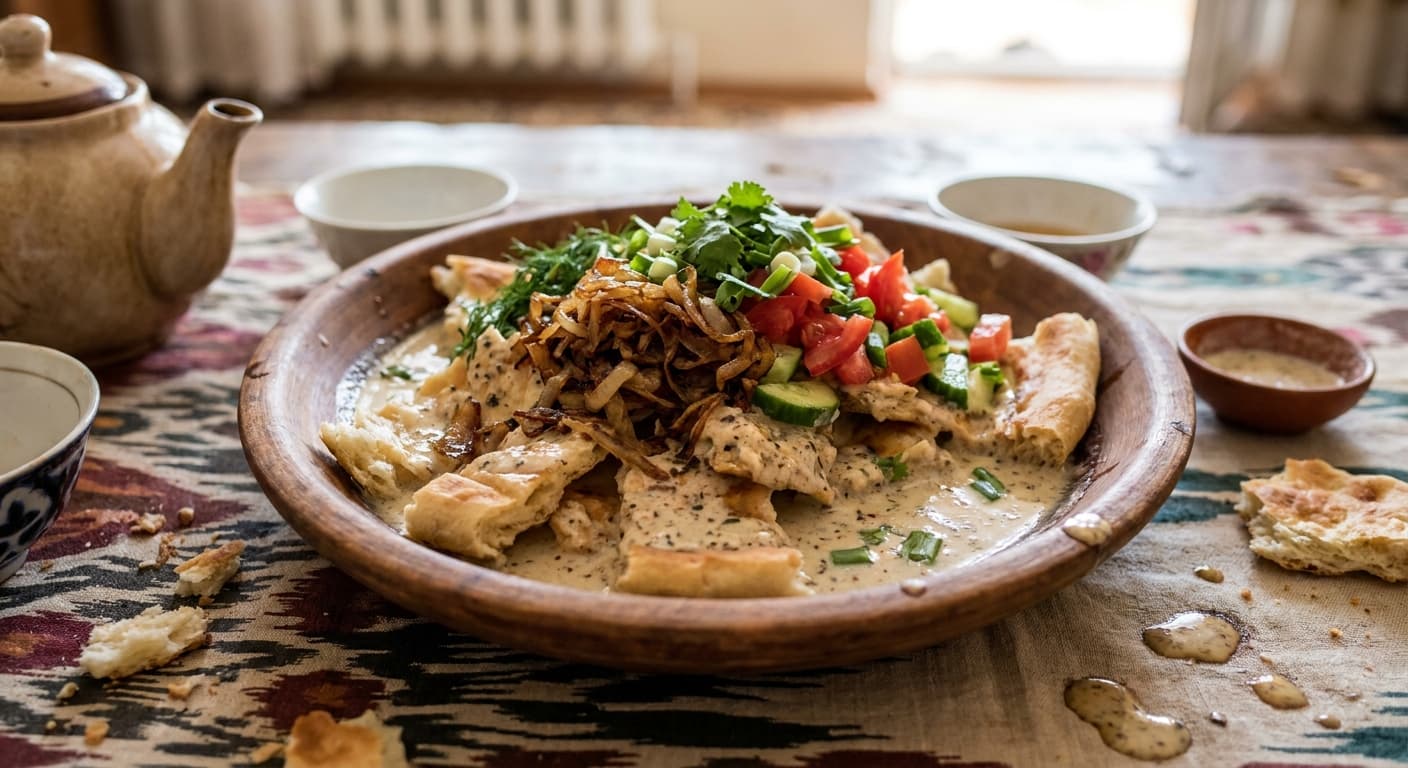
Tajik Qurutob (Қурутоб) — Tangy Bread Salad with Qurut and Fried Onions
Tajik · Main Courses · 40 min
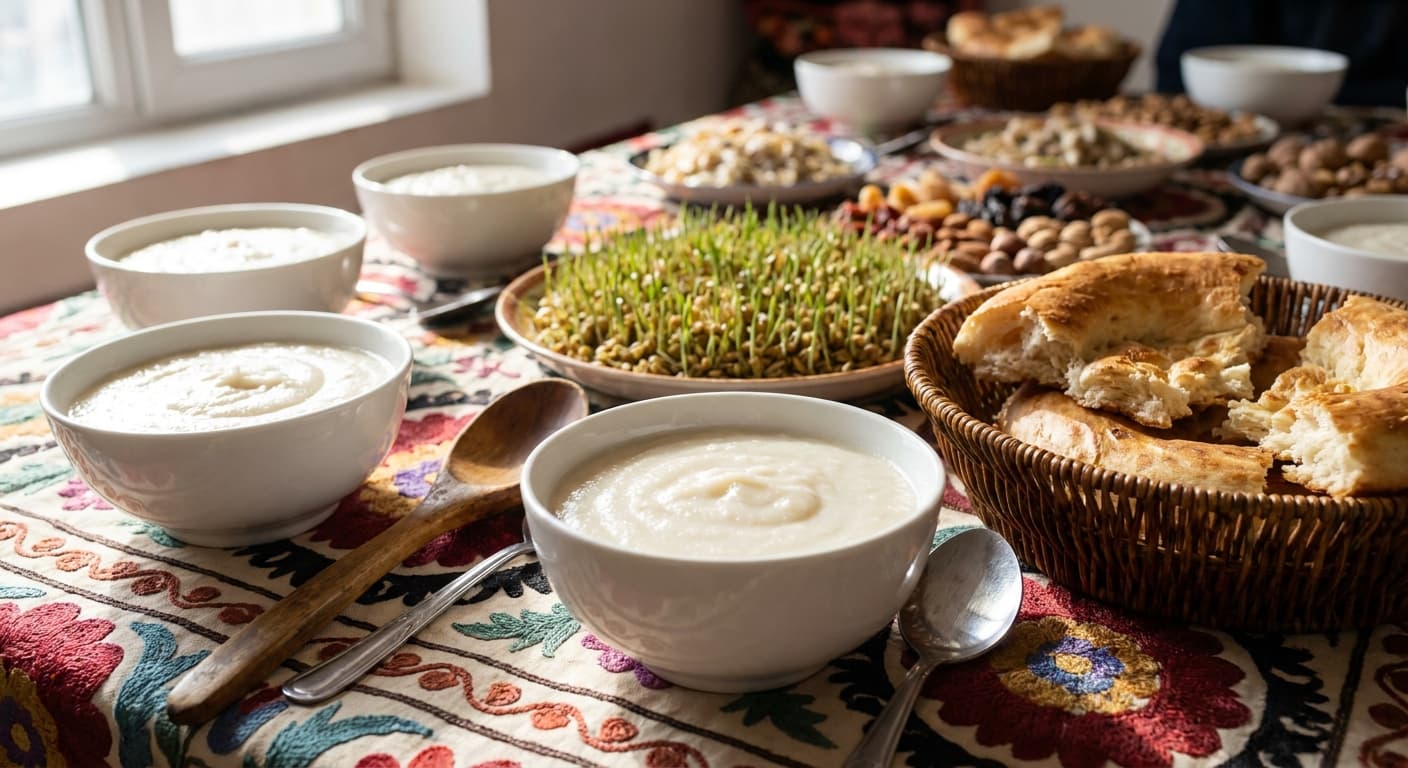
Nishollo (Нишолло) — Tajik Whipped Egg-White and Syrup Sweet
Tajik · Desserts · 60 min
Uzbek Shurpa (Шўрпа) — Lamb and Vegetable Soup
Uzbek · Soups · 160 min
Begova Corba (Begova čorba) — Bosnian Chicken and Okra Soup
Bosnian · Soups · 110 min
Murgh-e Qorma (مرغ قورمه) — Afghan Chicken in Onion-Tomato Gravy
Afghan · Stews · 95 min
Uzbek Dimlama (Dimlama) — Layered Lamb and Vegetable Stew
Uzbek · Stews · 125 min
Varenyky (Вареники) — Ukrainian Potato-Cheese Dumplings
Ukrainian · Main Courses · 95 min
Reviews
Cooked this recipe?
Tap the stars to rate it — that's all it takes. A few words are welcome but optional.
No ratings yet. Cooked this one? Be the first to rate it — it takes one tap.